Where Winds Meet is not most convincing when it gives you a vast map. Many games can do that. It becomes convincing when rain changes the mood of a road, an umbrella stops looking like a joke weapon, a village feels occupied before the player arrives, and movement expresses the impossible lightness promised by wuxia.
Where Winds Meet is a free-to-play wuxia open-world RPG for players who enjoy wandering with purpose
Everstone Studio places the game in tenth-century China during the Five Dynasties and Ten Kingdoms period. You play a customizable young wanderer, move through regions including Qinghe and Kaifeng, learn multiple weapons and mystic arts, and follow a personal mystery inside a larger political fracture.
As of this review, the official game site links the active PC, PlayStation and Xbox routes. PlayStation's official listing describes solo and multiplayer play and records the international PS5 release in November 2025. Platform availability can continue to expand, so use those official destinations rather than an old pre-release article.
This is the game's strongest promise in one image: martial ability is asked to carry responsibility, not only win a duel.
My short recommendation is clear. Play it if you enjoy environmental wandering, expressive wuxia movement, flexible combat and a live world that mixes authored story with shared activity. Do not choose it only because you want another punishing boss game after Black Myth: Wukong. The pleasures are different.
The decision table
| You want | How the game answers | My caution |
|---|---|---|
| A Chinese open world | Villages, cities, waterways, temples, clothing, social roles and tenth-century political framing | Cultural texture is not the same as historical reconstruction |
| Wuxia movement | Wall-running, aerial movement and techniques that turn traversal into performance | Spectacle can make distance feel trivial if every route becomes a shortcut |
| Flexible combat | Sword, spear, dual blades, glaive, fan, umbrella, bow and mystic arts support varied builds | Balance and best-build claims change with updates |
| Solo story | A personal identity mystery and regional narrative can be played as an individual journey | Live-service systems can interrupt the quiet rhythm some solo players want |
| Multiplayer activity | Co-op, guild and competitive options extend the jianghu beyond scripted characters | More activity does not automatically produce stronger social meaning |
| Historical learning | The period invites curiosity about political fragmentation and urban life | Treat the game as fiction, then verify history separately |
Wuxia movement is a philosophy of distance
In ordinary open-world design, traversal often exists between the important things. In wuxia, movement can be the important thing.
Qinggong-like lightness expresses mastery over the body's ordinary limits. A leap across water or a run along a wall is not just transportation; it tells us that discipline has changed the relationship between body and environment.

The bamboo grove gives movement resistance, rhythm and scale. Without a physical world to answer it, lightness becomes only an animation.
The game is strongest when route choice remains visible. A bridge, roofline, riverbank or mountain path should make you notice terrain before technique erases it. Good traversal turns geography into choreography.
This also explains why I would not describe every mystic action as “magic.” Wuxia regularly exaggerates trained ability until it becomes impossible, but its emotional language remains bodily: breath, timing, balance, weapon, lineage, endurance and reputation. Chinese martial arts are living practices, while the game's airborne freedom is fiction built from wuxia imagination. Both become clearer when we do not collapse them.
The umbrella test: does combat have cultural personality?
Sword and spear already carry familiar heroic authority. Fan and umbrella are more revealing. If the game treats them as novelty skins, the combat system is merely collecting Chinese-looking objects. If their movement, timing and social associations change how a fight feels, they belong to the world.
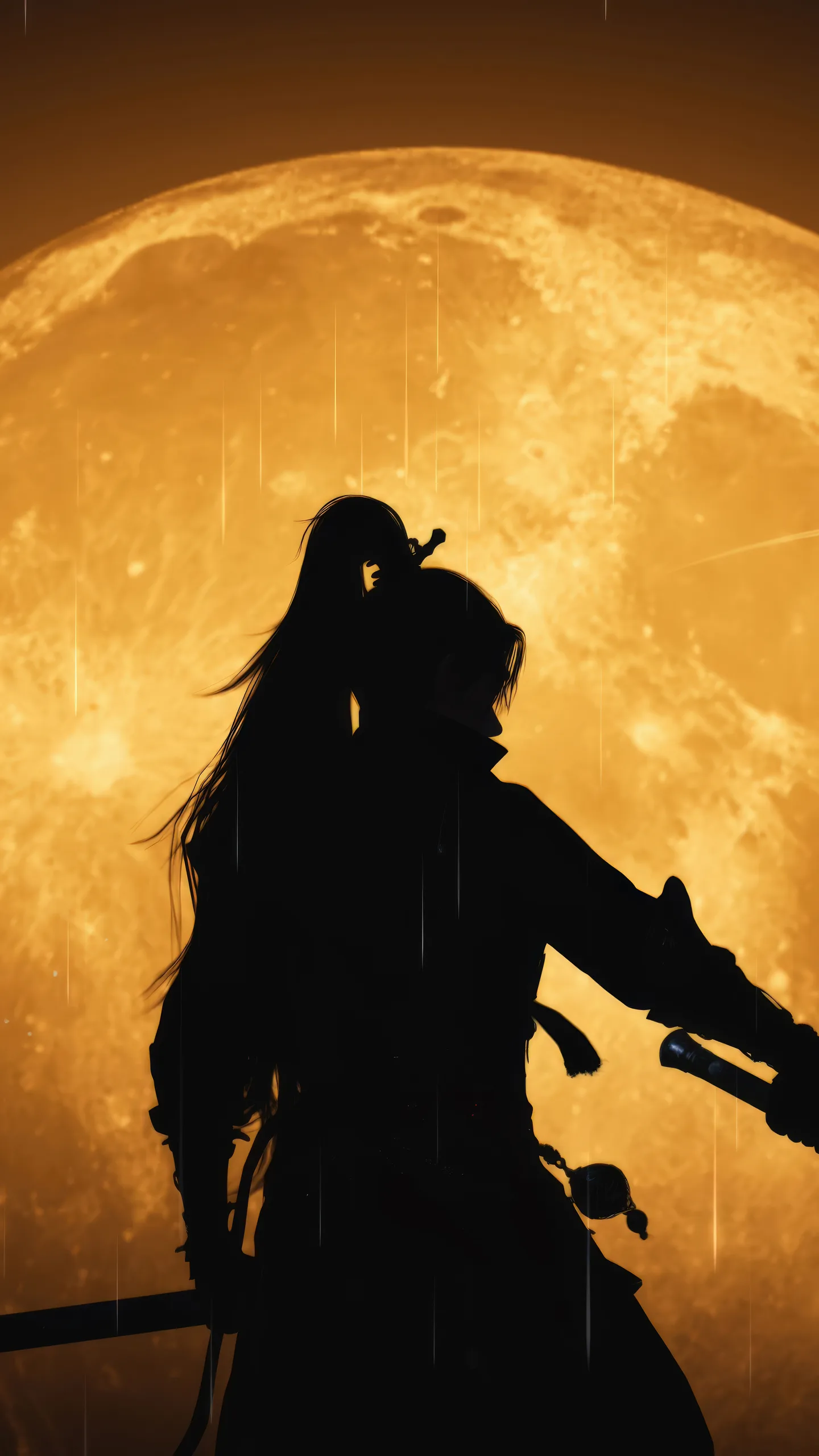
The moon dwarfs both figures, turning a combat stance into a question of duty and distance before any effect explodes. Wuxia needs control as much as speed.
I use the same test for Taichi-like mystic arts. The circular motion can create a satisfying redirection of force, but an energy effect is not evidence of real tai chi practice. In the game, it is a designed tactical language. Its value comes from how well that language supports timing and character fantasy.
The ideal build is therefore not the one with the highest number on an undated tier list. It is the combination whose rhythm makes you understand the wanderer you are trying to become.
Qinghe should feel lived in before it becomes content
Qinghe's rural spaces are persuasive when they appear to have routines independent of the player. Water, fields, weathered gates, animals, tools and people at work establish social life. The map marker arrives second.

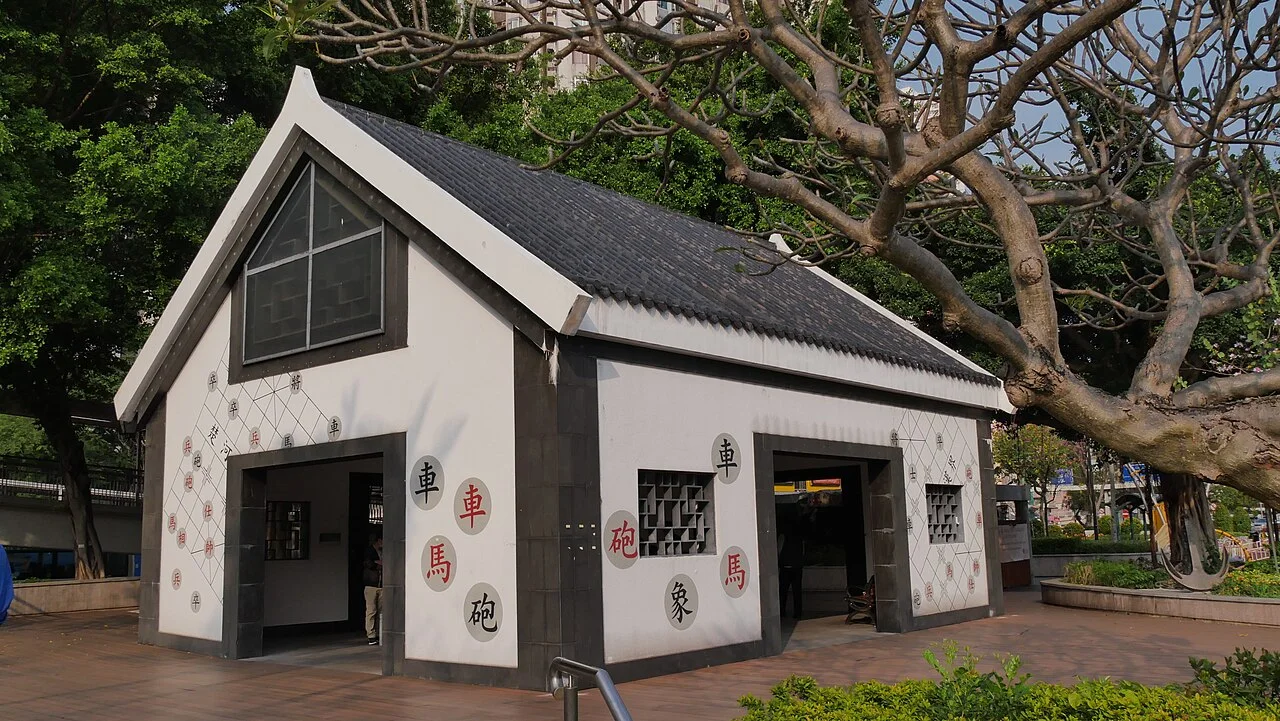
A seated figure, domestic architecture and surrounding vegetation give the village a pace. This image matters because nobody is performing a quest icon for us.
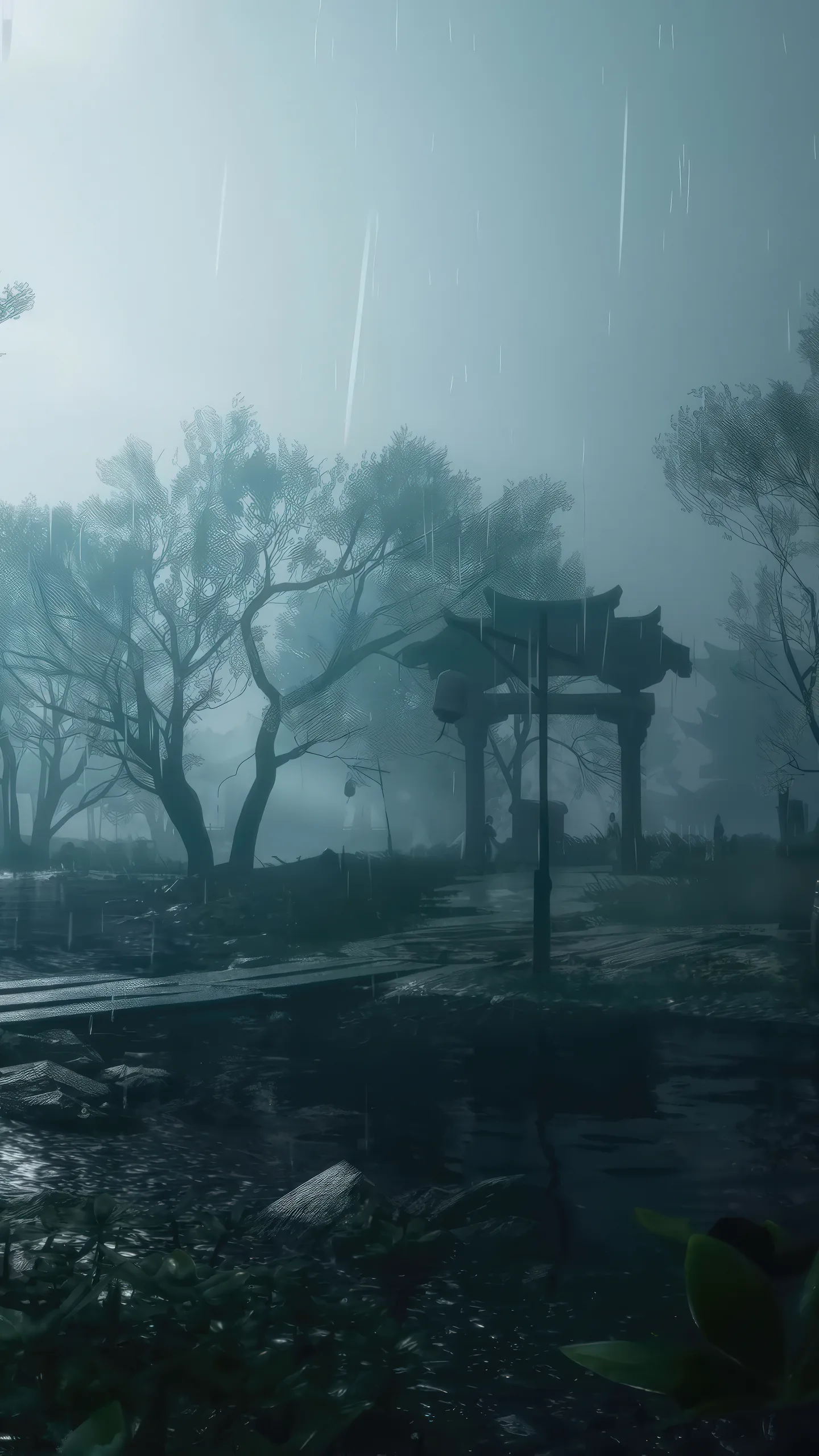
The pavilion almost disappears into rain and wet trees. The scene makes weather part of navigation rather than a filter laid over an attraction.
Kaifeng should change that rhythm. A city brings commerce, bureaucracy, density and visibility. In a jianghu story, freedom is never only distance from the court; it is negotiation with inns, guilds, officials, rumors, teachers and strangers. A hero alone on a mountain is an image. A hero owing favors in a city is a social being.
A large city is not impressive merely because it is large
The strongest reaction to Where Winds Meet often begins with Kaifeng rather than with a boss. That makes sense. A convincing historical city lets the player enter an ordinary doorway, hear a different kind of conversation, climb to a second floor, lose a little time in a market, and realize that the place was not arranged only for their arrival.
That is a higher standard than a long list of activities. Density needs variation: domestic rooms beside shops, quiet alleys beside public performance, workers with their own routes, and streets whose social rules feel different after dark. I do not need every NPC to offer a quest. I need enough people and spaces to appear uninterested in serving me. That indifference is what makes a later favor, rumor or conflict feel earned.
Kaifeng works best when it resists becoming a historical theme park. A convincing street contains unequal attention: a vendor watching the next customer, a worker finishing a task, someone sheltering from weather and a doorway whose life continues without the hero. I want the city to interrupt my power fantasy. If every resident freezes into admiration or instruction, the architecture is only a set. When ordinary people keep their own tempo, the player finally enters a society rather than a catalogue of assets.
It is also the right place to be critical. A world can be visually generous and still become exhausting if every square introduces another currency, panel, daily demand or collectible. When a game says it offers freedom, I ask a simple question: can I spend an evening following a mood—rain, a river, a rumor, a rooftop—without being punished for ignoring its busiest systems? For players who love discovery, the answer matters more than the size of the map.
Combat should welcome curiosity without pretending every player wants the same challenge
The public discussion around the game makes one useful point: a difficult encounter and a satisfying encounter are not identical. A timing aid can allow a newcomer to read the animation, survive the exchange and enjoy the shape of a duel. That is different from deleting every demand through inflated damage numbers. Good accessibility preserves a choice's texture; it gives more people a chance to feel why a move has rhythm.
But no feature can make one combat language universal. If weighty recovery, close timing windows or a particular camera rhythm irritate you in the opening hours, believe that response. Do not force yourself through a twenty-hour game because a tier list says its endgame is excellent. Conversely, do not decide that a help option makes the game shallow before trying whether it lets you practice attention rather than simply skip danger.
My practical test is modest: play until you have used movement to approach a problem, changed your answer to an enemy at least once, and seen a local space at two different tempos—quiet wandering and real pressure. If all three feel good, the game's mix of systems may be a pleasure. If they feel like a queue of unrelated features, the free entry point is permission to walk away.
The infant reveals whether heroism has weight
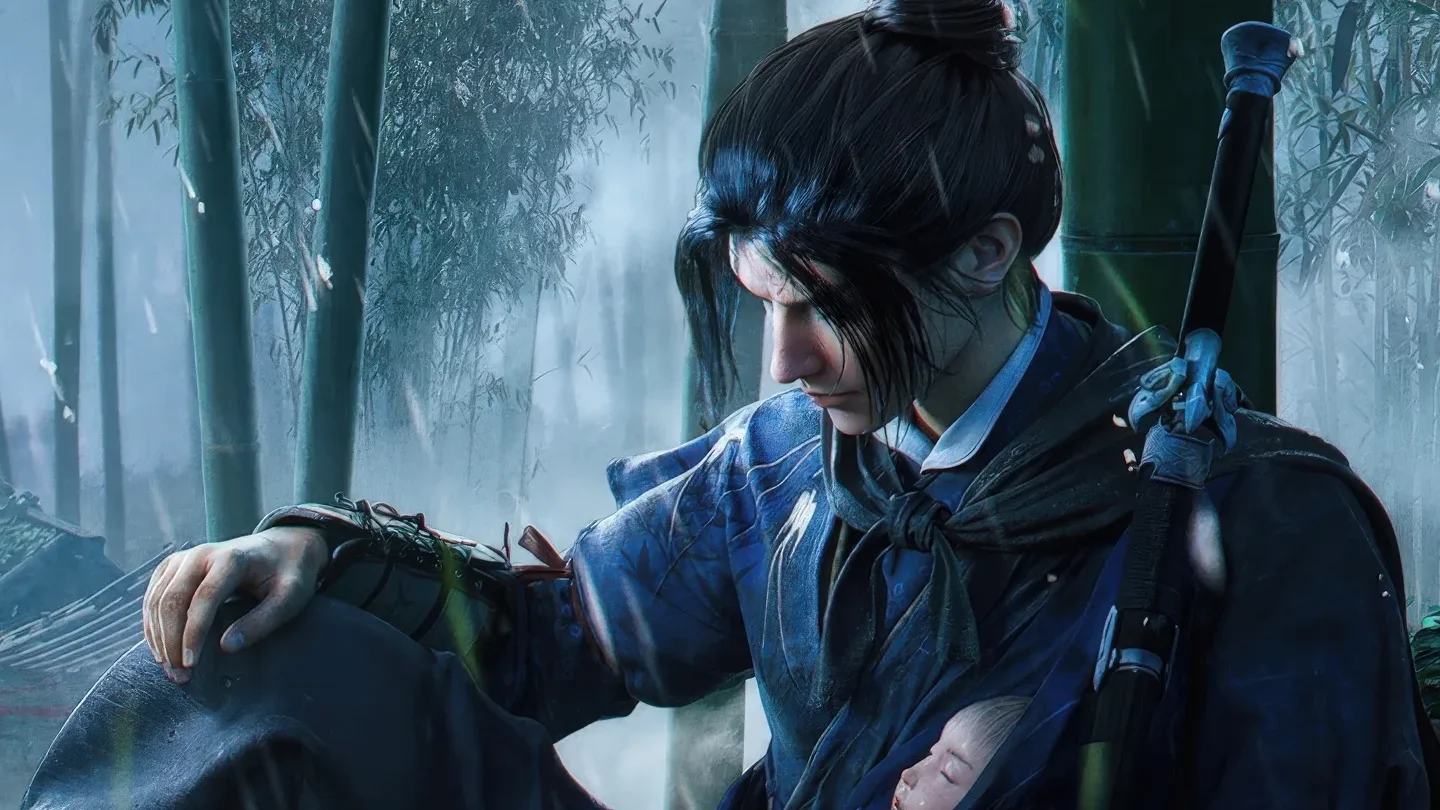
The recurring image of a sword master carrying an infant interests me more than a hundred empty victory poses.

Rest changes the heroic body. The weapon remains present, but care determines the posture.
Wuxia heroes are often defined through yi (义): a difficult idea involving righteousness, loyalty and the obligation to act. It is easily flattened into “honor.” Carrying someone who cannot repay you gives the concept physical weight. Speed changes. Risk changes. The road changes.
This is where an open world can become more than acreage. Choice should alter what the player is responsible for, not only which reward appears. A bounty, favor, rescue or betrayal matters when the world remembers enough to make reputation social.
History is pressure, not wallpaper
The Five Dynasties and Ten Kingdoms period gives the game fragmentation: competing regimes, changing authority and uncertainty about who can promise order. That frame suits wuxia because the jianghu becomes visible where institutions are incomplete, compromised or contested.
You do not need a chronology lesson before playing. Notice instead how the game stages authority. Who collects force? Which uniform changes behavior? Where does law protect, and where does it merely announce power? Then use those questions to begin real historical research rather than treating the map as a documentary.
The same restraint helps with the word wuxia. It does not mean that every period costume, bamboo forest or sword animation belongs to one unchanging Chinese tradition. Wuxia is a storytelling language with its own moral pressure: power is tested by what it protects, freedom is tested by whom it abandons, and a reputation exists because other people can remember it. That is why the best side stories should not feel disposable. They are where a game proves whether its jianghu has consequences.
My recommendation after the spectacle
Choose Where Winds Meet for the roads, movement and possibility of becoming a particular kind of wanderer. Stay if Qinghe and Kaifeng feel like communities rather than resource containers, and if the combat's timing invites practice instead of resentment. Leave the damage spreadsheets to dated build guides.
Compare it with Black Myth: Wukong if you want to see two very different uses of Chinese cultural inheritance: one concentrated through authored combat and Journey to the West, the other dispersed through an open jianghu. Browse more through the Chinese games hub.
For region, weapon and system reference, continue to XianLore's Where Winds Meet archive. Then join East Moment's community and show us one road, village or choice where the world stopped feeling designed and started feeling inhabited.