The best Journey to the West movie to watch first depends on what you want from one evening. For an adult newcomer, I would start with Stephen Chow's Conquering the Demons: a young monk must face the danger in the creatures he hopes to redeem. For a younger viewer, choose Monkey King: Hero Is Back. For comedy that turns into romantic regret, save both parts of A Chinese Odyssey for later.
Journey to the West movie choices depend on which feeling you want
My first pick for an adult newcomer is Stephen Chow's Journey to the West: Conquering the Demons (2013). It starts before the familiar team exists. A young demon-catcher, Xuan Zhang, meets a water demon, a pig demon and finally Sun Wukong; mercy is tested against real danger. This is funny, strange and sometimes frightening. For a younger viewer comfortable with monsters and peril, choose the animated Monkey King: Hero Is Back (2015) instead. Save Jeff Lau's two-part A Chinese Odyssey (1995) for a night when you want absurd comedy to turn unexpectedly painful.
| Your mood tonight | Watch first | What you will not get |
|---|---|---|
| Dark comedy and the team's beginnings | Conquering the Demons (2013) | A gentle family film or a retelling of the whole pilgrimage |
| A child and a fallen hero finding courage together | Monkey King: Hero Is Back (2015) | All four pilgrims in their familiar road-story roles |
| Stephen Chow's face, Cantonese comic timing and romantic regret | A Chinese Odyssey Parts One and Two (1995) | A faithful chapter-by-chapter version of the novel |
The original Journey to the West novel gives its pilgrims a long, quarrelsome road. No two-hour film can do that. A good movie earns its shorter path by making one conflict impossible to ignore. Below is why these three choices work, and where each may disappoint you.
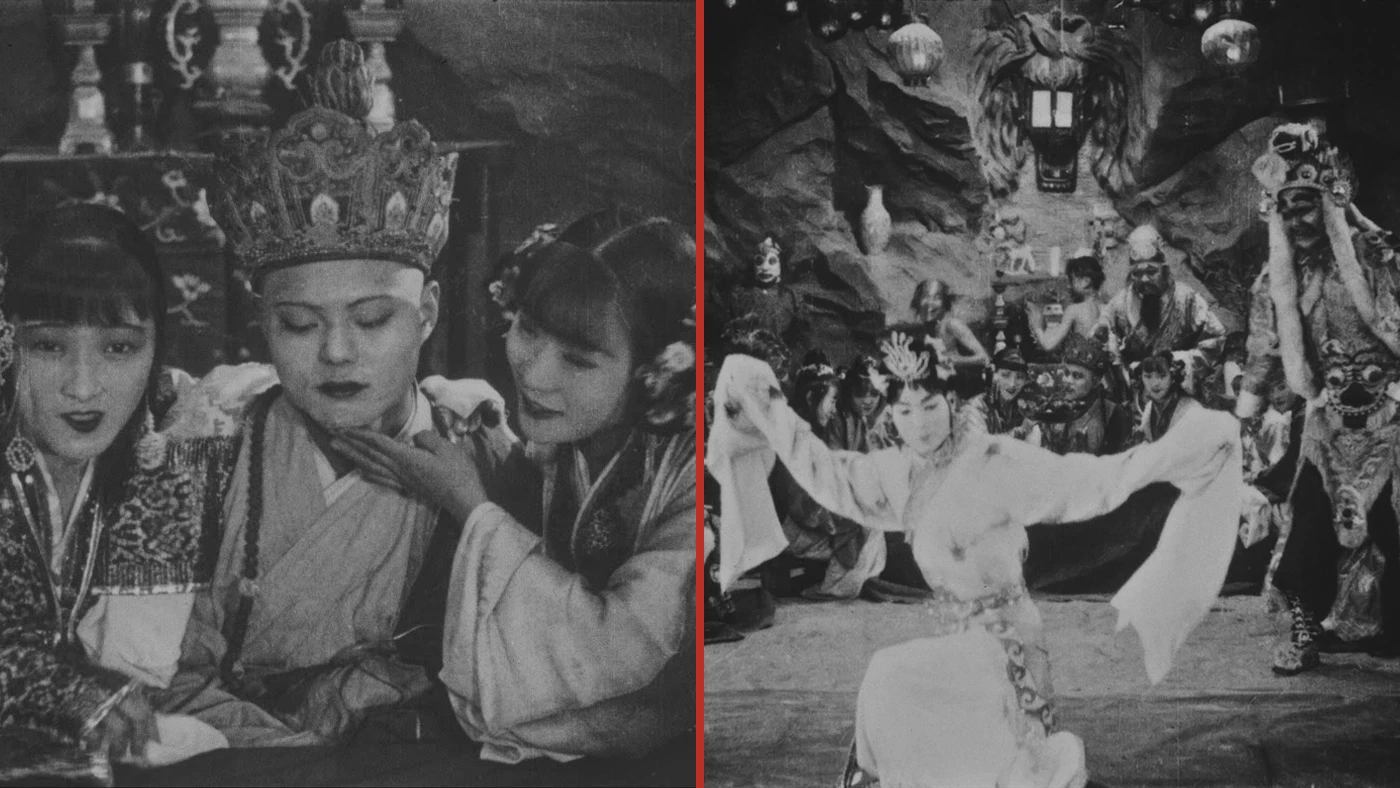
The 1927 Cave of the Silken Web reference is not one of the three modern starting recommendations. It belongs here because it makes the adaptation question visible: the legend has always moved between screen technologies, performance traditions and different ideas of what a “Journey to the West movie” should preserve.
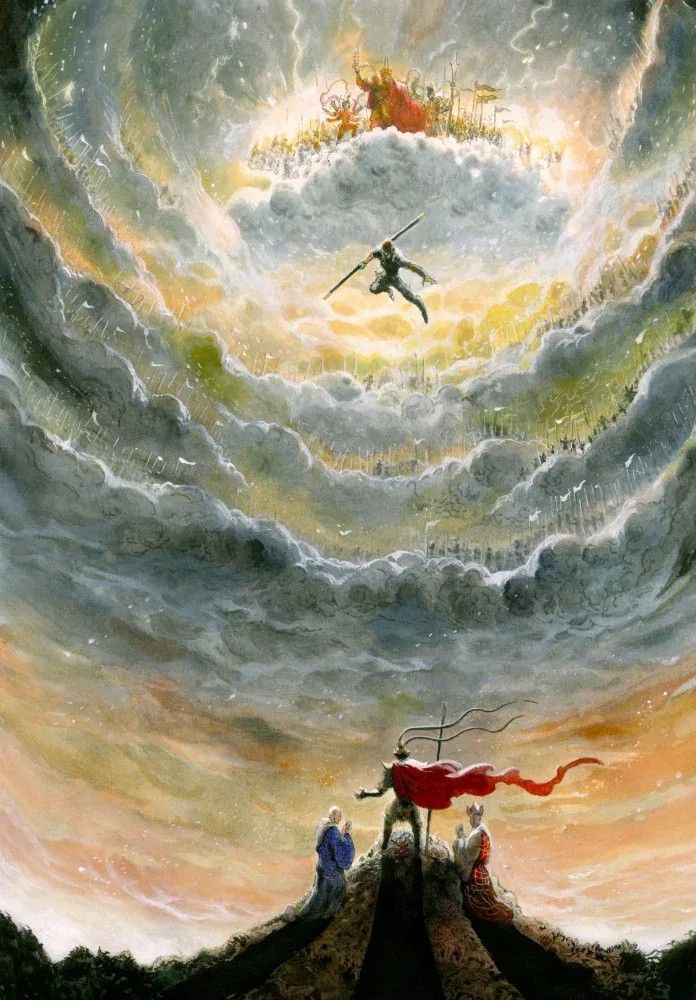
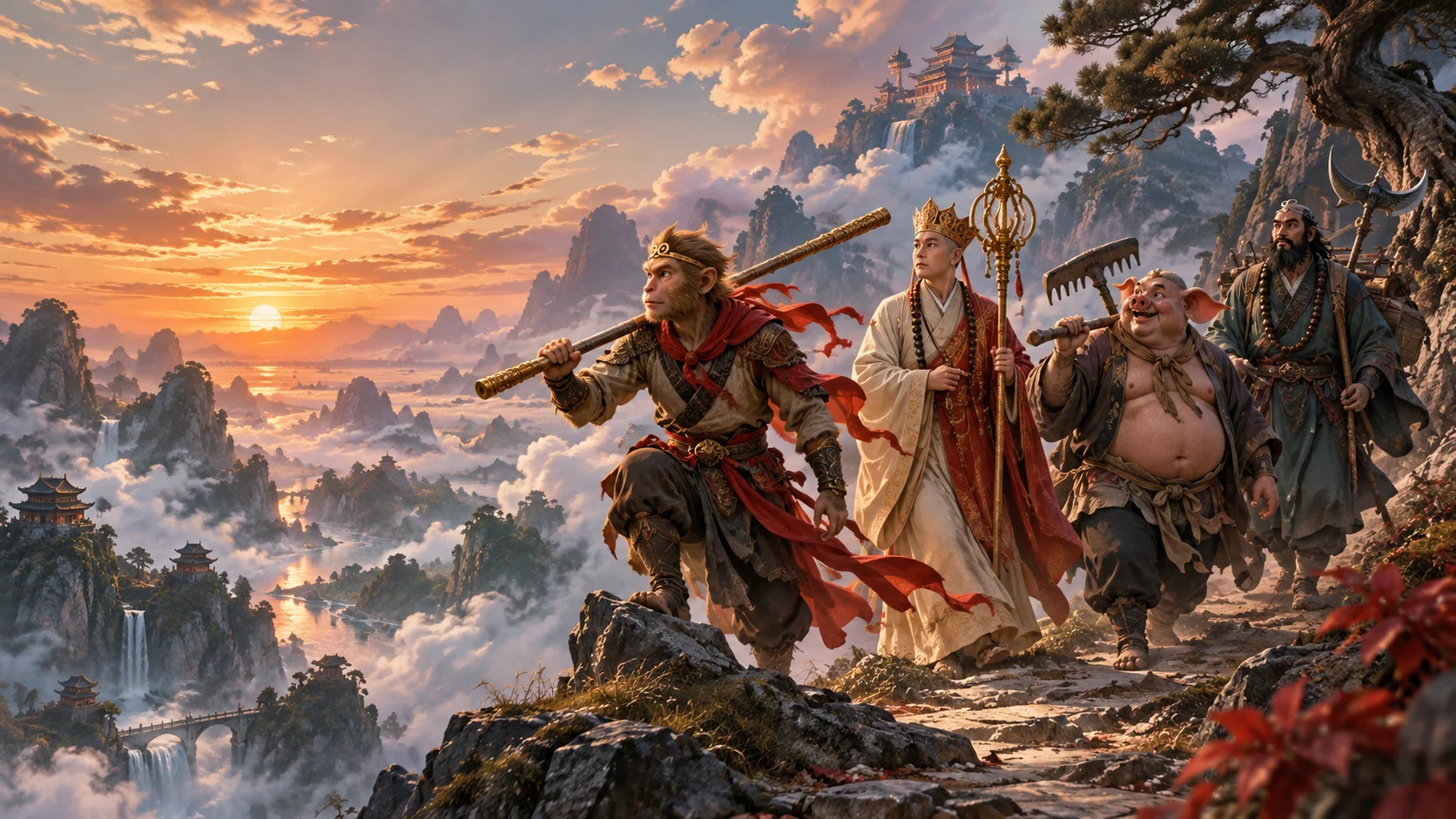
Authorized poster artwork for a different Journey to the West screen project. It is a visual reference to the larger legend, not a still or poster from any of the three films recommended here; its source is listed under Sources and verification.
Conquering the Demons: why I would start here
The Golden Horse Film Festival's synopsis identifies the film's decisive structure: Xuan Zhang confronts a water demon, a pig demon and the Monkey King before they become fellow travelers. That is a much sharper premise than “the classic story, but with effects.” We know who these figures may eventually become; he does not. Each encounter asks whether a man who wants to save a monster can survive the monster in front of him.
That difference makes the water-demon opening matter. The danger is not presented as an abstract heavenly quarrel. Ordinary people are at risk, and Xuan Zhang's wish to transform evil looks inadequate beside the physical harm. Stephen Chow puts comedy close to horror, which can feel jarring if your only Monkey King is a cheerful children's icon. I think the jolt is the point: compassion is easy to praise after a threat has been contained. Here it is asked to act while the threat still has teeth.
The pig demon's appearance makes the road more bodily and grotesque. It also prepares the viewer for Zhu Bajie's double identity: comic companion in one version, frightening appetite in another. By the time Wukong enters, the film has earned the question its advertising could have skipped: is this legendary rescuer actually safe to release? A viewer who only knows the golden staff may be startled by how much menace can sit inside the same name.
This is why I recommend it first to an adult who asks for a movie, not for a complete literary education. It has a dramatic engine you can feel without memorizing celestial ranks. It also has a limitation: the tonal leaps are violent, and the full four-person fellowship arrives late. Watch it to see why the journey must begin, then read the novel guide for what the road does to them afterward.
Hero Is Back: a Monkey King who needs the child
The premise of Tian Xiaopeng's animated Monkey King: Hero Is Back is beautifully direct. The Golden Horse festival's film record says Wukong has been confined for five centuries. The orphan Jiang Liuer accidentally releases him at Five Elements Mountain; the danger then centers on children abducted by mountain demons. You do not need a chart of gods to understand the film's question. What happens when a boy expects the strongest hero in China and finds a hero who no longer believes in his own strength?
The pairing changes where the emotional weight sits. In many Wukong films, people wait for the famous warrior to arrive and solve the action sequence. Here the child's faith pushes on Wukong's reluctance. Rescue runs in both directions. I would show this to a young viewer before explaining the novel's hundred chapters because the relationship gives the mythology a human size. The child sees a protector; Wukong sees an obligation he cannot simply joke or fight away.
The animation can be sweeping, but its useful image is small: a child standing near a figure who ought to be invincible and discovering that he is not. That is more memorable to me than a larger army of anonymous demons. It also makes the film an unexpectedly good doorway for an adult who thinks “animated” means “thin.” The drama does not depend on counting how many powers Wukong has retained; it depends on whether he will answer one person's trust.
There is a trade-off. This is not a guide to Tang Sanzang, Zhu Bajie and Sha Wujing as a completed traveling household. It is a concentrated Wukong-and-child story. If what you loved was the pilgrims bickering, eating and surviving together, the film may feel like a prelude rather than the full road. That is a limitation of its chosen focus, not a reason to dismiss what it gets right.
A Chinese Odyssey: a joke that becomes a loss
Do not start Jeff Lau's A Chinese Odyssey expecting a straight Monkey King origin story. Watch Part One: Pandora's Box and then Part Two: Cinderella. The Hong Kong Film Archive's restored screening note describes the opening provocation: Stephen Chow's Monkey wants to kill his nagging master, who instead sacrifices himself for him. Five centuries later the Monkey King is reincarnated as Joker, an outlaw chief. That is not a tidy transfer from one heroic set piece to the next. The film breaks the hero and makes a comic figure carry the fragments.
Much of the pleasure is in the speed of reversal. Someone seems ridiculous, then reveals a wound. A romantic possibility looks like another joke until timing becomes cruel. The films' Cantonese mo lei tau style can make an overseas viewer wonder whether they are missing the rules; often the rule is that a solemn declaration is about to be interrupted by a body, a misunderstanding or an unwanted feeling. Let the comic disorder work before demanding a clean mythology timeline.
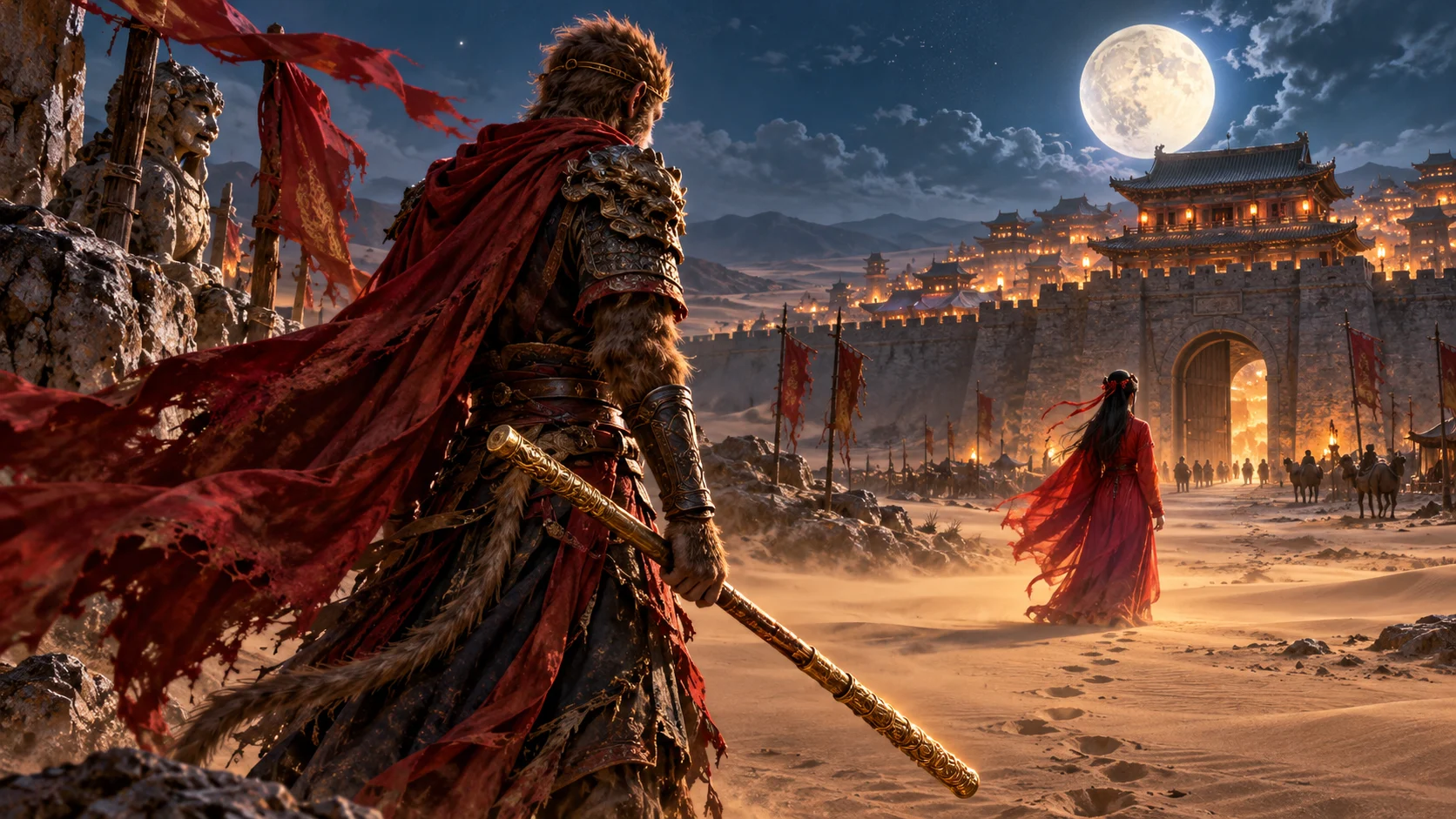
Original East Moment editorial illustration of the films' theme of belated love. It is not a frame, actor likeness or official poster from A Chinese Odyssey.
My judgment is that the pair earns its sadness because it does not begin by asking for reverence. The clowning lowers your guard; the ache arrives after you have accepted Joker as a person rather than an emblem. This is why I would not market it as “the most faithful” adaptation. Its value is an argument about choice, attachment and arriving too late. It borrows the pilgrimage to make a different kind of loss visible.
The warning matters as much as the recommendation. Its jokes, gender dynamics and abrupt tonal shifts come from a particular 1990s Hong Kong comic world. Some gags will land badly or not land at all for a new viewer. If you want a coherent first explanation of Sun Wukong, use his character guide first. If you want to understand why a film can be cherished even while it runs far from the book, watch both halves and judge the final emotional turn rather than the first twenty minutes alone.
Two Stephen Chow films, two completely different promises
This confusion is worth clearing up before you click play. Stephen Chow stars in Jeff Lau's A Chinese Odyssey; he directs Conquering the Demons. The 1995 pair follows a clownish reincarnation toward romantic consequence. The 2013 film follows Xuan Zhang toward a dangerous group of future disciples. Both are comic, but the joke aims at different targets. In one, the hero's bravado cannot save the life he wants. In the other, a monk's goodness is not enough to keep people from being hurt.
That distinction is more helpful than calling either film “the Stephen Chow version.” It also explains something an overseas reader may miss: Chinese popular storytelling does not require myth to stay solemn. A god can be mocked, a monk can be exasperating, a pig demon can be grotesque, and the next scene can still demand grief. The tonal collision is not automatically sloppy writing. The real test is whether the emotion survives the joke. In A Chinese Odyssey, I think it does; in Conquering the Demons, the violent changes of register will be harder for some viewers.
Faithfulness is not a scorecard for Journey to the West movies
None of these three is a substitute for the complete novel. Conquering the Demons stays near the moment a fellowship forms, but invents a forceful pre-pilgrimage dramatic arc. Hero Is Back isolates Wukong's rescue of a child, not the group's westward progress. A Chinese Odyssey takes names and symbols into a time-bending romance. If “closest” means retaining all four pilgrims' changing relationships across repeated ordeals, the answer is: read the book, then choose a screen version for its own strengths.
I would judge a film by what it makes visible, not by how many famous names it includes. Does Xuan Zhang's mercy cost him something? Does the animated child change Wukong's behavior? Does Joker's comedy make the later loss sharper? Those are scenes and relationships a viewer can actually test. A parade of demons and celestial titles may be spectacular, but it is not automatically a fuller version of the story.
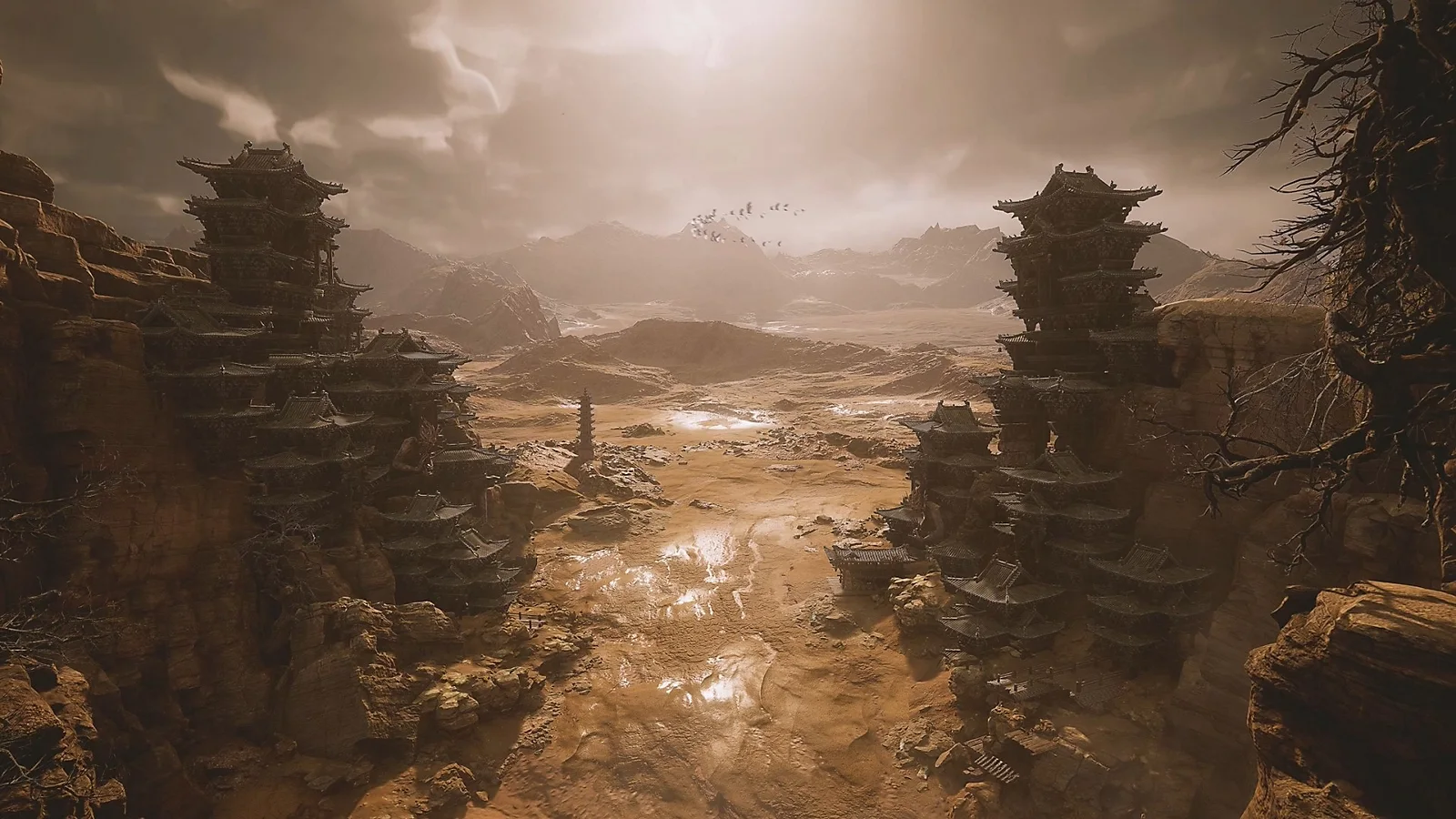
That is also why I keep Black Myth: Wukong outside the movie list. Its darker aftermath may appeal to the same audience, but it asks a player to move through the legend, not a viewer to watch an actor or an animated character choose. Calling it another “film adaptation” would make this guide less useful.
Journey to the West movie watch order, without homework
For an adult watching alone, my order is Conquering the Demons → Hero Is Back → A Chinese Odyssey Parts One and Two. The first gives the legend danger and a reason to set out. The second asks what a child can give a broken hero. The last asks what a comic hero cannot keep. The sequence moves from the road's beginning, through Wukong's restored courage, to a reinvention that hurts precisely because it refuses to behave like the book.
For a younger viewer comfortable with animated peril, reverse the first two. Start with Hero Is Back, then decide when they are ready for the stronger horror and violence of Conquering the Demons. Animation is not an age guarantee; judge the monsters and threatened children against the viewer in front of you. If your only interest is Stephen Chow on screen, skip directly to A Chinese Odyssey but commit to both parts. If you came here from the game, remember that Black Myth: Wukong is an interactive aftermath, not one of these films.
You do not need to identify every god before watching. Learn the basic tension: Tang Sanzang seeks a path through mercy and discipline; Wukong has the power to break obstacles and a history of resisting command; Zhu Bajie and Sha Wujing complicate the road with appetite and endurance. Each film above removes or rearranges some of that structure. Knowing what was changed is more interesting than catching a hidden reference.
My verdict on the best Journey to the West movie
For a first adult viewing, I still choose Conquering the Demons. Not because it is the definitive Monkey King film; it is not. I choose it because its young monk cannot wave away the harm caused by the beings he hopes to redeem. It gives the legend a live moral problem before the costumes become familiar. Hero Is Back is the better family doorway. A Chinese Odyssey is the riskier, stranger film pair I would return to when I want to feel how far a beloved myth can travel without losing its capacity to wound.
Which scene made a Journey to the West movie feel like your Monkey King, and what did that version leave out? Add the film title, the scene and who you watched it with in a Moment linked to this guide. Another reader's first movie may be the one you have never considered. The Chinese movies collection is there when you are ready for the next screen story.