Ne Zha 2 is worth watching. It is visually excessive, emotionally direct and sometimes too crowded, but its real achievement is not making Chinese mythology bigger. The film turns inherited identity into an institutional problem: Ne Zha and Ao Bing are classified by what the world says they are, while the story judges them by what they choose to protect. That argument gives the spectacle a spine.
Ne Zha 2 in 60 seconds
| Question | Short answer |
|---|---|
| Chinese title | Ne Zha zhi Mo Tong Nao Hai (哪吒之魔童闹海) |
| What it is | Jiao Zi's 2025 animated sequel to Ne Zha (2019) |
| Must I watch the first film? | Strongly recommended; the sequel begins with its physical and emotional consequences |
| Main relationship | Ne Zha and Ao Bing as friends, opposites and victims of assigned origin |
| Main strength | It makes family, species, status and heavenly authority part of the same identity conflict |
| Main weakness | More factions, transformations and comic interruptions than every emotional turn can carry |
| Ending | Major conflict resolved; larger institutional struggle left open |
| East Moment verdict | Watch it, but follow decisions rather than trying to memorize every creature and weapon |
The film became an international event large enough that box-office records can dominate every introduction. That is useful industry context, not a review. Revenue proves reach. It does not prove that a character works, a joke lands or an ending earns its grief. This guide keeps those questions separate.
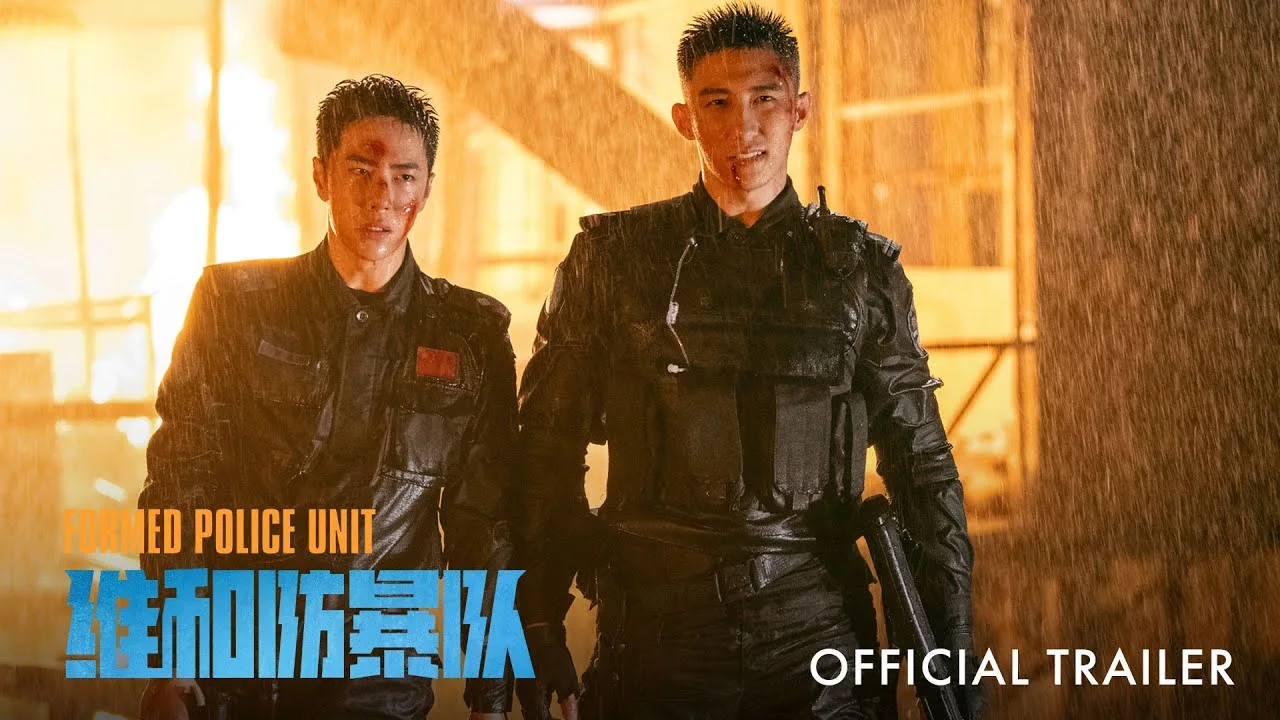
The second official image is useful for a different reason from the hero: it keeps the friendship and the institutional threat in the same visual field. The film is not asking viewers to choose between character emotion and spectacle; it is asking whether the spectacle changes what these two boys are allowed to be.
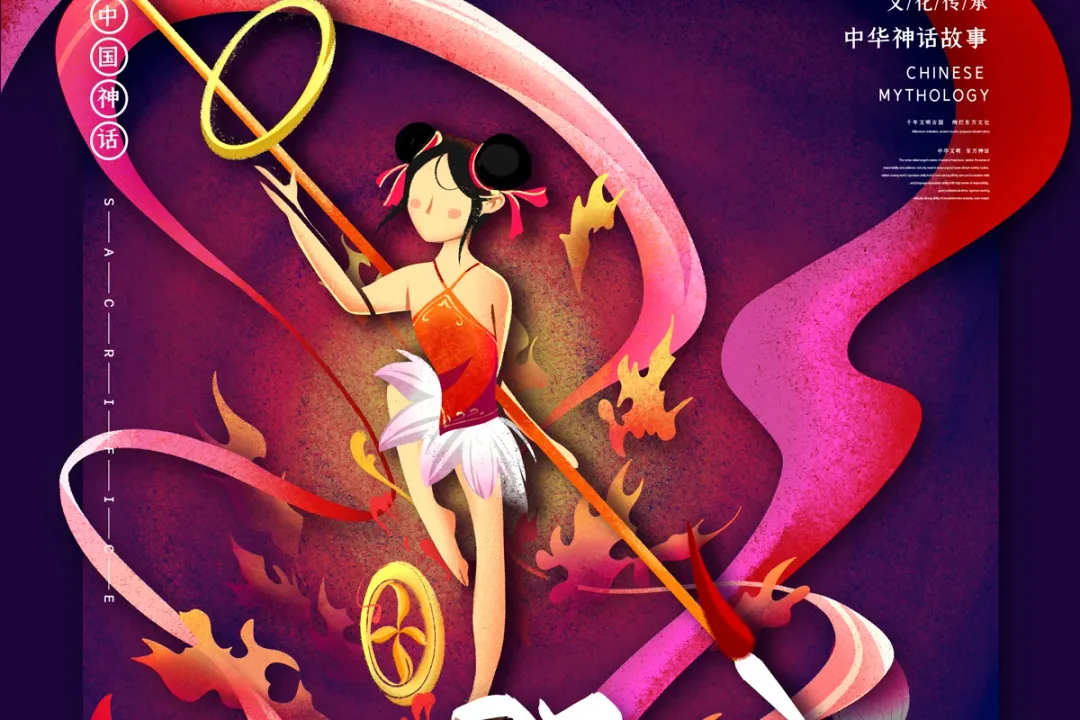
This third visual beat links the film's contemporary animation to the older visual vocabulary it reworks. It is not a claim that the movie reproduces one fixed ancient design; it is a prompt to notice what the adaptation keeps and what it changes.
The cinema photograph above gives the phrase “international event” a physical location: a Japanese-language IMAX poster, an April 4 release date and Ne Zha facing Ao Bing through a ring of fire. It records one display in a Japanese cinema in 2025; it cannot establish nationwide reception or the film's quality. I value it because the myth has crossed a language boundary and is asking a new audience to care about the same two children.
Do you need to watch the first Ne Zha?
Yes, if you want the sequel to work emotionally rather than only visually. The first film establishes the Demon Orb and Spirit Pearl, Ne Zha's fear of being treated as a future disaster, Ao Bing's duty to the Dragon Clan and the friendship that makes their conflict tragic. Its ending also creates the sequel's immediate problem: their bodies are destroyed while their souls endure.
Choose one of three routes:
- Best route: watch Ne Zha (2019), then Ne Zha 2. The official Well Go USA first-film page identifies the earlier film; check the services available in your region before watching.
- Fast route: read the next two paragraphs, then start the sequel. You will understand the machinery but lose some family and friendship weight.
- Spectacle-only route: begin with the sequel and accept confusion. The action remains legible at the level of fire, water, pursuit and resistance, but several sacrifices will arrive before you understand the relationships paying for them.
The essential setup is simple. A Chaos Pearl is divided into the feared Demon Orb and the blessed Spirit Pearl. Ne Zha receives the first; Ao Bing receives the second. Society therefore expects one child to destroy and the other to save before either has made a meaningful choice. The first film challenges that verdict. The sequel asks a harder question: what happens when an entire institution benefits from keeping those categories alive?
What Ne Zha 2 is about, without major spoilers
Ne Zha and Ao Bing survive as souls but cannot simply return to ordinary life. Taiyi Zhenren attempts to restore their physical forms, and that restoration draws them into trials, secrets and a widening conflict involving Chentang Pass, the Dragon Clan, demons and immortal authority.
The plot moves quickly because almost every practical problem is also political. A body is not only a body; it determines who can act and who may be recognized. A trial is not only a test; it lets an institution classify the person taking it. A captured creature is not only an enemy; its label may decide whether violence against it counts as order.
You do not need to decode every proper name on first viewing. Track four relationships instead: Ne Zha and Ao Bing; each boy and his parents; the Dragon Clan and the authority confining it; and ordinary beings versus the institutions allowed to name them. The lore becomes much easier once power is read as a relationship rather than a glossary.
Lijun's reading: the enemy is classification before judgment
The most revealing word in the story is not destiny. It is category.
Ne Zha is called a demon before his actions can define him. Ao Bing is treated as hope before he can decide whether he wants to carry a whole clan's future. Dragons, demons and immortals occupy a hierarchy that turns moral language into administration: the group with authority gets to decide whose violence is discipline and whose resistance proves inferiority.
This is why the sequel needs Immortal Wuliang and an institutional conflict rather than one stronger monster. A monster can be defeated without changing the rule that created the next victim. An institution is harder: it produces records, tests, titles and respectable explanations for unequal treatment.
The capture squads make that machine visible. Once an authority owns the categories, “demon” stops being a description and becomes permission: permission to detain, test, refine and consume. That is why the villain's calm administrative language frightens me more than another enormous creature. Violence has learned to call itself procedure.
The film's definite position is that origin matters but does not complete moral judgment. Family, species and power shape what a character can do. They do not absolve the choice that follows. This is more demanding than the slogan “I control my own fate.” Freedom is not merely refusing a label. It is accepting responsibility for what happens after the refusal.
Ne Zha and Ao Bing work because neither is the other's simple opposite
Fire and water make the boys visually easy to separate. Their social positions are less clean.
| Question | Ne Zha | Ao Bing |
|---|---|---|
| Assigned origin | Demon Orb | Spirit Pearl |
| Public expectation | Future disaster | Future savior and clan solution |
| Private need | To be judged by action rather than fear | To exist as a person rather than a collective instrument |
| Family pressure | Love collides with Chentang Pass duty | Love collides with Dragon Clan survival |
| Central temptation | Turn rejection into destructive proof | Turn obligation into self-erasure |
Their friendship matters because each recognizes the violence hidden inside the other's privilege or stigma. Ne Zha can see that being called “chosen” does not make Ao Bing free. Ao Bing can see that being feared does not make Ne Zha incapable of care. For the older character traditions behind these names, read Ao Bing's mythology profile; the film's friendship belongs to its own continuity.
That is also why debates that reduce their bond to rivalry miss the structure. They fight because their inherited duties collide. They understand one another because the same system wrote both roles before they met.
Their friendship needs choices, not just a beautiful contrast
Fire and water, red and blue, disorder and restraint: the film gives Ne Zha and Ao Bing an instantly readable visual pair. That clarity is a strength. It lets the action turn their social positions into movement rather than exposition.
But a visual pair is not yet a relationship. The film earns the bond when one boy can see the cost of the other’s assigned role and still refuse to use that knowledge as leverage. It weakens whenever a new emergency asks the audience to accept their closeness without giving them enough quiet time to make a decision together, disagree about its cost, or repair the harm one has caused.
That is my test for the sequel’s emotional scale. A transformation may show how completely two bodies can move in concert; it cannot by itself show mutual trust. Trust arrives when Ne Zha does not treat Ao Bing as proof that he is better than the adults who rejected him, and when Ao Bing does not turn Ne Zha into an escape route from obligations he must confront himself.
The best scenes leave both boys with agency. They do not solve one child’s stigma by making the other child a sacrifice, and they do not solve a clan’s history by asking a single heir to disappear inside it. When the film maintains that balance, its spectacle feels like the visible form of a relationship. When it rushes past the balance, the action is still impressive—but the feeling has not yet caught up.
The parents make responsibility visible
The film's emotional center is not rebellion against all parents. It distinguishes protective love from love that turns a child into a mission.
Li Jing and Lady Yin do not solve every danger around Ne Zha. Their value is that they continue treating him as someone whose choices remain open. Care becomes practical: time, protection, physical risk and the refusal to let public fear become a final verdict. The older Li Jing story makes the father-son conflict much harsher; that contrast is exactly why the film's choice to show protective care matters.
Ao Guang's position is more painful. The Dragon Clan's confinement and grievance are real, so the pressure placed on Ao Bing is not created from nothing. But a parent's justified anger does not make a child's life communal property. The film becomes strongest when it allows us to understand that pressure without declaring every act done in the clan's name correct.
This is the central family test: does love protect a person's capacity to choose, or preserve the role that the family needs that person to perform?
This is an adaptation, not a mythology transcript
Nezha is an old Chinese deity and literary figure associated with stories, temples, weapons and visual forms that long predate these films. But the 2019 and 2025 movies create a distinct continuity. The Demon Orb / Spirit Pearl division, this version of Ne Zha and Ao Bing's friendship, and the exact institutional plot should not be presented as one fixed ancient account. The dedicated Ne Zha mythology guide follows the guardian, Ming-novel child and lotus-born deity before the Demon Orb continuity begins.
The film's freedom with tradition is not a defect. Adaptation becomes culturally useful when it preserves a live question rather than museum-like surface accuracy. Nezha has repeatedly carried tensions among child and parent, unruly force and social order, body and identity. Jiao Zi reorganizes those tensions for a world preoccupied with labels, institutions and whether inherited disadvantage can be rewritten. The same rule applies when reading Chinese symbols in context: a recognizable object carries history, but its meaning still depends on who uses it, where it appears and what the new story asks it to do.
The mistake is to make either extreme claim: “this is the authentic myth” or “this has nothing to do with Chinese tradition.” It is a modern argument built with inherited names, symbols and conflicts.
Why the animation is powerful, and where it becomes exhausting
The sequel treats scale as a change in physical law. Bodies stretch, multiply and transform; water carries mass; fire creates direction; crowds and architecture establish how small one decision is inside a system. The best sequences remain readable because each force has a purpose and a relationship.
Use three tests while watching:
- Silhouette: can you still identify who is acting when particles fill the frame?
- Direction: can you tell what force is moving where, and why?
- Consequence: does the spectacular action change a relationship, body or political position afterward?
When all three hold, the film's density is exhilarating. When they fail, more animation produces less understanding.
The honest weakness is tonal congestion. Broad bodily comedy, rapid exposition, grief, family intimacy and enormous combat sometimes compete inside the same movement. Comedy can release pressure, but repeated interruption also prevents emotion from changing the rhythm of the film. Some viewers will enjoy the refusal of solemn prestige. Others will feel that the movie is afraid to remain still after earning pain.
The plot is similarly crowded. New factions and rules enlarge the political world but create a tax on attention. The correct response is not a larger character list. It is to follow who has the authority to classify someone else and what material benefit that label creates.
Ne Zha 2 ending explained
Major spoilers begin here.
The ending exposes Immortal Wuliang's authority as a system that has manipulated conflict among Chentang Pass, demons and dragons. The cauldron is more than a large final weapon. It turns classified beings into material. That image completes the film's argument: once an institution declares a population inferior or dangerous, exploitation can be presented as purification and order.
Lady Yin's fate gives that system a cost that cannot be reduced to world-building. Ne Zha's transformation and rage matter because power is no longer abstract; family loss has entered the body. Yet the film does not let rage become the final moral proof. Ne Zha and Ao Bing must still choose what their power serves.
Ao Bing's decisions separate responsibility from obedience. Helping a clan does not require becoming the instrument of every plan made in its name. Ne Zha's decisions make the parallel point: being wronged does not automatically make every act of retaliation just.
The immediate operation is broken and the larger deception is exposed, but the hierarchy that enabled it is not neatly dissolved. That is why the ending feels victorious and unfinished at once. A villain can lose before a system has been replaced.
The final promise is therefore not “fate has disappeared.” It is that Ne Zha and Ao Bing can face inherited structures without accepting the identities those structures assigned them. The sequel leaves room for another film because chosen responsibility is now an alliance, not a completed private awakening.
Where to watch Ne Zha 2 legally
The official US listing was checked on October 17, 2026. A listing is not a promise that every viewer can rent, buy or stream the film in every region.
- The Apple TV US listing identifies the film and its listed audio and subtitle options. Open it in your country to see the access terms available to you.
- Check the displayed audio, subtitle, rental and purchase details before paying. These can differ by country and change over time.
East Moment does not recommend unauthorized streams. A page that explains cultural ownership while ignoring the creators' distribution rights would contradict its own argument.
Final verdict: watch the choices inside the scale
Watch Ne Zha 2 if you want Chinese animation with genuine visual ambition, a friendship built from unequal assigned identities and a family story that refuses to make rebellion synonymous with emotional isolation.
You may not enjoy it if dense fantasy systems, loud comedy or rapid tonal changes exhaust you. The film's scale is real, but bigger is not automatically clearer. Its achievement survives that criticism because the central argument remains visible: institutions name people in ways that preserve power, while moral identity is produced by responsibility under pressure.
Watch the first film, then the sequel. Do not pause to memorize every title. Follow who gets to name whom, whose suffering becomes administrative material and which character accepts a cost without demanding ownership of another life. That route reveals the film beneath the record.
Continue through the Chinese movies collection or move backward into the Chinese mythology guide. In the comments, bring one exact scene where a character rejects an assigned identity through action. The community can build something more useful than a score: a scene-based record of how modern Chinese stories rewrite inherited roles.