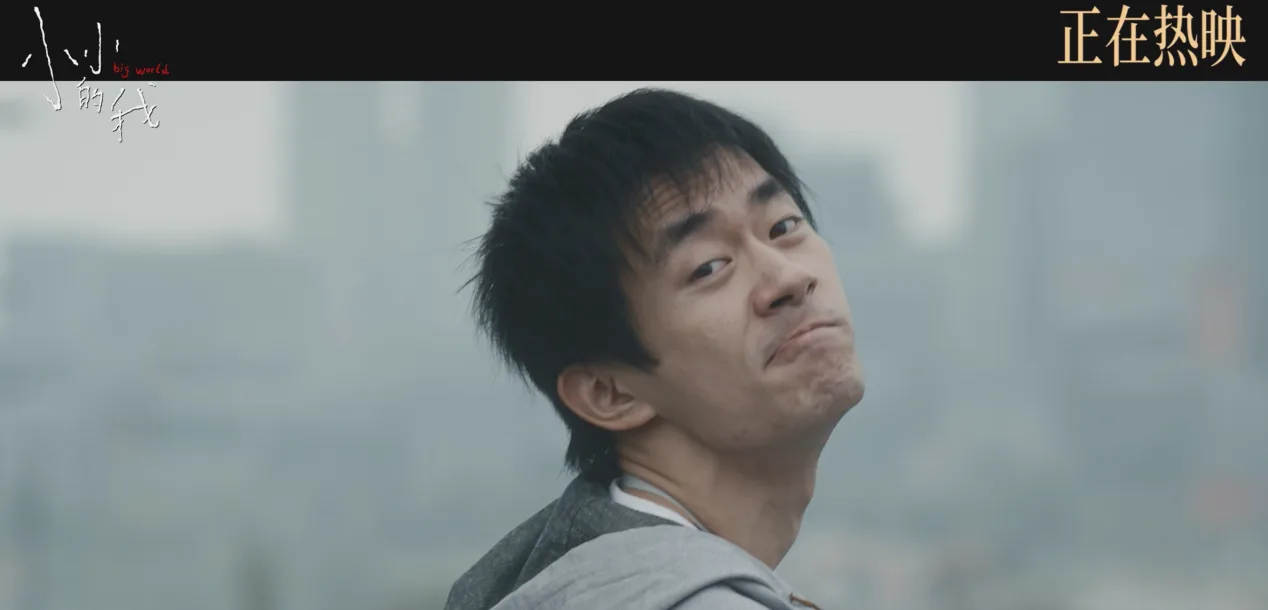
Big World 2024 is worth watching, but not because it offers an easy lesson about courage. Its real test is whether Liu Chunhe is allowed to be a young adult with desire, anger, work, sexuality and unfair choices—or whether his body becomes a device for making nondisabled viewers feel compassionate. The film often passes that test. Its safest moments do not.
Big World 2024 in 60 seconds
| Reader question | Direct answer |
|---|---|
| Chinese title | Xiao Xiao De Wo (小小的我), literally “the small me” |
| What is it? | A 2024 Chinese drama directed by Yang Lina about Liu Chunhe, a young man with cerebral palsy trying to work, study, love and leave home |
| Runtime | 131 minutes |
| Main cast | Jackson Yee, Lin Xiaojie, Jiang Qinqin and Zhou Yutong |
| Is it a true story? | No. It is a fictional drama informed by research, not a biopic or documentary |
| Is it worth watching? | Yes, for the difficult family relationships and Jackson Yee's task-based physical acting; no, if you dislike emotional pressure built around illness and crisis |
| Does it have a happy ending? | Hopeful, not cured: Liu Chunhe survives a crisis and enters university, while cerebral palsy remains part of his life |
| Where can I watch it? | Netflix in listed regions, Apple TV in the US and YOUKU; availability and payment terms vary by country |
The basic facts are unusually easy to bury beneath the transformation story. Big World opened in China on December 27, 2024. Yang Lina directed from a screenplay by You Xiaoying; Jackson Yee plays Liu Chunhe, Lin Xiaojie plays his grandmother Chen Suqun, Jiang Qinqin plays his mother Chen Lu, and Zhou Yutong plays Yaya. The official Chinese film record identifies Chengdu as the filming location and Chunhe's ambition to study education and become a teacher.
Those details matter because the movie is not really about whether Liu Chunhe can “overcome” cerebral palsy. It is about who gets to decide the size of his life.
Start with what Liu Chunhe wants, not what his body cannot do

Liu Chunhe wants a job. He wants to study at a teachers' university. He wants to play drums, be wanted by a woman, leave his grandmother's care and make choices that his mother considers dangerous. None of these desires is saintly. That is exactly why they are valuable.
Films about disability often make the protagonist morally tidy in exchange for audience sympathy. The person becomes patient, inspirational and grateful enough to reassure everyone looking at them. Chunhe is more alive when he is impatient, sexually hopeful, embarrassed, cruel or simply wrong. Adulthood includes the right to be inconvenient.
This is also why the title works better than its English optimism initially suggests. “小小的我” can describe how the world reduces Chunhe, but the film keeps placing his so-called small self inside a city of traffic lights, workplaces, museums, classrooms and family obligations. The world is not made large by his suffering. It becomes large when other people stop treating care as ownership.
Jackson Yee's performance works when movement has a task

Jackson Yee's transformation is the most visible thing in the film and therefore the easiest thing to praise badly. A tightened jaw, turned wrist or disrupted line of speech can demonstrate preparation. It does not automatically create Liu Chunhe.
I judge the performance by a harder question: what is Chunhe trying to do while his body is moving? At a job interview, he is reading strangers who have already decided what kind of worker they think he can be. Around Yaya, he is trying to be seen as desirable without begging for reassurance. With his mother, he wants control of the conversation even when emotion makes speech harder. Every useful physical choice belongs to one of those tasks.
The weak reading is “look how completely Jackson disappears.” The more honest reading remembers that a famous nondisabled actor's technique is receiving attention that disabled performers rarely receive. The achievement therefore has to survive beyond resemblance. It does when Chunhe's attention moves toward another person—when he listens, calculates, enjoys, resists or fails—instead of turning inward to display labor.
That distinction explains why the role belongs inside our larger Jackson Yee guide. Dance gave him precise knowledge of weight and timing. Big World asks whether that control can serve a character whose movements must never look like choreography presented for applause.
The grandmother's love also contains an unpaid debt

Chen Suqun is the film's warmest presence, but turning her into a perfect grandmother would flatten the family. She has cared for Chunhe through routines that require time, patience and physical work. She also carries guilt over what she failed to give her daughter, Chen Lu. Care for the grandson partly becomes a way to repay a debt that cannot be repaid to the same person.
That history changes every disagreement about independence. Chunhe hears, “You cannot manage without me.” Suqun hears, “The purpose that organized my life is ending.” Neither feeling is pure. Love can be generous and still need to be needed.
The film is at its most humane when it lets the pair be funny and irritating together. Their physical closeness is not framed only as sacrifice; it contains rhythm, teasing, exhaustion and the shorthand of two people who have repeated the same actions for years. The relationship becomes moving because separation is necessary, not because permanent dependence would prove devotion.
His mother is frightened, controlling—and not simply a villain
Chen Lu's protection includes shame. She anticipates how employers, lovers and strangers may reject her son, then tries to shrink his choices before they can hurt him. That is control. It is also fear developed inside a society where access and ordinary dignity cannot be assumed.
I do not excuse her because she is afraid. I also do not accept the convenient version in which a cold mother blocks the brave child while the grandmother supplies pure love. Chen Lu has lived with guilt, absence and the expectation that every bad outcome will prove she should have controlled more. Her failure is to make Chunhe carry that fear as obedience.
The hospital apology matters, but one apology cannot repair a family system. Reconciliation begins when she recognizes that safety without agency is another kind of confinement. The movie is right not to convert recognition into instant emotional cleanliness.
Yaya is not the prize for being brave
Yaya recognizes Chunhe as a young man rather than a moral exercise. That difference creates intimacy, but it does not create an obligation to love him. A disabled protagonist's desire is real; the desired person still has the right to leave.
The film risks a familiar bargain here: let Chunhe display courage, then reward him with romance so viewers can feel that the world has become fair. It avoids the cleanest version of that bargain. Yaya does not become proof that he is lovable, and her departure is not evidence that she is shallow.
Chunhe is allowed to be devastated. More importantly, he is allowed to be angry without the film making anger proof that he never deserved intimacy. Desire exposes him to the same asymmetry as everyone else: wanting another person does not give him a claim over that person's future.
The nougat scene is not an audition clip

After Yaya leaves, Chunhe swallows a dangerous amount of nougat. The scene is often remembered through the extremity of Jackson Yee's body and the audience's tears. That is the least useful way to read it.
Eating is the action. Despair changes the speed and purpose of that action, while cerebral palsy changes its physical risk. The horror comes from watching an ordinary sweet become a self-destructive instrument. If the camera only asks us to admire how difficult the scene was to perform, Chunhe disappears precisely when his pain should be most specific.
I am unsettled by how efficiently the sequence invites awards language. Yet removing it would also protect viewers from the character's ugliest point. The ethical answer is not to demand gentle representation. It is to keep the crisis attached to Chunhe's rejection, dependence and desire, rather than using his body as a universal symbol of suffering.
Does Big World represent cerebral palsy responsibly?
No single performance can certify “the cerebral-palsy experience.” Cerebral palsy describes a wide range of bodies, communication patterns and support needs. The film should therefore be judged as one fictional life, not a model patient presented for inspection.
The strongest evidence in its favor is structural. Chunhe has work goals, sexual desire, humor, resentment and family power—not only symptoms. Yang Lina said at the Tokyo International Film Festival that the team researched the subject and deliberately approached Chunhe as an ordinary young person facing family, employment and life choices. That statement explains intent; the finished scenes still have to prove it.
A first-person response from a viewer with cerebral palsy found much of the daily life recognizable while asking audiences for equality rather than pity. I treat that testimony as important, not as a certificate that the film speaks for everyone. Other criticism is equally necessary: casting a major star can turn a marginalized body into prestige material, especially when publicity emphasizes transformation more than the person represented.
My verdict sits between celebration and dismissal. Big World does not merely consume suffering, because Chunhe's choices repeatedly disturb the comforting story others want from him. It still retreats toward a safe achievement ending when the messier question—what adulthood looks like without institutional access—has only begun.
Big World ending explained
Full spoilers begin here.
Yaya does not become Chunhe's girlfriend and leaves. Chunhe's despair leads to the nougat crisis; his grandmother finds him, he receives emergency care and survives. Chen Lu apologizes at the hospital, but the film does not pretend a few sentences can erase years of protection mixed with shame and control.
Chunhe later receives an admission letter from the teachers' university he wanted to attend. His grandmother takes him to campus. The crucial final movement is not the letter itself. It is Chunhe telling Suqun not to devote the rest of her life to caring for him.
That request changes the meaning of independence. He is not only asking for freedom from care; he is releasing another person from the obligation to make care her entire identity. Suqun can have a later life that is not measured by sacrifice. Chunhe can begin a life in which help does not cancel adulthood.
The ending is hopeful and too safe at once. University admission gives the audience a recognizable receipt for effort. It does not solve inaccessible work, intimacy, housing or the daily negotiations that follow. Chunhe has not overcome cerebral palsy. He has crossed into a new set of conflicts, and the film stops at the moment hope is easiest to photograph.
That limitation does not erase the ending's value. It tells us exactly where a sequel that will never exist would need to begin.
Awards and why they do not settle the argument
Big World won the Audience Award at the 37th Tokyo International Film Festival after three sold-out screenings. Jackson Yee later won Best Actor at the 38th China Film Golden Rooster Awards; CCTV's award report identifies him as the youngest winner of that category.
These are meaningful career facts, not answers to the representation debate. An audience award establishes response at a particular festival. A performance prize recognizes craft within an awards system. Neither can determine whether every disabled viewer feels represented or whether a famous actor should automatically be celebrated for physical transformation.
The awards make the question more urgent, not less: after the applause, do we remember Jackson Yee's effort or Liu Chunhe's unfinished life?
Where to watch Big World now
Availability was checked on August 18, 2026.
- Netflix lists Big World in supported regions. Search both the English and Chinese titles; catalog access varies by country.
- Apple TV US has an official movie listing. Check the displayed rental, purchase, audio and subtitle terms before paying.
- YOUKU provides the official Chinese platform route. Regional playback and membership rules may differ.
The embedded trailer is free and useful for testing tone, cast and physical performance. It cannot tell you whether the full emotional argument is earned. East Moment embeds no subscription-gated or rental player.
Final verdict: compassion is not enough
Watch Big World for a family in which love, guilt and control occupy the same room. Watch Jackson Yee's hands and jaw, but ask what Liu Chunhe is trying to achieve with them. Watch the university ending, but do not confuse admission with a solved life.
I recommend the film because it gives Chunhe enough appetite to resist becoming an inspirational symbol. I criticize it because the final achievement arrives exactly when the harder adult world should open. Both judgments belong together.
Continue through the Chinese movies collection or read the full Jackson Yee profile to compare this transformation with Better Days, dance and his other uses of physical control. In the comments, name the scene where Chunhe feels most fully like an adult—or the moment when the film looks at his body harder than it listens to him. Bring that scene to the East Moment community so the discussion can begin with evidence instead of pity.