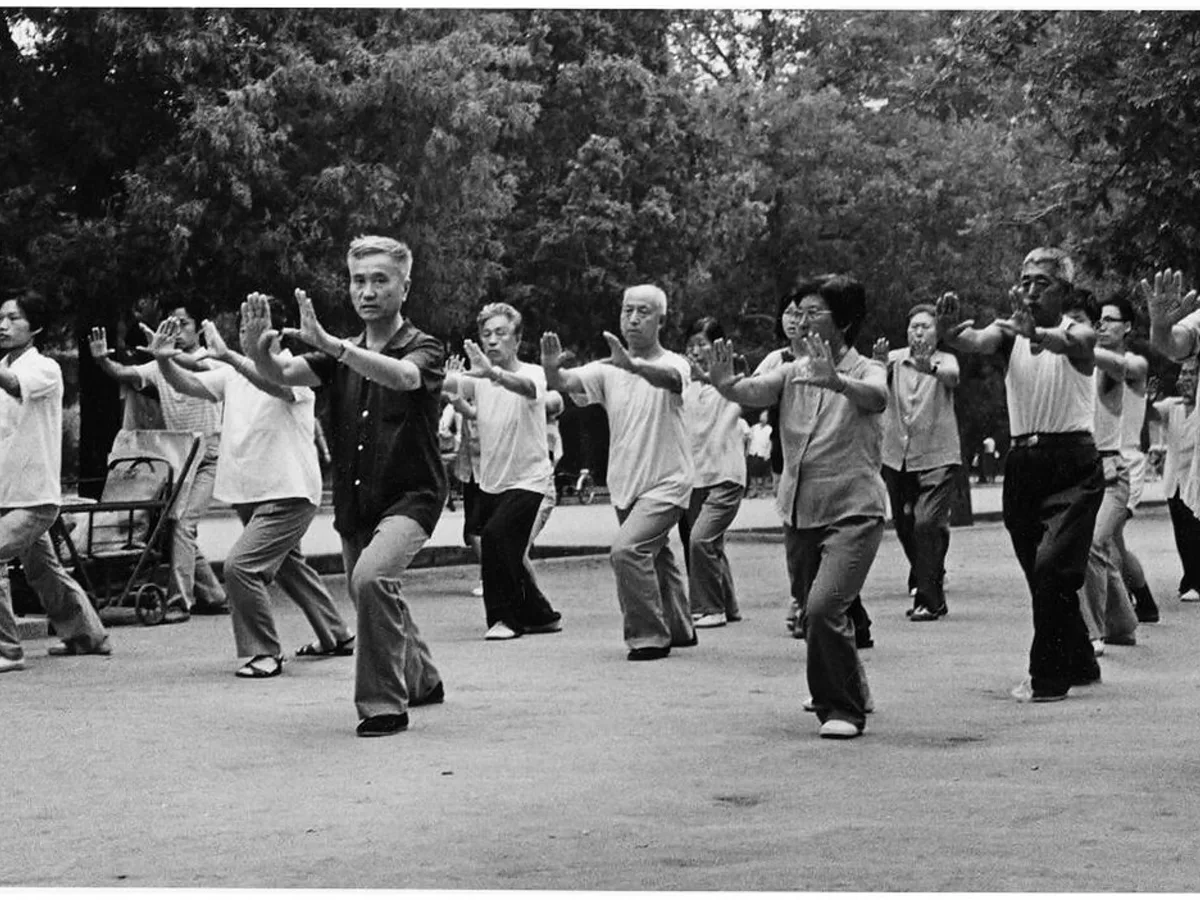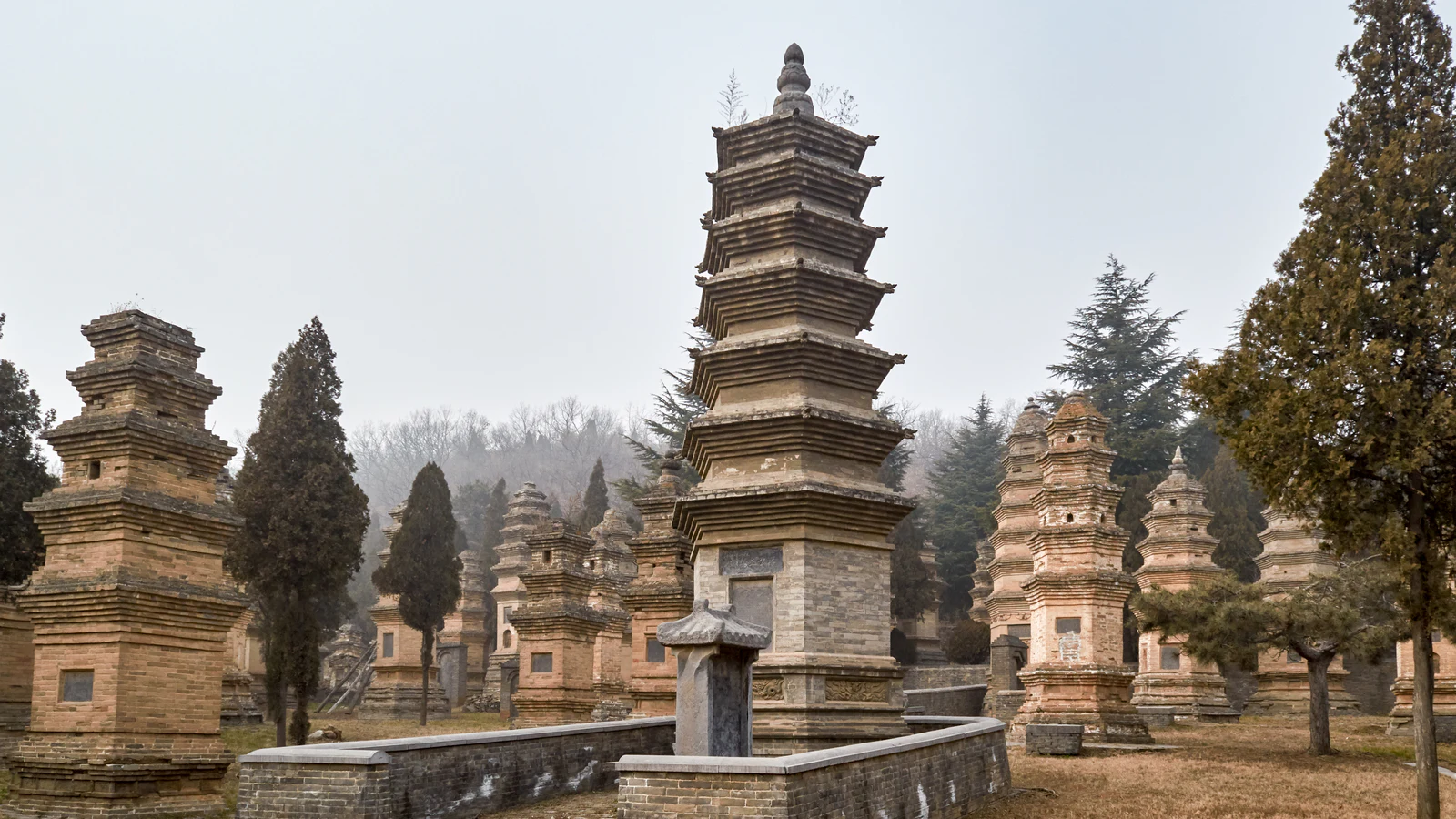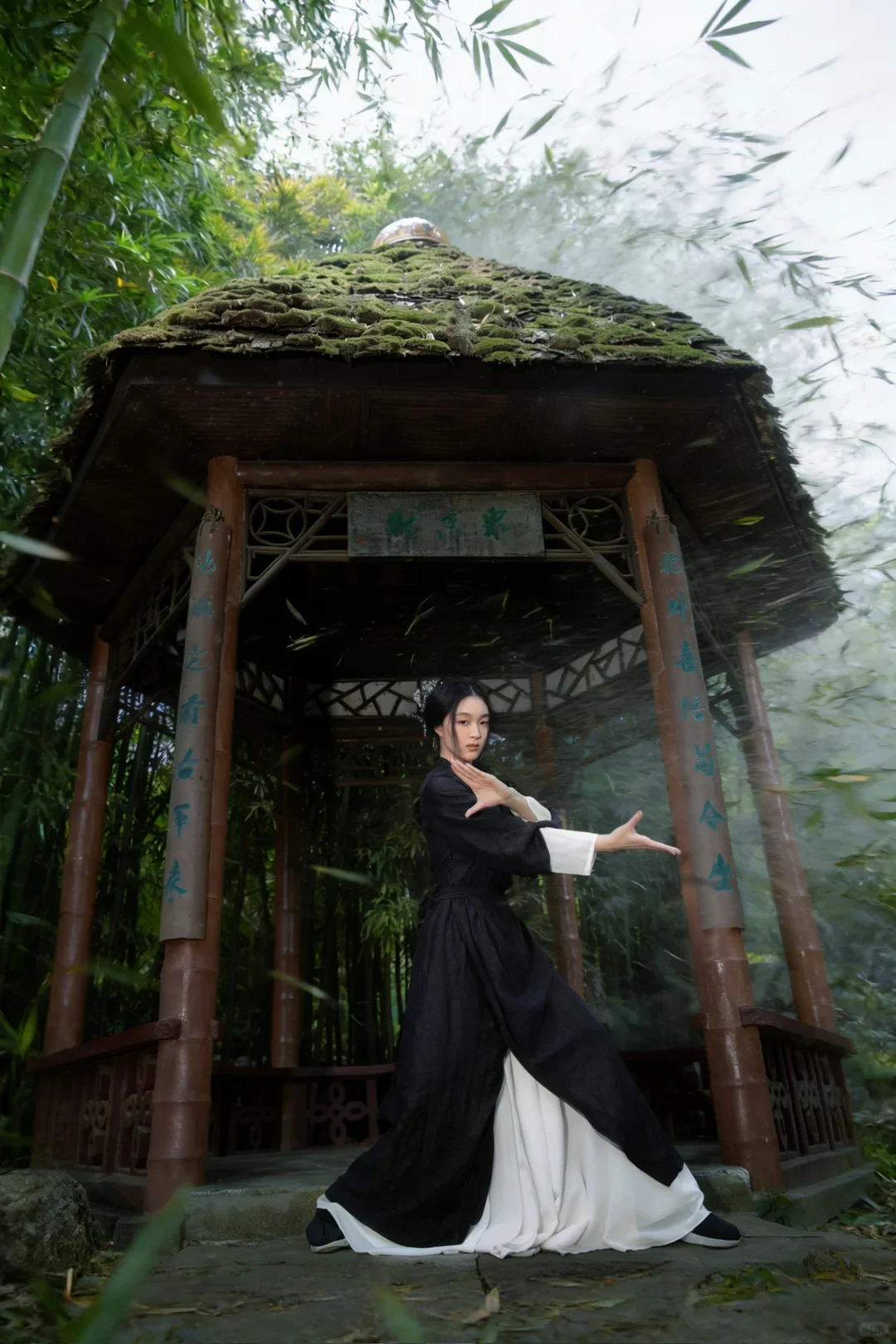
Wuxia meaning is often reduced to “Chinese martial-arts fantasy.” That translation helps you find the genre, but it misses the reason a fight matters. Wuxia asks what a skilled person owes others when law, loyalty and conscience pull in different directions. The opening photograph is a contemporary costumed portrait, not evidence of a historical fighter or a scene from a named work.
Wuxia meaning begins with the person who refuses to become only a weapon
The Chinese word 武侠 combines wu, martial skill, with xia, the figure who acts with courage, loyalty and generosity outside the respectable order. The definition is not a costume. A character can know every sword form and still fail the xia test if their skill serves only vanity or domination.
When I watch a good wuxia story, I am not mainly asking who wins the duel. I am asking what the duel reveals about a promise. Does the fighter protect someone who cannot repay them? Refuse an order from a powerful institution? Accept exile rather than betray a friend? Those choices turn choreography into ethics.
What does wuxia mean in plain English?
| Term | Plain meaning | What it does in a story |
|---|---|---|
| Wuxia | Martial-arts hero fiction | Tests personal ethics outside official power |
| Xia | A brave, loyal and generous wandering hero | Makes action answerable to a moral code |
| Jianghu | The “rivers and lakes,” an imagined social world beyond formal government | Connects clans, teachers, escorts, sects, debt and reputation |
| Wulin | The martial world and its communities | Gives skilled people a society with rules and rivalries |
| Shifu | Teacher or master | Makes training a relationship, not only a technique |
These English glosses are handles, not perfect equivalents. Jianghu is not simply “the underworld,” and xia is not identical to a Western knight. The terms name social feelings: belonging without citizenship, authority without a government office, and reputation that travels faster than a legal record.
Jianghu is a relationship space, not a fantasy map
The phrase 江湖 literally points to rivers and lakes, but wuxia's jianghu is an imagined network of roads, inns, sects, schools, escort agencies, households and grudges. It is where a person can be anonymous in one town and famous in the next because somebody remembers their sword, debt or betrayal.
That makes the jianghu feel unusually close to ordinary life. A teahouse conversation can change a person's safety. A teacher's name opens one door and closes another. A small act of hospitality becomes a promise that must be repaid years later.
This is where I disagree with the prettiest English explanations. Jianghu is not a misty landscape waiting for a photogenic swordsman. It is the pressure created when formal law cannot contain every loyalty, grievance, school, rumor and debt. An inn matters because strangers exchange names there. A bridge matters because somebody controls passage. A mountain matters because leaving society never erases the people who fed, trained or betrayed the person climbing it. Remove those relationships and the genre keeps its costume while losing its pulse.
The strongest modern adaptations understand that the jianghu is made of relationships before it is made of scenery. Where Winds Meet works when its villages, wandering swordsmen and practical errands make the world feel inhabited, not when the camera merely shows another beautiful mountain.
Jin Yong made the jianghu impossible to reduce to sword fights
If a newcomer asks me for the writer who makes this meaning tangible, I choose Jin Yong (Louis Cha). He did not invent wuxia, and he is not the author of every famous wuxia film. His achievement was to make a martial world feel inhabited by people whose obligations clash. His novels moved through newspapers, books, television, cinema and games, a long movement documented by the Hong Kong Heritage Museum's Jin Yong Gallery. The crucial inheritance is not a list of secret techniques. It is a cast of characters who disagree about what a hero owes the world.
- The Legend of the Condor Heroes (射雕英雄传) is my first recommendation. Guo Jing is not the quickest mind in the room, while Huang Rong often sees three moves ahead. Their partnership matters because moral steadiness without intelligence can be manipulated, and intelligence without loyalty can become a game. Guo Jing's larger test is whether gratitude to people who raised and taught him can coexist with responsibility to others caught in war. His heroism is not a high score in combat.
- The Return of the Condor Heroes (神雕侠侣) changes the pressure. Yang Guo and Xiaolongnu's bond runs against the expectations of their martial community. If Guo Jing makes duty compelling, Yang Guo makes me ask when a community's rule has mistaken conformity for virtue. Love is not a decorative reward at the end of the adventure; it is the argument with the jianghu.
- The Smiling, Proud Wanderer (笑傲江湖) is the sharper choice if sect politics interest you. Linghu Chong is at his best when institutional loyalty and a person's actual decency stop matching. The title's freedom has a price: leaving a faction does not make its demands disappear.
- Demi-Gods and Semi-Devils (天龙八部) takes identity and allegiance further through Qiao Feng, whose inherited name and loyalties become impossible to reconcile neatly. The Deer and the Cauldron (鹿鼎记) then refuses the comfortable pattern altogether: Wei Xiaobao's survival depends far more on wit and relationships than on being the exemplary swordsman. He is a useful warning against defining xia as whoever happens to be the protagonist.
These are different doors, not a required reading syllabus. For an English-language first step, A Hero Born is the opening volume of the published Condor Heroes translation. Read it for Guo Jing and Huang Rong's choices, then decide whether you want the sequel's collision between love and rules or the later novels' suspicion of righteous institutions. I would not send a first-time reader into an adaptation merely to memorize every character and technique. Choose one relationship and watch what power does to it.
Why the hero often stands outside the state
Wuxia heroes are not automatically rebels against all government. They may serve a court, protect a magistrate or respect a just ruler. The tension comes from the gap between legal authority and moral authority.
A corrupt order can be lawful and still wrong. A fugitive can be criminalised and still be the only person protecting a vulnerable family. The jianghu gives a story room to stage that conflict through movement: who is allowed to cross a bridge, who must hide a name, who can ask for help and who is forced to duel in public.
This is why the classic hero is often lonely without being individualistic. Their freedom exists because a web of teachers, friends, sworn siblings and strangers makes action possible. The lone sword is a visual shorthand; the moral life is collective.
The phrase “人在江湖,身不由己”—a person in the jianghu cannot always act entirely by their own will—survives because it punctures the fantasy of effortless freedom. Reputation brings shelter and also traps. A teacher's name grants authority and also inherits enemies. Sworn loyalty can save a life and demand the wrong sacrifice later. I do not admire a wuxia hero merely for escaping rules. I admire the rare hero who recognizes which obligation is human and which one is only coercion dressed as tradition.
Martial skill is not the same thing as xia
“Wuxia” can sound as if every skilled fighter belongs in the same moral category. The genre itself resists that shortcut. A sword can protect a traveler, enforce a sect’s vanity, collect a debt for a corrupt official, intimidate a village or settle nothing except its owner’s pride. Wu gives a character the ability to act; xia asks what that ability is willing to answer for.
This is also why jianghu should not be flattened into either a scenic map or a criminal organization. It is a social field full of unofficial authority: teachers whose approval matters, inns that provide shelter, sects that make rules, strangers who recognize a name, and networks where a promise can carry farther than a written order. Those networks can be generous, oppressive, corrupt or lifesaving. A wuxia story becomes interesting when legal status and moral status refuse to line up neatly.
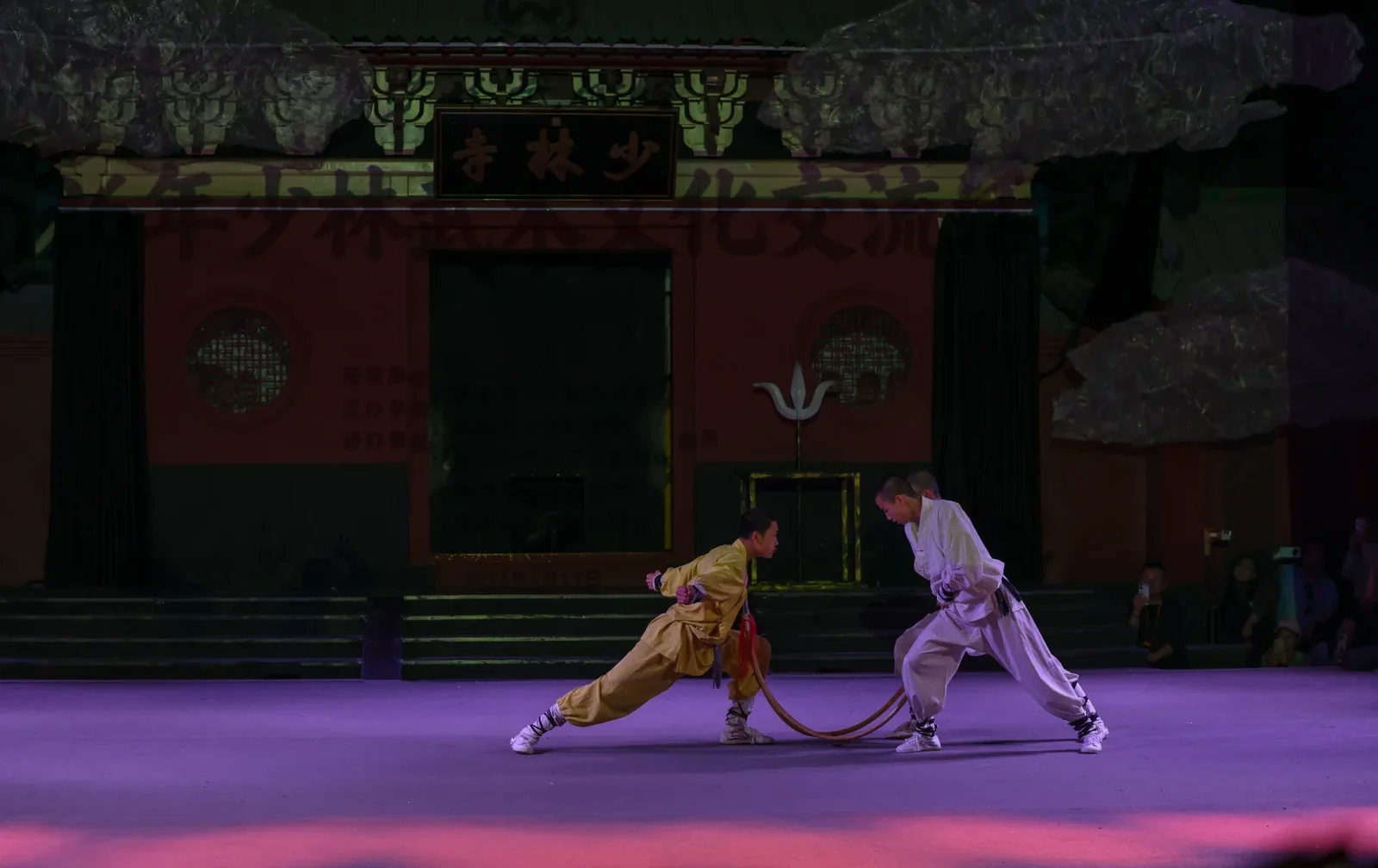
The shared rope makes trained timing, balance and resistance visible. It cannot tell us whether either performer is a xia. That judgment begins only when a story gives skill a vulnerable person, an unjust order or a debt it would be easier to ignore.
When you watch a duel, try three questions instead of counting techniques:
- Who pays if this fighter wins? A victory may protect someone, deepen a feud or hand authority to the wrong person.
- Who is allowed to leave? Freedom matters more when a character can refuse a school, patron or inherited grudge.
- What debt remains afterward? A real wuxia scene changes a relationship; it does not vanish once the sword returns to its sheath.
That is the difference between martial choreography and wuxia feeling. The latter lets force expose a person's responsibility to other people. A hero may be outside the state, but they are never outside consequence.
This distinction also protects the genre from empty power worship. If the strongest fighter can humiliate everyone, collect admiration and leave without moral residue, I am not watching xia; I am watching domination with beautiful sleeves. Skill earns attention. Only responsibility earns the word hero.
Wuxia is not the same as xianxia
Wuxia can contain extraordinary skill, impossible leaps and secret manuals, but its central world remains recognisably human. Xianxia extends the struggle into cultivation, immortality, demons, divine realms and cosmic cycles. The difference is not “realistic versus magical” in a strict sense. It is the scale of what a person is trying to become.
Read the full comparison in Xianxia vs wuxia. For animation routes, martial arts anime shows how contemporary donghua borrows both traditions without treating them as interchangeable.
If your question has moved from “what does wuxia mean?” to cultivation stages, sect systems, weapons and immortal realms, the comparison page is the better next stop. East Moment stays here with the human and cultural feeling of the jianghu.
The female swordsman exposes the genre's promises and limits
Wuxia has given me some of the most compelling women in Chinese popular culture: fighters who refuse marriage bargains, protect sects, outwit patriarchs and choose a life beyond respectable domesticity. It has also repeatedly asked women to prove freedom through exceptional suffering or disguise.
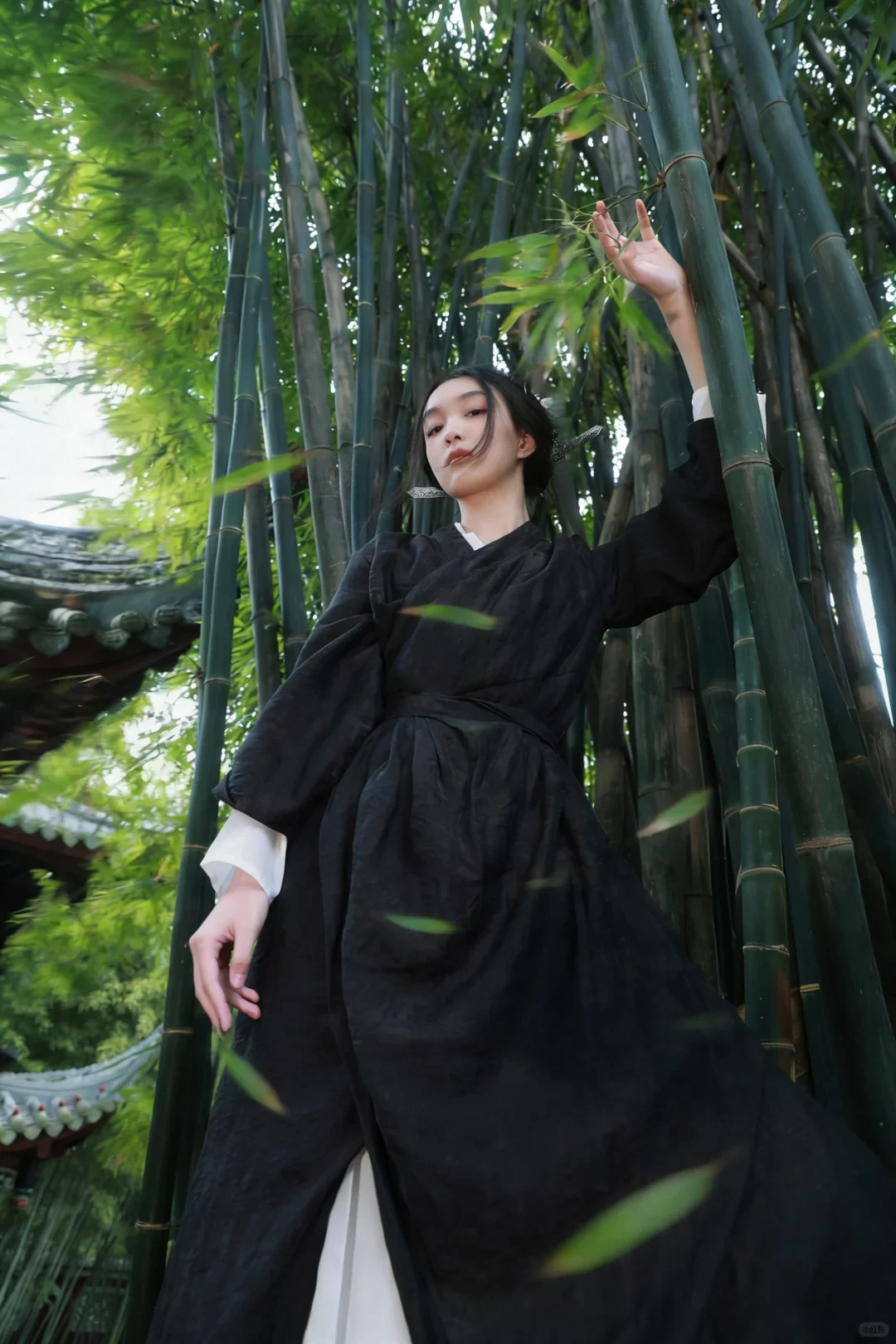
A real, staged portrait can give the female sword-bearing figure presence. It cannot tell us what choices a fictional heroine is allowed to make after the fight.
That contradiction should remain visible. A female character is not automatically progressive because she carries a blade. What does the story allow her to want after the duel? Can she inherit a school, choose an ordinary life, forgive herself, or be funny without surrendering authority?
The bamboo ambush in House of Flying Daggers turns scenery into social pressure: masked fighters narrow every route before a sword is swung. But a striking formation cannot tell us Mei's motives or the moral truth of either side. Those still depend on the relationships the film reveals.
In Crouching Tiger, Hidden Dragon, movement gives desire a language that social etiquette denies. In Hero (2002), disciplined bodies become arguments about sacrifice and the state. The films are visually related, but their moral conclusions are not the same. Wuxia is not one political answer; it is a form for testing competing loyalties.
The weapons room works because abundance does not settle authority. Many weapons are available, but the scene keeps returning to discipline, desire and the relationship between two women. The room is a moral argument disguised as an arsenal.
Wuxia stays alive because heroism can fail its own test
The genre becomes thin when it treats every blow against authority as righteous. A sect can be corrupt; it can also hold a hard-won craft, a vulnerable community or a promise between generations. A fugitive can be unjustly hunted; they can also use the romance of independence to avoid responsibility for the people harmed behind them. Wuxia is strongest when it refuses to make rebellion morally automatic.
That is why the best heroes are rarely rewarded with a clean victory. Keeping a promise may cost them a home. Refusing an order may leave a friend exposed. Returning a debt can create another debt. Even the decision to walk away from fame has consequences for the people who hoped a skilled person would stay.
I use one small test after a satisfying fight: what has become harder now that the hero has won? If the answer is nothing, I have probably watched action rather than wuxia. If victory changes who can trust whom, which name can be spoken safely, or who must carry a loss, the moral neighbourhood is still alive.
This is also why wuxia continues to travel across film, animation and games. The clothing and weapons may change, but the emotional problem remains recognizable: how do you act decently when no institution can guarantee that decency will protect you in return?
Which wuxia films carried the form beyond Chinese-language readers?
This is where two histories are too often blended. Jin Yong's characters have been reinterpreted for the screen many times; wuxia cinema is larger than Jin Yong. Wong Kar-wai's Ashes of Time borrows figures from the Condor world and remakes them into a film about memory and missed love. The Eagle Shooting Heroes turns related material into a wild parody. Neither is a faithful shortcut through The Legend of the Condor Heroes. Swordsman II is another screen route into Jin Yong's world, but a film's speed and star image change the novel's emphasis. The British Film Institute's wuxia film guide places these screen works beside films from other creative lineages, which is the distinction an overseas viewer needs.
For a globally recognized film gateway, start with Hero (2002). Jet Li's Nameless enters a court with competing accounts of three assassins; color and choreography make each version persuasive before the ending asks whether a beautiful argument for collective peace can justify one person's surrender. My view is that the film's dazzling surfaces should make us more suspicious of its political conclusion, not less. Our scene-by-scene Hero guide follows the narrators, color shifts and final choice. Hero is not a Jin Yong adaptation. That fact matters: the film reached international audiences through cinematic spectacle and a debate about state power, while Jin Yong's most enduring hook is the long relationship between a person's skill and their conflicting loyalties.
If you want another internationally familiar route, choose Crouching Tiger, Hidden Dragon for desire and constraint rather than court ideology. It, too, is not a Jin Yong adaptation. Watch Hero first for the force of its argument; read Jin Yong when you want to discover how much harder that argument becomes after you have lived with characters for hundreds of pages.
My verdict: wuxia is a moral neighbourhood
The most useful translation of wuxia is not “kung fu fantasy.” It is a moral neighbourhood where skill, reputation and loyalty collide outside official power.
That is why the genre travels so well. A reader in another country may not know every sect or weapon, but they understand the fear of disappointing a teacher, the cost of a promise and the loneliness of doing the right thing without institutional permission.
Start with Chinese martial arts for the wider map, then choose a film, series or game whose relationships you can feel. When a scene makes you stop ranking fighters and start asking who owes whom a life, wuxia has already made its meaning clear. Bring that scene to East Moment's community and tell us what kind of jianghu it opened for you.