Martial arts anime is not a single visual style. In the Chinese shows I return to, the best fights are arguments about discipline, debt, loyalty or escape. The kick matters because somebody has chosen to stand, hesitate or protect another body.
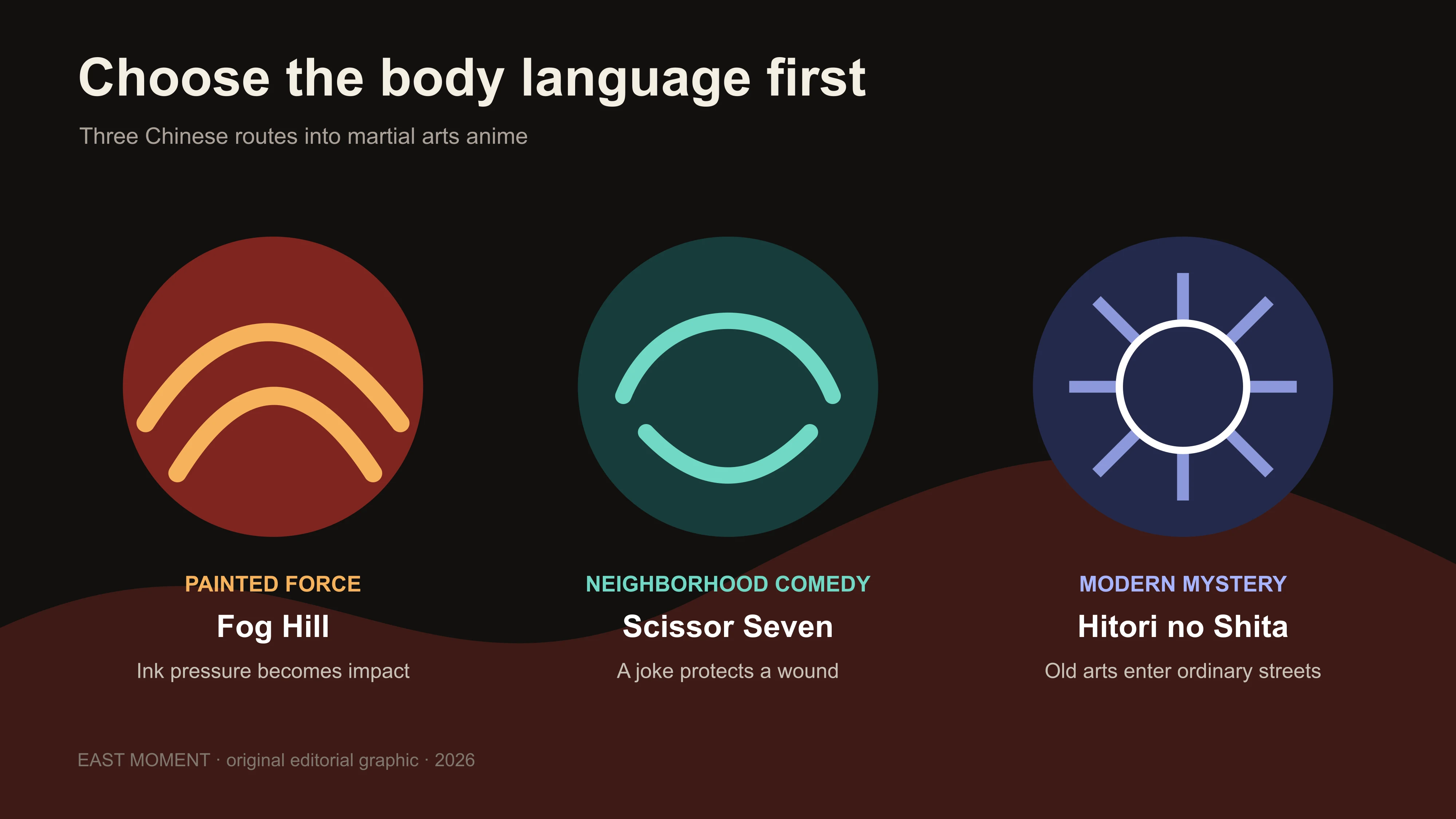
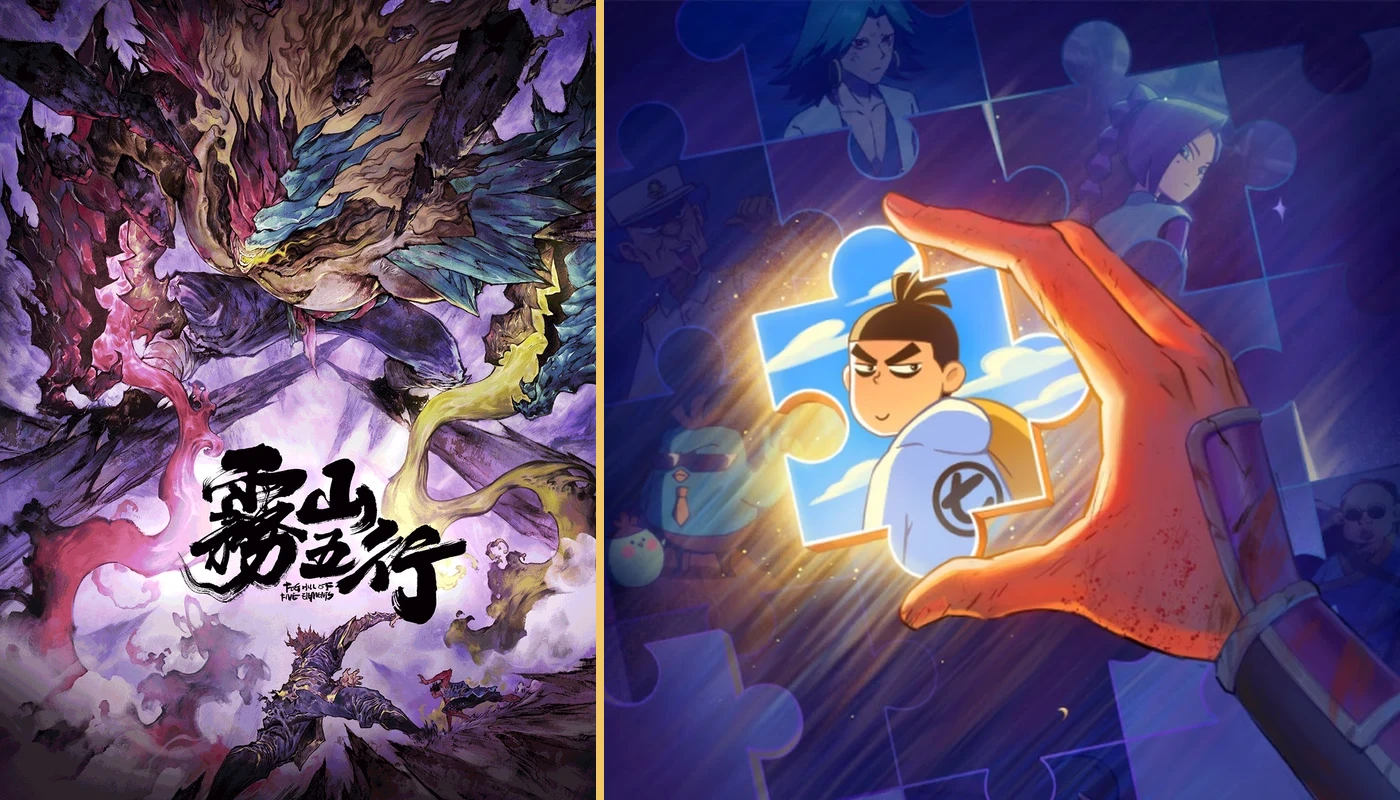
The cover places official Fog Hill of Five Elements and Scissor Seven artwork beside each other because “martial arts anime” is already too broad for one generic fighter. The images prove two productions publicly present radically different visual rhythms—painted elemental force and wounded comic invention. They do not prove choreography quality, cultural authenticity, complete plot or a universal best series.
Martial arts anime begins with how a body carries a choice
Bilibili's official Fog Hill of Five Elements series page grounds the first recommendation in an identifiable Chinese production. The larger comparison is mine: I judge each fight by the choice a body carries, not by how many effects the frame can display.
The search phrase often brings together Japanese action anime, Chinese donghua, wuxia television and anything with a sword. That is understandable, but it makes choosing difficult. A spectacular move is not automatically a martial-arts story.
My test is simple: can I tell what the fighter values from the way they enter a room? Fog Hill of Five Elements gives fire a reckless forward pressure. Scissor Seven makes a cheap haircut and a badly timed joke part of the same emotional defense. Hitori No Shita lets ordinary streets, dialect and strange Daoist techniques share one world. Their choreography is different because their people are different.
This is the useful distinction between “anime with martial arts” and martial arts anime: action should reveal a relationship to fear, training, authority or responsibility.
If the movement reveals none of those, speed alone cannot rescue the scene.
Chinese kung fu animation, wuxia and anime action are close relatives, not synonyms
The International Wushu Federation's account of wushu separates a living field of styles, bare-hand and weapon practice, routines and combat forms from the fantasy image that animation constructs. That distinction matters. A donghua can borrow a stance, weapon family or training rhythm without becoming documentary evidence for how an actual school teaches it.
| Search phrase | What a reader usually wants | Best starting route |
|---|---|---|
| Martial arts anime | A watchable action list with a point of difference | Start with the routes below, not a generic ranking |
| Kung fu anime | Hand-to-hand technique, training and physical comedy | Compare Scissor Seven with live-action kung fu comedy |
| Wuxia anime | Jianghu, wandering heroes, loyalty and sword ethics | Read the wuxia meaning guide first |
| Chinese martial arts anime | Chinese settings, donghua production and cultural texture | Begin with Fog Hill or Hitori No Shita |
Wuxia is a storytelling tradition. Kung fu is a family of practices and screen languages. Donghua means Chinese animation, not a genre. Keeping those terms separate makes the recommendations more useful and prevents “Chinese-looking” scenery from doing all the cultural work.
Start here if you want ink, speed and consequence
Fog Hill of Five Elements: the line itself becomes a weapon
The best entry point for viewers who want action that feels painted by hand is Fog Hill of Five Elements. Its five-element fantasy is invented, but the movement borrows the visual patience of ink: empty paper gives a body somewhere to go, then a single edge turns stillness into impact.
Do not call it merely “beautiful.” Fire here is impatience made visible. Wenren Yixuan's most exciting choices also create obligations for people outside his field of vision. That is why the fight scenes remain in my memory after the plot mechanics become less tidy.
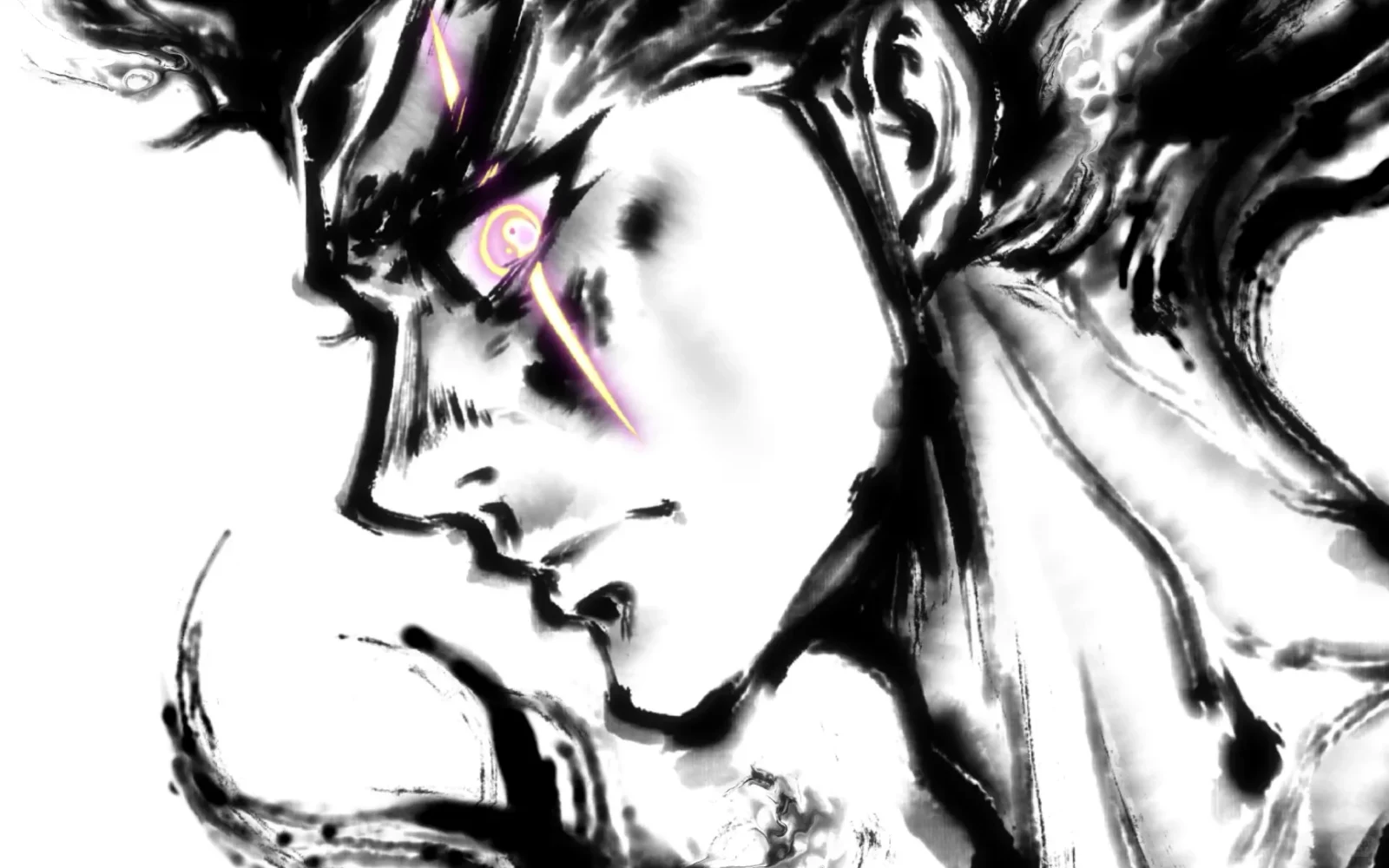
This frame explains the force better than another ranking ever could: almost everything is black or bare paper, so the one charged eye feels like a decision breaking through restraint. It proves the series can make line, contrast and a tiny color accent carry pressure. It cannot prove how the full sequence moves or whether every episode sustains that intensity.
Scissor Seven: martial arts with a neighborhood pulse
If you need comedy and warmth before you can commit to lore, choose Scissor Seven. Seven's hairdressing tools, cheap clothes and wounded pride make the action feel local. He can be absurd in one shot and frightening in the next without the series pretending those sides cancel each other.
The show understands a truth many tournament stories forget: technique is also how a person survives an embarrassing day. The joke is not outside the martial arts. It is the armor.
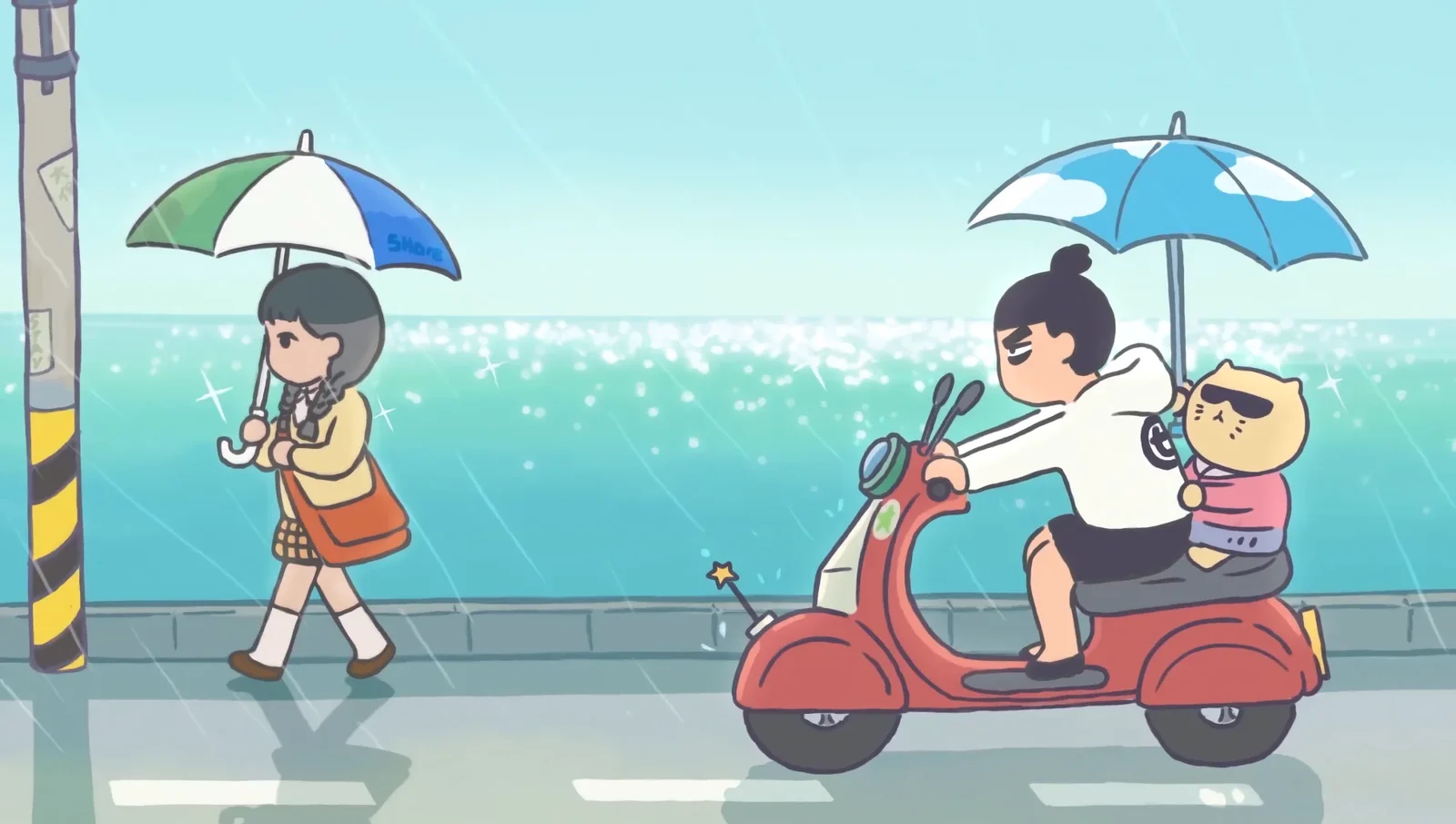
This rainy street is why I refuse to reduce the series to assassin fights. Seven, a scooter, an umbrella and an ordinary missed connection make the neighborhood part of the action language. The image proves the show gives its martial characters a daily pulse; it does not establish the scene's complete plot or the quality of later seasons.
A great fight has to leave something behind
Animation can make an action scene feel extraordinary through line, color, sound and speed. That is real craft, and Fog Hill earns its reputation for it. But I do not judge martial-arts animation at the instant of impact alone. I look for four things before calling a fight memorable:
- A readable decision. I should know why this character attacks, waits, retreats or refuses the obvious finishing move.
- A body with limits. Exhaustion, injury, fear, awkward footing or a changed grip must alter the next choice. Invulnerable bodies turn choreography into decoration.
- A place that matters. A wet stair, a narrow kitchen, an open field, a neighborhood shop or a bridge should change distance and risk. The fight should not be transferable to an empty digital arena.
- A consequence after the cut. Someone has to live with a broken promise, a damaged home, a frightened witness, a debt or a newly exposed truth.
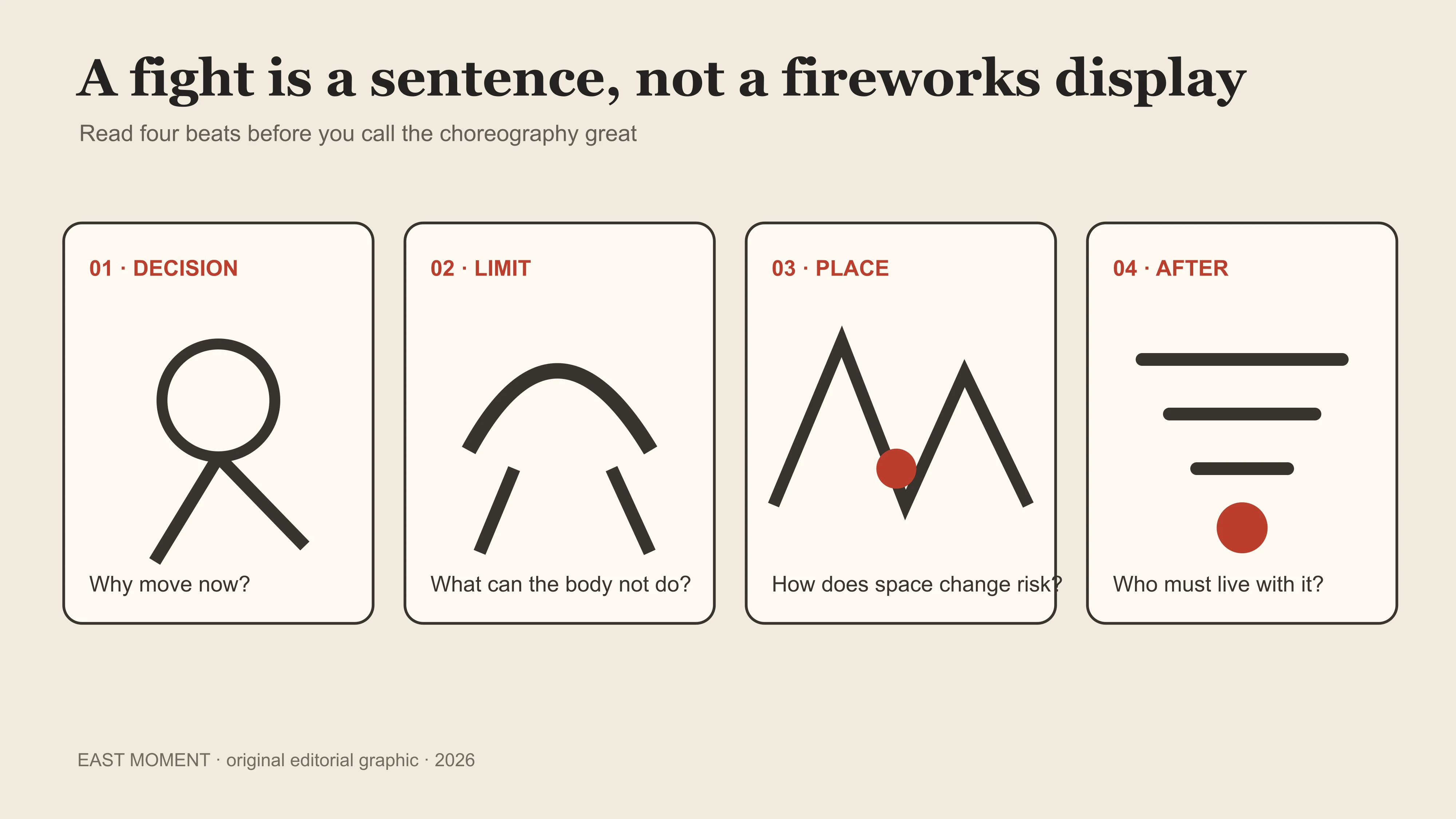
This is the difference between admiring an animated strike and feeling it. A rapid sequence can be technically brilliant and emotionally blank; a single hand held back can contain an entire relationship. The best Chinese action animation understands that movement is not an interruption to character. Movement is where character loses the ability to keep pretending.
Hitori No Shita: modern streets and old techniques
Hitori No Shita: The Outcast is for viewers who want contemporary China rather than a sealed historical world. Its supernatural martial system travels through universities, cemeteries, highways and family secrets. Feng Baobao's blankness and Wang Ye's cultivated ease create a different kind of tension from a heroic training ladder.
The pleasure is not just learning who is strongest. It is watching old knowledge become awkward, useful or dangerous in ordinary places.
Watch one scene three times before calling the animation “all style”
When an action sequence is praised online, the most useful response is not to freeze on the loudest frame. Rewatch one short exchange with a different question each time.
First pass: follow the geography. Where is each person standing? What changes when a fighter is pushed against a wall, slips across water, loses an open route or has to keep someone behind them safe? In good choreography, distance is never empty. It is an argument about access.
Second pass: follow the preparation. Notice the beat before contact: a shoulder lowers, a hand changes position, a joke stops, a character refuses to draw a weapon or chooses the wrong move because fear has narrowed their options. The flashiest strike is often less revealing than the half-second that made it unavoidable.
Third pass: follow the silence after. Does the story let a character look at what they have done? Does a bystander react? Does the joke return differently? Does the next scene acknowledge an injury, a debt or a new imbalance of power? If the animation cuts directly from victory to a larger opponent, the fight may still be enjoyable, but it has not yet become martial drama.
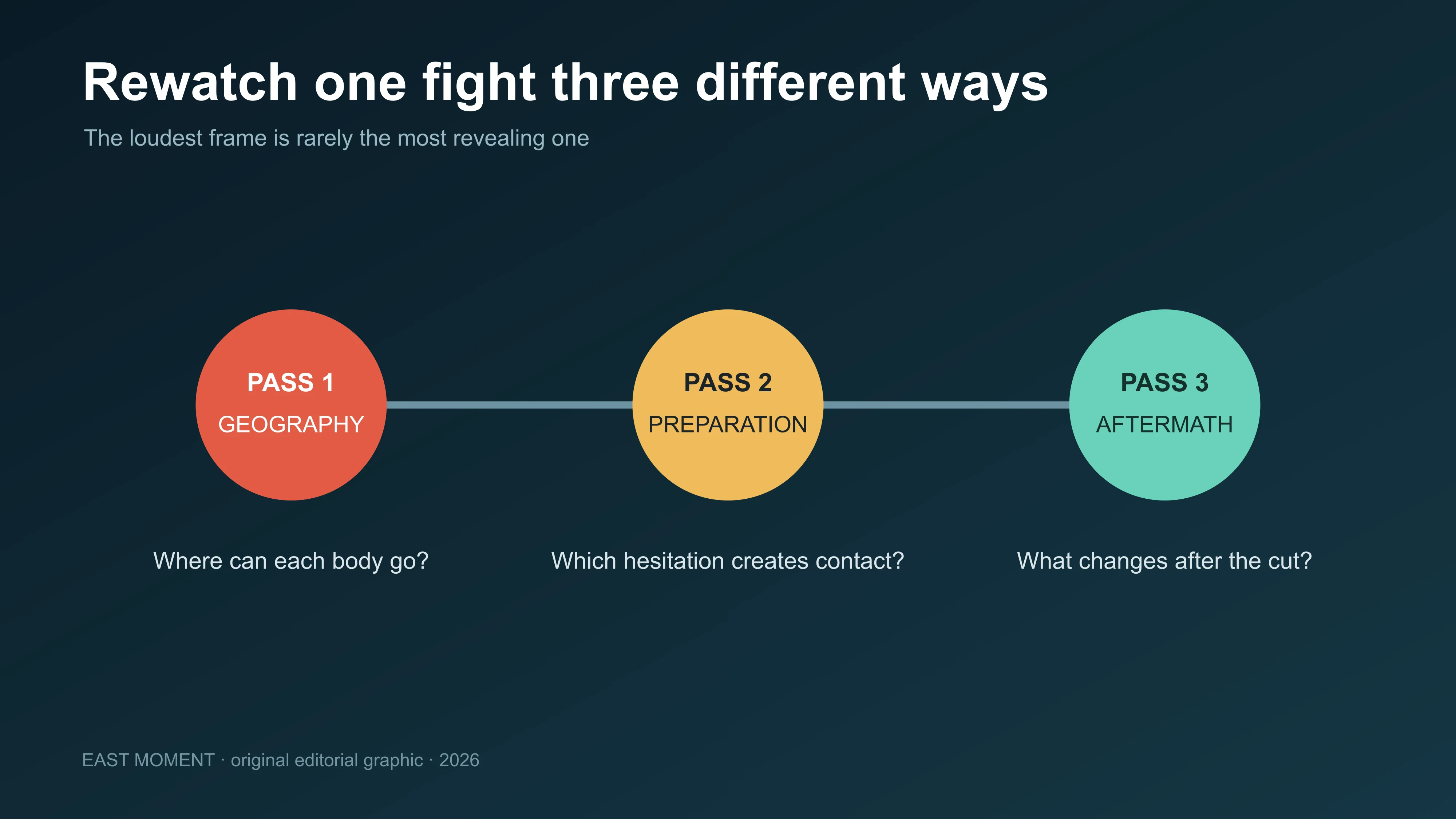
This method also protects viewers from a common export shortcut: treating every Chinese action scene as proof of some ancient, fixed “kung fu spirit.” A modern animated fight can be informed by opera rhythm, ink-painting composition, game grammar, Hong Kong cinema, online comedy and the studio's own invention at the same time. Look at the specific scene before assigning it a civilization-sized label.
For viewers who want to compare animation with actual martial practice, keep a boundary. A choreographed strike can communicate character and cinematic force; it is not training instruction, and it cannot establish how a real school teaches, tests safety or resolves force. Start with the Chinese martial arts collection when that distinction is your question.
One final test is useful when choosing a series rather than dissecting a clip: after the sequence ends, can you name one person whose situation changed? If the answer is only “the hero unlocked a stronger move,” the show may be delivering spectacle without a dramatic hinge. If you can name a promise strained, a home threatened, a teacher disappointed or a frightened person protected, the next episode has something human to carry forward.
Choose by the feeling you want, not by a numbered ranking
- Choose visual force for Fog Hill of Five Elements.
- Choose comedy that hides real injury for Scissor Seven.
- Choose modern supernatural mystery for Hitori No Shita.
- Choose cultivation scale and long-form escalation through Battle Through the Heavens, knowing that it is a larger commitment than the short, concentrated works above.
- Choose human mythology and spectacle through Ne Zha 2 if you want a film rather than a series.
This is why “best martial arts anime” lists often disappoint. They rank duration, budget and fan familiarity together, then ask the reader to accept one winner. A useful guide should tell you what kind of attention each show rewards.
The tradeoff is real. Fog Hill gives the strongest immediate sensory hit but asks the viewer to accept a short, unfinished story whose production intensity slows release. Scissor Seven offers the easiest emotional entrance, then risks suffocating Chicken Island beneath expanding assassin mythology. Hitori No Shita gives the richest modern social world, but names, factions and technique explanations demand more patience. Calling one “best” without naming those costs is not curation. It is a popularity list wearing critical language.
I would start a skeptical animation fan with Fog Hill, a friend who needs affection with Scissor Seven, and a viewer already curious about contemporary China with Hitori No Shita. These are not three interchangeable samples of “Chinese style.” One treats line as force, one treats comedy as emotional self-defense, and one lets esoteric knowledge ride public transport. The route must begin with the experience the reader actually wants.
What martial arts anime can teach without becoming a lesson
Chinese martial-arts stories repeatedly return to a question: what does strength obligate you to do? The answer changes with the setting. A wandering wuxia hero may owe a promise to a teacher or stranger. A cultivation protagonist may owe a clan, a dead parent or an entire realm. A comic assassin may simply owe rent and one more chance not to become the person his reputation expects.
That is also where the visuals become evidence. A blade held back can tell me more than ten lines about loyalty. A character who keeps smiling while their stance changes tells me that comedy is not the opposite of danger. The body is the paragraph.
For the cultural vocabulary behind those choices, continue to What wuxia means and compare the supernatural scale in Xianxia vs wuxia. For a broader entry point, the Chinese anime and donghua guide maps the cluster without flattening every title into “anime.”
My verdict
The best martial arts anime does not make me wish I could perform the move. It makes me understand why this particular person moved now, what they were afraid to lose and who will pay for the choice.
Start with Fog Hill if the line and sound should hit your body first. Start with Scissor Seven if you need a laugh before the wound appears. Start with Hitori No Shita if you want the old and modern worlds to collide on a city street. Then bring one frame to East Moment's community and tell us what the movement meant before you turned it into a ranking.