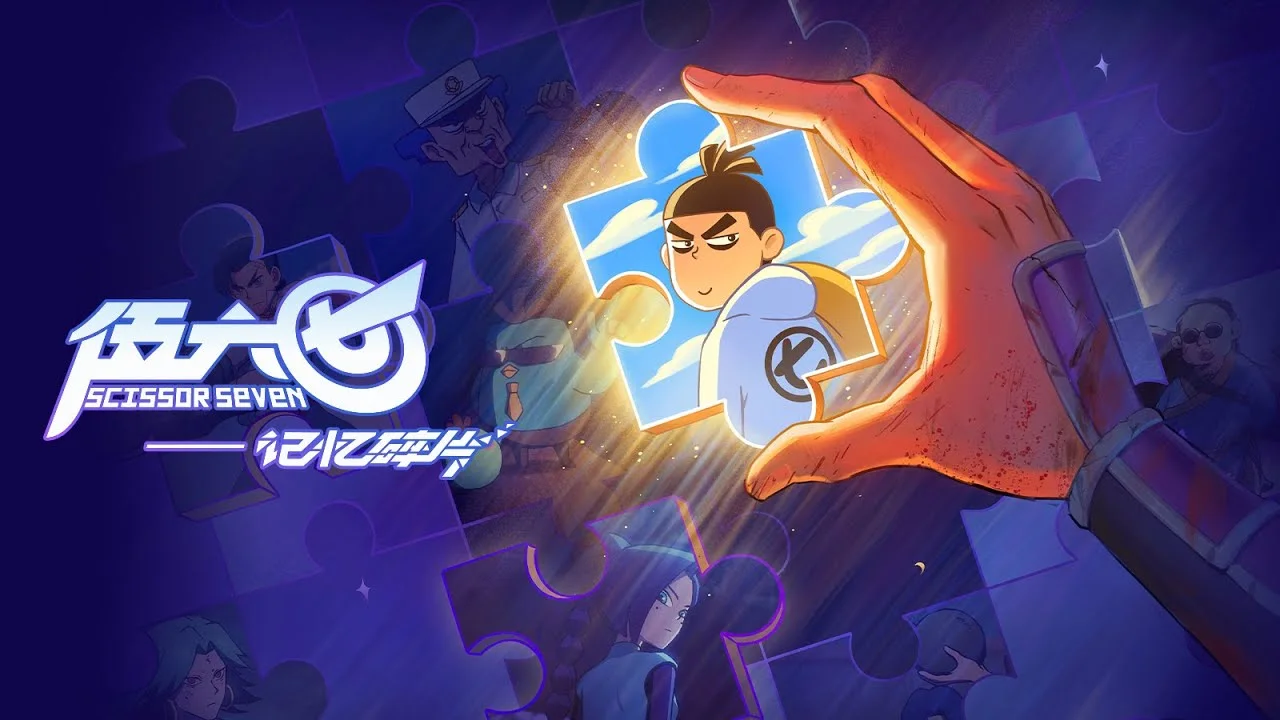
Scissor Seven looks like a bargain-bin assassin comedy: a young barber flies on scissors, accepts humiliating jobs and usually fails. That failure is the point. Seven becomes compelling because every attempted killing exposes a relationship he cannot reduce to a target. The show is funniest on Chicken Island and most moving when the feared Killer Seven has to compete with the ordinary person his neighbors already know.
Scissor Seven works because Seven keeps failing at emotional distance
The shortest answer to “What is Scissor Seven?” is a Chinese animated action comedy about an amnesiac hairdresser trying to recover his past by working as an assassin. It is accurate and almost useless.
Seven is not bad at combat. When the old assassin identity called Killer Seven pushes through, the loose body, cheap scissors and sleepy face can become frighteningly precise. He is bad at the emotional rule the profession requires: treating a person as a job.
That is why the early missions matter even when they look disposable. A client arrives with a petty grievance. Seven puts on a terrible disguise. The target turns out to have a need, history or ridiculous private dignity. The assassination collapses, but a social knot loosens. Comedy is not interrupting the plot. It is how Seven discovers that the world contains people rather than assignments.

The Prince of Stan fight is the first hard visual break between the clumsy barber and the force stored inside him. Official clip via Scissor Seven.
The useful question is therefore not whether Seven will become the strongest assassin again. It is whether recovering a powerful past should be called recovery when the present has made him kinder.
The essential facts before you start
| Question | Direct answer |
|---|---|
| What is the Chinese title? | Wu Liuqi (伍六七), also used as Seven's name. The earlier international label “Killer Seven” survives around his assassin identity. |
| Who created it? | Director He Xiaofeng created the series and voices Seven in the original performance; Sharefun Studio makes the animation. |
| Is it anime or donghua? | It is Chinese animation, commonly called donghua. “Scissor Seven anime” is a useful search phrase, not its production country. |
| How many seasons are released? | AHAVERSE's official April 2026 retrospective confirms five released seasons. |
| Where can I watch it? | Netflix carries the international series page; catalog, audio and subscription availability vary by region. |
| Is the story finished? | No. The official channel has released a feature-film teaser, but the teaser alone does not establish a release date for every territory. |
| Should I watch in release order? | Yes. Start with season one and continue numerically. Do not reorganize memory episodes into chronology on a first viewing. |
The first season is the honest test. If Chicken Island's low-stakes lives feel like filler to you, the later assassin mythology will not repair the mismatch. If those lives begin to matter, the mythology gains something worth threatening.
Chicken Island is a neighborhood before it is a fantasy map
Chicken Island looks deliberately unprestigious. Seven cuts hair. Dai Bo negotiates money. Xiao Fei turns impossible mobility into a physical joke. People argue about bodies, pets, food, romance, reputation and rent-sized problems. The island has fighters and supernatural creatures, but it also has the rhythm of a place where everyone will see you again after you embarrass yourself.
This social closeness changes the meaning of heroism. Seven rarely protects an abstract population. He protects the person who annoyed him yesterday, the animal someone else dismissed, or the shopkeeper whose habits have become part of his day. His ethics grow through repetition, not a speech about justice.

Dai Bo's return to King Pheasant's arena gives his comic partnership with Xiao Fei a history of fear and loss. Official clip via Scissor Seven.
The Da Fei story is an early warning that the crude drawings can carry grief. A chicken-fighting premise first invites a joke about animal bravado, then reveals sacrifice, parenthood and the cost of entertainment built from another creature's pain. Dai Bo's bossiness and obsession with payment never disappear; they become more human once you understand what he is trying not to lose again.
This is the show's best scale: a tiny community where absurdity and grief have to share the same chair.
Chicken Island also gives Seven something the assassin world cannot: witnesses who know him through repetition rather than legend. Dai Bo has seen him fail at work. Xiao Fei has shared the small physical routines that keep a day moving. Neighbors can be irritated by him before they are impressed by him. That knowledge is not glamorous, but it prevents identity from being decided only by the moment a blade returns to his hand.
I value those relationships because they make mercy concrete. “Be kind” is too vague to change an assassin. Cutting someone's hair, accepting a foolish favor, returning after embarrassment and being expected at the same doorway tomorrow can. The island does not erase Seven's violence; it creates enough ordinary obligation that violence can no longer be the only story he knows how to tell about himself.
Seven and Killer Seven are two answers to the same face
One of the most revealing ways to understand the Scissor Seven characters is to ask who is looking at Seven.
Dai Bo sees a foolish employee he can scold and still trust. Thirteen sees a man whose softness is embarrassing, attractive and tactically dangerous. Chicken Island sees a familiar problem-solver. Xuanwu's assassins see a weapon, traitor or unfinished threat. The viewer is asked to hold all these portraits together.
That is richer than the standard “goofy mode versus cool mode” reading. Killer Seven is not simply the authentic adult hidden beneath a comic mask. He is a person produced by a system that rewarded emotional silence and lethal usefulness. The barber is not a fake created by amnesia. He is evidence that identity can be rebuilt by daily obligations.

Redtooth's impossible grin turns the assassin world's violence into a body that looks hungry even before it moves. Official clip via Scissor Seven.
This explains why so many affectionate interpretations make Seven smaller rather than grander: a cat, an idiot, a shy man who blushes, somebody sunny. They are not denying his danger. They are resisting Xuanwu's claim that danger is his truest form.
The later seasons sometimes weaken this tension by polishing Killer Seven into a familiar beautiful, wounded, emotionally blank hero. Mystery becomes less interesting when trauma only makes a character look cooler. The original contradiction is sharper: a ridiculous ordinary life may be the bravest identity Seven has ever chosen.
Guangdong enters through rhythm, not a culture lecture
The original voice track is essential for a first watch. He Xiaofeng gives Seven a loose, Guangdong-inflected Mandarin delivery often described in China as Guangpu: Putonghua carrying Cantonese-region sounds and cadence. The humor lives in stretched vowels, sudden confidence, shameless salesmanship and the speed with which bravado collapses.
Subtitles can preserve the information and still miss the social temperature. Seven does not sound like a neutral fantasy protagonist. He sounds closer to the young man at a small neighborhood shop who can sell you a haircut, tell an exaggerated story and be pulled into somebody else's trouble before lunch.
The official AHAVERSE and Sharefun Studio retrospective describes the visual foundation as Lingnan aesthetics and identifies contrast as the series' staple. That regional grounding is not a claim that every island building maps neatly onto Guangzhou. It is a creative rhythm: pragmatic street life beside wild imagination, verbal looseness beside exact martial movement, ordinary commerce beside inherited power.
Try the original Chinese audio for at least two episodes before changing languages. A dub may work well, but it creates a different comic person. Our Chinese-language guide helps when tone and regional rhythm carry more meaning than a literal subtitle.
The rough drawing is an action system, not a lack of skill
Scissor Seven can look cheap for ten seconds and beautifully controlled in the eleventh. Heads deform. Backgrounds flatten. A body becomes a scribble to land a joke. Then a blade enters, the silhouette sharpens and the space becomes legible.
That switch is designed. The studio's official production account emphasizes strong key poses, environmental staging and snap timing that permits a gag without destroying action clarity. The fight is readable because the animator decides exactly what the eye must understand before impact.

A production screen makes the labor behind the apparent looseness visible. Official behind-the-scenes image via Scissor Seven.
This gives the art a moral function too. Xuanwu tends toward hard silhouettes, rules, ranks and controlled violence. Chicken Island permits roundness, ugliness and elastic bodies. Seven moves between those visual regimes. When the drawing suddenly makes him elegant, the change can feel like old discipline taking control of his body.
A smoother, permanently expensive look would make the show less itself. The roughness leaves room for people to be foolish without losing dignity.
Thirteen matters most when she is allowed to choose
Thirteen begins with the posture Seven cannot maintain: disciplined, economical and guarded. Her design uses controlled lines; his invites deformation. Their chemistry works because each exposes the cost of the other's survival method.
Seven's openness can become intrusive. Thirteen's control can become isolation. A romantic reading is available, but reducing every encounter to “will they become a couple?” makes both characters thinner. Their better function is mutual disturbance. He shows that failed professionalism can protect a life. She shows that kindness without competence can still get someone killed.
The same rule applies to the wider cast. Chairman Jiang, Redtooth, Dai Bo and even apparently disposable clients should not exist merely to unlock Seven's next ability. They matter when their own compromises alter the moral shape of his choice.
That is also the boundary the growing franchise must protect. A larger universe can add clans, weapons and histories. It cannot treat relationships as equipment for upgrading the lead.
The later seasons gain mythology and lose breathing room
Scissor Seven inevitably had to leave the island's single-episode jobs and confront the assassin world. Avoiding that move forever would turn emotional growth into a sitcom reset. The problem is not serialization. It is proportion.
As the Xuanwu plot expands, explanations, memory fragments, factions and delayed confrontations consume time once given to complete small stories. A binge can hide some of the strain. Weekly viewing magnifies it: an episode may feel like preparation for a payoff that moves again.
The deepest complaint is not “there are fewer jokes.” It is that the two Seven identities sometimes stop feeling like consequences of one life. Early glimpses of the assassin could be mature, amused and terrifying. Later memory material can flatten him into an unwilling machine whose suffering explains everything. Tragedy becomes a costume instead of a contradiction.
Season five still contains strong visual and emotional work. Its weakness is structural: the series now asks a short run of episodes to serve memory mystery, ensemble arcs, romance pressure, combat escalation and franchise setup. Some scenes land beautifully. The route between them can feel broken into pieces.

The free official season-five PV is the useful moving evidence here: watch how quickly comedy, intimacy and threat are asked to coexist.
My verdict is firm: the main plot works only when it returns power to the ordinary person Chicken Island helped create. Lore is not a reward if it erases the life that made the lore matter.
Watch order, season choice and the current 2026 status
Use release order: seasons one through five. Watch the bonus material near the season in which the official platform places it, but do not move later memory chapters forward just to create a tidy chronology. The series wants your idea of Seven to change as evidence arrives.
For different viewers, the best route is simple:
- You want comedy and heart: watch season one without spoilers and decide after the Da Fei story.
- You want action: do not skip the early jobs; the fights gain force because you know what the ordinary life costs.
- You want Thirteen and the assassin world: continue in release order rather than jumping to character clips.
- You dislike fragmented mysteries: watch later seasons in short batches, not one isolated episode per week.
- You care about voice performance: begin in Mandarin, then compare your preferred dub after the character rhythm is established.
As of August 2026, the official studio retrospective confirms five released seasons, and the Netflix series page remains the clearest international availability check. Streaming catalogs vary by country, so no static article should promise that every season, subtitle or dub is present everywhere.
The official channel has also released a Scissor Seven feature-film teaser. It confirms the project and its visual ambition. Treat release dates, territory plans and plot claims elsewhere as unconfirmed until the studio states them directly.
The East Moment verdict
Watch Scissor Seven if you want an action comedy where mercy usually arrives disguised as incompetence. Do not begin because somebody promised nonstop sakuga or a perfectly organized assassin epic. Begin because a cheap haircut shop, a bossy blue chicken and a young man with no stable past slowly become a definition of home.
Its most Chinese quality is not one weapon or costume. It is the refusal to separate lofty martial identity from ordinary social obligation. Power enters the neighborhood and still has to answer to friendship, money, embarrassment, food and tomorrow's haircut.
That makes it an ideal companion to Link Click. Link Click asks whether empathy gives you the right to intervene; Scissor Seven asks whether repeated intervention can make you a different person. Continue through the Chinese anime and donghua collection, or compare its rough, local texture with the monumental inheritance of Black Myth: Wukong.
Then bring one small scene to East Moment's community: not a power ranking, but the failed job, dialect joke or ordinary favor that made Seven feel more alive than Killer Seven. Use a spoiler label. The best discussion begins where “weak” and “kind” stop meaning the same thing.