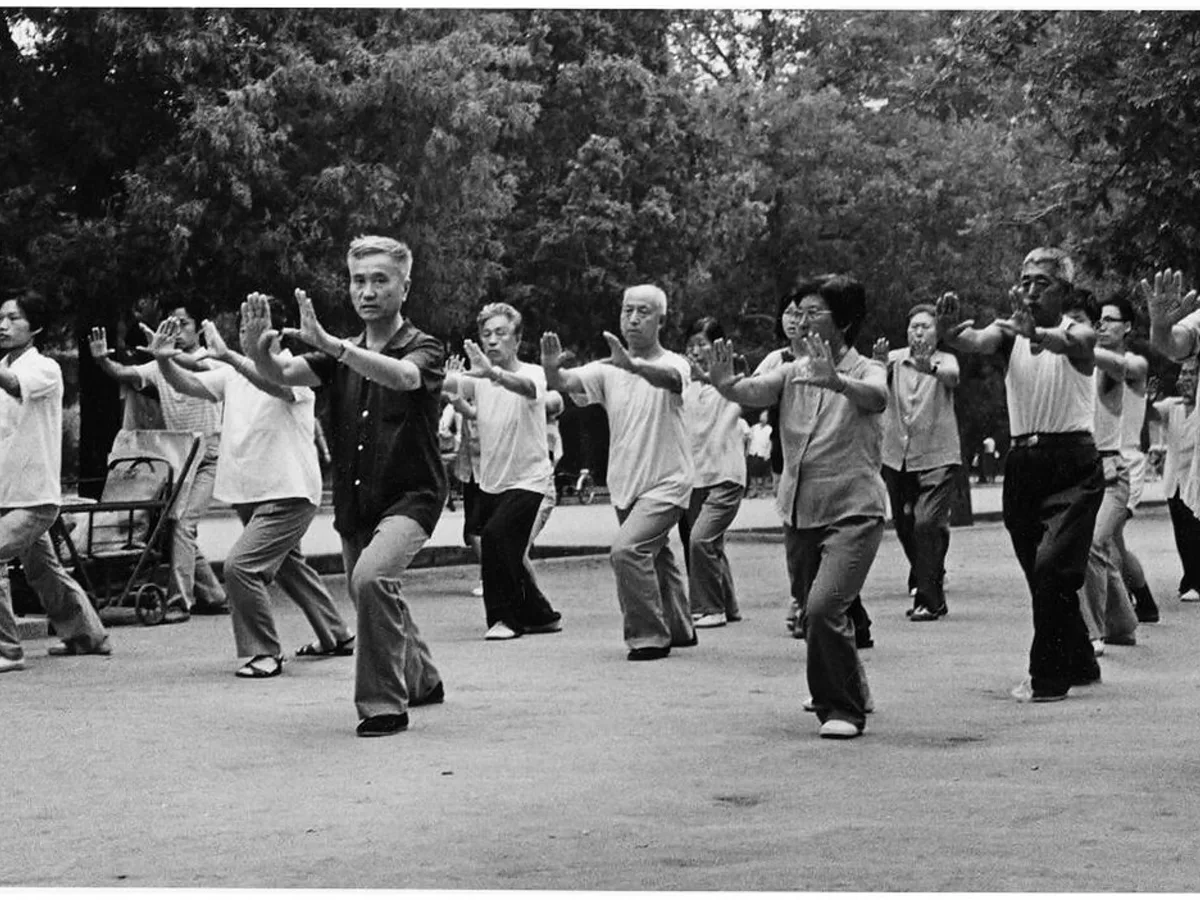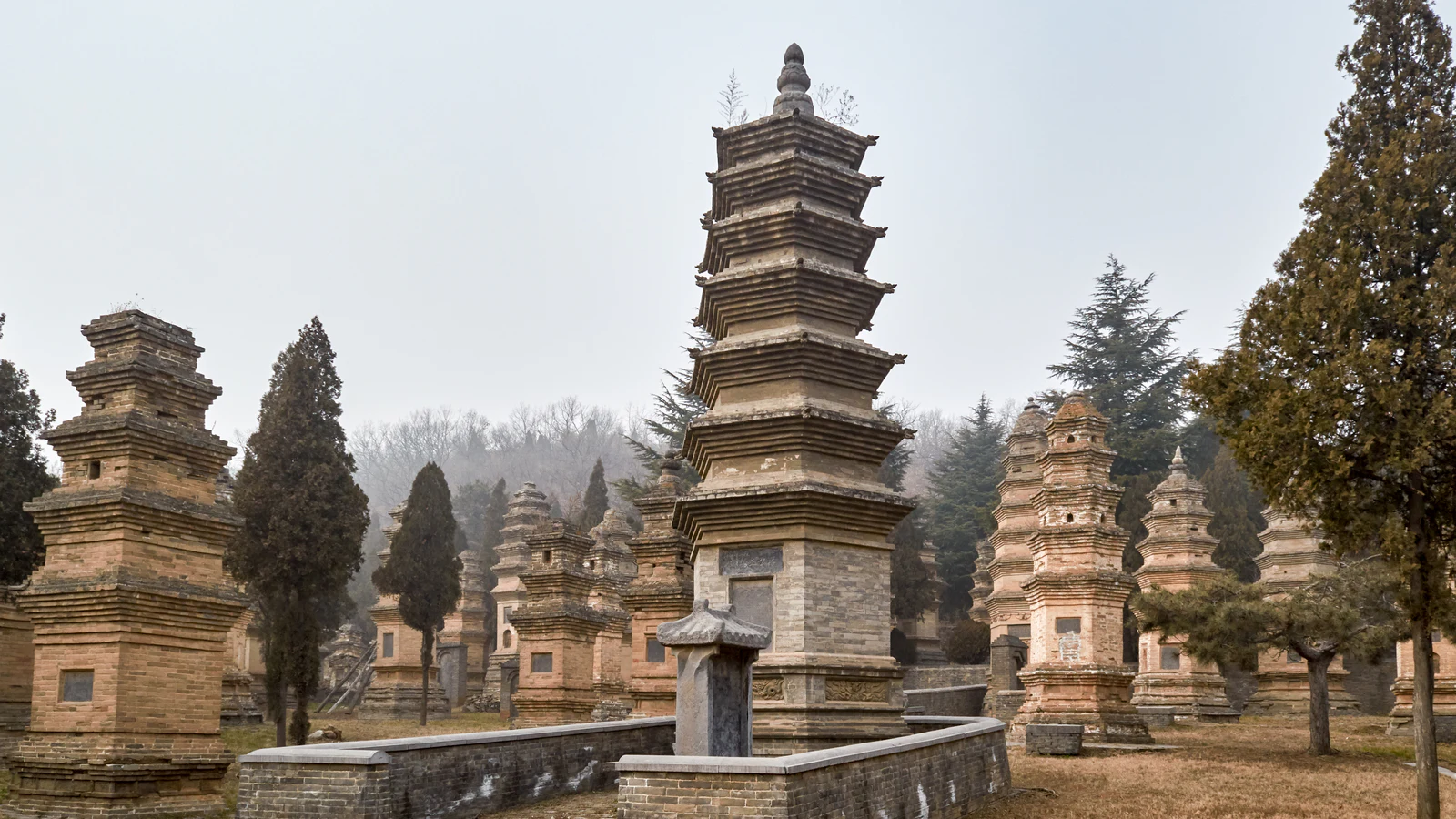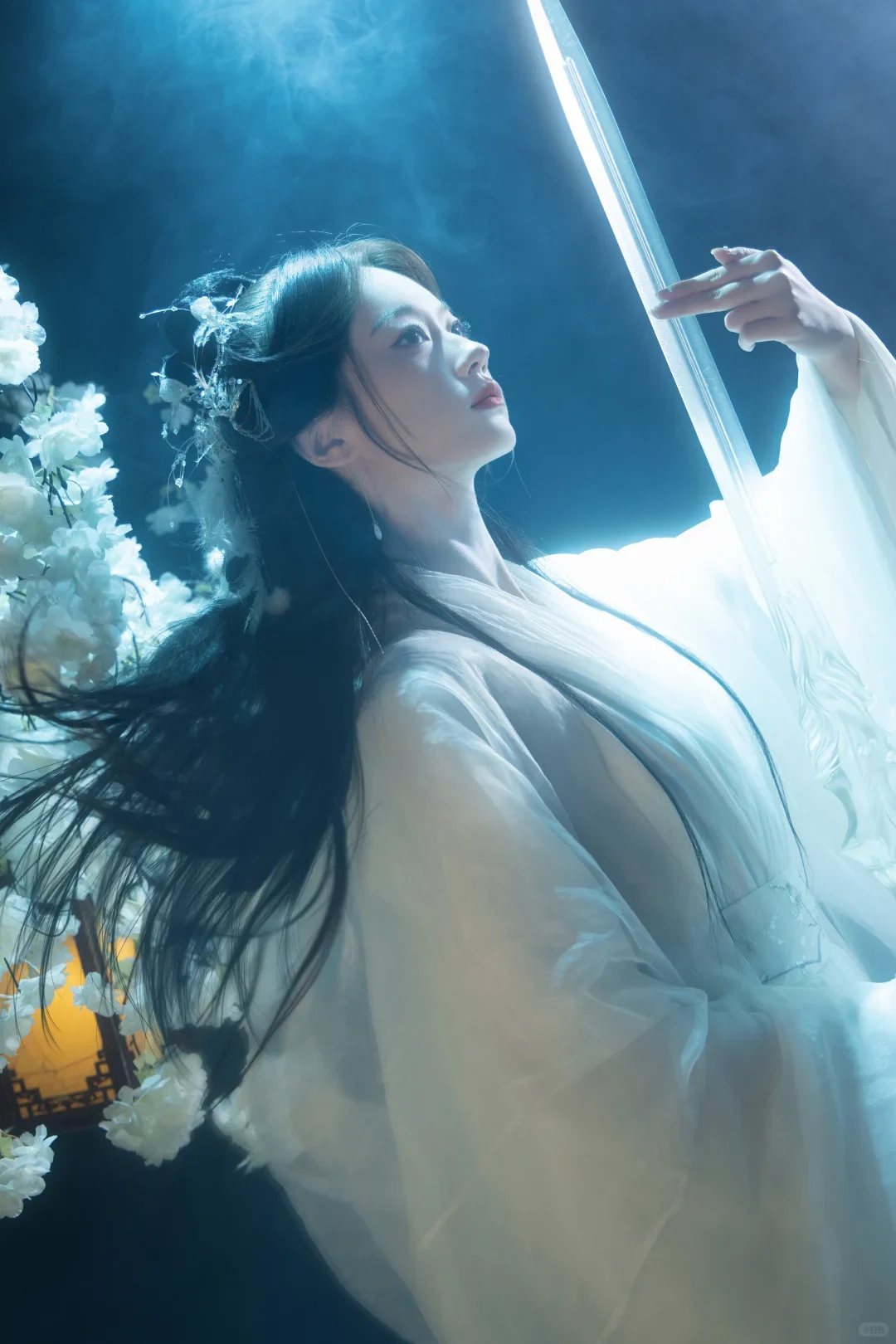
Xianxia vs wuxia is not simply magic versus realism. Wuxia asks how a skilled person should live among other people. Xianxia asks what happens when that person tries to remake the limits of life itself. The costumes overlap; the emotional scale changes. The opening image is a real fantasy-themed studio photograph, not a still from a named work or proof of a historical practice.
Xianxia vs wuxia: the shortest useful answer
| Difference | Wuxia | Xianxia |
|---|---|---|
| Central figure | A wandering martial hero | A cultivator pursuing power, longevity or transcendence |
| Main social world | Jianghu: sects, teachers, inns, clans and courts | Realms, sects, immortal courts, demons and cosmic cycles |
| What strength means | Skill creates responsibility and reputation | Cultivation changes the body, lifespan and place in the cosmos |
| Typical moral pressure | Which promise or loyalty should I keep? | What must I sacrifice to survive, ascend or break fate? |
| Best entry feeling | Intimacy, honour, betrayal and movement | Wonder, scale, transformation and metaphysical consequence |
The categories bleed into one another. A wuxia hero can perform impossible feats. A xianxia protagonist can care about a small village or one human promise. Genre labels describe the dominant engine, not a sealed box.
What is xianxia, and how is it different from wuxia?
Xianxia (仙侠) is Chinese fantasy built around cultivation and the possibility of becoming more than an ordinary human. A character may train body and spirit, enter a sect, seek a breakthrough, face a heavenly trial or cross between mortal and other realms. The word xia links it to heroic action, but the xian points toward immortals and transcendence. That is a story vocabulary, not a claim that a television show's invented cultivation system describes a real religious practice.
Wuxia (武侠) centers the martial hero and the human world of the jianghu. Its extraordinary fighters still have teachers, rivals, reputations and obligations that another person can recognize. A supernatural image does not automatically turn wuxia into xianxia. Conversely, a cultivator can begin in a village with a very human problem and still be in xianxia once the story makes lifespan, realms or transformation the central pressure.
For a first watch, do not memorize power levels. Ask what victory changes. If the sword resolves a promise to a person, start with our wuxia meaning guide and Crouching Tiger, Hidden Dragon. If it changes the character's body, lifespan or relationship to heaven, compare Perfect World or Till the End of the Moon. A work can contain both movements; the question is which one gives the story its cost.
The Chinese martial arts collection is the parent route for forms, traditions and screen culture. Here the narrower task is classification. Britannica's wuxia overview is useful for establishing the literary tradition and its martial heroes; it does not settle every contemporary hybrid. My own rule is stricter and more practical: ignore how many clouds, robes or glowing swords appear, then follow the consequence of power.
That rule matters because English discovery pages often treat “wuxia,” “xianxia” and “Chinese fantasy” as visual tags. The result is a shelf organized by costume rather than story. I find that flattening actively unhelpful. A wandering fighter whose impossible leap returns him to a promise can remain wuxia. A quiet cultivator sitting in one cave may already be xianxia if the breakthrough rewrites lifespan, body and reality. Genre lives in the pressure placed on the character, not in the special-effects budget.
A fantasy costume can make a scene feel otherworldly, but only a story can show whether power changes a person's obligations or the limits of life itself.
Wuxia keeps the moral camera close to the ground
In wuxia meaning, I describe the jianghu as a moral neighbourhood. That remains the quickest way to recognise the tradition. A fighter may be extraordinarily fast, but the story keeps returning to a teacher's trust, a friend's betrayal, an escort route, a family name or a promise made at an inn.
The world is large enough for danger and small enough for reputation to travel. You can run from a magistrate and still meet the consequences at the next teahouse. A sword form expresses training, but the decision to draw it expresses a relationship.
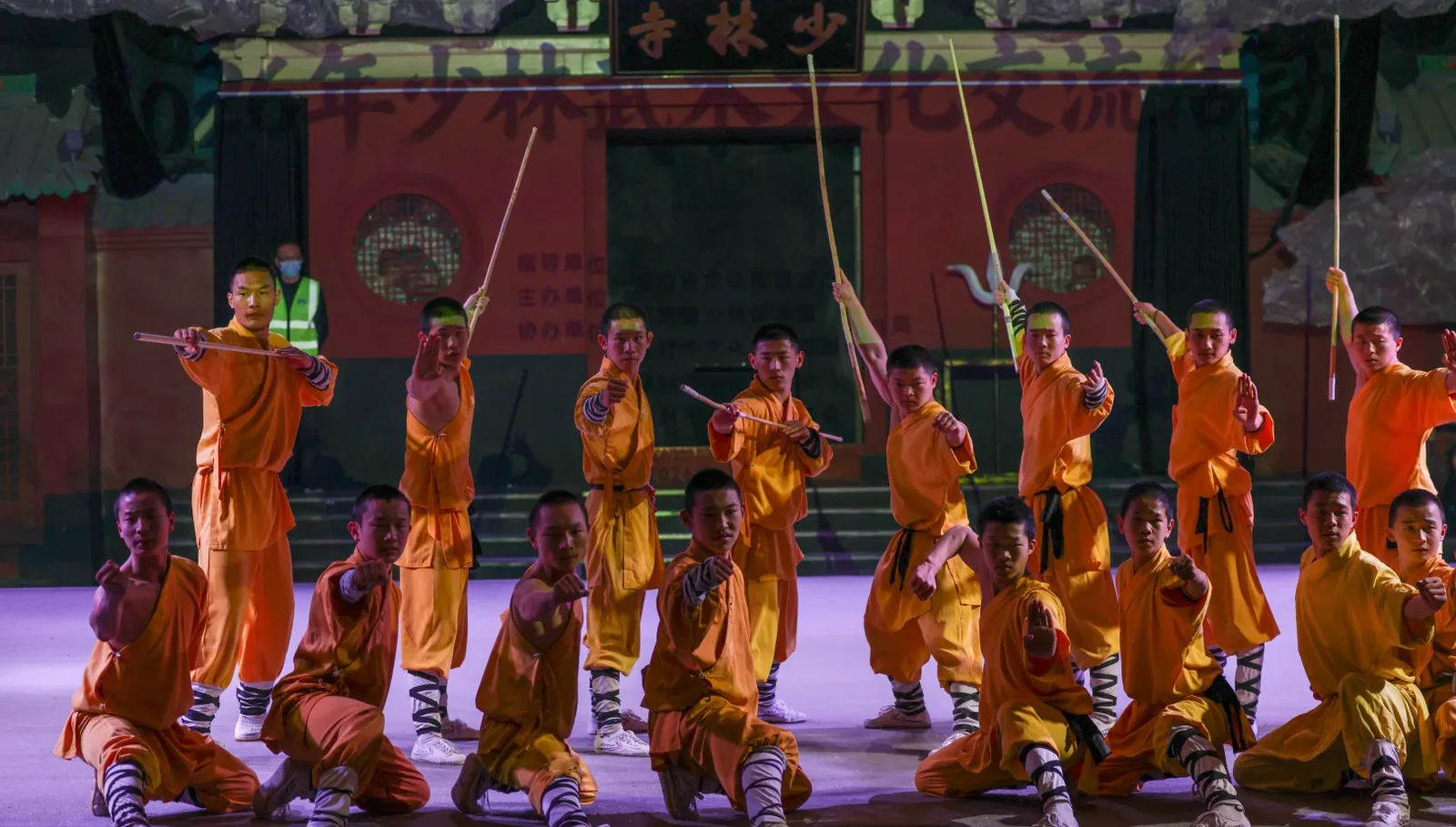
These bodies remain bound by floor, distance, grip and one another's timing. The photograph records a contemporary public performance—not an ancient battle and not proof of combat effectiveness—but it gives the wuxia side of the comparison a useful physical limit: skill must pass through a human body before a story can ask what that skill owes.
That is why Where Winds Meet feels wuxia when it slows down for roads, villages, letters and awkward encounters. Its open world is most convincing when the player is not chasing a glowing objective but deciding which person to help before the weather changes.
Xianxia turns the body into a long argument with time
Xianxia's defining word is often translated as “immortal hero fantasy,” but cultivation is the more useful entry point. A cultivator disciplines breath, spirit, weapon, body or consciousness to cross thresholds that ordinary human life cannot cross.
Those thresholds create drama that wuxia usually does not need: reincarnation, tribulation, heavenly law, demon blood, sect inheritance, lost memories and the possibility of living long enough to outlast everyone you once loved.
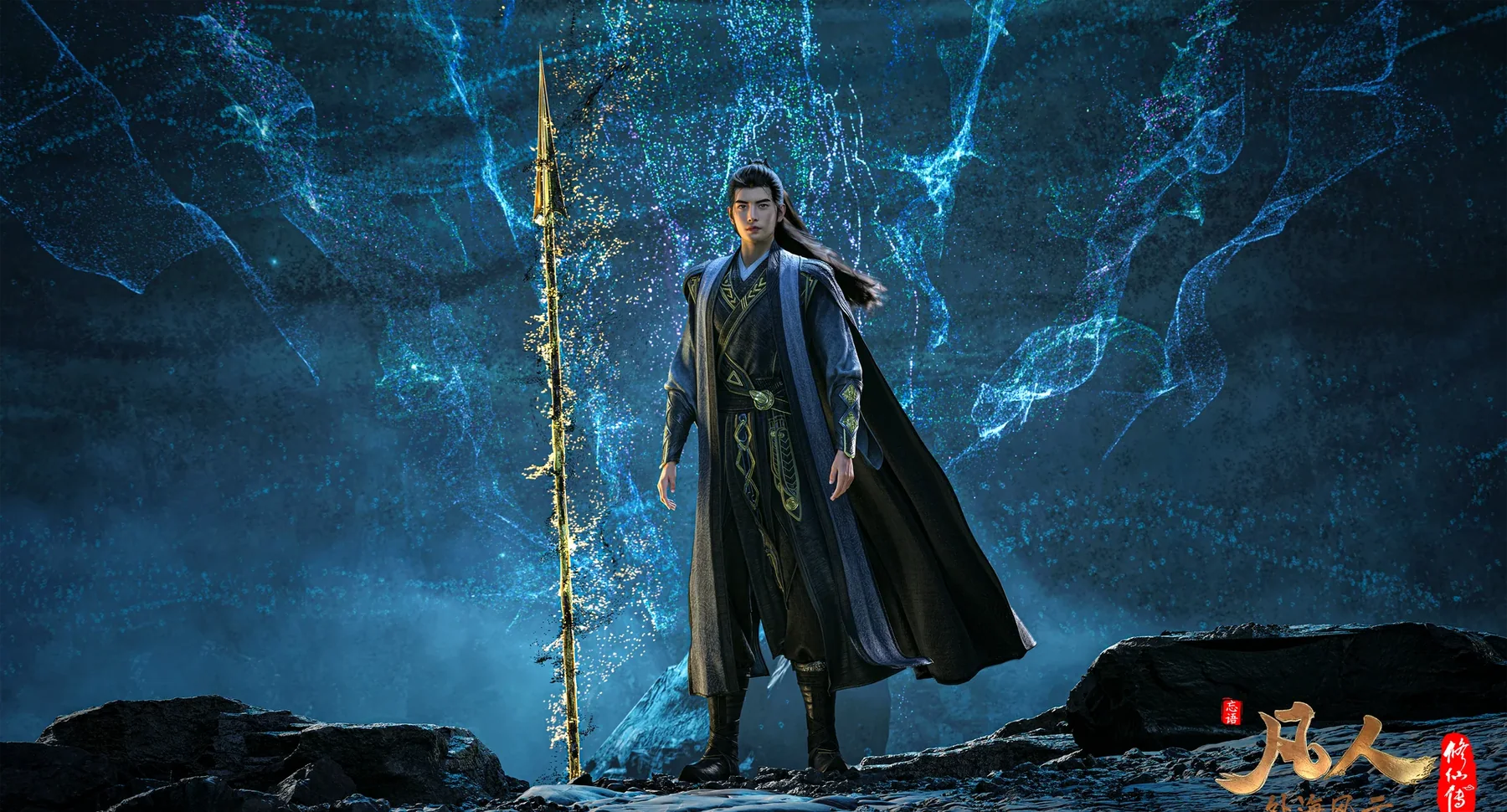
This Mortal's Journey visual breaks a staff into particles and places one body inside a giant spectral form. It proves how modern donghua can package cultivation as bodily transformation and inhuman scale. It cannot prove that spectacle has emotional weight; only the story's costs can do that.
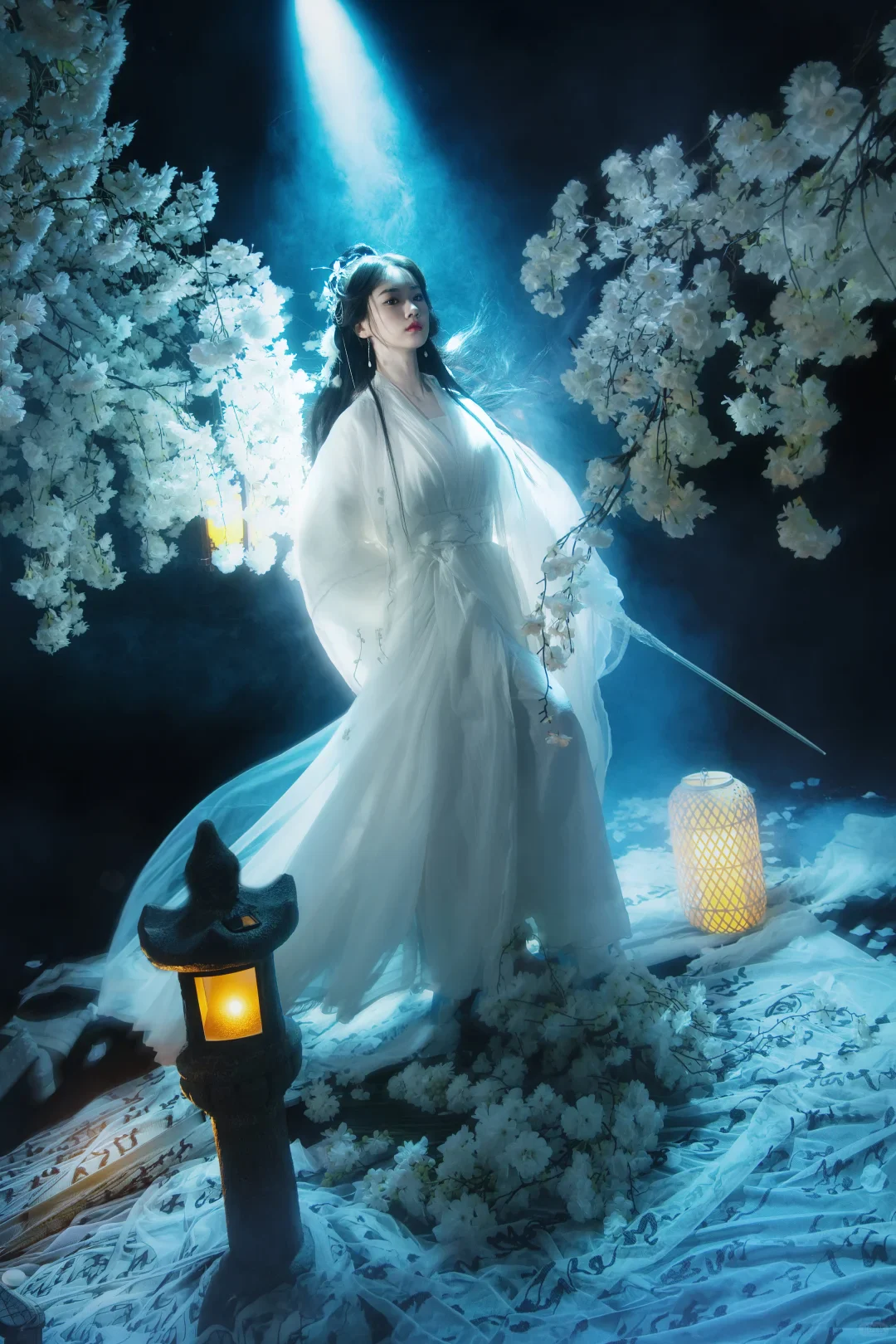
The staged light, flowers and sword explain a contemporary xianxia visual expectation. They do not prove a character has ascended, lost a relationship or entered another realm.
The xianxia question is therefore not only “can he defeat the opponent?” It is “what remains of him when every victory asks him to become less ordinary?” A power-up can be thrilling and frightening at once. Ascension may be escape, but it can also be a new form of loneliness.
The weakest cultivation stories avoid that loneliness. They turn realm names into salary grades: advance, defeat the newly assigned enemy, collect a rarer resource and repeat. The numbers rise while the person disappears. I have no patience for that machinery. Xianxia becomes emotionally necessary only when transformation creates a cost that cannot be solved by the next transformation—an aging parent, a mortal promise, a memory that no longer fits the new body, or the fear that immortality has preserved existence while erasing the reason to exist.
Why the same sword can belong to two different genres
The sword is not a reliable genre test. In wuxia, it may be the visible extension of a person's reputation and school. In xianxia, it can become a flying weapon, a spirit-bound artifact or a temporary vessel for a law of the universe.
The difference is what the sword changes. If it changes who owes whom a promise, I am probably in wuxia territory. If it changes lifespan, realm, reincarnation or the rules of reality, the work is leaning xianxia.
This consequence test is more reliable than asking whether the work contains “magic.” Wuxia has never been a police report of realistic movement, and xianxia does not become profound merely by adding heaven. One tradition keeps dragging power back toward human obligation; the other forces human attachment to survive an expanding metaphysical scale. A hybrid earns both labels only when it carries both pressures, not when its marketing page lists swords beside immortals.
The same principle applies to sects. A wuxia school teaches a lineage and protects a social identity. A xianxia sect may manage resources, bloodlines, heavenly techniques and access to a different plane of existence. “Sect” is shared vocabulary; scale is the clue.
Xianxia did not simply replace wuxia, and wuxia was never merely “low power”
The neatest bad explanation says that wuxia is the realistic earlier form and xianxia is the upgraded magical form. It is attractive because it makes genre history resemble a game’s progression tree. It is not a reliable way to read Chinese fiction.
Older tales already allow extraordinary movement, transformations, talismans and encounters that no realistic martial-arts story could contain. Meanwhile, many contemporary cultivation sagas begin with a village, a family grievance, a teacher, a sect audition or a fight over local dignity before their worlds widen into realms and heavenly law. Power level alone cannot do the sorting.
What I watch instead is the direction of consequence. In wuxia, a spectacular skill usually returns the hero to the human field: a debt must be repaid, a name must be defended, a stranger must be protected, or a community must live with the result. In xianxia, the same skill may push the character out of that field: the body changes, the lifespan stretches, an old relationship becomes temporally impossible, or a new realm asks the hero to reconsider what counts as a person.
That is why “martial” is not the opposite of “magical,” and “immortal” is not a guarantee of emptiness. A wuxia story can be wildly strange while remaining emotionally accountable to the jianghu. A xianxia story can be cosmic while holding on to one village name, one dead friend or one promise that prevents ascension from becoming pure extraction. The genres meet whenever power is forced to answer for what it leaves behind.
This also keeps the page honest about hybrids. Do not reject a show because a sword flies once, and do not call every robe-and-cloud fantasy xianxia. Follow the pressure after the impossible moment. Does it make someone more responsible to the people beside them, or does it ask whether they can survive becoming someone beyond them? That question will usually lead you to the right shelf.
Screen examples: from human honour to cosmic fate
Wuxia: Crouching Tiger, Hidden Dragon and Where Winds Meet
Crouching Tiger, Hidden Dragon makes desire, discipline and social expectation visible through movement. Its wirework is not an escape from gravity; it is a way to show people negotiating a life they have not been permitted to name.
In Where Winds Meet, the player can feel wuxia through errands and encounters as much as through swordplay. The jianghu becomes a place where practical kindness, reputation and betrayal have spatial consequences.
Xianxia: Till the End of the Moon and Perfect World
Till the End of the Moon uses doomed love, demonic fate and repeated timelines to ask whether a person can refuse the identity the world has prepared for them. Its spectacle is always tied to a moral gamble: save one person now, or risk the future that person may destroy.
Perfect World pushes further into cultivation scale. Shi Hao's childhood, Stone Village and early bonds matter because cosmic spectacle can otherwise make the human centre disappear. The best xianxia animation lets me feel both the size of the realm and the small person who is still trying to protect a name.
Where donghua complicates the labels
Chinese animation frequently moves between wuxia and xianxia without apologising for the overlap. Fog Hill of Five Elements uses elemental fantasy and mythic creatures, but its emotional pressure remains recognisably martial: family obligation, institutional rules and the cost of protecting a living being.
That makes it a useful bridge for new viewers. Start with martial arts anime if you want a route through action styles, then ask whether a specific title's deepest conflict is human loyalty or transcendence.
The English market often calls every Chinese animated series “anime.” The label is convenient for discovery, not a substitute for describing the work. Donghua can be wuxia, xianxia, science fiction, comedy or a mixture. Search terms help people arrive; cultural distinctions help them stay.
A simple way to choose what to watch
- Choose wuxia if you want a promise, a teacher, a rival and a human-scale moral decision.
- Choose xianxia if you want cultivation stages, divine or demonic realms, reincarnation and the fear of outliving your old self.
- Choose a hybrid if you want martial movement with elemental or cosmic stakes, as in Fog Hill of Five Elements.
- Choose XianLore after the first watch when you want deeper cultivation systems, artifacts, factions and lore references rather than another spoiler-heavy summary.
Use the first thirty minutes as a genre test
Do not wait for a database to label a work perfectly. In the opening stretch, notice what the camera treats as a genuine loss. If a missed meal, a wounded friend, a compromised promise or a village’s safety changes the protagonist’s choices, you are probably being asked to inhabit a wuxia-style moral field—even if the fight briefly outruns realism.
If the scene turns on a breakthrough, bloodline, spirit root, sealed memory, lifespan, trial or access to a higher realm, the story is likely moving through xianxia pressure. The useful follow-up is not “how many levels are there?” It is “what ordinary attachment becomes harder once this character crosses the next threshold?” A strong cultivation story has an answer. If every new realm only replaces one enemy with a larger enemy, the genre language may be present while the human argument is missing.
For a hybrid, ask both questions. The most satisfying ones let a spectacular ability complicate a promise rather than erase it. That is the moment a reader can stop categorizing and start trusting the work.
My verdict: one tradition asks how to live, the other asks how far to become
The cleanest difference between xianxia and wuxia is not the number of magical effects. It is the direction of the character's desire.
Wuxia turns outward toward a community: a promise, a teacher, a friend, a stranger on the road. Xianxia turns upward and beyond: a realm, an immortal law, a reincarnation cycle, a future self that may no longer fit inside ordinary love.
The best stories know that these directions can hurt each other. A cultivator still owes something to the person who taught them to hold a sword. A wandering hero may dream of a life larger than one village. When a work lets the small promise survive inside the giant mythology, I believe it.
Bring your clearest example to East Moment's community: one wuxia scene, one xianxia scene and the precise moment you felt the scale change.