Till the End of the Moon is worth watching once, but not because every piece of its story works. Li Susu travels back to stop Tantai Jin from becoming the Demon God; the mission becomes harder when she sees the person behind the future catastrophe. Luo Yunxi and Bai Lu make that conflict vivid across 40 episodes. My verdict: the art direction gives their choices enormous emotional force, but the writing sometimes treats suffering itself as proof of moral depth. Watch the spectacle. Keep arguing with the judgment underneath it.
Till the End of the Moon cast, story and ending at a glance
| Reader question | Direct answer |
|---|---|
| What is it? | A 2023, 40-episode Chinese xianxia fantasy romance released by YOUKU. |
| Who leads the cast? | Luo Yunxi as Tantai Jin and Bai Lu as Li Susu/Ye Xiwu, with Chen Duling as Ye Bingchang and Deng Wei as Xiao Lin among the central supporting cast. |
| What is the premise? | Li Susu travels into the past to prevent the future Demon God from awakening inside Tantai Jin, then discovers that trying to control fate can help create the very catastrophe she fears. |
| Is it easy to follow? | Not at first. It moves among a ruined future, Ye family past, dream identities and later immortal/demonic conflict. Track the mission and each character's knowledge rather than memorizing every title. |
| Is the ending happy? | No conventional reunion. Tantai Jin chooses sacrifice; Li Susu survives, and the final trace leaves emotional possibility rather than shared life. Full spoilers below. |
| Is it worth watching? | Yes for visual ambition, performance and moral debate; no if repeated suffering and compressed causality make you impatient. |
| East Moment verdict | A major fantasy image attached to an uneven moral argument. |
YOUKU's official series synopsis establishes the time-travel mission and 2023 release. The question it cannot settle is whether the long route from feared future to chosen sacrifice earns its emotional payoff.
My blunt version is that the screenwriter should kneel and thank the art department. The production often feels like expensive beauty forced around broken writing, even though the opening visual effects are genuinely thrilling. The art department did not merely decorate the script. It created a coherent emotional world that the script could enter, exploit and sometimes fail to deserve.
Till the End of the Moon cast: choose a performance route, not a name list
The cast is easiest to understand through pressure. Each central actor is playing a person whose public role, private fear and next decision do not line up. That is more useful than memorizing every immortal title.
| Actor | Central role | What to watch |
|---|---|---|
| Luo Yunxi | Tantai Jin | How stillness changes from self-protection to command, then becomes a deliberate refusal of power |
| Bai Lu | Li Susu / Ye Xiwu | How mission, suspicion and tenderness compete inside the same glance or decision |
| Chen Duling | Ye Bingchang | How politeness, grievance and calculation occupy the same social performance |
| Deng Wei | Xiao Lin and the dream-arc contrast | How a conventionally virtuous figure exposes the limits of the drama's moral sorting |
My advice for a first watch is to begin with Luo Yunxi and Bai Lu, then deliberately follow Chen Duling rather than treating Ye Bingchang as a romantic obstacle. That viewing order changes the show. The central romance remains important, but Ye Bingchang reveals the rules the story uses to decide whose pain deserves explanation. A cast page that only lists names misses the most interesting question: who is allowed to remain complicated after making a harmful choice?
The fastest way through the timeline
Do not begin by treating every identity as a separate protagonist. Follow the transfer of knowledge.
- The ruined future: Li Susu knows the Demon God has destroyed her world. She is sent back to prevent that future.
- The Ye family past: she occupies Ye Xiwu's life and encounters Tantai Jin before he has become the Demon God. She knows what he may become; he does not know why she alternates between hostility, surveillance and care.
- The dream arc: Ming Ye and Sangjiu offer a mythic parallel about love, clan violence and catastrophic misunderstanding. The arc is not disposable fantasy; it changes what the leads understand about sacrifice.
- The later conflict: identity, power and remembered injury converge. Tantai Jin seeks another possibility while systems around him continue reading him through the feared future.
The costume change in the later arc is not a reliable shortcut to redemption, but it is a useful orientation device. The silhouette becomes less like the opening catastrophe and more like a person trying to author the role everyone else has already assigned him. I use that visible change only to locate the phase of the story; the proof of moral change still has to come from what he refuses, protects and finally sacrifices.
The tragedy grows from unequal information. Li Susu cannot forget what Tantai Jin did in a future he has not yet created. Tantai Jin experiences her choices without access to the mission governing them. Love does not erase that asymmetry. It makes every withheld truth more dangerous.
How to watch Till the End of the Moon without getting lost
The series becomes easier when you stop trying to store every title in working memory. Keep a small three-column note:
| Track | Question to ask |
|---|---|
| Mission | What future is Li Susu trying to prevent? |
| Knowledge | Which character knows the truth of the current identity or prophecy? |
| Cost | Who pays when a person chooses safety, love or power? |
Add one line whenever the story enters a new realm or dream. Write the identity, the relationship that matters in that phase and the decision that cannot be reversed. You do not need a family tree for every immortal. You need the causal hinge.
This note also protects the drama from a common viewing mistake: treating a beautiful costume change as proof of a moral change. A new robe can signal a new role, but it cannot answer whether Tantai Jin has stopped using fear as a method, whether Li Susu has disclosed enough for consent, or whether Ye Bingchang has gained a real alternative to calculation. The scene must do that work.
I recommend watching the first time with subtitles that preserve names consistently, then reading a short recap before the dream arc rather than pausing every five minutes to search a title. Search is useful for confirming an actor or episode. It is harmful when it replaces the experience of discovering how one decision changes the next identity.
The show's length is another threshold. Forty episodes can feel excessive when the plot repeats suspicion without changing the balance of knowledge. Stay when a repeated scene gains a new moral angle; stop when it only repeats the same emotional cue. The difference is not impatience. It is asking the drama to convert duration into consequence.
What xianxia means in Till the End of the Moon
For an overseas viewer, xianxia is more than a decorative word for Chinese fantasy. It usually opens a world of cultivation, immortals, demons, reincarnation, spiritual weapons and multiple realms, where a person's moral life can stretch across identities and lifetimes. That scale explains why this drama keeps translating private romance into questions about fate and catastrophe.
It is also why the show can feel crowded even when the emotional problem is simple. A scene may be carrying a love decision, a clan hierarchy, a cultivation rule and the memory of a future apocalypse at the same time. The xianxia versus wuxia guide explains the larger genre boundary; here, the useful shortcut is to ask which rule is controlling the character's choice in the scene you are watching.
I do not recommend using every title or realm name as a test of intelligence. Follow three anchors instead: who knows the future, who controls the body and who pays for the decision. Once those anchors are clear, the mythology becomes emotional machinery rather than a wall of vocabulary.
The opening image makes catastrophe seductive
The production wants the viewer to feel the Demon God's power before understanding it. Scale, black-gold surfaces, blood-red contrast, vertical architecture and Luo Yunxi's narrow silhouette turn catastrophe into a designed object.
That choice is not morally neutral, but it is not automatically shallow. Fantasy often needs to make power desirable before exposing its cost. The problem begins when the camera keeps desiring the image after the story should be counting the dead.
This is why the visual achievement and moral weakness cannot be separated. Beauty gives the drama force. Beauty also gives it an alibi.
Tantai Jin is not born evil; he is treated as a verdict
Tantai Jin enters the past as a person everyone has already classified: disposable hostage, ominous body, future threat. Humiliation teaches him to read other people as danger or instrument. The point is not that abuse removes responsibility. The point is that a social world keeps rehearsing the monster it claims merely to predict.
Luo Yunxi's physical control makes that process visible. Early stillness protects. Later stillness commands. Attachment then creates badly timed movement: attention turns before the character intends to reveal concern; the body closes distance while the mind still frames the other person as a risk.
The Luo Yunxi profile follows that movement method across his career. Here the crucial moral question is different: can a person be held responsible for possible evil without being denied every condition required to choose otherwise?
The drama's best answer is no. Its less convincing passages still use predestination whenever causality becomes inconvenient.
Li Susu has a mission that love cannot politely dissolve
Bai Lu's Li Susu is not a neutral woman deciding whether a misunderstood man deserves affection. She carries memory of mass destruction. If she forgets that because the past version of Tantai Jin suffers beautifully, the character loses moral intelligence.
Her contradictions are therefore the story, not an obstacle to romance. She can recognize his present pain and still fear his possible future. She can try to change him while withholding the reason. She can love a person and remain responsible to people he may destroy.
This makes trust almost impossible. The script is strongest when every tender action contains the mission's shadow. It weakens when knowledge appears or disappears according to the emotional peak required in that episode.
Bai Lu's wider profile compares how she makes different identities behaviorally distinct. In this drama, watch whether Ye Xiwu, Li Susu and dream-arc experience change tempo and judgment rather than only costume.
Ye Bingchang exposes the drama's weakest moral habit

Ye Bingchang is where a romance viewer becomes a moral reader. She is jealous, calculating and capable of harmful choices. She is also a woman formed by hierarchy, conditional protection and the knowledge that virtue is praised most loudly when it keeps her powerless.
I see Ye Bingchang carrying overwhelming hatred and grievance. That does not acquit her, but the drama's official moral sorting cannot contain what has been done to her. The useful question is not “is Ye Bingchang good?” It is why does the story understand suffering when it belongs to the romantic leads, then use suffering as evidence of corruption when it belongs to a rival woman?
My answer is that the drama wants structural pain and fairy-tale moral clarity at the same time. Ye Bingchang makes that compromise visible. Her harmful actions remain hers. The social conditions that shape them remain the story's responsibility.
The dream arc is the miniature that explains the whole drama
The Ming Ye and Sangjiu arc is often remembered for wedding imagery, war and devastation. Its real value is compression. Love enters a conflict already organized by clans, status and incomplete knowledge. Private tenderness cannot survive if each person continues letting institutions interpret the other.
The arc teaches the leads about sacrifice, but it also teaches the audience to distrust beautiful grief. If a misunderstanding can be repaired only after irreversible destruction, emotion is not the same as moral wisdom.
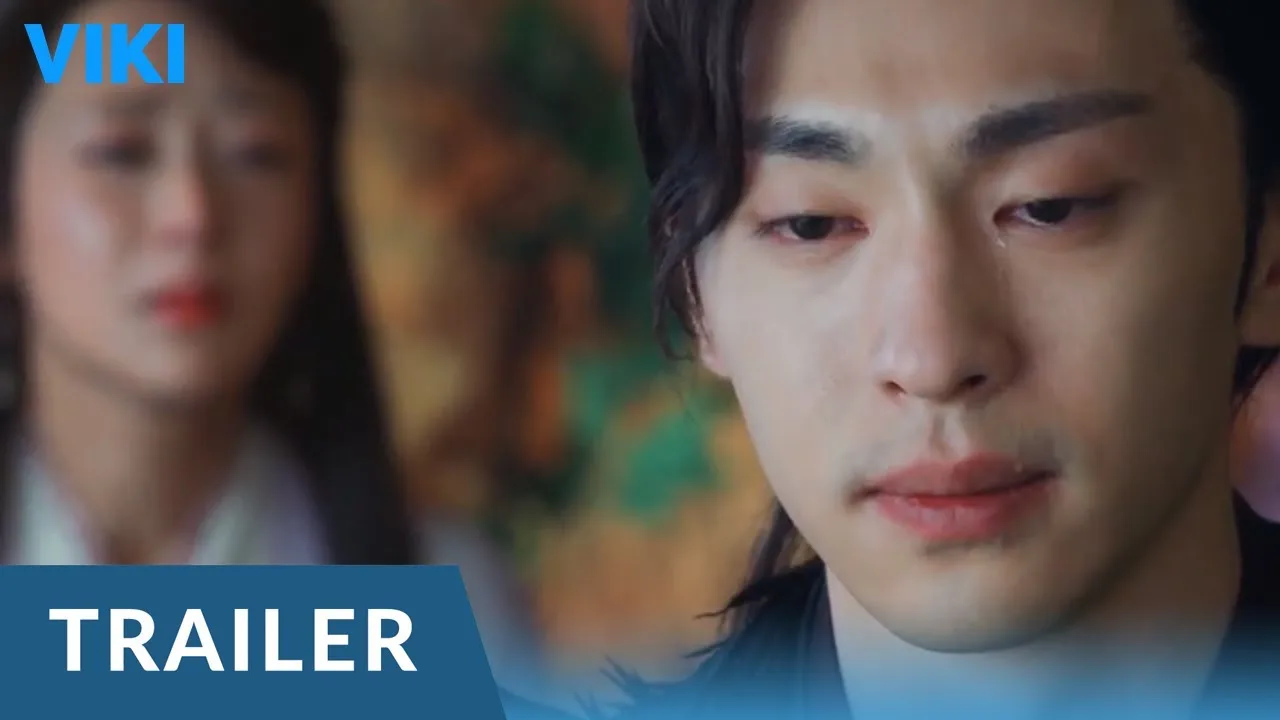
The dream arc's grief can hit hard. That force does not prove the causal chain is sound. A scene can devastate a viewer and still deserve argument about what the writing had to force in order to reach it.
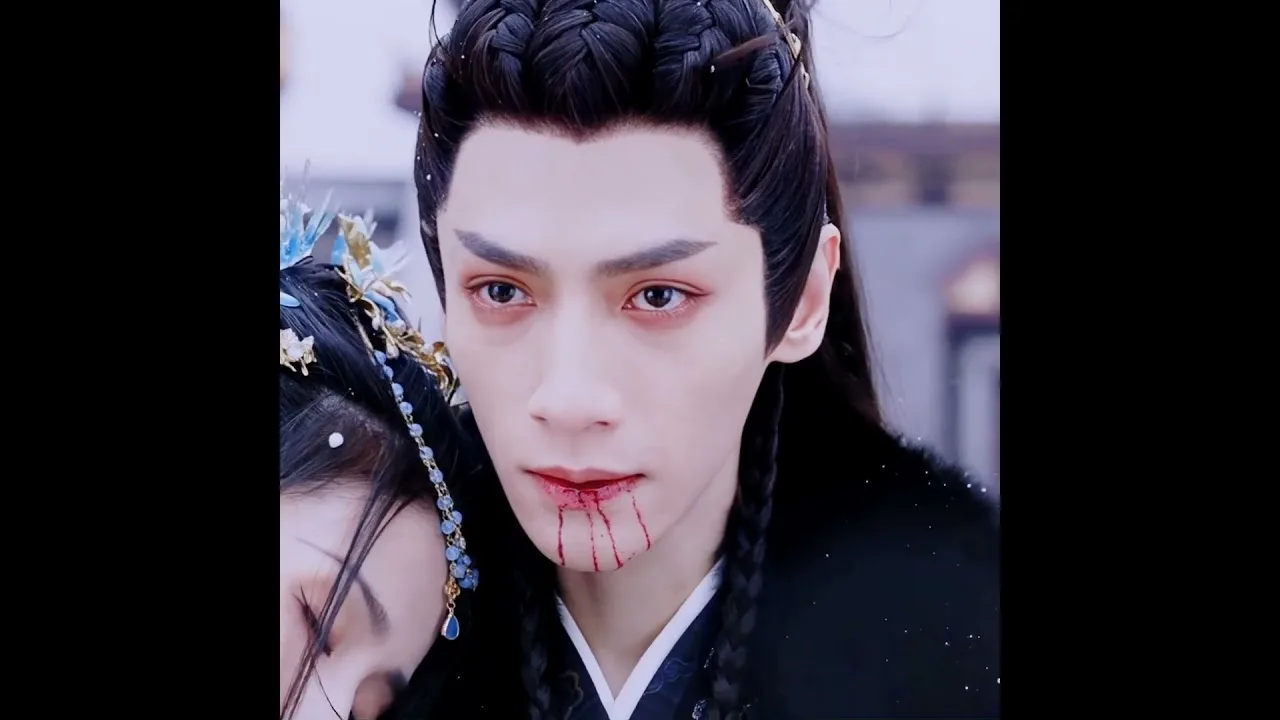
The image explains why this drama travels so well in short clips: grief is immediately legible in the bodies, color and distance between characters. A complete episode has to do harder work. It must show whose decision produced the loss and whether another choice was possible. That gap between an unforgettable image and an earned consequence is the test I keep applying all the way to the ending.
Till the End of the Moon ending explained
Major spoilers begin here.
Tantai Jin ultimately refuses the Demon God's predetermined role and chooses a sacrifice that protects the world rather than possessing Li Susu. The emotional logic is clear: the person treated as inevitable evil makes the choice that proves inevitability false.
The ending does not reward that choice with an ordinary reunion. Li Susu survives and continues life; the closing trace associated with Tantai Jin keeps memory or possibility open without showing the pair sharing a restored domestic future.
That is why viewers call the ending tragic, open or spiritually hopeful depending on what they require from closure. The facts on screen are narrower: he sacrifices, she lives, and the final image refuses to make survival feel like complete repair.
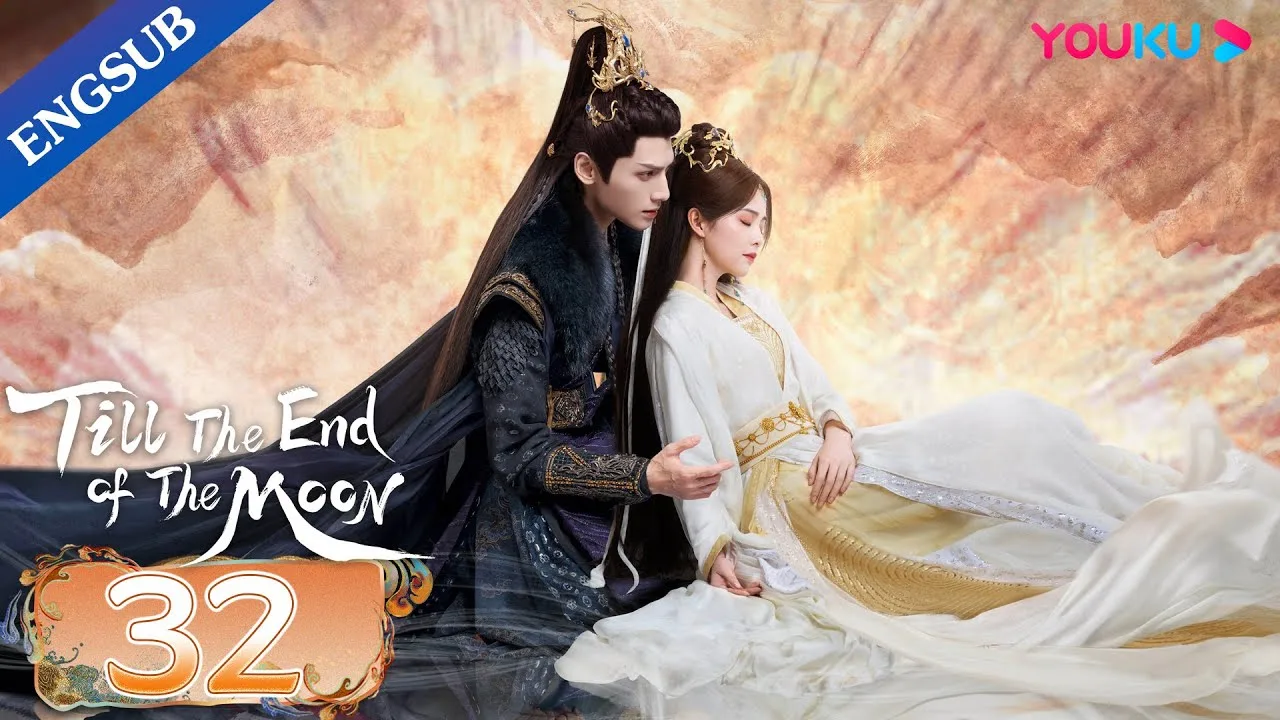
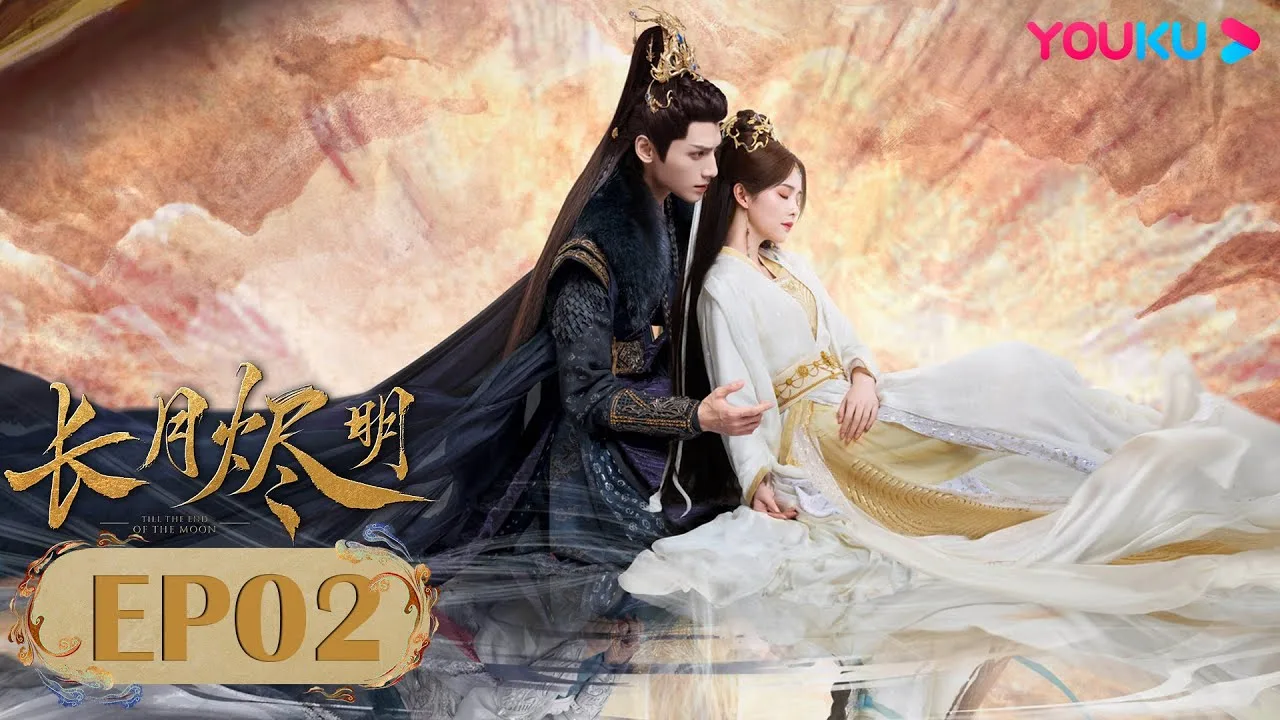
The later-arc image matters because it shows the drama trying to turn catastrophe back into intimacy. The white costume, open space and softened pose promise restoration, but the story has already made restoration impossible in ordinary terms. I prefer this visual honesty to a clean romantic reset: the characters can still be connected without pretending that sacrifice erased every cost.
I think the refusal is right. A quick embrace would convert cosmic consequence into a prize. The weakness is not the absence of a happy ending. It is that the route to sacrifice is so compressed and repeatedly obstructed that the final moral clarity feels cleaner than the preceding story earned.
Who should watch it
Watch Till the End of the Moon if you want:
- an ambitious xianxia production where design carries real narrative information;
- two lead performances built around unequal knowledge, surveillance and bodily control;
- a drama whose flaws create serious arguments about fate, abuse, gender and responsibility;
- fantasy romance that does not resolve into uncomplicated shared life.
Skip it if repeated suffering feels like emotional inflation, if inconsistent knowledge destroys your trust in character decisions, or if you need a cleanly paced route through forty episodes.
For comparison, Love Between Fairy and Devil uses forced bodily connection to build empathy more cleanly, while Till the End of the Moon creates a larger and messier problem: how do you love someone when you remember a future in which he ended your world? If you want to follow Luo Yunxi's wounded restraint into a different kind of fantasy romance, compare it with Ashes of Love; if Chen Duling's moral complexity is what stayed with you, continue to her actor profile.
Beauty does not close the moral argument
The art department did not save a worthless drama. It built a major fantasy language around a story with genuinely difficult questions. The writing then answered some of those questions with courage and others with spectacle, repetition or moral shortcuts.
I insist on keeping both verdicts at once: this is a visual landmark and an uneven moral argument. Calling it either a masterpiece or a disaster erases the exact tension that makes the drama worth revisiting.
That is exactly why the drama remains worth discussing. Perfect stories close arguments. Till the End of the Moon leaves viewers carrying beauty, anger and unresolved responsibility at the same time.
In the comments, name one scene where tragedy grows from a choice and one where music, blood or costume tries to manufacture it. Compare that moral machinery with Ashes of Love, where Luo Yunxi's wounded restraint turns a love triangle into an argument about deprivation and control. Join the East Moment community to compare the difference with spoiler labels and actual scene evidence, then return through the Chinese TV shows collection when you want a fantasy drama built on a different emotional contract.