Luo Yunxi is best understood as an actor who thinks through the body. His dance training does not merely give him elegant posture in costume. It gives him a way to store conflict in a held shoulder, redirect a scene through distance and make a character's loss of control feel like an event. Start with Till the End of the Moon for the largest expression of that method, then use Love Is Sweet and The Truth Within to test whether it survives outside fantasy.
Luo Yunxi makes discipline visible before dialogue begins
| Reader question | Direct answer |
|---|---|
| Who is Luo Yunxi? | Luo Yunxi (罗云熙), also known internationally as Leo Luo, is a Chinese actor and singer whose dance-trained physical control shapes both costume and modern roles. |
| Why is he famous? | Runyu in Ashes of Love expanded his audience; Tantai Jin in Till the End of the Moon became his largest international fantasy-drama showcase. |
| What are his best dramas? | Start with Till the End of the Moon, then compare Love Is Sweet, Love Is Panacea and the current crime route represented by The Truth Within. |
| Is he mainly a movie actor? | No. Searchers asking for Luo Yunxi movies and TV shows will find that television drama is the useful center of his career. |
| East Moment verdict | His strength is not looking fragile or beautiful. It is making control itself dramatic. |
The internet often compresses Luo Yunxi into three images: the thin costume silhouette, the wounded fantasy hero and the immaculate face. All three are visible. None explains why a scene works.
The more useful word is alignment. A dancer learns that the head, spine, arms and feet cannot make unrelated claims. Luo carries that coordination into acting. When a character is socially controlled but emotionally unstable, the interest comes from watching one part of the body begin to disobey the rest.
I do not care how many beautiful costume edits a role produces if the body keeps making the same promise. Luo is compelling when elegance stops being decoration and becomes pressure: a hand held too still, a greeting completed while anger reaches the eyes, a straight back that finally cannot carry the scene. I believe every new role must be judged against that standard. Beauty may open the door, but changed physical behavior is what proves a character has entered.
The dance background is a method, not a decorative fact
Biographies tend to mention dance training and move on. That wastes the most practical key to his screen work.
In dance, a line has direction, weight and an ending. A turn begins before the audience sees it. Stillness is not the absence of movement; it is organized readiness. Luo Yunxi's costume-drama entrances often use the same logic. Sleeves, hair, gaze and foot placement arrive as one decision rather than four attractive details.
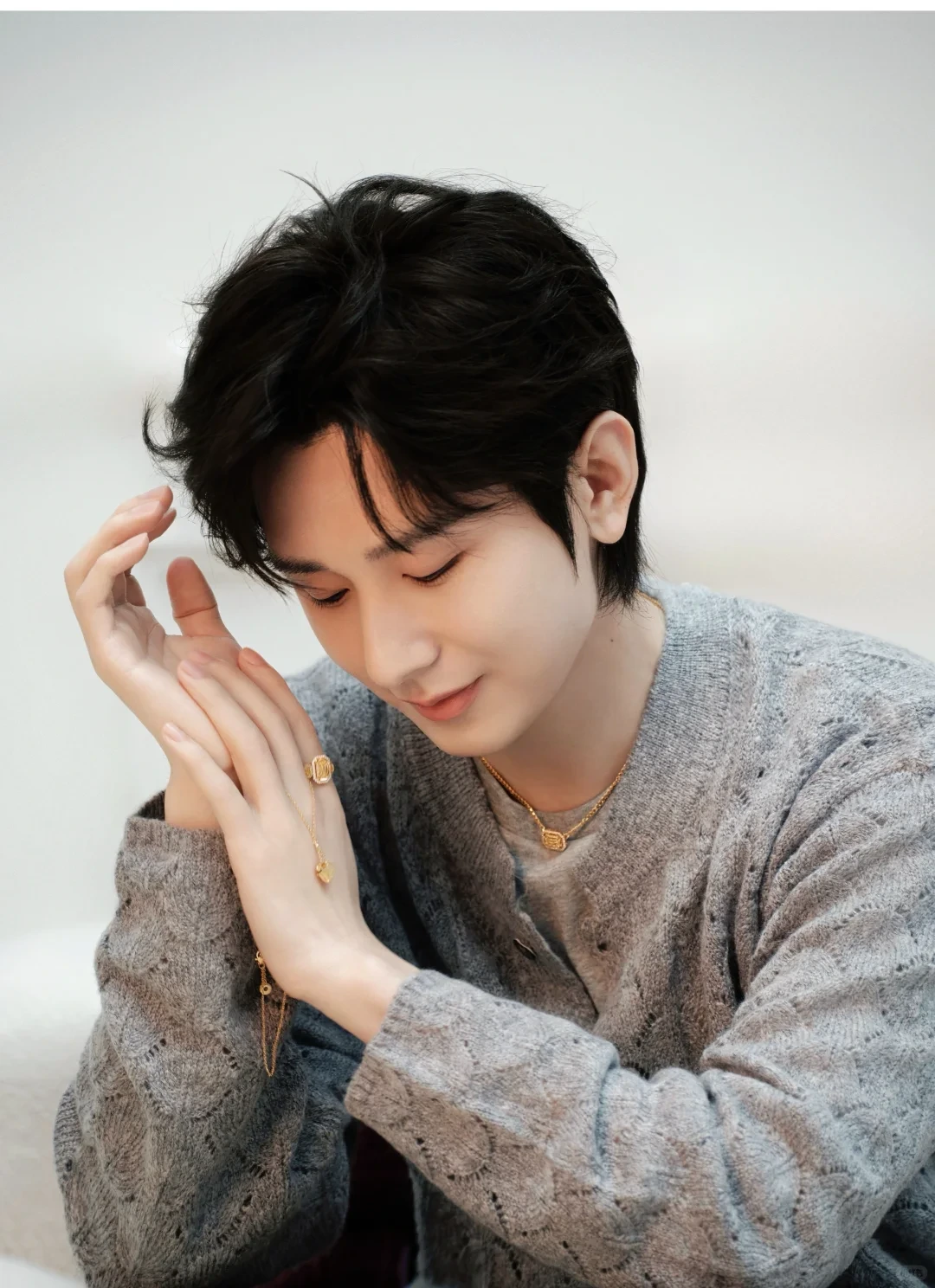
An official YOUKU dance short cannot prove everything about his training or acting. It does let a viewer see the relevant foundation: extension, balance and the ability to finish a gesture cleanly. The question is what happens when that finish is denied to a character.
That is where acting begins. Tantai Jin often wants to complete a threat but hesitates. Yuan Shuai in Love Is Sweet can occupy space confidently, then lose rhythmic certainty when intimacy changes the terms. In modern crime material, formal beauty matters less; listening and reaction have to carry the scene.
The useful phrase for Luo Yunxi is not “top-level charm” but “the quietness of long-term practice.” I respond to effort that appears as calm rather than self-advertisement, without pretending that performance alone proves private discipline.
My judgment is sharper. Luo Yunxi is most persuasive when training disappears into a character's problem. If the viewer notices only a perfect line, the image has won and the role has lost.
Runyu made restraint feel dangerous
Ashes of Love remains essential because Runyu turns elegance into a defensive system. Courtesy, composure and beautiful costume do not mean emotional peace. They are the architecture built around deprivation and ambition. The drama guide keeps the whole triangle on trial; this profile isolates what Luo Yunxi does with stillness, injury and increasingly deliberate control.
Runyu is effective when the body appears socially correct while attention becomes predatory. He waits. He watches who receives affection and who controls the rules. The stillness gradually stops reading as gentleness and begins to feel like calculation.
This role created a template that later productions could exploit too easily: pale costume, suffering, control, fracture. Luo's responsibility in later work is not to repeat the surface. It is to give each controlled man a different reason for control.
Till the End of the Moon turns the whole body into a battlefield

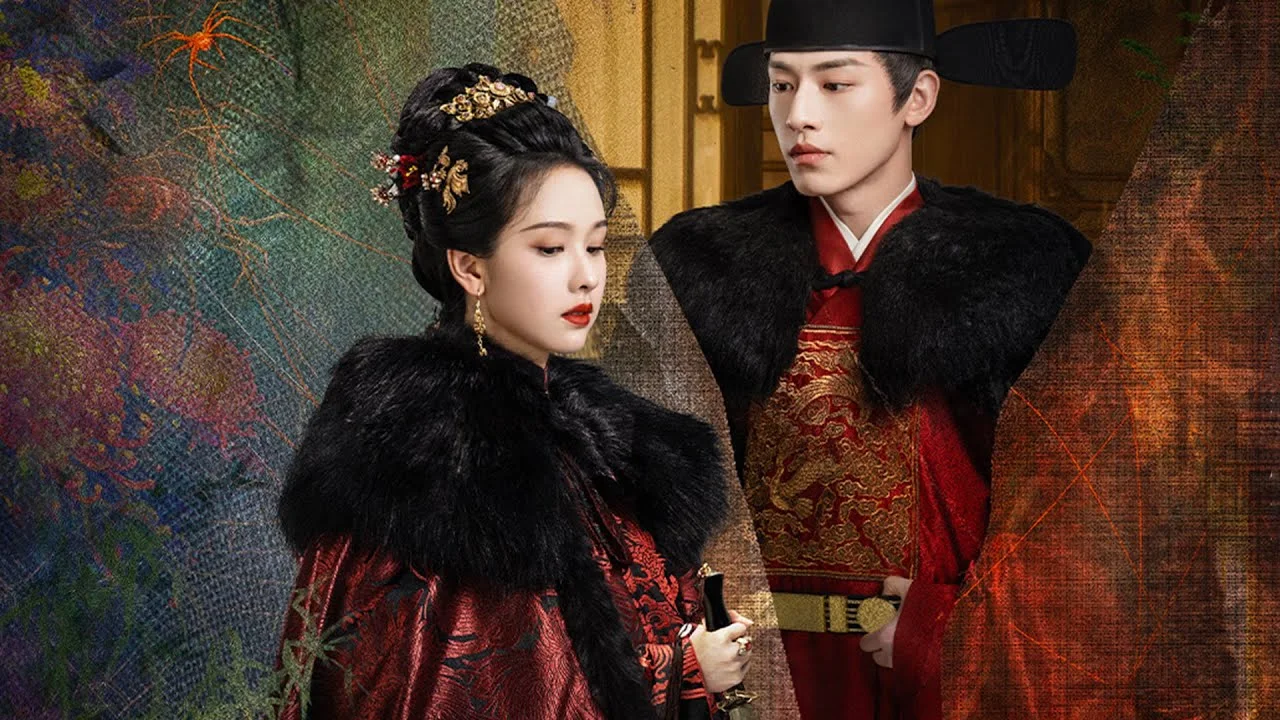
YOUKU's official Episode 1 identifies Luo Yunxi inside the drama's fantasy world. The image proves the production and role context, not acting quality or the character's complete psychology.
Tantai Jin is the largest test because the role contains incompatible physical histories: humiliation, learned watchfulness, new power, attachment and the possibility of becoming the catastrophe everyone already sees in him.
Luo does not solve that by adding more anguish to every scene. His better choice is to change how the character occupies space. Early Tantai Jin protects the body before he can command the room. Power later straightens the line and slows response. Love introduces a different instability because proximity is no longer merely tactical.
Watch the hands. A fantasy production can enlarge eyes, blood, costume and visual effects, but hands betray whether fear, calculation or desire is operating before dialogue names it. Then watch distance. Tantai Jin's most meaningful changes are not always embraces; they are the moments when another person is no longer treated as an object to observe, use or survive.
The full Till the End of the Moon guide owns the plot, Ye Bingchang controversy and ending. This page asks a narrower question: does Luo make one body carry a person, a feared future and a godlike image without letting spectacle erase the transitions?
Often, yes. Not always. The production sometimes loves the wounded silhouette so much that suffering becomes a visual product. When that happens, no amount of physical precision can replace missing causal writing.
Runyu and Tantai Jin are not the same controlled man
The easiest criticism says Luo Yunxi repeated the elegant, wounded costume figure. The costumes invite that conclusion. The bodies do not.
Runyu's control is administrative. He has learned the social architecture around him and tries to win by becoming more correct, more patient and eventually more strategic than the people who denied him. His stillness watches rank. Even desire is filtered through calculation because the character wants a place inside an existing order before he decides to seize it.
Tantai Jin begins from a more animal problem: survival under humiliation. His attention searches for immediate threat, leverage and the strange behavior of people who offer care without an obvious price. When power arrives, the body does not merely become grander. It has to unlearn the reflex of the captive while carrying the prophecy of a destroyer. That makes intimacy dangerous in a different way. Runyu risks losing position; Tantai Jin risks discovering a self that contradicts the role history has prepared for him.
Watch their listening rather than their costumes. Runyu receives information and files it. Tantai Jin often receives it as a bodily disturbance before he understands the moral meaning. If those reactions feel identical, the performance has collapsed into brand. When they differ, Luo proves that physical control is not one pose but a grammar capable of expressing two incompatible histories.
Love Is Sweet proves he can change temperature

Move from Tantai Jin to Yuan Shuai and the silhouette remains recognizable, but the social temperature changes. Modern romance gives Luo fewer robes and supernatural stakes to externalize authority. Timing has to become lighter.
His useful tool here is interruption. Confidence arrives first; a reaction from Jiang Jun forces a recalculation; the scene changes before the polished persona can fully recover. That makes flirtation feel like two people modifying each other rather than one lead delivering charm at a passive recipient.
This is also why Bai Lu is an important internal comparison. Her fast tactical adjustment prevents his control from becoming the only rhythm in the room. Chemistry is not mystical compatibility. It is the visible exchange of information.
Love Is Panacea asks tenderness to survive professional authority

Medical romance creates a risk: a white coat and grave expression can manufacture authority before the character has earned it. Love Is Panacea is useful less as medical guidance than as a test of whether Luo can make care legible without turning it into possession or saintly suffering.
The viewer should separate two questions. Does the performance communicate attention, patience and fear? Does the plot represent medicine responsibly? An actor can support the first without the drama satisfying the second. East Moment does not use this series for health advice.
The Truth Within is the current test that matters
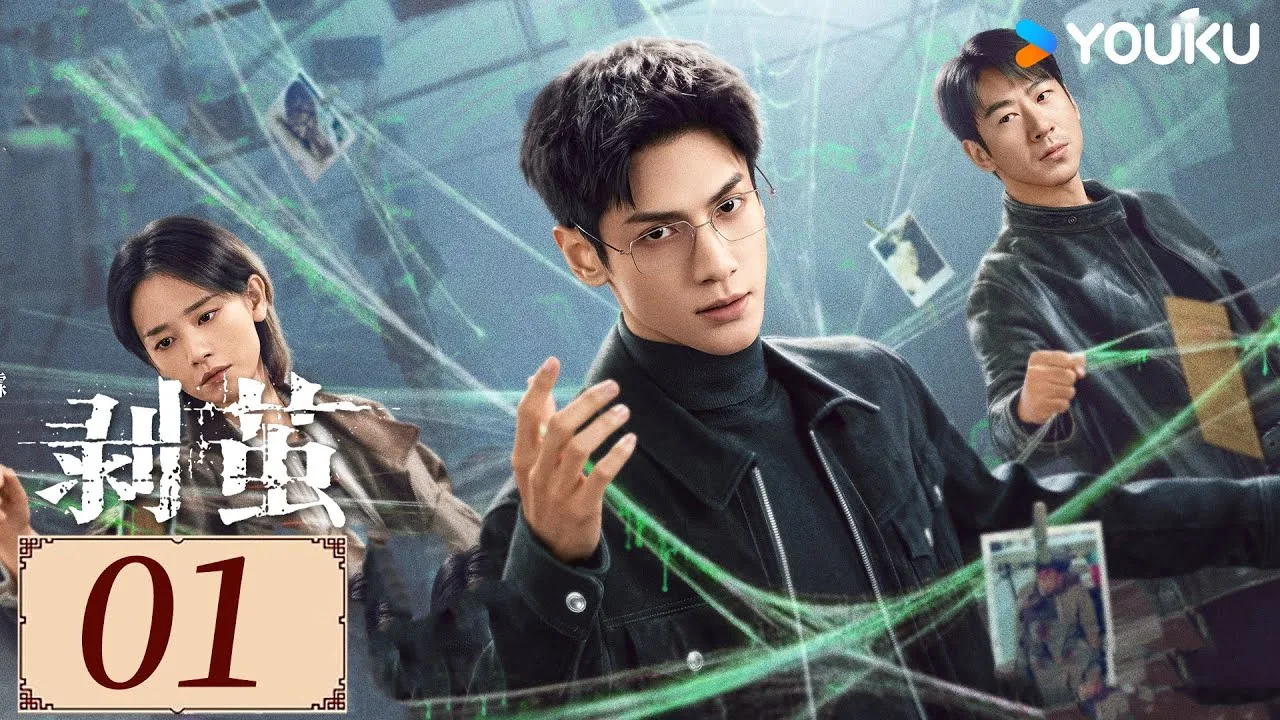
The most useful current question is whether Luo Yunxi can keep the precision while shedding the fantasy packaging. The Truth Within matters because crime work places him among files, colleagues, suspects and procedural pressure. The actor cannot rely on being the singular beautiful wound in the frame.
In ensemble scenes, look at whom he listens to and when attention moves. A good investigator performance is not a sequence of clever conclusions. It lets the audience see information arriving, being doubted and changing the next action.

The ensemble image establishes that the production distributes attention across a team. It does not prove equal narrative weight, real police procedure or later character outcomes.
This is the role I would use to judge his next stage. Tantai Jin proves he can hold a huge fantasy image. A contemporary ensemble must prove he can release control, become ordinary when the scene requires it and let another actor's information matter more than his own framing.
The honest limitation: beauty can become an alibi
Luo Yunxi's visual specificity attracts productions that know how to display him before they know how to write him. Costume, blood, pale makeup and elegant suffering can create instant intensity. They can also encourage a circular performance economy: the character hurts because the image of him hurting is valuable.
Viewers should resist two lazy responses. Admiration should not treat every controlled gesture as genius. Criticism should not assume a narrow frame makes physical performance weak. Use a scene-level test:
- What does the character want before he enters?
- Which part of the body reveals that goal?
- What new information changes the alignment?
- Does the release alter the decision, or merely provide a beautiful close-up?
If nothing changes except the image, the scene is decoration.
Choose Luo Yunxi by how much control you want
- For the defining international role: begin with Till the End of the Moon and watch how humiliation, power and attachment alter distance.
- For the earlier controlled antagonist: choose Ashes of Love and follow Runyu's courtesy becoming strategy.
- For modern romantic rhythm: watch Love Is Sweet, paying attention to interruption rather than only chemistry edits.
- For gentler authority: use Love Is Panacea, while keeping medical claims outside entertainment judgment.
- For the current direction: watch a complete episode of The Truth Within and ask whether his listening is as precise as his posing.
- For a wider comparison: continue through the Chinese actors collection and Chinese television guide.
My final view is that Luo Yunxi's career is not a contest between “beautiful” and “good actor.” Beauty is one instrument the production keeps handing him. The real craft is deciding when the character can control that instrument and when experience breaks the line.
In the comments, bring one full scene where posture changes the meaning of the dialogue. Then join the East Moment community to compare evidence rather than circulating another ranking of faces or suffering.