A Record of Mortal's Journey to Immortality is unusual because Han Li does not treat danger as a stage on which courage must be displayed. He counts enemies, escape routes, medicine, information and the people he would leave exposed. If the answer is bad, he runs. “Han Run-Run” sounds like a joke until you realize that retreat is the discipline that lets a poor village boy live long enough to become someone powerful people must fear.
A Record of Mortal's Journey to Immortality makes survival an intelligence
Most cultivation heroes enter a room and make the hierarchy collapse around their hidden talent. Han Li enters and first asks who owns the room, what they know, what they want from him and whether the door will still exist after he speaks.
That difference is the story's personality.
Han Li is not born into a great clan. He does not receive a public destiny, noble bloodline or mentor whose protection lasts until he is ready. He comes from an ordinary rural family and joins the Seven Mysteries Sect because cultivation first appears as economic possibility: one child leaving may help everyone else survive.
The immortality in the English title can therefore mislead. The early desire is not abstract transcendence. It is mobility. Food, medicine, knowledge and time are scarce; power means having one more choice when somebody stronger has already made plans for your body.
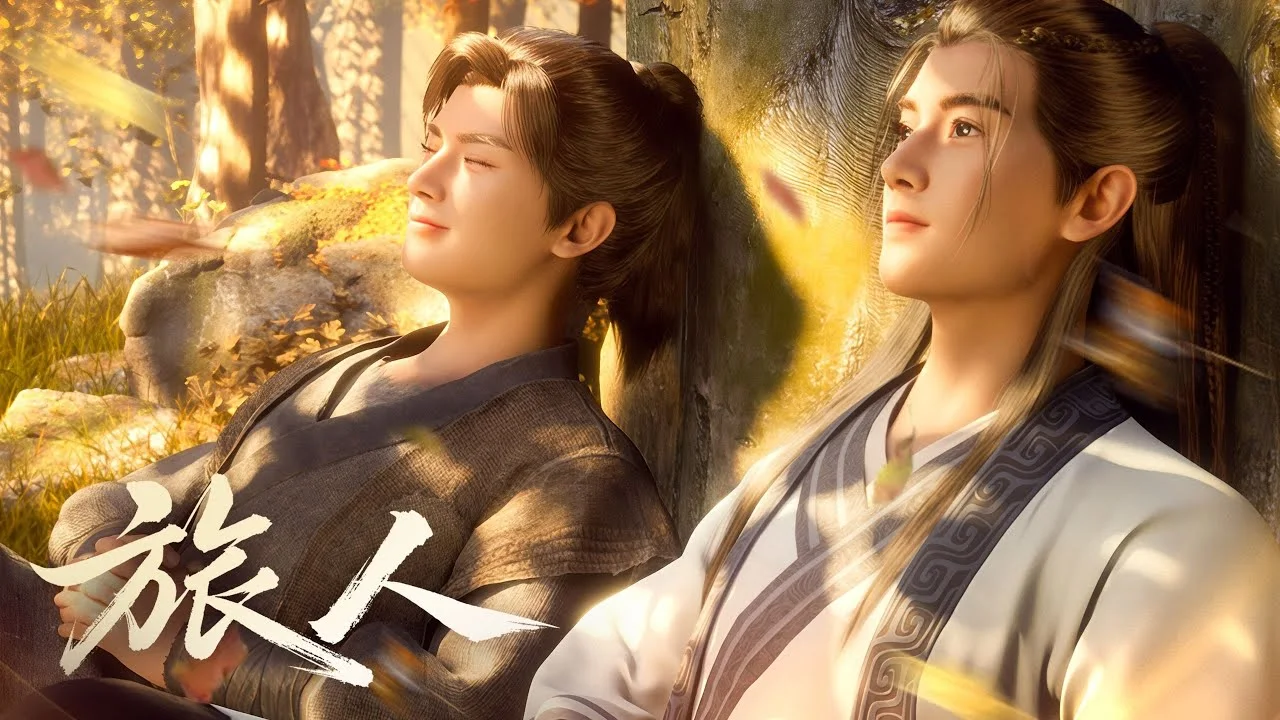
The official “Traveler” image understands the real spectacle: the same person surviving long enough for youth to become memory. Official animation art via Made By Bilibili.
I do not admire Han Li because he always chooses correctly. I admire that he refuses to confuse being seen as brave with remaining alive.
The title, story, order and current status
| Question | Direct answer |
|---|---|
| What is the Chinese title? | Fan Ren Xiu Xian Zhuan (凡人修仙传), literally a record or tale of an ordinary mortal cultivating immortality. |
| Why do English titles vary? | Official and search usage includes A Record of a Mortal's Journey to Immortality, A Mortal's Journey to Immortality and versions without the second “a.” They refer to the same donghua. |
| Who is Han Li? | A poor village boy with ordinary spiritual roots who enters cultivation through the Seven Mysteries Sect and survives by preparation, secrecy and disciplined retreat. |
| Is it anime or donghua? | It is Chinese 3D animation, commonly called donghua. “Anime” remains a useful international search term, not its production country. |
| Is the animation finished? | No. It is an ongoing long-form adaptation of Wang Yu's completed web novel. |
| What is the watch order? | Begin at episode one and follow the numbered release order. Arc labels such as Tiannan, Sea of Scattered Stars, Return to Tiannan and Mulan War help navigation but do not replace episodes. |
| What is current in August 2026? | The official English-facing channel is in the Mulan War arc. When reviewed, episode 186 was public and episode 187 had an official preview; paid access can run ahead of the public catalog. |
| Where can I watch it? | Check Made By Bilibili's official series search and Bilibili. Region, subtitles, compilation length and membership access vary. |
| Do I need to memorize every cultivation realm? | No. Early on, understand that one realm can create an overwhelming power gap. Learn specific stages when Han Li's choices make them matter. |
The episode count changes during an ongoing weekly release, so a static guide should not promise “all episodes” based on a repost title. The official channel now offers very long subtitled compilations, but some newest episodes and previews carry membership labels. This page embeds only a free promotional video.
Doctor Mo teaches Han Li that mentorship can be predation
Doctor Mo is the first adult who makes Han Li's talent feel valuable. He offers medicine, technique and a path beyond ordinary martial training. He is also the lesson that shapes almost every later relationship: a benefactor may be investing in the future ownership of your body.
The conflict is frightening because it is not announced as villainy. Knowledge arrives together with surveillance. Progress makes Han Li more useful to the person controlling access. A weaker student must learn the teacher's intention before the teacher decides the harvest is ready.
This is where Han Li's secrecy begins to feel ethical rather than merely suspicious. He hides the green bottle, tests information and builds alternatives because transparency inside an unequal relationship can be self-destruction. “Trust your mentor” is not moral advice when the mentor can kill you for the resource you reveal.
The lesson also damages him. Once caution saves his life, he applies it everywhere. Every favor may conceal a price. Every attachment may expose a weakness. Survival logic becomes a shield so useful that removing it starts to feel irrational.
That is the emotional cost the long story should keep examining, not simply celebrate.
Han Run-Run is funny because the joke contains strategy
I understand the affection behind the nickname Han Paopao, or “Han Run-Run.” At last, here is a protagonist who sees an opponent he cannot beat and does not wait for pride to invent a miracle.
The cleanest version of the joke is also the smartest reading: when Han Li does not run, everyone else should start running. His decision to stay means he has already counted the gap, prepared tools and found enough control over the battlefield to accept risk.
The thumbnail does not need an explosion. Han Li's stillness and hand position make preparation visible before the battle montage begins. Official PV via Made By Bilibili.
Retreat is not passive. He may burn precious energy, reveal a reserve technique or abandon loot because the alternative is becoming somebody else's loot. He also understands that surviving a fight can be a loss if it exposes every card to the next enemy.
That behavior feels adult because real life rarely guarantees the strongest person will arrive after your inspirational speech. Sometimes dignity is protecting the future from a battle chosen by somebody else's ego.
But the joke has a boundary. If every retreat is later proven optimal, caution becomes another form of protagonist infallibility. The story is richer when leaving costs a relationship, allows harm elsewhere or forces Han Li to live with a choice that cannot be converted into future power.
Survival is not innocent from the other side of the encounter
Han Li's caution is appealing because the cultivation world is structurally predatory. But a strategy that keeps one person alive can make another person's world less stable. He arrives with concealed techniques, incomplete information and several exits; rivals, gatekeepers and even temporary allies rarely know which version of him they are facing. When the calculation turns against them, they may experience the quiet cultivator not as a reasonable survivor but as the unannounced disaster that changed the rules of the room.
That shift in perspective matters. It stops “Han Run-Run” from becoming a permission slip for every act committed in the name of safety. Secrecy can defend the vulnerable person who has no institutional protection. It can also prevent accountability, turn trust into a disposable tool and make collateral damage easy to rename as necessity.
I still prefer Han Li's refusal to perform heroic stupidity. Yet his best scenes do not say that planning makes him morally clean. They ask whether survival has enlarged his ability to choose responsibly, or merely made his own future too valuable to share. A long-lived protagonist becomes interesting when the people around him retain the right to see his caution as protection, betrayal, fear or threat.
The green bottle turns time into labor, not a free cheat
Han Li's mysterious green bottle is an enormous advantage. It accelerates the growth of spiritual plants, making rare medicinal ingredients and pills more attainable. Calling him an ordinary mortal without acknowledging it would be dishonest.
What keeps the object interesting is how he uses it. The bottle does not remove scarcity; it changes which scarcity matters. Seeds, recipes, safe land, time, secrecy and alchemical skill become the new constraints. A spectacular treasure produces farming, inventory and the constant fear of discovery.
This is one reason the series can make preparation satisfying. Pills, talismans, formations and magical tools are not prizes waiting in a glowing chest. They sit inside an economy. Somebody grows, refines, trades, steals, inherits or kills for them. Han Li's power rises because he understands systems of production as well as combat.
The danger is repetition. When another arc becomes “acquire ingredient, enter dangerous place, hide true strength, escape with better resources,” cultivation can resemble an efficient spreadsheet. The adaptation needs faces, landscapes and relationships to remind us what the resources are for.
Time is the series' real special effect
The strongest visual decision is not one giant spell. It is allowing Han Li to age.
Many animated heroes keep one youthful face while centuries become numbers in dialogue. Mortal's Journey changes hair, skin, posture and the weight of attention. The 3D model is not perfect; sometimes polished faces feel smoother than the emotional history they are supposed to carry. Yet the willingness to alter the protagonist matters.

Facial hair and heavier features allow elapsed years to reach Han Li's body. The official opening image does not preserve him as an eternal teenager.
Cultivation promises longer life, but longevity is not the same as continuity. Mortal friends age. Family becomes unreachable. Places that once defined the whole map become one earlier region in a much larger world. Han Li acquires time while losing shared time with people who cannot follow.
That is why the paired “Traveler” portrait is more moving than a realm chart. One self rests beside another self he could never literally meet. The road has kept the person alive and made the earlier person impossible to return to.
Nangong Wan matters when romance interrupts calculation
Reducing the women around Han Li to a list of “eleven beauties” repeats the weakest habit of cultivation marketing. Attraction, gratitude, missed timing, companionship and lasting partnership are not interchangeable trophies.
Nangong Wan matters because she has her own cultivation position and because the bond repeatedly collides with Han Li's instinct to preserve options. He cannot treat her as a simple reward waiting at the end of a successful realm. Choosing a shared future creates risk he cannot fully outsource to strategy.
Other relationships expose different limits. Mo Caihuan carries the ache of mortal timing: affection can be real and still be unable to cross the lifespan, status and path separating two people. Silvermoon begins inside a supernatural and practical arrangement, then develops enough agency that “companion” must mean more than useful spirit beside the hero.

Silvermoon's direct gaze gives her the frame instead of placing her behind Han Li. The page should ask what she wants, not only what she can do for him.
Han Li is emotionally convincing when caution delays intimacy without erasing it. He notices, remembers and sometimes returns. He is less convincing when the narrative uses women to prove that a reserved man is secretly desirable while denying those women equivalent interior lives.
My question is not “Which woman wins?” It is whether immortality expands Han Li's capacity for relationship or only extends the duration of his self-protection.
Cultivation here is an economy before it is a philosophy
The series uses Daoist vocabulary, alchemy, talismans, meditation, yin-yang imagery and the aspiration to transcend mortality. It is fantasy, not a documentary guide to Daoist religious practice.
Its world is more immediately legible as political economy. Sects control techniques. Families convert lineage into access. Markets assign prices to medicine and tools. Powerful cultivators can take resources because enforcement follows realm. “Righteous” and “demonic” factions may use different language while sharing appetite.
Han Li succeeds because he learns that moral labels do not cancel incentives. He deals with institutions without expecting their slogans to protect him. This skepticism can feel bracing after fantasy stories where joining the correct school solves the ethics of power.
For the historical tradition behind some borrowed vocabulary, read our Taoism guide. Keep the boundary clear: real Daoist lineages, ritual and philosophy cannot be reconstructed from flying swords, Nascent Souls or fictional pill recipes.
The Sea of Scattered Stars makes distance feel dangerous
Long cultivation stories often enlarge the map until location becomes wallpaper. The Sea of Scattered Stars works when geography changes behavior. Islands, travel time, storms, sea beasts, markets and hidden sites turn movement into risk calculation.
Han Li cannot assume that escape means running over the next hill. Distance consumes resources. Information decays between places. A safe identity in one market may become dangerous at another port. The environment suits a protagonist whose first talent is logistical thought.
The 3D production gains something here. Large water surfaces, vessels, islands and vertical combat can establish distance more quickly than exposition. It can also become too clean: digital seas and monumental structures risk making every location feel built from the same expensive fantasy material.
The best scenes restore friction: one person crossing an enormous space, a market dense with unequal transactions, or a quiet shore that makes the cost of leaving visible.
Mulan War tests whether survival can remain private
The active Mulan War arc increases scale from individual deals and sect danger to organized conflict. Han Li now has power, reputation and relationships that make “simply leave” morally different from the choice available to the unknown boy at Seven Mysteries Sect.

The campaign image gives Han Li armor and public scale, but his face still looks back before the body commits forward. Official Mulan War PV.
This is an important evolution. Caution remains intelligence, but accumulated power creates obligation. If you can change the survival odds of others, neutrality is no longer the same act it was when intervention meant certain death.
War can also expose the series' structural weakness. More factions, senior cultivators, weapons and battlefield stages can produce escalating spectacle without deepening the human stakes. A named army is not automatically a society. The arc needs ordinary consequences and decisions, not only opponents large enough for a Nascent Soul cultivator.

The official scene PV makes architecture part of the conflict: walls, gates and distance organize who can move and who must be defended.
The current material is most promising when Han Li's old survival reflex meets a world where other lives now depend on whether he stays.
Watch the free battle PV for tactical rhythm

The free official PV is useful because it compresses combat decisions without pretending to be a free full episode. Watch the distance between tools, bodies and escape paths, not only the finishing effects.
The page does not embed the 12-hour episode compilations or membership-marked latest releases. Very long embeds impose a performance cost and can blur the line between a guide and a viewing substitute. The official channel remains the correct place to check current free and member availability.
The East Moment verdict: caution becomes heroic when it preserves a future
Watch A Record of a Mortal's Journey to Immortality if you want cultivation to feel like accumulated labor rather than a sequence of destiny reveals. Han Li farms ingredients, studies danger, stores tools, changes identities, loses time and runs when the numbers are wrong.
Do not begin expecting fast romance, a compact finished season or a hero who turns every insult into immediate combat. The ongoing length can be exhausting. Arc names and realm changes accumulate. Some 3D faces are visually precise but emotionally smooth. Strategic repetition can make the world feel like a resource loop.
The reward is rare: a protagonist whose refusal to perform bravery becomes its own kind of courage. “Han Run-Run” survives because he knows that a future can be more valuable than today's applause. His growth becomes meaningful when that future finally contains obligations beyond himself.
Continue through the Chinese anime and donghua collection, or compare Han Li with Wei Wuxian in Mo Dao Zu Shi: one survives by withholding himself from institutions, while the other becomes a public enemy by refusing to abandon people those institutions have condemned. For another long journey built from Chinese fantasy systems, visit Black Myth: Wukong.
Readers who need to locate Han Li inside the larger chronology can use XianLore's Mortal's Journey world archive for characters, episodes, realms, relationships, artifacts and places.
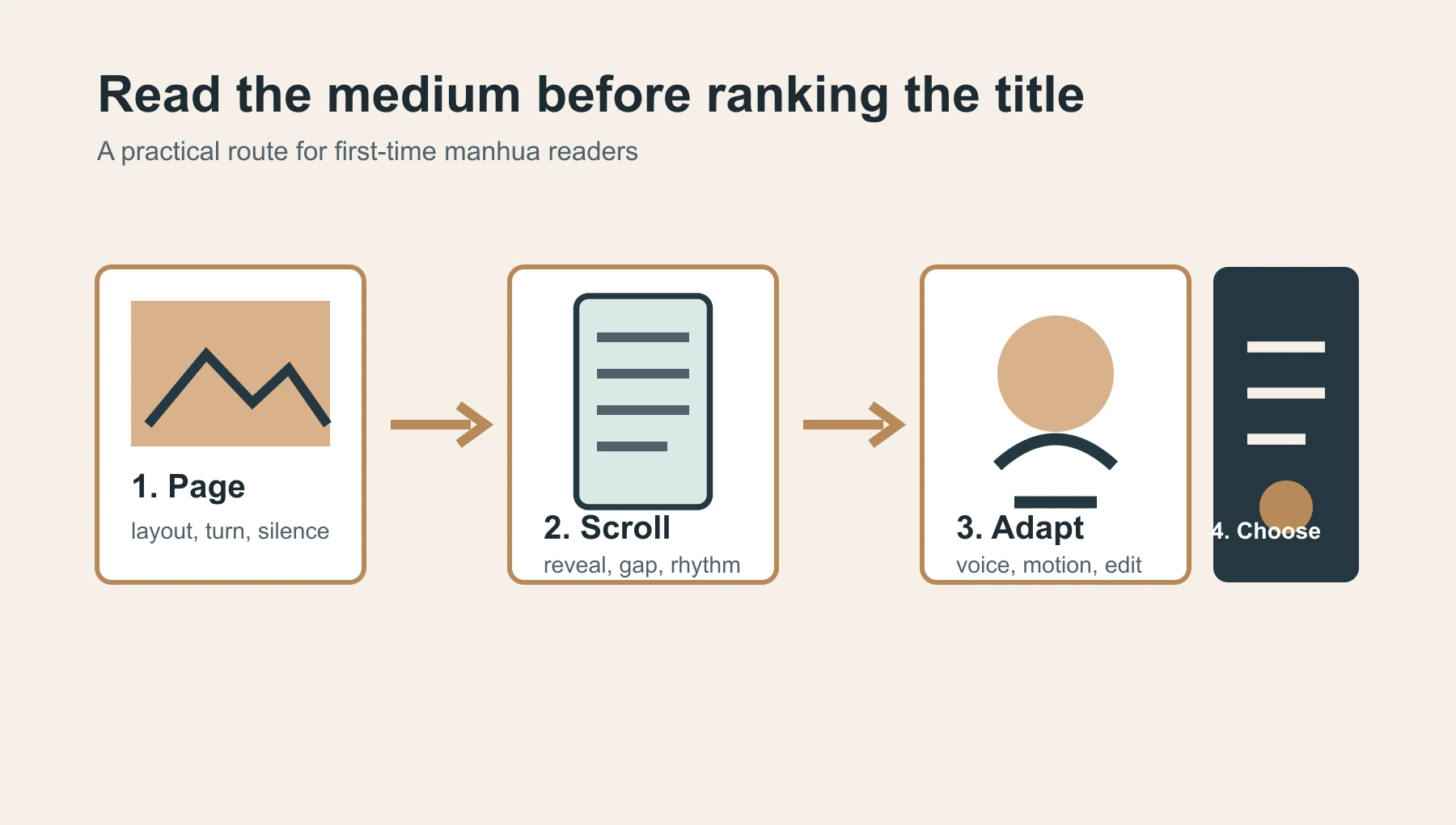
If Han Li's slow preparation makes you want a reading route rather than another episode list, continue with the cultivation manhua guide. It separates what a still panel can make you notice from what donghua movement, sound and duration add.
Then bring one decision to East Moment's community. Not a realm ranking: tell us which retreat felt wiser than fighting, which ordinary goodbye made immortality feel expensive, or where Han Li's caution crossed into emotional avoidance. Use spoiler labels for later arcs.