Battle Through the Heavens is easiest to advertise as a ladder of realms, rare flames and larger enemies. That is not why I keep caring. Its real engine is humiliation. Xiao Yan loses ability, status and the future others had already assigned to him. The long pleasure comes from watching him rebuild dignity without becoming the same kind of person who once measured his worth by rank.
Battle Through the Heavens begins with humiliation, not power
Xiao Yan was a celebrated child until his cultivation began moving backward. In a clan that treats talent as social currency, the loss is public. Adults recalculate his value. Peers change their tone. A marriage arrangement becomes an opportunity for the powerful Nalan clan to remove an embarrassment.
That is why the Three-Year Agreement matters. It is often remembered as a promised duel, but the duel is only the visible end of a deeper argument: who has the right to define a young person's value when his useful talent disappears?
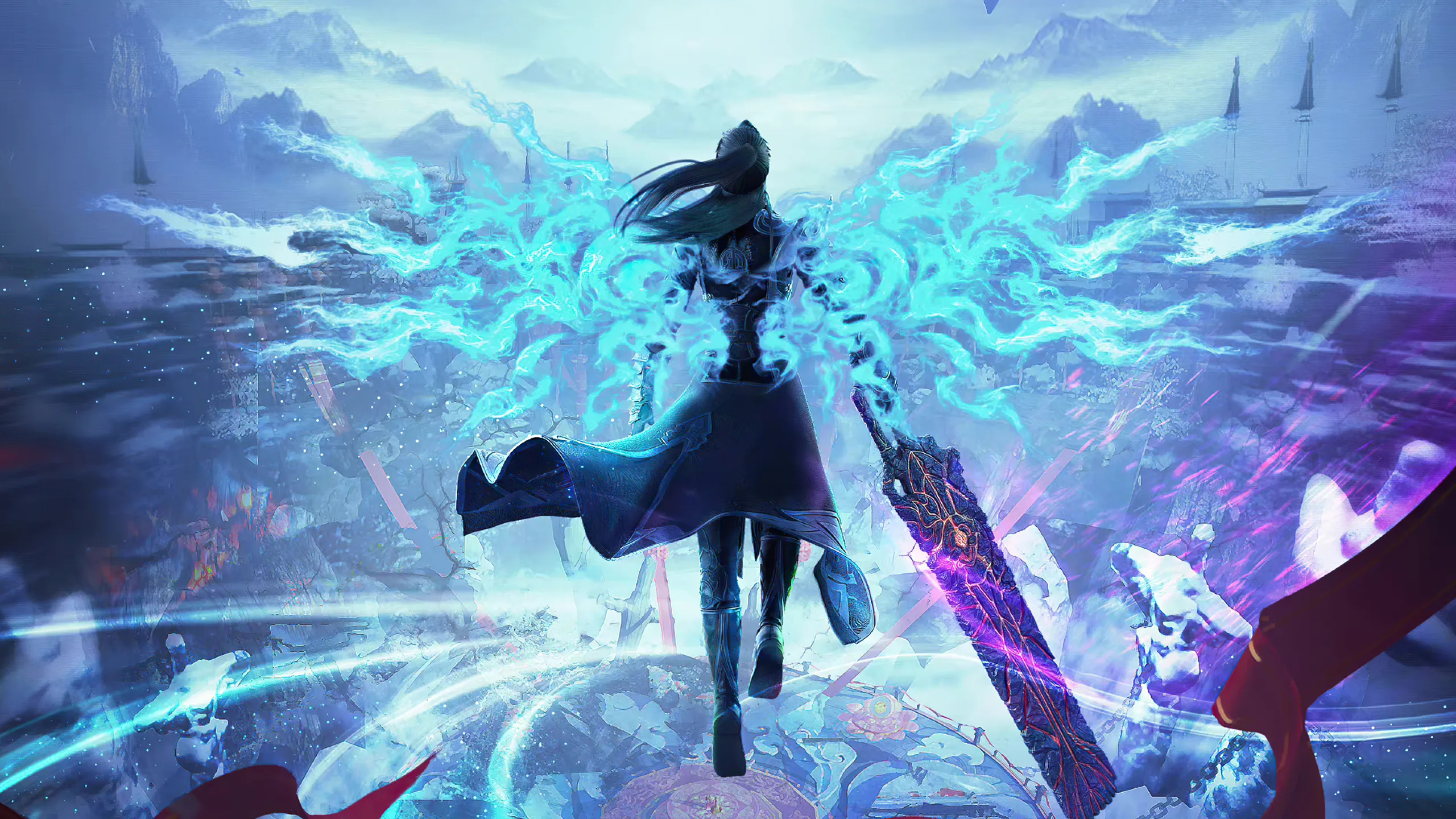
The blue flame makes the victory spectacular, but the posture matters more: Xiao Yan returns to a space where others once spoke over him and answers in his own name. Authorized title-specific archive image.
I do not read Nalan Yanran as a simple villain for refusing an arranged marriage. She should be free to refuse it. The cruelty lies in how the refusal is delivered through status, witnesses and institutional pressure. Xiao Yan's angry promise is also imperfect; wounded pride can turn another person's choice into a stage for revenge. The arc lasts because both freedom and humiliation are present at once.
The duel therefore works only if you remember the powerless boy before the flames. Remove that memory and it becomes another beautifully animated ranking correction. Keep it, and every step toward Misty Cloud Sect carries emotional weight.
The direct guide: title, story, characters and how to start
| Question | Direct answer |
|---|---|
| What is it? | A Chinese 3D cultivation-fantasy donghua adapted from Tian Can Tu Dou's web novel Dou Po Cang Qiong (斗破苍穹). |
| Who is the protagonist? | Xiao Yan, a former prodigy whose lost cultivation is connected to the spirit of the alchemist Yao Lao. |
| What drives the early story? | Xiao Yan trains for the Three-Year Agreement with Nalan Yanran while learning alchemy, gathering techniques and discovering why strength without resources is rarely equal. |
| Is Medusa the same person as Cai Lin? | Cai Lin is the name used for Queen Medusa. Her evolution, political duty to the Snake-People and relationship with Xiao Yan should be read as one continuing life, not separate decorative identities. |
| What are Heavenly Flames? | Rare and dangerous flames with distinct histories and abilities. They affect alchemy, combat and bodily transformation; they are not interchangeable collectible colors. |
| Where should a new viewer begin? | Start with the beginning of Xiao Yan's fall and Yao Lao's arrival. Do not begin with a late highlight compilation if you want the Three-Year Agreement to mean anything. |
| Where can it be watched? | Check the official Tencent Video catalog; regional access, subtitles and episode packaging can vary. |
Yao Lao turns secret advantage into a human relationship
Xiao Yan does not recover through motivation alone. Yao Lao gives him knowledge, methods, alchemy training and access to a world that his clan cannot see. This is important because cultivation stories often disguise privilege as pure willpower.
Xiao Yan works brutally hard. He is also trained by an extraordinary teacher. Both are true.

A Heavenly Flame is visible power; the control behind it comes from instruction, failure and alchemical discipline. The image proves the title-specific visual identity, not the exact flame rank of every scene.
Their bond becomes convincing because it changes direction. At first, Yao Lao is a hidden explanation for Xiao Yan's loss and then a source of solutions. Later, Xiao Yan must carry responsibility for the teacher who carried him. The relationship moves from debt to loyalty.
A good master should eventually become someone the student can disappoint
Yao Lao is easy to reduce to a cheat code: an ancient expert in a ring, a private teacher who makes the hero exceptional again. That is the structural advantage Xiao Yan receives, and the page should not disguise it. But the relationship earns more than convenience when it allows disagreement, absence and risk to change the student.
At the beginning, Xiao Yan needs Yao Lao's explanation for why his body failed, his training plan and the confidence to enter rooms that used to humiliate him. That dependence is understandable. It becomes a problem if every later decision is secretly correct only because the master has already solved it from offscreen.
The stronger version of their bond asks Xiao Yan to become answerable in his own right. He must decide when to use a lesson, when to reject an easier path and when saving Yao Lao costs more than a dutiful student can afford. A mentor is not proved great by making the pupil a copy. He is proved great when the pupil's independent judgment can surprise, worry or even disappoint him without destroying the relationship.
This is also why alchemy is more interesting than an extra combat profession. Pills, ingredients and flame control reveal an economy of advancement. Talent matters, but so do rare materials, recipes, teachers, markets and factions. The supposedly personal climb is built through social access.
Cai Lin is not a prize waiting beside Xiao Yan's ascent
Queen Medusa enters with her own people, authority and reason to risk evolution. She is not powerful because the protagonist notices her; Xiao Yan enters a crisis already in motion.

Armor, crown and controlled energy keep Cai Lin inside her political and martial identity. That is a more honest introduction than presenting her first as a glamorous attachment to Xiao Yan.
The donghua's visual fascination with her can be a strength and a trap. Her design communicates danger, command and transformation immediately. But a page that only collects her most beautiful frames repeats the same reduction the character spends the story resisting.
Her relationship with Xiao Yan is difficult because bodily transformation, power imbalance, danger and later affection do not arrive in a clean order. Viewers can care about their bond without rewriting coercive or uncomfortable material as uncomplicated romance. The better question is whether later choices restore Cai Lin's agency rather than merely rewarding Xiao Yan.

The serpent and flame imagery connects Cai Lin to bloodline, evolution and combat. It does not prove her private motives; those belong to the story, not the wallpaper.
The women reveal whether the story can imagine power beyond romance
Xiao Xun'er, Yun Yun, Nalan Yanran, Little Fairy Doctor and Cai Lin occupy very different positions. They should not be compressed into a list of who loves Xiao Yan.

Xiao Xun'er's quiet visual language contrasts with the public fire of the Three-Year Agreement. Her identity also carries family power and knowledge that Xiao Yan does not initially possess.
Nalan Yanran is the person who wounded Xiao Yan's pride, but she is also a young cultivator shaped by Misty Cloud Sect. Yun Yun holds institutional authority and personal vulnerability at the same time. Little Fairy Doctor's Woeful Poison Body turns the promise of special talent into danger. Cai Lin must lead a people while navigating a transformation that changes her body and future.
The adaptation is strongest when these women make decisions that would still matter if Xiao Yan left the frame. It is weakest when accumulated affection becomes another measure of the hero's successful ascent.
The Three-Year Agreement frees no one if only one person gets to grow
The duel with Nalan Yanran is often packaged as a clean comeback: the boy mocked by a powerful sect returns and proves everyone wrong. That satisfaction is real, but it is not the full emotional result. Nalan Yanran had a right to reject a marriage she did not choose; Xiao Yan had a right not to be publicly reduced to a failed investment. The conflict becomes meaningful only when both truths remain in the same scene.
The adaptation's more reflective note—victory as a kind of freedom for both people—matters because it shifts the focus away from possession. Xiao Yan should not need Nalan Yanran's defeat to establish his worth, and she should not need sect approval to establish hers. If the story treats her only as the girl who offended a future hero, it repeats the hierarchy it claims to challenge.
Yun Yun makes the issue harder, not softer. Her relationship with Xiao Yan carries real feeling, but she also inherits responsibility to Misty Cloud Sect. A choice made for him can become betrayal to the community that formed her; obedience to the sect can become complicity in its cruelty. Their distance is not a romance obstacle placed between two otherwise free people. It is the cost of having loyalties that cannot be settled by who wins a duel.

Distance, equal altitude and opposing movement make the relationship legible as conflict between two paths, not only attraction.
Heavenly Flames should feel dangerous, not merely collectible
The flames work because each promises acceleration at a bodily cost. They can transform alchemy and combat, but obtaining or merging them can injure the person trying to command them. That risk keeps the system connected to character.
Once every new flame becomes only a brighter upgrade, the story loses tension. The most satisfying breakthroughs are the ones that force preparation, trust, sacrifice or a change in how Xiao Yan understands power. A realm name tells you where he stands. A costly decision tells you who he is becoming.
This is the useful viewing habit: when a new technique appears, ask three questions.
- Who taught it or made access possible?
- What does Xiao Yan risk besides losing a fight?
- Which relationship changes after he succeeds?
Those questions protect the series from turning into a spreadsheet.
My best route through the donghua
Watch the opening fall and Yao Lao's reveal without skipping. Follow the training and alchemy closely enough to understand why resources matter. Treat the Three-Year Agreement as the first emotional destination, not the end of the story. After that, let Cai Lin, Yun Yun and the wider factions expand your idea of what power costs.
If you want a slower and more solitary cultivation journey, compare Xiao Yan with Wang Lin in Renegade Immortal. If you want team loyalty and a power system built on morally troubling extraction, go next to Soul Land. The Chinese anime hub explains where both sit inside donghua.
For named flames, character relationships, cultivation stages and episode-reference depth, continue to XianLore's Battle Through the Heavens world archive. East Moment's job here is different: to keep asking whether the ascent still remembers the humiliation and the people that gave it meaning.
Then bring one scene to the East Moment community: when did Xiao Yan truly recover his dignity, and when did the story confuse greater power with greater character?