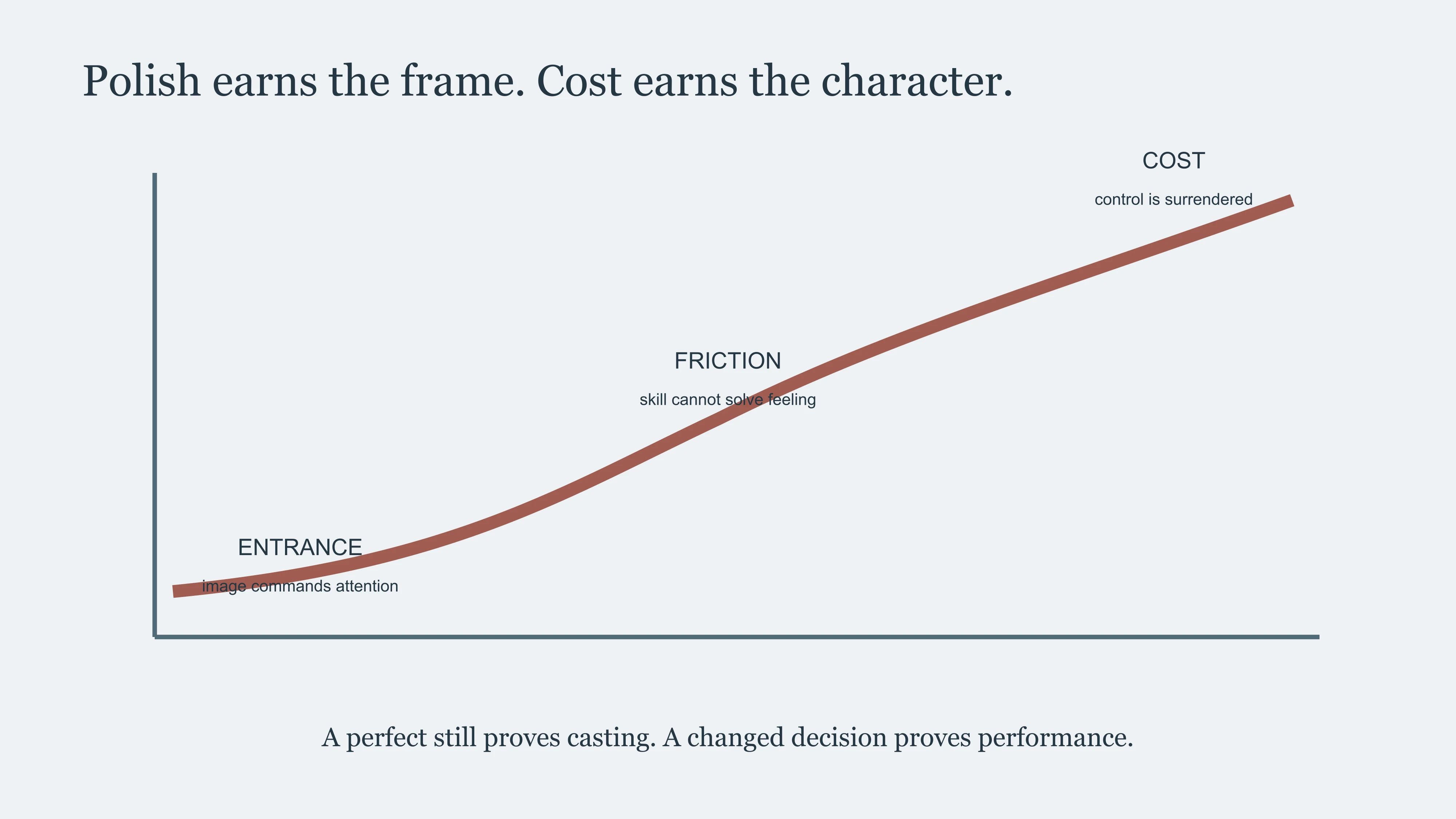
Yang Yang is most revealing when polished composure has to absorb a real emotional cost instead of functioning as decoration. He can command a frame before he has spoken. The serious question is what happens after the frame has been won: does the character listen, risk embarrassment and let another person change the plan?
Yang Yang: where should you start?
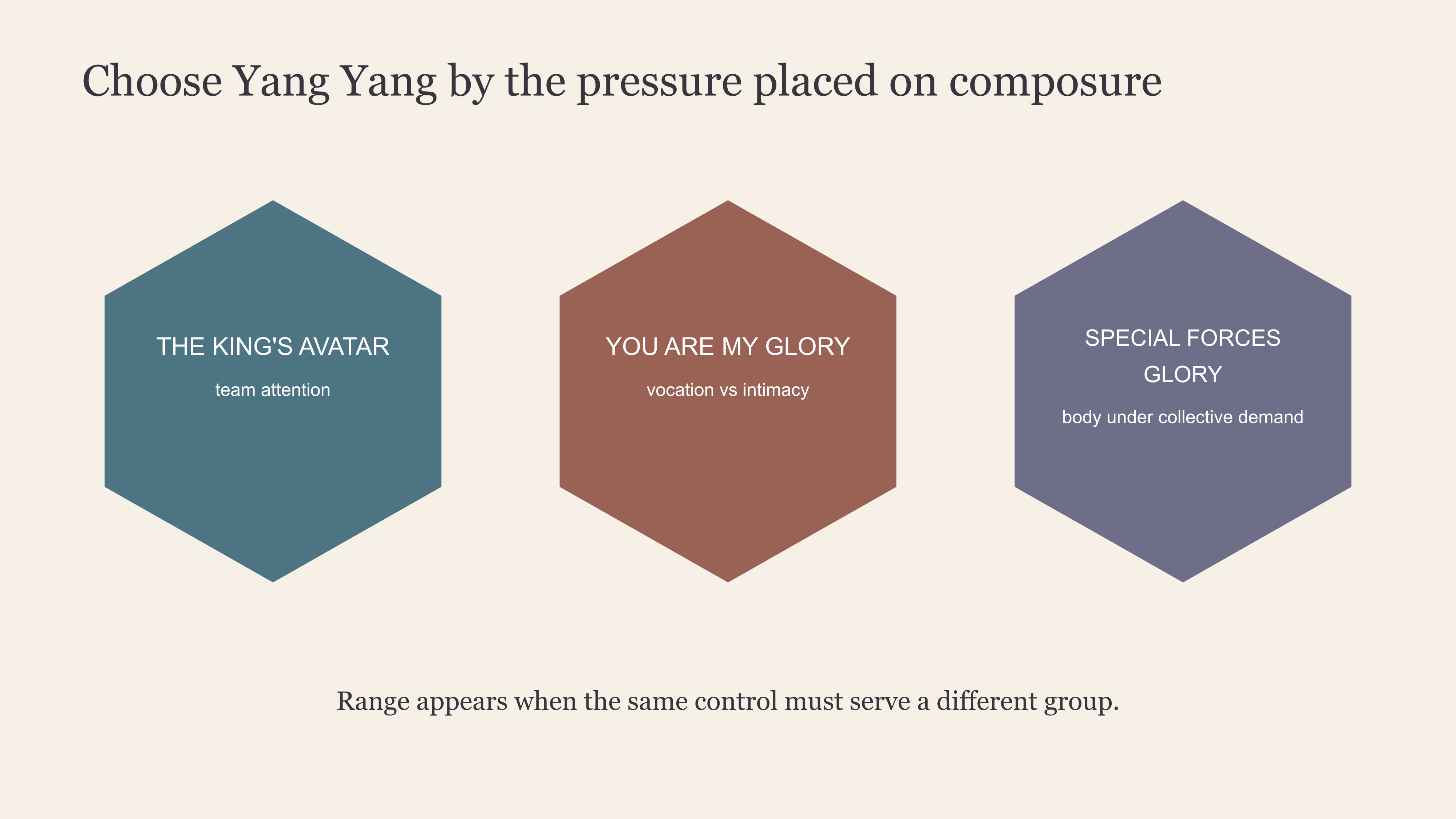
Start with You Are My Glory (你是我的荣耀). It is the clearest entry point because it places technical competence, public image and private hesitation in the same relationship. Yang Yang's character looks controlled because he is skilled. The drama becomes more interesting when skill cannot solve the emotional problem in front of him.
Follow it with Who Rules the World if you want to test whether the same composure can carry physical danger and moral responsibility beyond contemporary romance. The contrast is useful: one title asks him to make restraint intimate, the other asks him to make it consequential.
| Start here | What it tests | Why I would choose it |
|---|---|---|
| You Are My Glory | Competence, restraint and emotional timing | The best first test of whether polish becomes character |
| Who Rules the World | Action, loyalty and moral scale | Shows whether the composed surface can carry danger |
| The King's Avatar | Team observation without a romance engine | Competence must create trust across a group |
| Special Forces Glory | Physical urgency and collective discipline | The body cannot remain only a polished silhouette |
Yang Yang's credits connect naturally to the Chinese television guide, yet genre labels do not explain his central tension. His page asks what happens when competence and polish can no longer prevent embarrassment, uncertainty or emotional cost. Compare him with other performers through the Chinese actors collection only after watching the moment his controlled surface has to revise itself.
Yang Yang is more than a polished image
“Handsome” is a first impression, not an acting method. It can tell you why a viewer clicks. It cannot tell you why a scene stays in memory after the styling has disappeared.
My test is simple: when another person changes the stakes, does Yang Yang's character change his timing? Does he stop, revise a plan, reveal uncertainty or give up the advantage of looking completely in control? If not, the production is using his image as a shortcut. If yes, the image becomes a surface the character has to manage.
Overseas viewers also need to read the social layer behind the subtitles. A restrained answer may protect professional dignity, avoid embarrassing a family member or postpone a decision until the other person can speak freely. The sentence matters, but so does who is allowed to ask and who has to wait.
You Are My Glory makes competence carry intimacy

WeTV's official You Are My Glory page identifies Yang Yang as Yu Tu. I like this transit frame because it catches the tension the role needs: a man who looks completely composed while moving through an ordinary shared space, where competence cannot protect him from being seen.
The appealing trap of You Are My Glory is that both leads are already good at something. Technical competence creates easy chemistry: two attractive people can admire each other's skill and let the plot glide.
The stronger scenes refuse that shortcut. A character can be excellent at work and still be bad at explaining fear. He can solve a practical problem while making an emotional one worse. Yang Yang's useful work is in the delay between those two abilities.
Watch the moments when a technical conversation becomes personal. Does he answer with information to avoid a feeling? Does he keep a calm posture while the timing of his reply reveals that the calm is expensive? That is where polish stops being decoration and becomes a social strategy.
This is not evidence that every Chinese professional relationship works this way. The drama is fictional. The cultural detail worth noticing is the relationship between competence and face: being capable in public does not remove the pressure to remain composed when intimacy asks for a less perfect answer.
The King's Avatar proves competence can serve a group
The official WeTV The King's Avatar series page identifies Yang Yang as Ye Xiu and lists the complete forty-episode live-action series. This is the most useful correction to the idea that his screen value depends on romantic chemistry. Ye Xiu's authority comes from reading a system, a match and a team faster than the people around him—not from being desired.
Use the full The King's Avatar guide for the series-level route. On this page, watch Yang Yang's attention. Does he merely look like the smartest person in the room, or does he distribute information so other people become more capable? Competence becomes dramatically generous when it creates participation instead of worship.
I prefer this pressure to the effortless genius fantasy of Xiao Nai in Love O2O. Xiao Nai is designed to be enviably complete. Ye Xiu and Yu Tu are more revealing because skill has a social use and a cost. One must rebuild a collective after professional exclusion; the other must decide how much of adult life a vocation can ask him to surrender.
Who Rules the World tests whether composure can carry danger
Costume action makes polished presence easy to admire. A straight back, clean movement and controlled voice already look like authority. The harder task is making authority answer to another person's safety, loyalty or freedom.
In Who Rules the World, watch what happens after the fight or the strategic decision. Does the character use control to dominate the room, or to create space for somebody else to choose? Does the confident exterior survive unchanged when loyalty becomes morally inconvenient?
Action is not proof of real martial skill outside the role. It is a stage for decisions. The useful question is whether Yang Yang's physical control changes the relationships around him, not whether every move looks impressive in isolation.
The risk is visible: costume authority can freeze into a sequence of faultless poses. A character who always knows, always lands cleanly and always retains moral elegance may dominate clips while leaving little emotional residue. I need the control to be interrupted—by divided loyalty, a misjudgment or the realization that protecting somebody can also deny their choice.
Special Forces Glory puts the body under collective demand
Military drama changes the grammar again. The body is no longer only a romantic outline or wuxia instrument; it must register exhaustion, discipline and dependence on a group. Special Forces Glory is therefore useful even for viewers who do not prefer the genre. It asks whether physical intensity can roughen Yang Yang's carefully managed screen image.
I do not use a drama as evidence of real military procedure. I use it to compare performance pressure. Does urgency shorten the breath and disturb the voice, or does the star image remain untouched by exertion? Does the character learn to rely on other people, or does collective discipline become another stage for exceptional individual competence?
The role is strongest when the body stops advertising control and starts revealing its limits. That is the opposite of a fashion still. It is also the direction I want more of from Yang Yang: not ugliness for its own sake, but a production willing to let labor leave marks.
A Record of a Mortal's Journey to Immortality is the current test Yang Yang needed
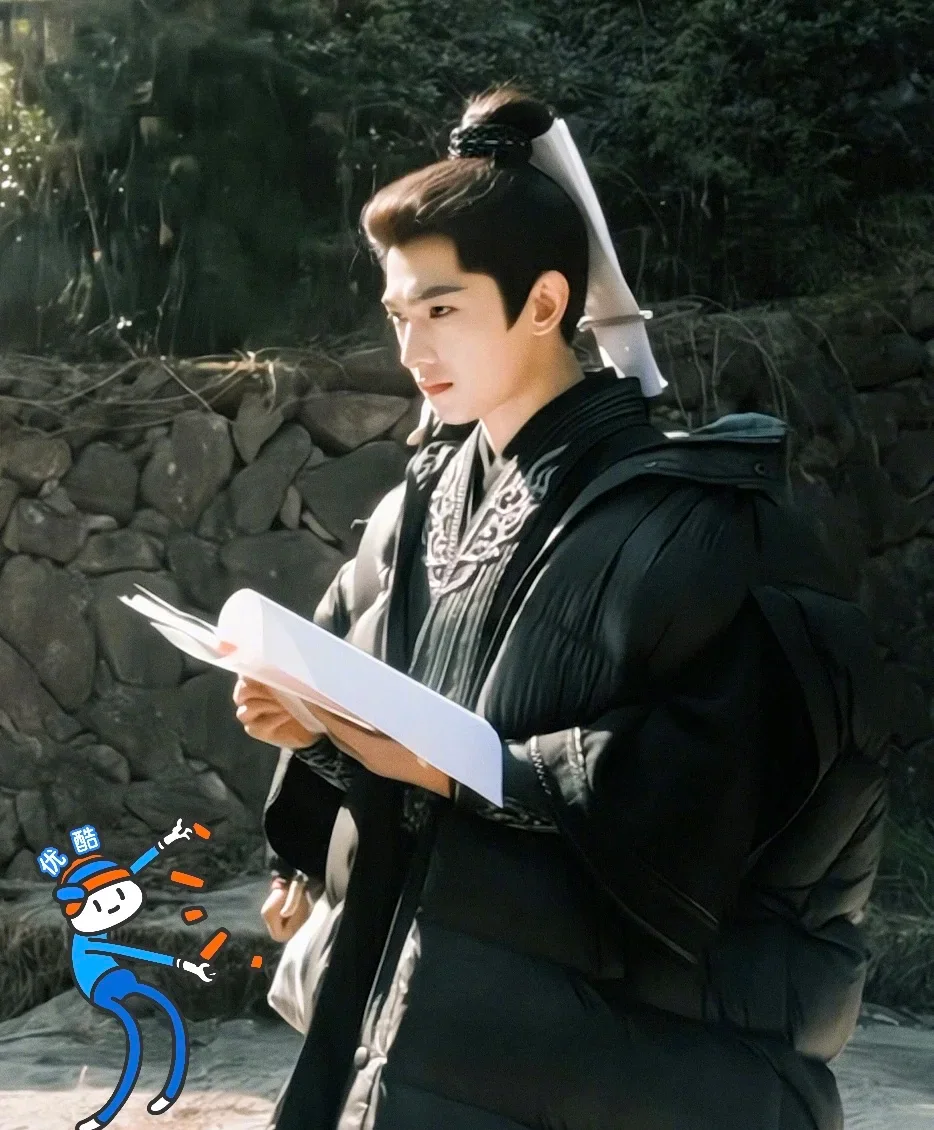
This set image matters because it catches Yang Yang between the two things people too easily confuse: looking right for a role and doing the work that makes the role live. The costume, hair and profile already deliver the polished xianxia figure. The script in his hands points to the harder task. Han Li cannot be played as another man who enters a room already entitled to command it.
Han Li survives by calculating risk, hiding strength, retreating when pride would be fatal and accepting that cultivation is repetitive labor. That temperament puts useful pressure on Yang Yang's established image. His straight posture and clean stillness can express vigilance, but only if the performance lets us feel the thought underneath them. If every pause becomes a heroic pose, the role collapses into packaging. If the eyes keep checking exits, alliances and the cost of the next move, composure becomes survival.
This is why I judge the role more severely than a costume reveal or a fan edit can. The question is not whether Yang Yang resembles an immortal cultivator. He obviously can. The question is whether he can make patience look active, caution look intelligent and ambition look lonely. Han Li should not radiate effortless destiny; he should make advancement feel purchased one dangerous decision at a time.
The production also exposes a limitation that glossy fantasy often hides. Spectacle can complete the emotional sentence for an actor: music announces danger, effects announce power, costume announces status. Yang Yang is strongest here when he refuses that assistance and allows a small calculation to arrive before the effect. I want to see the character become less presentational as the world grows larger—not more immaculate.
That makes this title an essential fourth stop after You Are My Glory, The King's Avatar and Special Forces Glory. Together they test intimacy, group intelligence, bodily limit and long-form survival. No single drama settles the question of range, but Han Li finally attacks the right weakness in Yang Yang's screen persona: the temptation to let control look complete before experience has earned it.
Yu Tu becomes human in ordinary public space
The aerospace work gives Yu Tu scale, but the public spaces give him a life. Transit, doorways, gaming screens and ordinary conversations keep returning a highly competent man to situations where expertise cannot control how another person sees him. This is where Yang Yang's polish becomes useful instead of merely photogenic.
I am less interested in whether Yu Tu looks convincing as an ideal professional than in the seconds when the ideal becomes tiring. The shoulders stay composed; the answer arrives late. He reaches for technical clarity because emotional clarity would expose more. Dilraba Dilmurat's Qiao Jingjing matters here because her own public image prevents the relationship from becoming a simple rescue fantasy. Her profile follows what remains after beauty stops being the explanation. Two polished people have to decide when to stop performing competence for each other.
That ordinary friction is the bridge between Yang Yang's modern romance and his costume roles. The clothes and stakes change, but the real question remains: can control create trust without turning into distance?
The complete You Are My Glory guide follows Jingjing and Yu Tu's two careers, ending and romantic structure. I link to it because a person page must not turn one successful role into an entire identity. Yu Tu is the best entry point, not the final word.
Xiao Nai and Yu Tu reveal the difference between image and burden
Both characters are associated with competence, but the performances should not be collapsed. Xiao Nai's composure is largely a reward: the world confirms his intelligence, desirability and control. Yu Tu's composure is defensive. It holds together a man comparing vocation, money and adult self-respect.
That is why Yu Tu stays with me longer. Perfection can be pleasurable, but burden creates afterimages. When Yu Tu reaches for technical clarity because emotional clarity would expose shame, the polished surface has a dramatic job. It is containing something that may leak.
This comparison is also a warning for future roles. Casting Yang Yang as another immaculate expert will produce an attractive first episode. It will not automatically produce a person. The writing must decide what his control costs, who pays when it fails and whether he can repair harm without instantly regaining the most flattering position.
A current portrait proves the polished image is still working—not that a role works
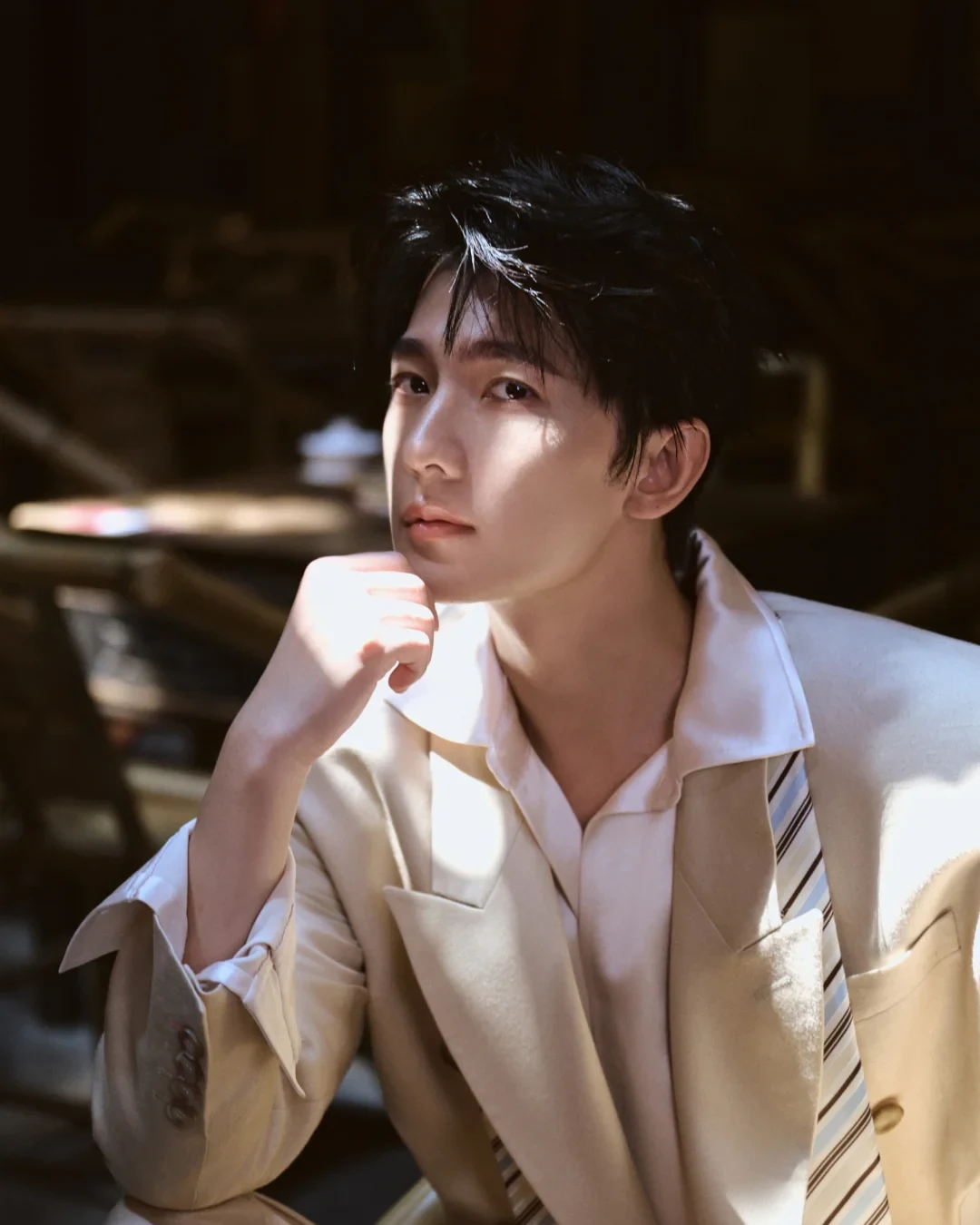
This 2026 portrait from a Chengdu tea-house setting is almost too perfect for the argument. The pale suit, controlled gaze and blade of sunlight do not ask Yang Yang to become someone else. They sell the visual contract that casting directors already know how to buy: stillness can make him look as if the room has arranged itself around him.
I like the photograph. I also refuse to use it as acting evidence. It proves that Yang Yang's star image remains immediately legible and that a traditional interior can intensify his modern polish. It cannot prove range, private temperament or what happens when a scene takes control away from him. That boundary is exactly why the image belongs here.
The question for the next role is not whether he can produce another beautiful still. He can. The question is whether the story dirties that still with work, error, divided loyalty or an answer delivered too late. A strong person page should let the portrait attract us and then make the performance earn the attention.
Where to go next
Compare Yang Yang with Song Weilong's actor guide. Both arrive on screen with strong visual authority, but Song Weilong's most useful scenes ask a young man to listen to an ensemble, while Yang Yang's ask a polished adult to let competence stop protecting him.
For another model of controlled behavior under social pressure, read Bai Jingting's actor guide. Then return to the Chinese television guide to build a viewing route across romance, ensemble and costume action.
Final judgment: start with You Are My Glory, then look for the cost
Yang Yang is not worth watching because he fits the leading-man image so efficiently. He is worth watching when that efficiency begins to fail. You Are My Glory is the best first stop because it makes professional confidence collide with private hesitation. Who Rules the World is the second test because composure has to answer to danger and loyalty.
Watch for the moment when the character could preserve the image but chooses a riskier, more honest action. That is where the surface becomes a performance rather than a shortcut.
In the comments, name the scene where Yang Yang's polished surface visibly costs him something. Then join the East Moment community to compare performances through exact scenes, timing and consequences rather than popularity slogans.