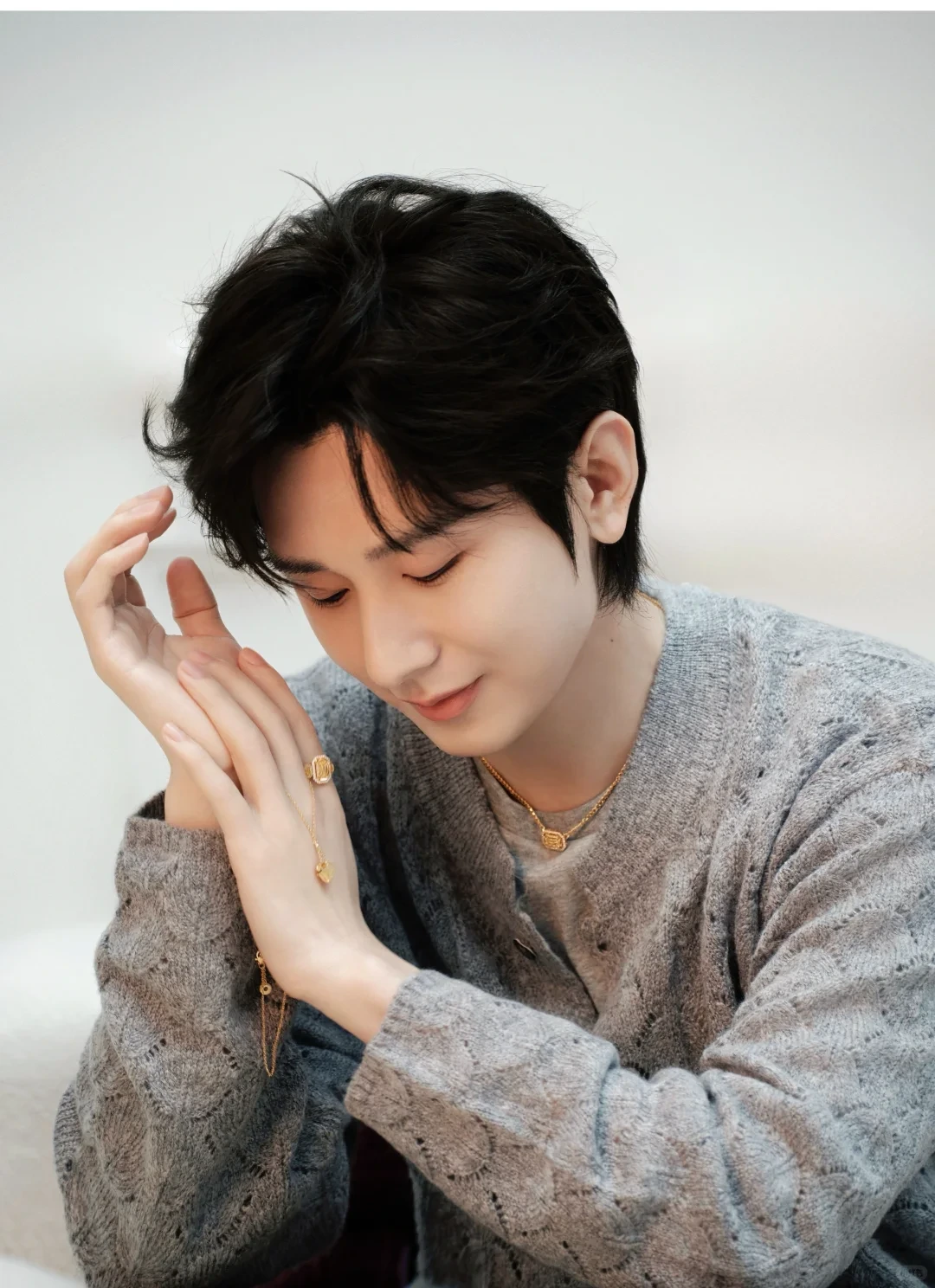
Song Weilong is most worth watching when a striking screen presence has to stop being an image and start listening to the room. His face and physical scale can win attention immediately. The harder question is whether that attention changes the scene: does he share focus, absorb another person's pressure and revise his behavior?
Song Weilong: where should you start?
Start with Go Ahead (以家人之名). It is the clearest first test because the drama places Song Weilong inside a family-like ensemble rather than asking him to carry every scene as a solitary romantic ideal. He has to listen across a table, protect a relationship without explaining everything and let another actor's reaction alter the temperature of the room.
Follow it with Find Yourself if you want to test his charm under a different kind of pressure. The second route is less about a beautiful first impression and more about awkward timing, unequal expectations and the moment a confident-looking character discovers that confidence is not the same as control.
If your search begins with Song Weilong dramas, Song Weilong latest drama, or the Chinese image query 宋威龙海报, use those terms as doors rather than destinations. The poster tells you which production is attracting attention; this page asks the more useful question: what kind of role is that image promising, and does the finished performance earn it?
| Start here | What it tests | Why I would choose it |
|---|---|---|
| Go Ahead | Ensemble attention and family pressure | His best entry point for seeing presence become listening |
| Find Yourself | Romantic timing and social friction | Tests whether charm can survive embarrassment and changed expectations |
| Other verified roles | Range outside the two entry points | Check official cast pages before treating a title as part of a watch route |
The Chinese actors collection is useful when you want to compare screen presence across performers. For Song Weilong, stay with one sharper test before moving on: after the camera has noticed his face, does his listening change the family or romantic space around him? The wider Chinese television guide can supply the genre map; this page judges what he does inside the frame.
Song Weilong is more interesting than the “visual actor” label
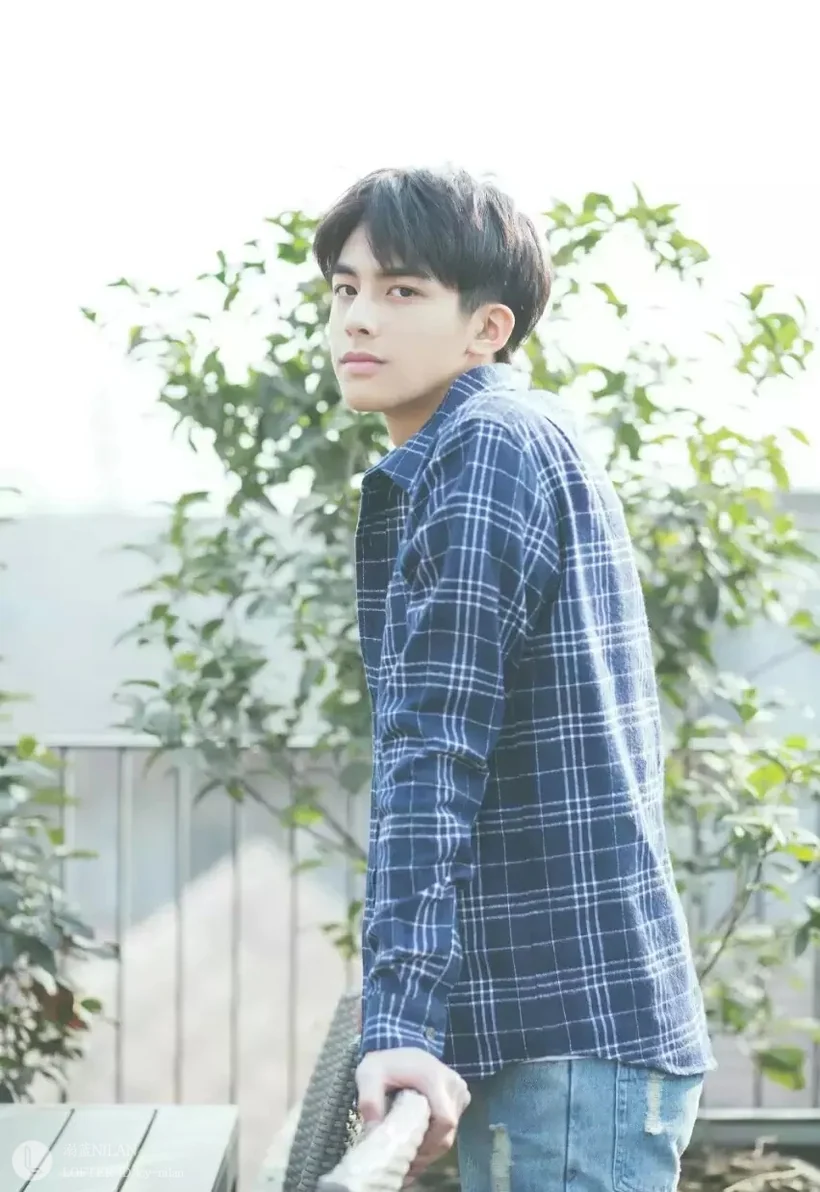
The early portrait explains why the “visual actor” label arrived so easily: the camera recognizes the face before a scene has asked it to do anything. That advantage is real. It is also exactly why my standard becomes stricter. A career cannot remain a sequence of productions discovering the same photogenic stillness.
“Visual actor” is useful search shorthand, but it is not a criticism. It describes the first advantage and stops before the real work begins. A performer with a strong physical image faces a specific danger: the production may keep photographing the image instead of giving it a social task.
My test is observable. When another person enters the scene, does Song Weilong's character change the angle of his body, delay a reply, give up the safest sentence or allow somebody else to hold the focus? If nothing changes, the beauty is only packaging. If the scene changes because he has listened, presence has become acting.
This distinction matters for overseas viewers because subtitles flatten some of the social information. A short answer can protect family dignity, conceal embarrassment or quietly refuse an invitation. The words are only one layer. Who is allowed to interrupt, who waits and who looks away carry the rest.
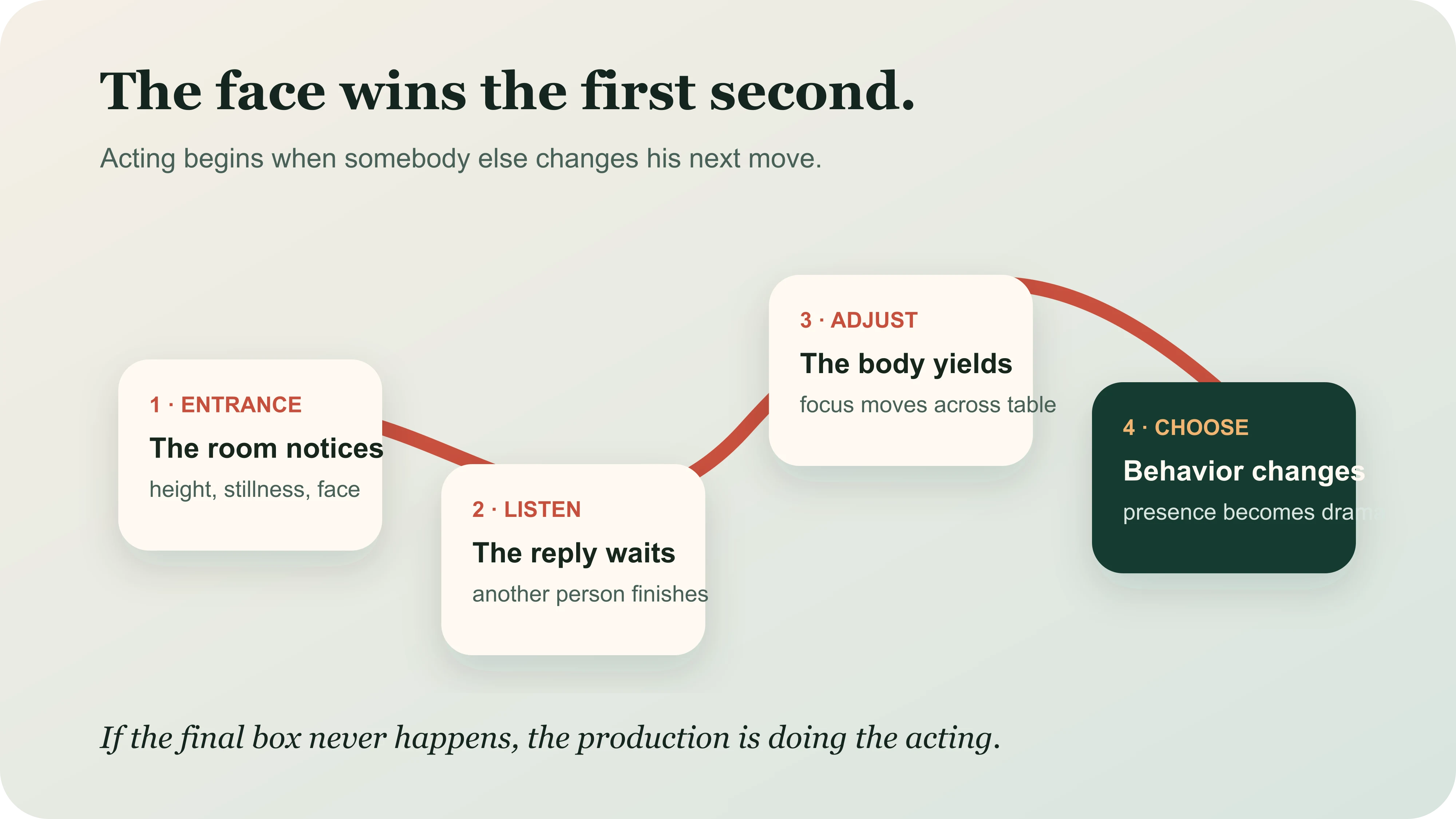
This is the sequence I use because it refuses two lazy conclusions at once. A still face is not automatically wooden, and a handsome close-up is not automatically acting. The evidence comes after the entrance: another person speaks, his posture or timing changes, and the next choice is different because he has absorbed what happened. If the last step never arrives, the scene may still look polished, but the performance has not created new dramatic information.
Go Ahead turns beauty into shared attention

iQIYI's official Go Ahead series page places Song Weilong inside a three-person chosen-family structure. That ensemble framing matters to my reading: the role only works when Ling Xiao's silence changes how he shares a room, a table and responsibility with the other two leads.
The strength of Go Ahead is its ensemble design. Its emotional pressure is not created by one couple in isolation; it comes from a group trying to build a home around absence, work, school, old wounds and unequal ideas of responsibility.
Song Weilong's role works when he does not treat that group as background. A family-table scene is not simply a chance for a close-up. It asks the character to read several people at once: who is pretending to be fine, who is speaking for somebody else and when a practical answer would wound more than silence.
His best contribution is often a small adjustment. He lets a sentence finish. He changes the subject without pretending the problem disappeared. He looks at the person who was ignored. Those choices do not create a loud “acting moment,” but they create a person who belongs to the room rather than a model placed in front of it.
Do not read the drama as a documentary about every Chinese family. The family structure is fictional and stylised. The useful cultural detail is the social choreography: care is often shown through food, logistics, waiting and indirect protection before it is named as emotion.
Find Yourself tests charm when the timing becomes uncomfortable
Romance is an easy place for a beautiful performer to hide. Chemistry, styling and a clean close-up can carry the first episodes. The more revealing scenes arrive after expectations stop lining up.
In Find Yourself, watch for the delay between what a character wants to say and what he can responsibly say in the room. A confident posture may survive until another person's age, work position or family expectation changes the balance. Then the performance has to decide whether charm means persuasion, avoidance or the willingness to admit that a plan no longer works.
That is where Song Weilong can escape the “pretty but blank” trap. A blank reaction is not the same as restraint. Restraint has a target. It protects a relationship, hides a fear or buys time to choose a less damaging answer. If the scene never identifies the cost, the pose remains a pose.
What Song Weilong still has to prove
Go Ahead gives him the ideal corrective to leading-man worship: a dining table that refuses to arrange itself around one handsome face. Find Yourself gives him a different corrective: charm cannot erase age, work and social timing. Together they establish potential, not a completed verdict.
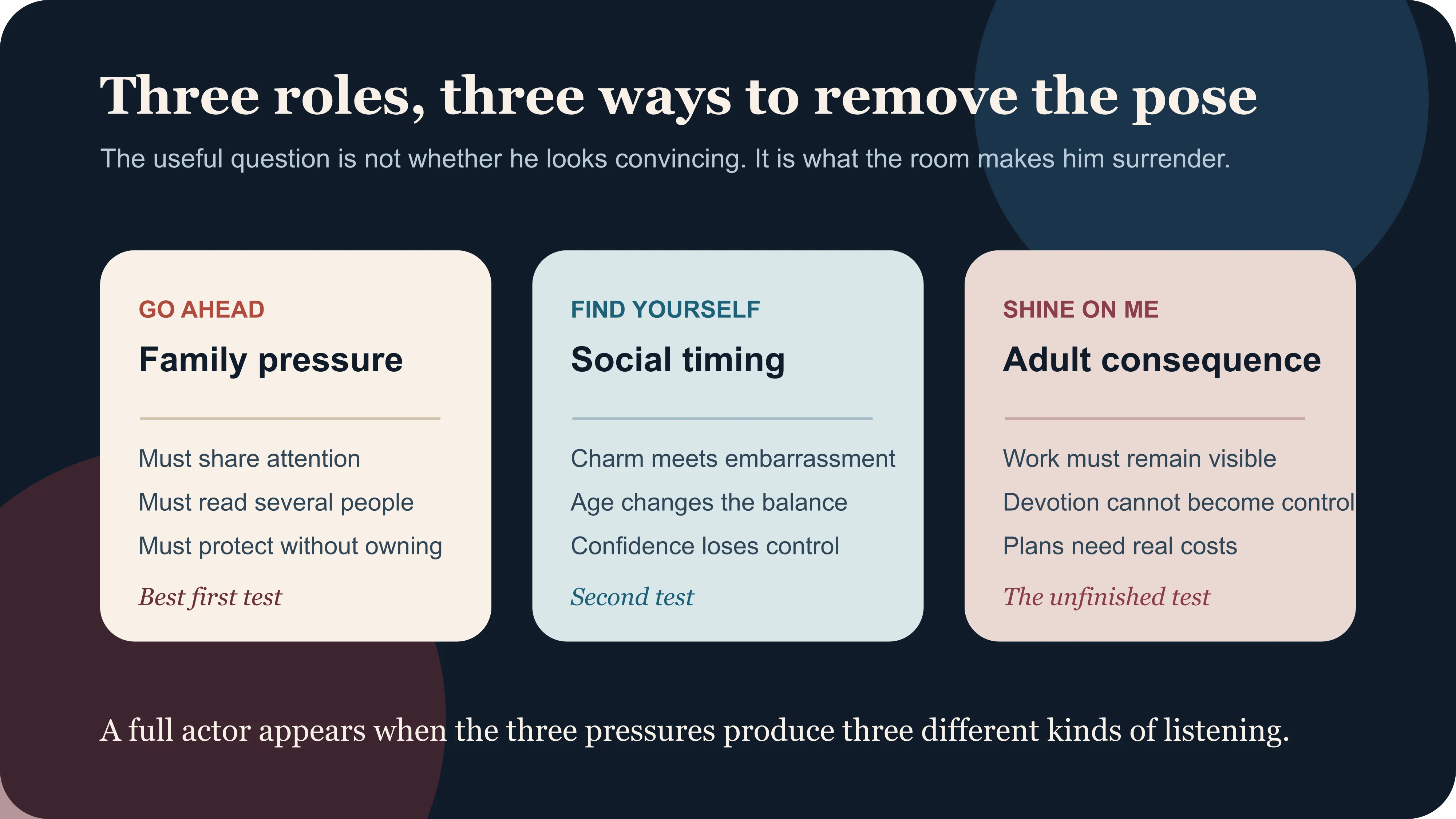
The three roles should not be collapsed into a list of romances. They test three different muscles. Family pressure asks whether he can share a scene without withdrawing into silence. Social timing asks whether confidence can survive embarrassment. Adult consequence asks whether devotion can coexist with another person's work, schedule and right to choose. A career becomes interesting when these pressures produce different behavior, not when the wardrobe changes around the same protected expression.
The more recent Shine on Me pairing with Zhao Jinmai moves that question into a working-adult romance. iQIYI's official Song Weilong profile is useful for confirming the expanding screen catalogue; it cannot answer whether the performances have actually become less interchangeable. The image sells warmth, but the role becomes valuable only if Lin Yusen exists beyond devotion: professional history, changed plans and a way of listening that does not turn steadfastness into control.
Song Weilong latest drama: Shine on Me is a pressure test
The current search route around Song Weilong is increasingly visual. People type Shine on Me Song Weilong, 骄阳似我, or simply 宋威龙海报 because they want to identify the face, the pairing and the mood before they decide whether to watch. That is not a shallow behavior. Posters are often the first piece of Chinese television metadata an overseas viewer can actually read: the title, the pairing, the costume, the lighting and the promise of the relationship are all visible before a platform page explains anything.
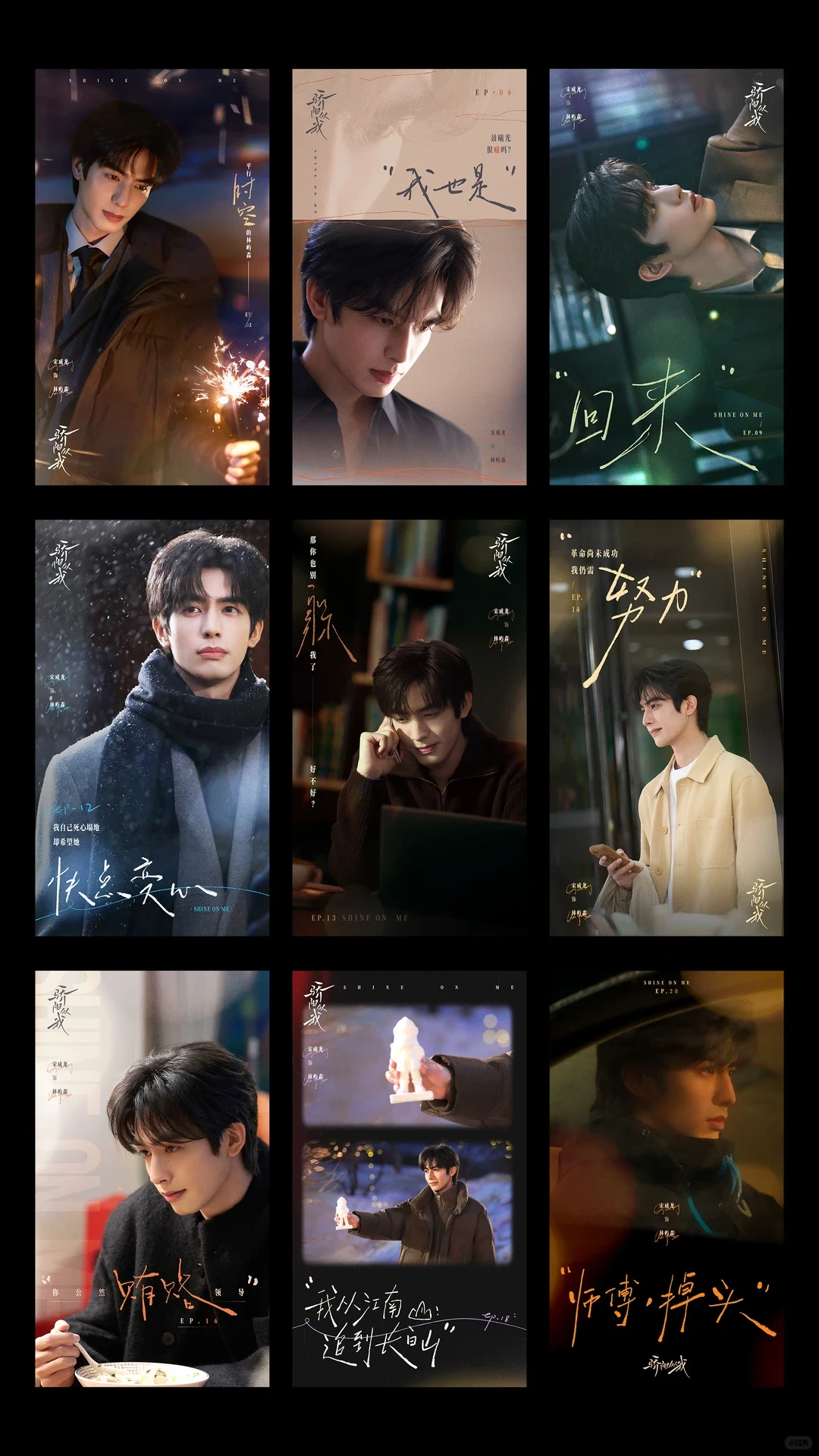
The best way to use a poster is comparative. Put the image beside a complete scene. Does the actor's body carry the same promise once the scene has duration? Does the controlled gaze become a decision, or does the edit keep protecting it? Does a relationship develop through disagreement and revised plans, or does each episode return to the same attractive stillness? These are the questions that turn an image-led search into a serious viewing decision.

My bias is clear: I would rather see one awkward working conversation than ten flawless couple posters. The adult-romance route only matters if work, fatigue, timing and responsibility stay in the room after the couple becomes visually convincing. Zhao Jinmai's character cannot exist only to validate his steadiness. If she can interrupt his plan, keep her own professional rhythm and make him change course, the pairing gives Song Weilong the exact resistance his screen image needs.
What I want next is friction that styling cannot solve. Let him be wrong in a way that costs another person something. Let a scene continue after the romantic gaze has failed. Let him play work, fatigue, compromise and the small embarrassment of realizing that somebody else understood the room first.
That request is not cruelty toward a young actor; it is respect for his real advantage. Screen presence buys time. It makes viewers willing to watch the pause before a sentence and the small correction after it. The next stage is to spend that time on contradiction. I want a role in which the character's most attractive habit is also what harms the relationship, so listening cannot remain a gentle virtue. It has to interrupt a plan, expose pride and cost him the version of himself he preferred.
The difference between restraint and vacancy is consequence
This is the most useful distinction an international viewer can carry into Song Weilong's dramas. Restraint stores a decision; vacancy avoids one. In a restrained performance, the withheld answer changes the room. Someone misreads it, waits for it or acts because it never arrives. In a vacant performance, the edit supplies mood while the body contributes no pressure of its own.
In Go Ahead, the family ensemble gives silence consequences because everybody already knows part of the history. A look across the table can accept responsibility, delay conflict or leave another person to carry the emotional labor. The performance succeeds when we can identify which of those jobs the silence is doing. Calling every quiet moment “subtle” is as unhelpful as calling every quiet moment “blank.”
The same standard makes Find Yourself a useful second stop. Romantic charm is easy while the character appears to know exactly what he wants. The interesting moment arrives when another person refuses the timetable. Watch whether the body keeps advertising certainty or begins to register the cost of being wrong. That is where a beautiful leading-man image either becomes vulnerable or becomes repetitive.
I would not begin with fan edits that isolate only the gaze. They remove the very evidence needed to judge him: the other actor's line, the pause before his response, the shared space and the next choice. Watch the complete exchange first. Then a close-up has meaning.
A Song Weilong profile needs an unfinished sentence
The public temptation is to declare a final verdict too early: great visual, limited range; or misunderstood actor, secretly brilliant. Both are neat, and both are smaller than the evidence. He has shown that he can make physical stillness useful inside an ensemble. He has also worked in roles where production polish protects that stillness from enough friction.
My position is firmer and less flattering than either fan slogan. Song Weilong is not yet interesting because of a finished body of work. He is interesting because the best material has revealed a specific route forward. Put him in rooms that do not admire him, with people who interrupt his control and consequences that cannot be solved by constancy. Then the screen presence becomes a pressure instrument rather than an advertisement.
That is also why Shine on Me matters more as a test than as a fresh title to add to a biography. The adult setting has to remain adult. Work cannot disappear once romance begins. Zhao Jinmai's character cannot become a surface that confirms his devotion. If both people retain schedules, mistakes and incompatible needs, the pairing can show whether his listening now changes action rather than only softening expression.
This is not a demand that he become less attractive on screen. It is a demand that beauty stop functioning as plot armor. The most memorable leading men do not make every room admire them; they let the room alter them. Song Weilong becomes a fuller actor each time the camera catches that alteration rather than another finished pose.
Where to go next
Compare Song Weilong with Bai Jingting's actor guide. Both can work through controlled surfaces, but Bai Jingting's strongest scenes often show an adult revising public behavior, while Song Weilong's most useful scenes show a prominent young man learning that the room is not arranged around him.
For another route into performers whose youth is treated as agency rather than decoration, read the Zhao Jinmai guide. Then return to the Chinese television guide to compare ensemble pressure across genres.
Final judgment: start with Go Ahead, then make the image listen
Song Weilong is not worth following because he fits the visual grammar of a leading man. He is worth following when a production asks that leading-man image to absorb pressure from other people. Go Ahead is the best first test because it makes shared attention unavoidable. Find Yourself is the second test because charm has to survive awkward timing and changed expectations.
Watch what happens after the camera has finished admiring him. Does the character listen? Does he surrender the first plan? Does another person's discomfort change his next move? When the answer is yes, the image has become a dramatic instrument. When the answer is no, the production is doing the acting for him.
In the comments, name the scene where Song Weilong stops presenting certainty and visibly listens or changes his plan. Then join the East Moment community to compare performances through exact scenes, timing and consequences rather than popularity slogans.