Love Game in Eastern Fantasy is worth watching for a cleverer reason than its game interface or lead chemistry: it asks whether a person inside a story still matters when the player can see the rules. Ling Miaomiao learns that Mu Sheng and the others are not disposable characters in her private adventure. I loved that argument enough to be frustrated by the finale. When the drama moves its emotional answer outside the fantasy world, it risks doing to Mu Sheng exactly what its heroine spent 31 episodes learning not to do: treating a lived relationship as something a larger narrative can replace.
Love Game in Eastern Fantasy: the spoiler-light answer
| Question | East Moment answer |
|---|---|
| Chinese title | Yong Ye Xing He (永夜星河) |
| What it is | A 2024 Chinese fantasy romance built around novel transmigration, system tasks and demon hunting |
| Leads | Yu Shuxin as Ling Miaomiao; Ding Yuxi as Mu Sheng |
| Core group | Zhu Xudan as Mu Yao; Yang Shize as Liu Fuyi |
| Best quality | Comedy exposes the gap between a written role and a living person |
| Main weakness | The final revelation compresses Mu Sheng's separate life and the group's future into a romantic answer |
| Ending | Hopeful for the couple, much less settled for the people inside the fantasy world; spoilers below |
| Best for | Viewers who know game or web-novel grammar and still want character-based feeling |
WeTV's official listing identifies the 2024 series, its 32-episode run and the central cast of Yu Shuxin, Ding Yuxi, Zhu Xudan and Yang Shize. That matters here because the four-person group—not only the lead pairing—is the unit by which I judge whether the story escapes its own system.
Give it four episodes. Episode 1 establishes the assignment; later episodes show whether you enjoy the show's real rhythm: Miaomiao attempts to perform the expected role, Mu Sheng reads the performance incorrectly, and the resulting failure reveals more than success would have.
The first joke is that Miaomiao knows too much and understands too little
Ling Miaomiao enters the world of a novel she has read. The system gives tasks, punishments and a romance-like target. On paper, she should possess the reader's power: she knows names, roles and the original direction of events.
But plot knowledge is a poor substitute for social knowledge. A sentence in a novel may describe a “jealous supporting man.” Living beside him means meeting a person whose loyalty, fear and violence developed through experiences the summary flattened. Miaomiao's advantage therefore keeps becoming arrogance by accident.

This is where Yu Shuxin's performance becomes a real point of disagreement. The quick voice, visible panic and abrupt recovery make us see two performances at once: Miaomiao acting inside the fantasy world and the modern reader behind her trying to manage the system. I understand why some viewers find the opening too loud. The breathless delivery occasionally keeps a scene in sitcom mode when I want to see what Miaomiao has noticed about another person. But removing all that excess would make her instant fluency in a strange world too easy. My test is whether the performance changes as her certainty breaks, not whether she is charming in every minute.
The first episode's meeting-time slacking, system bug, pixel style and running commentary establish the mechanism in ordinary language. Instead of the usual all-powerful transmigrator, Miaomiao repeatedly “restarts” when she meets the original couple. I notice failure and work-like frustration, not only costumes or chemistry.
The Chinese online-fiction context matters. “System” stories turn narrative convention into an interface. A task can reward a familiar trope even when the human consequence is absurd. The drama's central pleasure comes from watching the interface lose authority.
This is the line I use to judge every task: would the action still be defensible if no score appeared afterward? If the answer is no, the system has converted another person into an instrument. Miaomiao's growth is not that she becomes better at the game. It is that she becomes willing to lose the game rather than keep the original novel's cruelty intact.
That choice gives the comedy moral weight. Restarting is funny while failure is only inconvenient. It becomes frightening once Miaomiao understands that the people around her do not experience a reset as harmless repetition. They carry fear, humiliation and attachment even when the interface treats the attempt as disposable.
Audit the command before you celebrate the score
I do not judge a system task by whether Miaomiao completes it. I write down four things: the command, the concealed human cost, the failure that exposes a person, and the choice made after reward stops mattering. That little audit separates a clever premise from a story with an ethical spine.
The command is usually clean. It converts a messy relationship into a measurable action: approach someone, produce a response, raise a value, survive a punishment. The human cost is everything the interface refuses to display. Mu Sheng may hear manipulation where Miaomiao sees progress. Mu Yao may lose the right to make a decision because the “player” thinks she already knows the original plot. Liu Fuyi may be treated as a route through somebody else's mission rather than a person with his own incomplete knowledge.
Failure is therefore more revealing than success. When Miaomiao says the correct genre line and receives the wrong human response, the scene proves that a trope cannot predict the person forced to inhabit it. Her embarrassment is funny, but the real information arrives in the reaction: who flinches, who notices the performance, who protects someone anyway, and who refuses the role assigned by the novel.
The fourth line is the one I care about. What does Miaomiao choose when obedience no longer guarantees safety or affection? If she repeats the command because the system says so, she remains a reader exploiting characters. If she accepts punishment, lost progress or uncertainty to preserve another person's agency, she becomes a participant in a shared world.
Use this audit on a single task instead of ranking romantic moments. Do not write “the mission brings them closer.” Name the cost the interface hid and the choice that rewrote it. A strong answer may even conclude that the show used game logic as an excuse and never paid the human cost. That disagreement is more valuable than defending the drama by default.
Mu Sheng is compelling because every role offered to him is too small
Mu Sheng can be introduced as a guarded half-demon and romantic target. Neither description explains Ding Yuxi's performance. The character is always reading whether he is tolerated, used, feared or about to be abandoned. Suspicion arrives before speech.
The most revealing moments are micro-adjustments. He prepares one response, notices Miaomiao behaving outside the expected pattern and must replace it. Comedy punctures his control; danger restores it; affection makes both strategies unreliable.
That is why the Ding Yuxi profile treats reaction timing as a central skill. This drama page asks a different question: what happens when a character written to obstruct other people becomes the person whose freedom matters most?
Mu Sheng's darkness should not be romanticized as proof of depth. Threat, possessiveness and secrecy require consequences. His pain explains why belonging feels dangerous; it does not make Miaomiao responsible for regulating every fear. The romance works when she recognizes the full person and still preserves her own judgment.
Four people are more interesting than one affection score
The central group prevents the series from collapsing into a game of “make the difficult man love me.” Mu Yao carries family duty, inherited violence and the burden of being legible as righteous. Liu Fuyi tests what gentleness looks like inside demon-hunting authority. Miaomiao's presence changes not only Mu Sheng but the relationships around him.

This collective structure changes the ethical stakes. If Miaomiao only seeks a score, everyone else becomes a tool. If she begins making choices for the group's future, the story escapes the system's narrow definition of success.
Watch who receives information. Fantasy plots often use secrets to prolong tension. Here, secrecy also reveals who is considered capable of choosing. Protection becomes control when someone withholds the truth and then asks others to accept the consequences.
The richer comparison is Love Between Fairy and Devil, where a supposedly minor fairy and feared being also destabilize assigned cosmic roles. Choose My Journey to You when you want a darker system of households, assassins and spatial control rather than comic interface logic.
The costumes are not enough; watch how comedy changes power
The fantasy production offers vivid costumes, creatures, magical objects and bright tonal shifts. These make strong promotional images, but spectacle is not the reason to stay.
The useful visual question is who controls the frame before and after the joke. Mu Sheng may enter as danger; Miaomiao's wrong response makes his authority unstable. Miaomiao may believe she controls a task; the system's punishment turns her into the least powerful body in the scene. Comedy moves status.
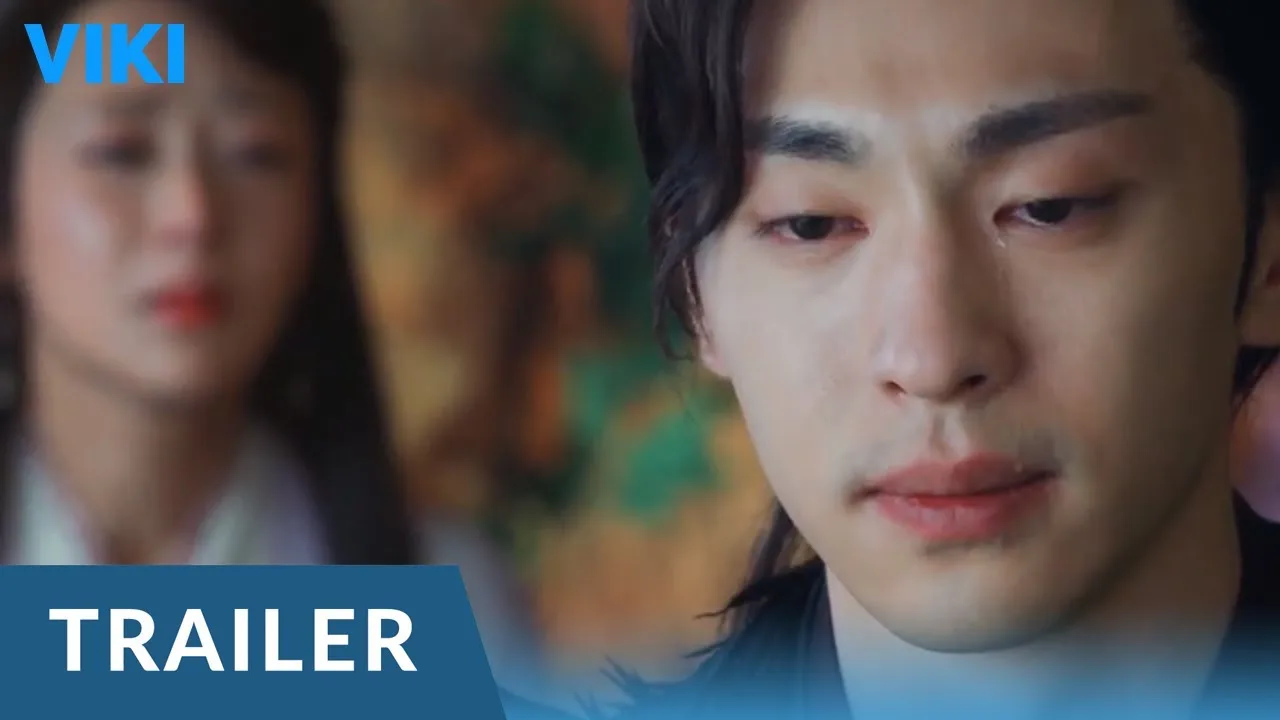
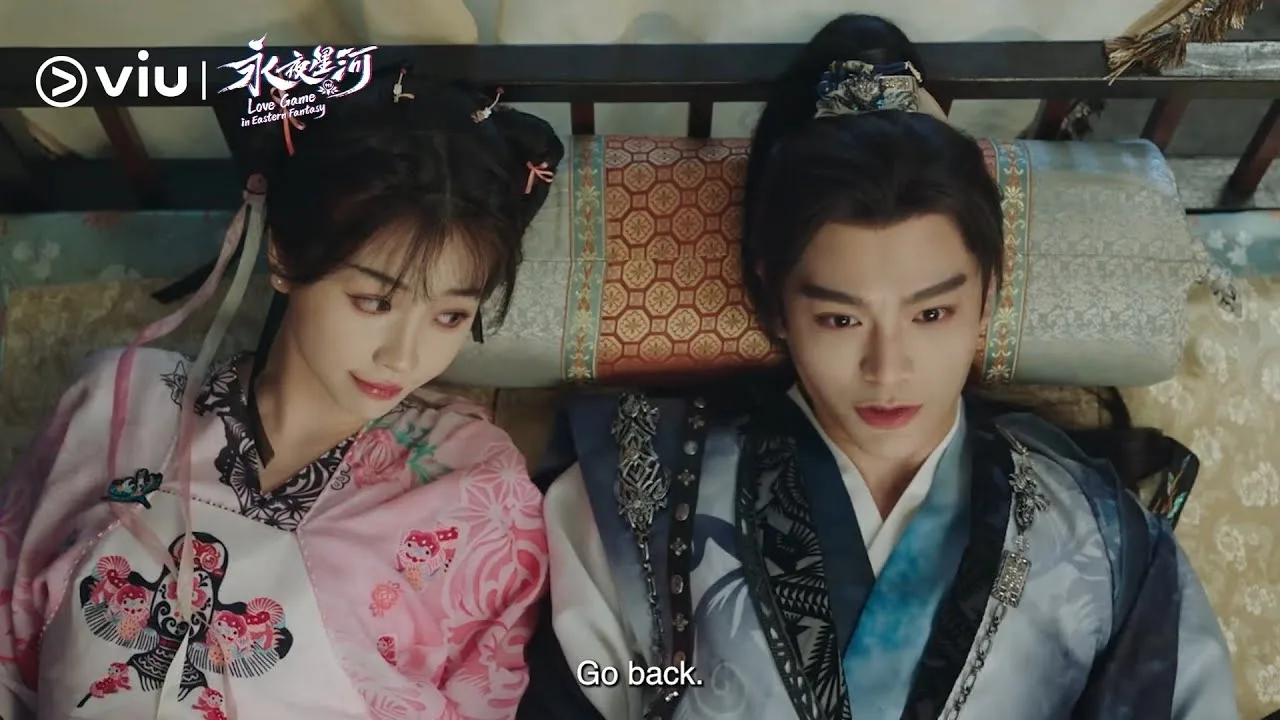
Viu's official trailer makes the contrast clear without requiring a paid player: modern awareness, period fantasy, mission language and a lead who does not behave like a compliant target. Use it to decide whether the tone suits you, not as evidence that every late plot turn works.
The charged line “It looks like you cannot escape today” exposes the temptation to reduce that machinery back to romance. Mu Sheng's threat-and-desire register is highly clip-friendly, but one successful moment cannot tell us whether the full relationship distributes power fairly. That gap is part of the article's test.
My visual verdict is simple: the show succeeds when color and comic timing expose an unstable rule. It weakens when effects merely announce that the stakes have become larger.
Love Game in Eastern Fantasy ending: does Fu Zhou replace Mu Sheng?
Spoiler warning: stop here if you want the final identity and world structure to arrive unannounced.
The ending connects the fantasy narrative to authorship and life outside the immediate story. Fu Zhou gives the lovers a form of recognition beyond the system. I can accept that as a hopeful gesture. What I cannot accept without qualification is the claim that recognition settles what happened to Mu Sheng, Mu Yao, Liu Fuyi and the world that made their choices matter.
The finale's problem is not that it is metafictional. Stories can constrain people, but they can also change whoever reads or writes them. The problem is that a revelation about authorship is asked to do the work of several missing farewells. When late information explains too many identities at once, revelation outruns grief. Knowing who wrote a character is not the same as accounting for the life that character lived.
This is not a solitary objection dressed up as universal consensus. In a substantial Zhihu discussion of the finale, viewers repeatedly separate Mu Sheng from Fu Zhou and ask what happens to the fantasy world's remaining relationships. I share that question, but my judgment is sharper: the ending weakens the show's own best idea. A story that taught Miaomiao to stop reducing people to roles should not ask me to treat the man who lived beside the group as merely a bridge to an author-world reunion.
This is where I disagree with the neat “both worlds are complete” reading. Mu Sheng is not merely a code package waiting to be revealed as Fu Zhou. He is the person Miaomiao, Mu Yao and Liu Fuyi lived beside. Moving his emotional continuity into a real-world author can preserve hope, but it does not automatically preserve every relationship formed in the fantasy world.
The final recognition moved me. I also felt the missing room around it. Who mourns the version of Mu Sheng who belonged to that group? What becomes of the world Miaomiao claimed was worth saving? The drama answers the lovers more clearly than it answers the community. That imbalance does not make the earlier episodes worthless. It makes their achievement more precise: for most of its run, this is a drama brave enough to let a supposed NPC become irreplaceable. Its last turn is less brave than the story that led there.
Where to watch and the route after Episode 1
Start with WeTV's official English-subtitled Episode 1 where available, then check WeTV or Viu for the current catalog in your region. Free, member and subtitle access changes by country and date. East Moment does not link unauthorized uploads.
On your first watch, track three things:
- When does Miaomiao obey the system but harm a relationship?
- When does Mu Sheng revise an interpretation rather than merely reveal hidden affection?
- Which group decision gives a “supporting character” genuine authorship?
The cast and premise attract the click. The value is recognizing a deeper argument: genre literacy can help you enter a story, but only attention to people lets you live inside it without repeating its cruelty.
Continue through the Chinese television guide. In the comments, bring one scene that proves Mu Sheng is more than the role assigned to him. Then add the scene, its context and your reading to Moments. After the finale, tell us whether Fu Zhou preserves Mu Sheng's life with the group or only gives the lead couple a hopeful recognition. A scene with a reason is more useful than another popularity vote.