Esther Yu, also known as Yu Shuxin (虞书欣), is an actor and singer whose voice and public persona are so recognizable that viewers often judge the person before judging the scene. That shortcut fails in both directions. A bright, high vocal register is neither proof of bad acting nor proof of charm. The real test is whether a role converts it into rhythm, agency and contrast.
Esther Yu in 60 seconds
| Question | Short answer |
|---|---|
| Chinese name | Yu Shuxin (虞书欣) |
| Born | December 18, 1995, in Shanghai |
| Main work | Actor and singer, with major variety-show visibility |
| Best first drama | Love Between Fairy and Devil |
| Best acting contrast | My Journey to You after Love Between Fairy and Devil |
| Best modern romance route | Moonlight |
| Breakout performance question | Whether apparent softness develops into consequential choice |
| Most debated tool | A highly recognizable voice and comic rhythm |
| Wrong shortcut | Treating the public persona as the complete person or every role as the same persona |
Start with Love Between Fairy and Devil if you want the role that best uses her established qualities. Then watch My Journey to You to test range. Add Moonlight to understand how fast contemporary dialogue and romantic-comedy initiative fit the same instrument.
Who Esther Yu is: actor, singer and variety persona are not the same thing
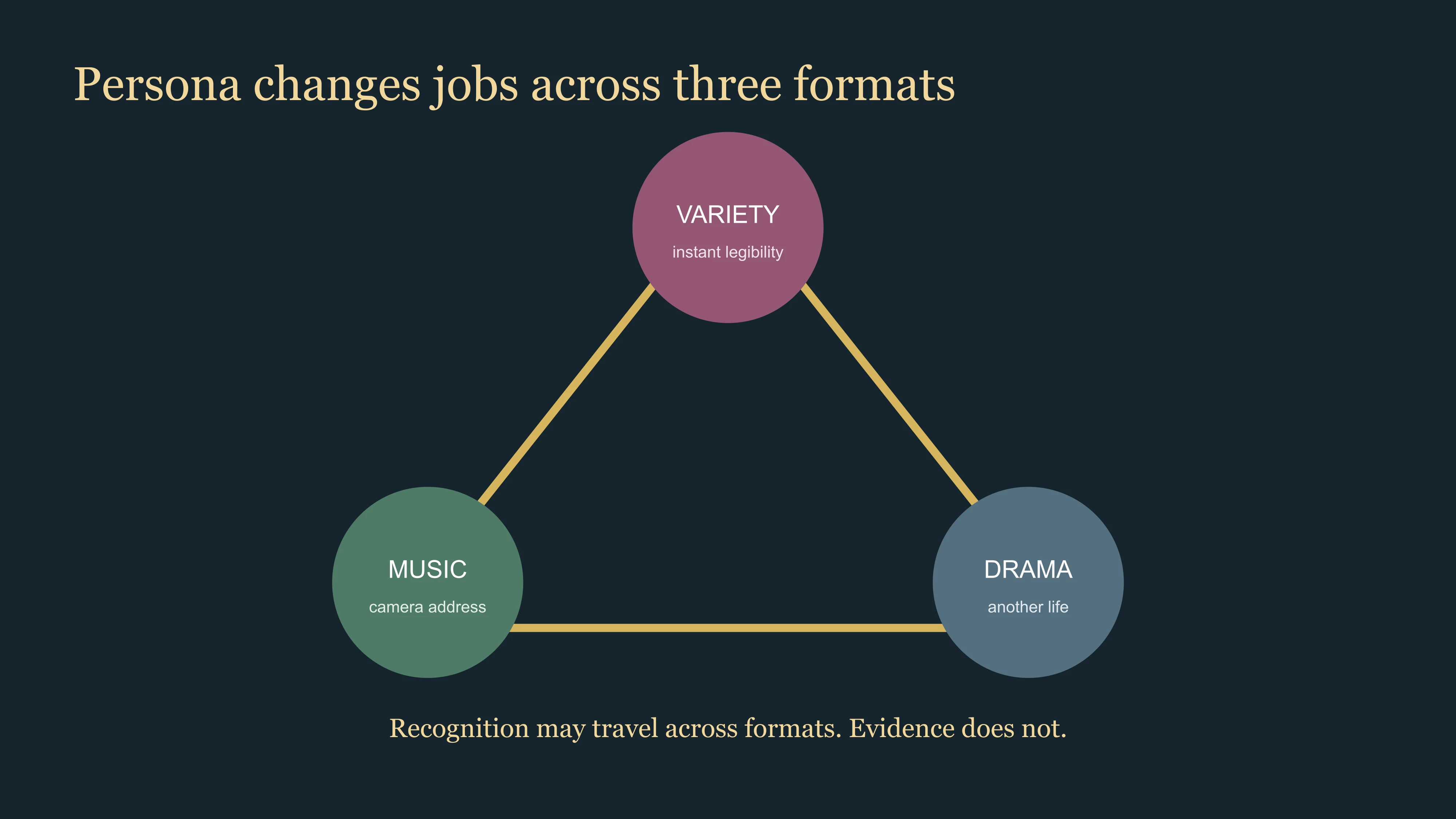
Esther Yu became visible across scripted drama, music and reality/variety entertainment. Those formats reward different kinds of legibility. A variety persona needs quick reactions and recognizable social rhythm. A pop performance organizes voice and image around a song. Acting requires choices to remain credible inside another person's circumstances.

The unpolished arrival photograph matters because it returns scale to the celebrity image: four colleagues, an ordinary curb, a vehicle blocking part of the frame and no fantasy lighting to assign anyone a character. It records Esther Yu's group-era public context; it does not reveal a private personality. That boundary is useful. Variety familiarity can make viewers feel they already know the actor, while a drama still asks her to build a separate person from scene choices.
The formats can reinforce one another, but they should not be collapsed. A public clip does not establish private personality. A familiar laugh or vocal color does not mean every character is autobiographical. Conversely, changing costume and lowering the voice do not automatically create depth.
This page judges observable work: timing, reaction, physical control, scene partnership and whether a character's decisions alter the story.
Best Esther Yu dramas by what you want to see
| Your intent | Start with | What it reveals | Main limitation |
|---|---|---|---|
| Understand the global breakout | Love Between Fairy and Devil | Brightness becoming ethical stubbornness and emotional leverage | Early vocal styling can repel viewers before the arc develops |
| Test dramatic contrast | My Journey to You | Reduced brightness, controlled movement and strategic ambiguity | The production's formal beauty can do some of the acting for everyone |
| Watch modern comic rhythm | Moonlight | Verbal speed, professional initiative and romance built through friction | Workplace logic often bends toward romantic convenience |
| Find an earlier fantasy lead | I've Fallen for You | Comic confidence before the larger breakout | A lighter production gives less demanding dramatic evidence |
| Follow current work | Use the official platform title pages | Project identity, credited role and available episodes | Announcements and catalogs change; anticipation is not quality evidence |
The most useful comparison is not “cute versus serious.” It is external rhythm versus internal control. Strong roles give both a reason.
Moonlight turns vocal rhythm into initiative
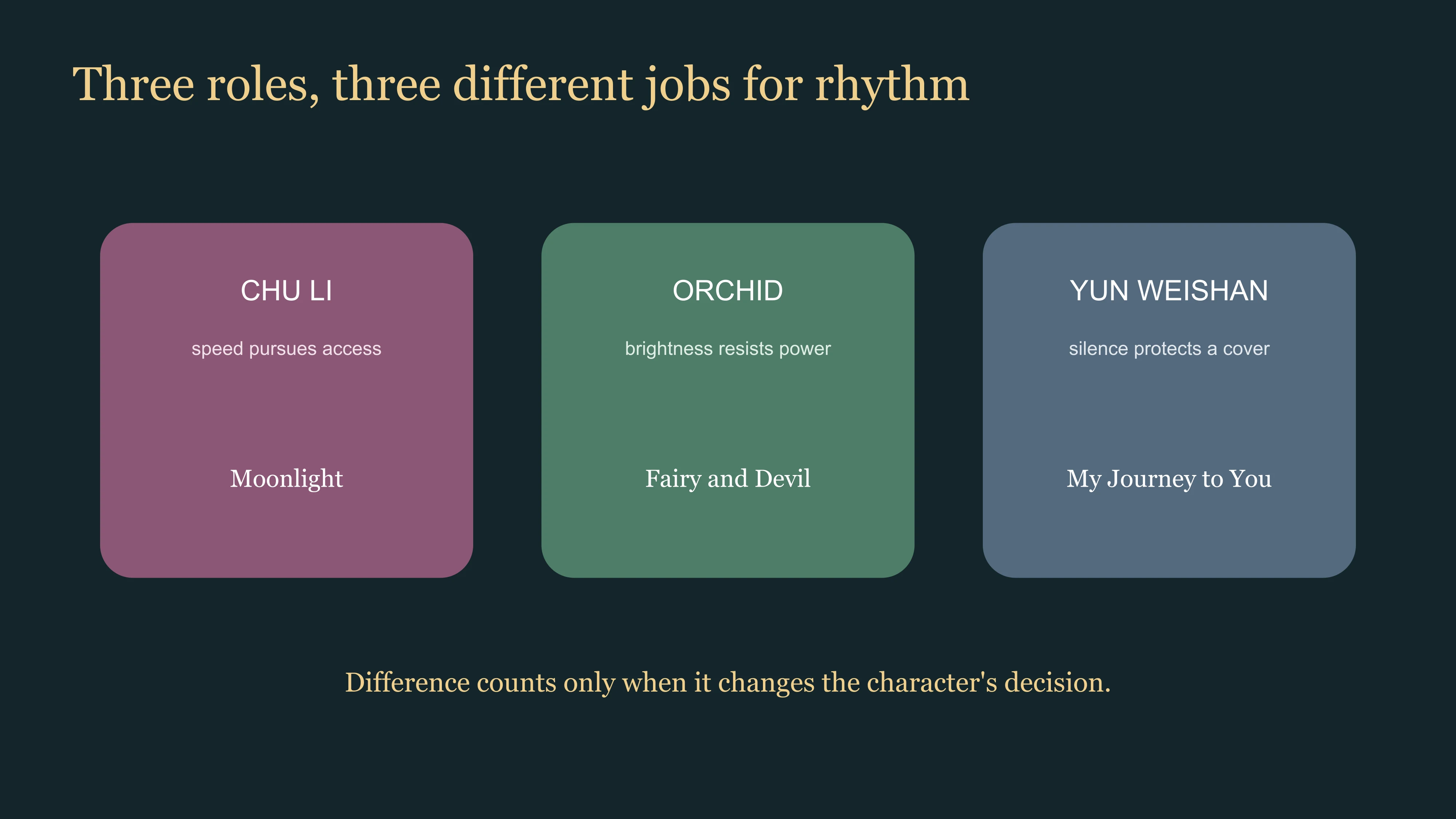
In Moonlight, the modern publishing setting allows quick speech, embarrassment, professional persistence and romantic friction to occupy the same scene. Esther Yu's bright register works when it carries intention: the character wants access, recognition or a change in another person's decision.
The iQIYI TW theme-song MV identifies Esther Yu within the drama's contemporary romantic world. An MV proves title identity and visual tone, not the complete performance or workplace realism.
The important distinction is between pitch and action. A high voice can become mannerism if it decorates every feeling identically. It becomes performance when tempo, interruption, hesitation and emphasis change according to what the character is trying to achieve.
Watch a scene with the sound on, then briefly with sound off. Does posture and eye line preserve the intention? Turn the sound back on. Does the vocal rhythm sharpen the choice or replace it? That is a fairer test than deciding whether the voice is pleasant.
Love Between Fairy and Devil makes softness consequential
Orchid begins small inside the scale of Love Between Fairy and Devil: lower status, limited power and a voice many viewers immediately code as childish. The drama succeeds when apparent softness becomes a form of stubborn ethical clarity rather than permanent helplessness.
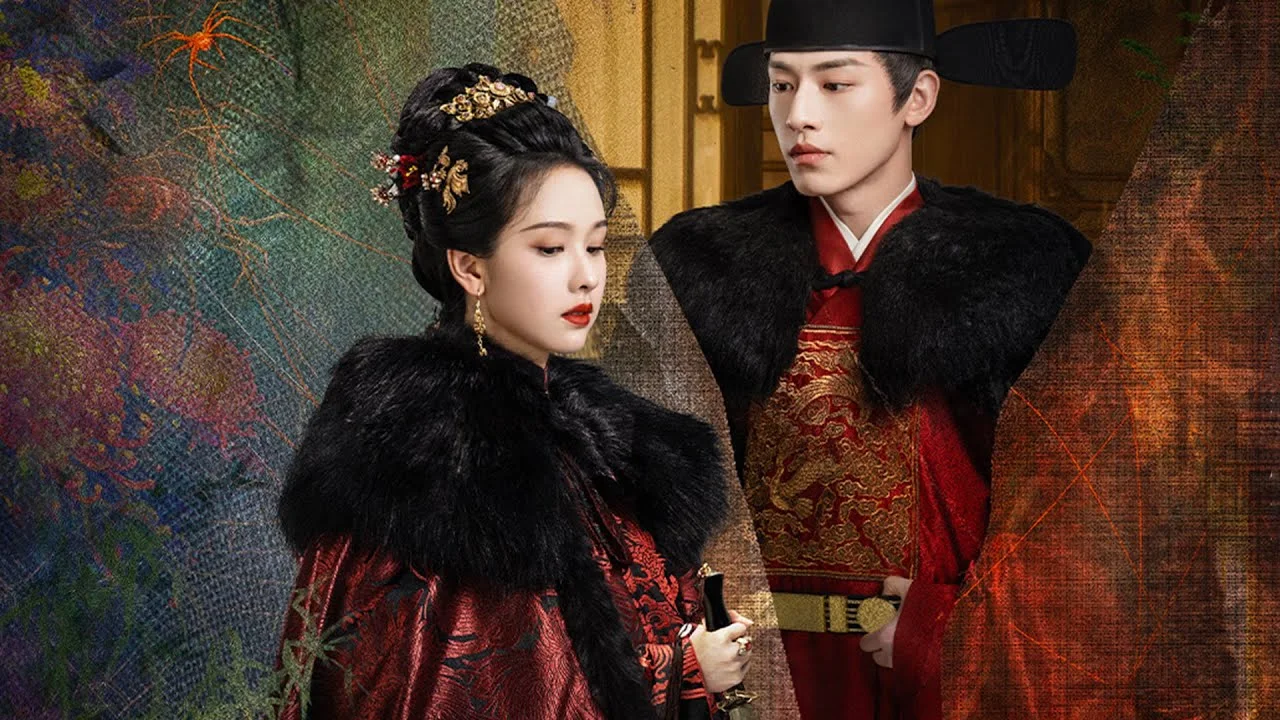
The official iQIYI trailer represented by the opening image establishes the character pairing and fantasy scale. The complete series shows the crucial movement: Orchid's value cannot remain that she melts a powerful man's heart. Her decisions must change what power is for.
The strongest scenes give her a choice with cost. Compassion is then not innocence floating above politics; it becomes refusal to accept the categories through which stronger figures justify harm. Vocal brightness gains dramatic contrast when circumstances darken but the character's agency remains legible.
Read East Moment's full Love Between Fairy and Devil guide for plot, relationship and ending context. Compare the performance with the Dylan Wang guide: their most effective scenes depend on incompatible rhythms learning to listen, not simply on visual chemistry.
Why Orchid is more difficult than she looks
The role risks three failures:
- Cuteness can erase competence. If every problem ends with rescue, softness becomes a marketable surface rather than a character method.
- Moral goodness can become passive. A kind person needs decisions that change consequence, not only speeches that describe virtue.
- Romance can absorb identity. If growth exists only to serve the male lead's transformation, the heroine becomes emotional infrastructure.
Esther Yu is strongest when she uses comic openness to make later resolve surprising but continuous. The audience should be able to look backward and see that courage was present before power recognized it.
The limitation is equally clear. Some early scenes push vocal and facial signals so strongly that viewers who dislike the style may stop before contrast appears. A later arc cannot retroactively make every early choice precise.
My Journey to You is the necessary range test
Yun Weishan in My Journey to You operates through concealment. She enters the Gong household under an identity that must survive observation. The role therefore reduces many tools associated with Esther Yu's public image: overt comic reaction, bright vocal attack and rapid social disclosure.
The change is useful but should not be overpraised merely because it looks serious. Lower voice, still posture and muted expression are inputs. The acting question is whether small changes reveal calculation, fear, emerging trust or divided purpose.
Her best Yun Weishan moments let two readings coexist: a response may be tactically correct and emotionally true. Her weaker moments are protected by the production's beauty. Symmetrical frames, slow motion and elaborate styling can supply significance even when the character's internal decision is not specific enough.
East Moment's full My Journey to You guide explains why spatial power often works better than the mystery plot. The Zhang Linghe page provides the necessary partnership comparison.
The voice debate: what can actually be judged
Audience preference is real evidence of reception, but not proof of craft. Some viewers find Esther Yu's vocal quality expressive and recognizable; others find it mannered or exhausting. Neither reaction needs to be denied. It needs to be separated from claims the reaction cannot establish.
Use four questions:
- Does pitch change with situation, or remain a fixed brand signal?
- Does tempo reveal what the character wants from the other person?
- Can the performance hold attention during listening, not only speaking?
- Does a later serious moment transform the earlier rhythm, or merely switch it off?
A distinctive voice is an acting constraint in the same way a famous face is a visual constraint. The artist cannot become neutral. The work is to give recognition a different function in each role.
Esther Yu songs: use music to understand persona, not acting range
Searches for Esther Yu songs often lead through drama soundtracks, group-era pop performance and character-associated music. These are useful for hearing tone, phrasing and how a public image is organized. They do not independently prove screen range.
Start with the Moonlight theme-song route because it connects singer and actor inside one production. Then compare a performance-oriented music video with dialogue from Love Between Fairy and Devil and a restrained scene from My Journey to You.
Listen for what changes:
- breath and phrasing when melody replaces dialogue;
- gaze directed toward camera versus a scene partner;
- whether recognizability is the goal or something the character must suppress;
- how costume, editing and music carry emotion the performer would otherwise need to build over time.
This keeps a multi-format career coherent without pretending every format demonstrates the same skill.
Her 2024 lead in Love Game in Eastern Fantasy matters because Ling Miaomiao does not simply repeat Orchid. The official WeTV title page identifies the 32-episode fantasy route and Esther Yu's lead role. My judgment is sharper: the role succeeds when exaggerated game-world reaction becomes tactical awareness. It fails whenever the production assumes audience affection can substitute for the character discovering a new way to act. That is the current test her career must keep passing.
How to watch one Esther Yu scene closely
- Name the immediate objective. What does the character need from the person in front of her?
- Separate pitch from rhythm. A voice can be high while timing remains precise or imprecise.
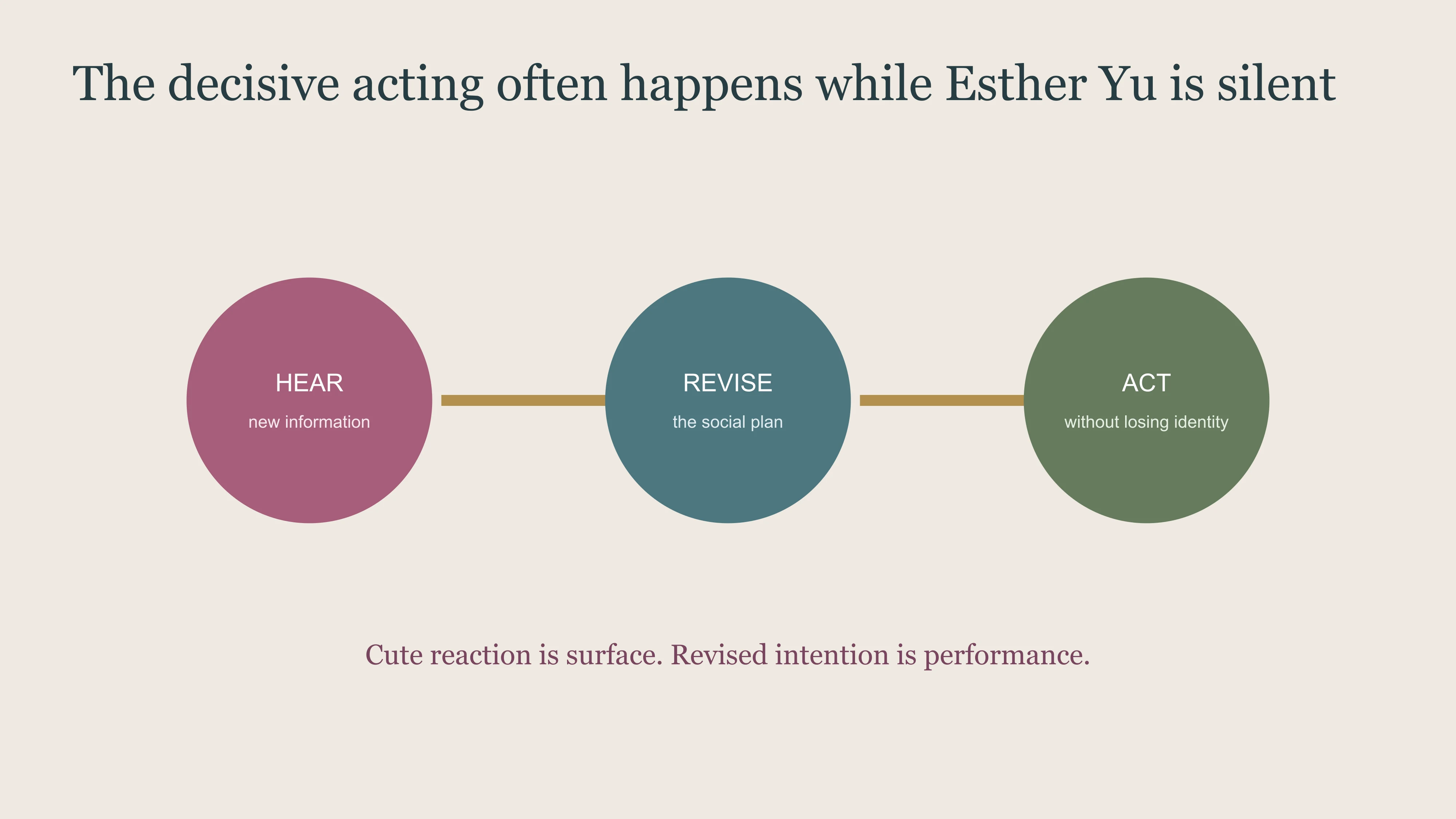
- Watch the listening shot. Does the character revise a plan when new information arrives?
- Check physical continuity. Does posture carry the same intention before and after a cut?
- Measure consequence. Does the choice alter trust, risk or action, or only create an attractive emotional beat?
Apply the same method to Orchid and Yun Weishan. Difference alone is not range; specific, consequential difference is.
The voice debate cannot carry the whole judgment
Esther Yu's recognizability can become a production shortcut. Some roles use vocal styling, fashion and established audience affection without creating enough resistance for a new character. In the opposite direction, a dark palette and subdued delivery can be mistaken for automatic maturity.
Her strongest work sits between those shortcuts. Love Between Fairy and Devil gives brightness moral consequence. My Journey to You asks concealment to disturb that brightness. Moonlight lets social and vocal speed generate professional and romantic initiative.
The career still needs roles whose writing remains demanding after the novelty of transformation disappears. Range is not one successful contrast; it is the ability to create new decisions across repeated circumstances.
Final verdict: where to start with Esther Yu
Start with Love Between Fairy and Devil, then watch My Journey to You, then use Moonlight as the modern comparison. That order shows the best integration of persona, the clearest attempt to suppress it and the contemporary rhythm that explains why it became legible.
My conclusion is specific: Esther Yu is most effective when recognizability becomes dramatic material rather than a finished character. The voice is not the verdict. What a scene makes the voice do is the evidence.
Continue through the Chinese actors guide and Chinese television collection. In the comments, bring one scene where rhythm creates agency and one where restraint changes your judgment. That comparison gives the community a useful starting point beyond “cute” or “serious.”