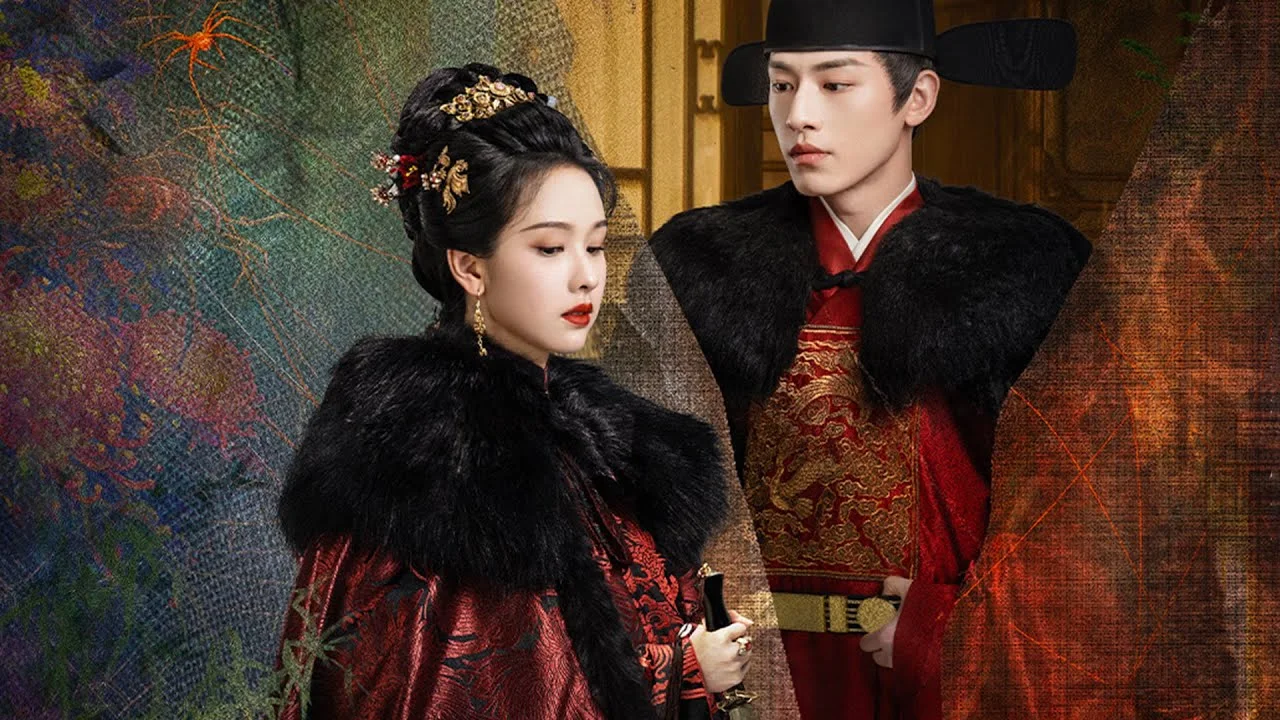
Zhang Linghe is easy to cast as an answer before a scene begins: tall, composed and immediately credible in historical costume. His best acting starts when he makes that apparent certainty unstable. Stillness, a delayed look and a controlled voice can turn physical authority into doubt, calculation or danger.
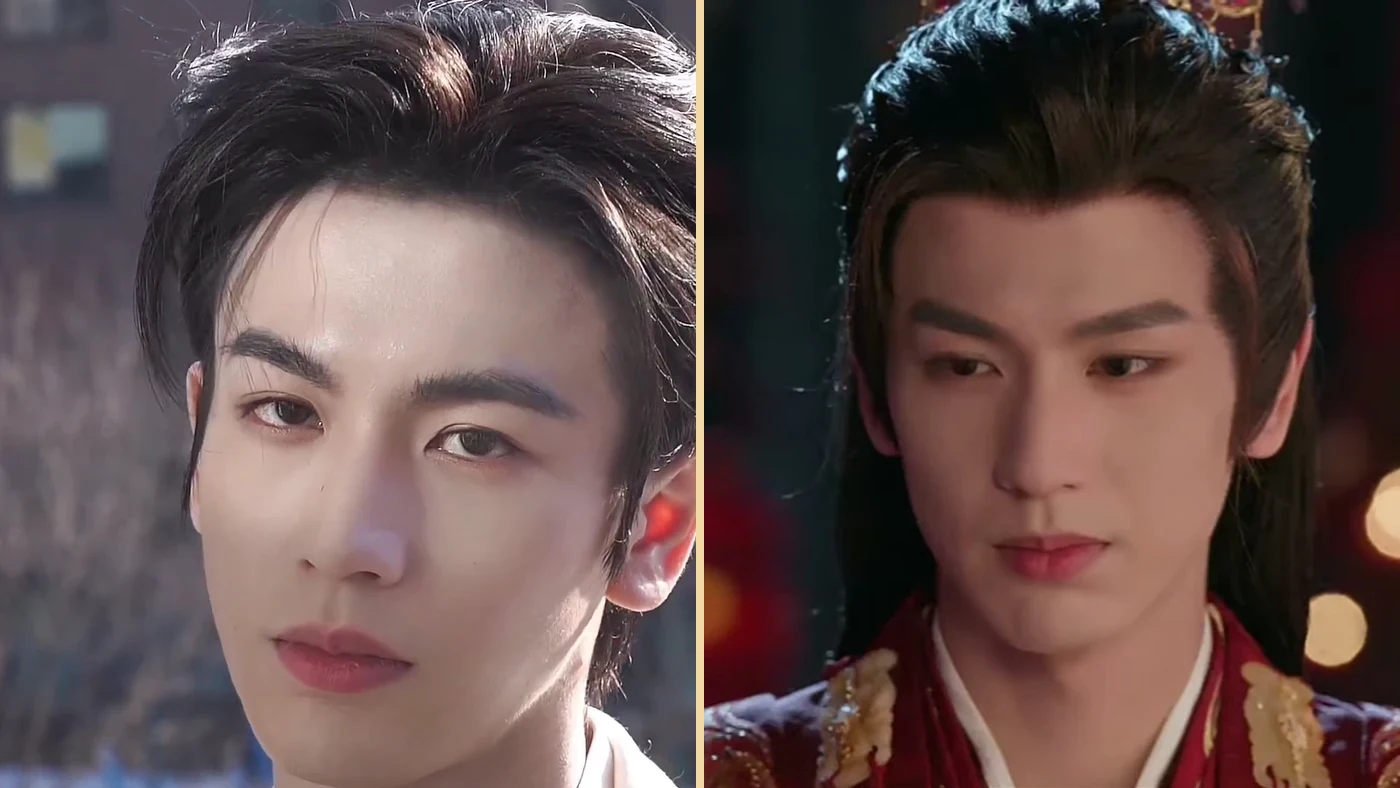
The cover puts two identified iQIYI publicity images beside each other: a modern close-up and a historical-costume character image. It proves how quickly styling can change the pressure around the same face. It cannot prove acting range, private personality or the quality of an entire drama; those judgments have to come from scenes, voice and reaction.
Zhang Linghe: best dramas and where to start
Start with Pursuit of Jade if you want to see Zhang Linghe's current screen problem in its clearest form: the actor's height and authority arrive before the character has earned either. Follow it with Story of Kunning Palace for controlled menace, then My Journey to You for the opposite movement, a young man who has to grow into command. This route is more revealing than starting with the most beautiful poster.
| Question | Short answer |
|---|---|
| Chinese name | Zhang Linghe (张凌赫) |
| Born | December 30, 1997, in Wuxi, Jiangsu |
| Breakthrough route | Television romance and costume drama |
| Best-known international entry points | Love Between Fairy and Devil, My Journey to You and Story of Kunning Palace |
| Strongest screen tool | Controlled stillness inside an imposing frame |
| Best current test | Xie Zheng in Pursuit of Jade |
| Best first lead role | Xie Wei in Story of Kunning Palace |
| Best contrast | Gong Ziyu in My Journey to You |
| Watch for | Whether voice and reaction change beneath the same elegant exterior |
Do not choose a first drama only by costume or poster. Choose by the kind of pressure you want to see him handle.
Who Zhang Linghe is and why overseas viewers find him
Zhang Linghe (张凌赫) is a mainland Chinese actor whose international visibility has been driven mainly by streaming costume dramas. Viewers may first recognize him from Love Between Fairy and Devil, even though that is not the best work for evaluating him as a central lead. The more revealing comparison is between Gong Ziyu in My Journey to You and Xie Wei in Story of Kunning Palace.
His name is written family name first in Chinese: Zhang is the surname, Linghe the given name. “Zhang Ling He” may appear as a search spelling, but the standard English credit is Zhang Linghe. This page concerns the actor, not characters or similarly named public figures.
Zhang Linghe dramas ranked by viewing purpose
| If you want... | Watch | His role | Why it is useful |
|---|---|---|---|
| The current career test | Pursuit of Jade | Xie Zheng | His authority has to become useful inside Fan Changyu's household before it can become public power |
| The strongest lead-performance test | Story of Kunning Palace | Xie Wei | Authority, trauma, calculation and listening under pressure |
| Growth from softness to responsibility | My Journey to You | Gong Ziyu | A direct contrast with his severe roles |
| Relationship negotiation over pure courtship | The Princess Royal | Pei Wenxuan | Status, memory and partnership require conversational adjustment |
| An earlier and lighter baseline | Maiden Holmes | Pei Zhao | Shows the actor before the imposing image became the default product |
| A supporting-role discovery | Love Between Fairy and Devil | Changheng | Explains why many international viewers recognize him, but not his full range |
There is no honest single “best drama” independent of intent. Pursuit of Jade is the best current test; Story of Kunning Palace is the strongest first acting test; My Journey to You is the best contrast; Love Between Fairy and Devil is the familiar discovery route.
Appearance creates the problem he must solve
Zhang's height and facial structure make rank immediately readable in costume drama. Directors can place him at the center of a hall, keep him nearly motionless and let the surrounding bodies establish power. That is efficient casting, but it can also flatten a performance. If every role depends on the same upright posture and cool gaze, the actor becomes an image rather than a changing person.
His useful skill is modulation within that limited surface. A lowered voice can suggest control in one scene and repression in another. A pause can read as intelligence, fear or calculation depending on when the eyes move. These are not explosive transformations. They reward comparison.
I do not count a beautiful close-up as evidence of a good performance. Zhang Linghe already brings height, clean lines and a face that costume departments know how to frame. The scene begins only after those advantages arrive. My question is blunt: what remains if the robe, lighting and low-angle shot stop doing the work?
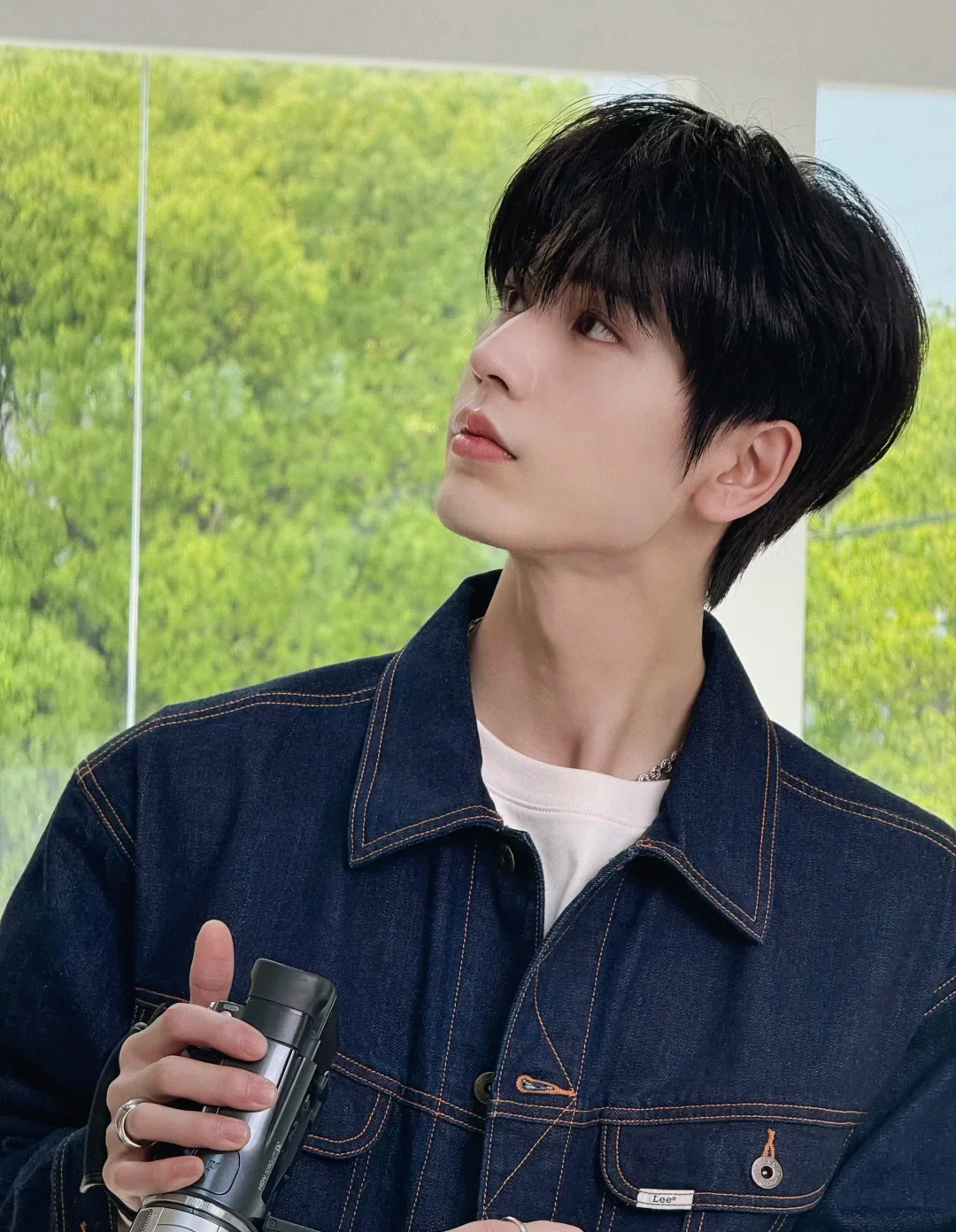
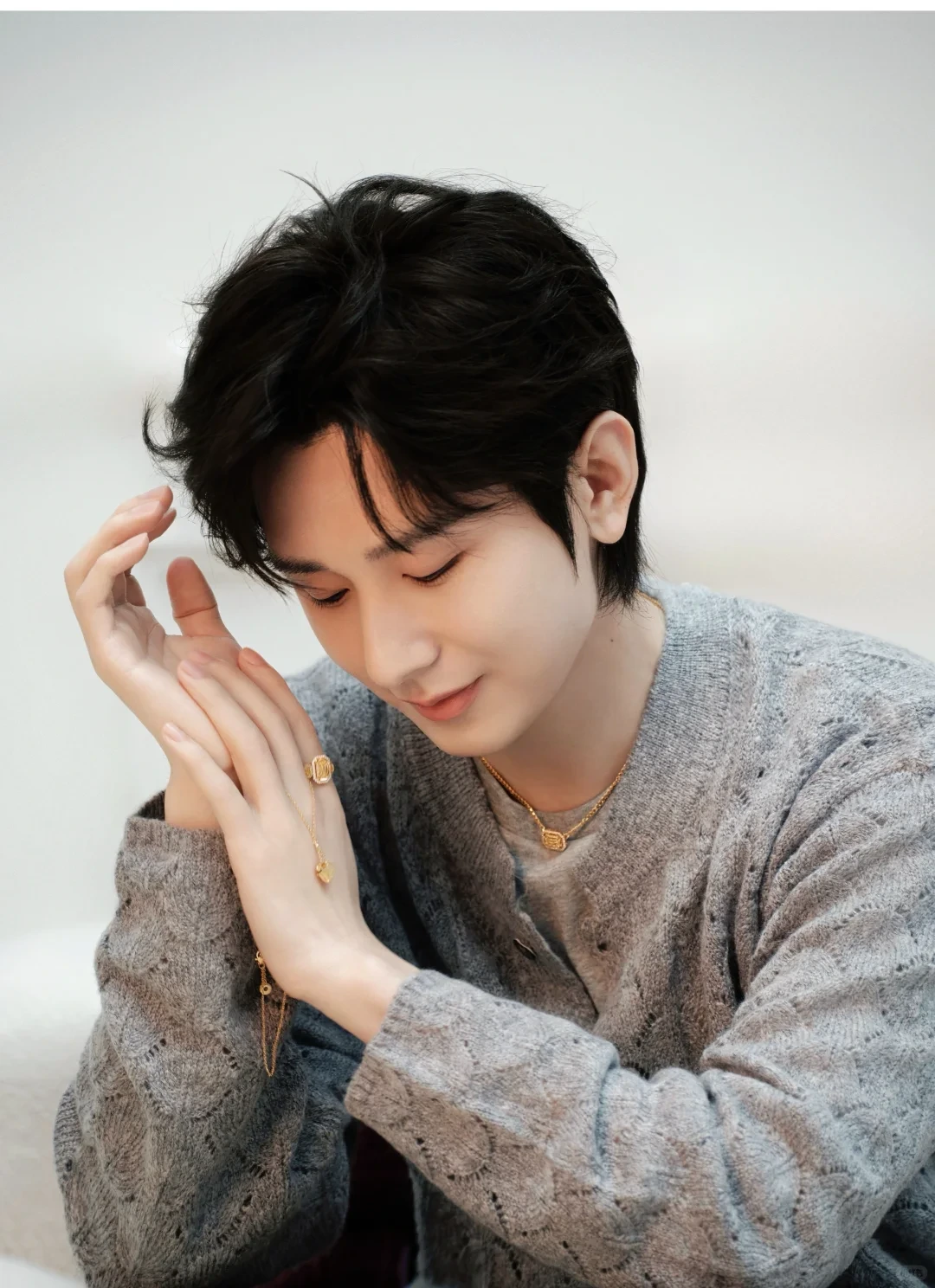
This August 2026 portrait removes the robe, palace architecture and inherited rank. Denim seams, daylight and the camera in his hand make him look like someone observing rather than someone a room has already agreed to obey. That is useful visual evidence of how styling changes the first answer a face gives us. It is not acting evidence. The photograph cannot tell us whether he listens, revises or breaks under pressure; only a moving scene can do that.
Two roles show the real range
Xie Wei: authority with a fracture inside it
In Story of Kunning Palace, Xie Wei is a teacher and political strategist whose command is never emotionally simple. Zhang benefits from the role's severe composition: clean costume lines, measured speech and rooms organized around his position. The performance becomes interesting when that order feels maintained at a cost.
The official Story of Kunning Palace trailer shows how the production frames Xie Wei as controlled authority. Watch the eyes and breath when that control is challenged.
The risk is monotony. Severity can become one sustained note. The stronger scenes give him someone to listen to rather than merely dominate; reaction exposes the instability the posture conceals.
The Bai Lu profile reads the same exchanges from Jiang Xuening's side: remembered danger becomes useful only when she adjusts to information Xie Wei has not allowed her to predict.
Gong Ziyu: softness has to grow into command
My Journey to You reverses the direction. Gong Ziyu begins with less authority and must become legible inside a dangerous family system. His relative softness is not an absence of charisma. It is the dramatic material.
Use the official My Journey to You trailer as a contrast. The question is no longer how power cracks, but how an uncertain man learns to occupy it. The full My Journey to You guide follows the household mystery and ending; here I am watching the actor learn to carry authority without pretending Gong Ziyu possessed it from birth.
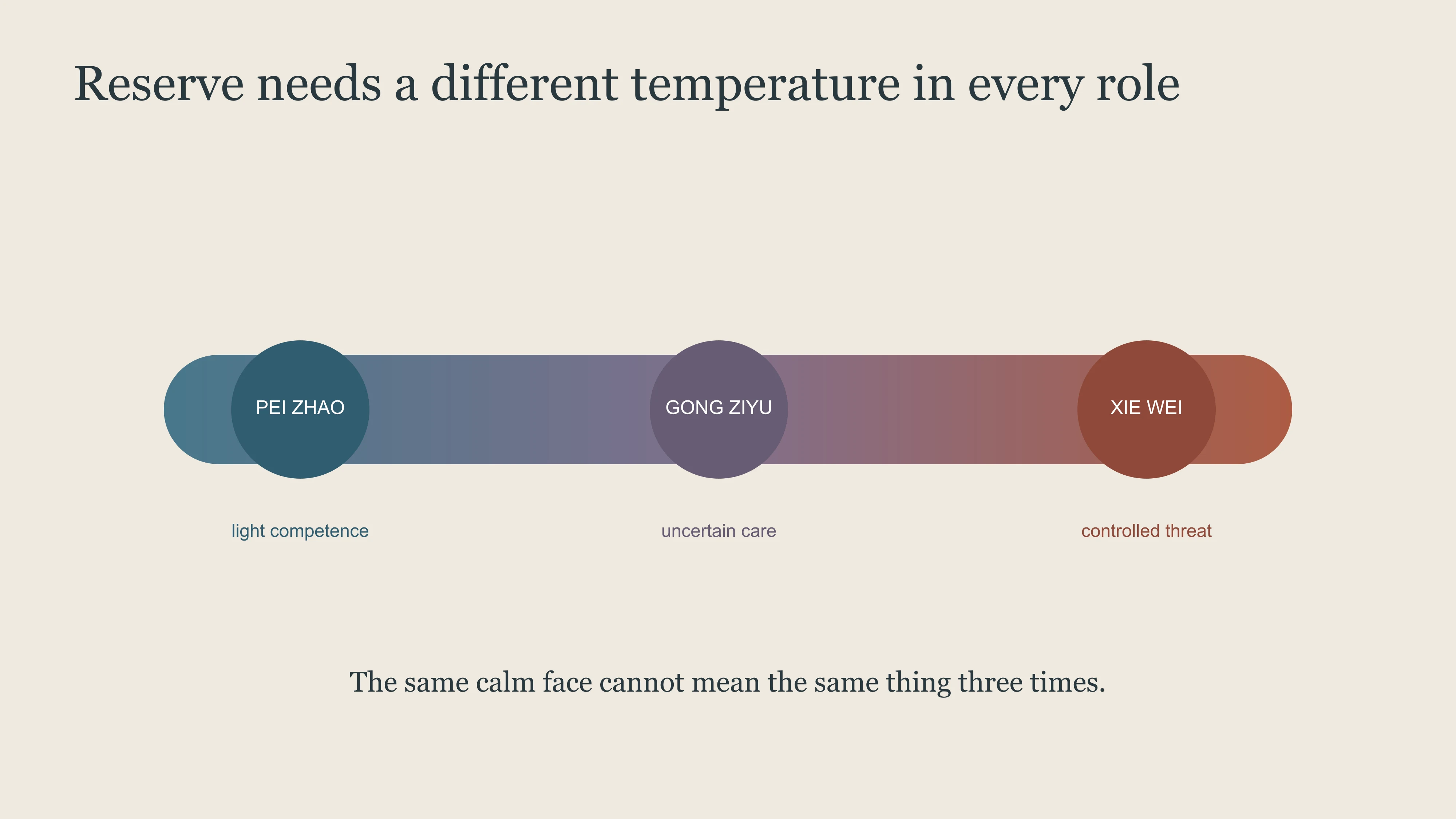
Placed together, the roles make the method visible. Xie Wei tightens. Gong Ziyu opens. Both can share elegant costume and restrained movement without being the same character.
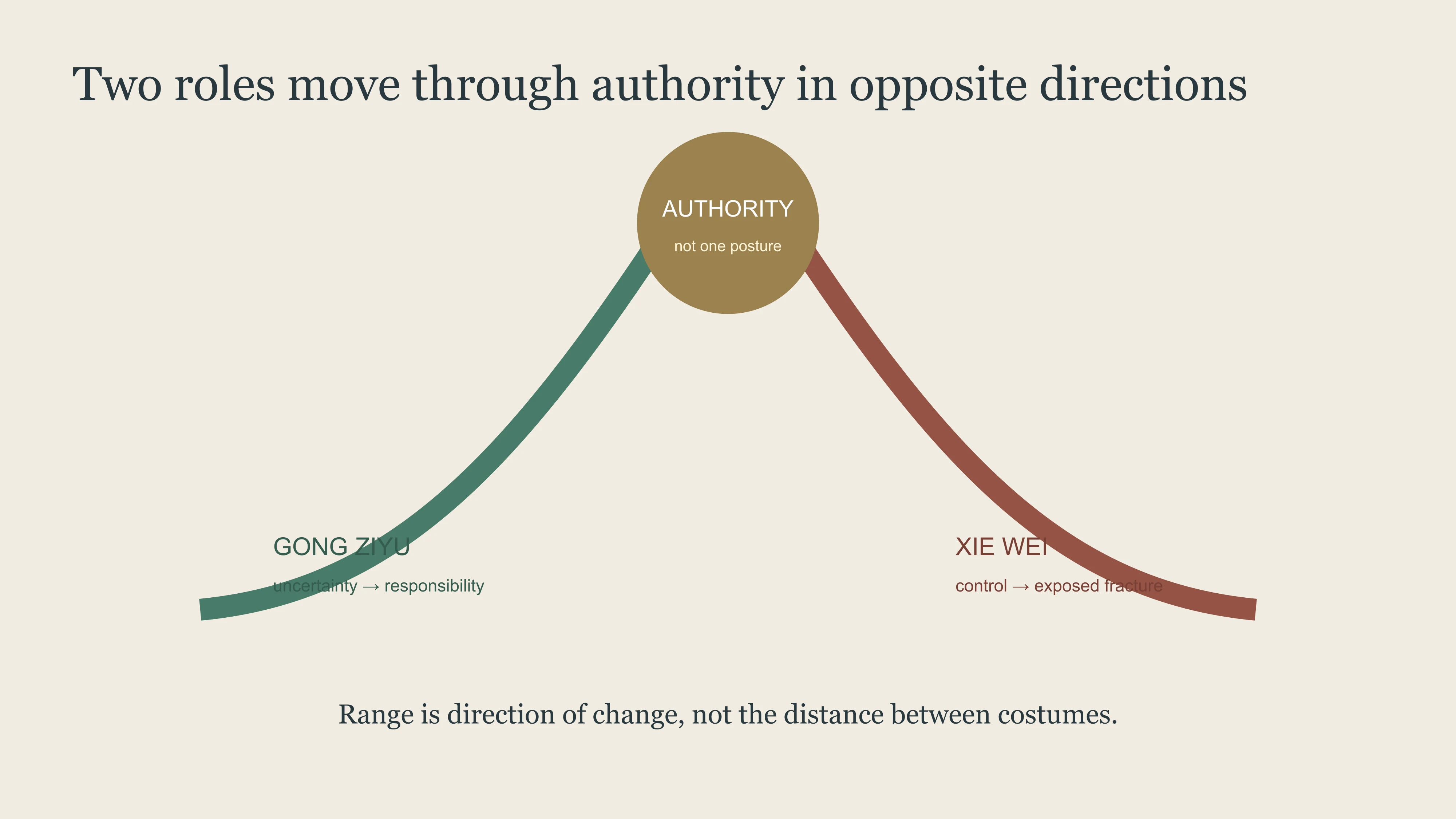
That opposition is the centre of the profile. Xie Wei enters a room knowing other people will adjust to him; Gong Ziyu often enters needing to discover which rule is already controlling everyone else. One performance stores pressure. The other receives it, misreads it and gradually learns how to answer. If both men merely look solemn, Zhang has failed the comparison.
Pursuit of Jade gives Zhang Linghe a harder problem than palace authority
Xie Zheng in Pursuit of Jade is the role I would put first for a reader searching Zhang Linghe best dramas in 2026. Not because it is automatically his best performance, and not because a current title deserves free promotion, but because the role removes one of his easiest advantages. He enters Fan Changyu's home with education, hidden status and military knowledge, yet none of those things can immediately run the household. He has to become useful before he can become impressive.
That reversal matters. In Story of Kunning Palace, Xie Wei's body is already backed by architecture: rooms, students, rank and the fear other characters bring with them. In Pursuit of Jade, Xie Zheng begins inside somebody else's system. Fan Changyu knows the food, money, work and social danger. He may understand a larger political world, but she understands the smaller world keeping people alive. The performance works when Zhang lets that difference show in his listening.
This is also why the pairing with Tian Xiwei's Fan Changyu deserves its own internal route. Her performance carries forward pressure; his has to absorb and redirect it. The full Pursuit of Jade guide owns the drama's plot, relationship arc and uneven later expansion. This page owns the actor question: can Zhang play authority as something that must be negotiated rather than something the camera grants him for free?
I prefer him in the early household material because the power is embarrassingly practical. Who knows what to do? Who is allowed to decide? Who notices that a person is tired before the person admits it? Zhang's tall frame becomes more interesting when it has to bend toward work, wait for another person's instruction or accept that a strategic mind cannot solve a problem by standing above it.
The limitation is visible too. The production often knows exactly how to make Xie Zheng look like a poster. Snow, banners, armor and a controlled profile can restore the old visual certainty in one cut. When that happens, the role slides back toward the familiar Zhang Linghe package: elegant man, withheld feeling, approaching danger. The question is whether the next action changes because he has listened. If not, the image is doing more work than the character.
My verdict is deliberately narrow: Pursuit of Jade does not erase the weaknesses in Zhang Linghe's acting range, but it makes the useful question impossible to avoid. Can the actor turn physical authority into shared responsibility? Watch the scene after Xie Zheng's status becomes less useful. That is where the role either becomes a new step or returns to costume-drama default.
Voice is more important than the screenshots suggest
Still images naturally favor Zhang Linghe: height, profile and costume silhouette survive without context. Acting does not. Listen to the pace of a sentence, where he removes volume and whether emotional pressure changes the breath.
His low, controlled register supports authority, but it can also make dialogue feel uniformly weighted. The strongest passages include interruption, hesitation or an unexpected softening. Subtitles carry meaning; vocal rhythm carries the social relation underneath it.
This is why short visual edits are insufficient evidence of range. They preserve the look and remove the timing between actors.
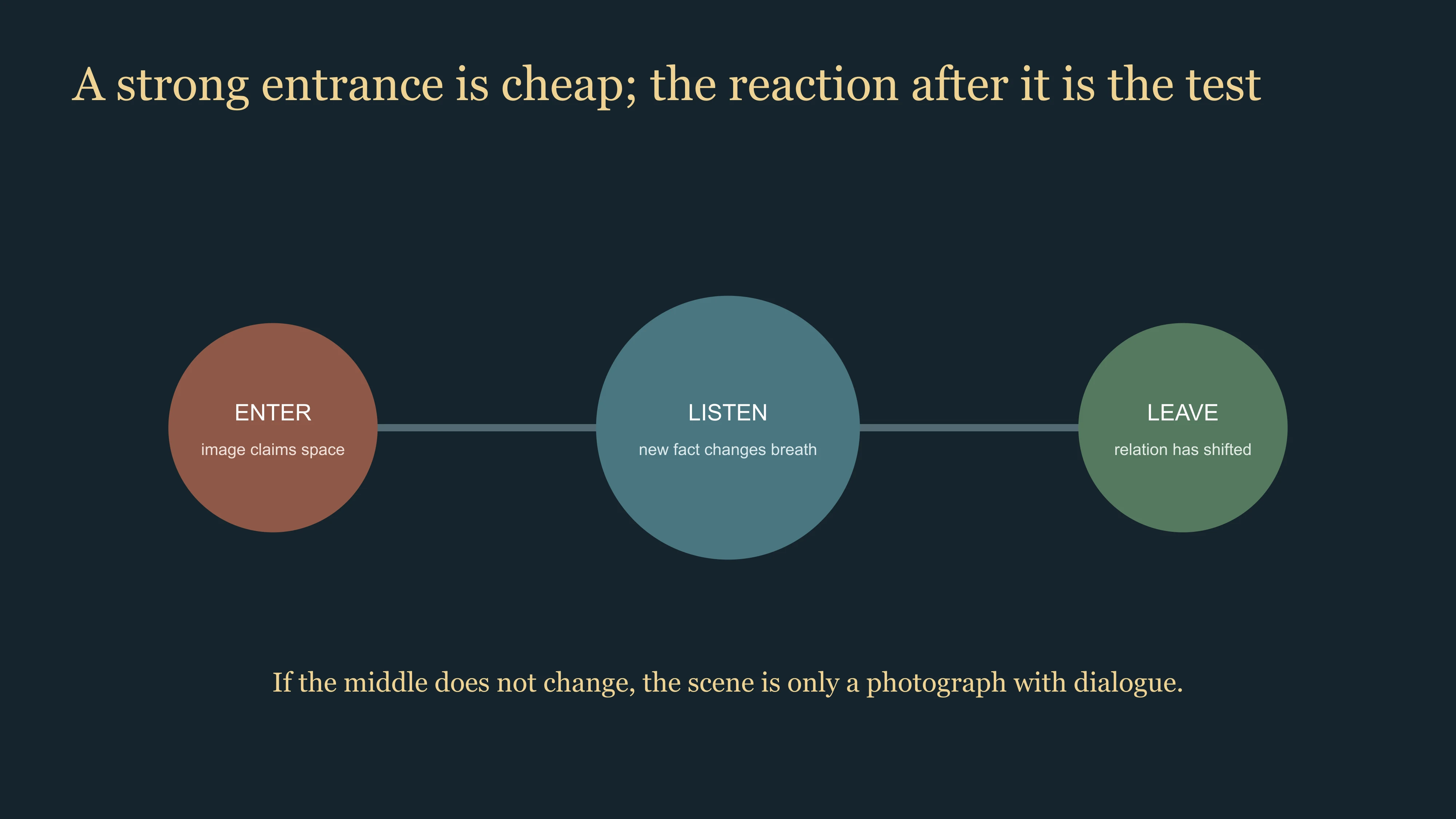
How to judge the acting in one episode
Use four observations instead of deciding from a highlight clip:
- Entrance: does the role claim space through rank, movement or other characters' reactions?
- Listening: what changes while someone else owns the dialogue?
- Vocal pressure: does speed, breath or volume change when control weakens?
- Exit: does the scene leave a psychological consequence, or only a strong image?
Apply this test to Xie Wei and Gong Ziyu. If both roles produce the same posture, gaze and vocal temperature, the production is leaning on the star image. If the timing and social relation change, the shared face and height no longer mean identical acting.
The lighter and relationship-led roles matter
Maiden Holmes is useful because it preserves an earlier, less monumental screen rhythm. Pei Zhao is not carrying the same accumulated prestige image as Xie Wei. The performance can therefore be quicker, warmer and more available to another person without every pause being photographed as destiny. It is not his deepest role. It is evidence that severity was never the only possible register.
The Princess Royal creates a different difficulty: Pei Wenxuan must negotiate with a woman who brings memory, status and her own strategy into the relationship. The official Youku teaser establishes the returning-marriage premise. What matters to me is the conversational work. Partnership cannot be performed as command with softer lighting. He has to concede, tease, wait and revise without losing the character's intelligence.
Love's Rebellion supplies another fantasy-romance test. The official iQIYI trailer identifies the production and pairing; it does not prove range. The useful question is whether romance changes his listening temperature or simply places the familiar composed image beside a new heroine.
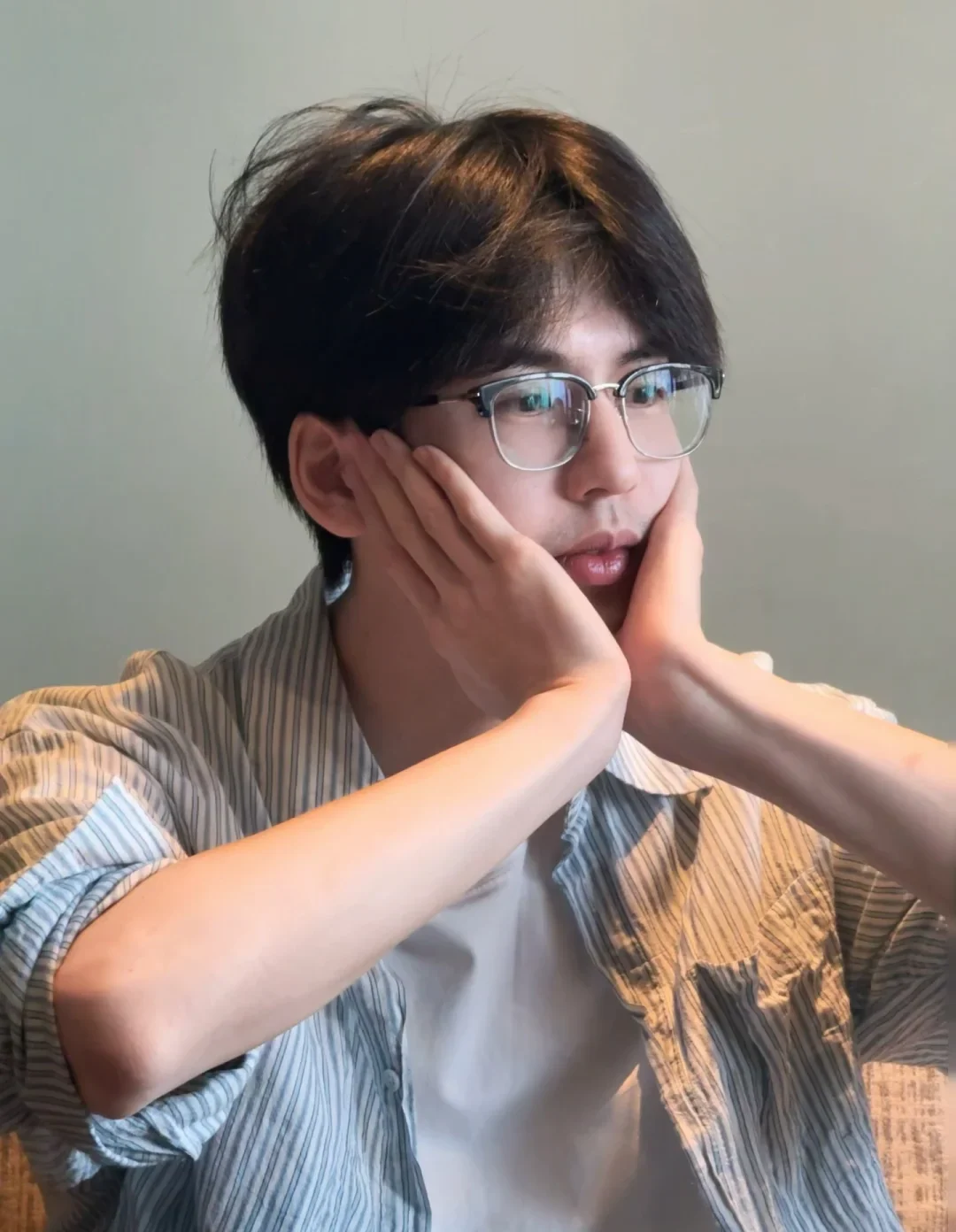
The September 2026 portrait goes further in the opposite direction: glasses, warm window light, an ordinary striped overshirt and a deliberately unguarded pose. I do not pretend this is Zhang Linghe's private personality. It proves something smaller and more useful for this page: the severe costume-drama silhouette is a production choice, not the only image his face can hold. A modern role should exploit that difference instead of rebuilding Xie Wei in a jacket.
Career turning points, not every credit
- 2020: Maiden Holmes provides an early leading-role baseline.
- 2022: Love Between Fairy and Devil places him before a large international streaming audience.
- 2023: My Journey to You and Story of Kunning Palace make contrasting forms of costume-drama authority visible in the same year.
- 2024-2025: lead roles test whether the Xie Wei image expands into partnership, comedy and other social rhythms or becomes a casting formula.
- 2026: Pursuit of Jade puts him inside a practical household alliance with Tian Xiwei, where authority must be earned through usefulness before it can become spectacle.
The current question is differentiation. Another beautiful historical role adds little unless the character requires a new body, voice or moral position.
Where to start watching
- Start with Pursuit of Jade if you want the current test of authority, usefulness and partnership.
- Start with Story of Kunning Palace if you want political pressure, moral opacity and controlled menace.
- Start with My Journey to You if you want vulnerability developing into responsibility.
- Try The Princess Royal for a relationship shaped by negotiation, status and second-chance knowledge.
- Use Maiden Holmes to see an earlier, lighter stage before the severe prestige image became dominant.
Do not binge only highlight reels. Watch one complete confrontation and one quiet listening scene from each role. The comparison separates photogenic presence from responsive acting.
The honest limitation
Zhang Linghe remains more convincing in roles that give his reserve an internal reason. When a production asks only for beauty, height and unbroken composure, his tools can narrow into a familiar package. This is partly performance and partly casting: repetition is profitable.
The next meaningful test is not a larger costume production. It is a role whose social position, body language and vocal temperature cannot be solved by elegance alone.
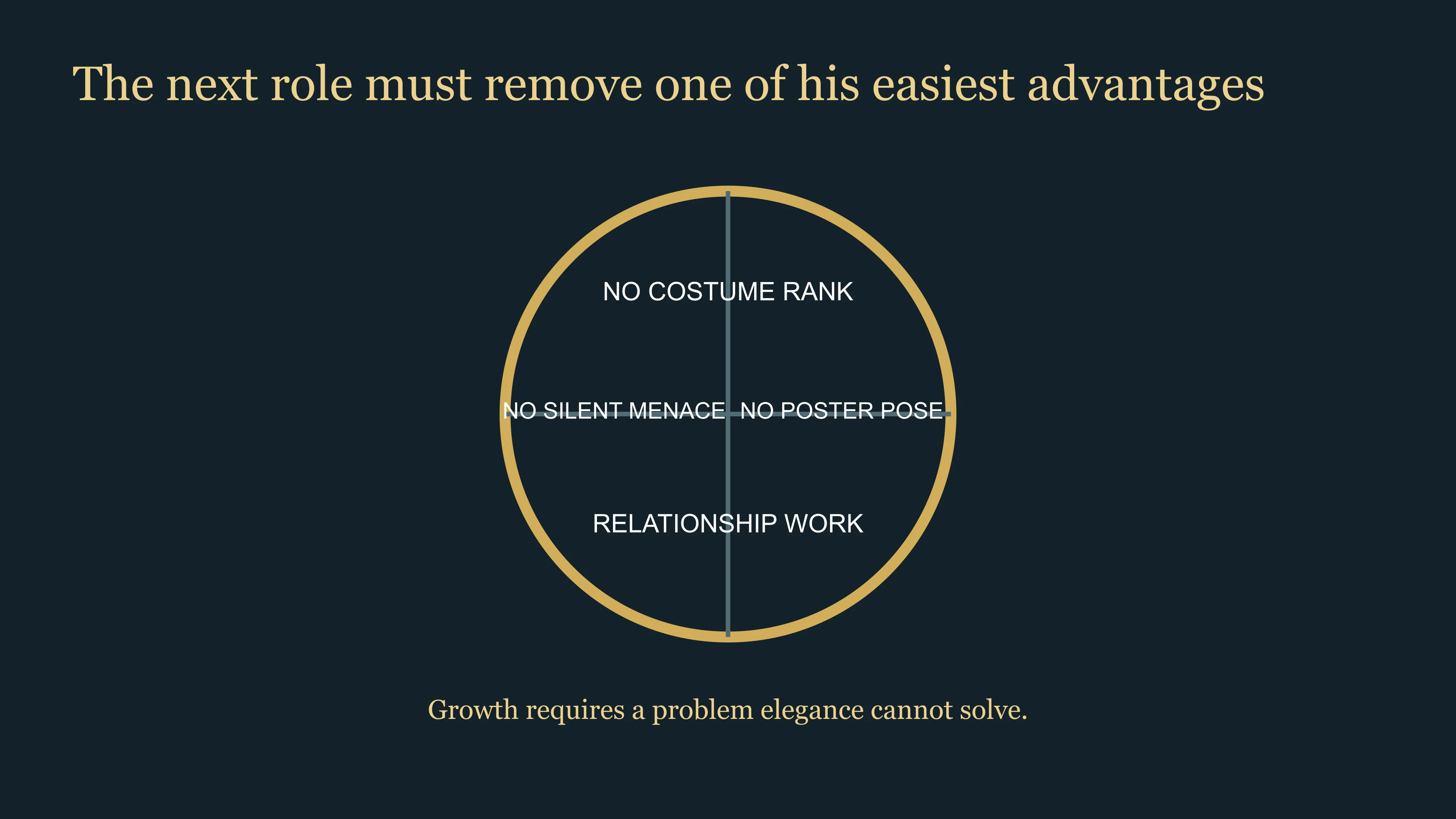
I want to see the production remove one easy answer: give him ordinary clothes, uncertain status, an embarrassing physical task or a relationship in which silence is read as avoidance rather than authority. That is not a demand that he abandon costume drama. It is a demand that the next character make the famous image pay rent.
Why Zhang Linghe is worth watching
He represents a recognizable current in internationally circulated Chinese drama: actors whose appearance travels instantly through posters and short video, while their real differentiation requires slower viewing. Zhang Linghe's value is not that the image is misleading. It is that the best roles make the image part of the conflict.
Continue through the Chinese actors guide and the wider Chinese television collection. Those routes make it easier to compare performance across genres instead of treating one popular costume role as a complete career.
The discussion below is deliberately specific: name one scene, not one photograph. Explain what Zhang does before, during and after the decisive line. Strong reader answers will be used to choose which role comparison East Moment updates next.