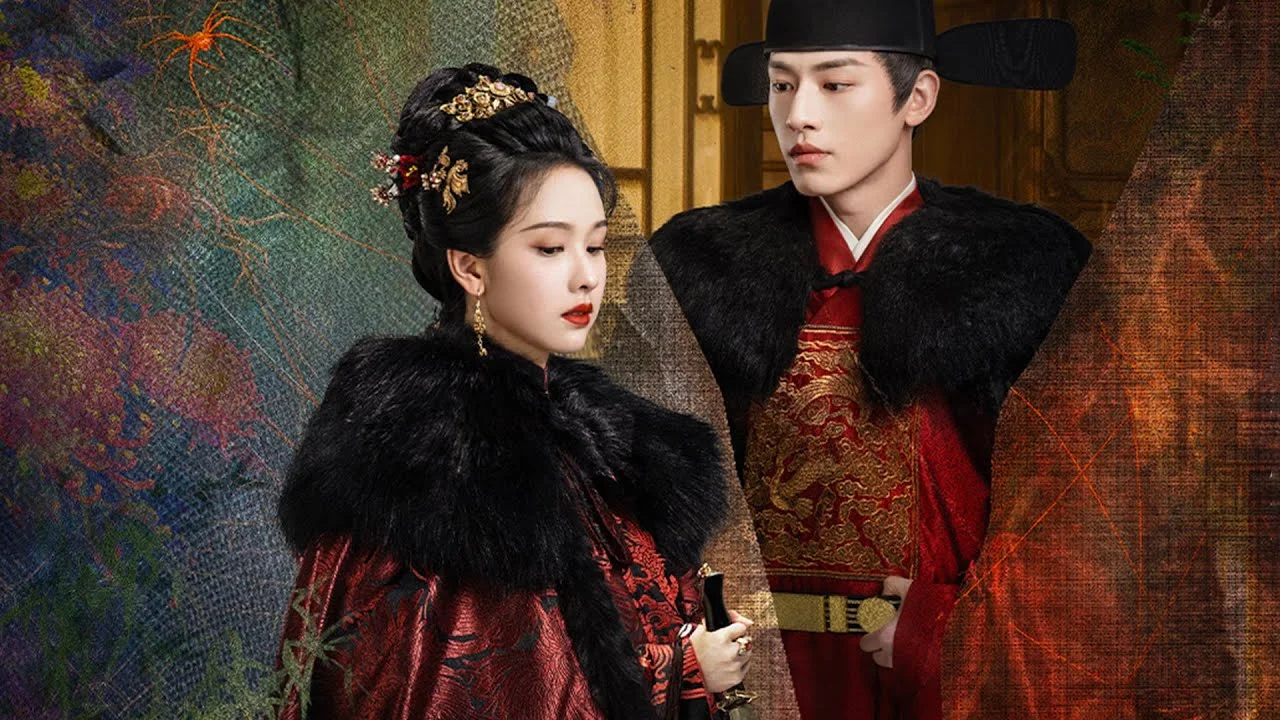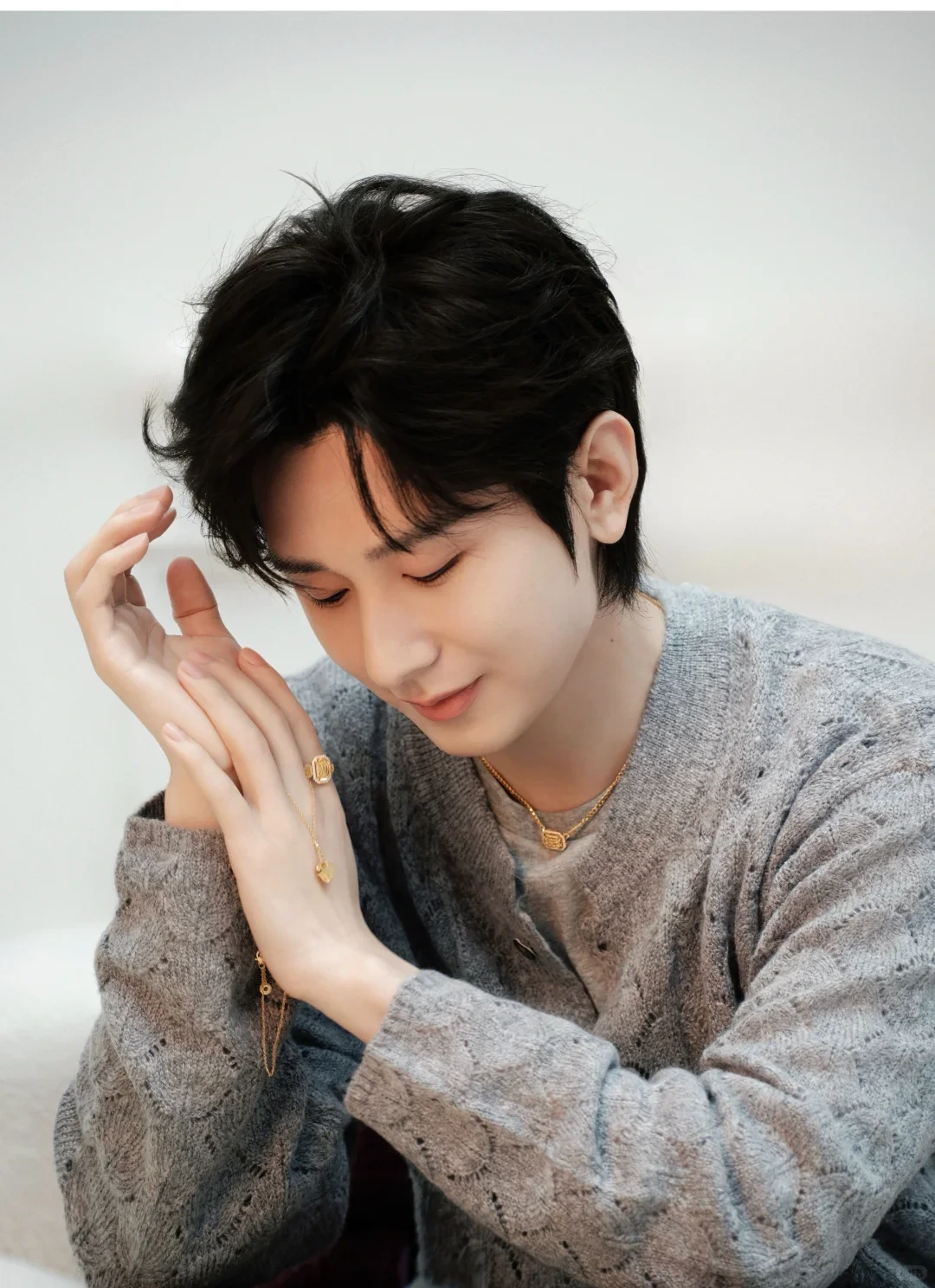
I did not stay interested in Wang Hedi because he is handsome. That is the entry ticket, not the reason to keep watching. I like the collision between his swagger, his basketball-player physicality, his unfinished hip-hop ambition and the moments when a supposedly confident man becomes ridiculous, lonely or unexpectedly sincere.
That is only half the person. Wang Hedi is also a Sichuan-born performer whose public image crosses acting, basketball, music, variety entertainment and a hip-hop ambition that began before fame. Meteor Garden made the face recognizable; Love Between Fairy and Devil gave the charisma a disciplined role; Guardians of the Dafeng let comedy loosen it. The C-BLOCK story explains something the drama list cannot: he does not experience music as a celebrity side project that appeared after success.
Dylan Wang: my route runs through drama, rap, basketball and variety
The conventional route starts with Meteor Garden. Mine is messier. I watched the dramas, then followed the person through performance clips, basketball and variety appearances. One program led me to Wang Hedi, but the surrounding cast also made me notice Meng Ziyi. That is how an entertainment knowledge network should work: one person opens a door, and the next person becomes interesting for a different reason.
I like Wang Hedi's sports side because basketball makes the body honest. On a drama set, swagger can be protected by framing, costume and editing. On a court, a bad decision is visible immediately. I am not using celebrity basketball appearances as proof of professional skill. I am using them as a useful contrast: the actor who knows how to claim space also has to share space, pass, miss and recover.
The same reason explains why I keep an eye on his music. His connection to C-BLOCK and GAI should not be inflated into ownership or crew membership claims. What matters is the cultural direction. Wang Hedi is drawn to rap as a living scene, not merely as a fashionable accessory. That makes the anticipated Xianyu Feisheng / 咸鱼飞升 another useful test: can his screen rhythm change when the fantasy emperor's armor is gone?
Dylan Wang in 60 seconds
| Question | Short answer |
|---|---|
| Chinese name | Wang Hedi (王鹤棣) |
| Born | December 20, 1998, in Leshan, Sichuan |
| Breakthrough | Daoming Si in the 2018 Meteor Garden |
| Global drama breakthrough | Dongfang Qingcang in Love Between Fairy and Devil |
| Strongest screen asset | Bold physical presence that can support authority or comedy |
| Best first drama | Love Between Fairy and Devil |
| Useful contrast | Meteor Garden, Guardians of the Dafeng and variety work |
| Current search route | Drama, rap, basketball, variety and Xianyu Feisheng |
| Watch for | Whether vulnerability changes the body, not only the dialogue |
The key question is not whether Dylan can look commanding. It is whether a role gives that command somewhere to go.
Who Dylan Wang is, and why the names look different
Dylan Wang is the international stage name of Wang Hedi (王鹤棣), a Chinese actor and singer from Leshan, Sichuan. English searches often split “Dylan Wang,” “Wang Hedi” and “Wang He Di” as if they were different people. They are the same performer; Wang is the family name and Hedi the given name.
His first major television visibility came through the 2018 Meteor Garden remake. The decisive international streaming role was Dongfang Qingcang in Love Between Fairy and Devil. A complete answer must hold both facts: Meteor Garden created the star entrance, while the later fantasy drama made a more controlled performance argument.
From C-BLOCK audience to the same stage
One of the most revealing current stories is not a drama credit. Wang went from watching C-BLOCK below the stage and appearing as an extra in an earlier music video to performing alongside the group. Every step counts.
The comments did not mainly celebrate access. One said his attitude and inner drive were the reason for following him; another described the reversal as a “爽文人生,” a life arc satisfying enough to resemble an online novel. That feeling has a concrete basis in the before-and-after image, but it should not be inflated into a claim that he co-founded C-BLOCK or owns a label with Wang Qiming. We found no primary evidence for those stronger assertions.
What the material does prove is continuity of desire. Music is part of the self he wanted before the drama-star identity arrived. That does not automatically make every song strong. It makes the attempt biographically meaningful and gives readers a better question than “Why is an actor rapping?”
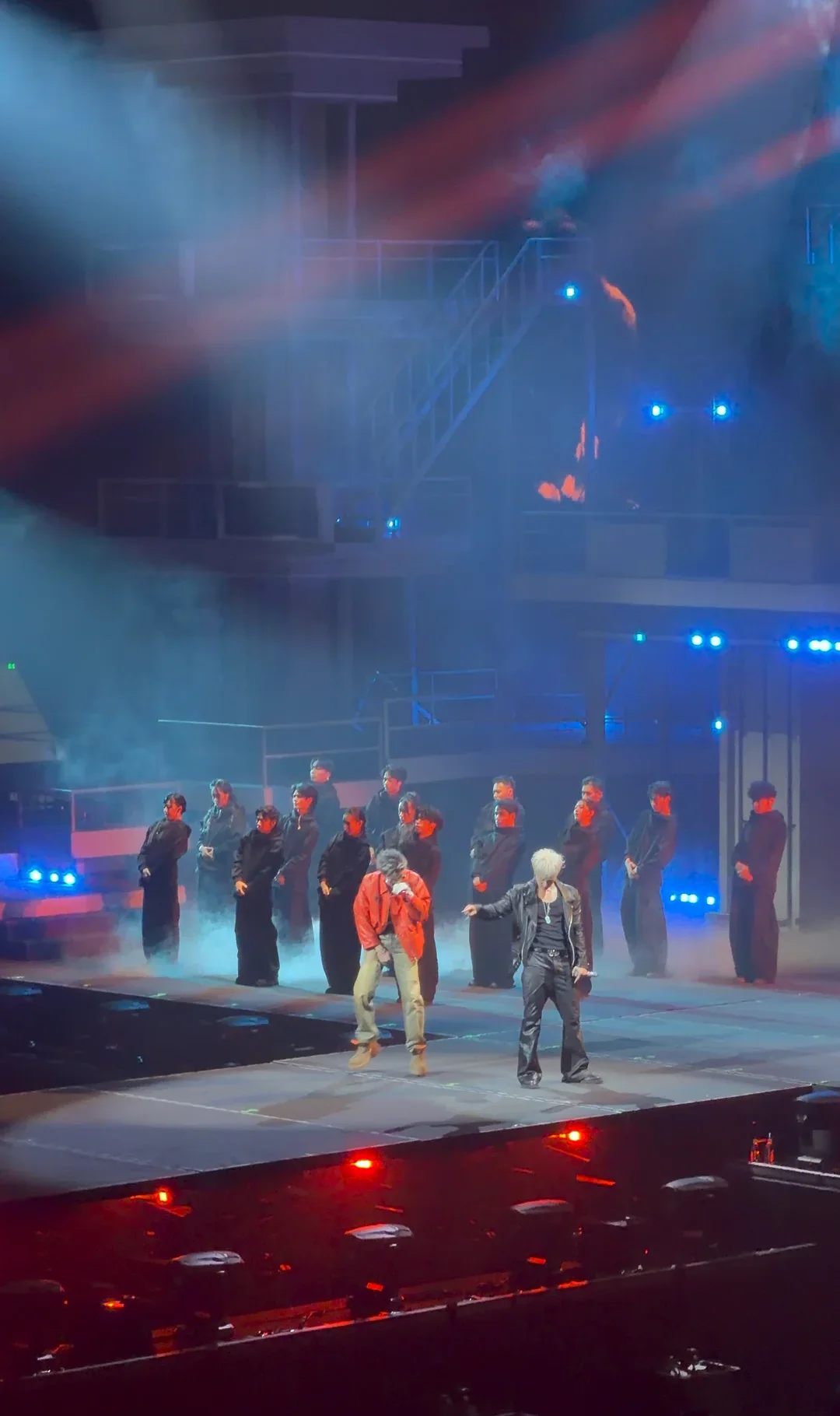
This stage image matters because it destroys the quiet fantasy that Wang Hedi's music exists only as a carefully lit side profile. He is small inside a large arena frame, sharing the runway with Huang Zitao while dancers and red-blue light keep the performance moving around him. Star presence cannot rely on a close-up here. It has to travel through pace, voice, breath and the willingness to give another performer space.
I like this version of him because it is less protected. The drama actor can repeat a take; the live performer has to recover in public. A verse can be technically uneven and still reveal appetite. That appetite connects to the “bking” image—the swaggering man who enjoys looking certain—but it also explains why the label is incomplete. Swagger is most alive when there is a real possibility of missing the beat, losing the crowd or being outperformed.
The G-Block/C-BLOCK orbit should not be inflated into fake ownership history. What is valuable is the visible continuity between fan, participant and collaborator. Wang Hedi wanted proximity to a culture before the television industry could market that desire as versatility. I do not need to pretend every track is excellent to believe the ambition is real.
This stage work also improves the way I read his acting. Dongfang Qingcang's authority depends on held rhythm; Xu Qi'an's comedy depends on breaking it. Hip-hop gives Wang another laboratory for timing, but transfer is not automatic. A rapper's attack can energize a line and still become mannerism if every character enters on the same beat.
Variety is where I first noticed the person behind the pose
My route to Wang Hedi did not begin with a clean “best dramas” list. I first followed a variety program because Wang Chuanjun, Wang Sulong and Li Xueqin were already interesting to me. Wang Hedi was part of that social mixture, and the relaxed setting made me notice something the costume dramas hide: he is not only a man who knows how to enter a frame. He is also someone who reacts quickly when another person changes the rhythm.
That route eventually made me like Meng Ziyi as well. This is exactly how an entertainment knowledge network should work. The connection is not that every person in one program has the same style. The connection is that a variety ensemble lets viewers compare different kinds of charm, awkwardness, competitiveness and silence in the same room.
Variety is not transparent reality. Editing, role assignment and celebrity self-management are still present. I do not use a few funny moments to prove that Wang Hedi is “actually” a certain kind of person. I use them to test the public rhythm that his drama roles often turn into swagger. Can he accept being teased? Does he give another person the better line? When a joke fails, does he retreat into the bking pose or stay available for the next beat?
Those questions matter because his strongest drama performances are built on the possibility of losing control. Dongfang Qingcang has to discover feeling after beginning as a sealed authority figure. Xu Qi'an has to turn confidence into group timing. On a variety set, the same actor has to share attention without a costume, title or close-up guaranteeing dominance.
That is why I would not separate “actor Wang Hedi” from “variety Wang Hedi” too neatly. The formats have different evidence standards, but they expose the same problem from opposite directions: drama asks whether the pose can crack; variety asks whether he can keep performing after the pose has already been punctured.
Best Dylan Wang dramas by what you want
| Your intent | Start with | What it tests | Main limitation |
|---|---|---|---|
| Understand why he became a global drama star | Love Between Fairy and Devil | Authority slowly disrupted by feeling | Fantasy design helps carry the transformation |
| See the raw early screen persona | Meteor Garden | Youthful aggression, attraction and limited self-control | Bluntness can outrun nuance |
| Test comedy and movement | Guardians of the Dafeng | Whether swagger can become flexible and briefly foolish | A busy genre frame can scatter the performance |
| Test modern romantic coolness | Only for Love | Voice, stillness and contemporary status | Styling may substitute for psychological change |
| Follow the next differentiation test | Confirmed upcoming work | Whether a new social position changes body and rhythm | Anticipation is not evidence of quality |
For one drama, choose Love Between Fairy and Devil. For an acting comparison, follow it with Meteor Garden and Guardians of the Dafeng rather than watching three similar romantic edits.
Meteor Garden establishes the raw instrument
As Daoming Si, Dylan enters with youth, aggression and physical confidence. The character's entitlement is not a side effect; it is the dramatic obstacle. Early performance energy can be blunt, but bluntness fits a young man whose feelings arrive before self-knowledge.
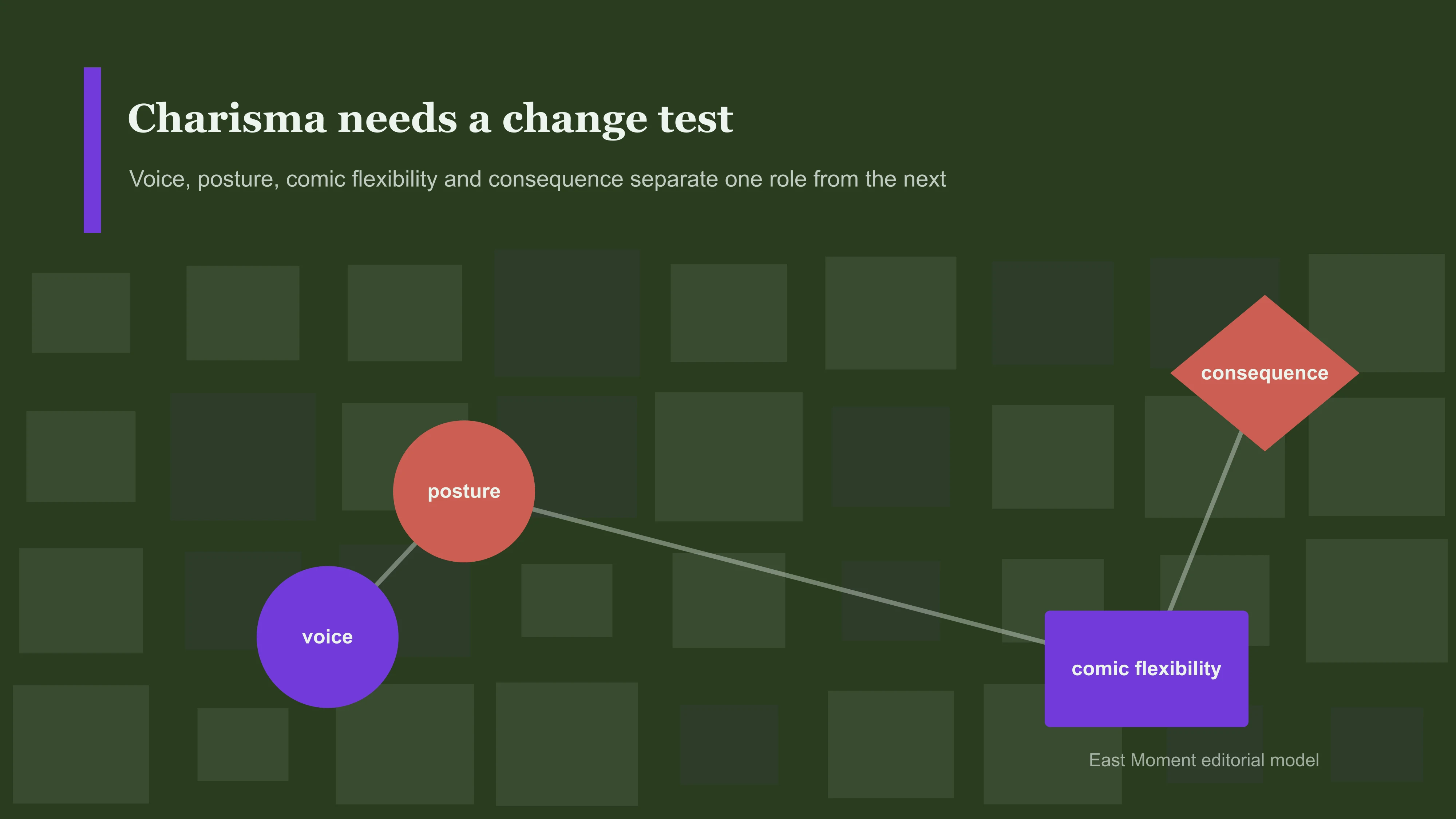
The role explains both the appeal and the limitation. Direct emotion reads quickly, while subtler transitions can be overwhelmed by the star pose.
Love Between Fairy and Devil turns the pose into structure
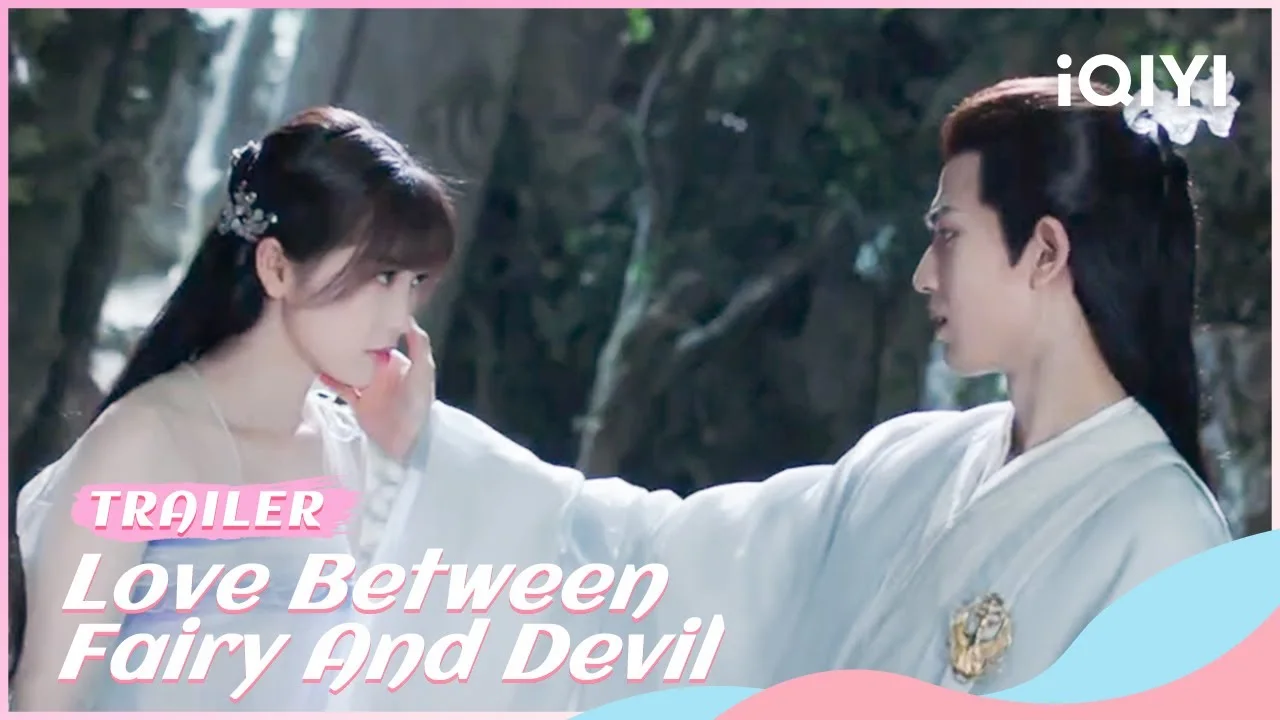
Dongfang Qingcang is the decisive role because the production makes control itself the subject. Costume, voice, framing and still posture establish overwhelming authority. Emotional transformation then has a clear distance to travel.
Use the complete Love Between Fairy and Devil guide alongside the official trailer represented by the opening image. The valuable comparison is between early stillness, the body-swap performance and later moments when feeling disrupts the body's control.
Fantasy scale helps, but it is not the whole explanation. The role gives Dylan a strong external grammar and then asks him to violate it gradually. That is a better use of charisma than simply placing a handsome actor in elaborate costume.
Guardians of the Dafeng tests comic flexibility
Xu Qi'an offers a different problem: an alert, contemporary-feeling intelligence navigating a costume world through investigation, social maneuvering and comedy. Swagger remains, but it cannot stay solemn.

Comedy is a meaningful test because timing cannot rely entirely on status. A reaction must arrive at the right speed, and the body must be willing to look briefly foolish.
For Lijun, Guardians of the Dafeng matters because its heat is not only romantic. Xu Qi'an keeps moving through investigation, group energy and comic danger. The role lets Dylan spend charisma rather than simply display it. The complete series guide asks the harder question: when does a joke actually clarify the case, and when does genre traffic break the causal chain?
Only for Love shows the risk of finished-looking charisma

The polished modern role is a useful negative test. Expensive spaces, controlled posture and a lowered voice can deliver status immediately, but immediate status leaves less room for discovery. When the production treats coolness as completed characterization, the actor has fewer chances to contradict the first impression.
Voice and body need to change together
Dylan's roles frequently begin with a strong physical outline: squared shoulders, direct gaze and a stance that claims space. The outline becomes performance when pressure changes it. Does pride make the neck rigid? Does tenderness reduce distance? Does comedy loosen the timing?
Voice can reinforce the same arc. A consistently lowered register creates authority but may also feel imposed if breath and emotional tempo do not support it. The strongest scenes align sound and body rather than asking one to manufacture all the character's weight.
Where to start watching
- Start with Love Between Fairy and Devil for the clearest transformation of authority into emotional vulnerability.
- Watch Meteor Garden next to see the youthful, less controlled version of star energy.
- Try Guardians of the Dafeng for comedy, investigation and a more mobile rhythm.
- Use Only for Love if you specifically want to test whether the cool contemporary-romance persona develops beyond visual control.
This order is diagnostic, not chronological completion. It places the strongest construction first and then exposes what earlier and later roles do differently.
The current chapter is larger than one drama
In August 2026, Wang Hedi's studio account was still moving across photographs, concerts, basketball and cities from Shanghai to Los Angeles, while current title discussion included Guardians of the Dafeng, Black Night Confession and the anticipated Xianyu Feisheng (咸鱼飞升). The English title remains a translation question here, so the Chinese title is the safer search anchor until an official international title is confirmed.
This does not prove that every new project is strong, and social posts cannot confirm release schedules. It does show that overseas-facing interest now extends beyond Dongfang Qingcang. The next editorial test should compare the new roles with the 2022 breakthrough: does comedy loosen the body, does a contemporary setting change the voice, and can charisma survive without the fantasy emperor's visual armor?
The next title should therefore be judged by a simple rule: no automatic credit for being anticipated. I want to see whether the new character has a different social rhythm, whether comedy comes from situation rather than the actor's familiar smirk, and whether Wang Hedi can let another performer control the scene. A handsome lead who always wins the frame is less interesting than one who has to lose it and keep acting.
A career map built around role changes
- 2018: Meteor Garden makes Daoming Si and the Dylan Wang name widely visible.
- 2022: Love Between Fairy and Devil turns commanding physical presence into a structured emotional transformation.
- 2023-2024: modern romance and variety visibility test whether star persona can remain distinct from character.
- 2024 onward: Guardians of the Dafeng and announced projects place comedy, investigation and new genre expectations against the established fantasy image.
This timeline deliberately avoids treating every variety appearance, endorsement or fan event as a career turning point. A turning point must change what a viewer expects from the work.
The honest limitation
Some productions treat Dylan Wang's charisma as finished characterization. When posture, styling and low vocal authority remain unchanged, the role may look persuasive in short clips but feel thin across episodes.
His best future work will not necessarily be grander. It will force an unfamiliar social position, rhythm or moral compromise that cannot be solved by confidence. Comedy already points in that direction because it makes self-seriousness impossible to maintain.
Why Dylan Wang matters
Dylan Wang shows how contemporary Chinese television manufactures and then tests star presence across remake romance, xianxia fantasy, modern romance and costume comedy. The C-BLOCK arc adds a second line: a music desire visible before fame can later become part of the public career without automatically being reduced to a promotional hobby. International viewers often meet the image first through clips. Complete work reveals whether the image can carry development.
Use the Chinese actors guide and Chinese television collection to compare him with performers built around stillness, comic speed or action precision. The comparison is more useful than a popularity ranking.
Bring one scene that transforms charisma into character to East Moment's community. A useful answer describes what the body, voice or timing does differently; those reader observations will decide which new role East Moment examines next, and give you a concrete reason to return after the role is complete.