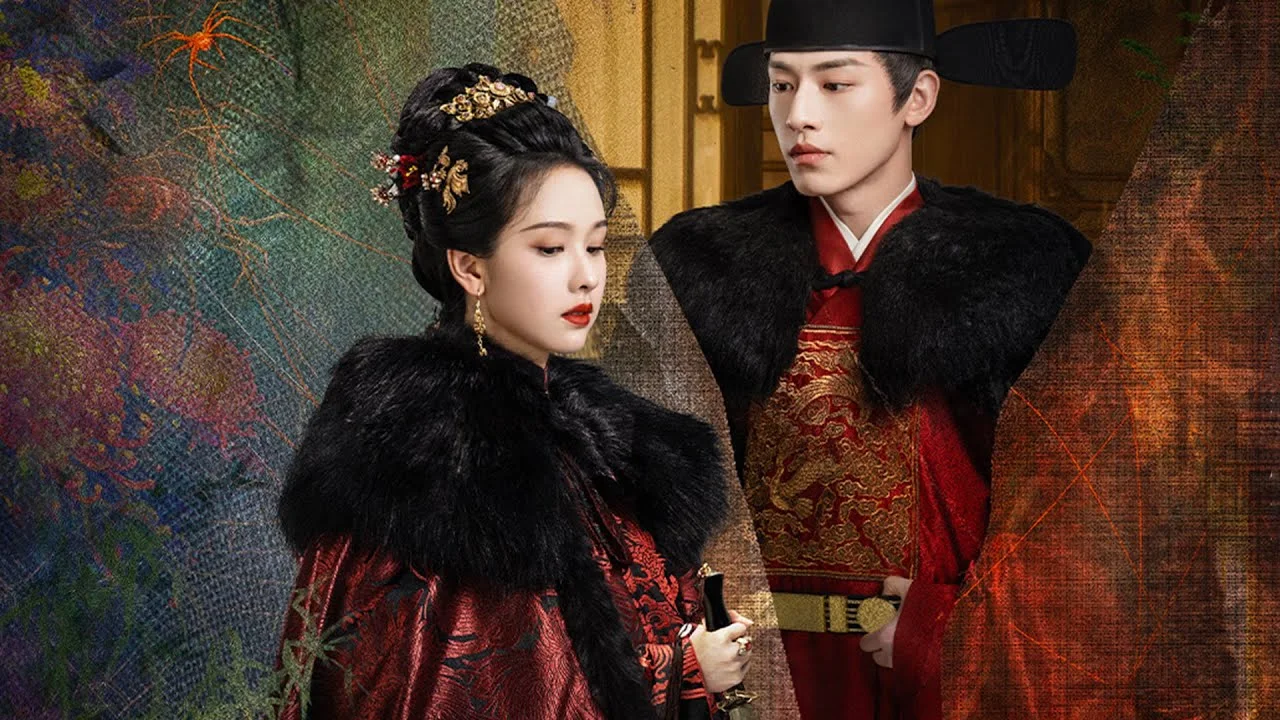
Meng Ziyi is not best understood as the blunt woman from variety clips who later became a successful costume-drama lead. The important point is that three different products keep being confused: a scripted character, a reality-show participant working inside an edited social experiment and a viral clip designed to repeat one reaction. Her career became more interesting when Blossom finally gave the acting enough narrative weight to compete with the persona.
Meng Ziyi is more than the internet's difficult personality
| Reader question | Direct answer |
|---|---|
| Who is Meng Ziyi? | Meng Ziyi (孟子义), also known as Zoey Meng, is a Chinese actor whose television career and highly visible variety-show persona have often been judged together. |
| Why is she famous? | Overseas viewers may first know her as Wen Qing in The Untamed; Chinese audiences also know her through 50km Taohuawu / Wonderland. Blossom established a stronger lead-drama identity. |
| What is her best drama? | Start with Blossom for the clearest lead-role test, then compare The Princess's Gambit and the current Blossoms of Power. |
| Is she mainly a movie actor? | No. Television drama and variety programming are the useful center of her public career. |
| East Moment verdict | The productive tension is not beauty versus acting; it is spontaneity versus control across media that reward completely different behavior. |
The internet likes a person it can summarize in one sentence. Meng Ziyi has repeatedly been summarized as beautiful, tactless, funny without trying, controversial, unexpectedly sincere or “finally vindicated.” Each label converts an unstable public record into a fixed personality.
That is precisely what this page refuses to do.
Wen Qing introduced Meng Ziyi inside somebody else's phenomenon
The Untamed gave Meng Ziyi global visibility as Wen Qing, a skilled healer caught between clan power, family loyalty and the danger surrounding Wei Wuxian.
The role is difficult to separate from online production rumor and fandom conflict. East Moment does not use rumor as performance evidence. The useful question is narrower: does Wen Qing remain a person with professional knowledge and moral risk when the main relationship dominates audience attention?
In her strongest scenes, directness is protective rather than merely sharp. She evaluates injury, withholds trust and knows that competence cannot protect her family from a political system that has already classified them.
Use our full guide to The Untamed for the drama's adaptation and central loyalty. Here the role matters as an early example of the problem that follows Meng: viewers decide what she represents before the scene finishes.
Wonderland turned social awkwardness into serial entertainment

50km Taohuawu, distributed internationally as Wonderland, places celebrities in a constructed social environment where conversation, group decisions, embarrassment and repair become content.
Meng's value to the format is speed. She sometimes speaks before a room has agreed on its polite fiction. That can produce laughter, discomfort or the pleasure of seeing an overmanaged celebrity environment lose control.
But reality television is not reality without form. Cameras select angles. Editors choose sequence. Music can turn hesitation into comedy. Repetition teaches an audience which person is “the awkward one.” A full episode is better evidence than a ten-second clip and still not access to private life.
My view is that her variety persona became popular because it exposed the labor of social smoothness. Other participants may complete the expected sentence; Meng makes the expectation visible by missing, challenging or overexplaining it.
That observation cannot be copied directly into acting criticism. A role is built from repeatable choices, not the impression of spontaneity.
Blossom succeeds because directness becomes strategy
Blossom (Jiu Chong Zi / 九重紫) is the breakthrough because Dou Zhao cannot survive by being an attractive collection of frank reactions. She has knowledge, memory, household pressure and a reason to control what other people learn.
The role converts traits the internet already associates with Meng - direct gaze, quick response, refusal to look timid - into a system with consequence. Directness now has timing. Silence can become more forceful than a comeback because the character is choosing when information enters the room.
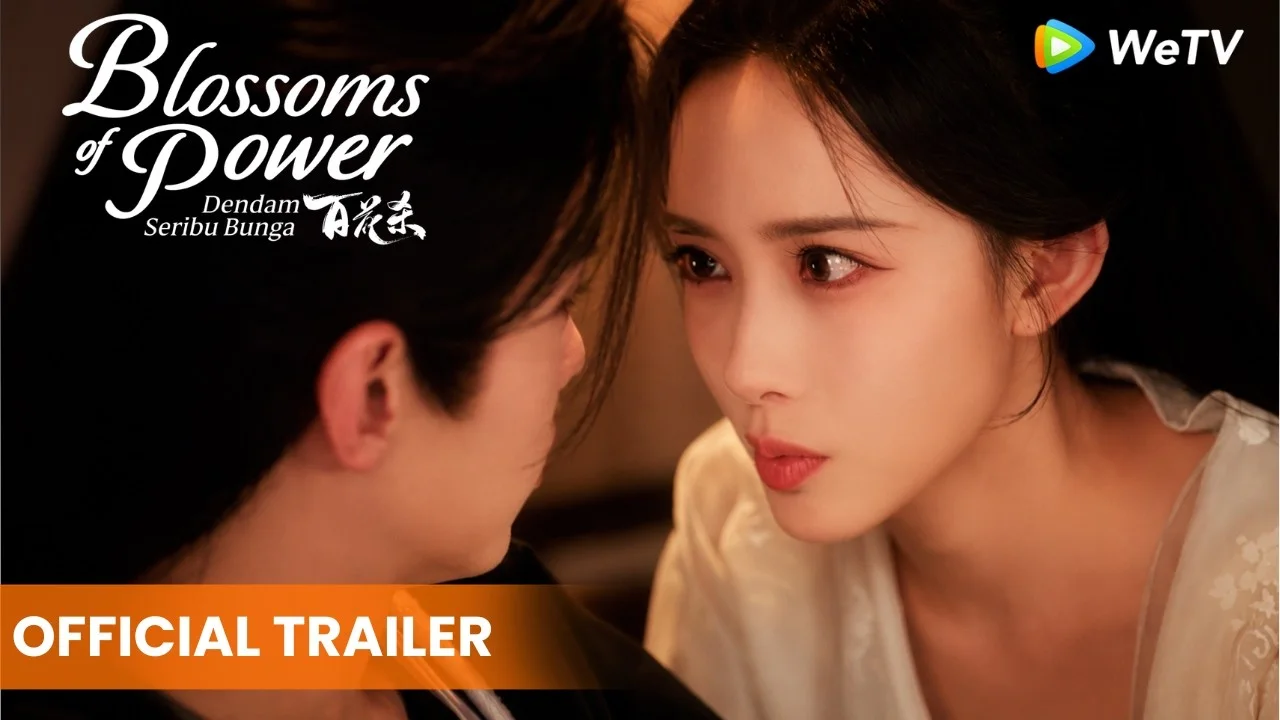
The romance with Song Mo works when both characters bring plans that existed before attraction. Chemistry is not the way they look at each other in a trailer. It is the way one person's decision makes the other's strategy obsolete.
This is where Meng proves something a variety clip cannot. She can repeat a controlled behavior across scenes while changing its meaning as trust, power and knowledge change.
The difference becomes clearer if you follow a decision across rooms. Dou Zhao receives information, conceals part of her reaction, changes who is allowed to act, then lives with the household consequence. That chain belongs to the role. A familiar blunt expression may still be present, but it is no longer the destination of the scene. It becomes one instrument inside a woman managing memory, money, kinship and danger.
The blindfold game explains why Meng Ziyi chemistry escapes the drama
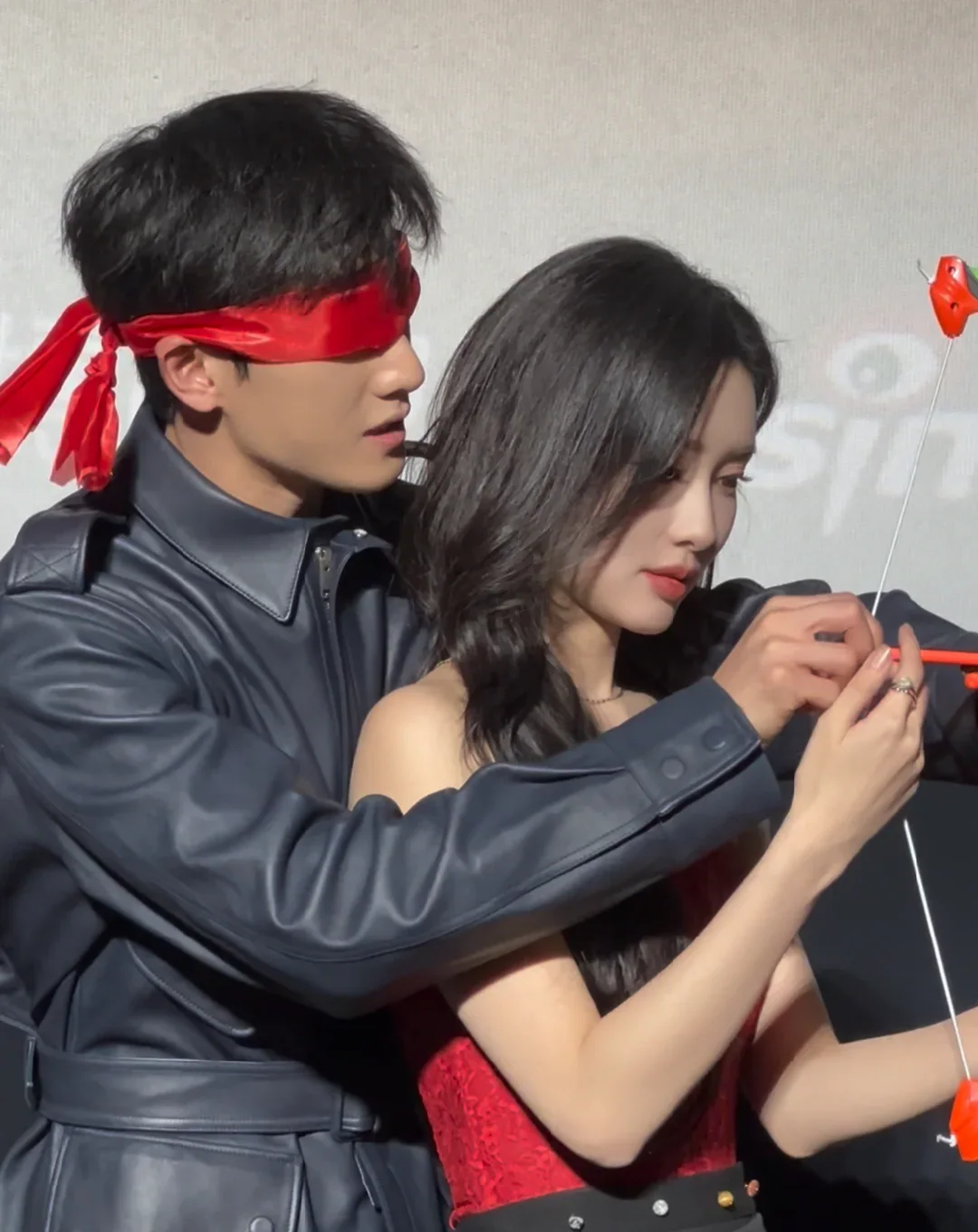
At a live Jiu Chong Zi event, Li Yunrui stands blindfolded behind Meng while they try to handle a toy bow together. It is playful promotion, not a scene from Blossom. Yet the image captures why this pairing travelled so easily from drama into social circulation: their bodies already know how to share a small problem. One cannot see; the other must interpret and guide; both must keep the joke alive in front of an audience.
I enjoy the warmth of it. I also refuse to use it as retroactive proof that every romantic beat in the drama was brilliant. Live promotion sells the memory of chemistry. The role must create chemistry through incompatible plans, delayed trust and consequences that remain after the glance has ended.
This distinction matters more for Meng than for an actor whose public persona stays quiet. She can turn a live mishap into entertainment quickly. That same social speed helps Dou Zhao when confidence must redirect a room, but it can damage a historical character if the response begins to feel like Meng participating in a variety show. The test is whether the other character changes the behavior. Dou Zhao should not smile, withdraw or take control in exactly the same way with Song Mo, a family elder and an enemy.
The image therefore carries a precise argument: off-screen familiarity can make a pair pleasurable to follow, while scripted relationship still needs its own architecture. Fans do not have to choose between delight and criticism. I want both. Keep the playful memory, then return to the episode and ask what each person risked before the moment became cute.
Beauty helps the role until the production starts admiring it
Meng Ziyi has a face and screen presence costume dramas know how to light. That is an advantage, not an argument.
The danger arrives when styling begins to complete the character. A red costume can announce force before Dou Zhao has acted. A close-up can present intelligence without showing calculation. A slow entrance can replace the social cost of taking power.
The viewer should ask:
- What did the character know before the close-up?
- What does she hide after it?
- Which person changes her plan?
- Does beauty increase vulnerability, authority or merely image value?
If the answer is only “she looks powerful,” the production has mistaken a poster for a person.
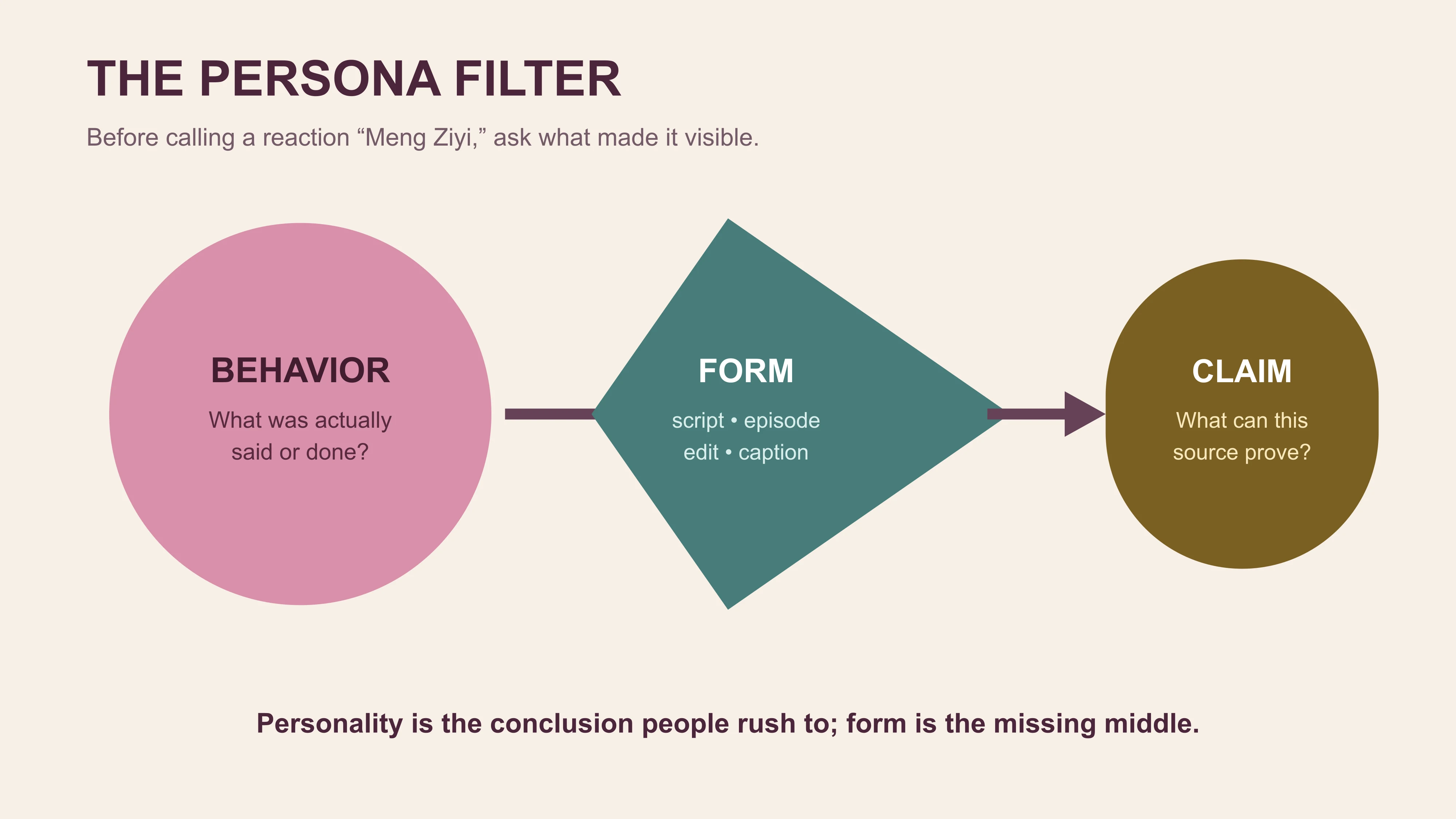
This filter is not an excuse to become neutral. My judgment is direct: Meng is dramatically strongest when the role forces her social brightness to serve a plan. She is weaker when the production photographs “Meng Ziyi being Meng Ziyi” and assumes familiarity will do the writing. The first creates a character; the second monetizes recognition.
The Princess's Gambit tests whether control survives flirtation

The Princess's Gambit places Jiang Taohua opposite a male lead marketed as her strategic equal. This is exactly where costume romance often cheats: the woman begins as intelligent, then attraction makes her forget to ask for information.
Meng's useful tool is social brightness. A smile can invite underestimation, redirect hostility or cover a decision already made. The performance works when flirtation remains part of political action rather than a vacation from it.
Compare this with Blossom. Dou Zhao's control grows from remembered danger and domestic calculation. Jiang Taohua operates through a more openly antagonistic romantic game. If the two women feel different only because the male partners and costumes change, the later role has not done enough.
Blossoms of Power is the current test, not a guaranteed coronation
The 2026 Blossoms of Power (Bai Hua Sha / 百花杀) arrives after Blossom changed expectations. That makes it more demanding. Viewers no longer need proof that Meng can carry an attractive costume-drama lead. They need evidence that the next woman has a new interior rule.
Watch for three differences:
- How does this character use silence differently from Dou Zhao?
- What does she want that is not reducible to romance or revenge?
- When power becomes available, what behavior changes rather than simply becoming more glamorous?
Current popularity should increase scrutiny, not lower it. A successful breakout often produces imitations before an actor has time to change.
That is the danger around a breakthrough as culturally sticky as Dou Zhao. The industry sees the result—decisive woman, strategic romance, expensive costume—and may reproduce the visible shell. What it cannot cheaply reproduce is the causal density that made her authority satisfying. A new heroine needs a different fear, a different relationship to information and a different point at which control fails. Otherwise Meng will be asked to repeat victory rather than build another person.
The misunderstanding that made Meng Ziyi interesting
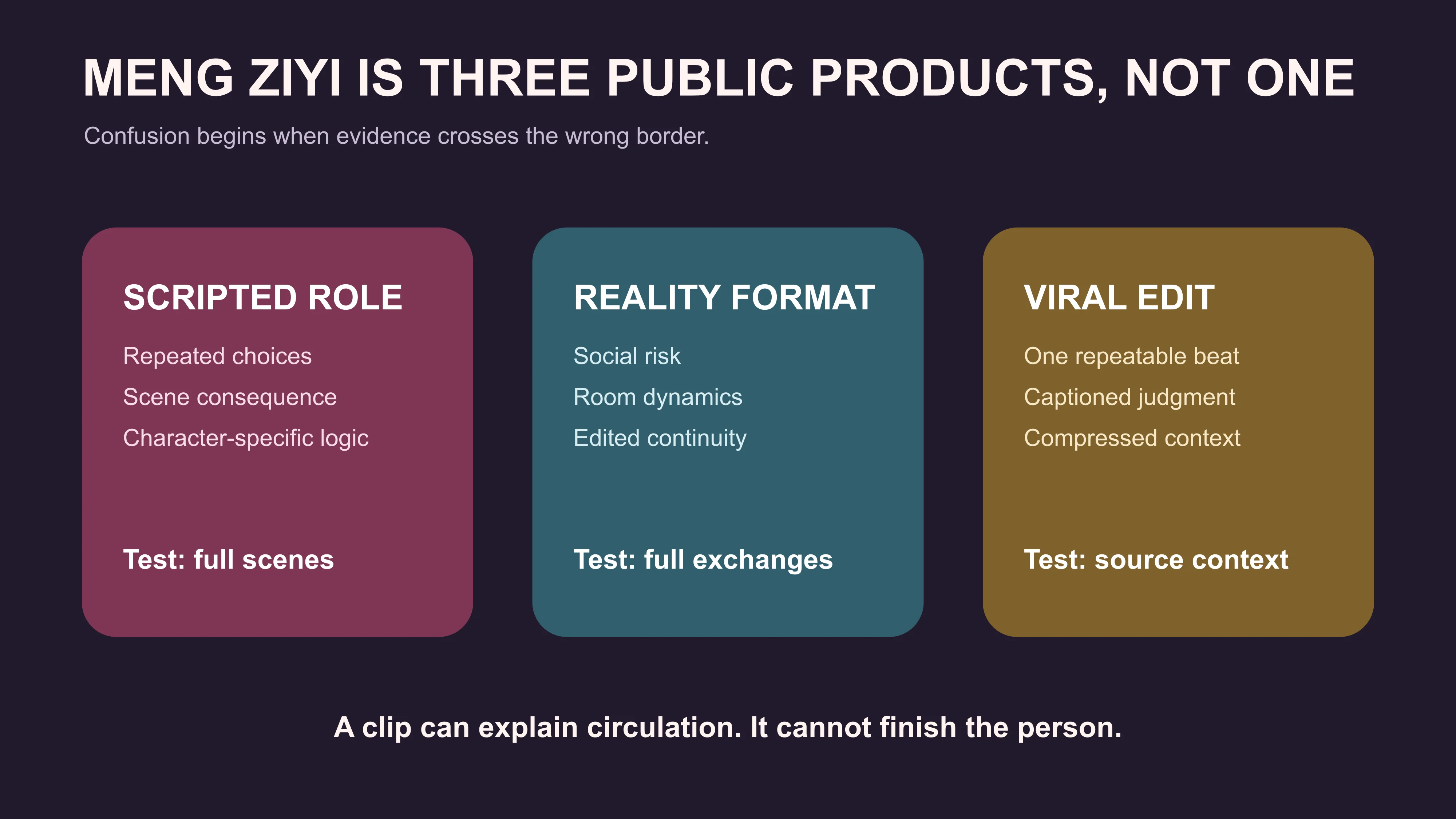
In variety television, Meng can look as if she has “a little scheming, but not much”; in drama she can play a woman with “eight hundred schemes.” Dou Zhao's clear-headed calculation and Lei Chun's damaged emotional register do not produce the same form of fragility. I also see the resistance: the crying in Heroes works, traces of the acting were already visible in The Untamed, yet the twisted-mouth habit and heavy filtering can interrupt a scene.
We do not encounter Meng as a clean filmography. We carry the funny variety-show woman into a crying scene, notice the mismatch, then ask whether the surprise belongs to acting, styling, editing or lowered expectations. My conclusion is not that praise proves greatness. Blossom broke an existing model of her. That is the more specific achievement.
I felt the break because the old public shorthand stopped being sufficient while I watched. The funny, direct woman did not disappear; she became material the performance could redirect. That sensation—recognition being corrected in real time—is more intimate than a score. It is why I keep watching her, and why I refuse both easy rehabilitation and permanent suspicion.
Choose which Meng Ziyi contradiction to test
- For the global ensemble entry: The Untamed, while keeping Wen Qing separate from fandom rumor.
- For the public persona question: a complete Wonderland episode, not a viral compilation.
- For the best lead-role evidence: Blossom.
- For strategic romantic contrast: The Princess's Gambit.
- For the current test: Blossoms of Power.
- For broader comparison: use the Chinese actors collection and Chinese television guide.
Meng Ziyi became more valuable to watch when no single medium could contain her. Drama asks for repeatable control. Reality television rewards social risk. Viral platforms extract the repeatable reaction. Confusing them creates a simple celebrity; separating them reveals the work.
In the comments, bring one complete scene or full variety exchange and state what it proves - and what the edit cannot prove. Then join the East Moment community to build a more honest record than another personality ranking.