The Untamed lasts because its central loyalty is never delivered as one clean declaration. It has to be read through rules broken, distances crossed, names used carefully and a person recognized after the world has agreed to misread him.
The Untamed asks viewers to become close readers
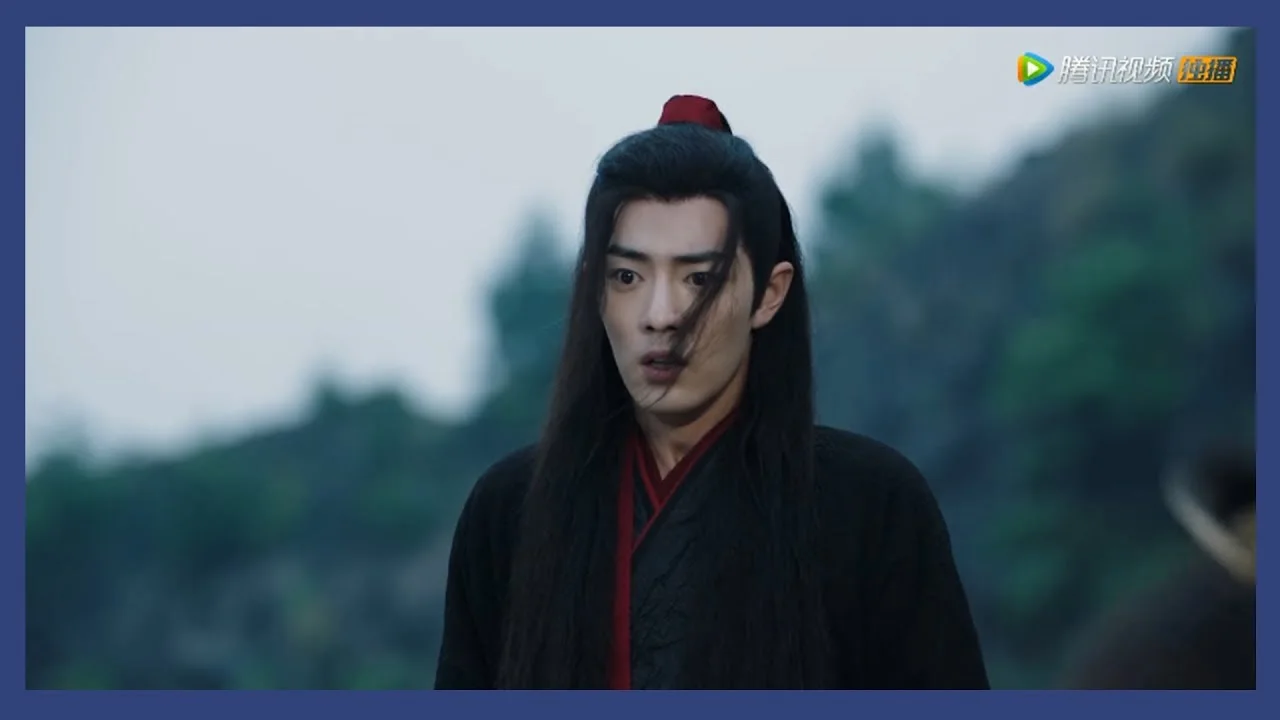
Tencent Video's official Episode 1 is the cleanest common text for this reading. It identifies the production and opening chronology; the judgments below come from watching how names, rules and physical distance change meaning across the story.
The Untamed (陈情令) is a 2019 Chinese fantasy drama starring Xiao Zhan as Wei Wuxian and Wang Yibo as Lan Wangji. It adapts a web novel into a television form shaped by broadcast constraints, ensemble politics and a nonlinear opening. New viewers should expect early confusion. Names, clans, objects and timelines arrive before their emotional weight is clear.
Do not solve that by memorizing a glossary first. Follow two questions: Who decides what counts as righteous? Who keeps recognizing Wei Wuxian when institutions stop doing so?

Wei Wuxian turns charisma into a moral liability
Xiao Zhan initially gives Wei Wuxian social ease: quick movement, appetite, irreverence and an instinct to enter other people's space. That openness makes later isolation legible. The tragedy is not that a cheerful man becomes sad. It is that a person who reads danger independently is punished when collective morality becomes reputation management.
Wei Wuxian remains compelling to me for an ethical reason rather than a cosmetic one. He helps before permission is granted. That instinct is admirable and dangerous because good intention does not eliminate consequence.
Lan Wangji makes rule-following change meaning
Wang Yibo's Lan Wangji begins as a body shaped by rules. Straight posture, controlled gaze and economical speech make discipline visible. The performance develops when the same restraint starts sheltering dissent. The viewer must notice where he stands, whom he faces and when silence stops serving authority.
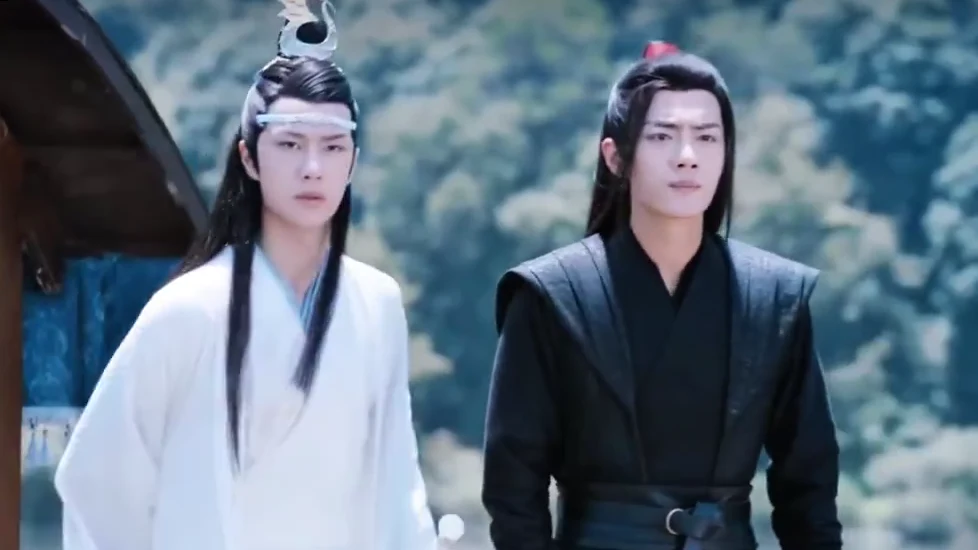
This side-by-side frame is almost aggressively undramatic, which is why I trust it. No embrace announces intimacy and no throne assigns rank. White and black remain visually opposed, yet the two bodies face the same horizon and keep the same pace. The Untamed repeatedly makes loyalty legible this way: not by erasing difference, but by showing who still chooses to stand beside whom after difference has become dangerous.
This is why the relationship survives imperfect subtitle transfer. Formal addresses and cultural nuance may thin out in English, but protection has physical grammar. Read our complete Wang Yibo profile for that bodily language and the Xiao Zhan guide for the career beyond Wei Wuxian.
The clans turn reputation into infrastructure
The drama's moral conflict works because gossip is not merely background noise. Clan authority, ritual language, inherited status and public gatherings turn interpretation into power. Once a person has been classified as dangerous, every later action is read through that label.
That structure gives Wei Wuxian's charisma a tragic edge. His ability to improvise looks liberating when institutions are slow or cruel, but improvisation also leaves him without durable protection when opinion turns. Lan Wangji begins inside the system that can protect him and gradually learns where obedience makes him complicit.
An overseas viewer may read this as a simple individual-versus-society story. I think the drama is more uncomfortable. Individuals also depend on institutions for education, safety, recognition and memory. The answer is not to become free of every rule. It is to notice when rules stop testing conduct and begin protecting reputation.
That is why secondary characters matter. Ambition, filial duty, resentment and the fear of losing face do not produce one identical villain. They produce people making compromises at different points in the same social machinery.
The messy beginning is part of the design, but not beyond criticism
The drama's opening can alienate viewers. Early visual effects and exposition are uneven; supporting figures arrive faster than emotional orientation. Later devotion should not be used to pretend every production choice is elegant.
Rewatching changes the first episodes because gestures that looked decorative become evidence. Nostalgia is present, but rewatchability also comes from delayed legibility: I return because I now know what the characters were unable to say.
Recognition is the drama's deepest form of romance
The adaptation cannot rely on every form of explicit declaration, so recognition carries unusual weight. Lan Wangji notices the person beneath a changed name and face; Wei Wuxian gradually understands that rule, loyalty and judgment have changed inside the man who once seemed rigid. Their bond is not persuasive because viewers are told it is exceptional. It becomes exceptional through accumulated acts of accurate seeing.
That is why names, music, distance and small breaches of etiquette matter. A subtitle can deliver the plot while missing the temperature of an address. A clip can preserve a look while losing the clan pressure that makes the look dangerous. The series trains viewers to gather meaning across episodes, which is also why discussion remains so active: interpretation is part of the viewing labor.
For me, the ending works because recognition survives public misreading. The world may keep simplifying Wei Wuxian, but one person has learned to distinguish reputation from moral action. That is more durable than a clean declaration.
Why The Untamed still creates community
The series gives viewers interpretive work rather than one final emotional label. A gesture can be read through romance, loyalty, cultivation ethics, censorship-aware adaptation or simply the accumulated history between two characters. Those readings overlap without becoming identical.
This is also where fandom can become either generous or exhausting. The best discussion returns to scenes, subtitles and choices. The worst treats affection as a demand for unanimity. The Untamed does not need every viewer to agree that every production choice succeeded. Its durability comes from giving people enough specific material to argue about what loyalty requires when public language is unsafe.
For East Moment, that is the real conversion point. Do not leave a comment that says only “iconic.” Name the rule that changed meaning, the gesture that became legible on rewatch or the subtitle that altered your interpretation. That kind of contribution helps the next international viewer enter the drama without being ordered how to feel.
My verdict
Watch through the early confusion until relationships acquire consequence. The Untamed is not a historical guide, and cultivation clans are not evidence of lived Chinese religious practice. It is a fantasy melodrama about how public righteousness can become morally lazy and how loyalty becomes action when language is unsafe.
Continue through the Chinese TV shows guide. In the comments, mark spoilers and identify one gesture whose meaning changed on rewatch. Then join the East Moment community to compare the scene across subtitles and cultural contexts.
The Untamed is a story about who gets to name a person
The easiest summary—two cultivators solve a mystery—misses the force that keeps viewers returning. The Untamed asks whether public reputation can replace witnessed character. Wei Wuxian is repeatedly named dangerous, improper or ungrateful; Lan Wangji has to decide whether institutional language matches the person he has watched act.
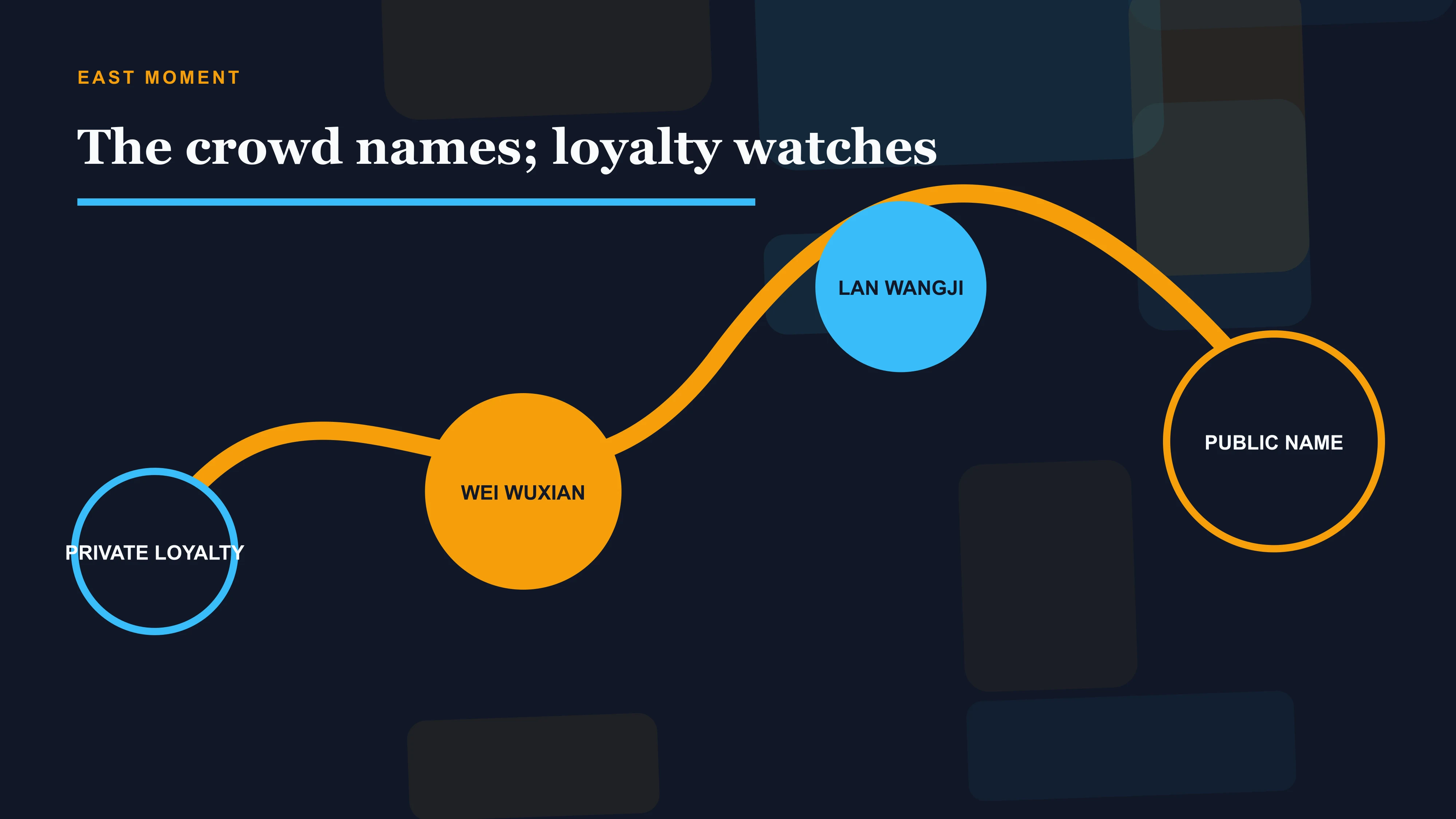
This makes the large cast and early terminology more than a barrier. Names, clans, titles and rules are the machinery through which judgment travels. The viewer initially struggles to place everyone; later, that struggle becomes the point. A name can preserve honour, erase motive or make punishment appear inevitable.
Wei Wuxian's charm creates debt as well as pleasure
Playfulness makes him easy to love, but the drama is not valuable because he is always right. His confidence can conceal how much danger others will bear beside him. His moral clarity resists cowardice; it can also become solitary decision-making.
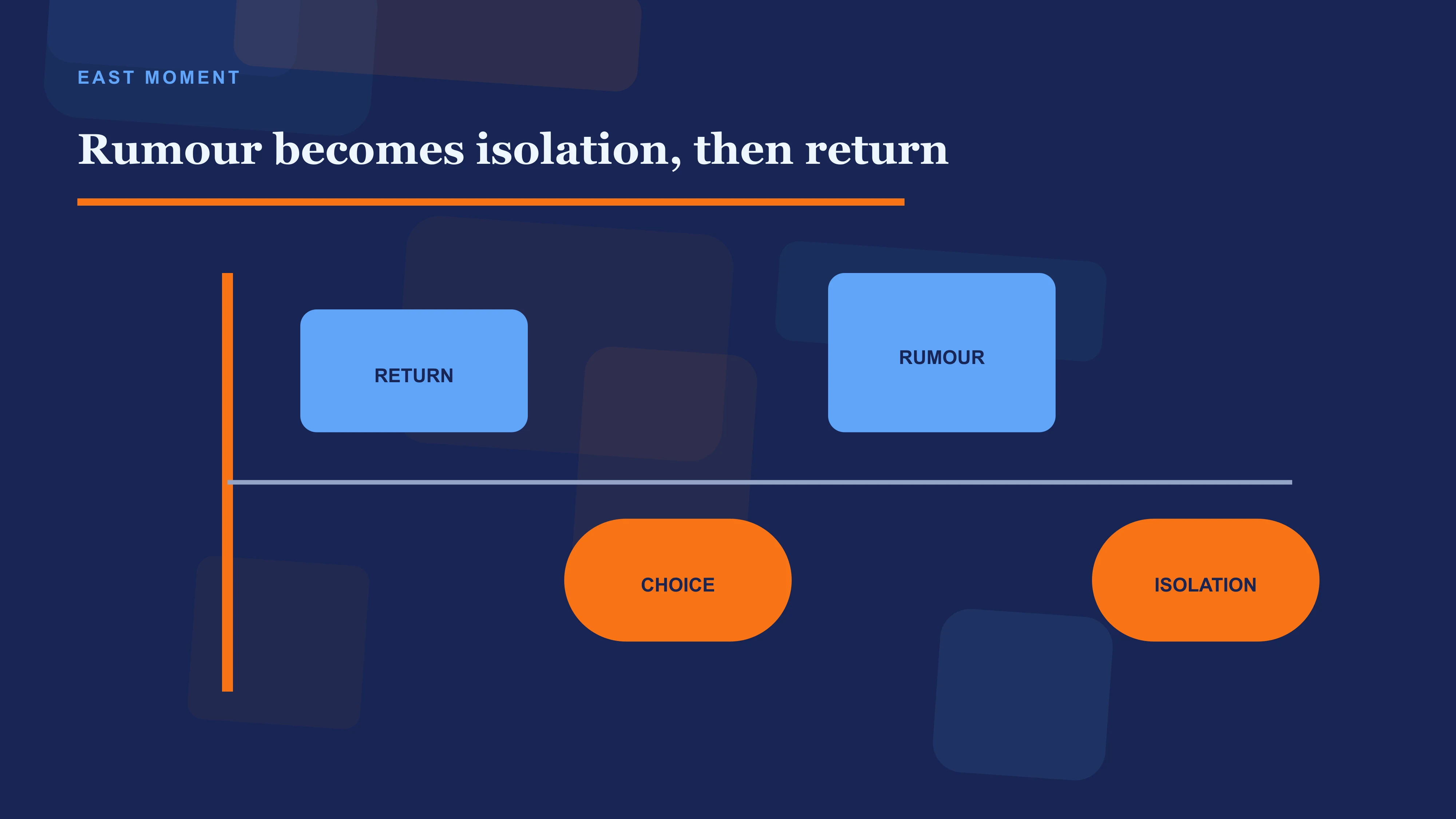
The return works because the body no longer moves inside the same social certainty. A joke after catastrophe cannot mean what it meant before. Xiao Zhan's performance is strongest when brightness tries to return and the pause reveals that history has already entered it.
Lan Wangji's silence must become action
Silence is not automatically devotion. Lan Wangji becomes compelling when rule-following changes under witnessed evidence. Wang Yibo's controlled physical line gives the transformation a measurable surface: distance closes, intervention replaces observation, and public alignment becomes possible.
The relationship should therefore be read through decisions, not labels alone. Whatever vocabulary a viewer uses for intimacy, the drama's visible achievement is sustained recognition: one person continues to see another when the social world prefers a simpler accusation.
Novel, drama, subtitle and fandom are four layers
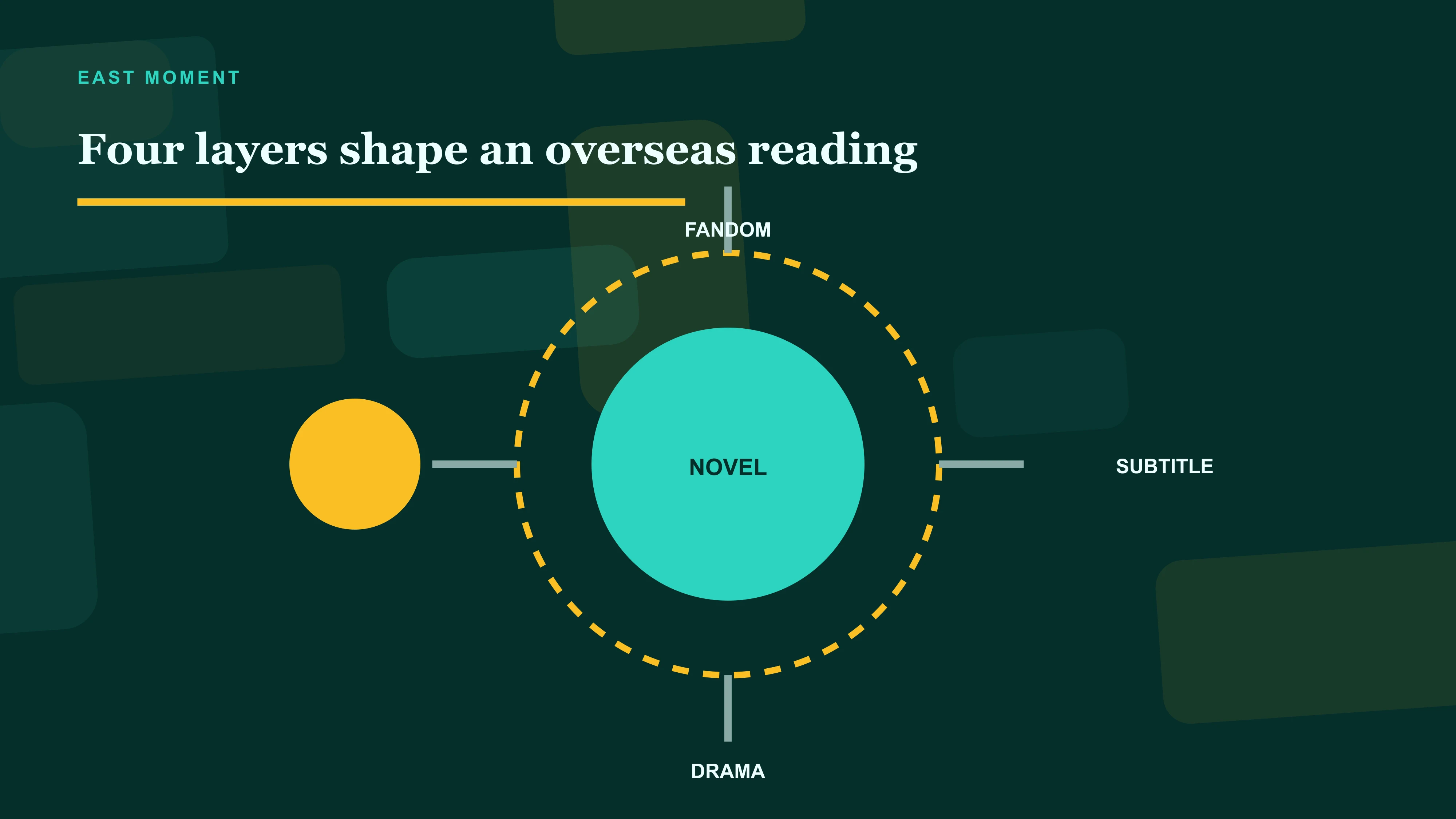
The television series adapts Mo Xiang Tong Xiu's novel Grandmaster of Demonic Cultivation under a different production and regulatory context. Subtitles make further choices about names, cultivation terms and emotional directness. Fandom then circulates edits, explanations and relationship readings. These layers interact, but a claim from one should not be assigned automatically to another.
The official Tencent Video episode establishes what the drama actually puts on screen. It cannot prove every claim about authorial intention, regulation or audience consensus.
My limitation: emotional loyalty cannot excuse structural confusion
The opening can be difficult, some effects age unevenly, and later attachment can tempt fans to treat every production choice as necessary. It is fair to need a character guide. It is also fair to criticise exposition or pacing that makes the audience work without immediate reward.
My verdict remains firm: The Untamed deserves its international life because loyalty changes from private recognition into costly public action. Watch complete scenes, not only gaze compilations. Continue to Xiao Zhan and Wang Yibo to separate the actors' later careers from the enormous afterlife of this one relationship.
Five names are enough for the first watch
Begin with Wei Wuxian and Lan Wangji. Add Jiang Cheng for family debt, Wen Ning for the moral cost of categorising people as dangerous, and Jin Guangyao for the distance between public refinement and accumulated grievance. The remaining names will attach themselves to these relationships.
This method is better than memorising a glossary because a name becomes durable when it has an emotional job. Clan colours and weapons help, but loyalty, resentment and obligation are the real indexing system.
International subtitles create another difficulty. Courtesy names, birth names and titles can make one person appear to be several people. Do not assume the drama is being deliberately obscure; Chinese naming practice carries relationship and status. Notice who uses which name in private or public. Address itself can be an action.
The limitation is that fandom knowledge can make the screen text seem clearer than it is. Long-time viewers supply novel context, interviews and interpretive consensus unconsciously. A first-time guide should identify what the episode establishes and mark what comes from elsewhere.
That discipline does not cool affection. It lets the series' actual achievement stand: a relationship becomes legible through repeated recognition even when the surrounding world changes the names attached to it.
Music and objects carry part of that recognition. The flute is not a generic sign of darkness, and the guqin is not merely elegant decoration. Each instrument gathers memory, method and danger through repeated use. When a melody identifies someone before public language does, sound becomes evidence of a bond that institutions failed to record.
That recognition is the reason the ending lingers. The world may keep its incomplete story; the person beside Wei Wuxian has heard enough to answer him accurately.