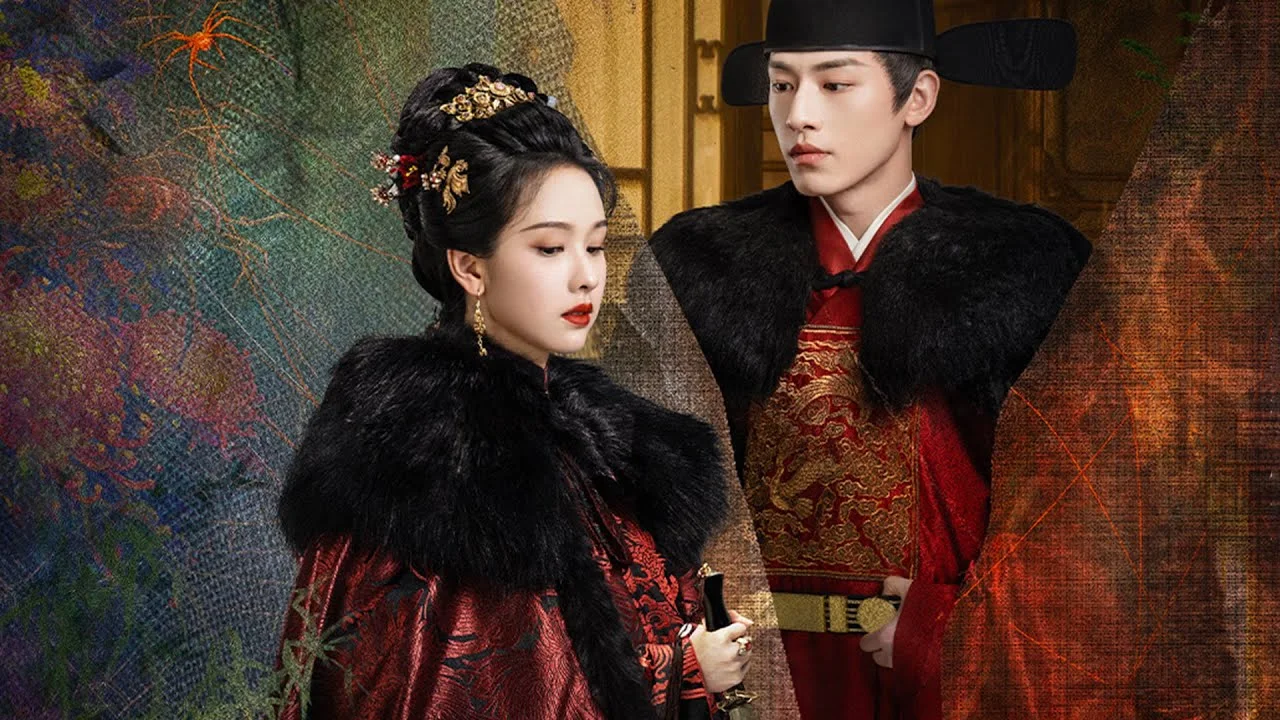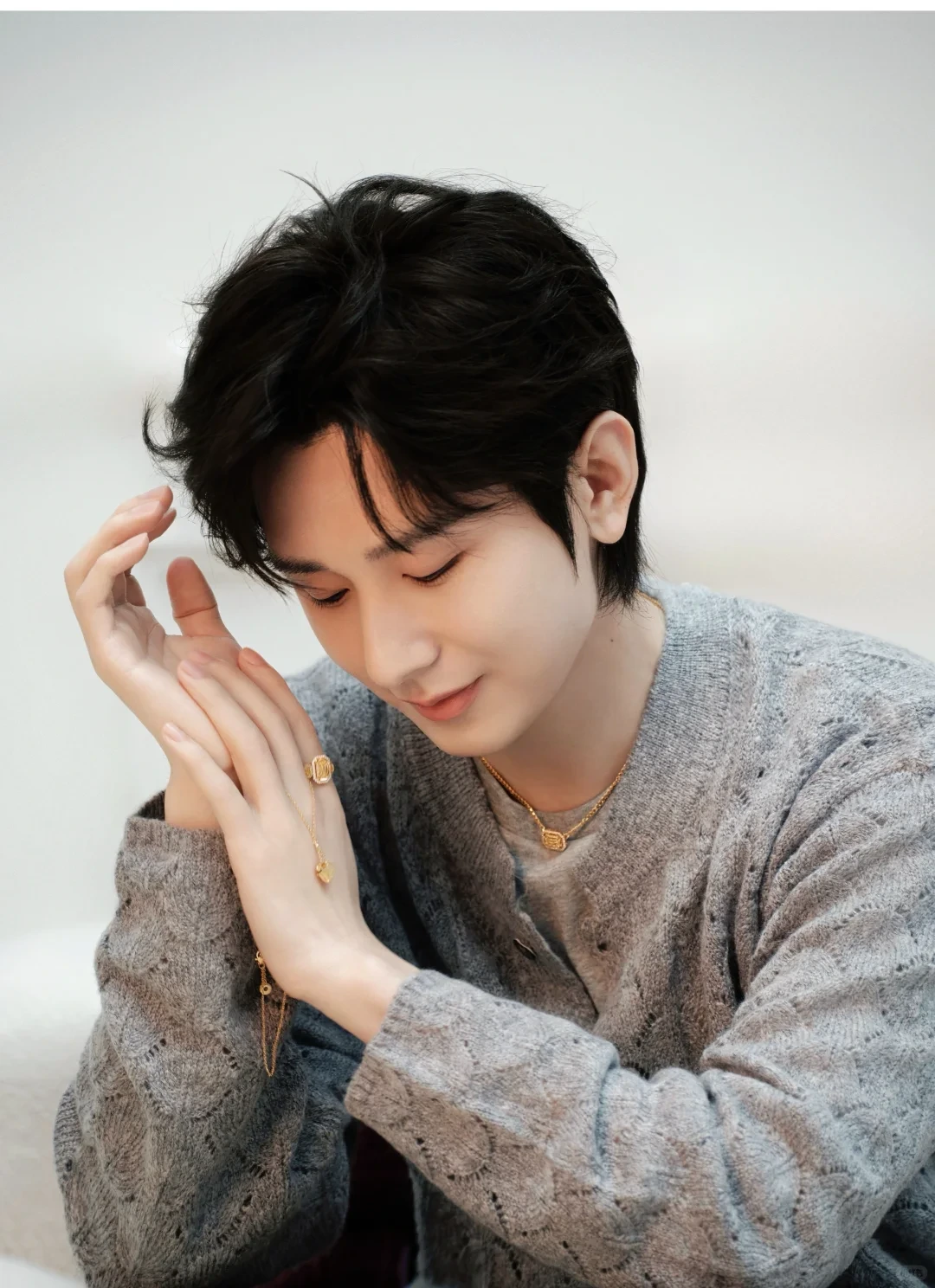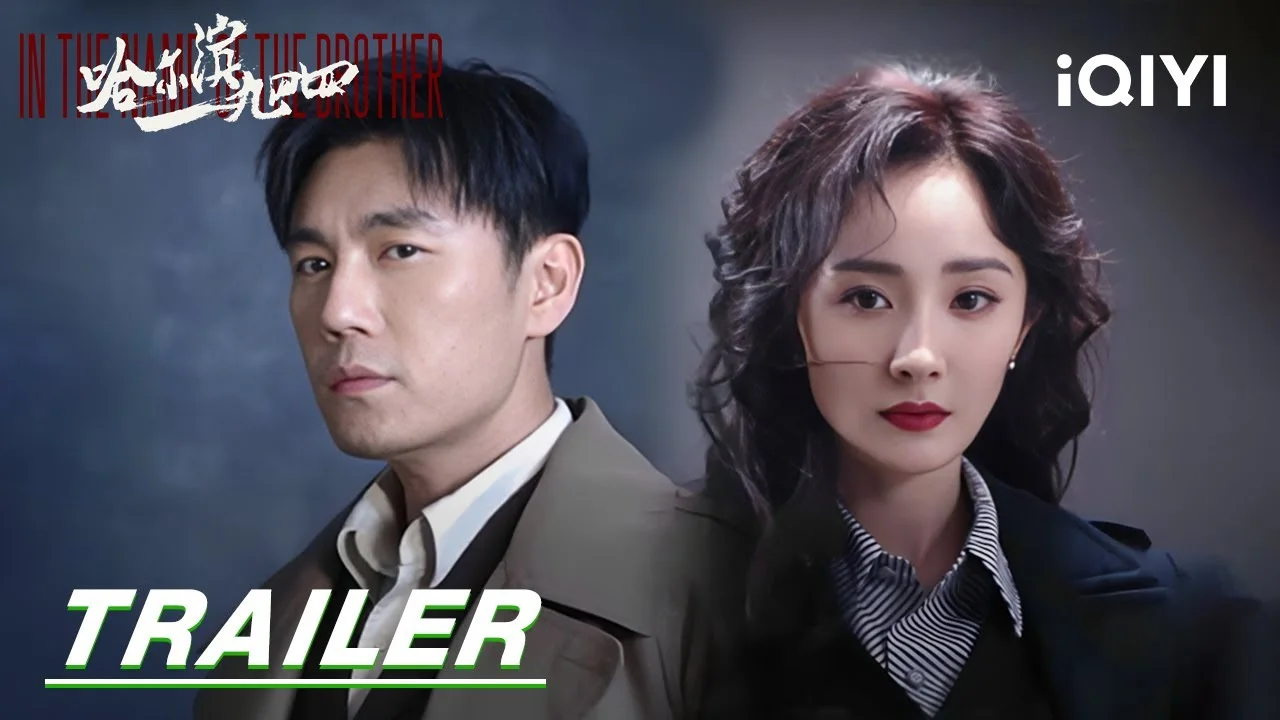
Yang Mi is not interesting because she has remained famous for a long time. She is interesting because every attempt to change has to fight an image she helped make extremely efficient. Eternal Love shows the star machine at full power. In the Name of the Brother asks whether danger can roughen that control. This Thriving Land is the more important recent answer because land, dialect and collective life refuse to revolve around celebrity polish.
Yang Mi turns survival into reinvention
| Reader question | Direct answer |
|---|---|
| Who is Yang Mi? | Yang Mi (杨幂) is a Chinese actor, singer and producer whose career spans childhood acting, commercial film, fantasy romance, modern drama and recent period/realist work. |
| Why is she famous? | Palace accelerated her television fame, the Tiny Times films fixed her commercial-star image, and Eternal Love became her defining international costume-drama role. |
| What is her best drama? | Eternal Love for star power; This Thriving Land for the strongest recent challenge to that image; In the Name of the Brother for an ambitious but uneven transition. |
| Does she make movies? | Yes, especially the commercially important Tiny Times cycle, but television is the clearer route through her acting development. |
| East Moment verdict | Longevity is not the same as growth. Her best recent work begins when control is no longer the only thing a scene rewards. |
Many celebrity profiles treat longevity as proof of quality. It is not. Staying visible can come from craft, business judgment, public appetite, disciplined image management or simply occupying the right industrial position for a long time.
Yang Mi contains all those forces. The useful question is not “How has she stayed popular?” It is what does a performer have to surrender after becoming so recognizable that every character arrives already wearing the star?
Before Eternal Love, Yang Mi had already learned how fame changes a face
Yang Mi did not enter the industry as a fully formed fantasy-romance icon. She appeared on screen as a child, then grew into the awkward adult transition that defeats many child performers: the audience recognizes the face before the actor has decided what kind of adult presence it can carry.
Guo Xiang in The Return of the Condor Heroes remains an important early marker because the role needs brightness without stupidity. She is young, curious and emotionally direct, but she is not merely decoration around the established heroes. Yang's face still feels open in those scenes. It reacts before it arranges itself. That quality would later become harder to see as celebrity polish grew more valuable.
Chinese Paladin 3 widened her costume-drama visibility, but Palace changed the scale of recognition. The time-travel romance did more than deliver a popular heroine. It taught television producers how effectively Yang Mi could carry a fast, accessible character through costume spectacle, romance and modern-feeling attitude. Once that formula worked, the industry had every reason to reproduce it.
This earlier route matters because it corrects two lazy stories. Yang Mi was not manufactured overnight by Eternal Love, and she was not simply repeating one character for an entire career. She accumulated several kinds of fluency: child-actor responsiveness, costume-drama readability, commercial-film self-awareness and the stamina to remain legible inside enormous productions. The later problem is more interesting. Fluency can become a cage when a performer knows exactly how to finish every beat before the character has had time to become confused.
Eternal Love made control feel like destiny

In Eternal Love - also known as Three Lives, Three Worlds, Ten Miles of Peach Blossoms - Yang Mi's great advantage is legibility across identities and lifetimes. Bai Qian's authority, Su Su's vulnerability and Si Yin's social placement need to feel related without becoming identical.
The production helps through hair, costume, lighting and fantasy hierarchy. Yang's job is to change what the character believes she is allowed to know and demand. Her strongest scenes do not announce transformation with tears. They alter eye contact, vocal certainty and the amount of space she assumes belongs to her.
This role also established a trap. When a star becomes inseparable from an elegant fantasy heroine, later productions can keep changing costumes without changing the performance problem. Authority becomes posture. Suffering becomes a close-up. Recognition replaces discovery.
Eternal Love is therefore both achievement and baseline. It proves what Yang Mi can control. It cannot answer what happens when the character should look socially wrong, physically tired or emotionally unprepared.
Tiny Times made her more than an actor inside the market
The Tiny Times films matter even for viewers who dislike them. They connected Yang Mi to an urban consumer fantasy built from friendship, status, clothes, ambition and spectacular lifestyle surfaces. The films turned actors into nodes inside a larger commercial design.
That period helps explain why Yang Mi is read as a business figure as well as a performer. Project choice, fashion visibility, production relationships and the ability to move attention became part of the public text. A role was never only a role; it affected the market around her.
This can reward discipline and punish risk. When the face, voice and pace of a star are economically valuable, a production has reasons to preserve them. Reinvention then becomes a negotiation with an asset.
My view is that Yang Mi's career becomes most interesting after that machine is already successful. Failure and friction begin to reveal choices that easy hits can hide.
Modern romance shows how efficient the persona became

She and Her Perfect Husband gives Yang Mi a role whose competence is immediately marketable: professional clothes, verbal control, adult romance and a woman who understands the rules of a room.
The fit is so natural that it creates little resistance. Watch whether Qin Shi needs to think, or whether the star persona has already solved the scene before another character speaks. Efficiency is pleasurable, but drama requires information to change a person.
This is where Yang's familiar vocal rhythm can become a problem. A recognizable cadence creates continuity across roles, yet it can also keep social worlds from changing the body. A lawyer, fantasy ruler and rural daughter should not all process pressure through the same polished tempo.
In the Name of the Brother is valuable because the strain is visible
Guan Xue in In the Name of the Brother (Harbin 1944) is a harder problem: dangerous authority, private injury, political violence and an ensemble full of performers who do not organize their rhythm around Yang Mi's star image.
Guan Xue is compelling when trust, suspicion and command change according to the person opposite her. Cruelty and buried softness can occupy the same scene, but familiar performance habits become more obvious beside an ensemble that refuses to accommodate the star image. That produces the correct test: does Guan Xue use a different tactic with each person, or does the production keep presenting one generalized dangerous woman?
My answer is mixed. Yang is willing to harden the image, and moments of social calculation work. But visible effort sometimes replaces lived danger. The strain is not a reason to dismiss the role. It is the evidence that reinvention has finally encountered resistance.
Fox Spirit Matchmaker reveals the cost of returning too quickly to safety

Returning to large fantasy after a difficult dramatic turn can look like retreat, but that judgment is too simple. The real issue is whether a familiar genre receives a newly changed actor.
In Fox Spirit Matchmaker: Red-Moon Pact, the costumes and composure arrive before interior tension. The production knows how to display Yang Mi, but display is the very skill no longer in doubt. The role needed an unexpected physical or vocal rule strong enough to interrupt the established image.
This is a useful negative lesson: changing genre is not reinvention, and returning to genre is not failure. The performance problem must change.
This Thriving Land finally gives the star something that does not care about stardom

Land is a better co-star for Yang Mi than another ornate palace. It has weight, season, labor and collective memory. It cannot be impressed by camera awareness.
This Thriving Land (Sheng Wan Wu) asks Ning Xiuxiu to exist inside a village rather than command an isolated heroine frame. Work, kinship, marriage and survival are distributed across many bodies. The role becomes convincing when Yang listens outward - to elders, weather, tools and other people's rhythms - instead of pulling every scene toward personal display.
The tension is visible without a popularity score: this may be a career breakthrough, yet the rural first-person pronoun “俺” can still sound unexpectedly fashionable in her mouth. Effort is visible, the old identity sometimes leaks through, and complete viewing can overturn an early assumption that she does not belong in the ensemble.
I do not need an awards-jury vocabulary for what Ning Xiuxiu did to me. Yang Mi is genuinely excellent here. Episode seven made me cry too. The feeling comes from the beat after the line: pride holds the face together, grievance pushes against it, and the sentence she cannot say becomes louder than the one she speaks. A moment later, the gap between what she says and what she plainly wants to shout becomes funny. Hurt and humor occupy the same breath. That is why the performance feels lived rather than arranged.
The later story also made me angry. I understand the impulse to stop watching when the writing begins spending emotional trust too casually, but the final six episodes recovered enough force to keep the whole journey from collapsing. This is more useful than a clean “comeback” headline because my response contains three different judgments at once: Yang's line delivery lands, the couple's emotional charge is real, and the writing does not sustain that power evenly.
That is why This Thriving Land matters more than declaring a perfect “transformation.” The friction remains. She is no longer protected from it.
The 2026 Yang Mi still runs two careers at once
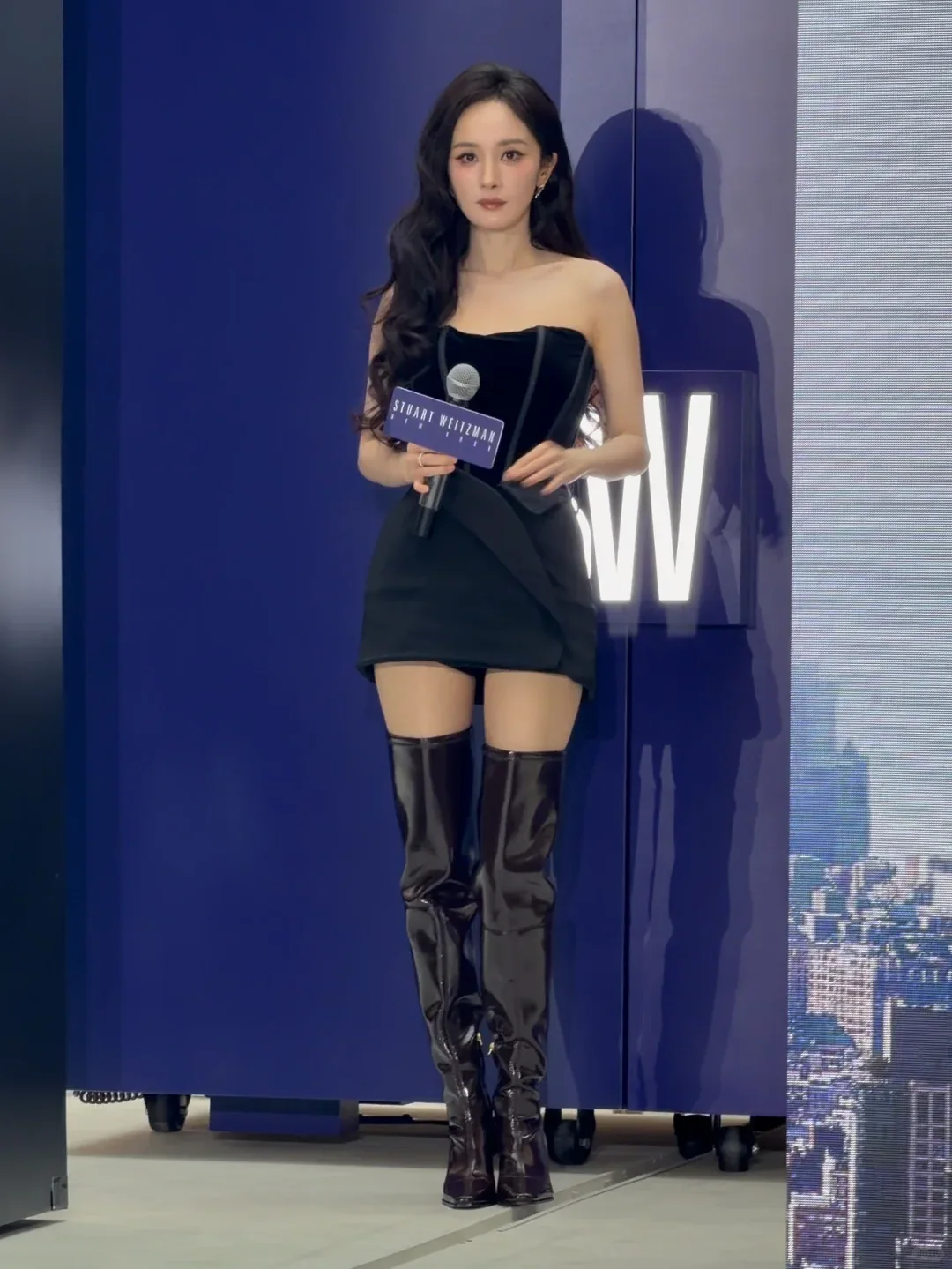
This September 2026 Shanghai event photograph proves current public visibility: Yang Mi stands before Stuart Weitzman branding in a black mini dress and over-the-knee boots. It proves nothing about acting quality, private character or the success of any drama.
Celebrity fashion is not a side note in Yang Mi's career. It is one of the systems that keeps the star image sharp between roles. On September 9, 2026, a Shanghai Stuart Weitzman event placed her back inside the visual grammar she controls almost without effort: hard silhouette, direct front-facing posture, microphone in hand, no rural dust and no character biography to interrupt the look.
I enjoy the image, but I do not confuse it with artistic development. That distinction is exactly why it belongs here. This Thriving Land asks the body to disappear into labor, kinship and a village ensemble; a brand stage asks the body to become instantly recognizable again. Both jobs are real, and Yang Mi remains unusually skilled at the second.
The career question for the next phase is therefore not whether she should abandon fashion or stop looking like a star. That would be false seriousness. It is whether the actor can walk from a stage like this into a scene and allow another person's need, an ugly physical task or a badly timed emotion to reorganize the face. Reinvention becomes convincing only when the image stops receiving special protection.
Preparation is also Yang Mi's trap
Yang Mi's long career has trained her to find the camera, finish a line and maintain continuity under enormous production pressure. Those are real professional strengths.
They become limitations when a character should not yet know how to present herself. Surprise needs delay. Shame may ruin posture. Labor changes breathing. Grief does not always arrive on the most flattering axis.
Use this four-part test:
- Does the character know what the star appears to know?
- Does another actor's behavior change Yang Mi's timing?
- Does the social environment alter voice and posture?
- Can the image remain unresolved after the scene ends?
When the answer is yes, her control becomes craft. When the answer is no, control becomes insulation.
Start with the version of Yang Mi you distrust
- For the defining international role: Eternal Love.
- For her commercial-film era: the first Tiny Times, read critically as market culture rather than realistic Shanghai life.
- For modern-star efficiency: She and Her Perfect Husband.
- For the difficult transition: In the Name of the Brother.
- For the strongest recent test: This Thriving Land.
- For the wider map: use the Chinese actors collection and Chinese television guide to move from a star profile into complete drama contexts.
- For comparison: follow Zhao Liying to see another long-running television star change social and physical register through role choice.
Yang Mi's value is not that every reinvention succeeds. It is that success made reinvention unusually expensive, public and easy to judge. The current career is finally more interesting than the maintenance of fame.
In the comments, bring one complete scene where the character defeats the Yang Mi image—or where the image wins. Name the episode and the exact beat: a delayed answer, a changed posture, a line delivered too beautifully or a reaction another actor forced from her. Then join the East Moment community and submit one image-versus-character scene. Return after watching the full episode and tell us whether the judgment survived context. That is harder, fairer and much more useful than another fan edit or anti-fan slogan.