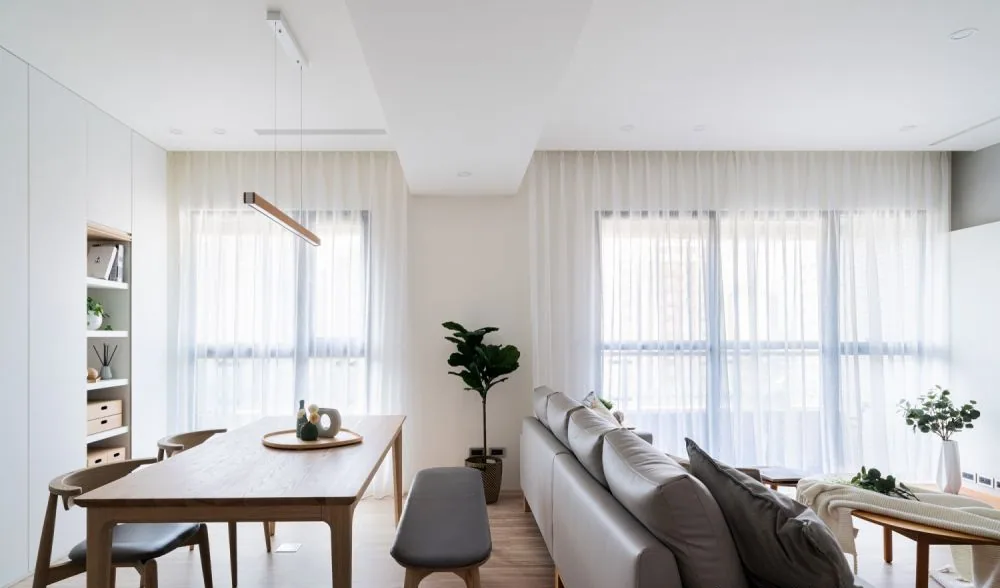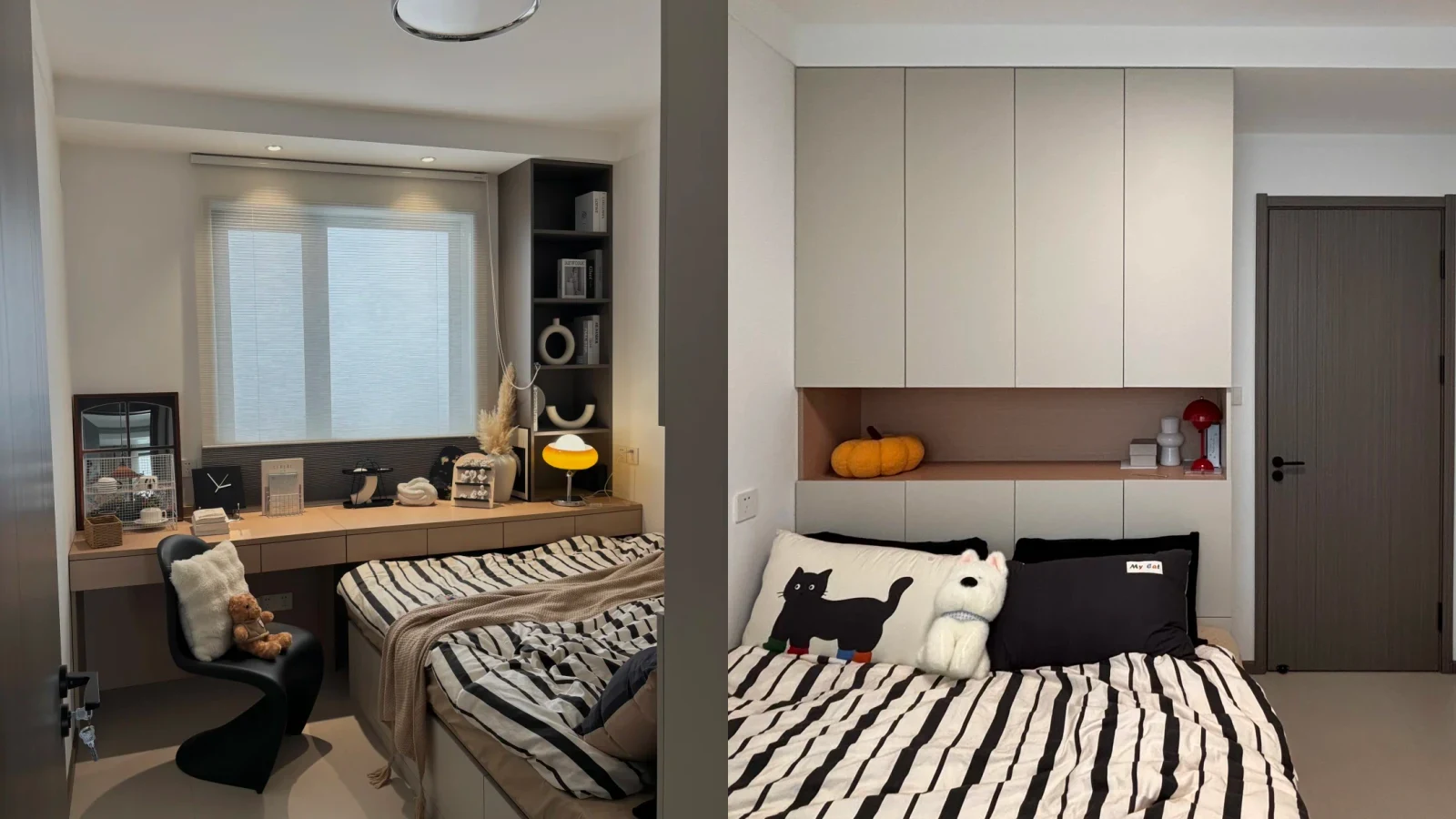
A feng shui bedroom should not promise romance, wealth or perfect health. Its honest value is simpler: it gives you a language for noticing whether a room lets a person arrive, sleep, wake and move without repeated exposure or friction.
Feng shui bedroom starts with the body at rest
The popular rule says a bed should see the door without sitting in its direct path, with a stable visual backing rather than a sense of exposure. Different schools interpret that rule differently. I use it as a question, not a command: when you lie down, can you register arrival without being placed inside the room’s traffic?
A diagram cannot choose a layout for every room. It can show the relationship worth testing: door, bed, window and walking route need to coexist. A bed that blocks an exit, catches hard morning glare or forces a person to squeeze around furniture has failed the room even if it matches an online compass rule.
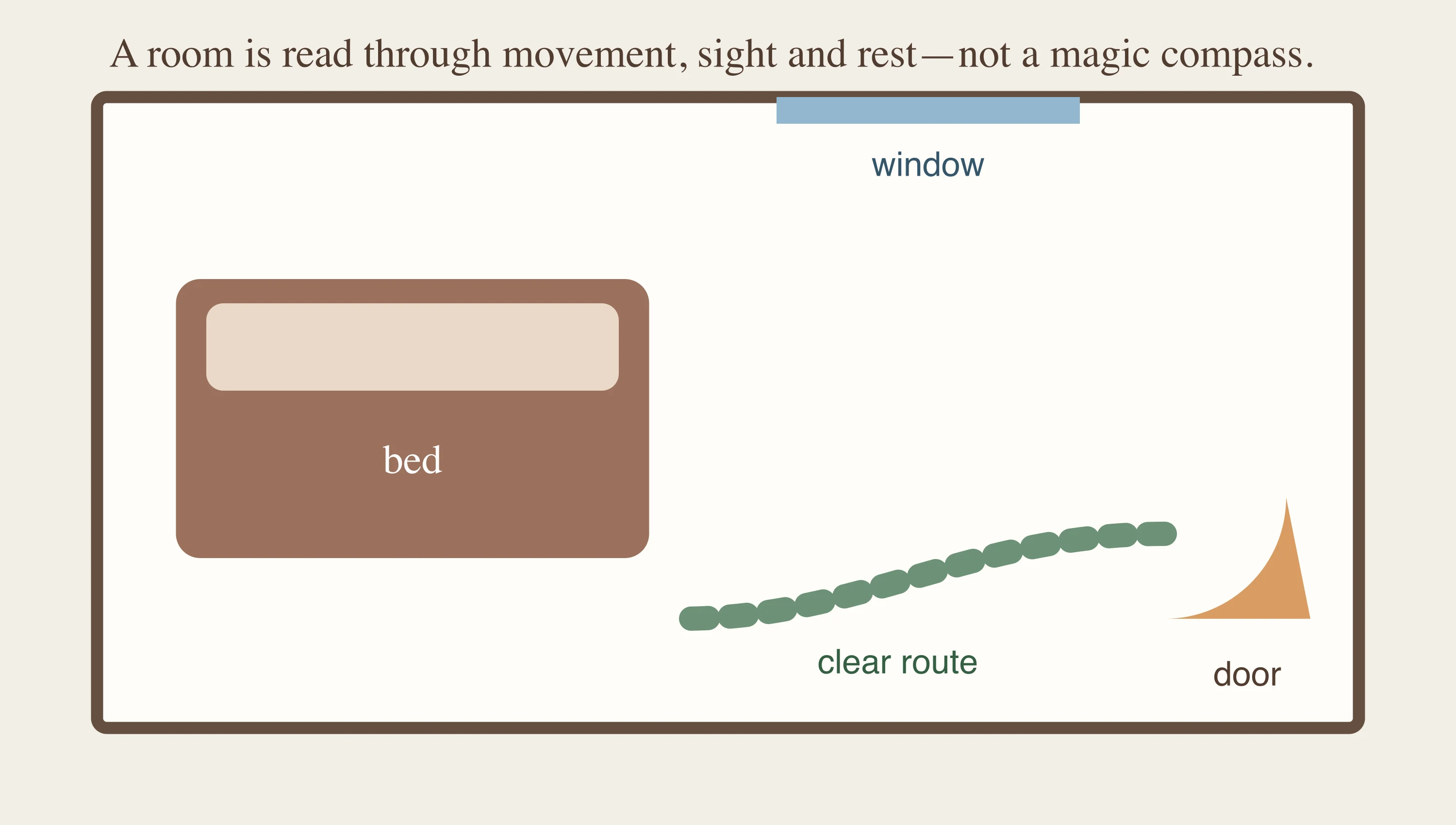
The diagram isolates the four relationships so they can be tested. The real-room Hero deliberately shows the opposite kind of evidence: furniture, storage and a working desk make those relationships collide. Neither image proves a universal arrangement; together they stop the rule from floating free of a room.
The more bedrooms I compare, the less I believe in one sacred arrangement. A large room can absorb a centred bed and two bedside tables. In a narrow room, repeating that showroom symmetry can consume the only useful floor area. The room should not be punished for failing to resemble a hotel.
Small bedrooms expose the conflict between rules and life
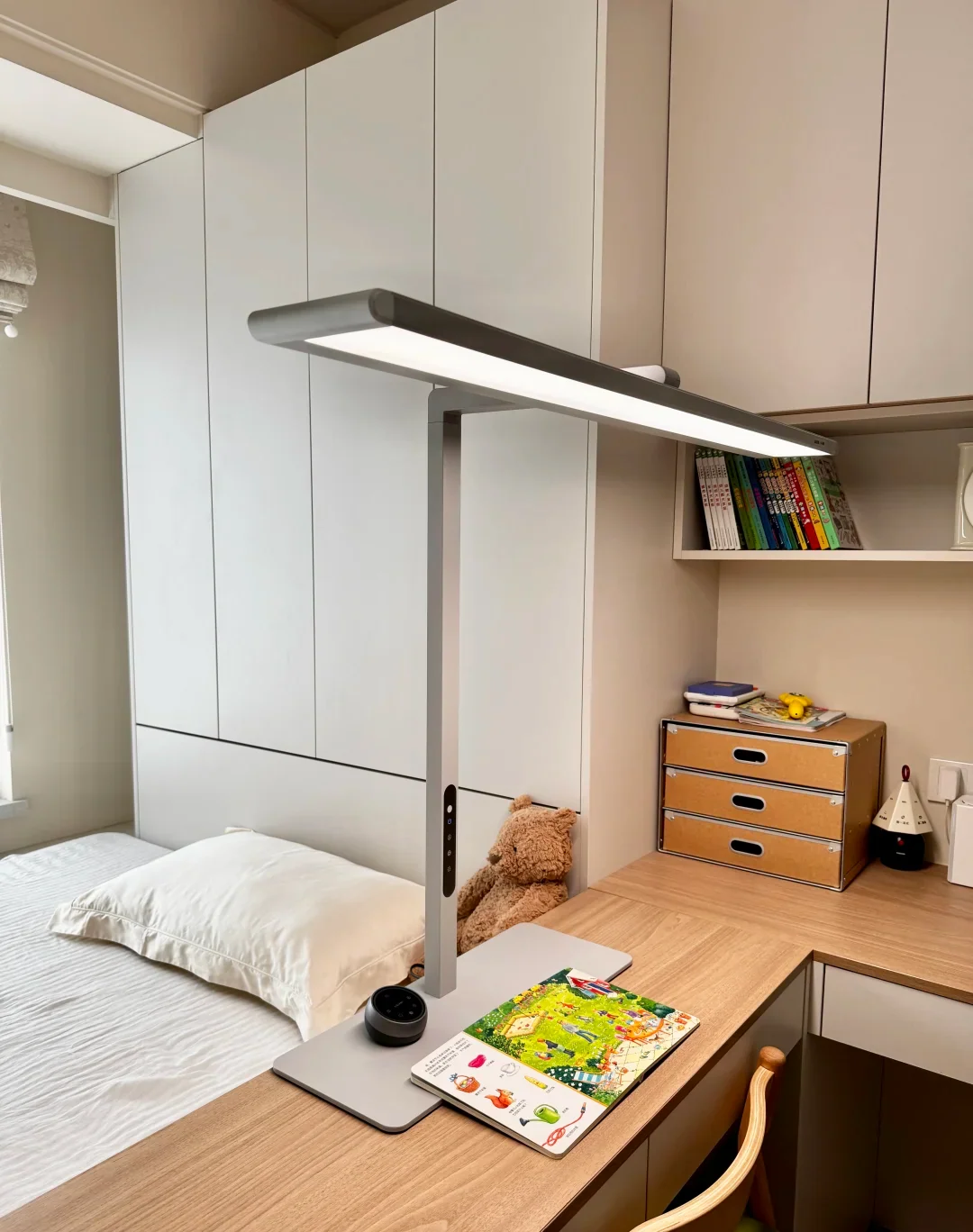
I feel the tension immediately: symmetry looks calm in a photograph, but unused symmetry can make a small bedroom exhausting. Sometimes moving the bed to one side creates one genuinely usable zone instead of two narrow strips. That does not make wall-side placement universally better. It means the room has admitted what it needs to contain.
The door is about privacy before symbolism
An open door can make a sleeping person feel exposed; a direct path can also make every late-night bathroom trip cut through the same narrow line. Before buying a screen, charm or mirror, test the ordinary action: open the door, carry laundry, turn on a small light and walk the route half-awake.
Privacy can be improved by changing the bed’s angle, reducing the direct view, using a low divider that does not obstruct egress, or simply making storage stop spilling into circulation. The answer depends on the room. The feng shui home guide explains why a physical route deserves more attention than a symbolic shopping list.
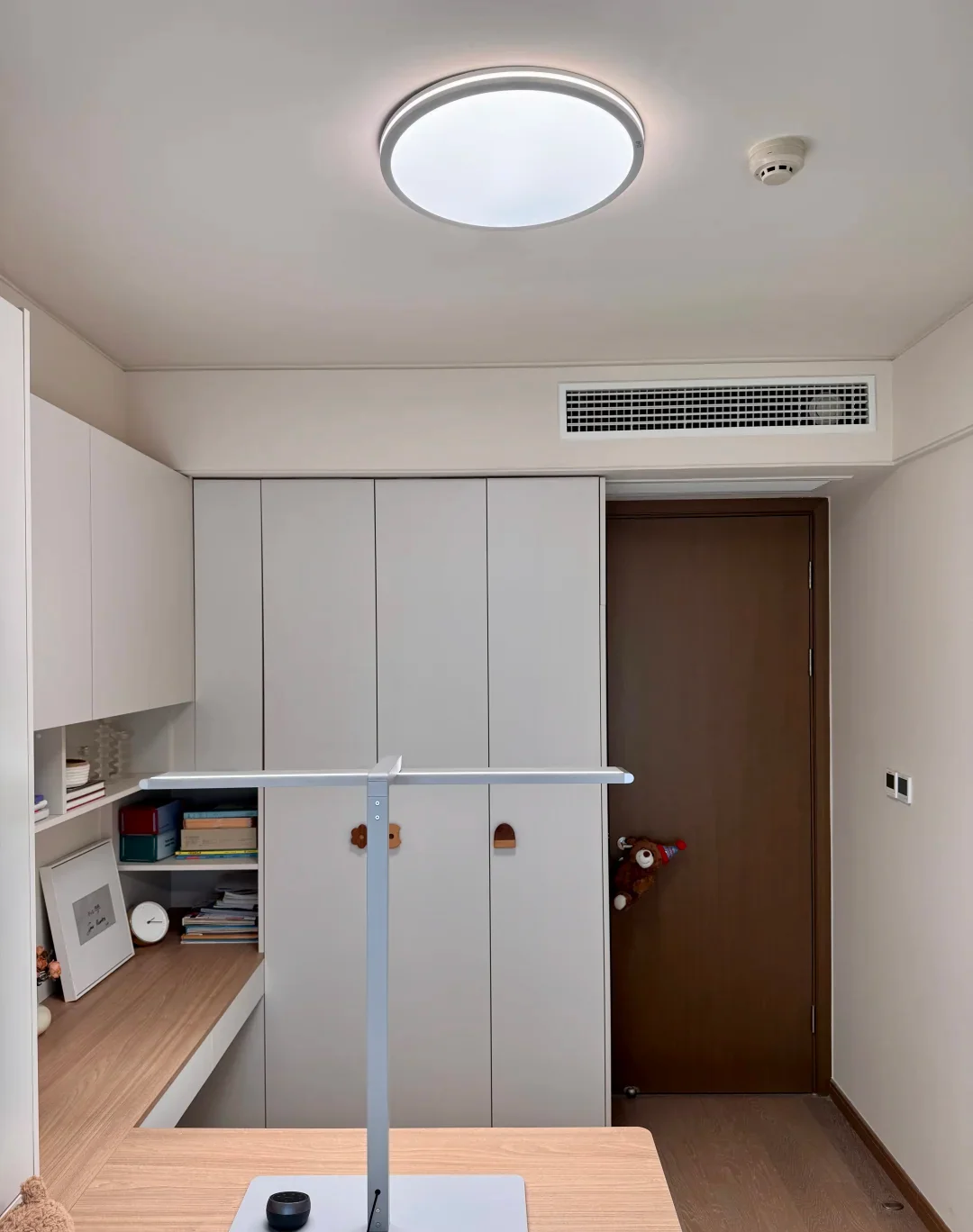
Here the doorway and cabinet wall make the trade-off visible. Storage is efficient, but the route beside the bed has no spare width to absorb a stool, laundry basket or badly opened door. The photograph cannot tell us whether the sleeper feels protected; it can prove that every symbolic recommendation must survive the physical route first.

The side-by-side views show why a doorway rule is really a relationship among several objects. A bed can gain visual protection while a wardrobe blocks movement; a clear central route can expose the sleeping area; a screen can create privacy and also steal light. The useful question is always “what changed for the person?” rather than “which picture matches the diagram?”
The command position is a reading tool, not a promise of power
Popular feng shui advice often recommends seeing the door without placing the bed directly in line with it, with a stable wall behind the head. I understand the appeal: surprise and exposure are bodily feelings before they become symbols. But the phrase “command position” can become grander than the bedroom itself.
If the recommended position places the bed under a noisy pipe, blocks a radiator, narrows an accessible route or creates dangerous window access, the diagram has stopped serving the person. Use the traditional idea to notice vulnerability. Do not use it to erase the actual building.
Light and air are not abstract energy
Feng shui language often describes balance between yin and yang. In a bedroom, I translate that first into observation: can the room darken for rest, ventilate safely, avoid prolonged glare and still feel usable in the morning? The Hong Kong Observatory notes that orientation changes sunlight and wind conditions locally; it is not a universal fortune rule.
The room’s climate, nearby buildings, window treatment and sleep schedule matter more than a generic “best direction.” Traditional meaning can remain meaningful to a household. It should not override fire safety, ventilation, accessibility, rental rules or medical needs.

This real room is a better argument than a slogan. Window-side placement releases floor area, but the photograph cannot tell us whether the window leaks, whether morning light is welcome, or how easily the blind can be cleaned. The image proves a spatial possibility—not a universal recommendation.
Storage is part of the bedroom’s emotional weather
Clothes collecting on a chair are often described as “bad energy.” I would rather ask what category the room failed to provide. Worn-but-not-ready-to-wash clothing needs a place different from clean clothes. A phone needs power without a cable crossing the route. Glasses, medicine, water and a book need a reachable surface. A beautiful empty bedside table is useless if daily objects must live on the floor.
The practical layer does not cheapen feng shui. It makes attention measurable. A room feels calmer when the household can restore order without performing a complete reset each night. Closed storage can reduce visual noise; open storage can make a routine easier. Neither is automatically better.
Two sleepers need negotiation, not matching furniture
A couple’s bedroom is often reduced to relationship symbolism: paired lamps, paired tables, paired objects. Pairing can express mutual recognition, but identical objects do not create equal access. One person may need the easier route to a child, bathroom or early shift. Another may need darkness, charging access or space for mobility equipment.
The honest test is whether both people can enter, reach their belongings and rest without one person’s route repeatedly crossing the other’s body. Sometimes symmetry supports that equality. Sometimes a deliberately uneven room supports it better.
A rented room does not need a perfect floor plan to become more livable
Many feng shui bedroom searches come from people who cannot move a wall, change a window, choose a door swing or buy a completely new bed. That constraint deserves respect. A room does not become a failed room because its best possible arrangement is still imperfect.
Start by separating fixed facts from movable relationships. The window, door, radiator, outlet and built-in wardrobe may be fixed. A bedside surface, curtain, lamp, under-bed bin, cable route, chair and the angle at which a person sees the door usually are not. This stops “feng shui” from becoming an expensive fantasy and turns it into a method for noticing what one small change can relieve.
In a rented bedroom, I would often spend money in this order: safe light, a curtain or blind that works, a stable place for daily objects, cable management that clears the walking route, then decoration. A dramatic headboard or a pile of symbolic objects may photograph well, but the useful improvement is often duller: the phone charger no longer crosses the floor; the laundry has a category; the person by the window can darken it without moving furniture.
There is also a necessary boundary. Do not cover a required ventilation path, overload an outlet, block an exit, alter a rental without permission, or ignore mould, leaks, overheating or persistent sleep problems because a symbolic rearrangement feels more pleasant. A cultural design practice can sit alongside ordinary building care. It cannot replace it.
The five-minute bedroom walk-through
Before searching for another rule, walk the room as if you have just arrived home tired. Put a bag down. Close the door. Reach the bed. Turn off the main light. Get a glass of water. Open the curtains. Leave the room again. At each point, ask one narrow question: what did my body have to negotiate?
| Moment | The thing to notice | A modest change worth testing |
|---|---|---|
| Entering | Does the doorway immediately expose the bed or collide with storage? | Clear the swing path; change the first sightline with furniture you already own. |
| Getting into bed | Is there a narrow pinch point, cable or loose item underfoot? | Remove the obstacle before adding a decorative cure. |
| Waking | Does glare arrive before you want it, or is the room impossible to brighten? | Adjust window covering and lamp position before moving the whole bed. |
| Reaching essentials | Do water, glasses, medicine or a phone have a stable landing place? | Add one reachable surface with a clear purpose. |
| Sharing | Does one person always have to cross the other’s route? | Reassign sides, storage or charging access instead of forcing symmetry. |
This is my favorite translation of feng shui into ordinary life: not “where does luck sit?” but “where does the room keep asking someone to compensate for it?” Repeated compensation is the clue. If a person steps over the same cable nightly, squeezes past the same drawer, or wakes to the same unmanageable glare, the room is expressing a problem in action.
What I would change before buying a feng shui cure
- Trace the door-to-bed and bed-to-bathroom routes after dark.
- Check the room at the actual sleeping and waking hours, not only at noon.
- Name every recurring pile before adding storage.
- Notice what the bed position gives up: light, privacy, floor area, access or quiet.
- Move one relationship and live with it for several nights before adding decoration.
Mirrors, plants, crystals, colours and paired objects can carry taste or family meaning. They cannot repair an obstructed exit, unsafe wiring, damp, overheating or persistent noise. Symbolic meaning belongs after the room’s physical obligations are respected.
Feng shui bedroom FAQ
Does a bed have to face a particular direction?
No universal direction can decide a bedroom. Use orientation as a prompt to observe sunlight, airflow, noise, privacy and how the room is actually used. A comfortable, safe, workable position matters more than forcing a generic directional rule.
Is it bad to put a bed by a window?
Not automatically. It can create glare, drafts or a feeling of exposure in one room, while freeing valuable floor area in another. Test the window at sleeping and waking hours, including curtain access and noise, before treating it as a fixed prohibition.
What is the best first feng shui bedroom change?
Clear one route that the body uses every day: door to bed, bed to bathroom, or bed to a needed surface. Then live with the change for several nights. A usable route gives better information than a shopping list.
Can feng shui fix sleep or relationship problems?
No. A calmer layout can reduce ordinary friction or improve privacy, but it cannot diagnose or treat health issues, guarantee a relationship outcome, or solve building defects. Use appropriate professional help for those needs.
My verdict: make one relationship easier
Do not remake a bedroom in one anxious afternoon. Follow a week of real use. Notice where the body turns sideways, where light arrives too early, where clothes accumulate and where a door makes rest feel public. Change one relationship—a clearer route, a quieter sightline, a usable landing place—then live with it.
That is the bedroom practice I trust: not a cure for a future you cannot measure, but a room that respects the person trying to sleep in it. Continue to feng shui at home, return to the wider Chinese architecture collection, or bring one concrete room problem to East Moment's community.