Chinese gardens are designed by people who understand that a wall can create distance without adding a single meter. Hide the pond, turn the path, open a lattice window, and a small urban garden begins to feel larger than the city surrounding it.
What are Chinese gardens?
A Chinese garden is a composed landscape in which rock, water, plants, architecture, writing and movement create a sequence of experiences. It may be an intimate scholar's retreat, an imperial park, a temple garden, a residence or a modern public interpretation of older traditions.
The garden is not a miniature wilderness and not an outdoor room filled with “Asian” objects. Its materials are arranged to invite comparison with mountains, rivers, paintings, poems and remembered places. Meaning unfolds while the visitor moves.
I have learned not to trust the first view. A good garden withholds something. It lets a doorway frame one scene, then makes the scene disappear behind a wall. Curiosity becomes part of the architecture.
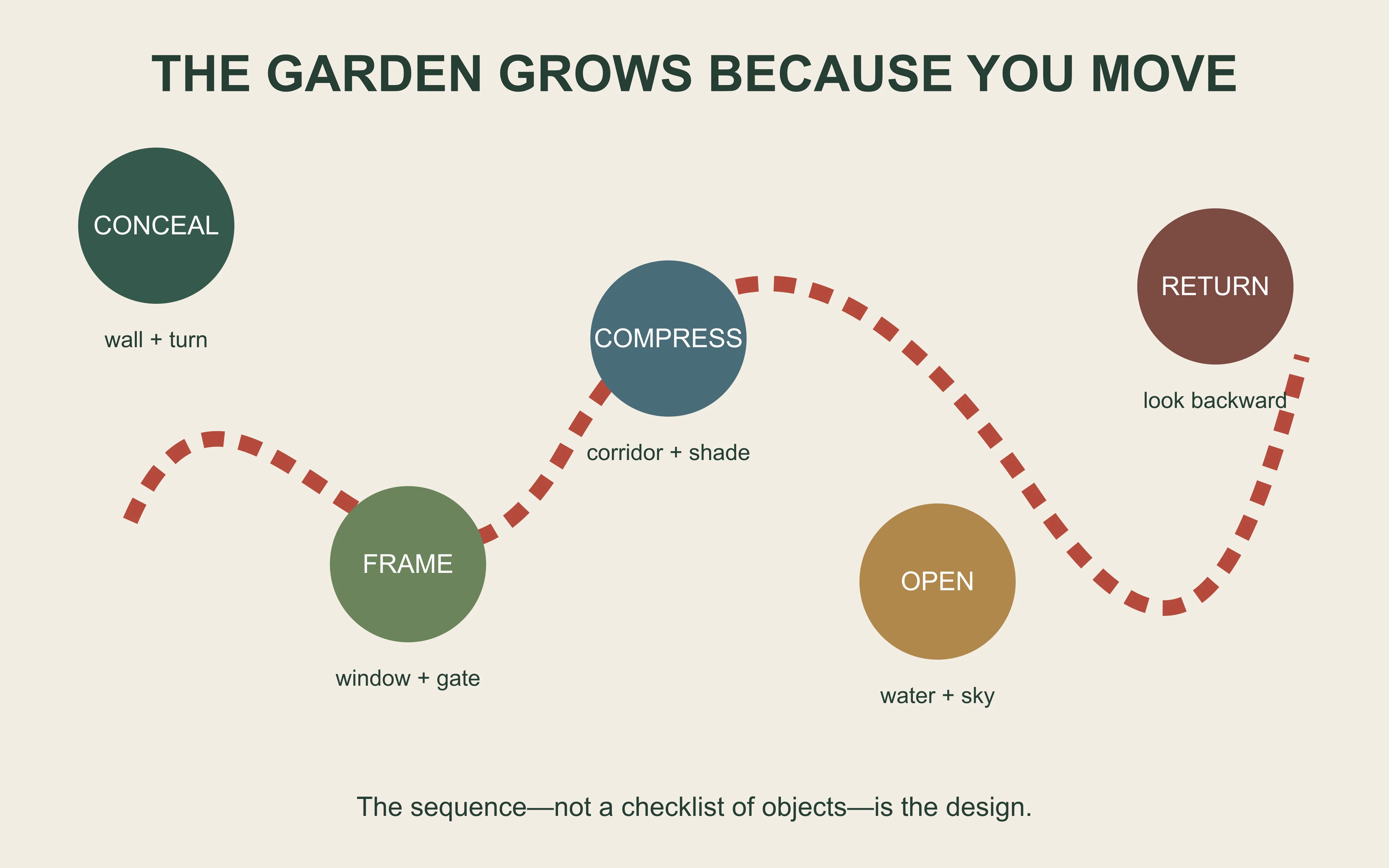
I reject the postcard reading of Chinese gardens because it rewards the prettiest frame and erases the intelligence that prepared it. The mistake is to ask which object looks most “Chinese.” I believe the real design begins in the interval: the dark corridor before the pond, the wall that interrupts certainty and the backward glance that makes an old view become new. If I leave with ten beautiful photographs but cannot reconstruct one sequence, I did not really read the garden.
Chinese garden design at a glance
| Element | Practical role | Cultural and visual work |
|---|---|---|
| Rock | Builds terrain, edges paths and stabilizes compositions | Evokes mountains, age, transformation and concentrated natural form |
| Water | Reflects light, supports plants and cools the setting | Creates depth, movement, emptiness and a changing surface |
| Plants | Provide shade, scent, seasonal change and habitat | Carry poetic, moral and personal associations |
| Pavilion or hall | Offers shelter, rest, gathering and a viewpoint | Frames experience and connects social life with landscape |
| Wall and window | Divide space and control visibility | Make small spaces unfold through concealment and framing |
| Path and bridge | Guide circulation across terrain and water | Turn walking into a sequence rather than a shortcut |
| Inscription | Names a place, quotes literature or records a patron | Adds language, memory and interpretation to the view |
The list is useful, but relationship is the real design material. A rock changes when reflected in water. Bamboo changes when heard through rain. A pavilion exists partly to make the scene outside it visible.
Movement creates the garden
Western visitors sometimes search for one central viewpoint. Many Chinese gardens resist that expectation. They offer a succession of partial views.
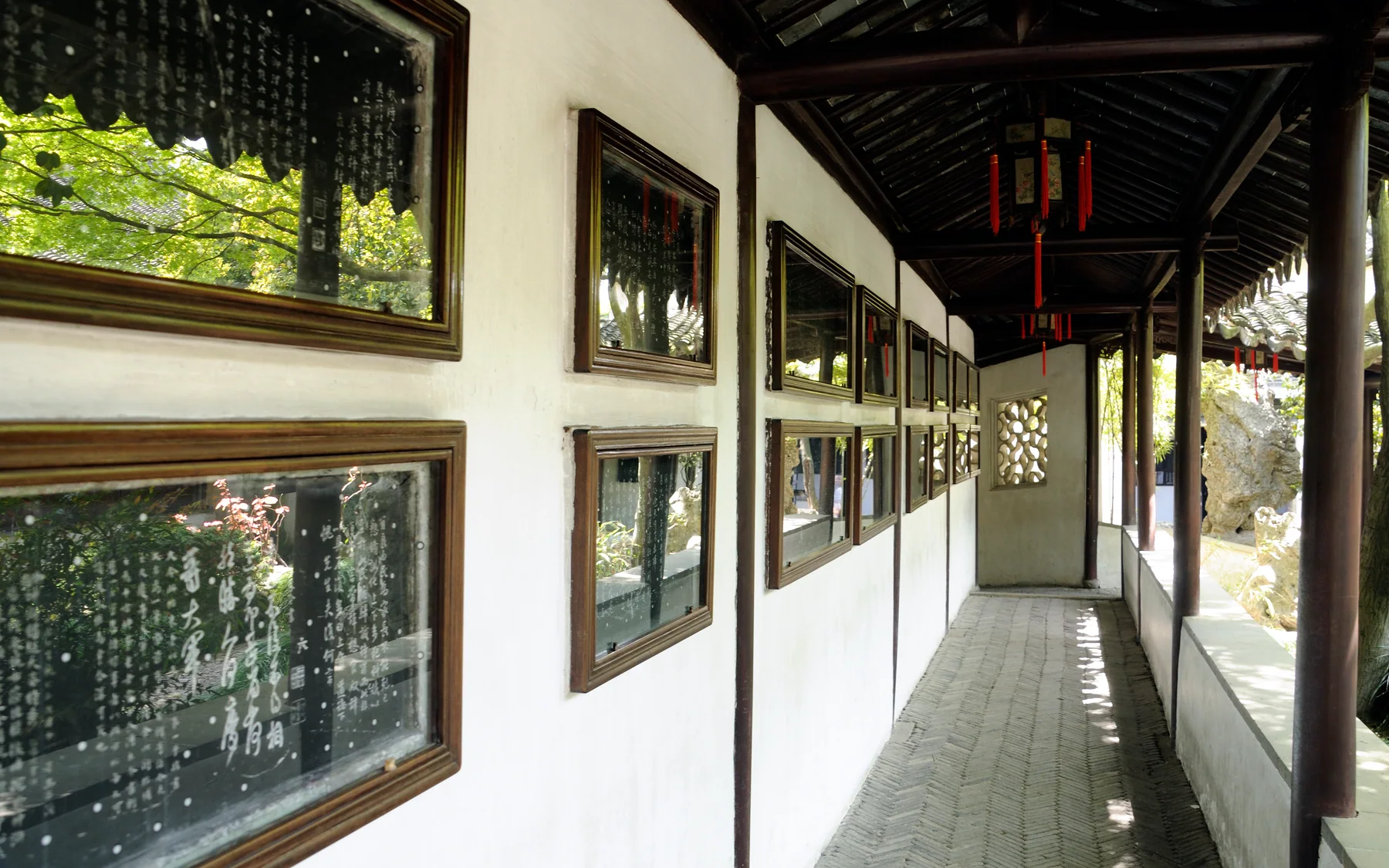
A path bends to delay arrival. A covered corridor compresses the body before a courtyard opens. A moon gate turns a wall into a circular picture frame. A patterned window reveals enough of the next space to make standing still feel incomplete.
This technique is spatial and psychological. The garden grows because the visitor cannot see it all at once. Memory holds the previous view while the next one appears.

The skyline beyond the roof is not a flaw in this photograph. It reveals what the wall is doing. A classical garden does not need the modern city to vanish; it controls when the city enters the frame and how loudly it speaks.
Rock is mountain, structure and personality
Garden rocks are selected for shape, texture, color, holes and silhouette. Some are assembled into artificial mountains with paths and caves. Others stand alone like sculptural presences.
Taihu rocks, associated with the Lake Tai region, are famous for weathered surfaces and openings created through geological and sometimes human processes. Their porous forms can feel both heavy and strangely weightless. The Metropolitan Museum of Art's essay on Chinese gardens and collectors' rocks places those rocks inside a larger design of changing viewpoints and contrasting surfaces rather than treating them as isolated ornaments.

Rocks evoke mountains without merely copying them. A small formation can concentrate the idea of elevation, erosion and deep time. The viewer supplies scale through imagination.
Water makes space move twice
Water reflects buildings, rocks, clouds and plants, creating a second changing garden on its surface. A pond can make a compact site feel deeper. It also introduces sound, weather, maintenance and seasonal life.

The most successful relationship between rock and water avoids a simple opposition. Rock appears stable but records geological change. Water appears soft but reshapes stone. Chinese landscape thought repeatedly returns to this kind of relational perception.
The Yin and Yang guide explains why paired qualities in Chinese thought should be understood through interaction rather than as rigid enemies.
Plants are read through season and story
Plum, orchid, bamboo and chrysanthemum are often called the Four Gentlemen in Chinese art. Lotus carries literary and Buddhist associations, but its meaning in Chinese culture changes with the living plant, pond setting, companion motifs, Buddhist image and literary reference. Pine may suggest endurance and longevity. Banana leaves turn rain into sound.
These meanings should not reduce plants to symbols pasted into soil. Garden plants also need light, water, pruning and local climate. Horticulture and poetry cooperate, sometimes uneasily.
A flowering tree changes the garden because its beauty is temporary. Seasonal disappearance is part of the composition. The garden teaches attention by refusing to remain identical.
Architecture does not sit outside nature
Pavilions, halls, bridges and covered walks organize how people encounter the garden. They provide places for reading, painting, tea, music, conversation and looking at rain without personally becoming part of it.
The built structures belong to Chinese architecture: timber frames, tiled roofs, courtyards and controlled thresholds. In a garden, their role becomes especially visual. A pavilion may serve as the place from which one looks and the object seen from across the pond.

Furniture, plaques, windows and floor patterns continue the design at close range. There is no clean border where architecture stops and garden begins.
Borrowed scenery reaches beyond the wall
Borrowed scenery, often discussed through the term jiejing, draws an outside feature into the composition. A distant hill, pagoda, tree or roofline becomes part of the garden because a particular opening or viewpoint frames it.

The garden does not own the distant scene. It edits the relationship. This is one of its most modern lessons: design can create value by directing attention rather than adding another object.
This is also why a beautiful still photograph is incomplete evidence. It proves the view from one standing point, not the route that prepared it. To understand the design, I need the frame before the frame: the dark corridor that adjusts the eye, the turn that removes the pond and the small opening that returns it. A garden is edited in time.
Painting, poetry and gardens use the same attention differently
Chinese gardens are often compared with landscape painting, but the relationship is richer than saying the garden “looks like a painting.” A painting fixes ink on a surface. A garden recruits weather, sound, scent, growth and the visitor's moving body. The comparison lies in selection: what to reveal, what to leave empty and how one form leads the eye toward another.
Poetry enters through names and inscriptions. A hall name can turn a patch of rain, moonlight or bamboo into a remembered literary scene. The words do not merely label the architecture. They suggest how the place might be read, and educated visitors historically brought their own poems, paintings and references into that encounter.
This can sound exclusive, because access to land, literacy, collections and leisure was never evenly distributed. The scholar garden was also a social performance of taste and status. Its apparent naturalness depended on money, skilled labor, hydraulic knowledge, plant care and continuous repair.
That tension is part of the garden's depth. A landscape can invite private reflection while also displaying ownership. Beauty does not erase labor; understanding the labor makes the beauty less mysterious and more human.
Scholar gardens and imperial gardens are not the same
Scholar gardens associated with Jiangnan cities such as Suzhou are often intimate, literary and carefully compressed. Their rooms and views supported family life, friendship, collecting, artistic practice and cultivated retreat.
Imperial gardens operated at a different scale. They could include lakes, hills, ceremonial spaces, residences, temples and political imagery. Temple and monastic landscapes brought other religious and communal functions.
“Chinese garden” therefore names a family of traditions, not one template. A small courtyard with three rocks should not be explained as though it were an imperial park with fewer employees.
Why Suzhou gardens matter
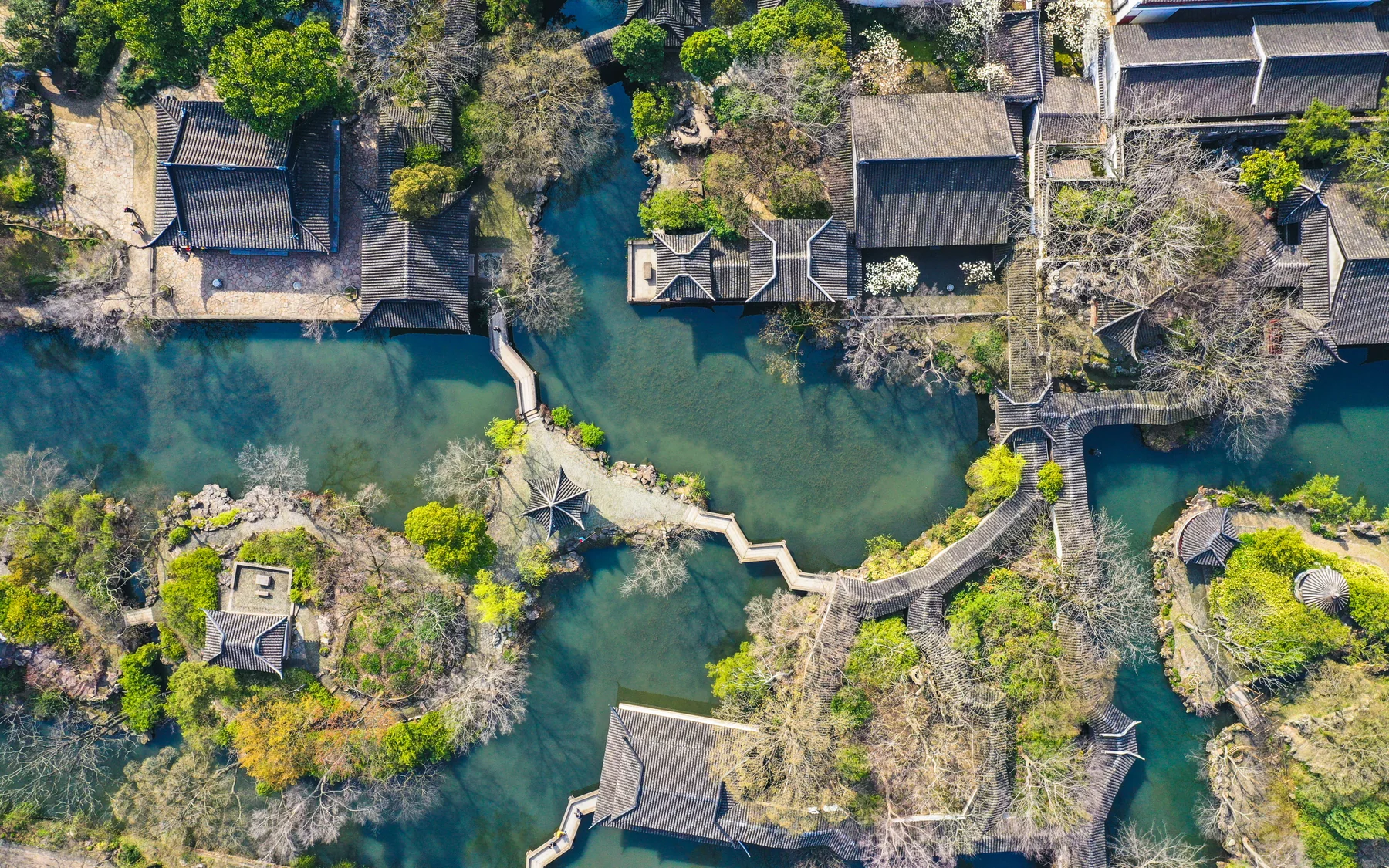
Suzhou's classical gardens are internationally celebrated because they preserve sophisticated relationships among architecture, water, rock, planting and literary culture within dense urban settings. Names such as the Humble Administrator's Garden and Lingering Garden carry their own histories of patronage, repair and tourism.
The UNESCO listing for the Classical Gardens of Suzhou is the authoritative starting point for their outstanding universal value and conservation history. It does not replace the slower work of reading one route, repair or lived use inside an individual garden.
Their fame can create a risk: visitors hunt for the photograph they have already seen. The better approach is slower. Notice the threshold before the famous view, the corridor that prepares it and the minor window that catches a scene nobody is queuing to photograph.

Chinese gardens and feng shui
Feng shui may shape the siting, orientation or interpretation of some gardens. It should not become a universal answer. Garden design also depends on drainage, climate, available land, engineering, household use, status, taste and artistic theory.
A responsible explanation asks what evidence connects a particular decision to feng shui. A curved path is not proof by itself. People also curve paths because straight lines are sometimes impatient.
How to visit a Chinese garden
Walk once without trying to photograph everything. Pause inside doorways and pavilions. Look backward after turning a corner. Notice what is hidden and when it reappears. Listen for water, wind and the difference between covered and open space.
Then read the garden's name, inscriptions and history. Ask which parts are original, restored or reconstructed. Living heritage requires maintenance, and restoration choices shape what visitors believe they are seeing.
Look for use as well as composition. Which room hosted guests? Where could someone read, sleep, eat or watch opera? Which corridor keeps rain off clothing? The garden becomes more convincing when it stops being a collection of perfect camera angles and returns to being a place where people once managed weather, family, privacy and reputation.
Choose the garden by the experience, not the fame ranking
If this is your first visit, choose a compact Suzhou garden when you want to understand compression: a wall, corridor and pond can turn a small site into several emotional distances. Choose an imperial garden when scale, procession and political landscape interest you more than intimacy. Choose a temple garden when active religious use matters, but do not assume every planted court follows the scholar-garden grammar described here.
Then give one garden enough time. Visiting four famous sites in a rushed afternoon produces four entrance photographs and almost no spatial memory. I would rather walk one route twice: first without a camera, then backward with three frames—the threshold, the view it prepared and the view that only appears after turning around.
The backward frame is the test. If the garden has worked, the place you just left will not look like the place you entered. Roof, rock and water have been recomposed by movement. That change is the cultural knowledge a list of elements cannot deliver.
Crowds do not automatically ruin the lesson. They show which openings attract bodies, where circulation jams and how a historic design meets contemporary tourism. Wait for emptiness if you want a clean photograph; watch the crowd if you want to understand the route.
Frequently asked questions about Chinese gardens
What is a traditional Chinese garden?
A traditional Chinese garden is a designed landscape that composes rocks, water, plants, paths, walls and architecture into a sequence of changing views and experiences. Scholar, imperial, temple and regional gardens have different purposes and scales.
What are the main elements of a Chinese garden?
Common elements include rocks or artificial mountains, water, plants, pavilions, halls, covered walks, walls, gates, windows, paths, inscriptions and borrowed views. Their relationships matter more than a fixed checklist.
Why are rocks important in Chinese gardens?
Rocks can evoke mountains, geological time, transformation and concentrated natural form. Their texture, silhouette, openings, placement and relationship to water make them active visual structures rather than simple decoration.
What is borrowed scenery in Chinese garden design?
Borrowed scenery incorporates a view beyond the garden boundary, such as a distant hill, temple or tree, into the garden's composition. Framing and viewpoint make the outside landscape feel connected to the designed space.
Are Chinese gardens based on feng shui?
Feng shui may influence siting or interpretation, but Chinese garden design also draws on architecture, painting, poetry, horticulture, engineering, status and practical use. It should not be used as a complete explanation for every feature.
What are the most famous Chinese gardens?
The classical gardens of Suzhou are internationally renowned. Important examples also survive in Beijing, Yangzhou and other cities, while imperial gardens such as the Summer Palace operate at a much larger landscape scale.
A garden is an argument about attention
Chinese gardens do not defeat the city by pretending it is absent. They create another pace inside it. Walls narrow the world, then a window opens it again. Rock becomes mountain; reflection doubles a roof; a few steps change the scale of everything.
Continue through Chinese Architecture, compare spatial interpretation in Feng Shui or follow brush and landscape into the wider world of Chinese Art.