Changsha food is loud in public imagination: black tofu, red chili, late-night crayfish and queues folding around a block. The real system is more disciplined. Rice noodles make breakfast repeatable. Fresh and preserved chilies create different kinds of heat. Smoke carries winter meat into another season. Vinegar, garlic and fermented vegetables keep richness awake. The city eats late, but its food culture begins long before the lights come on.
Changsha food begins at breakfast, not in a viral queue
| Food | Chinese name | Best context | What defines it |
|---|---|---|---|
| Changsha stinky tofu | 长沙臭豆腐 | Fresh from a busy fryer | Dark crisp exterior, soft center and savory chili-seasoned liquid or toppings |
| Hunan rice noodles | 湖南米粉 | Breakfast | Rice noodles with broth or toppings selected through local shop routines |
| Changsha rice tofu | 长沙米豆腐 | Daytime snack or light meal | Soft rice-based cubes carrying chili, aromatics and savory sauce |
| Sugar-oil baba | 糖油粑粑 | Warm snack | Glutinous rice cake fried or cooked with a glossy sweet coating |
| Hunan stir-fried pork | 辣椒炒肉 | Shared meal with rice | Pork, fresh chilies and fast wok timing |
| Chopped-chili fish head | 剁椒鱼头 | Group meal | Steamed fish with salted or fermented chopped chilies |
| Flavored crayfish | 口味虾 | Late-night social meal | Strong aromatics, chili and hands-on eating |
| Smoked pork | 腊肉 | Shared regional meal | Preservation, smoke, fat and fresh vegetable contrast |
| Lard-mixed noodles or rice noodles | 猪油拌粉 | Simple meal | Aroma and texture from rendered fat, seasoning and hot noodles |
Choose your route through this guide
| If you want... | Begin with... |
|---|---|
| An everyday first meal | Breakfast rice noodles |
| The famous street-food experience | Stinky tofu, rice tofu and vendor judgment |
| A serious Hunan table | Stir-fried pork, fish head, smoked meat, tofu and greens |
| A late-night route | Crayfish, sweet contrast and transport planning |
| Help with spice | The chili grammar and balanced-order sections |
| A comparison with Sichuan food | Changsha and Chengdu, without ranking either city |
The most useful Changsha food trip moves from repetition to spectacle, not the other way around. Begin with a breakfast that residents can eat every week. Learn how fresh, pickled and dried chili behave. Only then enter the crowded snack streets and late-night rooms that dominate the city's online image.
If you need the street-format vocabulary before choosing stalls, East Moment's Chinese street food guide explains turnover, frying and shared-snack judgment without pretending every city eats the same way.
Changsha is one city inside Hunan cuisine
The Hunan cuisine guide covers a province of river, lake, mountain and preserved-food traditions. Changsha gathers them through restaurants, migration, media and tourism, but it does not own them all. The regional history in The Food of China is useful here because it resists the internet habit of collapsing a province's cooking into one famous city's snack street.
| Changsha city identity | Wider Hunan system |
|---|---|
| Black stinky tofu and branded snack streets | Fermented tofu traditions vary across places and producers |
| Rice-noodle breakfast shops | Noodle forms and toppings vary across Hunan cities |
| Late-night crayfish and skewers | River and lake ingredients belong to wider regional foodways |
| Trend-driven Hunan restaurants | Smoked, sour and preserved foods often carry county or household origins |
| Media-famous dishes | Provincial cooking includes many foods that are not visually dramatic |
The city is a distribution point for provincial appetite. Students, workers, cooks and restaurant groups bring county dishes and household preferences into Changsha, where some become standardized for a metropolitan audience. Calling every dish “Changsha food” may be convenient for search, but a responsible guide should identify when the technique belongs to wider Hunan.
Fresh chili and preserved chili do different work
Hunan food is often distinguished from Sichuan food through its use of fresh and preserved chilies, sourness and smoke rather than the centrality of Sichuan pepper. That comparison is useful only as a starting point. The Hunan provincial government's culture overview supplies an institutional boundary for the province's food culture; it does not turn one city menu into the definition of all Hunan cooking.
Fresh green chilies can be grassy and sharp. Red chilies can bring fruitiness and heat. Chopped salted chilies create acidity and fermentation. White chilies introduce preservation and a changed texture. Dried chilies add another aroma and can season oil without providing the moisture of a fresh pepper.
This provincial Hunan dish image is used for technique, not to claim one Changsha invention. It shows how a mild ingredient can carry a preserved chili's concentrated aroma without becoming a generic red-oil plate.
The practical lesson is to ask which kind of chili drives a dish. Reducing visible fresh pepper may not remove chopped chili paste from steamed fish or preserved chili from a sauce. “Not spicy” is less useful than naming the ingredient or choosing a preparation whose identity does not depend on it.
Breakfast and snacks explain the everyday city
Breakfast shops and snack counters use different forms of speed. Rice noodles are assembled for commuters; stinky tofu depends on frying to order; rice tofu can be dressed quickly but still shows sauce balance. Treating them as one continuous tasting crawl ignores when and why people eat them.
Breakfast begins with rice noodles
Changsha rice-noodle shops teach visitors how local eating actually works. Choose noodle width or style where offered, select a topping, decide on broth or dry preparation and add preserved vegetables or chili according to the shop's system.
The bowl may look simple, but broth, rice aroma, topping preparation and service speed reveal repetition. Eat early enough to see commuters and regular customers rather than only visitors following a food map.
| Topping direction | What to expect | Question to ask |
|---|---|---|
| Pork | Minced, sliced, braised or stir-fried forms | Is the topping already spicy? |
| Beef | Braised or stewed, often with a stronger broth | Does the broth contain chili or pepper? |
| Offal | Chewy, rich or soft textures depending on the cut | Which organ is used? |
| Pickled vegetables | Sourness and crunch | Is meat stock used in the base? |
| Plain or vegetable | A lighter way to read the noodle and broth | Is lard included? |
The first bowl should be simple enough to read. Choose one topping, taste the broth before adding condiments and watch what regular customers do with pickles or chili. A fully loaded bowl may look generous but removes the chance to understand noodle texture and base seasoning.
Rice noodles are also a reason to stay near a useful breakfast neighborhood. Crossing Changsha for a single famous shop can place the visitor in a queue after the morning rhythm has ended. A busy shop near the hotel, with a focused menu and rapid turnover, often teaches more.
Stinky tofu should be eaten as food, not a dare
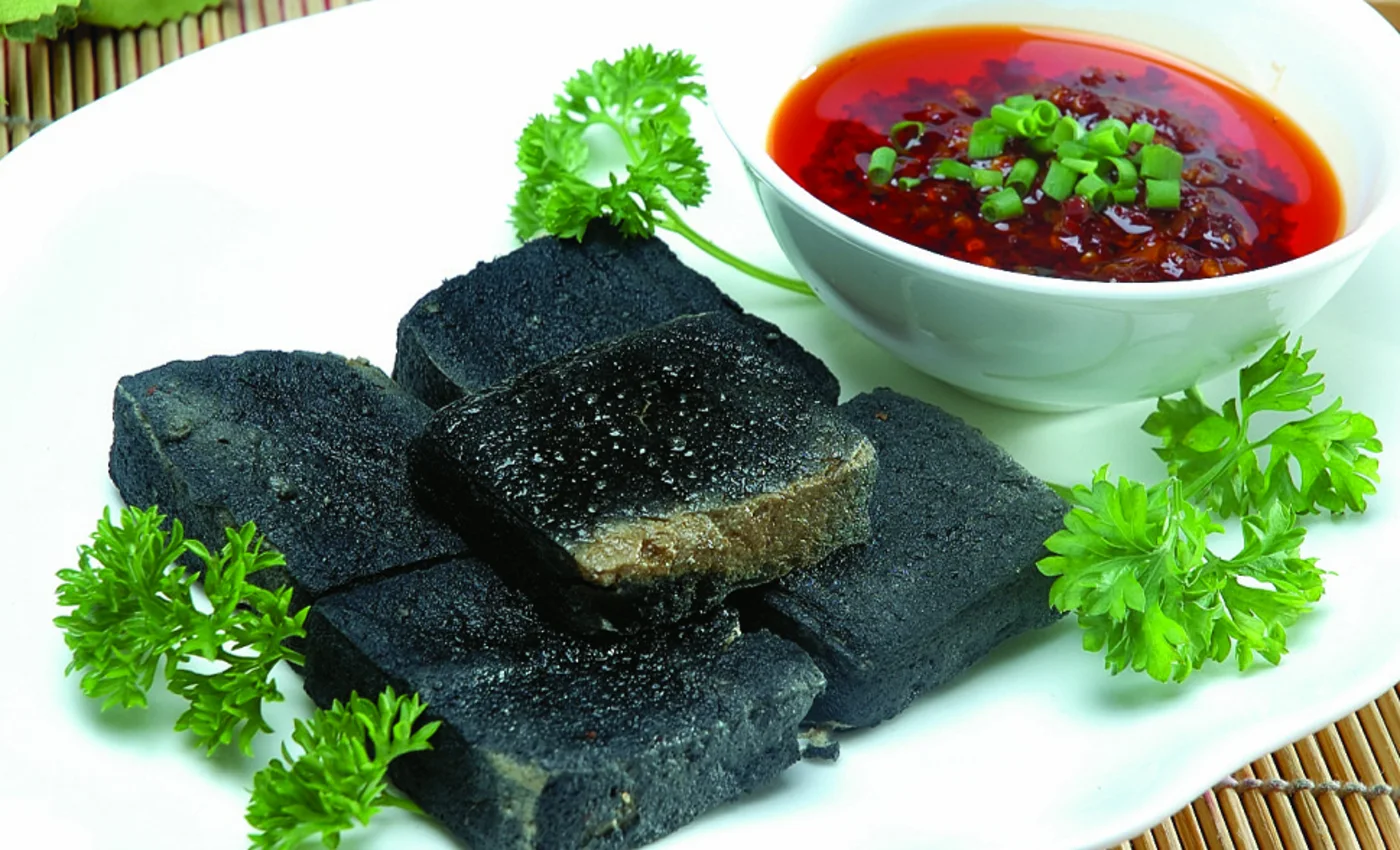
Changsha-style stinky tofu is commonly associated with a black exterior. Fermentation and coloring methods vary, and the final product depends on fresh frying. The best version creates contrast: crisp outside, soft within, with sauce entering openings without making the whole piece collapse.
The cover photograph shows the useful test before any ranking begins: a crisp black shell, a still-moist center and enough red sauce to enter the tofu without drowning it. Smell is part of the experience, but freshness, oil condition and sauce balance matter more. Choose a busy stall, watch the fryer and eat it hot. Viral fame does not override food handling.
The black color is not a universal measure of fermentation quality. Vendors use different production and seasoning systems, and the crisp exterior is created during frying. Judge the finished food: clean hot oil, a center that remains moist, sauce that enters without drowning the crust and toppings added with control.
Do not force companions to try it or film a disgust reaction. That performance turns an ordinary local snack into a foreigner's endurance test. Order a small portion, share and decide whether you enjoy fermentation, texture and sauce.
The current Changsha food feed is full of seven-shop comparisons, “best in the city” claims and stalls declared unbeatable after one bite. I understand the excitement; hot tofu, sharp sauce and a crowded street make an instant story. I still reject the ranking game. Most visitors cannot control batch time, oil turnover or which cook is at the fryer, so a permanent winner is false precision.
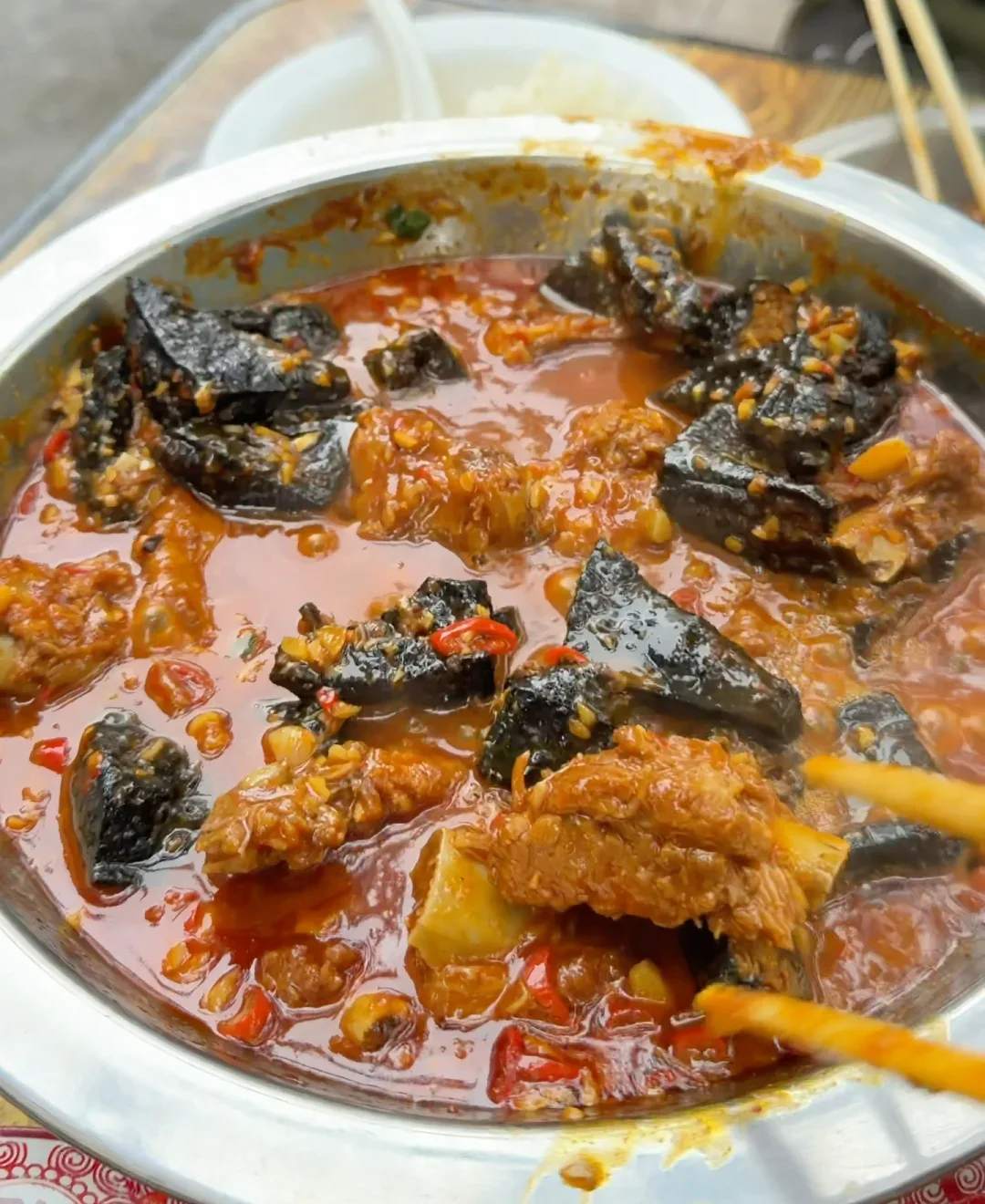
One unpolished street-side pot makes an important correction: black tofu does not exist only as a neat tourist snack. Here it shares sauce, chili and eating time with pork ribs. Image record.
My test is deliberately less glamorous: watch one batch enter clean oil, take the first piece before steam disappears, then notice whether the sauce enters the holes without erasing the crust. If those three things work, the snack has already given you more truth than a queue-length leaderboard.
Rice tofu carries sauce without becoming heavy
Changsha rice tofu is made from rice rather than soybeans. Its soft, springy cubes create a mild base for chili, garlic, fermented notes and savory sauce. Preparations vary, so the name should not be treated as one fixed recipe or confused with ordinary bean curd.
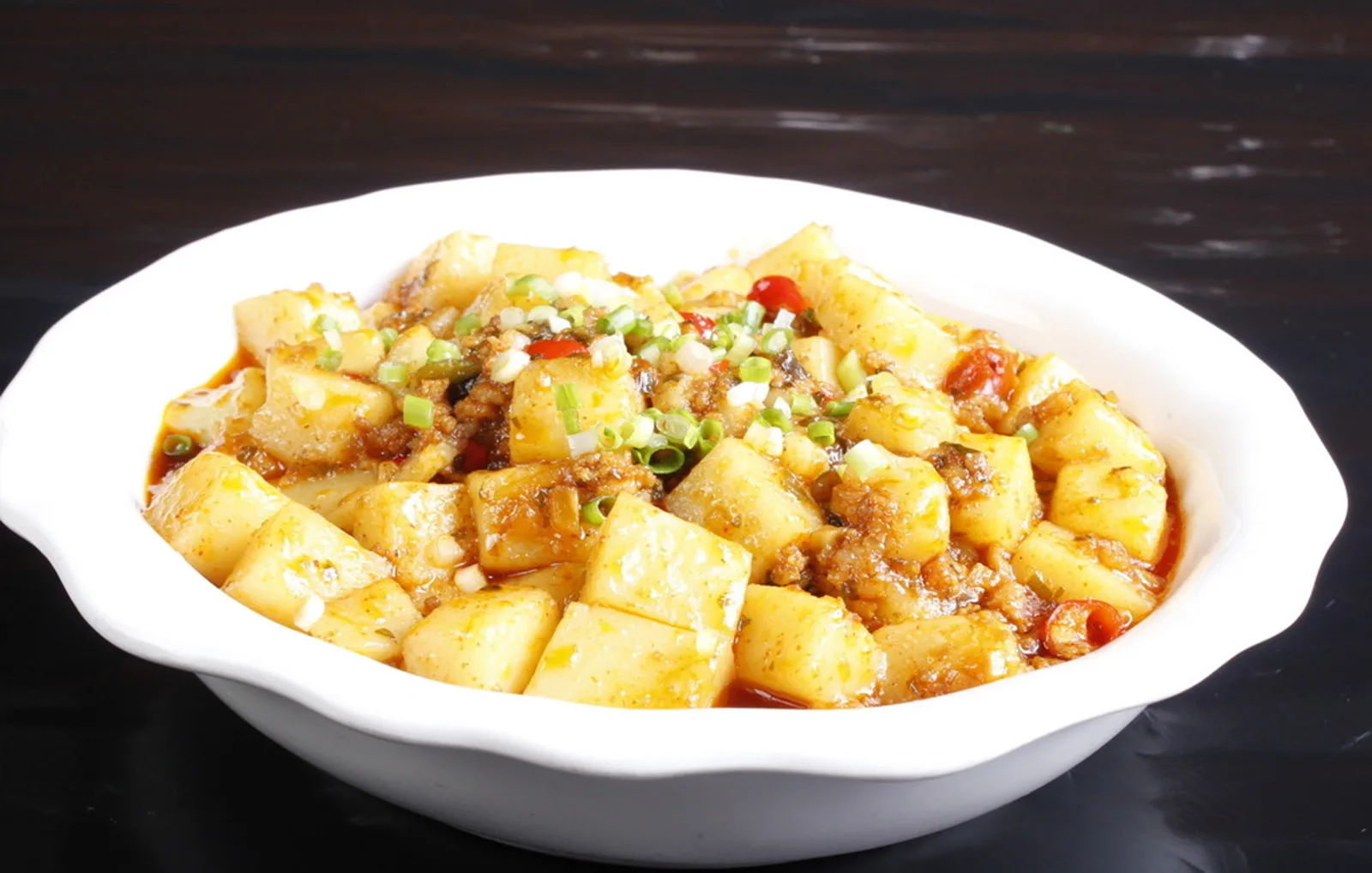
The dish works well between richer snacks because the rice base is gentle even when the seasoning is assertive. Ask whether the topping or cooking fat contains meat if you are vegetarian.
A serious Hunan table balances fresh and preserved flavors
A shared restaurant meal should not contain four versions of chili and meat with no relief. Build the table from one fresh-chili stir-fry, one steamed or braised centerpiece, tofu or egg, a green vegetable, soup where useful and rice. Smoke or preserved ingredients should contribute depth rather than occupy every plate.
Stir-fried pork depends on timing
Hunan stir-fried pork appears simple enough to expose every mistake. Pork should remain tender, chilies should keep fragrance and the oil should bind the plate rather than pool beneath it. Rice is essential because the seasoning is designed to travel.
In Changsha, the dish can appear in home-style restaurants, mall dining and late-night rooms. Compare one modest shop with one polished restaurant before declaring a universal version.
The pork cut and pepper ratio matter. A plate dominated by fatty meat may be satisfying but heavy; one with only lean pork can dry quickly. The chilies should remain identifiable as vegetables and aromatics, not collapse into an oily background. Rice captures the juices and completes the design.
Chopped-chili fish head is a shared centerpiece
Steaming protects the tenderness of the fish while chopped chili seasons the surface. The head provides cheeks, collar, skin and gelatinous textures that require patient eating.
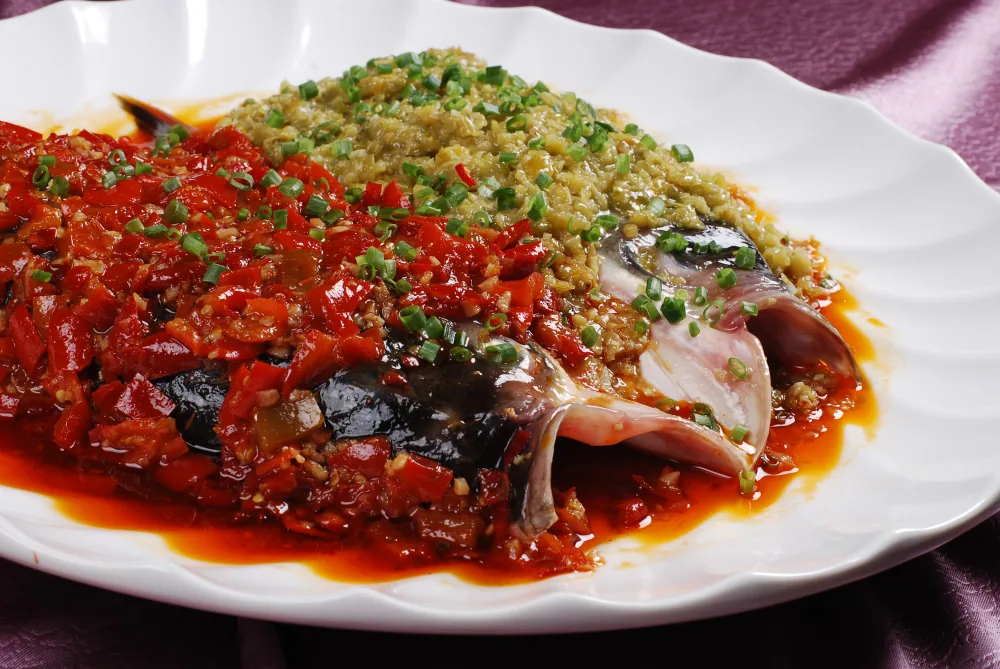
Order it for a group and ask about size. It is not a boneless fillet beneath red garnish. Use a serving spoon, expect bones and pair it with vegetables or tofu rather than another equally salty centerpiece.
Fish-head dishes are difficult for diners unfamiliar with bones, cheeks and collar meat. Ask a companion or server how to serve it, and keep a small plate for bones. The value lies in varied textures and the way steam carries chopped chili aroma, not in consuming the entire plate quickly.
Smoke and preservation need fresh partners
Smoked pork carries salt, fat and preservation. Fresh garlic shoots, greens, bamboo, beans or mountain vegetables can keep it from becoming heavy. The archive image shows bracken as one pairing, not a universal Changsha standard.
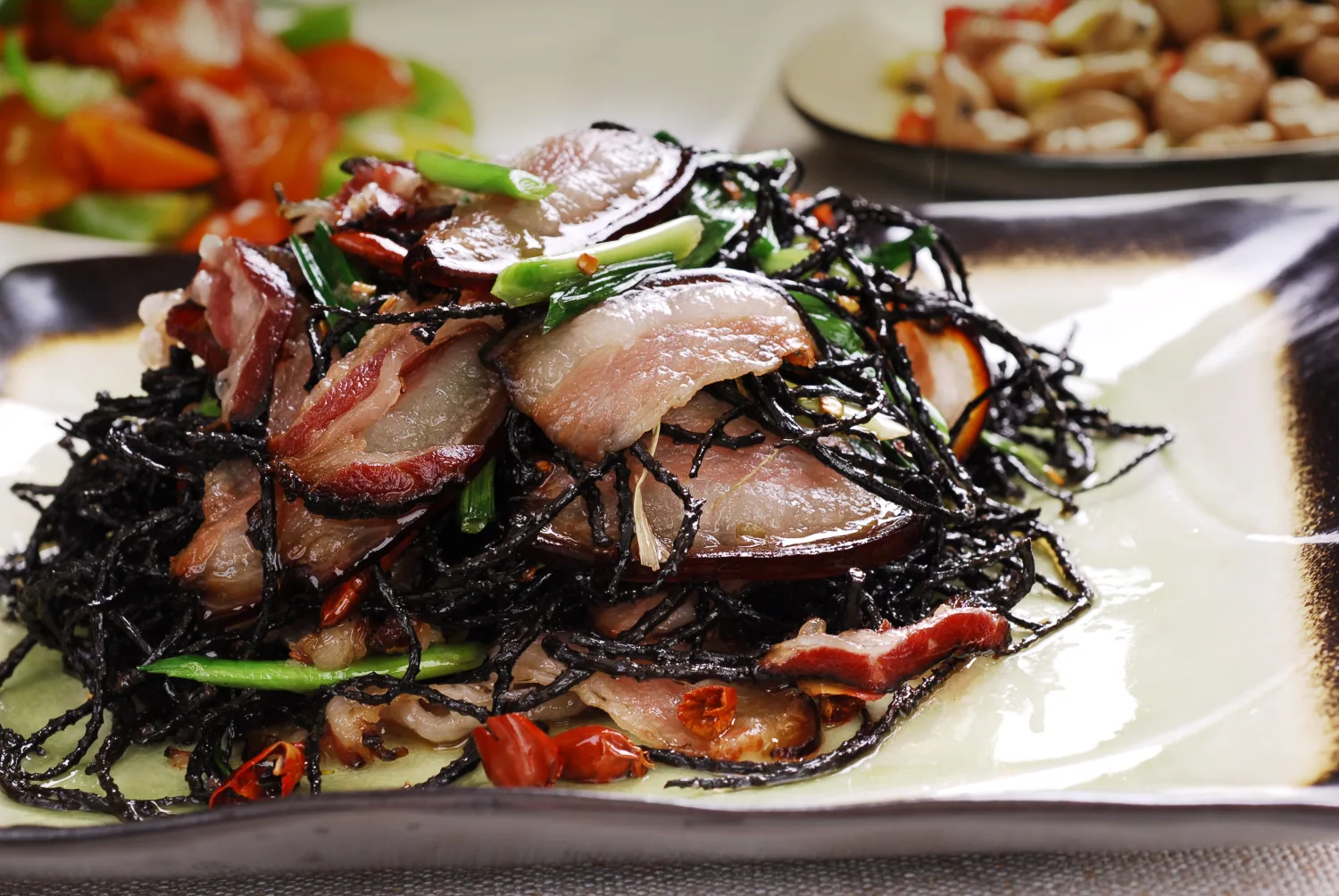
Preserved foods deserve practical caution. Buy from reputable producers and do not use a restaurant image as a guide to gathering or processing wild plants.
Preservation has historical and practical roots, but contemporary restaurant versions vary in salt, smoke and sweetness. Pair cured pork with garlic shoots, green vegetables, beans or bamboo so the fresh ingredient remains visible. Ordering smoked meat beside chopped-chili fish and a salty cold dish makes each less distinctive.
Changsha after dark is a social eating system
Changsha's night appetite includes crayfish, skewers, stinky tofu, noodles, Hunan cooked dishes, desserts and drinks. The city looks as though every food must be eaten after midnight, but a strong evening chooses one main format. Moving through four queues rarely creates a better experience than remaining at one table with friends.
Late-night crayfish is as social as it is edible
Flavored crayfish became a powerful part of Changsha's night image. Eating is slow and tactile: shells, gloves, sauce and conversation stretch the meal. Portions and spice levels can be difficult to judge from menus.
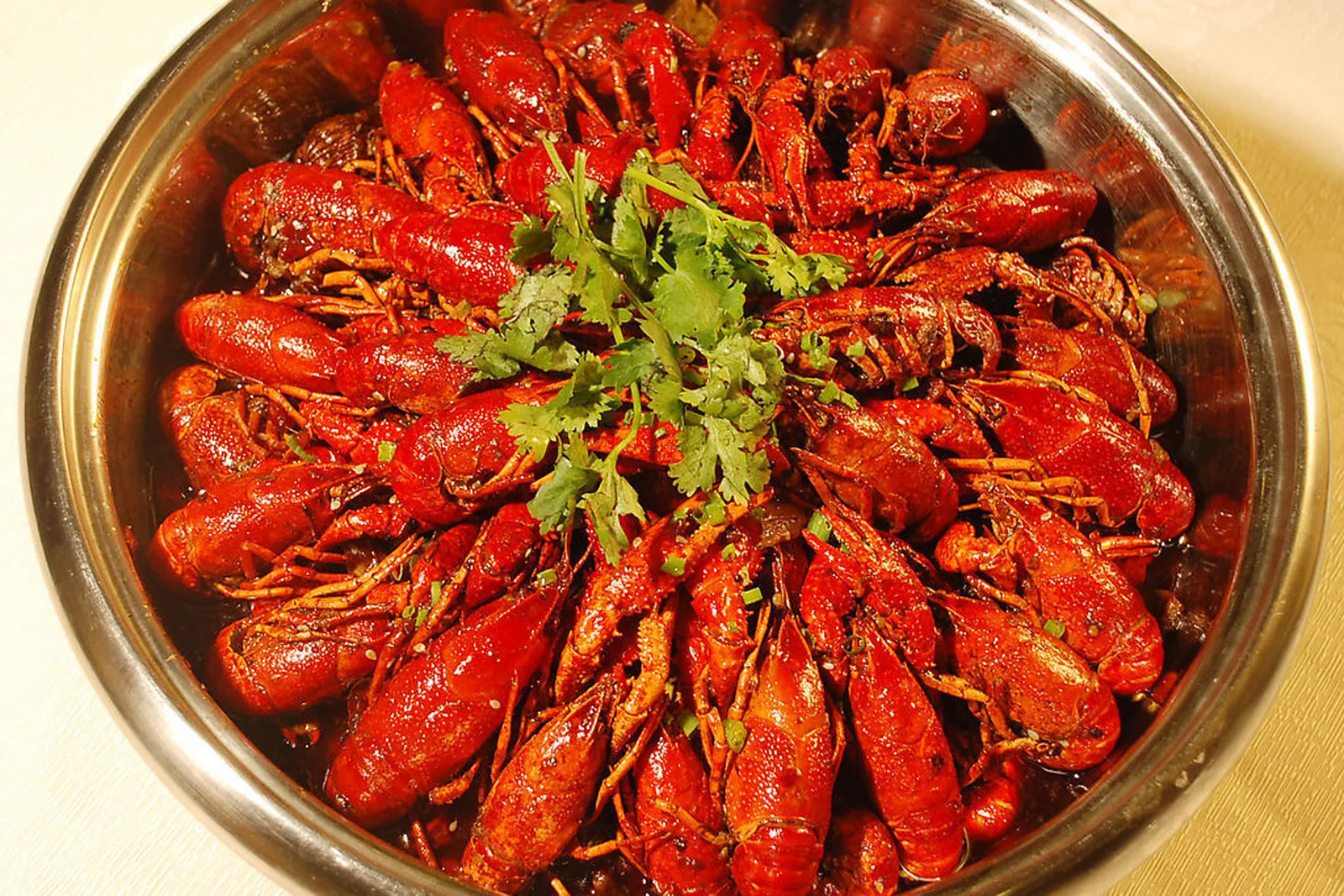
Order one preparation for the table, add a vegetable and a staple, and avoid treating the sauce as proof that the crayfish itself is fresh. Shellfish allergies require clear communication, while cross-contact is common in busy seafood kitchens.
Crayfish are seasonal agricultural products, although restaurant supply chains can extend availability. Ask the current preparation and price structure, wash hands and avoid eating damaged or questionable shellfish. Gloves manage sauce but do not replace hygiene.
The slow work of peeling is part of the social format. A table can remain together because nobody finishes immediately. That shared duration connects crayfish to Changsha's night identity more convincingly than the intensity of any one sauce.
This is the point outsiders often miss. Changsha night food is not valuable because people can keep ordering until 3 a.m.; it is valuable because the food delays departure. Shells, shared plates, refilled tea and arguments over the last bite keep the table alive. The product is not only crayfish. It is extra time together.
Sweet snacks create necessary contrast
Sugar-oil baba uses glutinous rice texture and a glossy sweet exterior. It is dense, warm and best shared. Other sweets, fruit, fermented-rice desserts and tea drinks can separate two chili-heavy meals.
Changsha's contemporary drink shops are part of the city's youth economy, but queue length is not a quality measure. Try one visible brand, then notice what local customers buy without cameras.
Sugar-oil baba is dense enough that one portion can be shared. Eat it warm, when the glutinous center and glossy exterior remain distinct. Sweetness is not a retreat from Hunan cuisine; it changes the mouth after smoke, salt and chili and makes the next savory bite easier to read.
Where to eat Changsha food by format
| Format | Best time | What it teaches |
|---|---|---|
| Neighborhood rice-noodle shop | Breakfast | Routine, broth, toppings and local service vocabulary |
| Busy tofu stall | Snack | Frying, fermentation, sauce and turnover |
| Home-style Hunan restaurant | Lunch or dinner | How fresh, preserved, smoked and gentle dishes share a table |
| Crayfish or night-food room | Evening | Social duration, shellfish preparation and group ordering |
| Central pedestrian food street | One controlled tasting visit | Branding, visitor convenience and spectacle |
| Dessert or drink shop | Between meals or after dinner | Sweet contrast and contemporary youth consumption |
Central food streets can be useful because vendors cluster, opening hours are visible and famous snacks are easy to compare. They are also crowded, branded and designed for high turnover. Use them for one chapter, not every meal. A neighborhood noodle breakfast and a proper Hunan restaurant provide the depth the street cannot.
Restaurant quality changes faster than cuisine. Check current hours and recent local use, then judge whether a shop specializes. Keep alternatives within the same neighborhood so one queue does not force a cross-city detour.
How to order Hunan food without flattening it
| Group size | Balanced order | What it reveals |
|---|---|---|
| Solo | Rice noodles plus one tofu or vegetable snack | Breakfast rhythm and seasoning control |
| Two people | Stir-fried pork, one green vegetable and rice | Fresh chili, wok timing and balance |
| Four people | Fish or poultry, smoked meat, tofu, vegetables, soup and rice | Fresh, preserved, rich and gentle flavors together |
| Late night | One crayfish or skewer format, one vegetable and a staple | Social eating without ordering three competing centerpieces |
Ask for wei la only as a starting point. A dish may contain pickled chili paste even after fresh chili is reduced. Severe allergies or intolerance should be explained with the ingredient name, not only the English word "spicy."
Vegetable dishes can contain lard, stock, minced pork or oyster sauce. Cold dishes may include peanuts or sesame. Crayfish restaurants have substantial shellfish cross-contact, and rice-noodle broth may be meat-based even when the visible topping is vegetables. Written dietary information in Chinese is worth preparing.
Begin with fewer dishes and reorder. Portions of fish head, smoked meat and crayfish can be difficult to infer from an English menu. Ask the serving size and whether the price is per portion, weight or individual item.
Changsha and Chengdu compared
| Question | Changsha | Chengdu |
|---|---|---|
| Most visible heat | Fresh, chopped, salted and preserved chili | Chili combined with Sichuan pepper, fermented beans and varied aromatic oils |
| Strong secondary identity | Sourness, smoke and preserved ingredients | Numbing fragrance, complex sauces and small-bowl snack systems |
| Everyday morning | Rice noodles | Wheat noodles, wontons and varied small breakfasts |
| Famous night format | Crayfish, skewers and Hunan shared dishes | Hot pot, chuanchuan and snack streets |
| Best corrective | Hunan food is not only raw heat | Sichuan food is not only mala |
The Chengdu food guide makes the comparison concrete. Neither city should be used as shorthand for all inland Chinese food.
The comparison becomes useful at breakfast and dinner. Changsha rice noodles show a rice-based morning culture with fresh or preserved chili condiments. Chengdu's small bowls show wheat noodles, wontons and sauce systems shaped by Sichuan pepper and fermented beans. At night, Changsha's crayfish and Hunan restaurant culture differ from Chengdu's hot pot and chuanchuan, even when both streets glow red.
A one-day Changsha food route
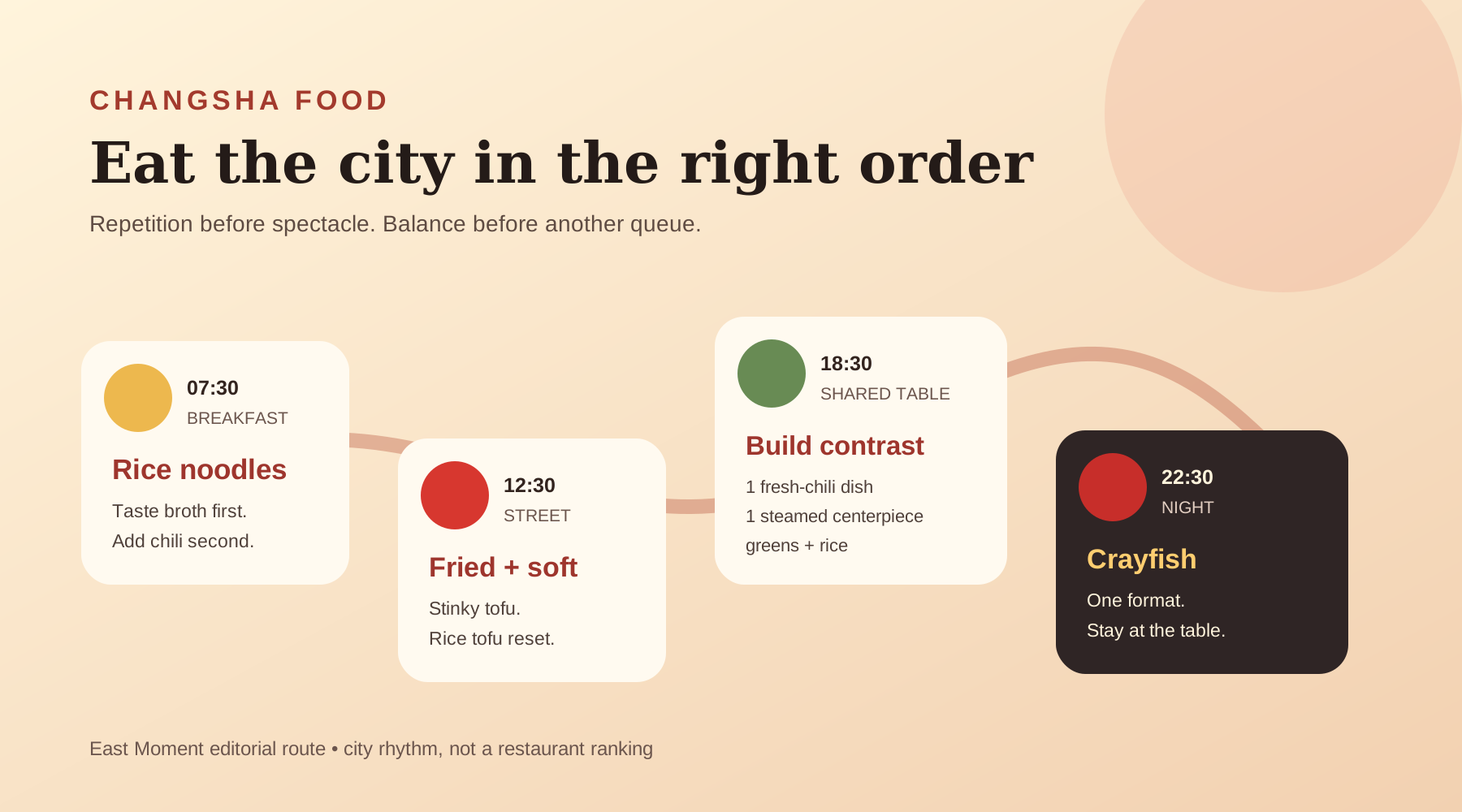
The route protects appetite and contrast: ordinary breakfast first, one serious shared table, then a single late-night spectacle. It is a decision map, not a claim that every visitor must eat the same dishes or cross the city for the same shop.
| Time | Eat or do | Why |
|---|---|---|
| Morning | Neighborhood rice noodles | Begin with the city's repeatable everyday meal |
| Late morning | Hunan Museum or Yuelu walk | Create appetite instead of continuous snacking |
| Lunch | Stir-fried pork, greens and rice | Read fresh chili and wok control |
| Afternoon | Sugar-oil baba or a small sweet | Add texture and contrast |
| Evening | Shared Hunan dinner with fish, tofu and vegetables | Experience the cuisine as a table system |
| Late night | Stinky tofu or crayfish, not both by obligation | Choose one social format and eat it fresh |
Use a second day for repetition: another noodle topping, a different style of chili and a restaurant meal that includes tofu, greens and soup. The second breakfast is where Changsha stops being a list and begins to become a food city.
Changsha is deeper than its loudest queue
What most Changsha food guides get wrong
They begin at night, treat stinky tofu as a reaction video and define Hunan food through maximum heat. That removes breakfast, preservation, vegetable cooking, rice, smoke and the balance required to eat chili-rich food with pleasure.
The East Moment recommendation is two mornings, one shared Hunan lunch or dinner and one late-night format. Repeat rice noodles before chasing another snack. Order fish or smoked meat with greens, tofu and rice. Let crayfish or stinky tofu be food, not a test.
The second morning is especially important because it removes the pressure of novelty. A different broth, topping or chili condiment shows which parts of the first bowl belonged to Changsha's noodle-shop grammar and which belonged to one cook. That small comparison is more valuable than adding another famous snack whose main difference is branding or queue length.
Changsha's advantage is not simply that it stays awake. It makes ordinary breakfast and high-energy night eating part of the same appetite. The city becomes distinctive when the traveler understands both ends of that day.
My final order is non-negotiable: protect breakfast first, build one balanced Hunan table second and choose only one late-night spectacle. Anyone can collect six snack names. The reader who understands why a quiet bowl of rice noodles and a messy crayfish table belong to the same city has actually learned Changsha.