My verdict: Furong Town is worth one night, not a rushed waterfall photograph. Arrive while the roofs and river still belong to daylight. Watch the town turn into a stage after dusk. Sleep nearby, then walk again before the day-trip crowd rebuilds. If your route cannot hold that sequence, skip it without regret and give the time to Zhangjiajie's mountains or Fenghuang's streets.
The sentence above is deliberately less romantic than “a thousand-year-old town hanging over a waterfall.” That slogan describes the picture. It does not make the travel decision. Furong Town is compact, ticketed, intensively lit and heavily visited. It is also visually extraordinary. The right response is not to expose it as “too commercial” or worship it as “untouched.” The right response is to use its transformation well.
Furong Town works because it becomes three different places
Most visitors see one image: amber buildings above blue-lit water. The image is real, but the strongest visit contains three versions of the town.
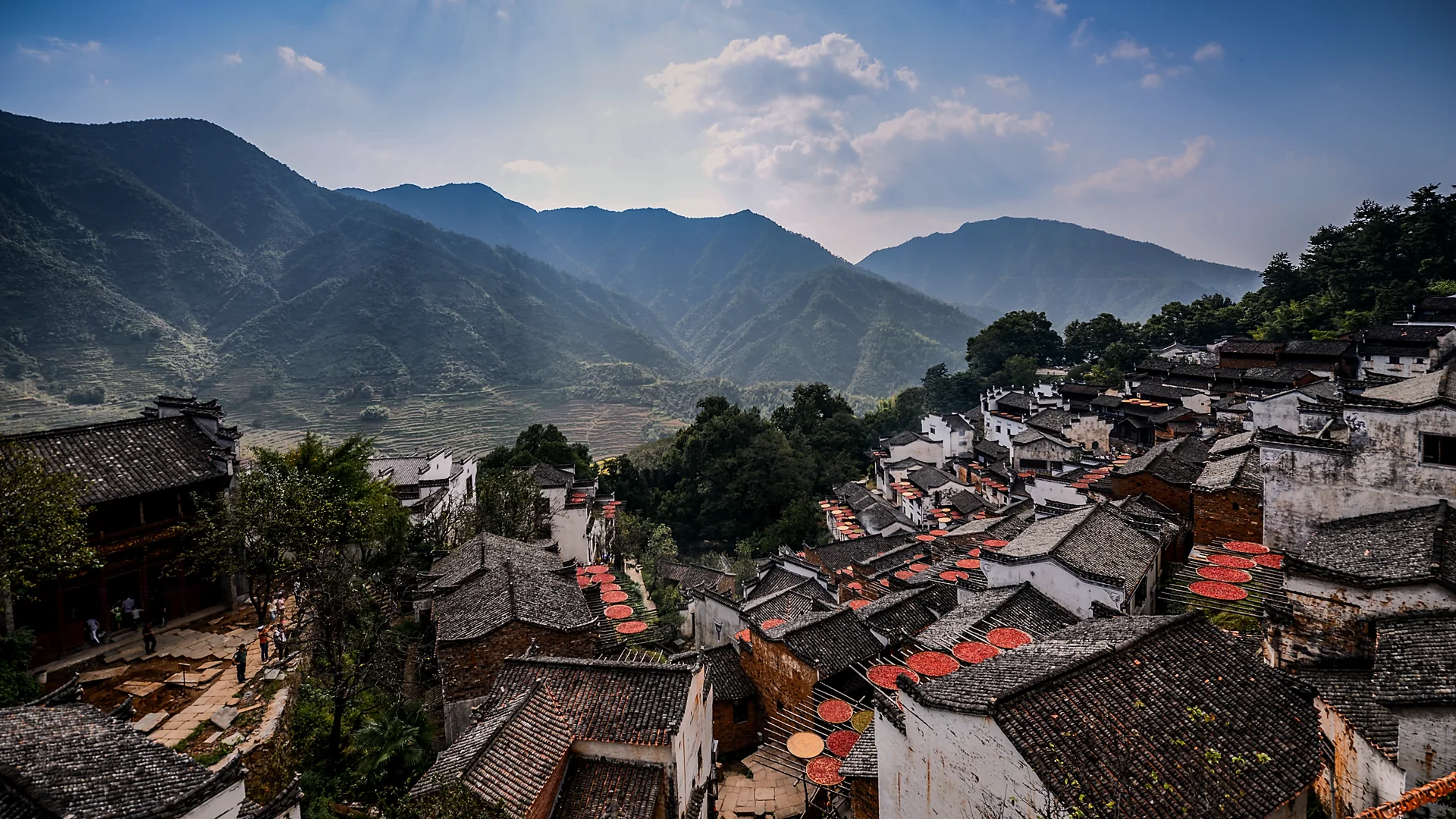
In daylight, the visual structure is plain enough to read. Dark roofs climb the slope. Restaurants, guesthouses and viewing terraces occupy the stacked buildings. Water cuts through vegetation and rock below. You can distinguish historic spatial bones from recent scenic-area production.
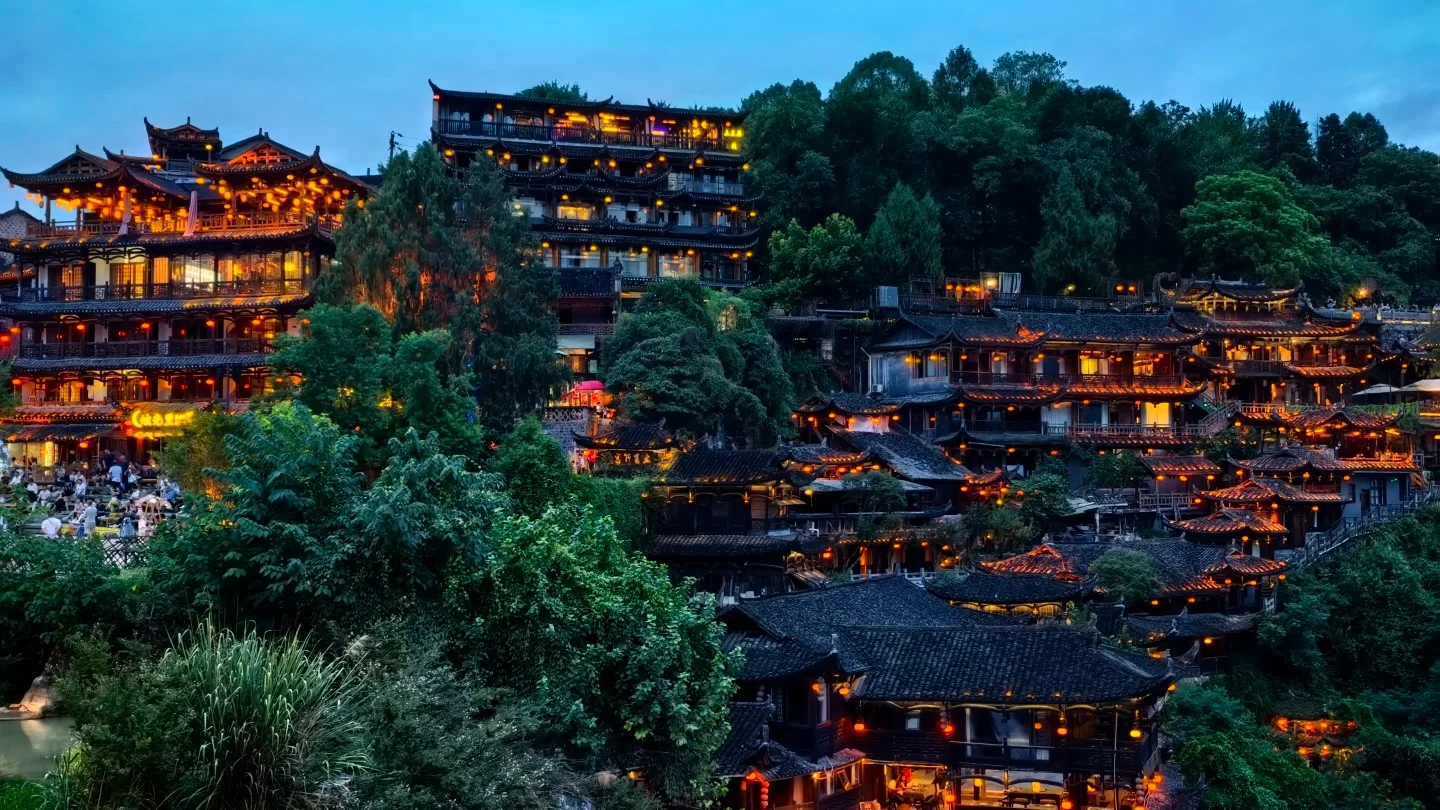
At blue hour, the balance is best. The sky still holds color, the hillside remains legible and the first lamps begin separating one roofline from another. This is the moment I would protect. Full darkness produces the famous spectacle; blue hour keeps the town attached to its landscape.
After dark, Furong becomes theatre. Gold traces the buildings, blue and purple light color the waterfall, spectators converge on a few viewpoints, and scheduled performances may add music, costume or amplified sound. The town is no longer asking to be read as an ordinary settlement. It is directing the eye.
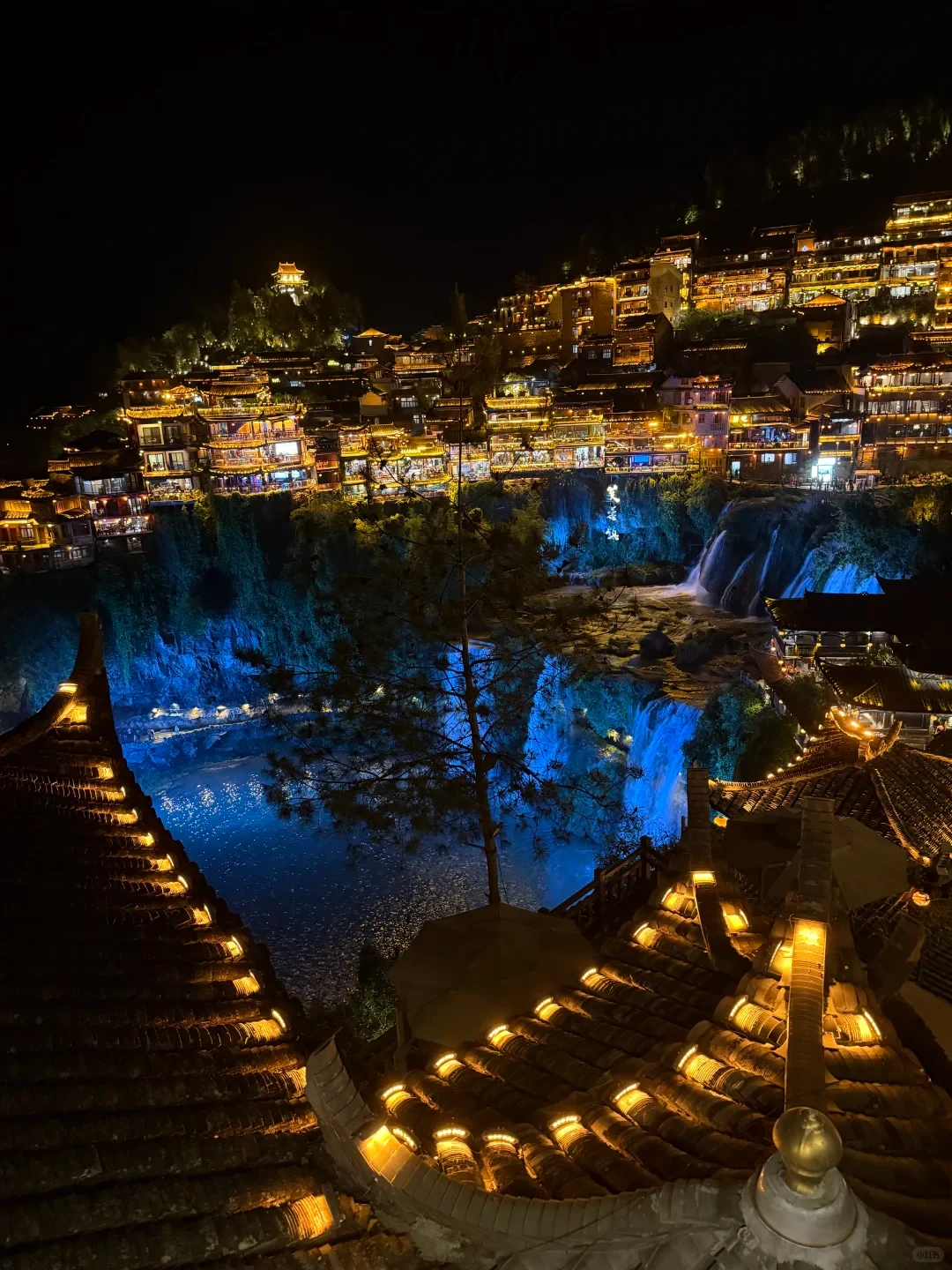
That theatricality is not a defect hidden by travel photography. It is the night product. Enjoy it on those terms. Do not use the lights as proof of ancient appearance, and do not demand that a popular scenic town pretend tourism never arrived.
The final version appears the next morning. Service lanes reopen, deliveries arrive, damp stone replaces colored light, and the famous viewpoints have room around them. The morning does not reveal a completely untouched town. It restores scale. That reset is the reason to stay.
Where Furong Town actually is
Furong Town is not in Zhangjiajie. It sits in Yongshun County, within Xiangxi Tujia and Miao Autonomous Prefecture in western Hunan. The high-speed-rail corridor connects Zhangjiajie West, Furong Town, Jishou and Fenghuang Ancient Town, so route maps often package them together. Transport convenience should not erase geography.
The national Ministry of Culture and Tourism places the town on the north bank of the Youshui River and records its former name, Wangcun. The current name followed the fame of Xie Jin's 1986 film Hibiscus Town (Furong Zhen), which was filmed here. The movie connection matters because the destination's modern identity was not discovered by Instagram. Screen culture had already rewritten the map.
Hunan's approved 2024–2035 protection plan gives the historic-town area more precision than a marketing phrase. It identifies a 122.86-hectare protected area and a 24.49-hectare core covering Stone Slab Street, old wharves, Waterfall Bay, Tuwang Bridge and related spaces. That official boundary proves there is a protected historic townscape. It does not prove that every bright facade, shop sign or “ancient” interior in a photograph is old.
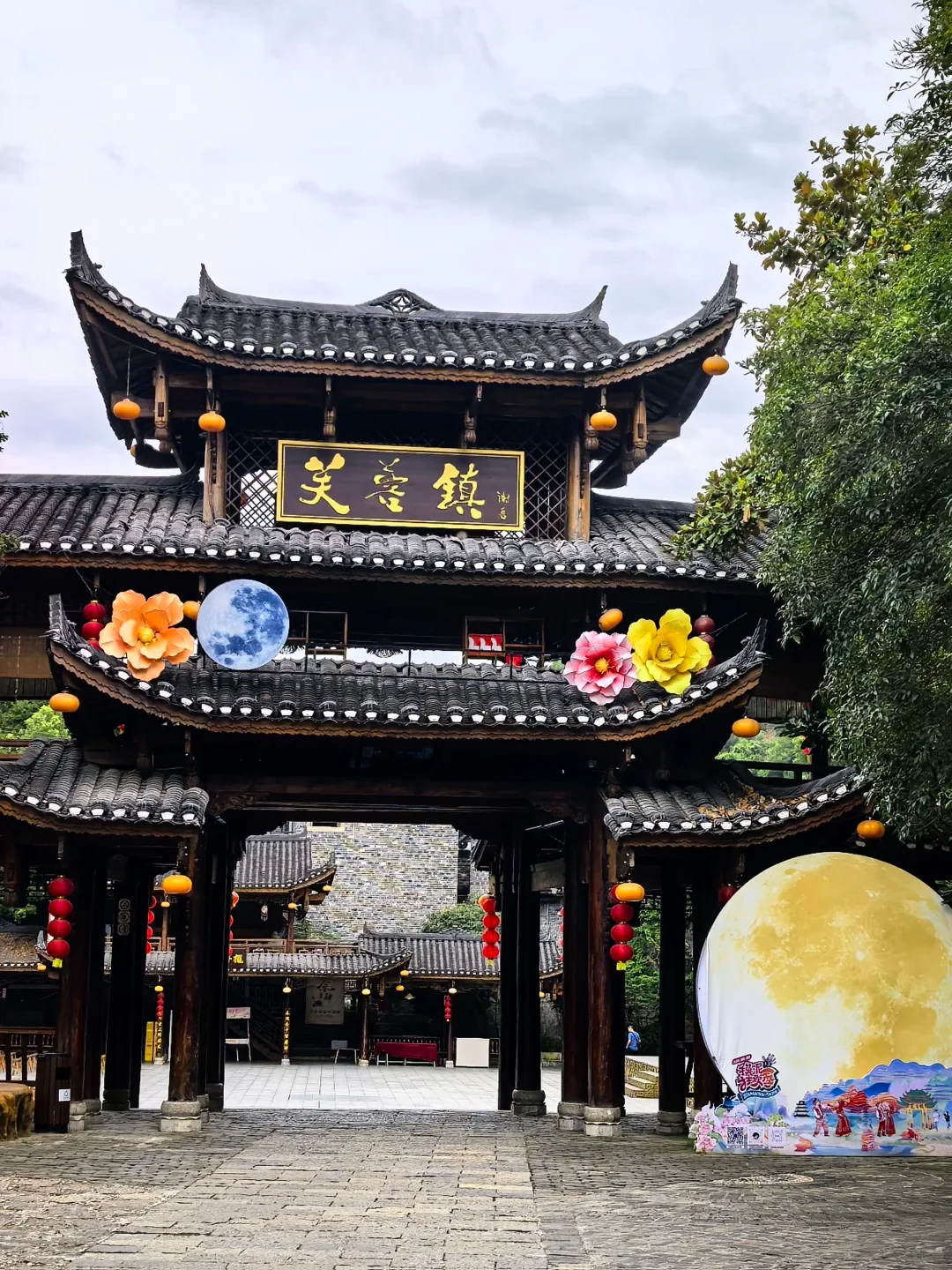
The entrance photograph is useful for exactly that reason. Timber-like forms and tiled roofs frame a formal scenic-area threshold, while large decorations announce a contemporary visitor experience. The picture does not invalidate the town's history. It prevents us from treating heritage and presentation as the same thing.
The best first visit is about 18 hours
I would not build a Furong Town itinerary around a long checklist. The town's value comes from repetition under changing light.
Arrive in mid-afternoon
Reach your accommodation early enough to drop luggage and enter the scenic area before dusk. Confirm current admission, re-entry and performance rules with the official channel or accommodation that day. Old posts commonly quote exact prices, lighting times and multi-day entry terms. Those details change; this guide will not freeze them into false certainty.
Use the first daylight circuit to understand gradients rather than collect attractions. Find the route between the upper entrance, Stone Slab Street, waterfall viewpoints, river edge and the path near or behind the water when it is open. Notice how many stairs separate the room you booked from the station transfer and the main exit. A “waterfall-view hotel” can be a wonderful room and a punishing luggage decision.
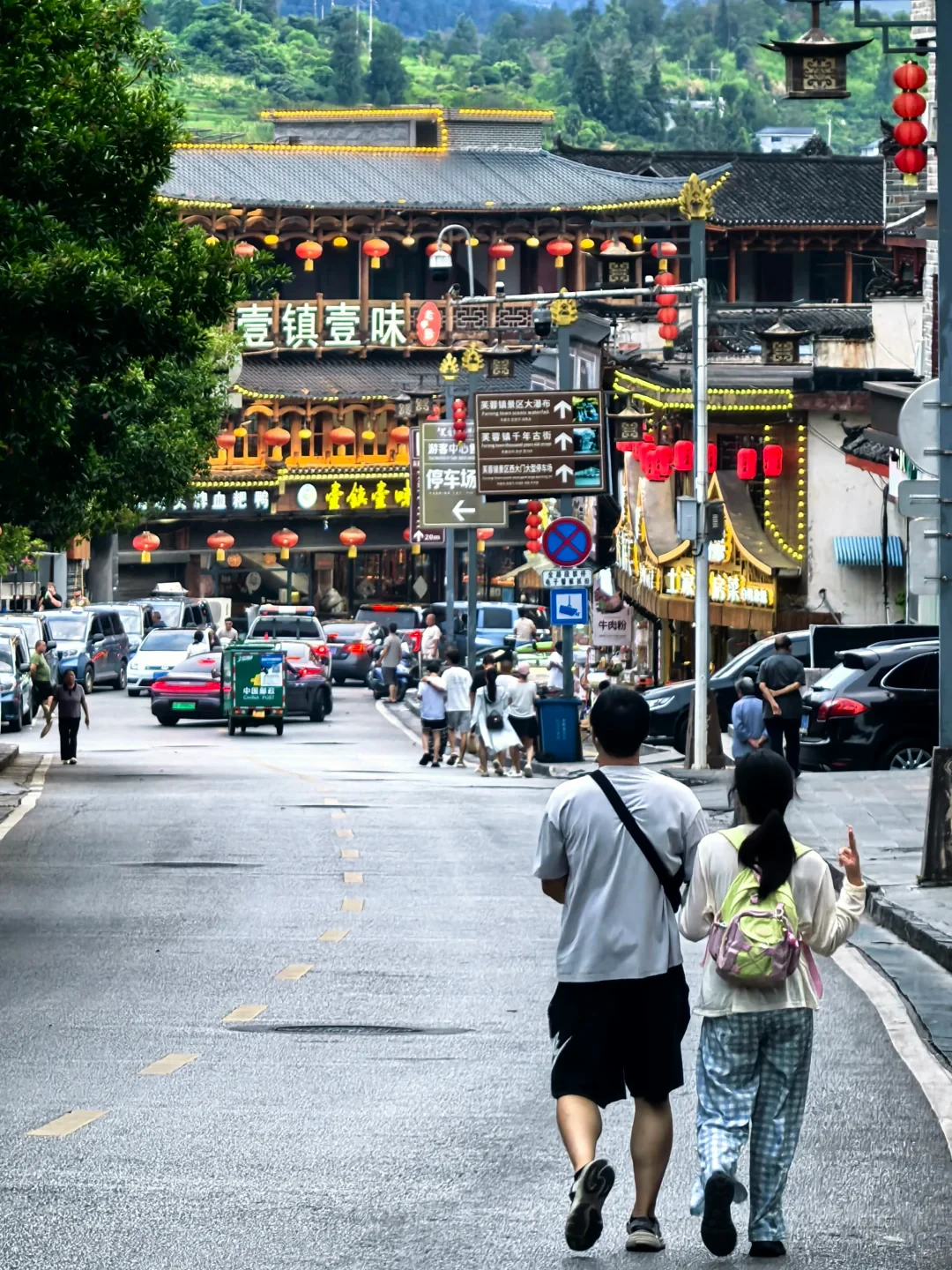
The approach is not a fantasy set. Cars, signs, food businesses and visitors occupy the same corridor. This is useful orientation: you are entering a working tourism town, not stepping directly from the railway platform into an ancient lane.
Protect the hour around dusk
Choose one broad view and stay long enough to see the change. Constantly moving between “best photo spots” is the fastest way to miss the event. The waterfall, hillside buildings and river need to remain in one composition while ambient light drops.
If the weather is wet, allow more time. Stone and constructed paths near the water can be slick. If the waterfall path is closed, accept the closure; no photograph is worth pushing past a barrier beside fast water. Water volume also changes by season and recent rain. A July image cannot promise a November waterfall.
Walk after the lights, then stop chasing views
Once full lighting begins, make one circuit through the brightest viewpoints and one through a lane where the waterfall is not always visible. This prevents the trip from collapsing into the same wide shot ten times.
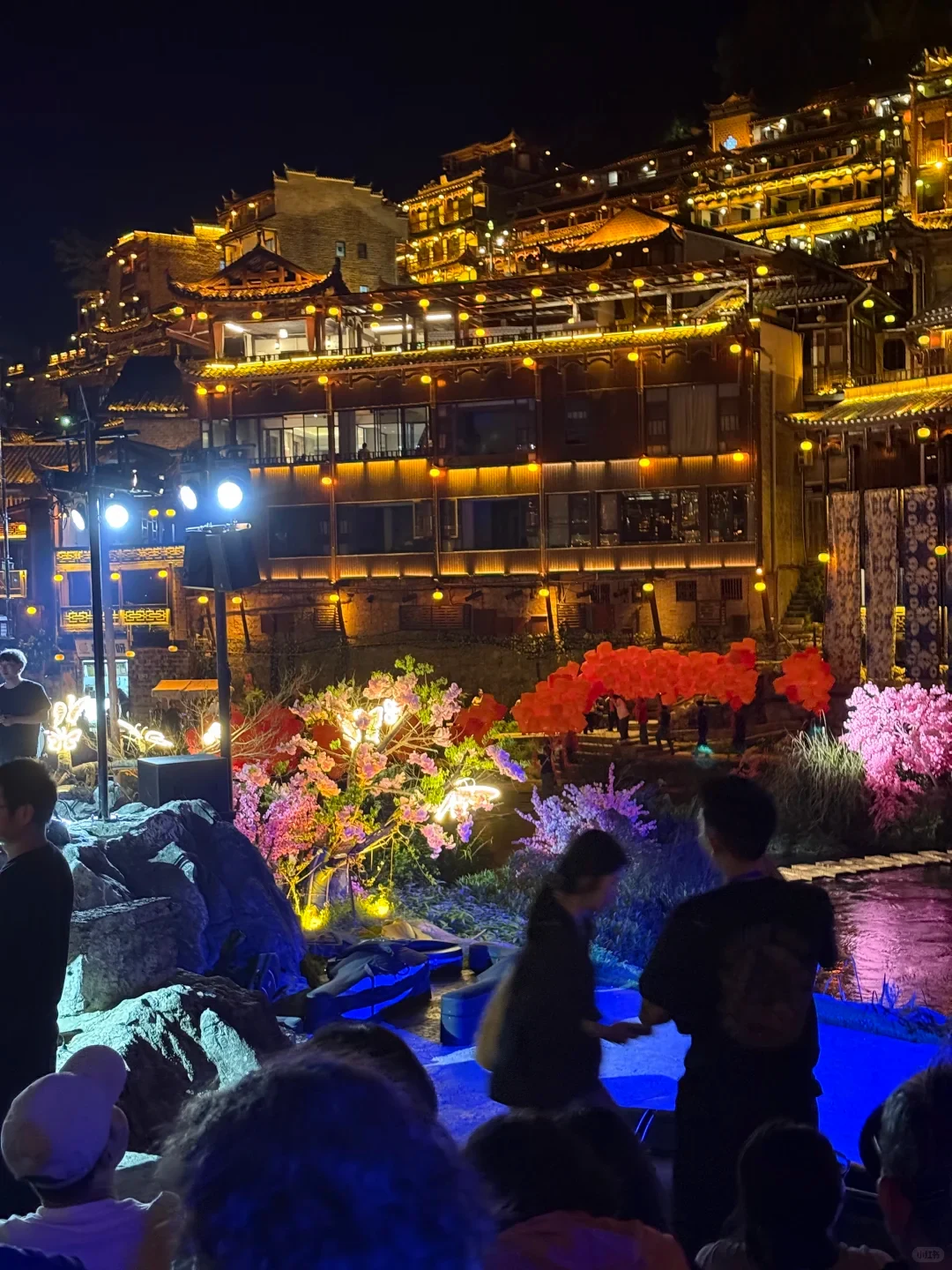
This frame is more honest than an empty promotional view. It proves that the night experience can concentrate people, phones, colored landscaping and bright facades in a tight space. It does not prove the same crowd every evening. It does prove that anyone seeking silence should not arrive only for peak lighting.
Live or staged entertainment may be part of the night program. Treat schedules as current operational information, not a permanent attraction list.
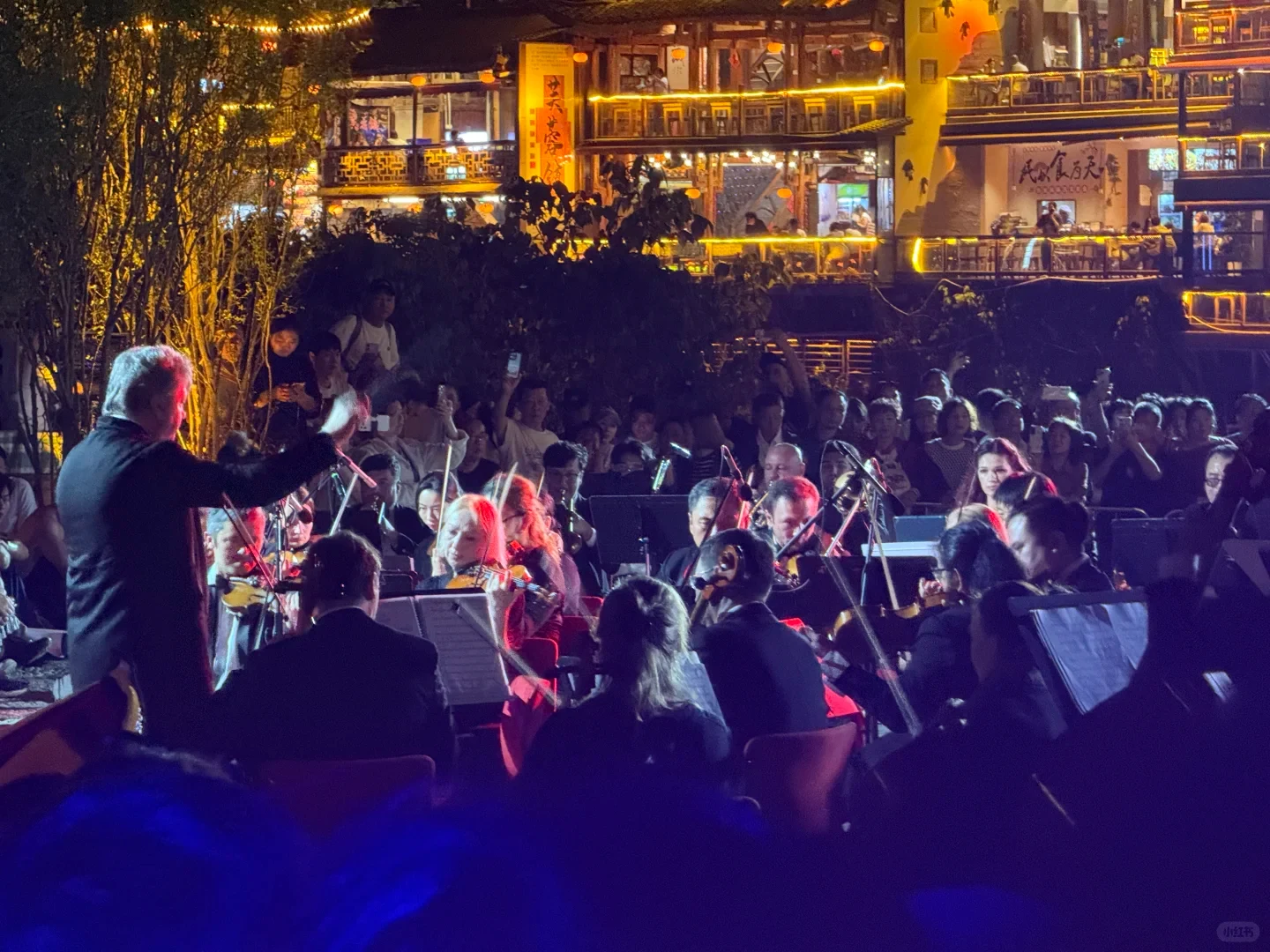
Performance changes the meaning of the town again. The heritage landscape becomes a venue. Some travelers will love that energy; others will hear it as an interruption. Neither reaction is wrong. The mistake is booking without knowing which kind of night you are buying.
Return before breakfast traffic peaks
The next morning, revisit only two places: the broad town-waterfall view and one route at water level. Do not start another full attraction race. The point is comparison.
Look at surfaces the lights hid. Look at where old masonry, renovated facades, hotel windows, commercial signs and vegetation meet. Listen for water without amplified sound. Then leave while the morning still feels like a conclusion rather than a second tourist shift.
The waterfall is a place, not a guaranteed effect
Furong's waterfall supplies the town's global image, but photographs flatten several variables.
First, flow changes. Rainfall and season affect volume, color and spray. Second, access changes. Wet weather, maintenance or safety controls can close paths. Third, light changes the water's apparent color. Blue or purple night water is illumination, not a natural river color. Fourth, camera position changes scale. A wide elevated view can make buildings and cascades fuse into one grand wall; a close path reveals concrete edges, railings, spray and other visitors.
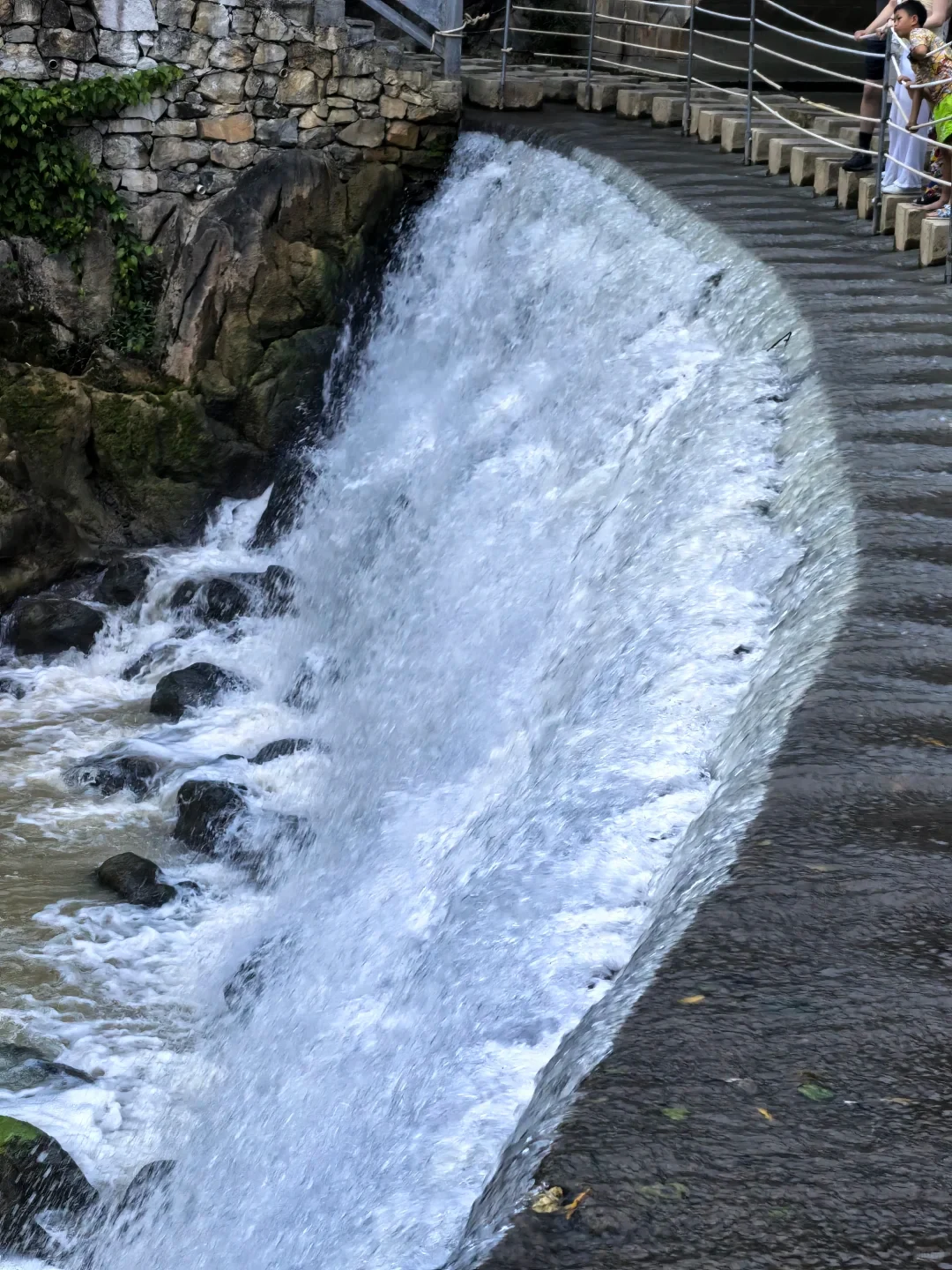
This close photograph proves that visitors can encounter moving water beside a constructed walkway when the route is open. It cannot prove that the path is always accessible, that footwear is safe, or that the flow shown is typical. Those boundaries matter more than another adjective about power.
Bring shoes with grip and a light rain layer. Keep electronics protected from spray. If traveling with limited mobility, ask the accommodation for the route in steps, slopes and vehicle access—not “Is it close?” Straight-line distance is a poor measure in a stacked town.
Stay inside for atmosphere; outside for easier logistics
There is no universally best side of the gate. Choose tomorrow morning, not tonight's balcony photograph.
Stay inside or on the scenic slope when...
- you value immediate access to blue hour and early morning;
- you can manage stairs and uneven surfaces with your luggage;
- the room's verified recent view matters enough to accept noise or a harder transfer;
- the property explains exactly how guests enter after hours and whether current tickets permit re-entry.
A dramatic view can justify the room. Ask for the actual room category and a recent unedited view, not the hotel's best promotional terrace.
Stay near the entrance or outside when...
- luggage, children, older travelers or an early train make vehicle access decisive;
- you prefer a newer room and quieter sleep over a balcony above the scenic core;
- you are willing to walk or transfer back for dusk and morning;
- a hotel shuttle has a clear schedule and pickup point.
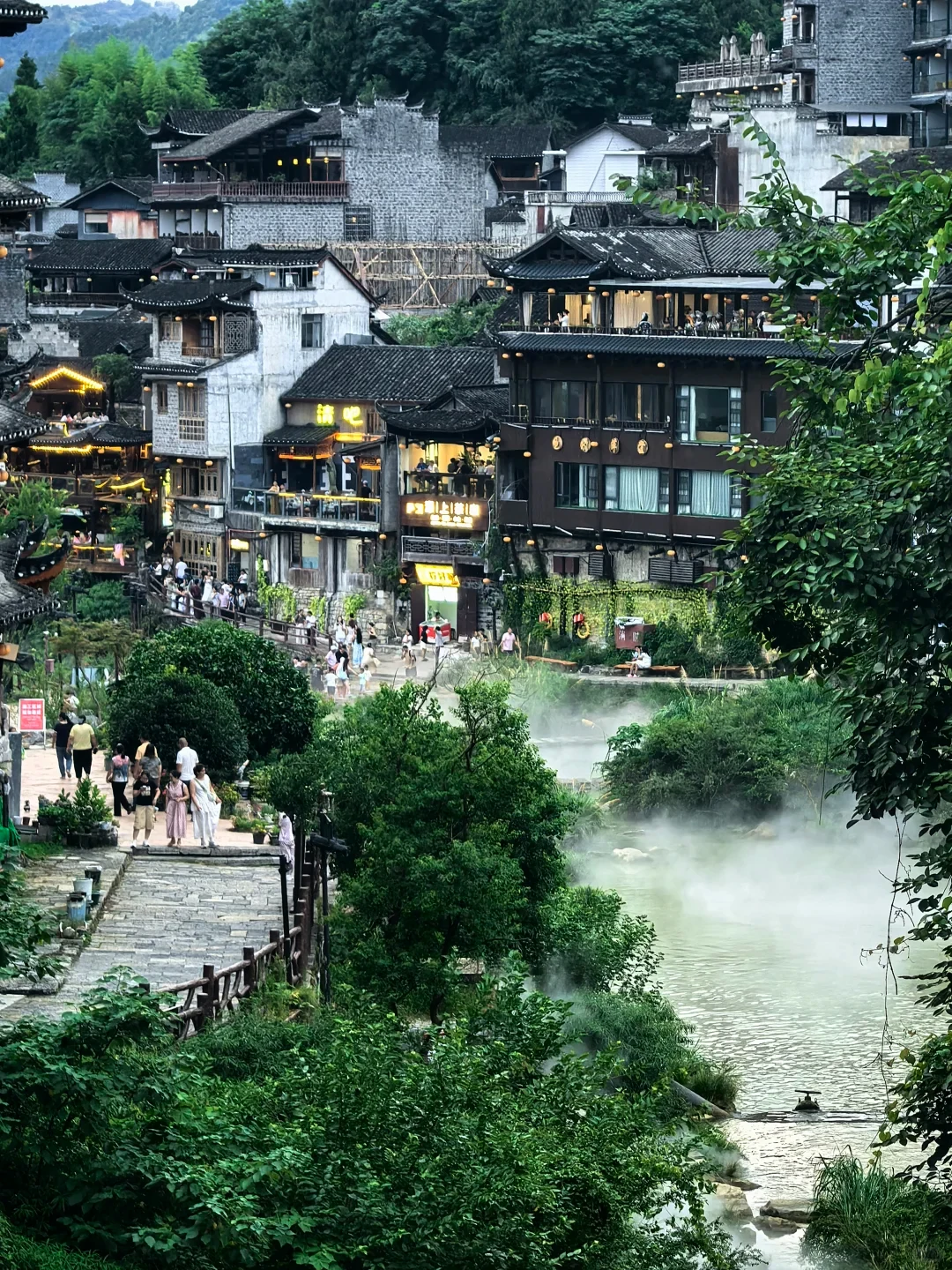
The photograph shows why “500 metres away” can still be a bad booking. Buildings stack vertically, paths bend around water, and the useful route may not follow the map's shortest line. Ask three concrete questions: How many steps from vehicle drop-off to reception? Who carries bags? How long is the morning trip to Furong Town station under current traffic?
Put Furong Town between larger experiences
Furong works best as a hinge in a western-Hunan route, not as the trip's single great destination.
From Zhangjiajie
Complete the mountain portion first. The Zhangjiajie travel guide separates Wulingyuan, Tianmen Mountain and the city because they already demand several bases and real physical effort. Do not steal half a forest-park day simply to say you saw Furong's lights.
After two coherent days in the Zhangjiajie National Forest Park, move by a current train that reaches Furong Town with enough daylight left. Confirm the correct station names and last-mile transfer. “Zhangjiajie” on an itinerary can mean the city, Zhangjiajie West station or Wulingyuan; those are not interchangeable departure points.
Onward to Fenghuang
Leave Furong after the morning comparison and continue south on the corridor when the timetable works. Fenghuang is the stronger place for a longer old-town stay: more lanes, riverfront sequence, bridges and lodging choices. Furong is the sharper visual event. Comparing them as identical “ancient towns” helps neither.
Authorized Zhihu discussions repeatedly split over which town is “better.” The useful answer is not a winner. Fenghuang carries more of a trip; Furong creates a more concentrated transition. If time forces one choice, choose according to duration and route friction. If the rail sequence is clean and you have the night, include both without asking one to imitate the other.
From Changsha
Direct rail connections can make a weekend possible, but the journey is long enough that a rushed same-day return wastes the town's best light sequence. Use Changsha as a real city stay, not only a platform. Eat before or after the rail day with the Changsha food guide, then give Furong one deliberate night.
Always check the official railway system for your date. A route described in a social post is evidence of one journey, not a timetable.
Tujia culture cannot be reduced to decorative roofs
Official cultural-tourism sources place Furong Town within a wider Tujia cultural landscape. Stilted buildings, local performance, food, weaving and regional history can all appear in the visitor experience. Yet a short scenic visit makes it easy to consume “Tujia” as a label attached to costumes and architecture.
Slow down when a performance or craft demonstration has a named form. Read who is presenting it, whether the description identifies community context and what has been adapted for the scenic stage. Do not photograph performers at close range without permission. Do not call every wooden balcony a surviving ancient Tujia house.
The old name Wangcun also deserves space. Before cinema and tourism renamed the destination for a national audience, this was a river town and trading place. The film Hibiscus Town added another layer rather than erasing everything beneath it. If you seek out the famous rice-tofu association from the film, understand that today's branded shops are part of tourism memory. Taste the dish if it interests you; do not treat one storefront as proof of an unchanged historical recipe.
Furong Town is popular, not hidden
The Hunan provincial government reported 6.53 million scenic-area visitors in 2025 and a 61 percent year-over-year rise in foreign-ticket purchases. Whatever the exact counting method, the conclusion is unavoidable: Furong Town is not a secret village waiting for discovery.
That popularity changes planning. Avoid language such as “undiscovered” and “untouched.” Expect commercial pressure and ask recent, specific questions. Was the room noisy after the performance? Was the waterfall path open? How long did the station transfer take? Did the ticket permit re-entry? Which viewpoint was congested at dusk?
It also creates an editorial responsibility. A beautiful empty frame can be true and misleading at the same time. The photograph below proves the illuminated town and waterfall can form a remarkable night composition. It cannot show the sound level, queue behind the camera or ease of leaving afterward.
The attraction survives that honesty. In fact, it becomes easier to value. You are not traveling to recover a lost pre-tourism China. You are traveling to watch a historic river town, a film-made destination and a modern scenic production occupy the same steep piece of land.
My final route decision
Add Furong Town when all four statements are true:
- It sits naturally between destinations you already want, especially Zhangjiajie and Fenghuang.
- You can arrive before dusk and leave after one morning walk.
- Your group can handle the town's vertical paths or has verified an accessible transfer and lodging plan.
- You enjoy dramatic night lighting without demanding that it look untouched.
Skip Furong Town when it requires a major backtrack, replaces essential mountain time, or exists only because one photograph went viral. Skipping a good place can still be the correct trip design.
For national arrival, payments, rail-booking and connectivity decisions, continue with the main travel to China guide. To compare other urban and regional bases without turning the trip into a collection race, use the Chinese cities guide.
And if you stay, make one useful record for the next traveler. Photograph the same broad view before dusk and after the lights. Note the date, recent weather, visible water level, crowd, lodging position and station transfer. Submit that paired observation to East Moment Moments. Furong Town does not need another perfect postcard. It needs honest comparisons between the versions a real visit contains.