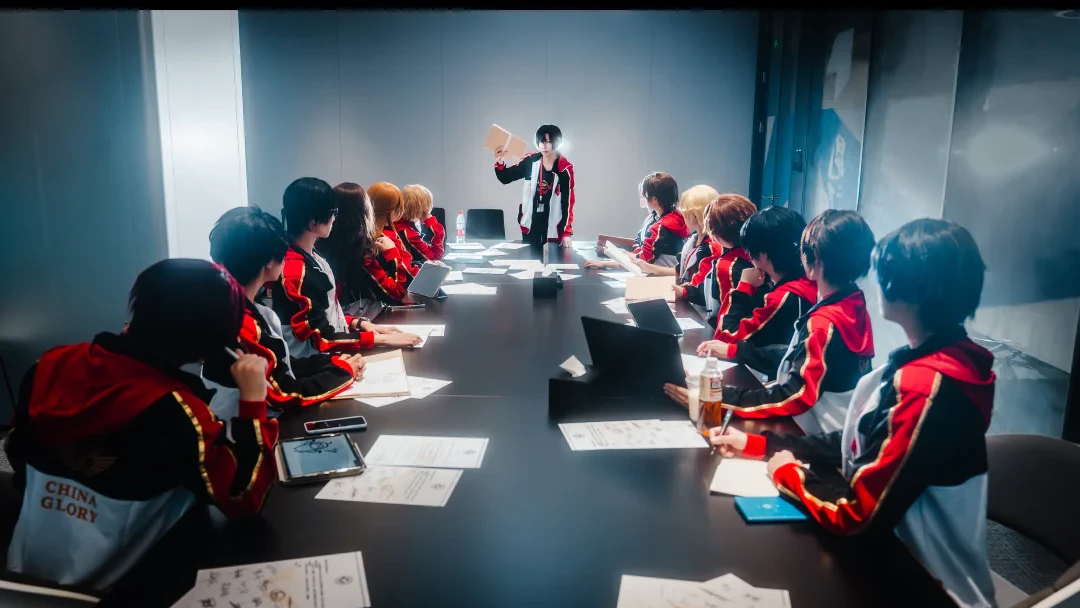
The King's Avatar: Starting Again Is Not Going Back
A spoiler-light guide to The King's Avatar donghua: Ye Xiu, Glory, esports pressure, its animated seasons, official viewing route and who should watch.
Read the deep guide
Platform · creator · fandom · contradiction
China digital culture through platforms, creators, fandoms, memes, online language and the communities inventing new ways to belong.
Enter through the screen and its room4 published guides across 6 core paths.
Keep the room around the meme
China digital culture happens where platform design, fandom, commerce, censorship, slang, ambition and loneliness occupy the same scroll. A meme stripped from that room becomes trivia. Follow who made it, how the platform moved it and what kind of belonging people were trying to build.
Baseline internet-use reports for checking scale before interpreting platforms and subcultures. CNNIC statistical reports
Published guides, organized by intent
A collection page must do more than list recent posts. Choose the question that brought you here, open a focused guide, then keep moving through works, people and related cultural context without returning to search.
2 published guides
The King's Avatar and Falling Into Your Smile turn ranking systems, teamwork, public scrutiny and romance into stories about digital belonging. Read them as audience emotion and platform culture, not as documentaries about professional esports.
A spoiler-light guide to The King's Avatar donghua: Ye Xiu, Glory, esports pressure, its animated seasons, official viewing route and who should watch.
Read the deep guide
Is Falling Into Your Smile worth watching? My review of 你微笑时很美, Tong Yao, Lu Sicheng, ZGDX, the ending and its limits as an esports drama.
Read the deep guide2 published guides
Games do more than illustrate old stories. Combat rules, exploration, player choice and online circulation reshape how mythology and jianghu reach a generation accustomed to inhabiting a world rather than receiving a summary.

Understand Black Myth Wukong through Journey to the West, the Destined One, yaoguai, Shanxi temples and the question hidden beneath its combat.
Read the deep guide
Decide whether Where Winds Meet suits you through its wuxia movement, tenth-century world, combat, exploration, solo and multiplayer structure, and cultural detail.
Read the deep guideOne scroll, five forces
A Chinese meme never arrives alone. It brings the platform that rewarded it, the shop that may monetize it, the fandom that protects it, the rules that shape what can be said and the loneliness that made a joke feel like company. Translate only the punchline and you have translated almost nothing. I want to keep the whole room visible—even when that room is contradictory, commercial and uncomfortable.
Calling Xiaohongshu, Douyin, Bilibili, Weibo and Zhihu 'Chinese social media' is like calling a kitchen, cinema, stadium and library 'rooms.' Technically correct, practically useless. Xiaohongshu rewards a saveable life: the route, outfit, recipe or emotional realization that another person can borrow. Douyin intensifies movement, face, rhythm and immediate completion. Bilibili builds identity through long comments, references and shared viewing history. Weibo accelerates public attention. Zhihu turns explanation and argument into social performance. The same event becomes a different object on each platform.
That difference matters to evidence. A beautiful Xiaohongshu photograph can prove that a place, garment or meal looked a certain way to one camera; it cannot prove that everybody experienced it that way. A Zhihu answer can expose a professional distinction or a deeply felt frustration; it does not become universal because it is articulate. Digital literacy begins when we stop asking whether a post is 'real' and ask exactly what it can support. Platform context is not a footnote. It is part of the source.
East Moment's own research changed when I stopped treating those two platforms as interchangeable. On Zhihu I often find the argument—the professional distinction, the long frustration, the reason two people disagree. On Xiaohongshu I find the scene—the garment from the back, the street at night, the bowl before it is styled into a generic food photograph. Neither source is a finished article. The most dishonest shortcut would be to take one highly visible post as public consensus. I use the tension to sharpen my own conclusion, then make the image prove only what it can actually show.
National internet-use reports establish scale; they do not replace observation of platform-specific behaviour. CNNIC statistical reports
Chinese online language compresses an entire situation into a few characters: exhaustion made funny, ambition made embarrassing, disappointment made shareable. Literal translation often kills the social function. A phrase may sound absurd in English because the original was never meant to describe reality neatly. It let people recognize one another without delivering a formal confession. That is why a glossary is useful but insufficient. You need the scene, speaker, target and emotional temperature.
I am suspicious of articles that collect ten trending Chinese phrases and declare the culture explained. Slang ages quickly, migrates between platforms and changes once brands begin using it. The better question is what pressure the phrase releases. Does it soften anger at work? Mock performative success? Turn romantic failure into a group joke? Mark a generation's distance from its parents? When readers understand that pressure, they can recognize the idea even after the phrase disappears.
International readers sometimes treat Chinese fandom as unusually intense without noticing how carefully platforms turn devotion into measurable work. Fans learn schedules, voting routes, chart rules, clip formats and crisis language. They translate, archive, purchase, correct and defend. This can create genuine friendship and extraordinary collective skill. It can also turn affection into unpaid platform labour and punish anyone whose love is not visible enough.
The contradiction is the point. Fandom can preserve a neglected performance, introduce a Chinese actor or donghua to global viewers and produce better translation than an official campaign. The same machinery can flatten criticism, invade private life and make a person into a scoreboard. I will not romanticize it as pure community or dismiss it as irrational obsession. It is a system for converting emotion into distribution, and every serious account of China digital culture must follow where that value goes.
China's platform culture is exceptionally good at collapsing inspiration, trust and purchase into one gesture. A creator can show a bedroom, confess insecurity, recommend a product and place a buying route inside the same emotional arc. The viewer is not foolish for responding. The content works because the practical detail and the feeling may both be sincere. But sincerity does not cancel commerce. The correct reading holds both at once.
This is also why visual trends accelerate so violently. A café corner, travel pose, face filter or collectible display becomes a reproducible package. Thousands of people can enter the same aesthetic, but repetition changes the place being photographed and the person doing the photographing. A once-private scene begins anticipating the feed. The digital culture is no longer documenting life from outside; it is arranging life before the camera arrives.
For any meme, controversy or creator trend, I record the platform, approximate date, original format, intended audience and the disagreement around it. I ask what a viewer had to know before the joke landed. I distinguish a widely recognized pattern from one viral post. And I preserve uncertainty when screenshots have lost their source. This is slower than trend aggregation. It is also the only way to keep digital people from becoming specimens in an overseas curiosity cabinet.
The reward is a warmer and sharper account of China. Online life is not a separate virtual layer floating above the country. It is where people rehearse identities, negotiate taste, find work, sell objects, mourn celebrities, learn recipes and borrow language for feelings they could not say alone. The screen can isolate and connect in the same minute. Any page that chooses only one side has missed the human being holding the phone.
A useful translation should therefore preserve timing as well as meaning. The same sentence posted during an exam season, celebrity scandal, layoff wave or holiday return can carry a pressure invisible months later. I would rather leave one phrase partly unresolved than supply a neat English equivalent that erases why people needed it. Digital culture is not difficult because Chinese internet users are unknowable. It is difficult because context moves faster than an encyclopedia, and because the people inside it are changing while they speak.
A platform is not a neutral shelf carrying Chinese culture. Its interface tells people what counts as participation. A short-video feed rewards immediate recognition and repetition. A lifestyle search page turns lived advice into a visual answer engine. Danmu lets response occupy the same time and surface as the work. Livestream commerce collapses entertainment, trust, urgency and payment into one room. To understand a meme, fandom or creator, ask what the platform lets a person do in one tap and what it makes difficult to see.
That action changes language. Users develop abbreviations, indirect phrasing, visual jokes, editing rhythms and community signals that can travel faster than literal translation. An overseas observer may understand the words and miss who is being addressed, what rule is being negotiated or why a tiny gesture feels rebellious. East Moment keeps the screen attached to the room: work, school, family, city, platform moderation, commerce and the embarrassment or pleasure of being seen by other people.
Do not treat virality as consensus. A highly visible trend may be produced by recommendation, coordinated fandom, commercial seeding, controversy or the ease of copying a format. The useful evidence is pattern plus consequence: who repeated it, how the form changed, what behavior followed and which users resisted. Popularity explains reach. It cannot prove sincerity, quality or permanence.
Fans subtitle, archive, explain, edit, draw, organize and remember. That labor can carry a work across languages and preserve details that official promotion ignores. It can also be captured by platforms and industries that convert attention into value while leaving contributors with fragile access and little control. The same community can offer belonging and enforce exhausting loyalty. Both truths belong in the page. Celebration without power analysis is marketing; suspicion without affection misses why people stay.
Creators face a similar double bind. Platforms lower the cost of publishing and supply immediate audience feedback. They also train creators toward reliable hooks, recognizable personas and constant output. A personal voice can find its public and then harden into a content machine. I look for the moment a creator uses the platform's grammar without surrendering the whole work to it: a slower explanation inside a fast feed, an awkward detail kept because it is true, or a community reply that changes the next piece.
Digital culture changes quickly, so the return reason must be dated evidence. Bring the interface, feature, phrase or participation rule you actually encountered, with enough context to explain what action it encouraged. We can then compare regions, platforms and moments without pretending a screenshot represents all Chinese users. The hub should remain a record of changing human behavior around technology—not a museum of expired slang and not a breathless list of apps.
Privacy and moderation are part of that behavior even when users rarely see the rule directly. Real-name systems, recommendation controls, comment filters, age protections and commerce enforcement can change who speaks, which joke survives and how creators phrase disagreement. Policy text establishes the formal boundary; interface observation shows how that boundary is encountered. Neither alone explains culture. The useful page keeps rule, design and human adaptation in the same dated account.
Reader-built field guide
Submit a meme, phrase or platform ritual with its date, platform, audience and emotional meaning—not a contextless screenshot.
What this builds: We will revisit entries when meanings migrate across platforms, brands or generations instead of freezing living language into a glossary.