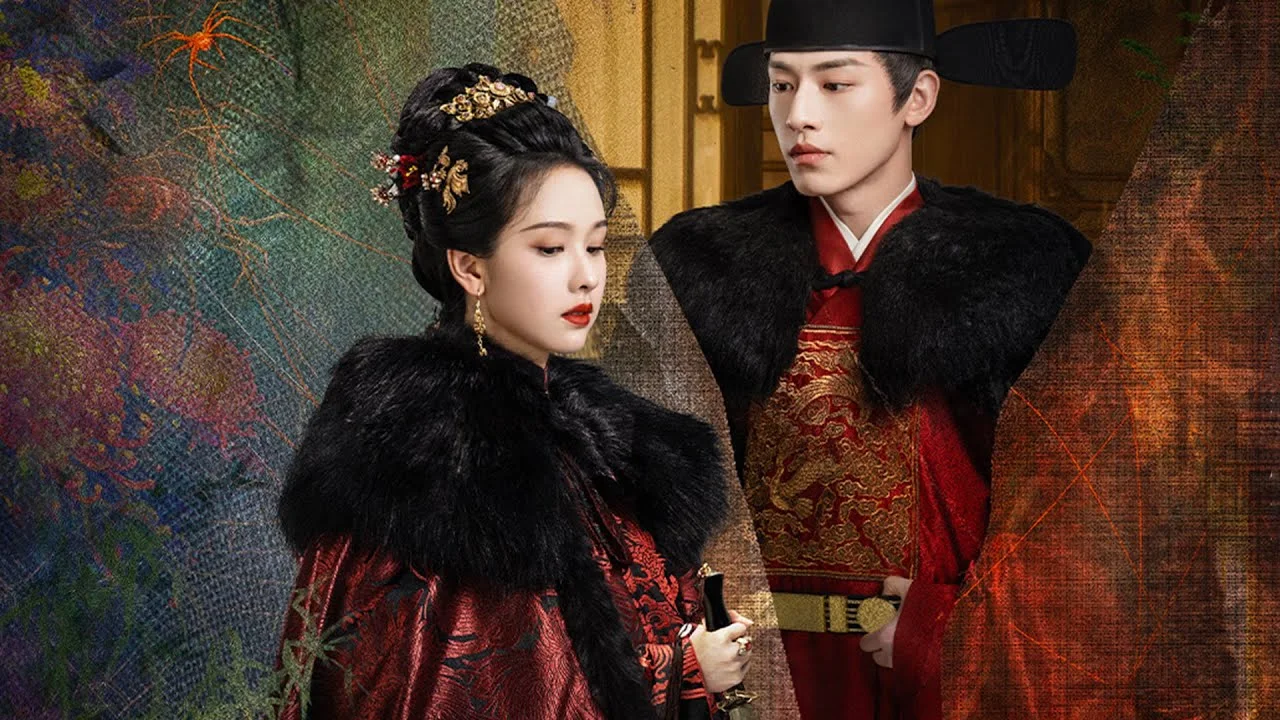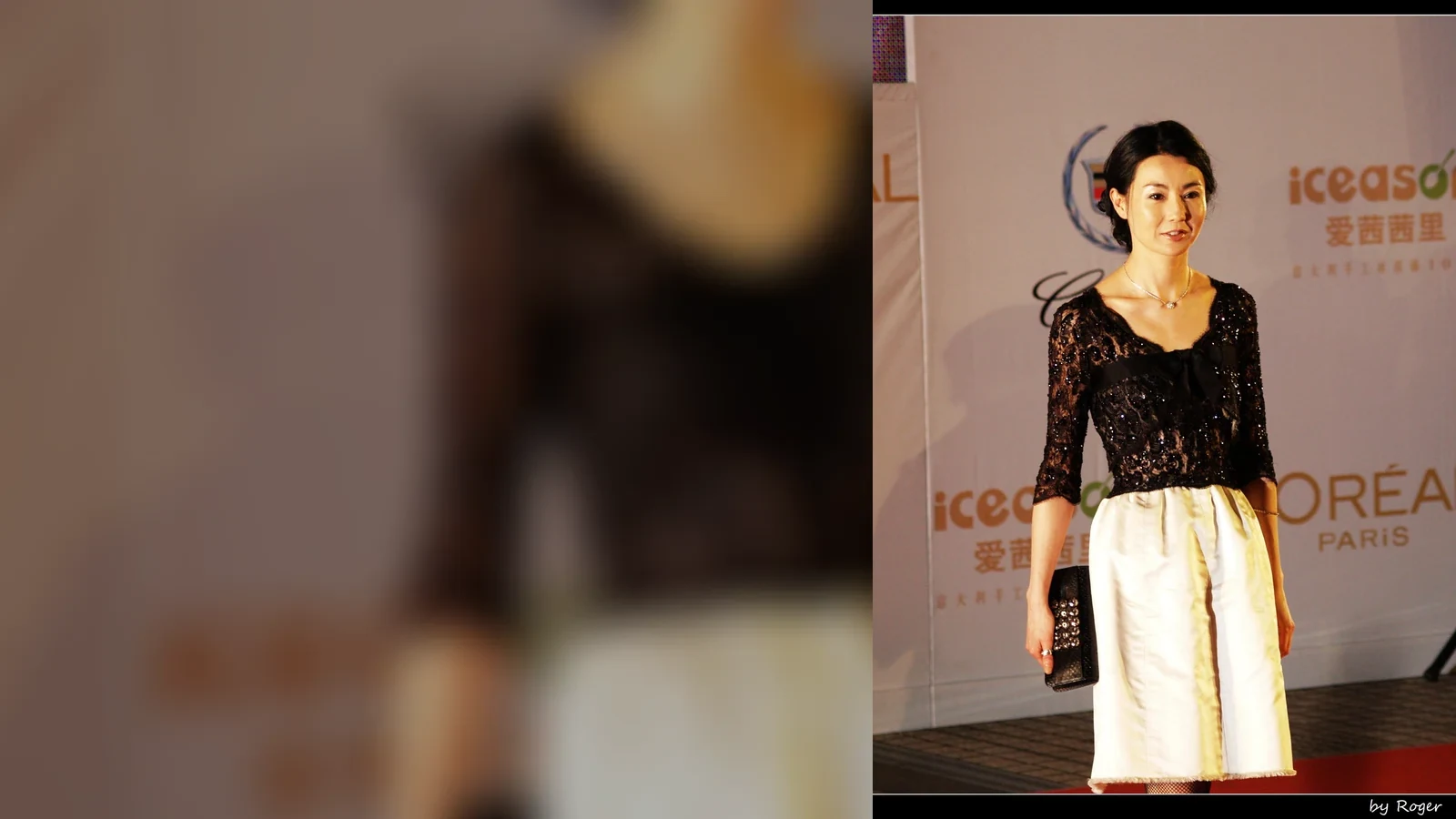
Maggie Cheung is not a great actor because she cries beautifully. She is great because restraint never means the same thing twice: dignity, calculation, fatigue, flirtation and self-protection each occupy her body differently.
Maggie Cheung turns withholding into action
The Criterion Collection's official In the Mood for Love page establishes the film and restored presentation. My argument begins inside that frame, with the different physical meanings Maggie Cheung gives to waiting, passing and refusing.
For Maggie Cheung (张曼玉), start with In the Mood for Love, then move backward to Center Stage and Comrades: Almost a Love Story, and sideways to Irma Vep. That route breaks the false idea that her gift is simply elegance.
I am most interested in crying without excess: emotion visible through the eyes, scenes that communicate without dialogue, and the mechanism beneath that restraint. The effect is easy to praise; the harder task is to identify exactly how the body makes it legible.
A corridor is an acting partner
In In the Mood for Love, costume and architecture continually restrict Su Li-zhen. Cheung does not merely look restrained inside a qipao. She adjusts speed, shoulder angle and the space allowed between bodies. Desire becomes a logistics problem: when to leave, where to look, how long to remain in a hallway that exposes too much.
This is why “her eyes say everything” is inadequate. The performance is distributed across the entire frame. Read our In the Mood for Love guide to see how editing, costume, music and Tony Leung share authorship of the feeling.
The doorway is not decorative nostalgia. It divides two people who are already emotionally close and makes every step toward the other socially visible. Cheung's work is to make the boundary feel chosen, resented and necessary at the same time.
Center Stage lets performance contain another performance
As Ruan Lingyu in Center Stage, Cheung is not asked to disappear behind a historical figure. The film exposes reconstruction, archive and acting. She must let the audience feel both a woman under pressure and a contemporary performer testing how that woman can be approached.
That layered awareness protects the role from wax-museum imitation. A gesture can belong to Ruan, to Cheung's interpretation, and to the film's doubt about whether cinema can recover a lost person.
Comrades lets time alter the same face
Comrades: Almost a Love Story gives Maggie Cheung a different kind of restraint. The pressure is not a narrow corridor or a historical icon. It is migration, work, timing and the humiliating fact that love can be sincere while life remains badly arranged.
Her performance makes time visible without turning each stage into a new personality. Ambition sharpens the body; disappointment changes the speed of a smile; familiarity returns before trust has fully caught up. This is why the film belongs in the starting route. It proves that her precision survives ordinary clothes and everyday economic pressure.
The emotional memory is not one grand breakdown. It is the accumulation of meetings that arrive slightly too early or too late. Cheung understands that adulthood often looks like continuing the conversation while silently recalculating what the other person can still become in your life.
Irma Vep removes the protection of prestige
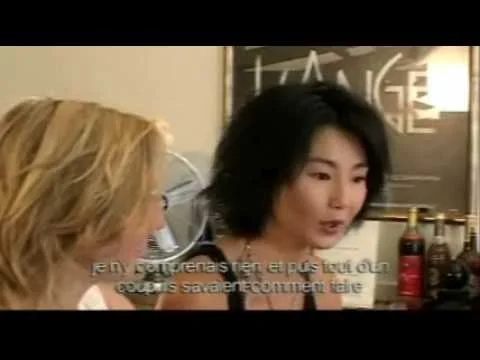
In Irma Vep, she plays “Maggie Cheung,” but not an unrestricted private self. The role uses language gaps, international projection and the absurdity of a production collapsing around a visiting star. Her stillness becomes observation rather than romantic repression. Comedy arrives because everyone else keeps assigning meanings to her presence.
The early commercial films are part of the achievement
It is tempting to begin Maggie Cheung with the films that already look canonical. That produces a false story in which elegance arrived fully formed. Her earlier commercial work—romance, comedy and action beside major Hong Kong stars—trained speed, reaction and the ability to hold a frame that was not designed as an acting exhibition.
That history changes how I see the later stillness. She is not motionless because she lacks comic or physical energy. The audience can feel the energy being withheld. Restraint has pressure because another tempo remains possible underneath it.
Her contribution to Chinese-language cinema is therefore larger than the image of Su Li-zhen in a qipao, however unforgettable that image is. Maggie Cheung links popular Hong Kong entertainment, transnational art cinema, historical performance and European self-reflexive filmmaking without becoming the same symbol in each system.
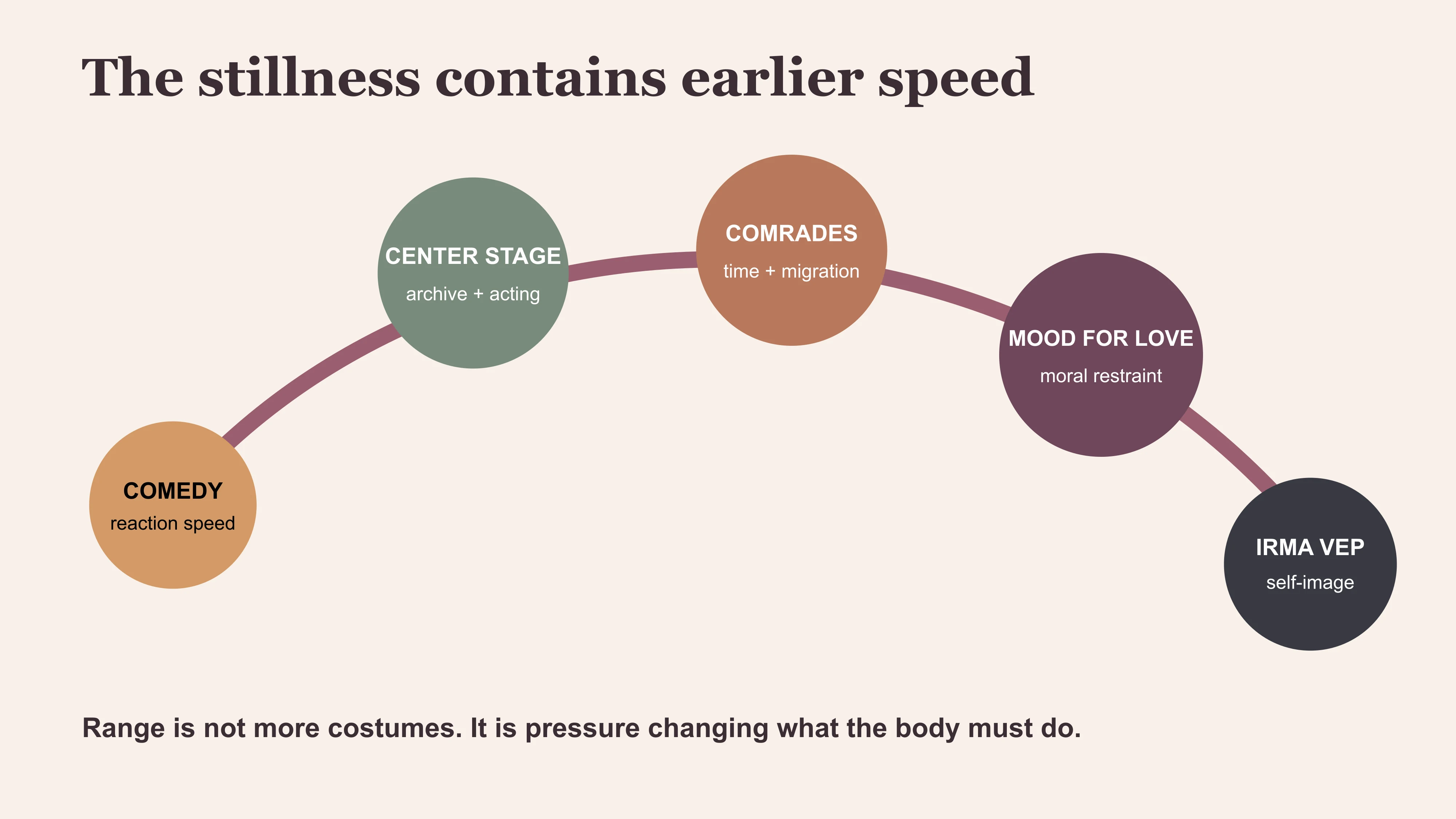
Time is the co-star across her career
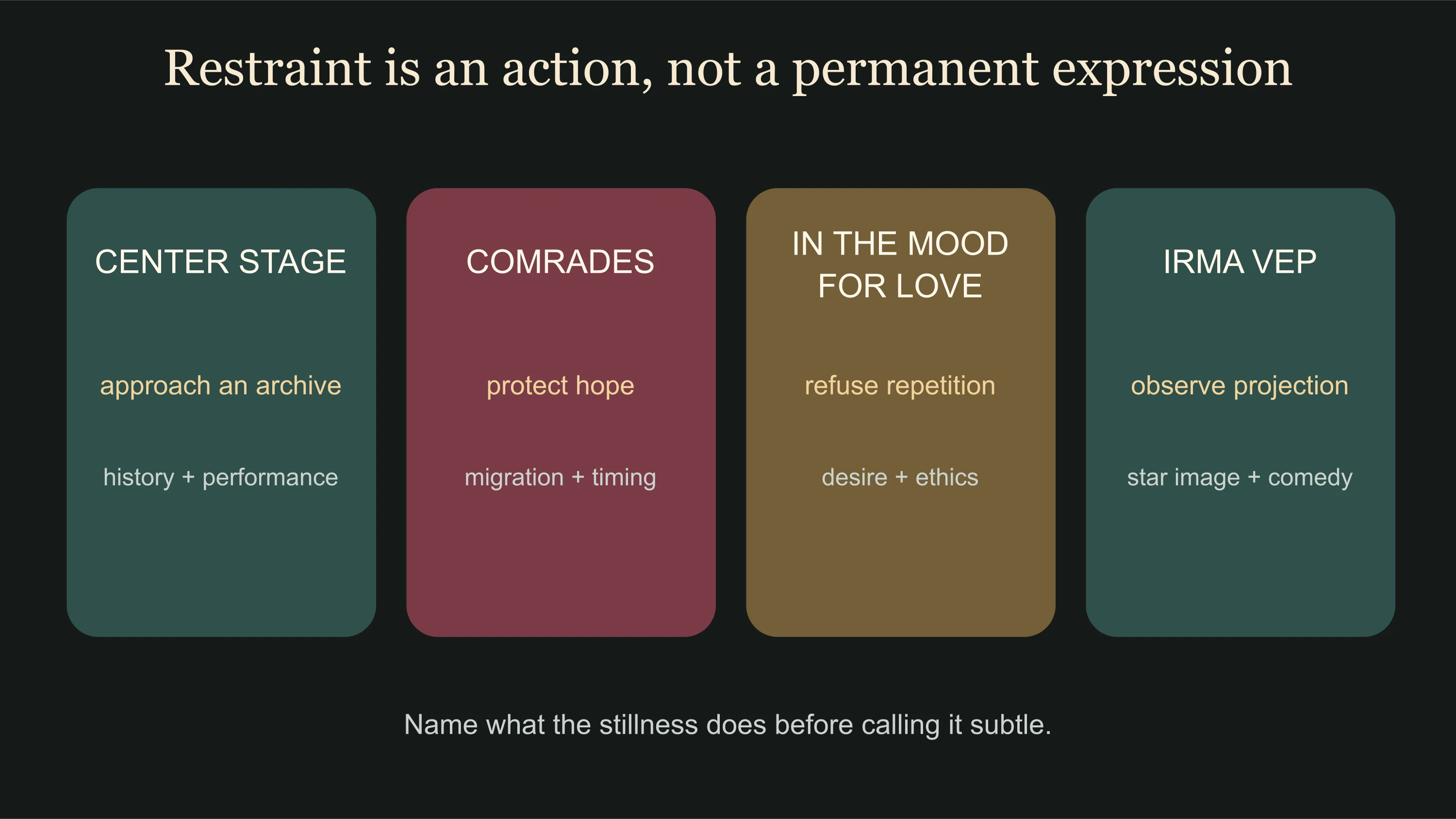
I use “restraint” only after naming what it is doing. In Center Stage, it negotiates the distance between archive and reconstruction. In Comrades, it protects hope from economic reality and bad timing. In In the Mood for Love, it prevents desire from becoming the same betrayal the characters are judging. In Irma Vep, it lets a visiting actor observe projections without answering every one of them.
That distinction is Maggie Cheung's real range. The face may remain composed, but the social action changes: recovering a lost woman, surviving migration, refusing repetition, or keeping authorship while other people turn her into an image. If I cannot name the action beneath stillness, “subtle” has become an empty compliment.
What makes Maggie Cheung feel complete to me is that the early, middle and later performances do not cancel one another. Commercial comedy trained speed and responsiveness. Center Stage made identity and historical performance occupy the same body. Comrades: Almost a Love Story let ordinary time alter intimacy. In the Mood for Love made restraint so exact that a corridor could feel like a moral decision. Irma Vep used her international image as material rather than pretending it did not exist.
This arc matters more than calling her an icon. An icon is easy to freeze into a red carpet, cheongsam or sad close-up. An actor remains in motion. Watch what happens before the famous still: how she enters, notices another person, changes the speed of a hand and decides what must remain unsaid. The photograph is beautiful because the scene has already filled it with consequence.
Her transnational importance also lies in refusing one fixed cultural function. Hong Kong popular cinema could ask for speed and comic timing; Stanley Kwan could place performance beside historical absence; Wong Kar Wai could turn urban architecture into emotional pressure; Olivier Assayas could make her international image part of the fiction. She does not simply “represent Chinese cinema” in each setting. She reveals what each film industry wants a Chinese woman star to carry.
Watch the hand before praising the eyes
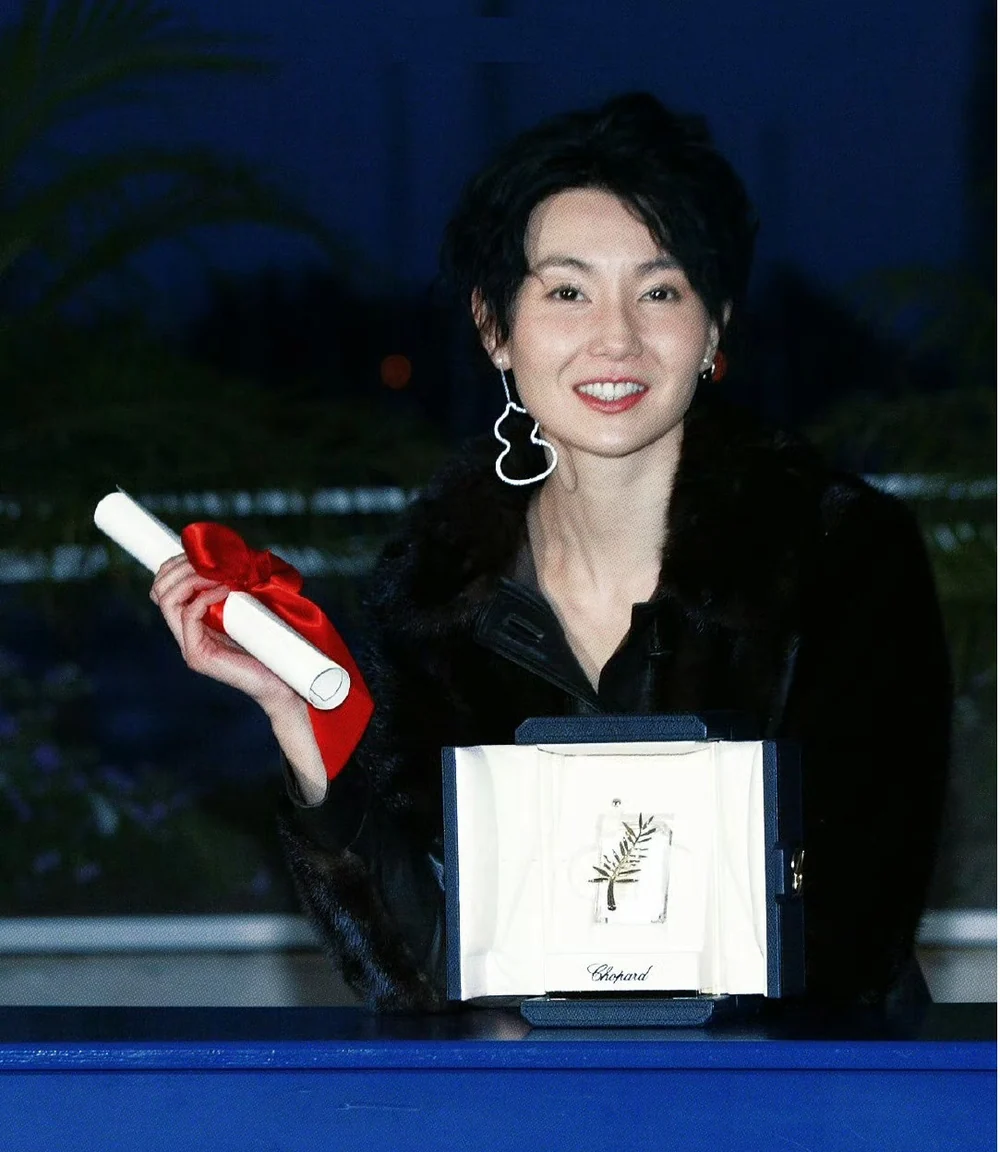
The easiest Maggie Cheung compliment is that her eyes express everything. I understand the impulse, but it turns a full-body performance into a beautiful close-up. Start the scene earlier. Notice whether the hand reaches for an object before the face changes, whether a shoulder protects the body from another person, and whether she completes a practical task while emotion is trying to interrupt it.
In Comrades, work and survival keep demanding action; feeling cannot occupy the whole scene. In In the Mood for Love, a food container, handbag, door or cigarette gives the hands something socially acceptable to do. In Center Stage, the body must carry both historical imitation and the contemporary actor's awareness of imitation. The visible feeling is powerful because another action remains necessary.
This is also why costume must not receive all the credit. A qipao changes stride, posture and the available shape of movement, but clothing cannot manufacture moral hesitation. Cheung turns restriction into choices: a shorter pause, a firmer exit, a body angled toward someone while the face maintains public composure. The garment supplies conditions; the actor supplies consequence.
Four scenes are enough to test the argument
Do not prove her range by listing thirty titles. Choose four scenes with different pressures. Use one early comedy or commercial romance for reaction speed; one Center Stage scene for performance inside historical reconstruction; one ordinary passage from Comrades for time and economic pressure; and one corridor or restaurant sequence from In the Mood for Love for restraint under surveillance.
For each, record three things: what practical task the character must complete, which part of the body changes first, and what the character refuses to make public. If the answers are different, range has become visible. If every note says only “sad eyes” or “elegant,” the viewing method has failed.
My strongest conclusion comes from that comparison: Maggie Cheung does not merely make silence readable. She makes silence perform different social work. One silence buys time, another protects dignity, another observes other people's projections, and another refuses to repeat a betrayal. That is why the performances remain alive after the famous costumes and frames have been copied so often.
The comparison also protects her from being frozen as an emblem of vanished Hong Kong glamour. Beauty is present, but the work is contemporary and practical: reading a workplace, managing a room, surviving migration, negotiating translation and deciding who is allowed to define the woman on screen. The feeling stays human because the pressure is never abstract.
My verdict and starting route
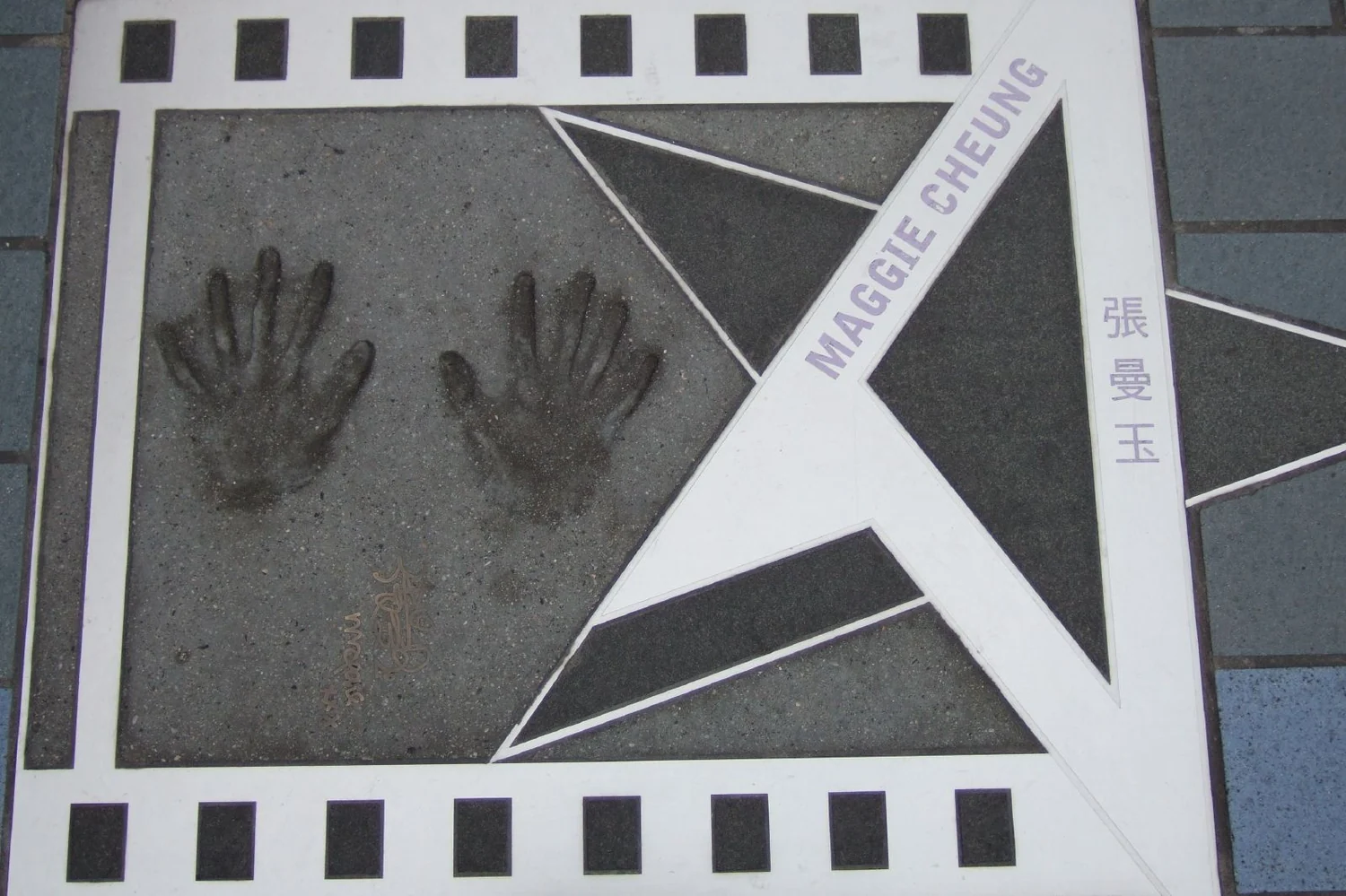
The handprints are public memory turned into pavement, but they are also a warning against reducing a living body of work to an icon. The useful question is not whether Hong Kong has certified her importance. It is which exact movement, pause or refusal made the audience remember the hand that once performed it.
Maggie Cheung's range is not a collection of accents or costumes. It is her ability to make social pressure alter the body with exact specificity. Start with In the Mood for Love for spatial restraint, Center Stage for identity and performance, Comrades for time and ordinary disappointment, then Irma Vep for self-image and international cinema.
Continue through the Chinese actors collection and Wong Kar Wai guide. In the comments, name what a character is withholding and the physical evidence. Join the East Moment community to compare readings without reducing the answer to “expressive eyes.”
Maggie Cheung makes props and thresholds perform beside her
The qipao in In the Mood for Love is not a decorative answer to the character. Its repetition makes variation visible while the narrow corridor limits how bodies can pass. A cigarette changes duration. A noodle container creates an excuse to leave and return. The performance lives in negotiation with objects, not in an isolated “sad eyes” close-up.
Irma Vep makes that negotiation explicit by placing a Hong Kong star inside a French film culture projecting fantasies onto her. The catsuit becomes role, costume, industry joke and trap at once. Cheung's intelligence is clearest when she lets those meanings remain active without flattening the person beneath them.
My limitation is equally firm: withholding can become empty prestige when a film supplies beautiful surfaces but no changing pressure. Her best work avoids that failure because time, architecture and objects keep making demands. Watch what her hand does with the object before praising the face.
The pause is never valuable by itself. It is valuable when the room has made speech dangerous and the object gives the body another action to perform.
That is why her films reward return visits: the plot is remembered, but the small negotiation with fabric, smoke, distance or a doorway becomes newly visible.