Zhang Ruonan is often described with soft words: natural, gentle, fragile, first-love face. I think those words become insulting when they replace the character. Her quiet acting is persuasive only when softness contains a practical choice—when the woman refuses, leaves, conceals, returns or changes the terms of the room.
Zhang Ruonan dramas: start where softness has to choose
If your search is simply Zhang Ruonan movies and TV shows, do not start with a gallery of first-love portraits. Start with The First Frost (难哄) because it is the clearest version of both her strength and the machinery that can weaken it. The series gives Zhang Ruonan's Wen Yifan a face built for close observation, a painful history, reunion romance and music that knows exactly when the audience should ache. That is an enormous advantage. It is also a trap.
I understand why the first impression is so strong. Zhang Ruonan can make a room feel gentle before she has said anything, and I was drawn to that warmth too. But the longer I watched, the less satisfied I became with the phrase “初恋脸” or “girl-next-door.” Those labels describe the camera's welcome, not the character's work. The question I keep bringing back is harder: after the softness has made us care, what does the woman actually decide?
Then move to My Love (你的婚礼) and Cry Me a Sad River (悲伤逆流成河). Do not watch them as three levels on a career ladder. Watch them as three rooms:
- In Cry Me a Sad River, fear has a social target.
- In My Love, a woman's present life competes with a man's memory of her.
- In The First Frost, safety, desire and the right not to explain oneself occupy the same home.
The official Netflix page for The First Frost identifies Zhang Ruonan as a lead alongside Bai Jingting and describes the reunion and cohabitation premise. iQIYI's official Zhang Ruonan profile verifies the broader career route. Neither source can decide whether a pause contains thought. That is what this page tests.
The phrase Zhang Ruonan actress also needs a boundary. An actor page should help you choose a role and understand a screen method; it should not pretend that a public profile proves a private personality. I am interested in Zhang Ruonan because her performances make social calculation visible, not because “natural” is a personality certificate.

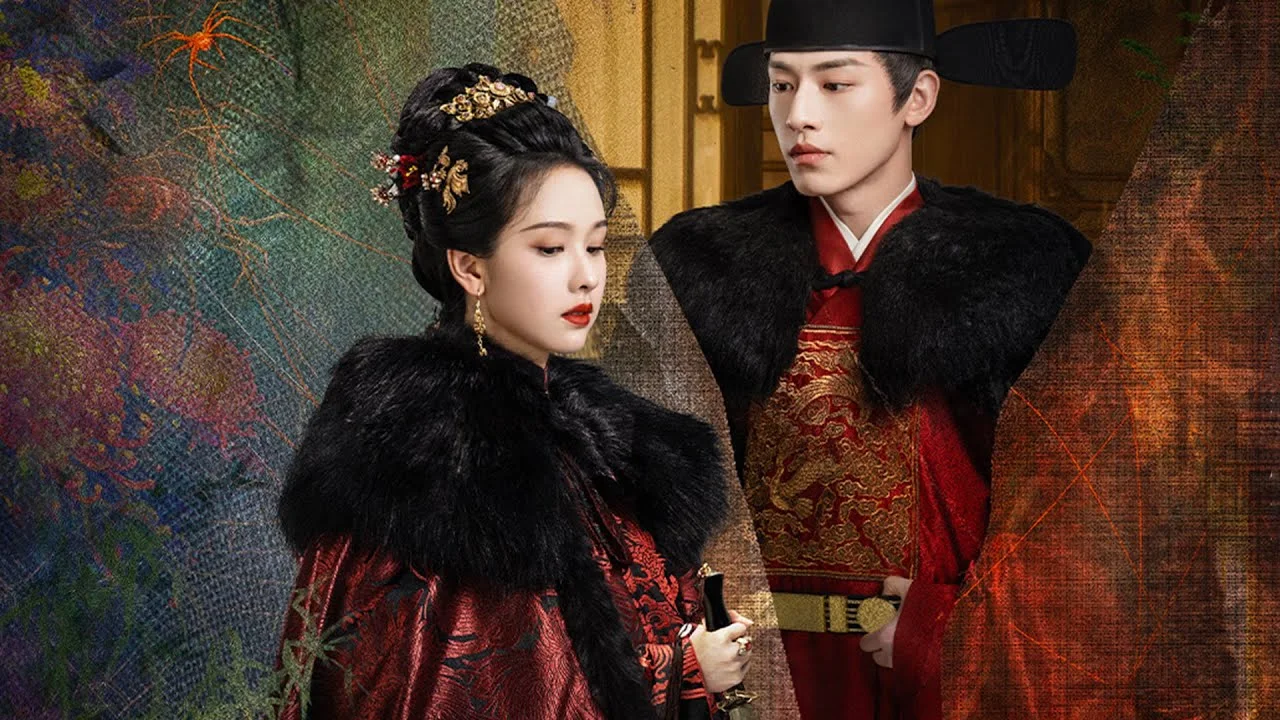
The teaser places Wen Yifan and Sang Yan side by side in matching school sportswear. That proximity proves casting and the drama's shared-past visual contract; it does not prove adult equality or acting range. I use it here because the entire performance problem begins in that image: Zhang Ruonan must make Wen Yifan more than the beautiful person a boy remembers from school.
| Begin with | The easy reading | The harder question |
|---|---|---|
| The First Frost | She looks wounded and restrained | Which boundary does Wen Yifan create or revise? |
| My Love | She embodies remembered first love | Does the woman keep a future not organized by his devotion? |
| Cry Me a Sad River | She looks vulnerable | Does fear change whom she trusts, avoids and confronts? |
Room one: the shared home cannot become a museum of his love
Reunion romance is dangerous for a female lead because the story can turn her into evidence of a man's constancy. He remembers. He waits. He has carried the old feeling. The woman then appears as the reward that proves his memory was noble.
Wen Yifan has to resist that structure. A shared home is not only romantic proximity; it is a map of doors, keys, food, sleep, privacy and who must explain where they are going. Zhang Ruonan's useful acting happens in those practical negotiations. Does Wen Yifan allow Sang Yan to think he understands? Does she redirect a question? Does she accept help while refusing ownership? Who ends the conversation?

This poster is useful precisely because it is not proof of a happy relationship. The umbrella creates a shared physical shelter while the bodies still face each other across a narrow boundary. I read that distance as the visual version of Wen Yifan's problem: closeness is available, but access is not automatically earned. A beautiful composition can show the invitation; only the story can show whether she accepts its terms.
The pause matters only when it reaches the threshold of action. A delayed answer may be avoidance, protection, calculation or the time required to keep panic from becoming public. I do not praise the delay by itself. I ask what option she rejects at the end of it.
This is where Zhang Ruonan can be exact. She often makes attention visible before speech: the eyes locate the risk, the mouth prepares a socially acceptable answer, the body chooses whether to stay. The performance is not “small” because it is weak. It is small because Wen Yifan has learned that being fully readable can cost her.
But the drama sometimes loves her wounded face too much. When every boundary is photographed as fragility, agency begins to look like something the male lead supplies. I want the home to register her decisions even when romance is not watching.
The casting works because resemblance is not the whole translation
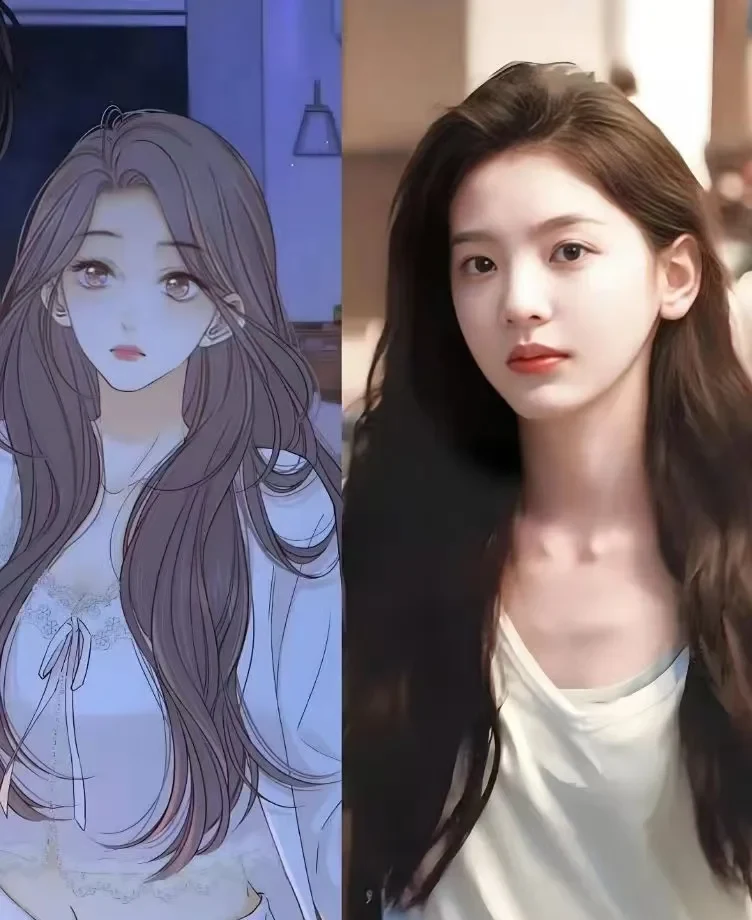
This comparison makes the adaptation question concrete. The illustrated Wen Yifan is often imagined as distant, delicate and difficult to reach. Zhang Ruonan brings a rounder, more immediately approachable warmth. The casting does not reproduce a drawing; it shifts the balance between coldness and recognizability.
I think that shift is mostly intelligent. A completely frozen Wen Yifan could become an aesthetic object. Zhang Ruonan lets small flashes of appetite, embarrassment and humor survive beneath the guardedness. The person still wants ordinary closeness even when her nervous system refuses to trust it.
The cost is that her natural warmth can soften the character's darker undertow. A lowered gaze may read as sweetness rather than self-protection. A tiny smile can reassure the audience too quickly. Makeup and pale clothing can manufacture distance, but they cannot replace the actor's job of making one person specifically unsafe and another specifically desired.
That is the adaptation test I care about: not “does she look exactly like the novel image?” but “does the screen version preserve the contradiction between wanting to be known and needing not to be exposed?”
Room two: the workplace must belong to Wen Yifan before romance enters
Wen Yifan is a journalist. That fact should give her more than a badge and a reason to encounter plot. Work can reveal what romance cannot: how she asks a question, handles authority, decides what counts as evidence and protects a boundary in public.
I become impatient when the professional space exists mainly to deliver another danger or another rescue. Repeated threat may intensify a drama, but it can also reduce the woman to the place where male protection becomes visible. That is a narrative criticism, not a claim about every real newsroom or every woman's life in China.
Zhang Ruonan's performance deserves scenes where competence is allowed to be dramatic. A controlled question can be braver than a breakdown. Choosing not to pursue a source can reveal ethics. Refusing to turn pain into a public confession can be work, not avoidance.
The audience should know who Wen Yifan is when Sang Yan is not in the room. Which task absorbs her? Which colleague irritates her? What professional failure changes her next decision? If those answers remain thin, no amount of chemistry can make the character complete.
This is also why the “girl next door” label bores me. A working adult is not valuable because she feels familiar. She is valuable because she has habits, standards, blind spots and a private scale for deciding what must be done.
Room three: danger cannot do all the emotional work
Some of The First Frost's most discussed passages use harassment, threat and remembered trauma to explain Wen Yifan's guardedness. The material is serious, and Zhang Ruonan's restraint can make the fear specific. But a production can overuse danger until suffering becomes the fastest route to audience loyalty.
That shortcut weakens everyone. The woman is repeatedly proved vulnerable. The man is repeatedly proved protective. The audience is repeatedly told when to fear. The relationship receives urgency without always earning new knowledge.

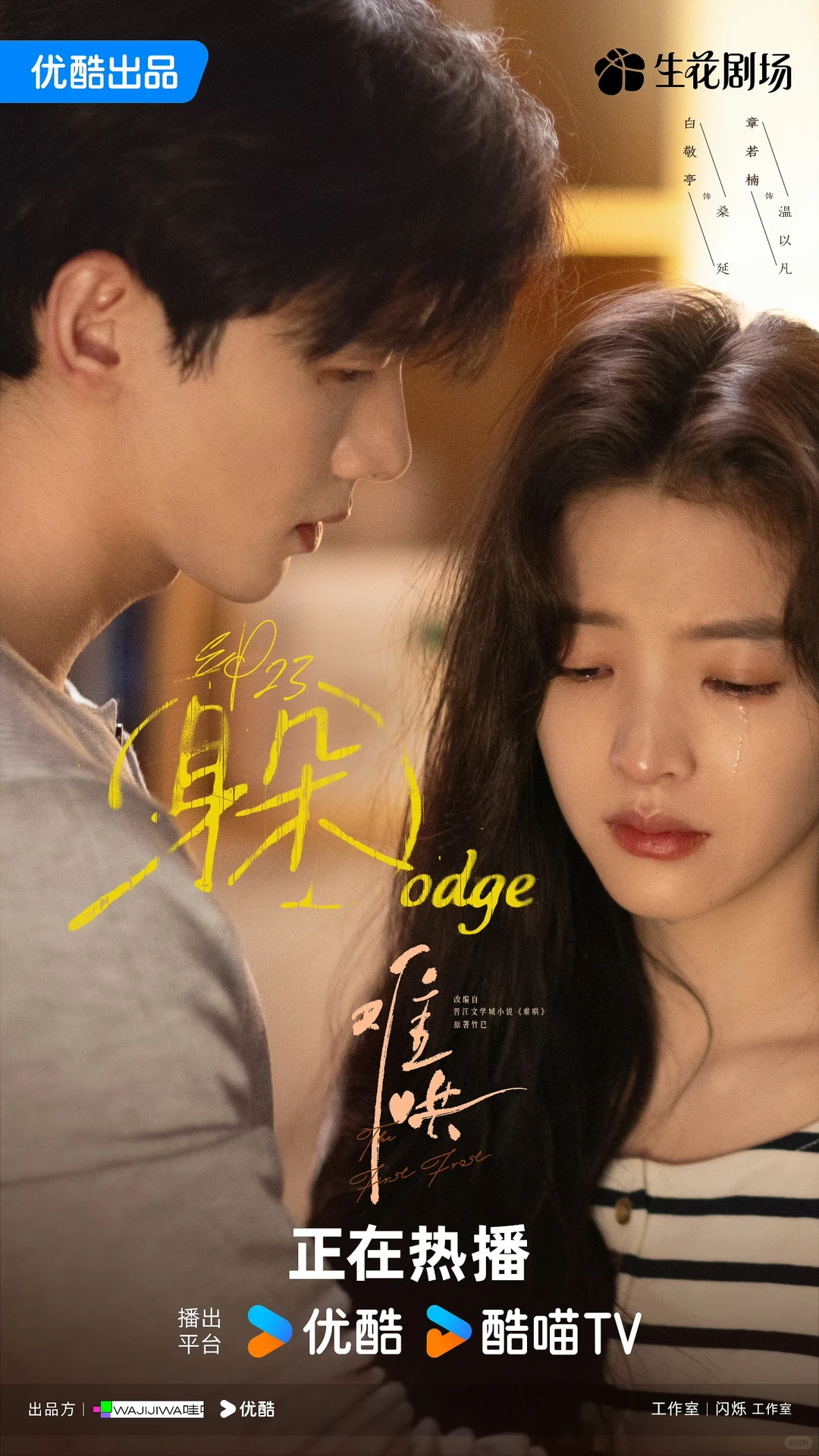
The poster captures the exact emotional bargain I distrust: the woman's pain is made immediately legible, while the man's nearness is offered as the answer. I do not reject the image; I reject the lazy conclusion that being comforted is the same as becoming safe. Zhang Ruonan's harder task is to let Wen Yifan retain a decision after the tears, not merely a face that makes protection feel noble.
I want a more demanding version of the same character. Let safety create difficulty. Once the immediate threat is absent, can Wen Yifan tolerate care? Can she disagree without preparing to disappear? Can she want something selfishly? Recovery is not a soft montage. It is the awkward work of discovering that an old defensive habit now injures a new relationship.
Zhang Ruonan is good at showing two impulses arrive together. The face moves toward relief; the body keeps distance. The voice offers a normal answer; the hand refuses ease. Those contradictions are stronger than a scene that gives her only one beautifully composed emotion.
The real limitation is continuity. If a terrifying scene ends and the next episode restores romantic softness without behavioral residue, the performance cannot carry the entire burden. Fear should alter a route home, a form of touch, a sentence or the willingness to be alone. Otherwise the production has borrowed intensity from the subject and returned too little character.
Room four: My Love asks whether she owns a future outside memory
My Love is useful because it makes memory itself the pressure. A man may organize years of feeling around a woman and present persistence as emotional truth. The film can then photograph her as the lost possibility that gives his life shape.
Zhang Ruonan's task is to protect the woman's separate timeline. What has she chosen when he was absent? What does she owe his devotion—and what does she not owe? Warmth should not automatically validate persistence. Regret should not erase autonomy.
This is where her screen familiarity works. She can make a remembered first love feel close rather than mythic. But the same familiarity can trap her in someone else's nostalgia. I watch for the moments when her attention moves beyond his feeling: a practical concern, an adult responsibility, a refusal to perform the past exactly as he remembers it.
The role becomes a useful bridge to The First Frost. Both stories ask whether reunion can produce a present-tense relationship rather than simply reward an old emotion. Zhang Ruonan is persuasive when the woman is not a door back to youth, but a person whose current answer may disappoint the memory.
Cry Me a Sad River shows why fear needs a target
In Cry Me a Sad River, pain can quickly become an atmosphere surrounding a young woman. Zhang Ruonan's work is more specific when the character's attention changes around different people. Fear of everyone is a mood. Fear that alters where she stands, whom she trusts and which sentence she swallows is behavior.
That early role belongs to a harsher social world than the polished interiors of The First Frost. It helps reveal that Zhang Ruonan's softness is not automatically romantic. It can be defensive, watchful or lonely.
The film also exposes the ethical risk of aesthetic suffering. Beautifully framed pain invites sympathy, but sympathy alone does not give the character agency. I need to see a decision, even a compromised one. The action may fail. It still has to belong to her.
Across the three roles, the same face carries different burdens: targeted fear, contested memory and negotiated safety. That is a real route through Zhang Ruonan's work. It is not yet proof of unlimited range.
Mute the music: my strictest Zhang Ruonan test
Zhang Ruonan is frequently protected by productions that understand atmosphere. Pale light, a close lens and a restrained soundtrack make tiny movements feel enormous. I enjoy that language. I do not credit all of its emotion to the actor.
Mute one scene and ask:
- What did she learn?
- Which practical option did she reject?
- Who now has more or less access to her?
- What changes in the next scene?
If the answers remain visible, the quietness contains performance. If only a beautiful sadness remains, the production has done most of the work.
This test is not hostile to softness. It defends quiet women from being treated as empty surfaces. A character does not need to shout to own a scene. She does need to alter its direction.
Zhang Ruonan's next major leap should not be another woman whom the camera protects for being tender. I want a character who is professionally hungry, socially wrong, funny without being cute, or unwilling to make the audience comfortable. Her naturalism will become range when the person still feels real after she stops being easy to love.
My bias is simple: I will forgive a melodramatic scene faster than I will forgive a character who exists only to be protected. Zhang Ruonan has enough warmth to make tenderness convincing; the next challenge is to let that warmth become inconvenient, ambitious or even selfish. A beautiful pause is not a career. A decision that changes the room is.
My final judgment on Zhang Ruonan
Zhang Ruonan's screen value is not “ordinary beauty.” That phrase reduces both the woman and the work. Her real instrument is guarded attention: she can show that a person is measuring danger, desire and social cost before deciding what to reveal.
The First Frost is the best place to start because it gives that instrument maximum visibility and maximum protection. The music, romance and camera all want you to feel for Wen Yifan. Your job is to ask whether Wen Yifan also acts on the room. Then watch My Love to test whether she keeps a future outside male memory, and Cry Me a Sad River to see whether fear remains attached to specific social choices.
Use our The First Frost guide for the wider plot and ending, then compare Zhang Ruonan's silence with Bai Jingting's in the same drama. Continue through the Chinese actors collection or Chinese television hub when you want a different kind of quiet lead.
For the comments, mute one complete Zhang Ruonan scene. Tell me the practical choice that remains visible without the score, and the consequence that follows. Bring the timestamp to Moments. I will return after she takes a role that refuses first-love lighting, because softness will only become a full career when it no longer needs to be protected.