The First Frost is worth watching if you want a reunion drama that treats silence as evidence. My reservation is equally clear: if the series explains every old feeling in dialogue instead of letting present choices carry it, the premise becomes a polished memory exercise rather than a real adult relationship.
The First Frost Chinese Drama: what is it actually about?
The First Frost (难哄) is built around a deceptively simple question: what happens when two people with unfinished history meet again after becoming different adults? That is not the same question as “will they fall in love?” The answer to that one is obvious before the opening credits. The valuable question is whether the drama makes the past visible through what the characters do now.
The international title is easy to confuse with a generic winter romance. It is better understood as a contemporary Chinese relationship drama with a reunion structure, a guarded male lead, and a female lead whose present life must be allowed to exist outside the old emotional story. The title points toward atmosphere, but atmosphere is not enough. The show has to earn its silences.
For me, the attraction is not the old-school “he never stopped loving her” fantasy. That sentence is too easy, and it usually gives the man all the emotional credit. The series is more interesting when it makes love inconvenient: Sang Yan has to notice that his certainty can become pressure, while Wen Yifan has to decide whether protecting herself still requires refusing every form of care. That imbalance matters more than the reunion poster.
This page owns the series: premise, cast roles, viewing decision, ending discussion and the cultural details an overseas viewer may miss. The Zhang Ruonan guide owns her wider career. The Bai Jingting guide owns his. Keeping those questions separate makes the show easier to judge honestly.
The short answer for a new viewer
If you searched The First Frost Chinese drama because you want to know whether this is another beautiful but empty reunion romance, my answer is: it is worth starting, and it is not worth worshipping. The first episodes have enough emotional intelligence to make silence feel active. The middle gives the couple real shared space instead of only longing montages. The later Hong Kong detour asks for more patience than the writing has earned.
This is also why I would not sell the series with the phrase “a perfect love story.” It is not perfect, and the imperfections are useful. Wen Yifan has to remain more than the person Sang Yan remembers. Sang Yan has to learn that persistence is not the same as care. The show is interesting only when it lets those two facts create friction.
Does The First Frost have a love triangle?
It has romantic rivals, but not a sustained three-way choice at the center of the story. Xiang Lang and Mu Chengyun are interested in Wen Yifan; producer Zeng Yun describes them as contrasts to Sang Yan, not as equal endpoints for her romance. Xiang Lang's steadier, more practical approach and Mu Chengyun's direct pursuit make Sang Yan's devotion easier to compare. The main relationship remains Wen Yifan and Sang Yan's reunion.
I find “no love triangle” too neat an answer, because those men do put pressure on how the audience reads Sang Yan. I also resist the opposite claim that the show is a long guessing game about whom Wen Yifan will choose. The rivals are most useful when they reveal the difference between wanting her and making room for her decisions. If each man exists only to certify that Sang Yan is the best candidate, the writing has repeated the very problem it should be testing: treating Wen Yifan as a prize rather than the person whose choice gives the romance meaning. Watch it for that tension, not for a last-minute switch of male lead.
For readers who do not know the Chinese title, 难哄 carries the sense of someone or something difficult to soothe. That is a better entry point than the English title alone. The problem is not simply that the pair were separated. The problem is that the emotional damage cannot be fixed by one reunion, one confession or one handsome close-up. Someone has to change the conditions of closeness.
My verdict: start The First Frost, but test the reunion before committing
Watch the first three episodes as a test of method, not as a promise that the entire series will pay off.
- Continue if a small action changes the meaning of an old memory.
- Continue if the female lead has present goals, friendships and decisions that do not exist only to react to the man.
- Continue if the show trusts pauses, awkwardness and ordinary logistics to carry emotional information.
- Stop if every conflict becomes a speech explaining what the characters “really” feel.
- Stop if nostalgia replaces reciprocity: remembering someone is not the same as meeting them as an equal adult.
My conclusion is a qualified yes. The premise deserves attention because it can turn familiar Chinese-drama longing into a study of timing and self-protection. It does not deserve automatic praise because two attractive people look convincing in the same frame.
Why the frustrating romance is worth examining
A reunion premise can win attention with winter light, attractive actors and a soundtrack that knows exactly when to swell. None of that resolves this drama's more difficult question: the two leads are not equally ready for the same kind of closeness.
Wen Yifan makes me protective because her quietness is constantly in danger of being misread as emotional availability. Sang Yan makes me impatient because he often understands the history before he understands the boundary in front of him. That imbalance is the real engine. I do not want him to become less caring. I want his care to become more disciplined.
The scenes worth examining are therefore not only the grand declarations. They are the moments when one person changes a practical behavior because the other person has made a limit visible. A door left open or closed, a question dropped instead of pursued, a favor accepted without turning it into a debt: these details tell me whether a reunion is becoming a relationship or merely repeating the old hierarchy with better lighting.
This is my editorial line: melodrama is defensible when the characters are allowed to make a new choice. A plot that uses trauma as a shortcut to make the male lead look noble is not. The series earns attention when Wen Yifan's fear has consequences for the shape of the relationship, not only for the amount of suffering she must endure before the kiss.
The reunion is the real story, not the backstory
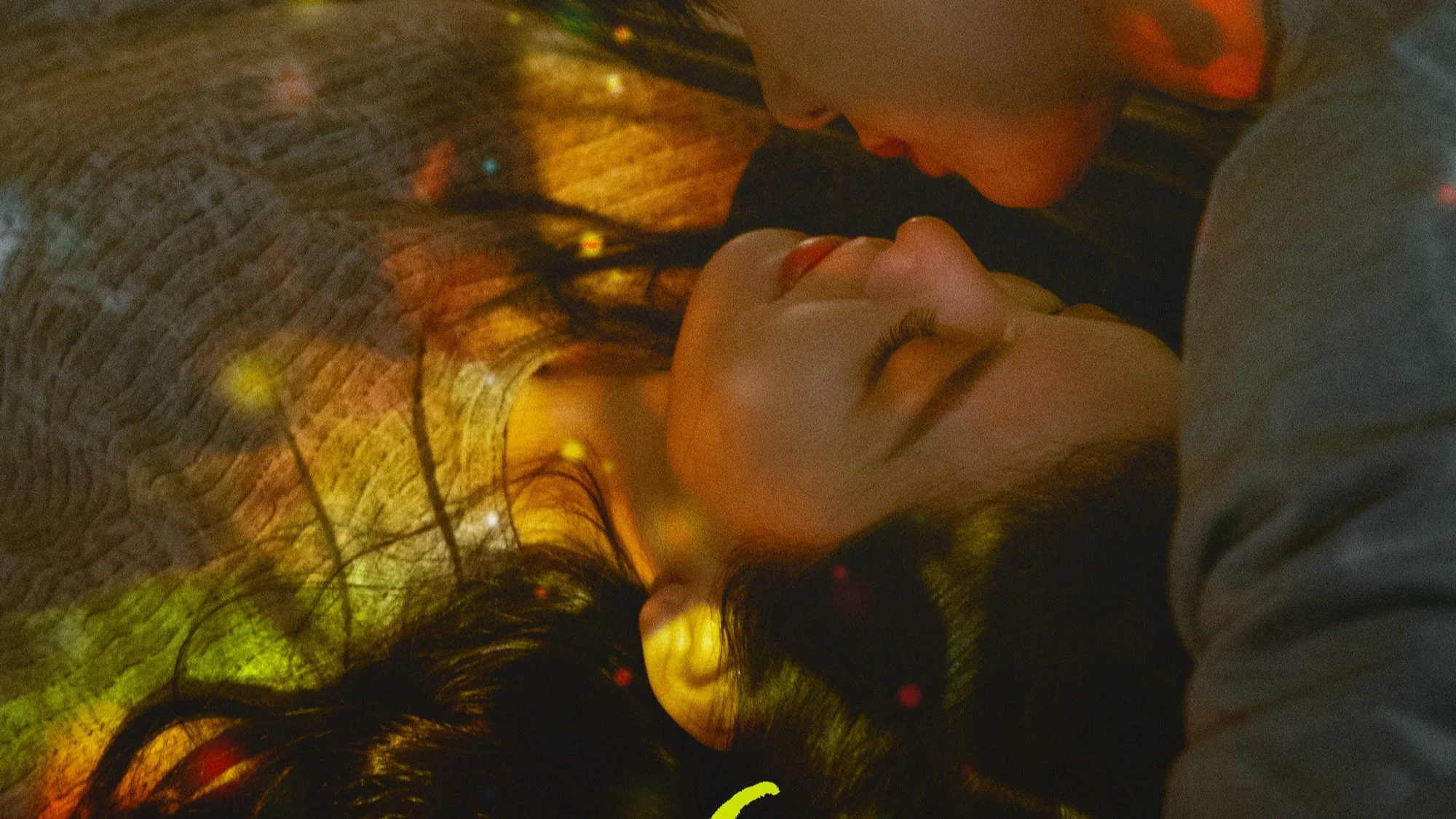
The promotional close-up above puts attention on the tiny distance between looking, speaking and choosing to stay. That is where the reunion either becomes an adult relationship or remains a polished memory.
Reunion dramas often make the past do too much work. A former connection arrives preloaded with meaning, and the audience is asked to feel the weight before the present has shown why it still matters.
The stronger version of this story reverses that order. The past should create pressure, but the present should make the decision. Watch for moments when one character could choose the familiar response and instead chooses a different one: a message not sent, a question answered directly, an invitation refused, a practical favor accepted without pretending it means more than it does.
That is where an overseas viewer can read the drama without knowing every social reference. Chinese family and school histories often leave relationships surrounded by people who remember an earlier version of you. The emotional conflict is therefore not private in the Western romantic sense. A reunion can reactivate family expectations, class assumptions, reputation and the fear of being seen as the person you used to be.
The point is not that Chinese relationships are uniquely restrained. That would be a lazy cultural claim. The point is that this drama gives restraint a visible social cost: every choice is made in a room where somebody else may already have a story about you.
Zhang Ruonan and Bai Jingting solve different performance problems
The cast question is not simply “who is in The First Frost?” It is why the two leads need different acting strategies.
Zhang Ruonan's task is to keep the female lead from becoming a memory container. She needs a present-tense life: a way of moving through rooms, answering people and making decisions that cannot be reduced to what happened years earlier. The performance succeeds when recognition arrives in fragments rather than as an instant return to an old role.
Bai Jingting has the opposite danger. A guarded male lead can become a polished blank surface, with quietness mistaken for depth. The useful test is whether silence changes his behavior. Does he listen differently? Does he give up control? Does he accept a boundary without turning acceptance into another form of pressure? Those are observable choices. They are more valuable than a general claim that a character is “cold but caring.”
This is why the actor pages remain separate. One role can demonstrate a technique; it cannot prove the whole career. Use the Zhang Ruonan page and Bai Jingting page when you want the larger viewing route.

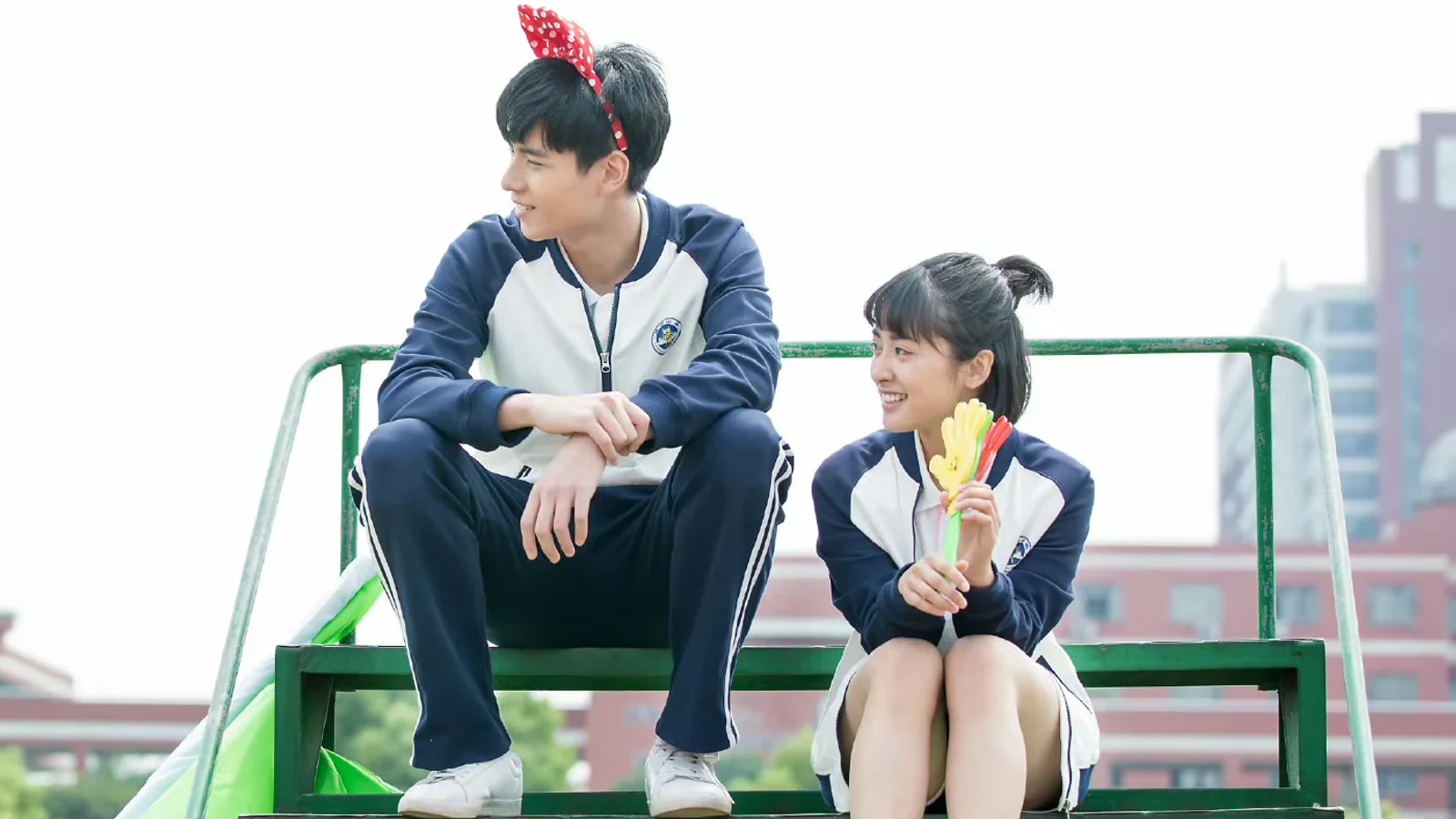
The school table is the cleanest visual summary of their early bond. They occupy the same narrow space, yet the books, bowls and downward gazes keep them in separate mental rooms. That distance matters more than a montage of smiling memories. It explains why adult reunion cannot simply restore a lost romance: the younger pair had proximity and unfinished recognition, not a completed agreement about who they were to each other.
The costume progression makes the same argument without a speech. Sang Yan's school-outside layers keep a crisp, controlled outline; the later home clothes loosen that outline as shared space becomes ordinary. Clothing does not prove inner goodness, but it does show the production changing how much of his body appears defended. I trust that concrete change more than any subtitle telling me he has “opened his heart.”
The First Frost lives in corridors, doorways and borrowed space
The drama becomes most revealing when the couple is not granted a perfect romantic room. Corridors force them to pass rather than settle. Doorways make entry a decision. Shared housing turns privacy into negotiation. Work and transport keep interrupting the fantasy that old feelings deserve unlimited time.
I read those spaces as the drama's emotional grammar. Sang Yan often appears to have more confidence, but confidence is not the same as permission. Wen Yifan may speak more softly, but a quiet refusal still reorganizes the room. The relationship matures only when both characters learn that proximity must be chosen again in the present.
The shared home is therefore not a cute-romance accessory. It is a continuous boundary test. Who controls the light, the door, the noise and the unplanned encounter? Who can retreat without being followed? Who notices that a practical favor has turned into emotional pressure? A reunion drama can claim that two people know each other deeply; shared space forces the claim into observable behavior.
This is where I take Wen Yifan more seriously than the usual “quiet heroine” description. Her softness is not permission to treat her present as an empty room waiting for Sang Yan. She has built routines that keep her functioning. If he loves her, he must learn those routines before asking to be included in them. His devotion becomes meaningful only after it stops treating persistence as a universal virtue.

This adult image looks warmer than the school table, but I do not read it as proof that every old wound has healed. Their shoulders touch while both faces remain oriented toward the same outside space. The scene gives intimacy a present-tense condition: they are together because they are attending to the same moment, not because the camera has erased everything beyond the couple. That is the version of romance the series must protect.
The distinction sounds severe because it is severe. A long crush is emotionally impressive, but it gives nobody ownership. The drama is strongest when Sang Yan's certainty meets a fact he cannot charm away: Wen Yifan is the only person who can decide what safety feels like inside her own life.
This is also why the series can feel painfully familiar without becoming universal autobiography. Many adults have returned to a place, a classmate or a family circle that still remembers an earlier version of them. The First Frost earns its emotion when it allows the present person to correct that memory.
The Hong Kong detour is where my trust nearly breaks
Episodes 25–27 create the drama's most serious writing problem. I understand why Wen Yifan wants distance. Trauma can make flight feel cleaner than explanation, and leaving can be the only decision that still feels like one's own. What I do not accept automatically is the way an established adult life can be thinned into a convenient detour.
The emotional cause and the logistical chain are different obligations. “She is overwhelmed” can explain why she leaves. It cannot by itself explain why work, colleagues, housing, professional identity and ordinary competence disappear from the route. When a character has been built through survival, the plot cannot suddenly make her less capable simply to manufacture longing.
This is my sharpest disagreement with the series. The dark line of The First Frost is not Sang Yan waiting faithfully; it is Wen Yifan staying alive inside social and psychological pressure for years. If the romance enters her world only after the plot removes that world's practical texture, the drama has made his devotion visible by making her labor invisible.
The later emotional payoff can still work, but it carries this debt. A viewer moved by the reunion is not wrong. I simply refuse to let that release erase the weak bridge that brought us there. Being moved is only half the test. The harder question is whether Wen Yifan remains recognizably herself while the scene moves us.
Cast guide: whose story are you actually following?
Bai Jingting plays Sang Yan, the more socially confident half of the pair. His task is to turn old knowledge into new attention. Zhang Ruonan plays Wen Yifan, whose task is harder: she must remain legible as a whole adult even when the romance, the camera and the audience all want to read her primarily through his love.
The supporting world matters because isolation would make the central relationship too easy. Workmates, friends and family reveal which version of each lead exists outside the romantic frame. When you watch, notice whether a side character gives Wen Yifan information, pressure, companionship or merely another reason to return to Sang Yan. That difference tells you whether the drama has built a life or only a corridor leading back to the couple.
What an overseas viewer may miss about this kind of reunion
The emotional vocabulary can look familiar to an international viewer while the social pressure underneath it remains easy to miss. In a Chinese school or family network, people often carry a long memory of who somebody was: the quiet student, the difficult daughter, the boy who was expected to succeed, the person who left without explaining. A reunion is never only two people meeting in an empty street. It can reactivate the version of them that a whole group still believes.
That is why ordinary logistics matter so much in this drama. A meal, a shared ride, a work conversation or a visit to a familiar place can carry more pressure than a romantic monologue. The characters are not only deciding whether they still have feelings. They are deciding whether they can be seen as adults rather than returned to an old role.
I also like that the show gives silence a different meaning for each lead. Sang Yan's silence often feels like control: he knows more than he says and assumes he can wait out resistance. Wen Yifan's silence feels like self-protection: saying less is a way to keep a room from taking more than she can give. Treating both as the same kind of “slow burn” would flatten the writing. They are not equally silent, and they do not pay the same price for speaking.
This is where Zhang Ruonan's performance matters most to me. She does not need to make Wen Yifan loud in order to make her present. A slight delay before answering, a body that remains ready to leave, or a face that refuses to reward the other person's confidence can hold the line. The performance is persuasive when her softness feels chosen rather than imposed by the script.
Where to watch The First Frost
Platform availability changes by country and date. Use the official international page for the current regional listing; East Moment does not recommend unauthorized mirrors, downloads or paid-only video embeds.
Search both The First Frost and 难哄 if a platform uses different metadata. If a service offers only a paid rental, purchase or membership-gated version, East Moment should provide a text-only availability note rather than embedding it as a playable page element.
The official YOUKU series page is the right place to verify the platform's current title record and regional access. It cannot decide whether the Hong Kong detour protects Wen Yifan's agency; that judgment comes from the completed drama, not from platform marketing.
The First Frost ending: what does the reunion actually resolve? (spoilers)
The conclusion gives Wen Yifan and Sang Yan a future together; it does not make the years between school and adulthood disappear. I take the ending as a choice to build something in the present, not as proof that Sang Yan was right every time he insisted on staying close. That distinction matters. If the resolution worked only because she finally accepted the old relationship on his terms, all those scenes about her boundaries would have been preparation for surrender, not growth.
The ending is also why the Hong Kong stretch bothers me. The final emotional certainty arrives, but the script owes Wen Yifan more ordinary continuity than it gives her during the separation: work, friends, a city and the capacity to decide without the romance narrating every step. A happy reunion can answer "do they choose each other?" while leaving "did the writing give both people equally complete lives?" open to criticism. I answer yes to the first and not entirely to the second. Readers looking for a beat-by-beat finale recap will not find one here; the useful spoiler is the meaning of the choice, and its cost.
My recommended viewing route
Do not begin by asking whether Sang Yan is attractive enough to justify the wait. That question is answered before the story starts. Use this route instead:
- Episodes 1–3: test the method. Does the drama let a practical action reveal history, or does every feeling arrive as an explanation?
- The shared-space stretch: test reciprocity. Watch whether Wen Yifan's routines remain visible after Sang Yan becomes more central. If her life disappears, the romance is taking too much.
- The family and work scenes: test adulthood. Notice who treats the pair as people with obligations rather than as a couple waiting for a reward.
- The Hong Kong detour: test the writing. Feel the emotion, but also ask whether the plot has preserved Wen Yifan's competence and agency.
- The ending: test the cost. A reunion is not complete because the couple is together. It is complete when the present relationship no longer depends on the old version of either person.
This route protects the pleasure of the romance without asking the reader to surrender judgment. Beautiful scenes and a weak transition can coexist; naming both makes the recommendation more useful.
Final judgment
The First Frost has a better central question than most reunion romances: can two adults meet again without allowing their old story to make the present decision for them? That question gives the drama a real chance to become more than a sequence of beautiful pauses.
My recommendation is firm but conditional: watch the opening three episodes, then decide based on whether present actions—not speeches, edits or fan expectations—make the relationship reciprocal. If the show earns that transition, continue. If it keeps asking nostalgia to do the work of character development, stop without guilt.
In the comments, name one scene where Wen Yifan sets a boundary and say whether Sang Yan actually respects it. If you made a viewing note or fan object, you can share an original photograph as a Moment; the submission requires your own photo and is reviewed before it appears. Contrast this drama's shared-space boundaries with the two-career coordination in You Are My Glory, then continue through the Chinese TV shows collection when you want another romance judged by behavior rather than chemistry slogans.