A Chinese folding fan is the original pocket screen. Closed, it withholds the image. One flick of the wrist later, a private landscape, poem, joke, signature or statement of taste appears in public. The fan does not merely carry art. It controls the reveal.
What is a Chinese folding fan?
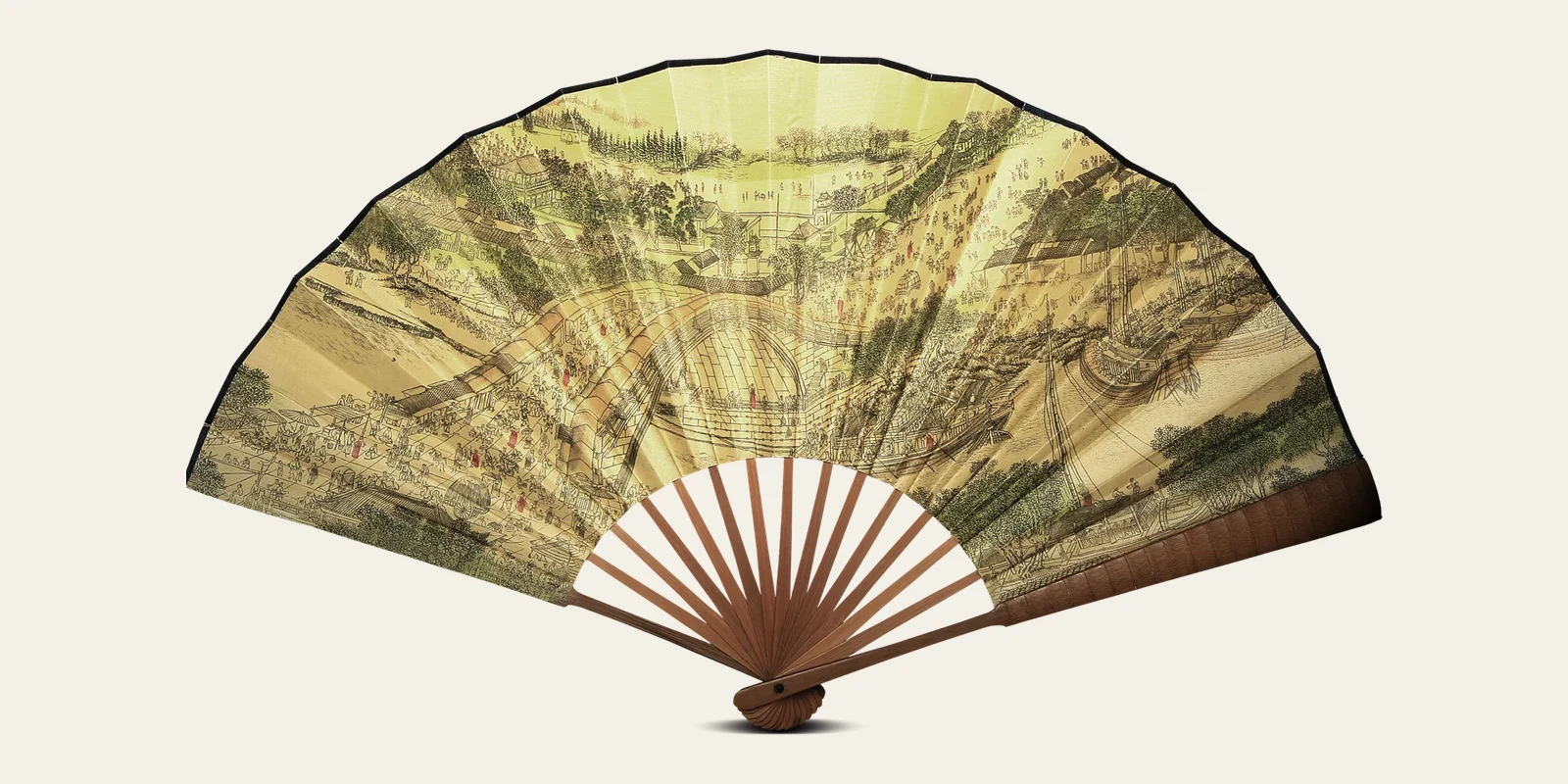
A Chinese folding fan is a handheld fan built from narrow ribs joined at a pivot and connected by a pleated paper or silk leaf. In Chinese it is commonly called zheshan (折扇): literally, a folding fan.
That definition explains the mechanism but misses the personality. A flat painting gives you the whole image immediately. A folding fan makes the image wait. It can enter a room as a slim object, open into a bright semicircle, cool the face, punctuate a conversation and disappear again.
This is why I refuse to describe it as a pretty antique air conditioner. The Chinese folding fan became a portable meeting point for engineering, painting, calligraphy, fashion, gift exchange and body language. It belongs to the history of objects, but it also behaves like a piece of social technology.
The origin story is a cultural relay, not a national trophy
Here is the honest answer to the question search results keep trying to simplify: the origin of the folding fan is debated.
The Arts & Crafts Museum Hangzhou presents competing views: early Chinese folding forms, and a Japanese introduction during the Northern Song. The Field Museum's guide distinguishes early written mentions from widespread Chinese manufacture and describes a Japan–Korea–China route. A reference in a text and a surviving, securely dated object are different kinds of evidence.
One documented moment is especially useful. In 988, the Japanese monk Chonen presented a paper-covered folding fan, often described as bat-wing shaped, to the Chinese court. Later exchange brought more fans into Chinese luxury markets. Official Ming-Japan trade from 1404 increased that circulation.
My judgment is direct: the Japan-to-China route is more convincing than the clean slogan that China independently invented the familiar folding fan and then kept it unchanged. But that does not make the Chinese folding fan a copy with a new passport. East Asian design rarely moves in one direction and freezes. Chinese makers rebuilt the object, added double-sided paper leaves, developed local rib work, turned the curved surface into a serious format for painting and calligraphy, and sent transformed fans back into regional circulation.
The better story is not “who owns the fan?” It is “what did each culture make the fan capable of doing?” That question produces history. National scorekeeping produces merchandise copy.
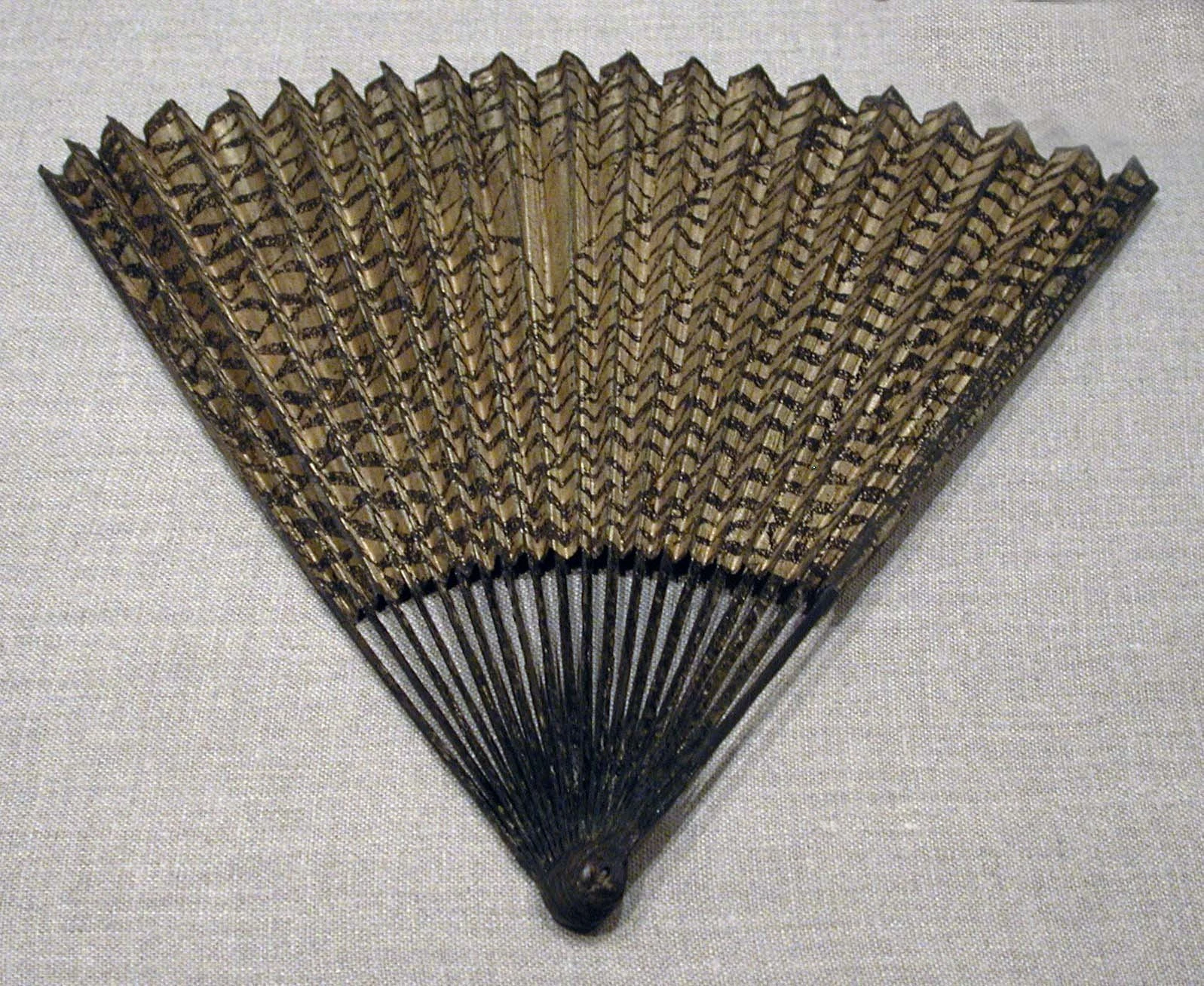
In this late-sixteenth- to early-seventeenth-century fan, the decorated supports continue below the leaf toward the pivot. Cover the painting with your hand and the lower structure still has a visual rhythm. That is why a good frame is not incidental packaging for the artwork.
China turned the folding fan into a portable profile
By the mid-Ming dynasty, the folding fan had become deeply fashionable in China. The Hangzhou museum describes it as an accessory of elite life, a marker of identity and a carrier for artistic skill. In Jiangnan, the culturally dense lower Yangtze region, painted and inscribed fans circulated as friendship gifts among writers, artists and collectors. That practice continued into the Qing and Republican periods.
This changed the fan's social function. A fan could tell other people what kind of world you wanted around you.
A landscape suggested cultivated escape: mountains, water and a pavilion created a world apart from official duties and crowded city life. An orchid or bamboo painting could connect the owner to admired qualities expressed through poetry and painting. A calligraphic inscription displayed language, literary taste and the prestige of the writer. Carved ribs rewarded the person who looked closely rather than the person who only noticed the large image.
The Metropolitan Museum of Art's Folding fan with roses and calligraphy documents a collaboration over time: bamboo carving in 1933, calligraphy in 1934 and painting in 1935. One object gathered separate contributions rather than emerging complete from a single hand. A seller's word “handmade” cannot describe that whole history by itself.
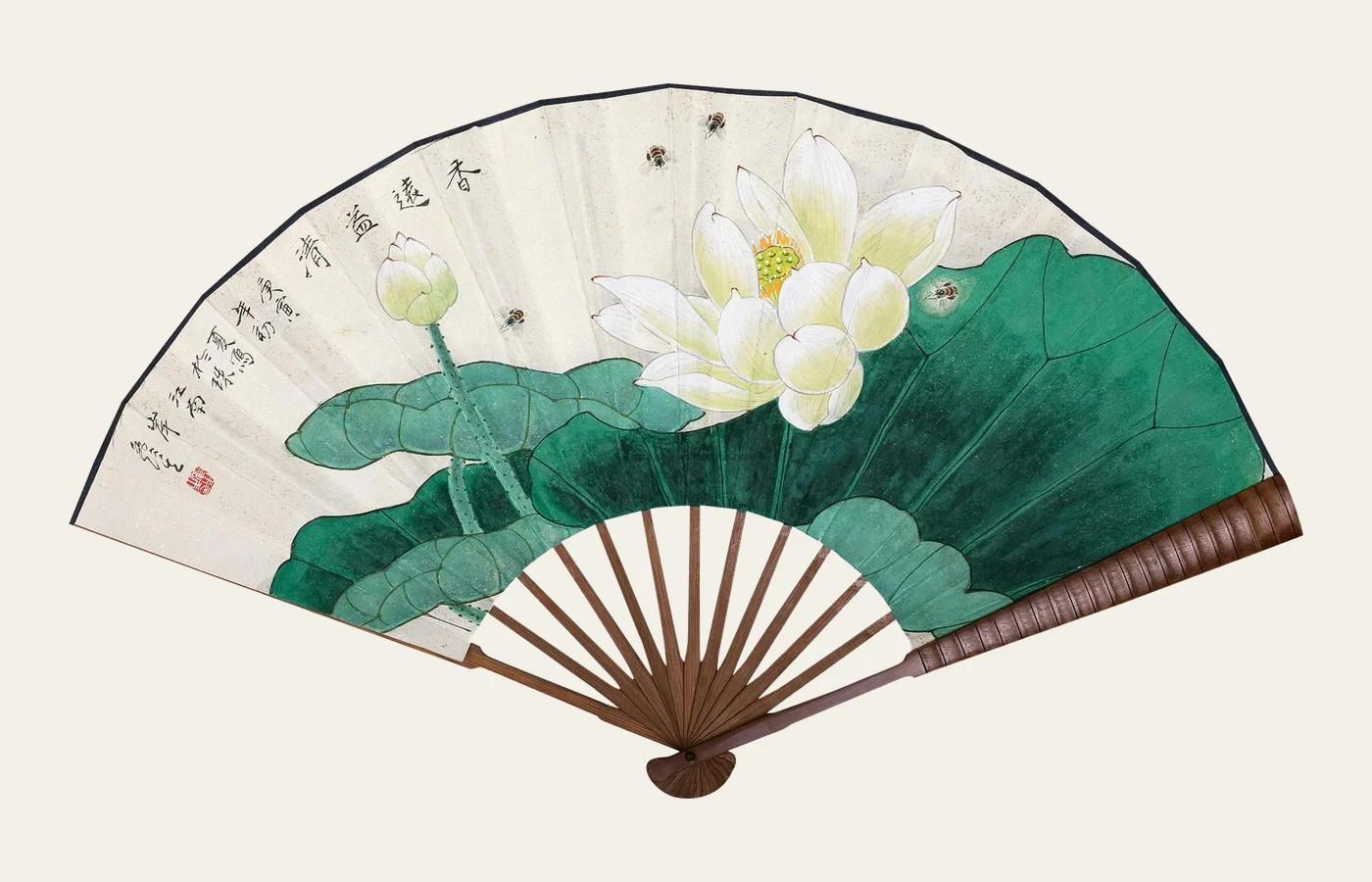
The broad lotus leaves occupy the lower field while the inscription uses the more open space above. Painting and writing negotiate the same limited surface; neither can be placed carelessly after the other is finished.
The fan worked as a compact public statement: image, inscription, material, maker and owner appeared together whenever it opened. The person holding it completed the composition.
How the mechanism changes the art
Ribs, guards and pivot
The basic structure is easy to understand and difficult to make well.
The leaf or panel carries the paper, silk, painting, printing or calligraphy. Beneath it, the ribs spread outward from a shared pivot. The heavier outer ribs, often called guards in English, protect the closed fan and may receive carving or inlay. The bottom area around the pivot is the fan head.
When the spacing is right, the ribs open into a controlled arc and the leaf distributes tension across the form. When it is wrong, the fan twists, gaps appear, the paper buckles and closing becomes a small argument.
Bamboo became the most common frame material because it can be split into slim, resilient pieces and finished with remarkable finesse. Historical examples also used sandalwood, lacquered wood, bone, ivory, tortoiseshell, mother-of-pearl and metal decoration. Several of those animal-derived materials now carry serious legal and conservation problems. A contemporary buyer does not need endangered wildlife in order to own a good fan. Bamboo already solved the design problem beautifully.
Paper matters just as much. A fan leaf must accept repeated folding, remain light, take ink or color and survive movement. Xuan paper is famous for its relationship with Chinese painting and calligraphy, but “Xuan paper” should not be used as a magical label for every pale sheet attached to a tourist fan. Fiber, sizing, backing, lamination and workmanship change how a leaf behaves.
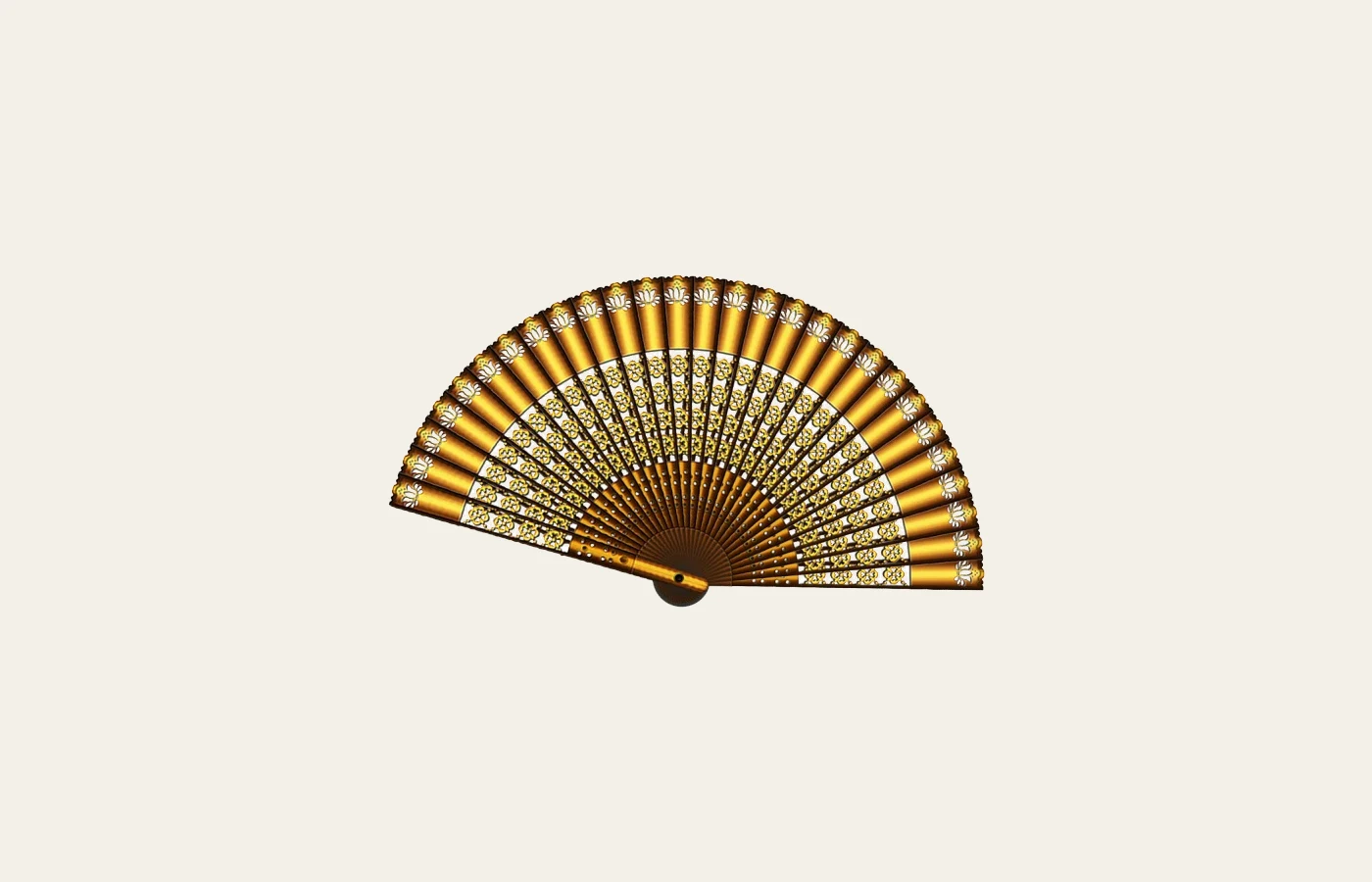
The guards and ribs do more than hold the picture. Their spacing, finish and repeated pattern create a second visual system beneath the leaf. East Moment media archive.
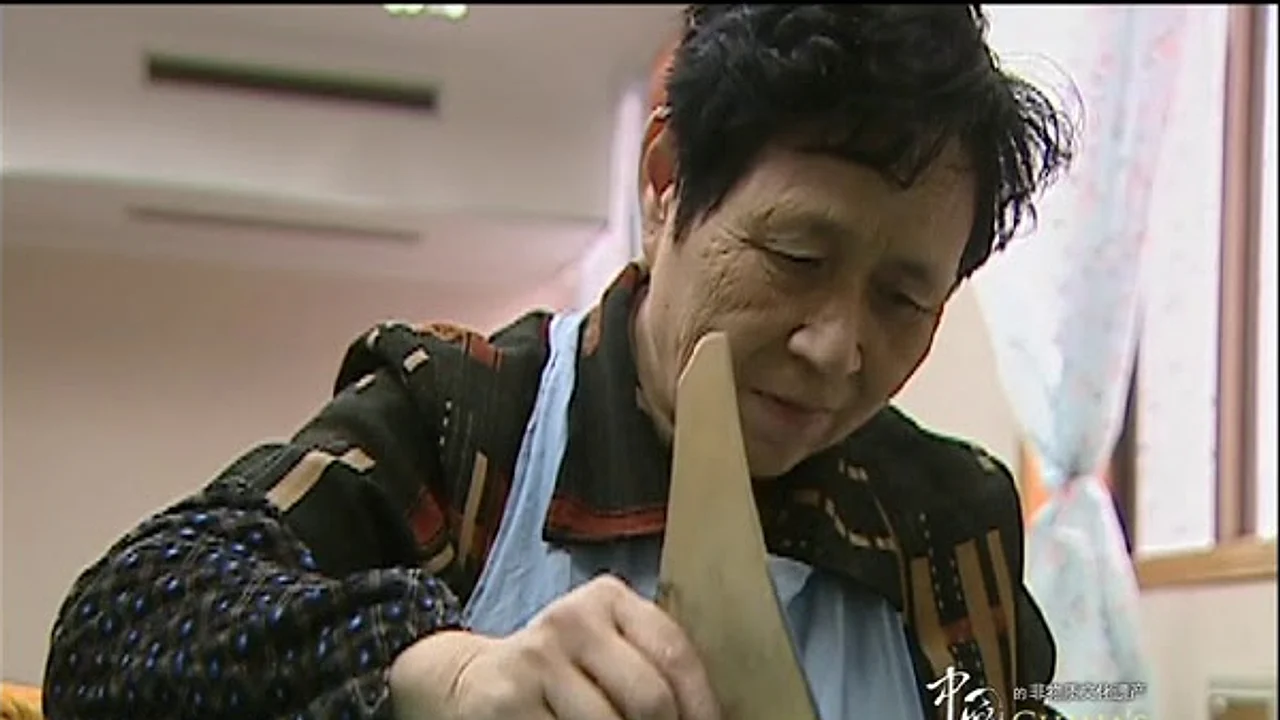
This China National Tourist Office Toronto video shows real fan-making work. Watch how material preparation and repeated hand movements turn separate parts into a controlled opening mechanism.
Why a fan painting is not a cropped rectangle
The fan surface fights back.
It is narrow near the pivot and broad at the outer edge. Pleats break a continuous line into alternating ridges and valleys. Ribs create rhythm underneath. The top edge sweeps outward while the lower edge compresses the composition. An artist cannot simply crop a rectangle and expect the fan to cooperate.
Strong fan painting uses that distortion. A river can follow the curve. Mountains can rise into the wider outer field. A branch can cross several folds and change as light catches each ridge. Figures can remain small while the landscape opens around them. Calligraphy may radiate outward, with characters adjusting to spaces that widen as they move away from the pivot.
This is why fan leaves remain compelling even after collectors remove them from the ribs and mount them in albums. The missing mechanism is still visible in the shape. The curve remembers the hand that once opened it.
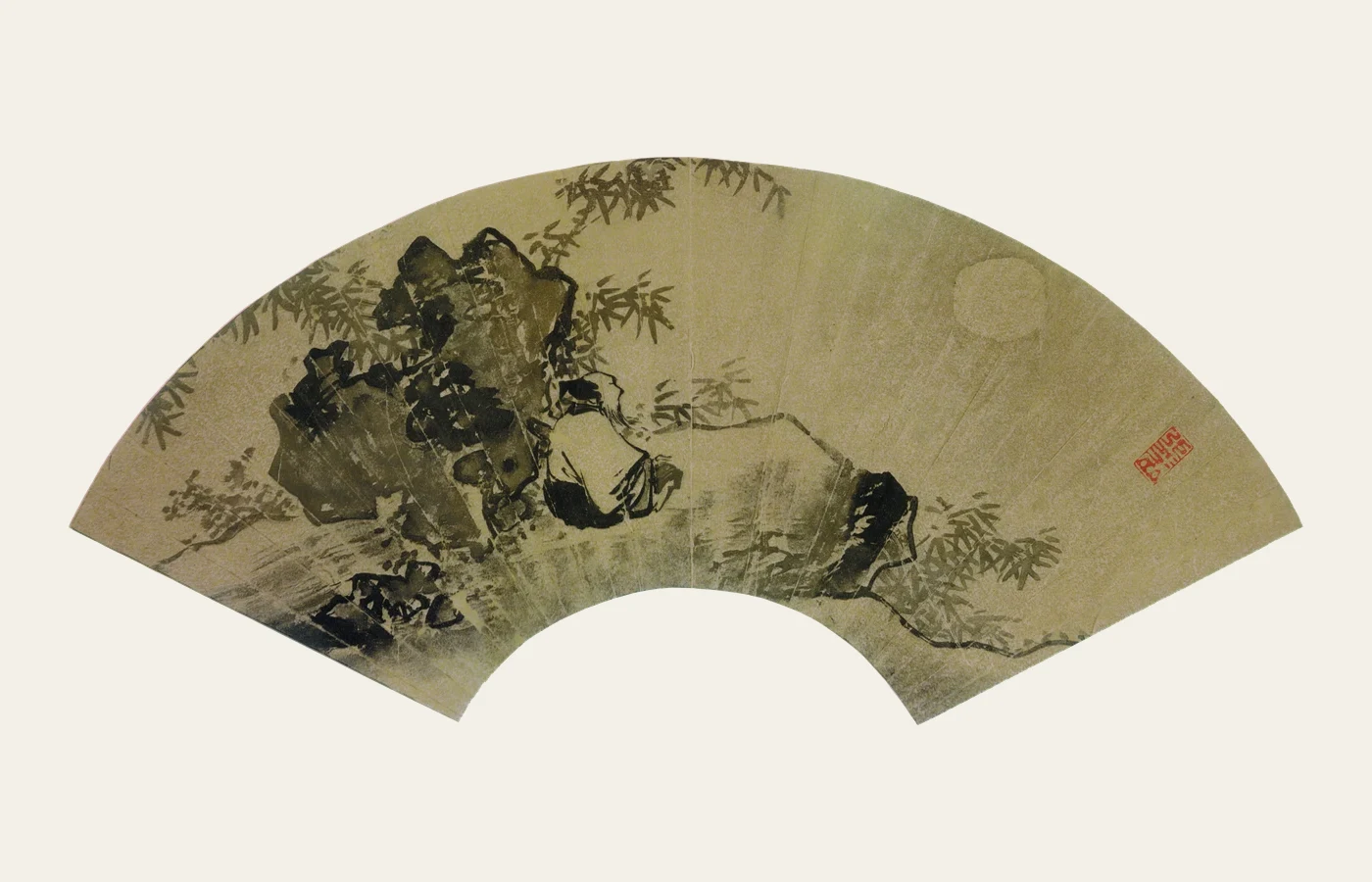
The missing ribs do not make this a rectangular picture. Its curved lower edge still restricts where a figure or tree can stand. Look at the landscape as an answer to that constraint.
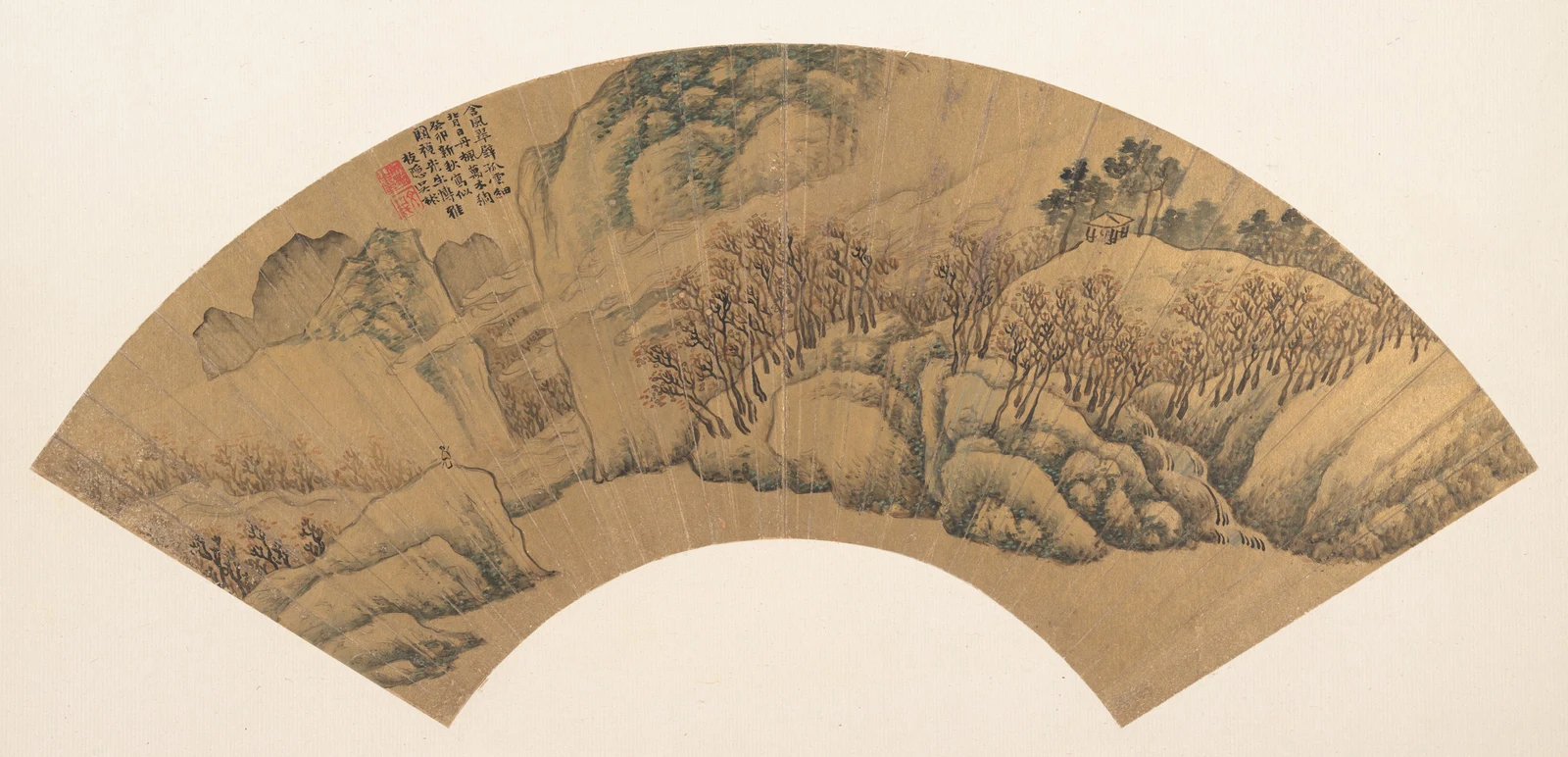
Wu Bin, Azure Cliff with Red Maples, 1603, ink and color on paper, The Metropolitan Museum of Art, public domain.
Wu Bin's Azure Cliff with Red Maples is a fan leaf mounted in an album. The cliff rises into the broad outer arc while the lower space remains compressed. The viewer has to travel through the landscape within that curved boundary. The museum image presents a mounted surface, not evidence of a working fan opening and closing. The composition remains expansive because its route was designed for this shape.
The Met's late-16th- to early-17th-century Folding Fan with Fishing Net Decoration pushes the object even further. Ink sits on gold-flecked paper while the lacquered bamboo bones and guards also carry decoration. There is no clean border between artwork and support. The entire device participates.
How to read a Chinese fan without inventing meanings
The internet loves symbol dictionaries because they turn culture into instant certainty. A lotus means this. Bamboo means that. Red means luck. Done.
No. Start with the object, inscription, maker, recipient and occasion. A motif can carry familiar associations without functioning as a fixed code.
| What you notice | The first useful question | The lazy conclusion to avoid |
|---|---|---|
| Landscape | Is this a real place, a literary landscape or an imagined retreat? | “All mountains mean harmony.” |
| Lotus | Does the image connect to season, Buddhism, purity, a poem or simple visual taste? | “Lotus has one universal Chinese meaning.” |
| Orchid or bamboo | Is there an inscription naming a person, poem or admired quality? | “This automatically proves the owner was scholarly.” |
| Birds and flowers | Which species and season are shown, and are they paired with words? | “Every bird is a luck symbol.” |
| Calligraphy | What does the text say, who wrote it and in what script? | “Unreadable Chinese writing is decorative energy.” |
| Red or gold | Is the fan festive, theatrical, commercial, ceremonial or simply bold? | “Red always means the same thing.” |
| Carved ribs | What material and technique are actually documented? | “More ornament means older and more valuable.” |
The larger Chinese symbols guide follows the same rule: meaning comes from context, not from downloading a one-line definition.
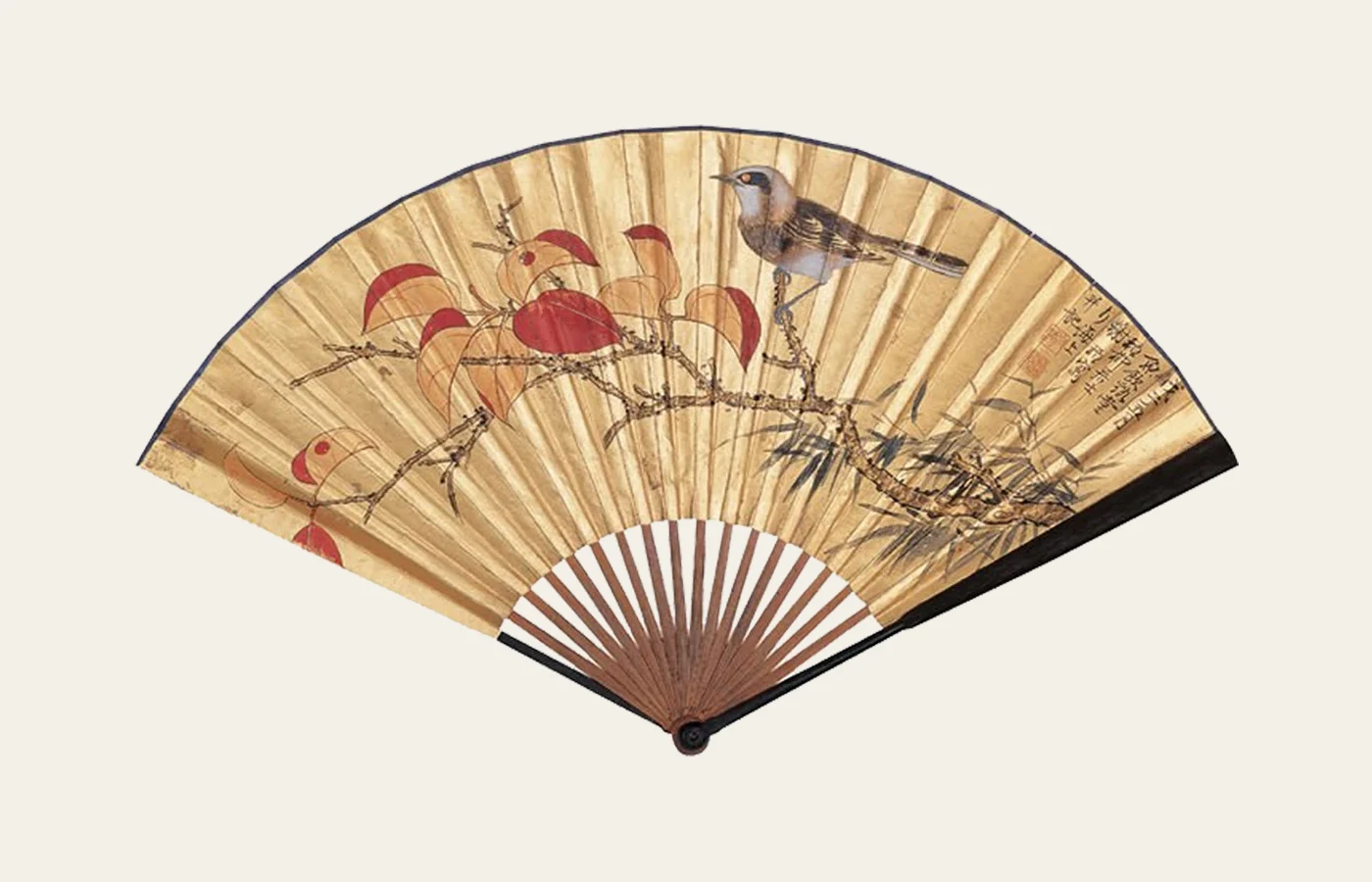
Bird-and-flower imagery can be seasonal, literary, auspicious or simply chosen for visual pleasure. The picture alone does not supply a complete interpretation. East Moment media archive.
Calligraphy is content, not texture
If a fan carries Chinese writing, the words matter.
They may be a poem, dedication, date, signature, place, quotation or message between friends. The script style and placement also matter. A confident running script can move with the opening arc; a more formal script may create deliberate order. Seals may identify an artist or collector, but decorative reproductions also copy seal-like red blocks without reliable information.
Do not buy or display a fan because the writing “looks spiritual.” Ask for a transcription and translation. If the seller cannot tell you what the largest words mean, the fan has already failed a basic design test.
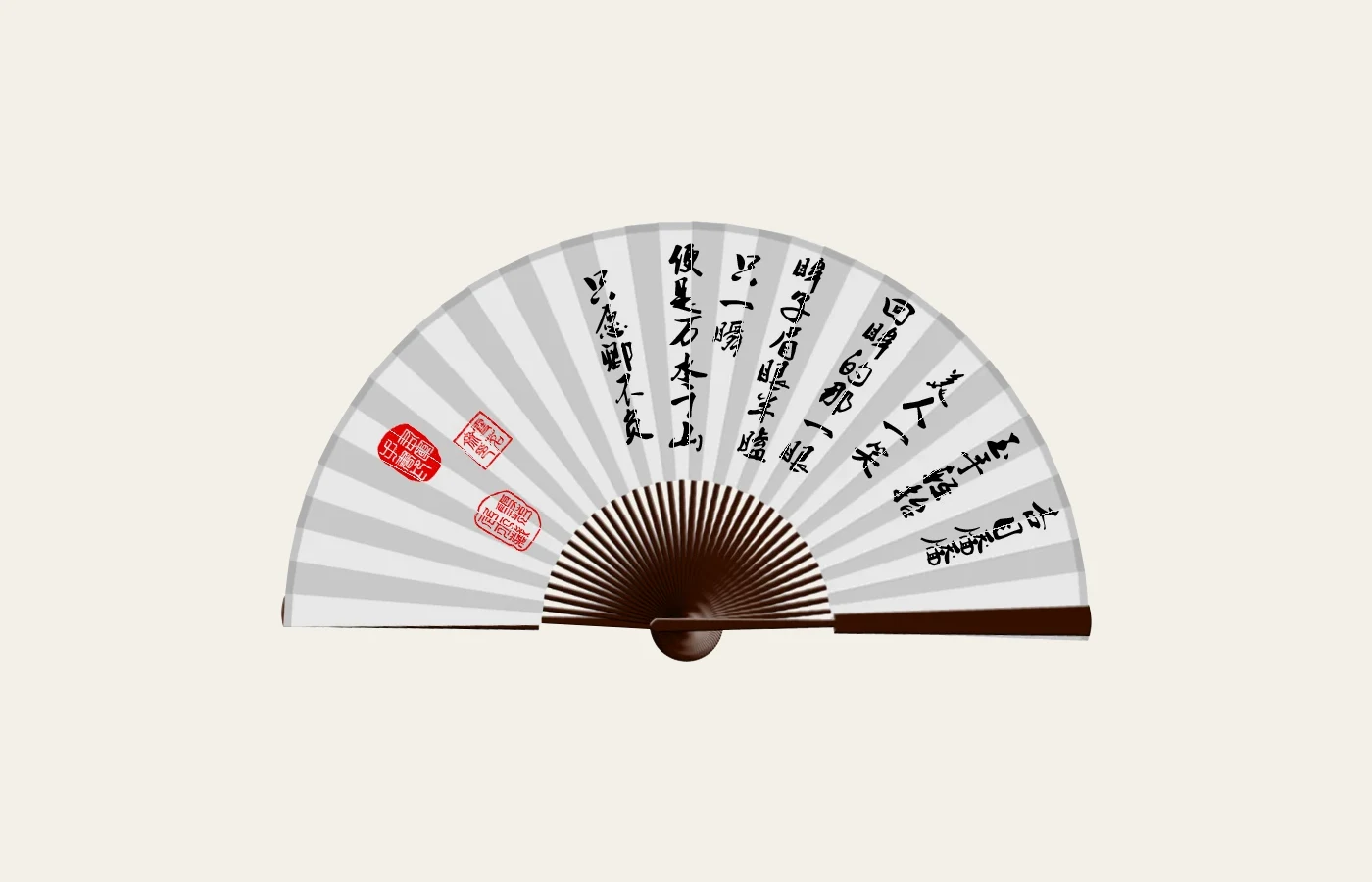
The widening spaces between ribs force writing to negotiate a moving surface. Treat the characters as language before treating them as graphic design. East Moment media archive.
Flowers carry personality, not fixed passwords
Flowers give a fan a mood without requiring the owner to announce that mood aloud. Lotus can bring ideas of purity and Buddhist visual culture. Orchids can connect with cultivated refinement and the traditional “Four Gentlemen” of painting. Plum blossom can carry winter endurance and renewal. Peony often arrives with visual abundance and status.
But the same flower can also be present because it fits the shape, matches a dress, recalls a season or pleased the painter. Culture is not weakened when people choose beauty for pleasure. It becomes more human.
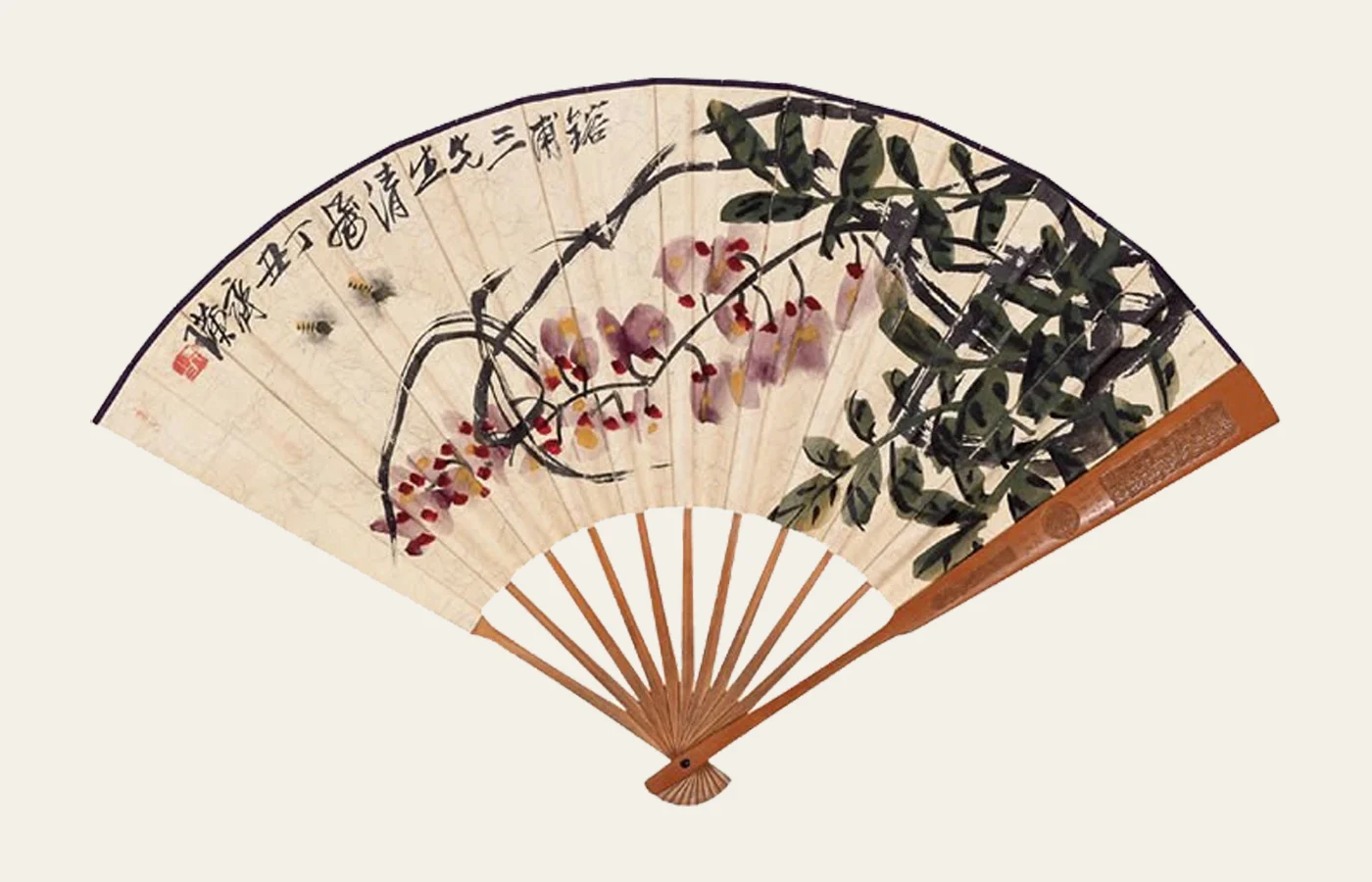
The long leaves stretch into the available space while the writing gathers at the side. A translation of that inscription would add more than another generic promise of good fortune.
Folding fan versus round fan: stop calling everything a “Chinese fan”
The round fan, tuanshan (团扇), is not a folding fan with commitment issues. It has a fixed surface held on a handle, traditionally made in circular and other shaped silhouettes with silk, gauze or paper. It became prominent in Chinese court and elite culture long before the folding fan became widespread.
The two forms create different experiences. A round fan presents its image continuously. A folding fan reveals and hides. A round fan frames the face and moves like a single plane. A folding fan changes width, makes sound, catches light across pleats and can become a narrow baton when closed.
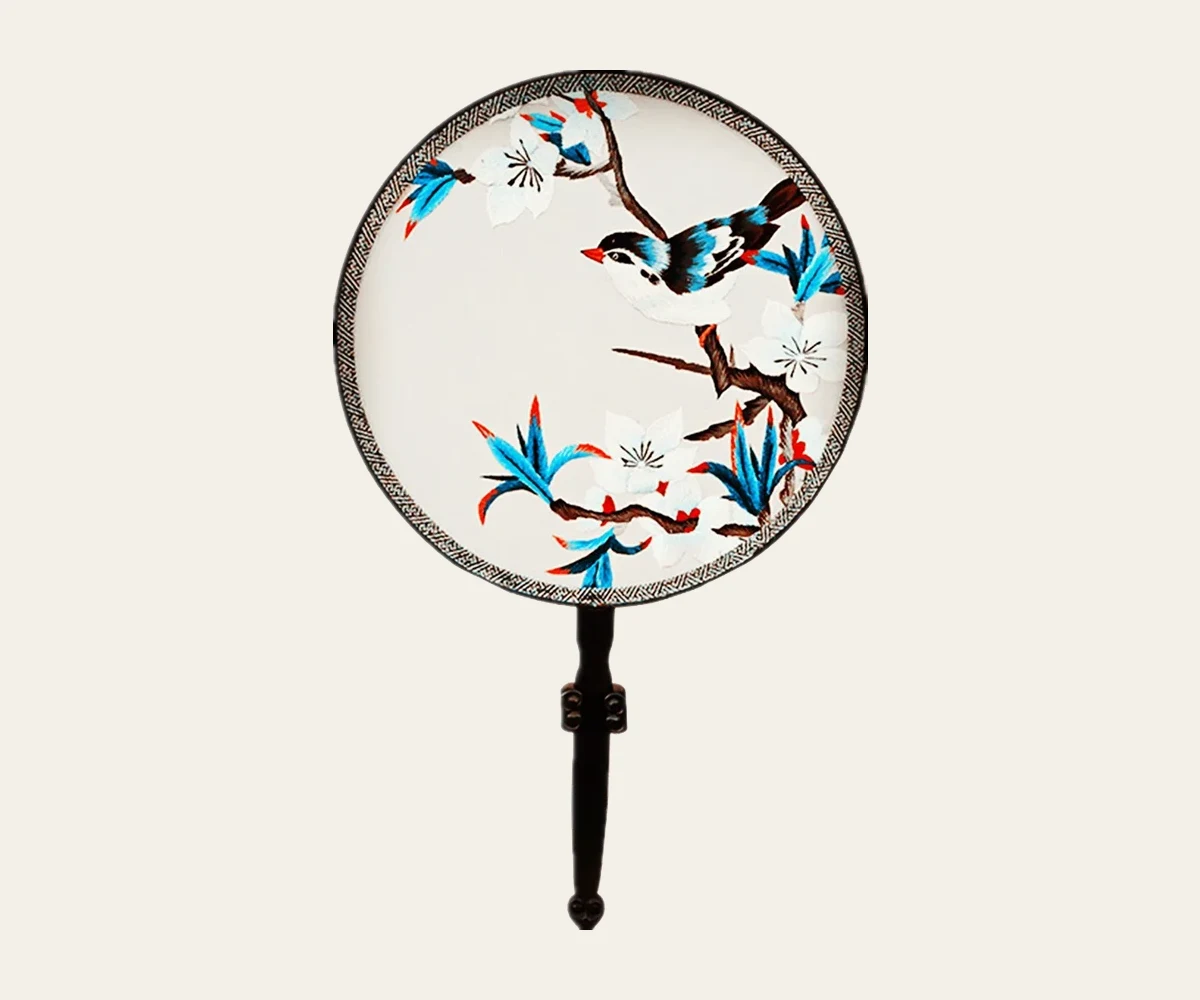
A round fan stays open and holds one continuous picture plane. The folding fan turns a comparable image field into a moving mechanism. East Moment media archive.
Overseas costume listings often mix tuanshan, folding fans, feather fans and Japanese-style fans under one vague label. That is visually lazy. Learn the silhouette and mechanism first. You can understand the difference in five seconds and stop making the same mistake forever.
The fan is body language, so handle it intelligently
A fan changes the silhouette of the person holding it. That is why it survives so powerfully in theater, dance, portraiture, fashion photography and screen costume.
Open near the face, it creates a frame. Held low, it extends the line of the arm. Closed, it becomes a pointer, rhythmic prop or controlled vertical accent. Partly opened, it produces suspense because the object visibly contains more image than it reveals.
There is no universal Chinese “fan language” in which every angle carries one fixed secret message. Treating random gestures as an ancient code is exactly how costume fantasy replaces culture. Specific performance traditions may train precise movements, but those movements belong to the role, school, choreography and scene.
The useful observation is simpler: a folding fan edits attention. It can hide expression, redirect the eye, amplify a pause and make a small wrist movement visible across a room. That is not mystical. It is excellent stage design.
How to open, use and display one
Start gently. Hold the closed fan near the pivot, loosen the ribs with the other hand and open it without forcing the guards backward. A well-made fan should spread smoothly. Forceful snapping is unnecessary and can damage a delicate object.
Do not practice dramatic one-handed flicks with an antique, painted fan or delicate paper leaf. Repeated impact can loosen the pivot, split bamboo and tear folds. Performance fans designed for snapping are a different tool from collectible painting-and-calligraphy fans.
When displaying one, support it with a proper stand and keep it away from direct sun, damp air and aggressive air-conditioning. Paper fades, silk weakens and bamboo responds to humidity. If the fan carries an original inscription or painting, preservation matters more than leaving it permanently open for a bedroom aesthetic.
Most importantly, learn what you are holding. A fan printed with random characters, an unrelated Japanese motif and a falsely “imperial Chinese” product description is a confused product, not an authentic cultural object.
How to choose a Chinese folding fan worth keeping
Ignore the fake-age story first. Then inspect the object.
Open it slowly. The ribs should spread evenly. The leaf should not pull sharply to one side. The two guards should meet cleanly when closed. Check the pivot for wobble, the paper for tearing near the folds and the rib tips for rough edges. An unpleasant odor is a reason to ask about coatings and adhesives, not a reliable test of toxicity or craftsmanship.
Ask who made the frame, who made the leaf and whether the painting or calligraphy is original, printed or reproduced. None of those categories is automatically bad. A well-designed printed fan can be excellent daily equipment. A hand-painted fan can be mediocre. The problem begins when a seller piles up claims such as “handmade,” “Xuan paper,” “antique style” and “intangible heritage” without explaining the maker, material or process.
For a first fan, choose one you will actually open. Bamboo ribs, a readable design, stable construction and a maker who explains the materials are enough. You do not need dragons, gold, ten seals and a certificate written by the same shop that printed it.
Before choosing a size, test where the closed fan will live. A beautiful fan that will not fit the pocket or bag you use is a display purchase pretending to be daily equipment. Ask for the closed length in centimetres, not only a traditional size label, and check whether the quoted measurement includes the whole guard. Then open it and feel the weight. A wider leaf moves differently from a narrow one even when the closed lengths match.
Here is a hypothetical choice worth making honestly. One fan has a printed picture you love, a smooth bamboo frame and a leaf you can afford to replace. Another has an original inscription you are afraid to crease. For commuting, I choose the first. For collecting that particular writer, the second has a different purpose. Calling one more “authentic” collapses two decisions into a prestige contest. A good print does not become a bad fan because its ink arrived through a printer.
Ask three separate questions at the counter: who made the frame, how was the leaf decorated, and how were they assembled? A hand-finished frame can carry a printed leaf. An original painted leaf can be mounted later. A workshop name does not establish who wrote the inscription. This separation makes the purchase clearer without requiring you to become an antiques specialist.
The same reasoning is useful in cultural learning and AP Chinese preparation: describe the object's actual use before attaching a grand value such as tradition or refinement. The fan you carry to stay cool and the fan you preserve for its dedication tell different human stories, even if both contain bamboo and paper.
Why the Chinese folding fan still feels modern
The fan solves three contemporary design problems at once.
First, it is compact. A large visual surface collapses into a narrow object without battery, hinge cover or loading screen. Second, it is interactive. The user controls timing, angle and visibility. Third, it is customizable. Image, text, material, carving, color and performance can all change while the basic mechanism remains recognizable.
That is why folding fans move so easily into streetwear shoots, concerts, cosplay, wedding design, museum shops and contemporary illustration. The object does not survive because everyone wants to imitate the past. It survives because the design is still clever.
The weak modern version pastes generic “Chinese style” onto the leaf. The strong version understands the fan as a moving composition. A designer should ask what appears first, what disappears in the folds, what the closed guards look like and how the fan changes the body holding it.
I insist on judging the fan while it moves. A motif that looks impressive in a flat product photograph may fracture into meaningless stripes when folded, while a quieter design can become unforgettable because the reveal is timed perfectly by the hand.
This is the larger lesson of Chinese art: tradition is not a file of old motifs. It is accumulated intelligence about material, movement and attention.
The Chinese folding fan is not interesting because it looks ancient. It is interesting because it remains one of the smartest small objects in visual culture.
It crossed borders. Chinese makers transformed it. Artists turned a difficult curved surface into a serious format. Friends exchanged it. Performers used it to control attention. Modern designers keep rediscovering the same mechanism because a pocket-sized object that can reveal an entire world is still an excellent idea.
When you see one, do not stop at “beautiful Chinese fan.” Look at the ribs. Read the words. Follow the curve. Ask who made it and why this image belongs on something designed to disappear.
Then open it. If you own or encounter one, bring four photographs—closed guards, open leaf, inscription and pivot—to Moments. Tell us which detail changed your first judgment. Come back for translations and maker identifications: a single readable line can turn an anonymous decoration into a relationship between real people.