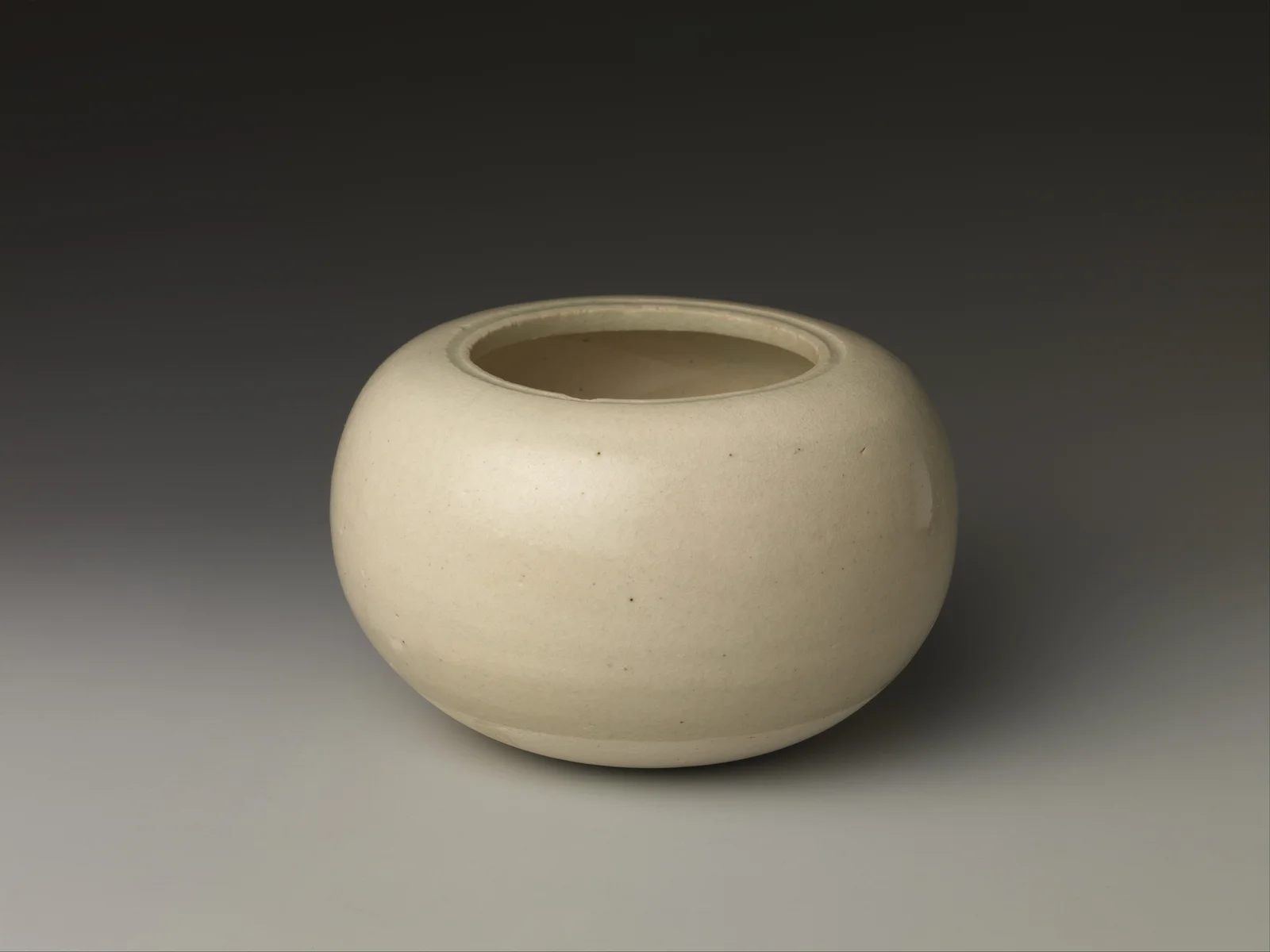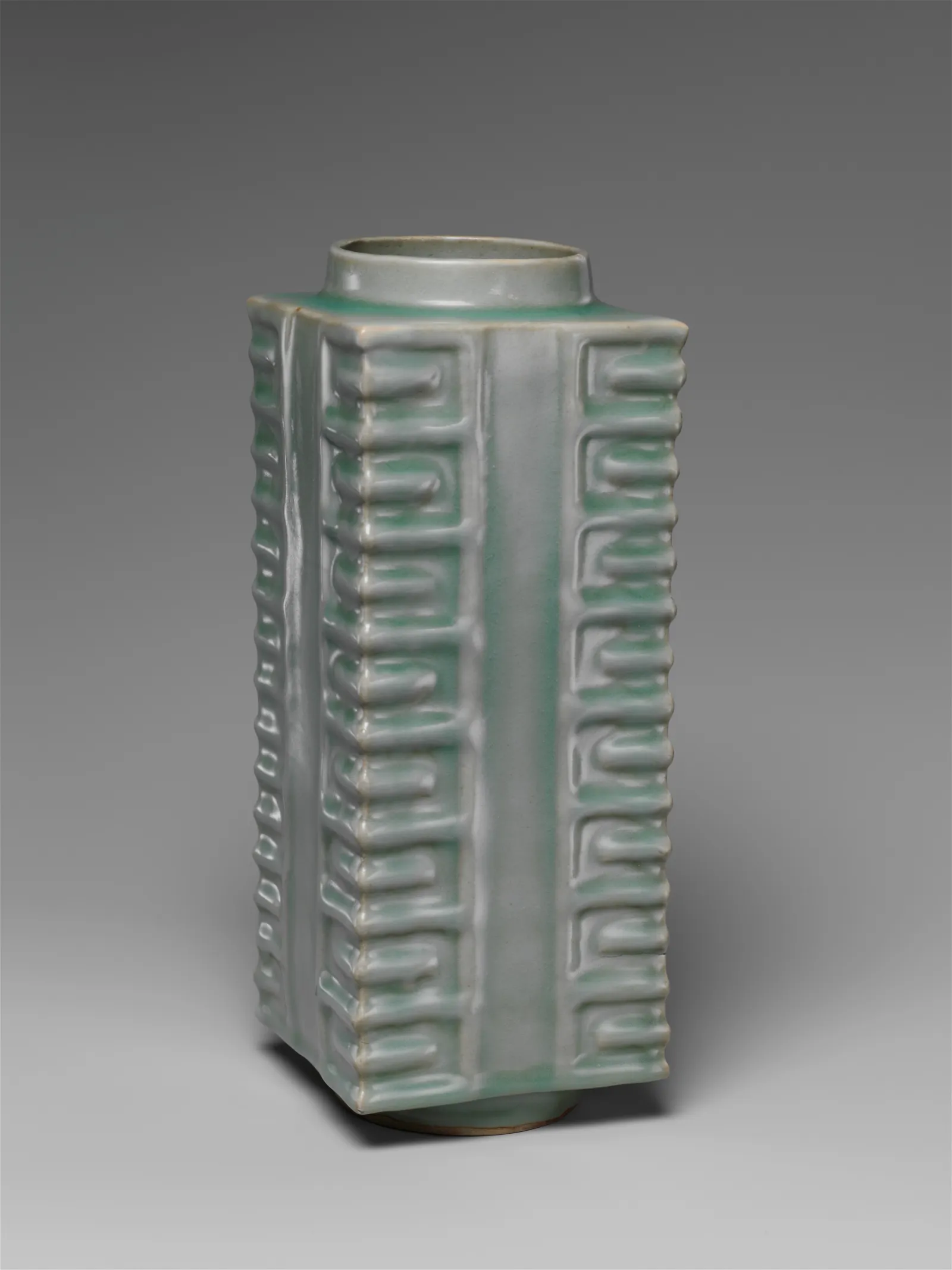
Chinese export porcelain was made in China for overseas markets. My way into it is the hand that used it: a spout shaped for a drinking habit, a wine cooler built for a dining table, a teapot carrying a family's arms. Foreign demand did not make these objects less Chinese. It gave Chinese makers different problems to solve.
That is why “made in China” is not a complete description. A vessel can be Chinese in material knowledge and workshop labor while answering a customer who ate, poured, displayed or prayed differently on the other side of the sea.
What is Chinese export porcelain?
Chinese export porcelain is porcelain made in China for markets beyond China, especially through the long trade networks that connected Chinese kilns with Asia, the Middle East, Africa, Europe and later the Americas. It can include objects made for specific overseas forms of use, decorative schemes, armorial orders and commercial tastes.
The category is not a quality grade. It does not mean fake, lesser, or disconnected from Chinese ceramic skill. Nor does it mean every porcelain object found outside China was commissioned for export. The questions have to remain precise: where was it made, when, for which market, in what form, and on what evidence?
The Met's late-sixteenth-century Jingdezhen kendi is a useful corrective to the assumption that export means Europe. The museum traces Chinese manufacture of this long-necked, spouted drinking form to demand in Southeast Asian Muslim communities, with examples later reaching the Middle East. Its decoration does not establish a European destination. Start with the use and the record, not a blue-and-white pattern you recognize.
Export changed the form, not just the destination
The easiest story says Chinese potters made a finished tradition and foreign merchants carried it away. The harder, truer story is that trade changed production.

The wine cooler, dated around 1735–36 by the Met, puts the issue on a dining table. The museum identifies the porcelain as Chinese export work with a Western form, likely derived from silver, and the mounts as the work of Augsburg silversmith Elias Adam. Flowers alone would tell you much less than that combination of shape and documented makers.
Look at the broad opening and the metal attachments. I like this object because its job refuses to disappear behind its decoration. An overseas customer needed a cooler; Chinese potters supplied a fired body; a German silversmith worked on its presentation. Calling all of it Chinese, or all of it European, throws away part of the labor.
A workshop responding to export demand might make a pouring vessel suited to another region's habits, organize a rim for a foreign plate form, adapt border design to an unfamiliar dining service or paint a patron's coat of arms. None of that turns a Chinese workshop into a passive factory. It shows technical intelligence listening across distance.
This is the difference between an object that travels and an object designed to answer travel. The first may arrive somewhere new. The second already contains a conversation with somewhere new in its form, image or order.
Blue-and-white was global because it was flexible
Blue-and-white porcelain is often treated as a finished Chinese visual identity. Its history is more mobile. Cobalt, pale porcelain bodies, transparent glaze, brushwork and kiln control made a highly adaptable surface system. A workshop could create dense floral scrolls, narrative scenes, borders, marks and foreign-facing forms without losing the visual force of the material.
The mid-fourteenth-century Jingdezhen tradition does not prove one later export order. It supplied a technical and visual platform that made later adaptation possible: cobalt brushwork could negotiate curved bodies, repeating borders and many customer-facing forms before fire fixed the result. The blue-and-white guide owns that visual grammar in detail; this page follows what happened when the system had to answer distant use.

The Met dates this jar with the emblem of the Order of Saint Augustine to about 1575–1600. Look for the double-headed eagle and the heart pierced with arrows: the museum identifies that device with the Catholic order. The exact destination remains open; its record considers missionaries in Mexico, the Philippines or Macau. Naming the emblem advances the story. Choosing a destination without evidence would spoil it.
The global part of the story is not that China “gave” blue-and-white to the world in one clean gesture. Different consumers, intermediaries and makers adopted, copied, commissioned and transformed it. The pattern moved because it was both recognizably coherent and open to variation.
Read an export object through four questions
| Question | What to look for | What not to assume |
|---|---|---|
| Form | Spouts, handles, plate profiles, cup shapes, lids and scale | An unfamiliar shape is not automatically foreign-made or export-only |
| Surface | Coats of arms, inscriptions, borders, floral systems and figure scenes | A dragon or blue color alone cannot date, value or authenticate an object |
| Material and making | Body, glaze, painted line, foot, firing behavior and repair | A photograph cannot replace object handling, provenance or specialist examination |
| Use and route | Table setting, ritual, display, collection history and documented trade context | “Found overseas” does not by itself explain who ordered or used it |
The table is useful because it blocks the collector's shortcut: see a crest, a blue rim or a foreign-looking handle and announce a full biography. Real objects deserve slower looking.
A porcelain service is a designed relationship, not a pile of matching plates
The single-object photograph creates a false kind of independence. A plate appears alone, perfectly centred, and we begin to read its crest or flower as if the object were designed to be wall art. An export service asks for a wider frame. A dinner plate, soup plate, charger, serving dish, bowl, cup and sauceboat may repeat one border while changing the amount of open space, the position of an armorial device and the way a hand meets the form.
That relationship is where overseas use becomes visible. A flat central image must survive food covering part of it. A border has to remain legible around a rim. A crest that works on a broad charger may need to shrink or move on a cup. The workshop is not merely copying one picture many times; it is translating a visual identity across objects with different depths, curves and jobs.
The Cleveland Museum records a circa-1750 Chinese export porcelain charger measuring 36.3 centimetres across. That record supports one named object. It does not create a universal rule that every 36-centimetre Chinese plate was a charger or belonged to an export service. The dedicated Chinese porcelain plates guide explains why diameter, profile, well, foot and documented service context must be read together.
When only one piece survives, I ask what relationships are still visible. Does the border look designed to continue across related forms? Is the central device scaled for a particular well? Are there inventory numbers, family records or auction catalogues connecting it to other pieces? “Part of a service” should be evidence, not atmosphere.
This French clock is the counterexample, not Chinese export ware

The wall clock in the Met's collection dates to about 1735–40. Its porcelain case was made at Chantilly in France; the clockmaker was Etienne LeNoir in Paris. The museum connects its figures and palette to Japanese porcelain. It is not Chinese porcelain made for export.
Keep that distinction in view while looking at the painted figures and elaborate flowers. An object can participate in European fascination with Asian ceramics without containing a Chinese-made ceramic body. Chinoiserie names a European imaginative treatment of Asian themes, not a country-of-manufacture certificate.
This is the comparison I want beside a genuine export object. The wine cooler brings Chinese porcelain into an overseas service; the clock shows European manufacture responding to Asian examples. “Cross-cultural” describes both so loosely that it conceals their most useful difference: who actually made what.
Foreign-facing form does not erase Chinese technical authorship
Cross-cultural design becomes shallow when every unfamiliar feature is called foreign and every familiar brushstroke is called Chinese. The object is usually more entangled. A European coat of arms may be supplied as a drawing; Chinese painters still have to translate it into mineral pigments, brush lines, glaze and firing. A requested form may respond to an overseas dining habit; Chinese potters still have to make that form survive drying, kiln heat, packing and a sea voyage.
Look for the translation decisions. How has a heraldic shield been fitted into a circular well? Do scrolls, flowers or border bands mediate between the crest and the rim? Has a handle been joined in a way that respects the body and glaze? Does the decoration treat a vessel as a volume, or does it look like a paper design forced onto ceramic curvature?
These are not authentication shortcuts. They are ways to restore agency to the people who made the object. “Made for export” describes a destination and a system of demand. It should not reduce the workshop to an anonymous machine waiting for foreign taste to arrive.

The two-handled bowl from Burghley House presents a third situation. The Met dates the Chinese porcelain to 1573–about 1585 and the London mounts to about 1585. Crucially, it describes the painted decoration as consistent with China's domestic market. This is not the same claim as a body demonstrably designed for an export order.
The metal handles and foot changed how that bowl could be held and displayed. I find those additions more interesting than a fantasy of untouched purity, but they belong to a later part of its biography. Overseas alteration is evidence of overseas ownership and adaptation, not automatic proof of the original kiln's intended customer.
The workshop was never only a workshop
Export porcelain turns a kiln town into a network of specialists. Clay refinement, throwing, molding, painting, glazing, firing, packing, quality sorting, brokerage and shipping all had to coordinate before one fragile object could become a household possession thousands of miles away.
For the city's side of this relationship, follow Jingdezhen porcelain. Its workshop density explains how a requested form or decoration could move between specialists. This does not assign every export object to Jingdezhen: a kiln attribution still needs an object record, not the fame of a city.
The human fact remains essential: a vessel begins as controlled pressure, repeated specialist decisions and material risk before it becomes an auction category. The porcelain-making guide follows those decisions from clay to kiln without pretending every piece was made through one process.
The word “export” can make labor disappear behind ships and markets. Bring the object back to the workshop and the story becomes less glamorous, more exact, and more impressive.
Armorial porcelain is a request, not a shortcut to value
Armorial porcelain—objects carrying a European coat of arms or family emblem—makes the cross-cultural commission especially visible. It can show that a customer expected Chinese workshops to execute a foreign-facing image on porcelain.
But a crest does not magically authenticate everything around it. Marks, motifs, color and a family story must be checked against an object's material, form, decoration, provenance and securely documented comparisons. A supposed armorial object is not a license to skip object study.
This matters whether you are collecting, selling, inheriting or simply looking. If money, age or authenticity is at stake, take the object to a qualified ceramics specialist or auction-house department with relevant expertise. An article can teach the questions; it cannot certify the vase in your hand.
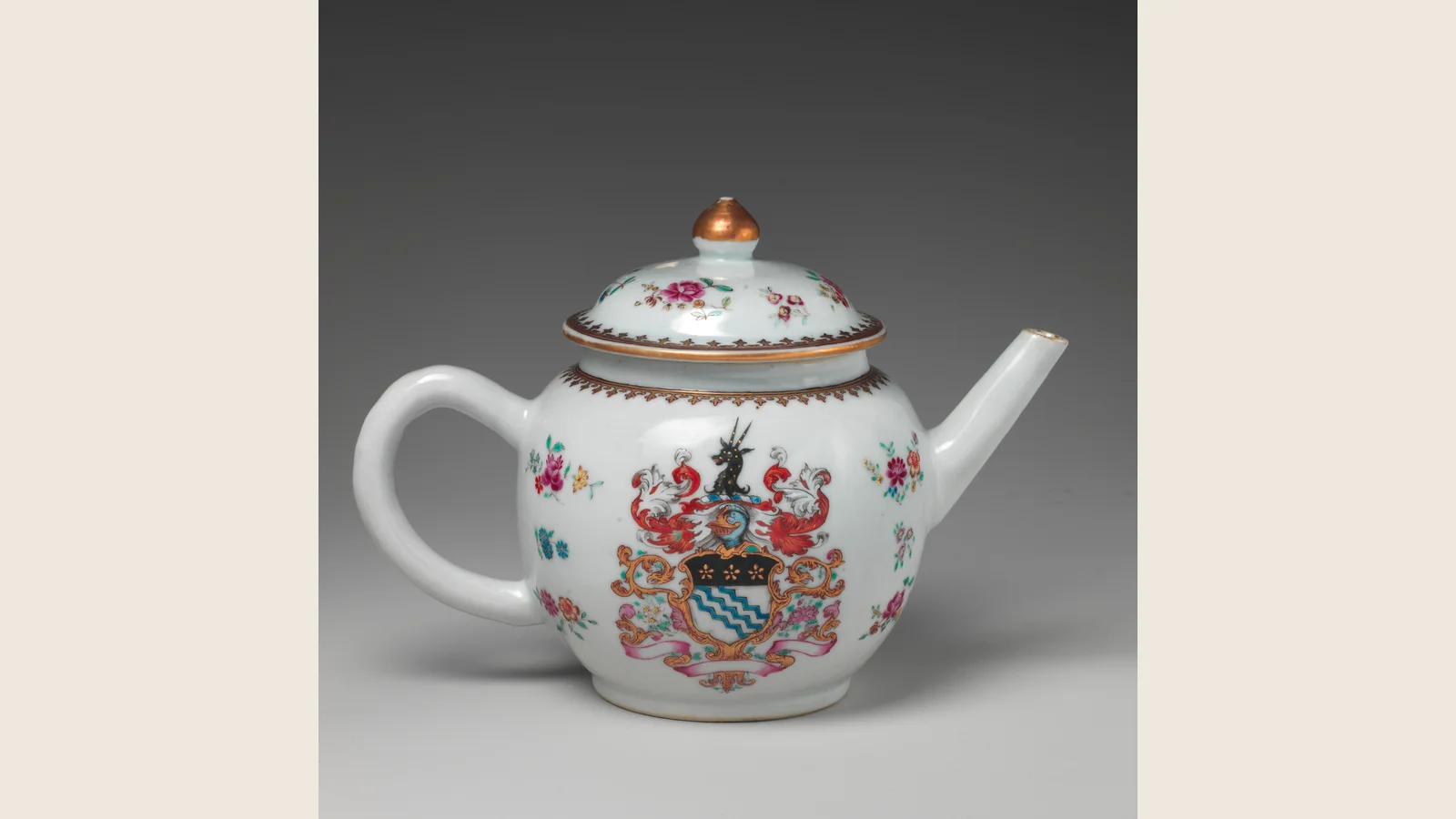
The armorial teapot at the top of this page is catalogued as Chinese, for the British market, dated 1750–60: hard-paste porcelain with enamel decoration and gilding. Those details anchor the reading. On the rounded body, the shield and its surrounding devices occupy a different visual space from the scattered flowers and the border around the lid. The painter had to fit a recognizable emblem to a curved, usable pot—not merely reproduce a flat drawing.
Errors can be evidence too. A letter copied strangely or a heraldic detail misunderstood may reveal the distance between paper design and ceramic execution. I refuse to mock those slips as ignorant copying. They are the visible friction of early global production: a drawing crossed languages and hands, then had to survive mineral color and fire.
Stories also travelled, and they did not remain stable

The Met identifies this 1700–1730 cup and saucer as Jingdezhen porcelain with Dutch decoration depicting the Chinese story of Sima Guang. The body and its enamel-painted story therefore have different geographical attributions. A Chinese subject did not require a Chinese painter; a Chinese-made cup could receive another layer of work abroad. This little service makes that distinction tangible.
This is where I become suspicious of the phrase "East meets West." It sounds elegant and explains almost nothing. Which story moved? Who selected it? Which part remained readable? What did the cup's new owner believe was happening? A useful object history names the translation problem instead of celebrating a foggy meeting between two giant abstractions.
Chinese export porcelain is a history of adaptation, not dilution
Some people treat foreign demand as a fall from pure Chinese design. That assumes culture is strongest when it stays still. The objects argue otherwise. Workshop traditions remained technically Chinese while responding to unfamiliar needs; foreign consumers met Chinese material intelligence and changed their own visual habits around it.
The best export porcelain therefore carries friction. It can be made in a Chinese kiln but shaped for an overseas hand. It can use a Chinese blue-and-white system around a foreign family emblem. It can be a luxury commodity, an everyday utensil, an imperial gift, a merchant order or a later collector's prize.
The movement of Chinese Dehua porcelain adds another route: white figures and vessels entered European collections under the name Blanc de Chine, and documented Guanyin forms became models for early Meissen experiments. The export story is therefore about copied bodies and materials as well as painted crests.
Begin with the Chinese art hub and the history of Chinese porcelain for the long technical and trade arc. Then compare an export form with a familiar domestic-looking vessel. The question is not “Which is more Chinese?” It is “What did this object have to learn in order to cross a world?”
Bring one object into Moments as a reconstructed table, not an isolated glamour shot: show the full form, one mark or repair, the job it was designed to perform and the route or family evidence you can actually document. Return to compare it with objects posted from other countries. A real network of object biographies can correct the heroic stories that sellers build from one crest and one photograph.