Shenhe is not an adeptus. She is a human being whose design has made distance look supernatural. The white hair, crane-like silhouette, mountain training and red ropes persuade players to misread her before she speaks. That mistake is not a flaw around the character. It is the mechanism that makes her story work.
I played Genshin Impact regularly through university, when a new Liyue character could quickly become a discussion about beauty, mythology, builds and banners at the same time. Shenhe still stands apart because the most useful question about her is not “How strong is she?” It is “Why does everyone keep mistaking a wounded human woman for something beyond human?”
My answer is firm: Shenhe's best design choice is not her beauty or Cryo kit. The game lets a human woman look like an immortal, then forces the audience to discover how much work that distance costs.
Shenhe Genshin explained: she is human, and that changes everything
HoYoverse's official introduction is unambiguous. Shenhe was born into a branch family of exorcists. Cloud Retainer took her in, raised her among adepti and trained her in adeptal arts. She is an adepti disciple, not an adeptus.
That distinction is the key to the character. An immortal naturally detached from ordinary life would be mysterious but emotionally simple. Shenhe is different. She learned detachment as a survival system. She eats mountain herbs, lives far from the harbor and speaks without the social cushioning most people expect because ordinary human life was removed from her before she could practice it.
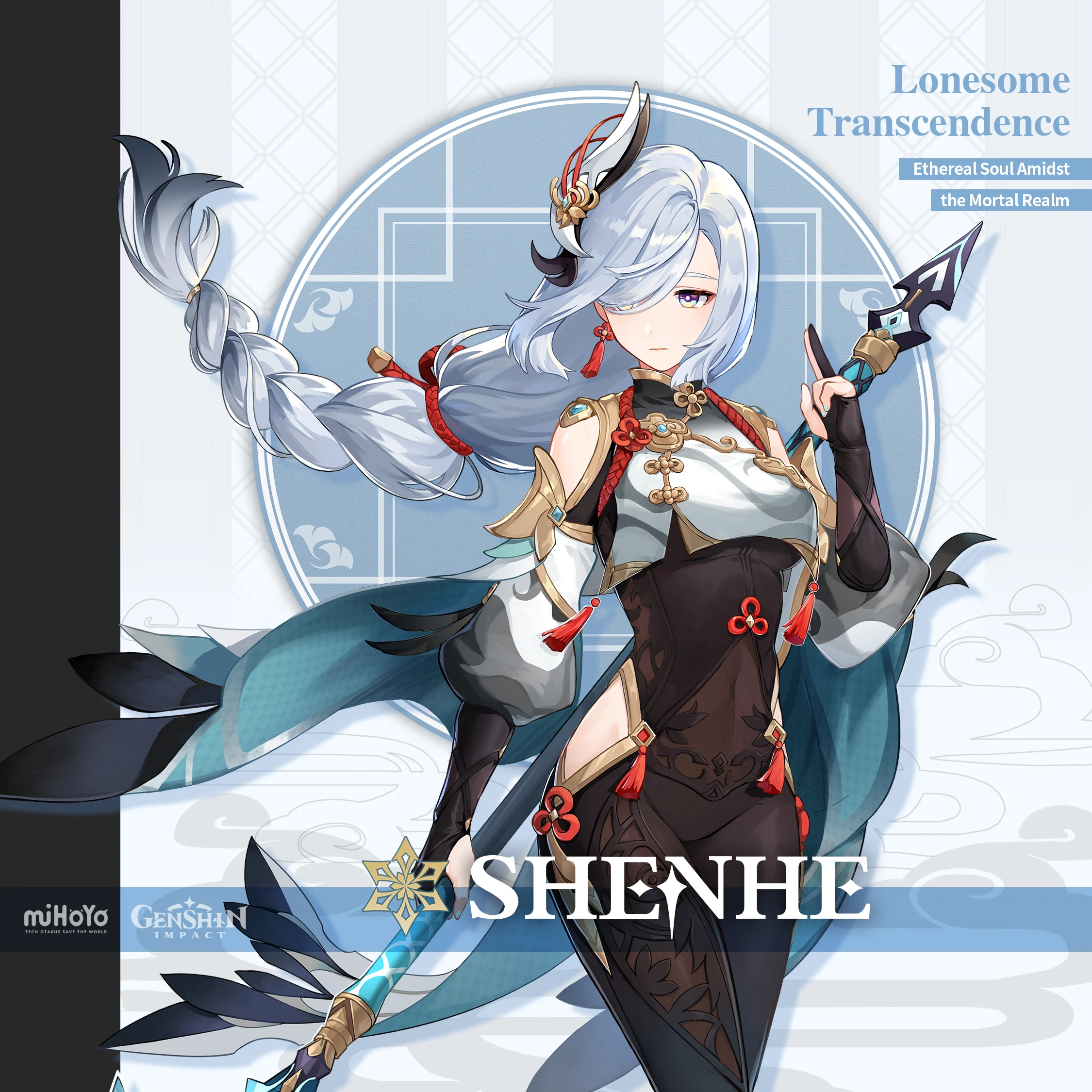
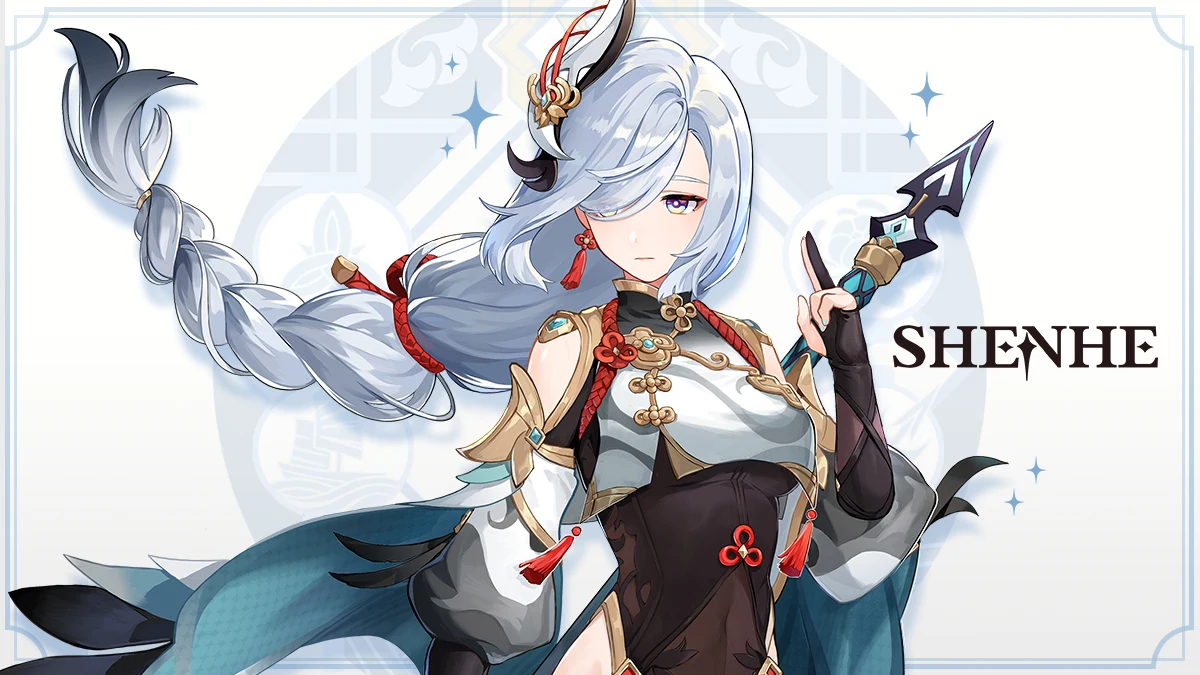
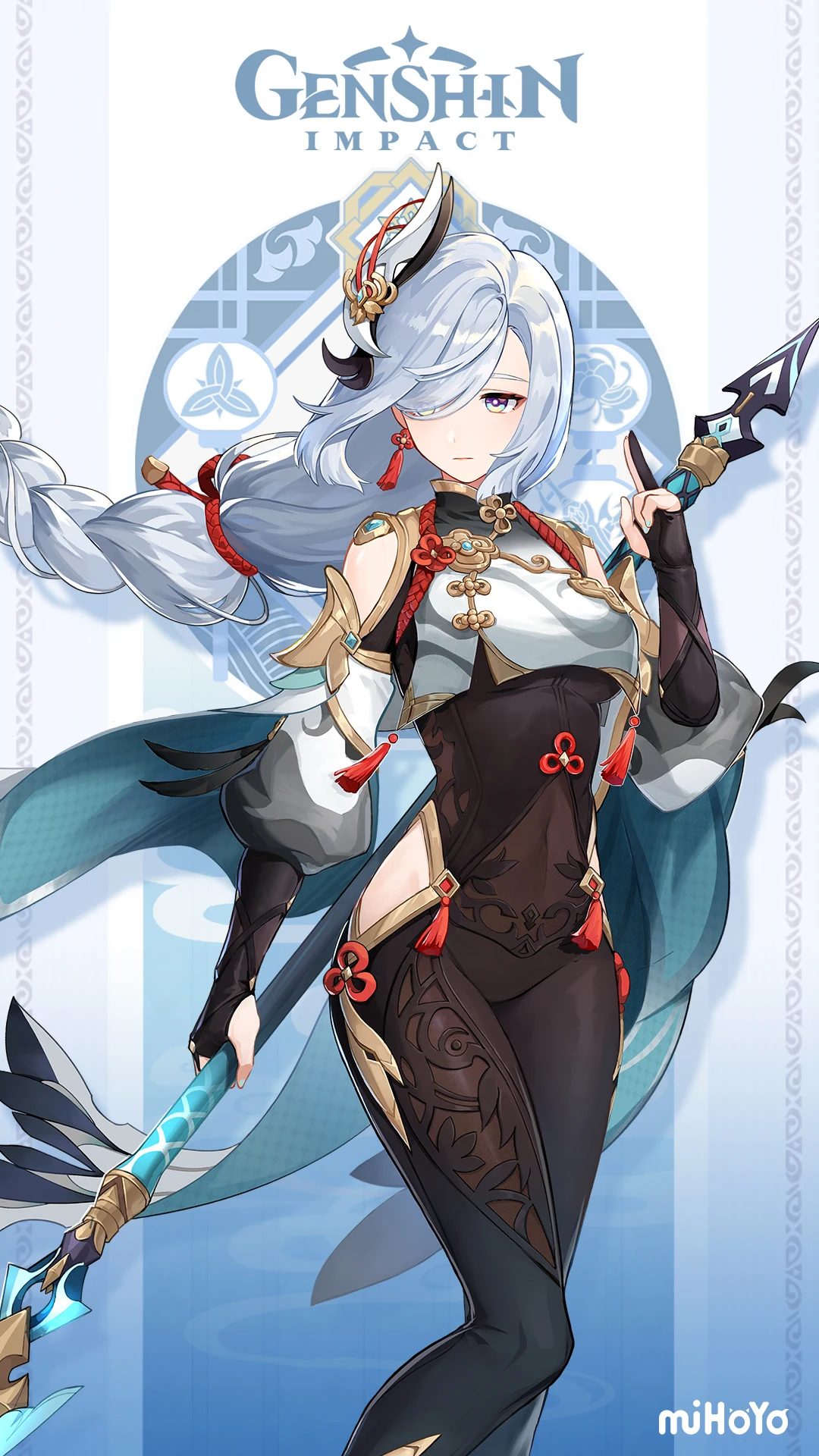
The official profile makes the misreading visible. White hair and pale-blue fabric create cold distance; the long braid and black bodysuit turn her into a clean, memorable silhouette; red knots interrupt the palette like warning signs. She looks composed because almost every line has been disciplined. The image proves the publisher's design. It cannot prove a real religious identity, personality diagnosis or historical costume.
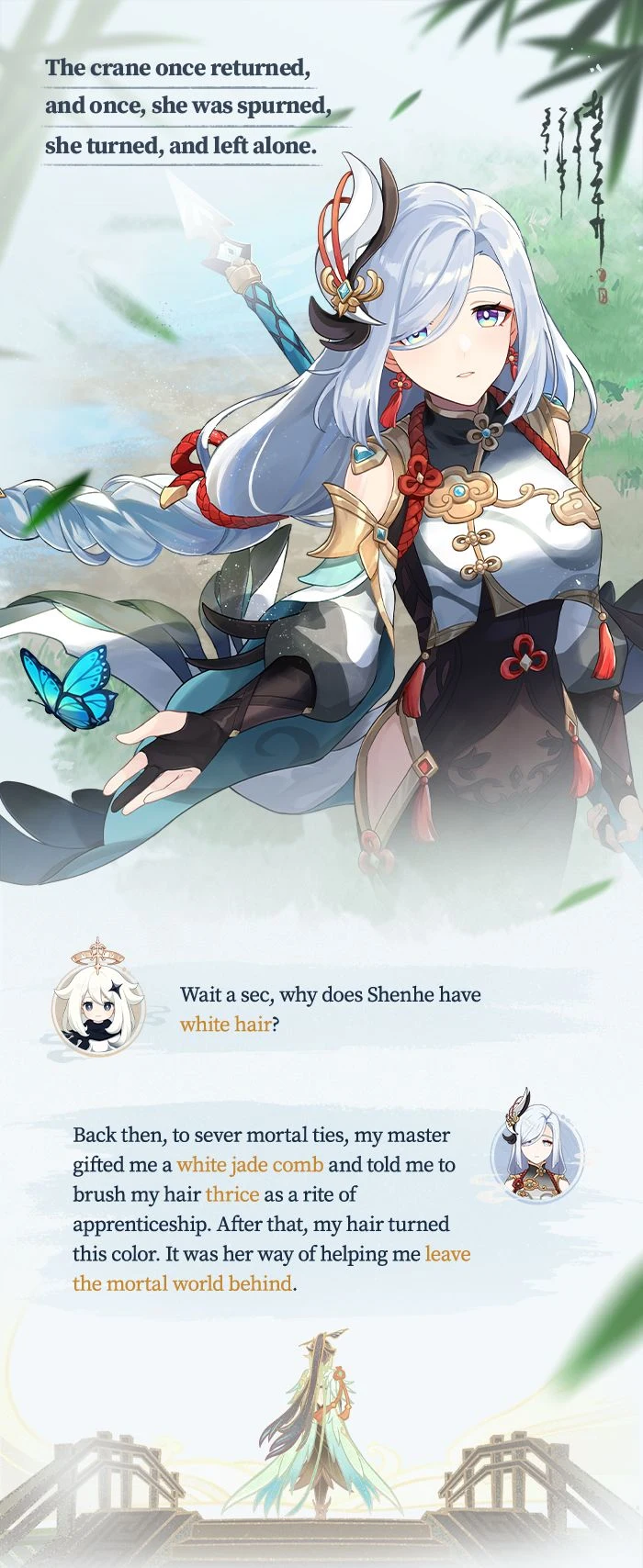
The later official notes make the human origin even harder to miss. Shenhe explains that a white jade comb, given as part of her fictional apprenticeship, preceded the change in her hair. The panel is not a record of one real initiation rite. It is evidence that the game authors her seemingly immortal appearance as something acquired after childhood, not a species marker she was born with.
Many character explainers treat the “human or adeptus” question as a trivia box and move on. That wastes it. Shenhe's humanity changes the meaning of every apparently immortal quality. Mountain isolation is not her natural habitat. Emotional restraint is not divine serenity. Her unfamiliarity with social life is not the wisdom of an ancient being. It is the result of a childhood cut away from ordinary development.
This is why I reject the popular “ice queen” summary. Coldness is a surface effect. Shenhe is not empty of feeling; she is crowded with feeling and trained to keep it contained.
The red ropes are a restraint system, not a decorative symbol
The official HoYoWiki outfit record calls the ropes around Shenhe's original outfit “fetters and wards simultaneously.” That sentence is more precise than most cultural speculation around her.
A fetter restricts. A ward protects. The ropes therefore hold two truths at once: Shenhe is restrained by them, and the restraint has helped her survive. They do not simply announce danger. They show how protection can become a permanent way of living.
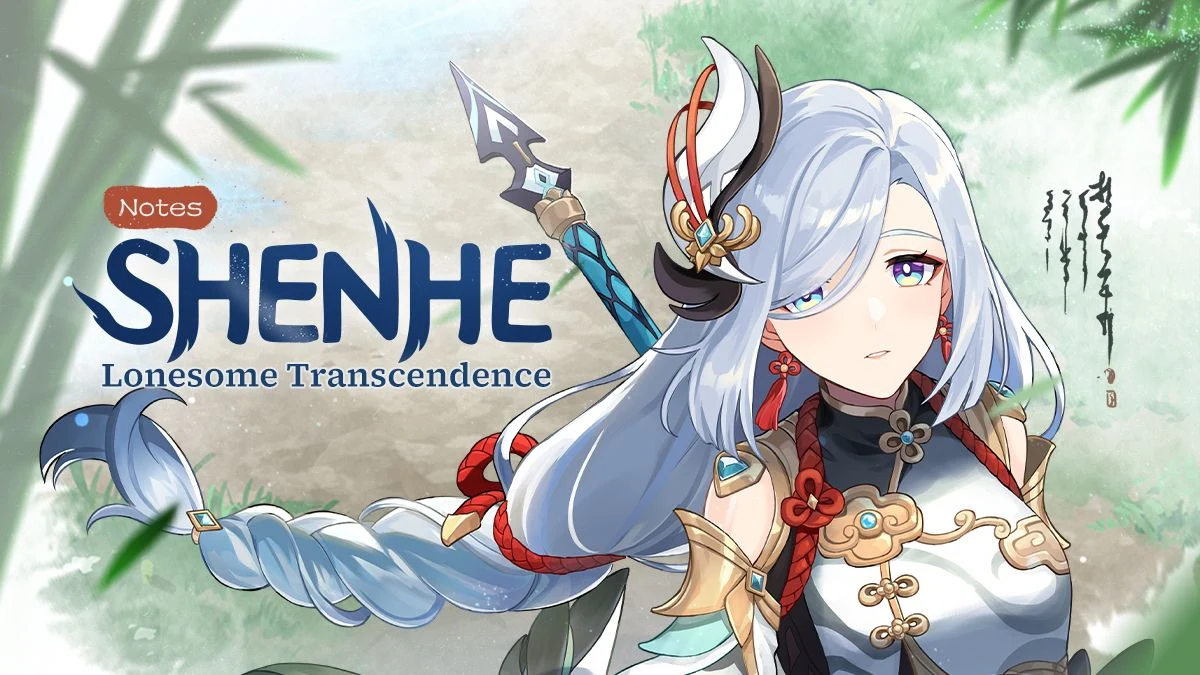
The red cords run through hair, shoulders, torso and accessories. They are not one pendant that can be removed without changing the character's outline. They organize the body. Even at a distance, the viewer sees control wrapping through the pale costume.
It is tempting to label them “Taoist binding ropes” and declare the design explained. I will not do that. Chinese religious, exorcist, folk and literary traditions use cords, knots, talismans and binding in many different ways. Genshin Impact combines visual associations inside a fantasy system. A resemblance can be worth exploring, but it does not turn one fictional costume into evidence of one universal real ritual.
The better interpretation stays inside what the story proves. Shenhe's violent impulses and emotional intensity are feared. The ropes help control them. She becomes legible to others because restraint is visible on her body. That is the tragedy: society can accept the controlled version before it learns to accept the person.
Her childhood explains the distance without excusing the myth
Shenhe's father attempted to sacrifice her after the death of her mother. The child survived the encounter and was later taken in by Cloud Retainer. The official material does not present this as an elegant path toward immortality. It is abandonment, terror and forced self-reliance before it becomes training.

This official story panel is unusually blunt. The red rope frames a father calling his daughter cursed and treating her death as a solution. It connects restraint to memory rather than fashion. The image can establish HoYoverse's authored scene; it cannot diagnose trauma, prove how every player reads the character or turn a fantasy biography into clinical evidence.
The most revealing detail is not that Shenhe wins against a monster. It is that survival leaves her without a believable home. Hero stories often reward endurance by restoring the survivor to society. Shenhe survives first and must learn belonging much later.
That delay is what gives her awkwardness weight. When she misunderstands etiquette or responds too literally, the scene is not merely a joke about an aloof woman. It shows the cost of being raised around beings who do not require the same social negotiations as people in Liyue Harbor. She can master an adeptal art and still need help reading a conversation.
I do not think the game always handles this tension perfectly. Beautiful suffering is easy to package. A poised, white-haired woman with a tragic past can become an aesthetic before she becomes a person. Shenhe works when the story interrupts that packaging—when she chooses, asks, protects, misreads, adjusts and remains present after the elegant reveal is over.
Yun Jin's opera turns pain into legend—and Shenhe refuses its ending
The strongest Shenhe scene is not a character demo. It is “The Divine Damsel of Devastation”, the Liyue opera performed by Yun Jin during Interlude Chapter: Act I.
The opera converts a child's ordeal into a heroic tale. That conversion is neither simply false nor simply respectful. Public art gives a community a form it can remember. It also edits. Fear becomes courage, private damage becomes spectacle and a living person's uncertainty becomes the clean ending an audience wants.
Then Shenhe appears and breaks the closed form. The “divine damsel” is not safely in the past. She is alive, listening and still deciding what her story means. When the performance changes to acknowledge her continuing journey, the scene stops treating legend as a tomb.
This is why the opera matters more than a lore recap. It asks who owns a painful story after other people have found it useful. Yun Jin does not become important by explaining Shenhe better than Shenhe can explain herself. She becomes important by recognizing that the performance must leave space for the person who survived it.
Overseas viewers often call the scene “Chinese opera” and stop there. The game itself calls the fictional form Liyue opera. Yun Jin's singing, costume, movement and stage language draw from Chinese opera traditions, while the production also uses modern game cinematics and an invented regional world. It is an invitation to learn about Chinese opera, not a substitute for learning the differences among Peking opera, Henan opera and many other forms.
My reading is decisive: the opera does not reveal a hidden immortal. It restores authorship to a human being whom both family and legend tried to define.
Her Cryo role mirrors her isolation, but it does not explain her
Shenhe is designed as a specialist Cryo support. Her Icy Quill effect amplifies Cryo damage, and her burst can reduce Cryo and Physical resistance. That mechanical narrowness has an obvious poetic fit: she is powerful, precise and most legible inside a limited relationship.
I would not call that proof of authorial intent. Game kits must satisfy balance, roster and commercial needs. A support role can echo a character theme without having been designed as a psychological metaphor.
The useful point is smaller. Playing Shenhe asks the player to understand what she enables in other characters. She does not dominate every team by herself. That structure resists the fantasy that emotional distance equals complete independence. Her power becomes clearer through connection.
This page is deliberately not a build guide. Weapons, artifacts, teams and banner value change with versions and accounts. Anyone making a current spending decision should check the live game and a dated specialist guide. The durable reason to read Shenhe is not a damage calculation. It is the tension between extraordinary capability and ordinary social need.
Frostflower Dew is the costume where social return becomes visible
The original outfit is called The World's Shackles. The later Frostflower Dew outfit keeps red cords but moves Shenhe into formal clothing commissioned by Cloud Retainer for Lantern Rite. HoYoverse's outfit record says the bitter cold in her heart has faded.
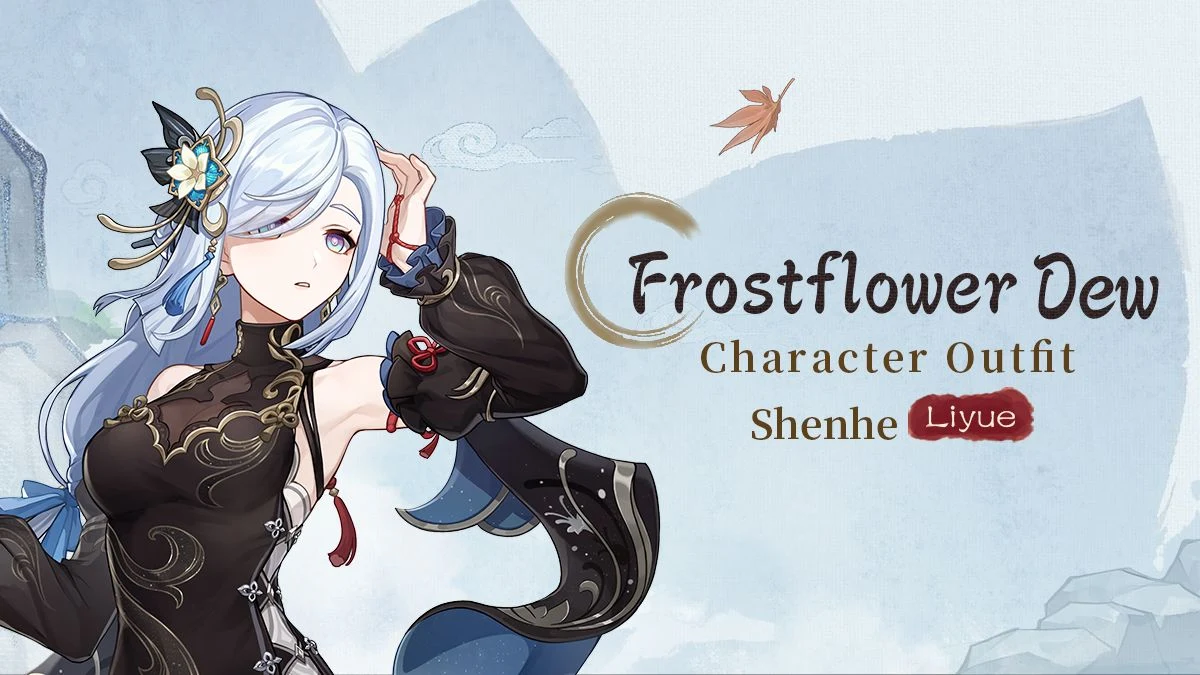
The important design choice is continuity. Shenhe does not become human by removing every sign of the past. Red cords remain at her arms. The palette remains cool. Her hair and face remain immediately recognizable. Social return is not a makeover that erases injury.
At the same time, the silhouette changes. The original clothing looks engineered for movement, combat and containment. Frostflower Dew is a public garment: formal, decorative and tied to a shared festival. She is dressed to attend rather than withdraw.
The official outfit story includes Shenhe watching children look at toys and realizing that desire and joy are connected in a way her own childhood did not teach her. That observation is more affecting than the luxury of the costume. She is not recovering one lost memory. She is learning how ordinary life works by staying close enough to watch it.
This is where Cloud Retainer also becomes more than an eccentric master. Commissioning the outfit is an imperfect act of care from someone who raised Shenhe outside human society and now recognizes that protection cannot mean permanent removal from it.
What is Chinese in Shenhe—and what remains invented
Shenhe is culturally specific without being an authentic specimen of one tradition. Her design draws energy from an exorcist lineage, talisman-like paper forms, mountain cultivation, crane imagery, red binding cords, opera and Liyue's recomposed architecture and clothing. Those elements make the character readable as part of a Chinese-authored fantasy world.
They do not collapse into one historical source. Adepti are a Genshin category shaped by Chinese ideas of immortals and cultivated beings, not a dictionary replacement for every xian story. Shenhe's clan is fictional. Her red ropes have an official function inside the game. Yun Jin's opera is a designed hybrid. Cloud Retainer is both a mythic crane-like being and a character written for this franchise.
The larger Genshin Impact guide argues that Liyue works when cultural reference changes movement, sound and institutions rather than sitting on the surface. Shenhe passes the same test at character scale. Her references change how other people misread her, how she controls herself, which relationships become possible and how a public performance retells her life.
That is richer than saying she “represents Chinese culture.” No single character can do that. She represents one confident mode of Chinese global game design: borrowing recognizably, recomposing aggressively and making the boundary between person and symbol part of the story.
The mistake to avoid is admiring the distance forever
Shenhe's marketing makes distance beautiful. The “Lonesome Dream” teaser and “Crane in the Wild” demo frame her through snow, mountain space, controlled movement and a voice that rarely wastes a word. It is excellent character advertising.
But the story does not ask us to preserve her in that advertisement. Shenhe becomes more compelling as the distance weakens: accepting company, entering the harbor, understanding a festival, hearing her life performed, making a choice that did not come from her father or master.
The shallow reading says her mystery is the appeal. The stronger reading says mystery is what other people call a life they have not bothered to understand.
So the answer to the common search question is simple. Shenhe is human. The real answer is larger. Her design persuades us to want the immortal image, then her story makes that desire uncomfortable. White hair, red ropes and mountain silence are not proof that she has transcended humanity. They show the elaborate structure built around a human being who was denied ordinary safety and is slowly choosing ordinary connection anyway.
That is why Shenhe deserves a page separate from a roster guide. She is not important because she is the coldest woman in Liyue. She is important because Genshin Impact makes coldness visible, marketable and beautiful—then gives the person inside it a chance to walk back toward warmth.
Continue with the Chinese Games guide to compare how Chinese-developed games carry culture through worlds, systems and characters. Then return to Genshin Impact for the wider argument about Liyue, music, contracts and fan culture.
Bring one specific scene or design detail to East Moment's community: When did Shenhe stop looking like an immortal to you and begin feeling unmistakably human?