Twinkle Twinkle succeeds because it compresses comfort into a silhouette that survives distance, costume and material changes. “Cute” is the effect, not the design explanation. Choose the shape that still reads across a room, then choose whether you want a precise scene or a soft companion. Rarity should have no vote.
Twinkle Twinkle Popmart: the direct answer
Twinkle Twinkle is a character world inside Pop Mart's artist-IP system, built around tiny star-like beings. The official Twinkle Twinkle collection describes them as small stars telling stories of courage, longing and love. Pop Mart's 2024 annual-results announcement says the IP was newly signed that year and frames the characters as lights born in darkness. That is the company's story. The design gives a more useful answer.
You recognize Twinkle Twinkle through a round child face, enormous upward-looking eyes, tiny star highlights, warm cheeks and a compact body swallowed by a larger outer shape. A hood may become a sheep, fruit, devil, cloud or night creature. A plush pendant may soften almost every edge. The character still holds because the eyes, face-to-costume ratio and star-like outline remain legible.
This page is not a release database and it will not tell you that a secret is automatically better. It answers four practical questions:
- What makes Twinkle Twinkle recognizable rather than generically cute?
- Why do the eyes carry more identity than the mouth?
- Should a first buyer choose a hard figure or a plush pendant?
- Which series idea will still deserve space after the launch excitement ends?
The short answer is firm: buy the design that survives normal viewing distance and has one readable action or relationship. If you need the product title to explain the emotion, the object is not doing enough work.
The star is a silhouette, not a decoration
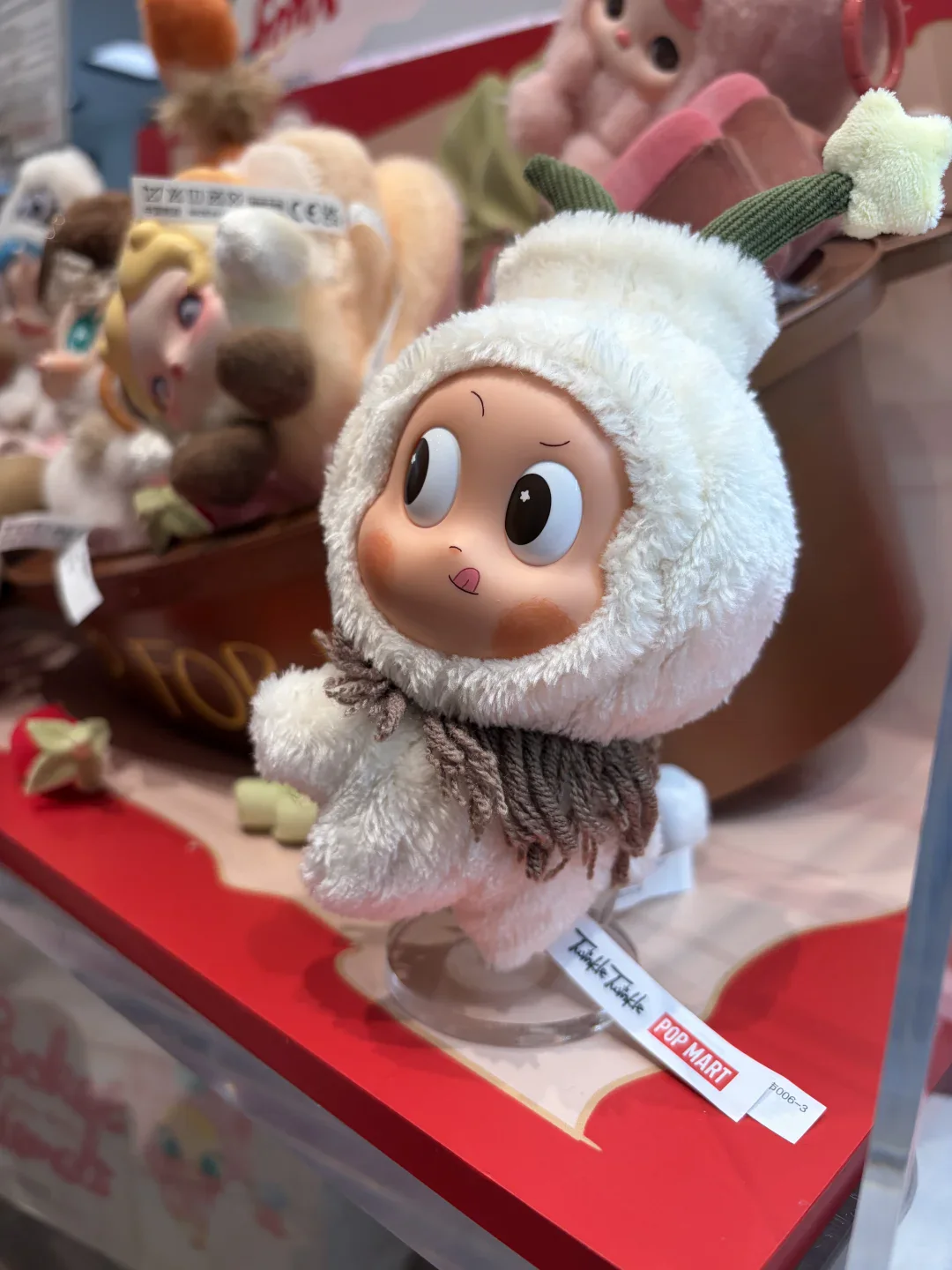
The star does not need to sit on top of the head. The eye highlight, large hood-to-face ratio and compact body keep the character readable even when the costume resembles a plant or farm creature.
Weak character writing treats a star as a symbol pasted onto a toy. Twinkle Twinkle works in the opposite direction. The star is distributed through the entire body: a broad upper mass, small points or ears, a narrow lower body and eyes that look as if they are reflecting light. Even when the outer costume becomes round, the face remains a small illuminated center.
That architecture matters because collectible objects are rarely viewed like product-page close-ups. They live on shelves, bags, desks and bedside tables. From one or two meters away, embroidery, tiny props and printed lore disappear. What remains is proportion.
My distance test is simple:
- Place the figure where it will actually live.
- Step back until you can no longer read a small tag or accessory.
- Ask whether the face and outer mass still form one clear character.
- Turn it fifteen degrees. If the idea collapses outside the official front angle, the product photography was doing too much of the work.
Twinkle Twinkle has an advantage over many detail-heavy art toys: the outline often survives. That advantage is not guaranteed. A busy hood can swallow the eyes; a collaboration can replace the character with costume recognition; a soft pendant can become an undifferentiated ball. The outline must carry identity, not merely volume.
The eyes do more work than the smile
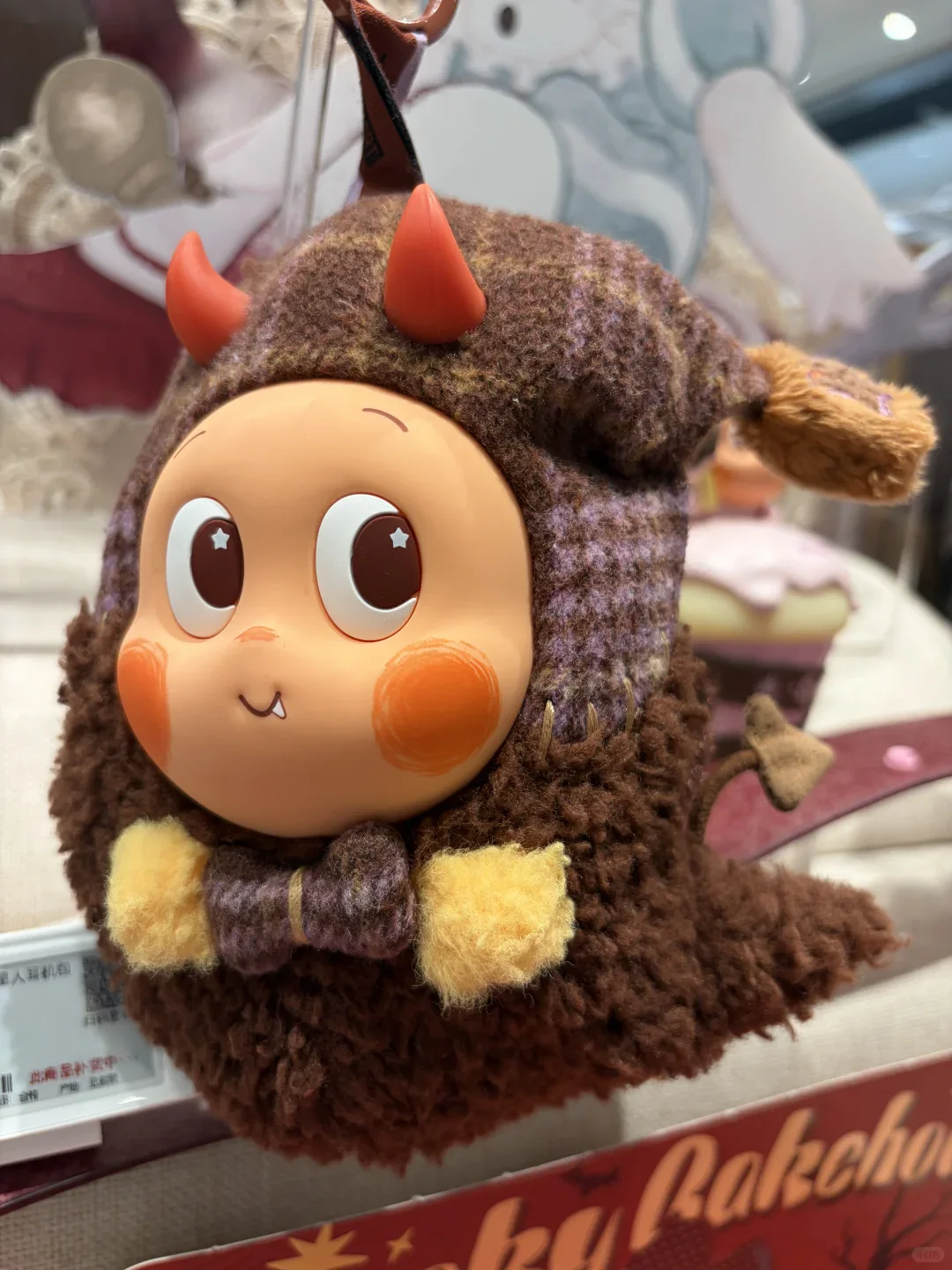
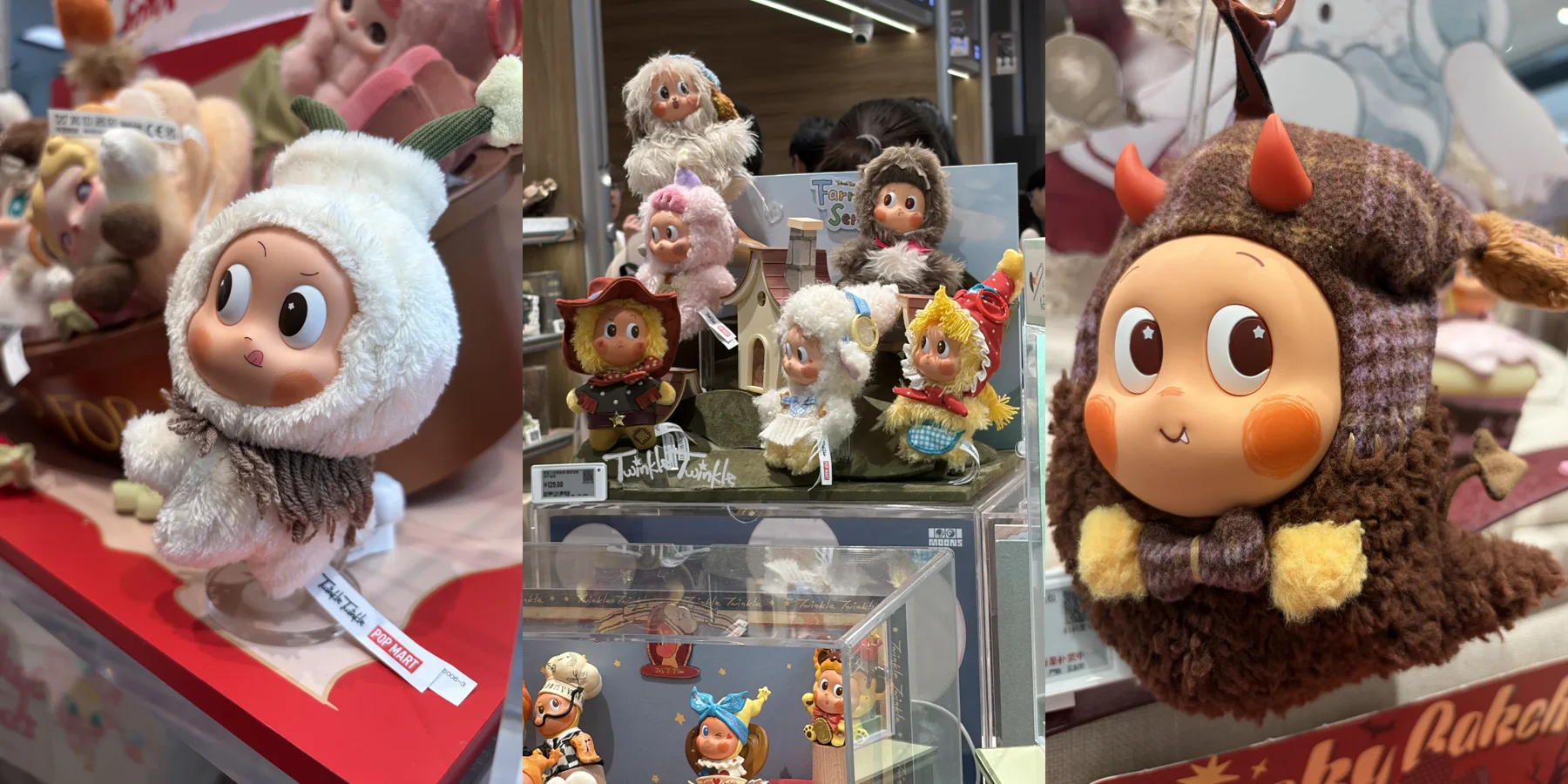
Horns and a dark costume change the mood, but the eye geometry keeps the face inside the same character system. This is variation without losing identity.
Most Twinkle Twinkle mouths are too small to carry a complex expression. That is deliberate. The face avoids a fixed grin or theatrical sadness. Direction, scale and highlights in the eyes do the emotional work.
The eyes usually look upward or sideways rather than confronting the viewer directly. That creates expectation: the character seems to notice something just outside the frame. The tiny star highlight converts a dark pupil into a point of light. Warm cheek circles keep the face from becoming cold or vacant. Together, those choices produce hope without forcing one exact story.
This also explains why Twinkle Twinkle differs from CRYBABY. CRYBABY externalizes emotion through tears and a face already in the middle of a reaction. Twinkle Twinkle holds emotion in anticipation. One says “the feeling is happening”; the other says “something may still arrive.” Neither approach is deeper by default. They organize the viewer's attention differently.
Do not over-interpret every star pupil as one official psychological code. The photographs prove a recurring design feature. They do not prove what every buyer feels or what every costume “means.” The honest observation is enough: when costume, color and material change, the eyes keep the same small source of light.
Plush changes volume; vinyl preserves the pose
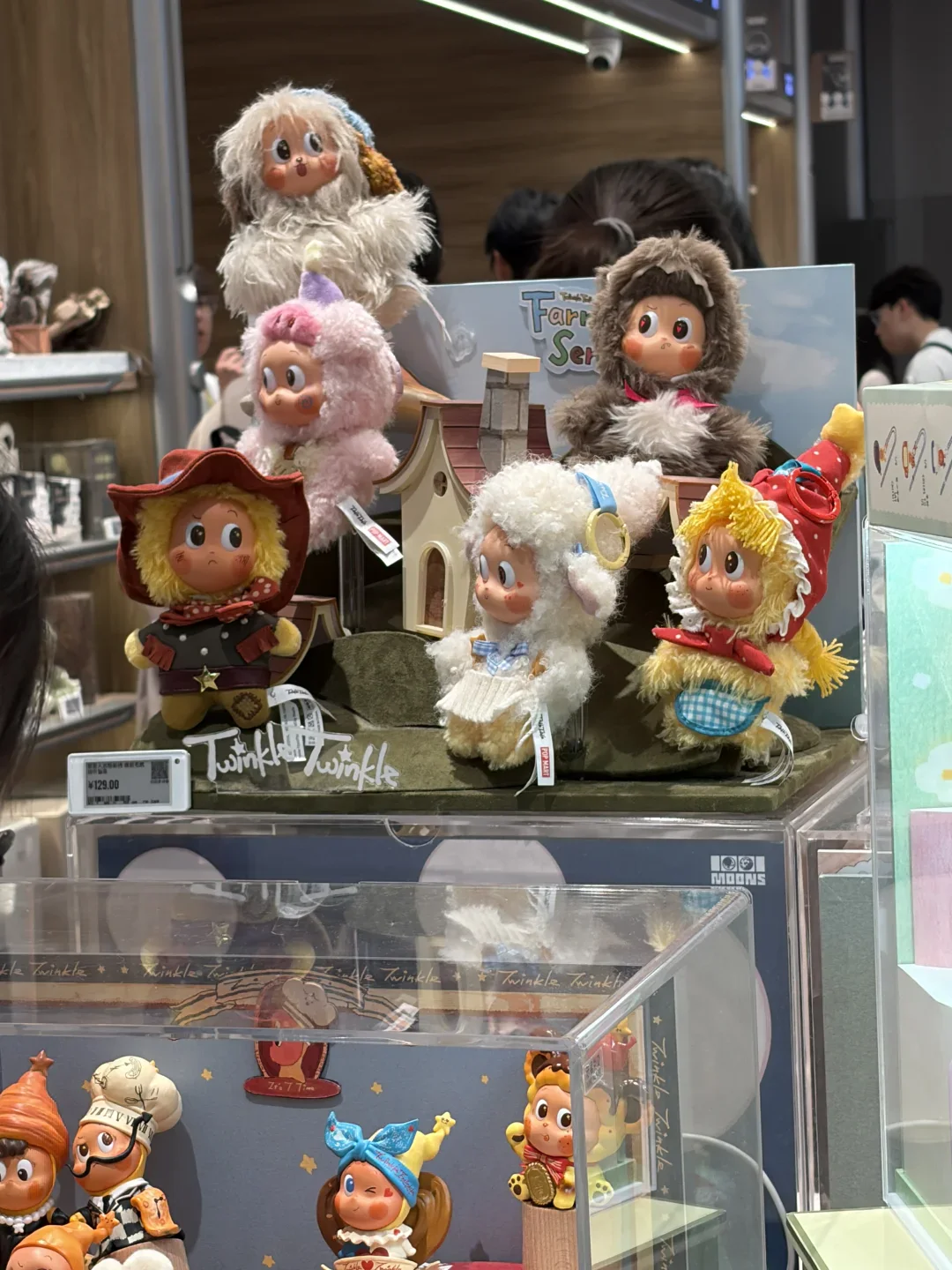
The same store display exposes the choice clearly. Plush expands the outer mass and reads quickly; hard figures retain small gestures, props and scene boundaries.
There is no universally superior Twinkle Twinkle format. There are two different jobs.
| If you want… | Choose… | What you gain | What you give up |
|---|---|---|---|
| A clear room or bag companion | Plush or plush pendant | larger outline, tactile surface, immediate warmth | less precise hands, props and facial edges |
| A miniature scene you can inspect | Hard figure | controlled pose, crisp prop relationships, stable base | less physical softness and usually less presence at room distance |
| One object that travels | Pendant | visible movement and attachment point | wear, rotation and background clutter can weaken the intended front view |
| A stable shelf composition | Hard figure or larger fixed plush | deliberate angle and repeatable placement | it asks for dedicated space rather than casual carry |
The wrong question is “Which format is more collectible?” That invites price, scarcity and social proof to answer for you. Ask what kind of looking you enjoy.
A hard figure rewards repeated close viewing when the body has a verb: carrying, leaning, hiding, reaching, balancing or protecting. A plush rewards placement and presence. It can make an empty corner feel inhabited even when the tiny story details vanish.
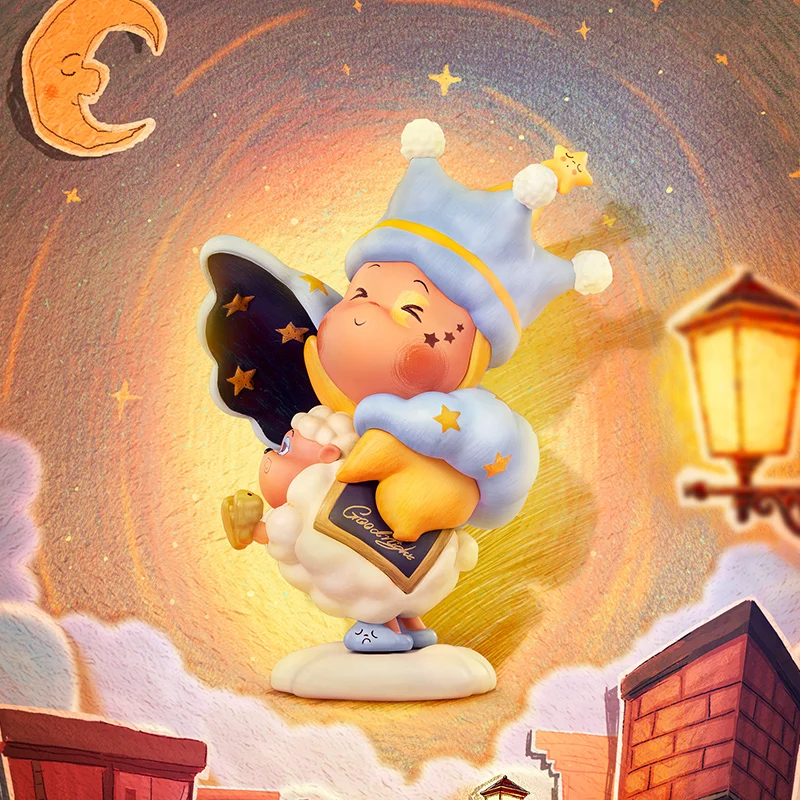
Hard construction keeps the feet, carried companion, hat points, moon and painted background separate. This format earns its place when those relationships matter more than touch.
My first-buy rule is blunt. Choose hard vinyl if you can describe the action in one verb. Choose plush if the outline itself is the reason you keep looking. If neither sentence feels true, wait.
“We Are Twinkle Twinkle” is the cleanest baseline
The official We Are Twinkle Twinkle Series Figures product record lists a 16 August 2024 release, ABS/PVC construction and a height range of 7.5–9 centimeters. Those facts make it a useful baseline: this is the character presented through compact hard figures before a shopper adds the sensory appeal of a larger plush costume.
Start here if you want to learn the stable face, body and star vocabulary. A baseline series lets you see which later changes are meaningful. If every release is your first encounter, novelty can disguise weak structure.
The series is not automatically the “best” because it is foundational. A first figure still needs a readable relationship. Look for a clear line from gaze to hand to object. A strong figure moves your eye through the sculpt. A weak one presents several charming details without deciding which one matters.
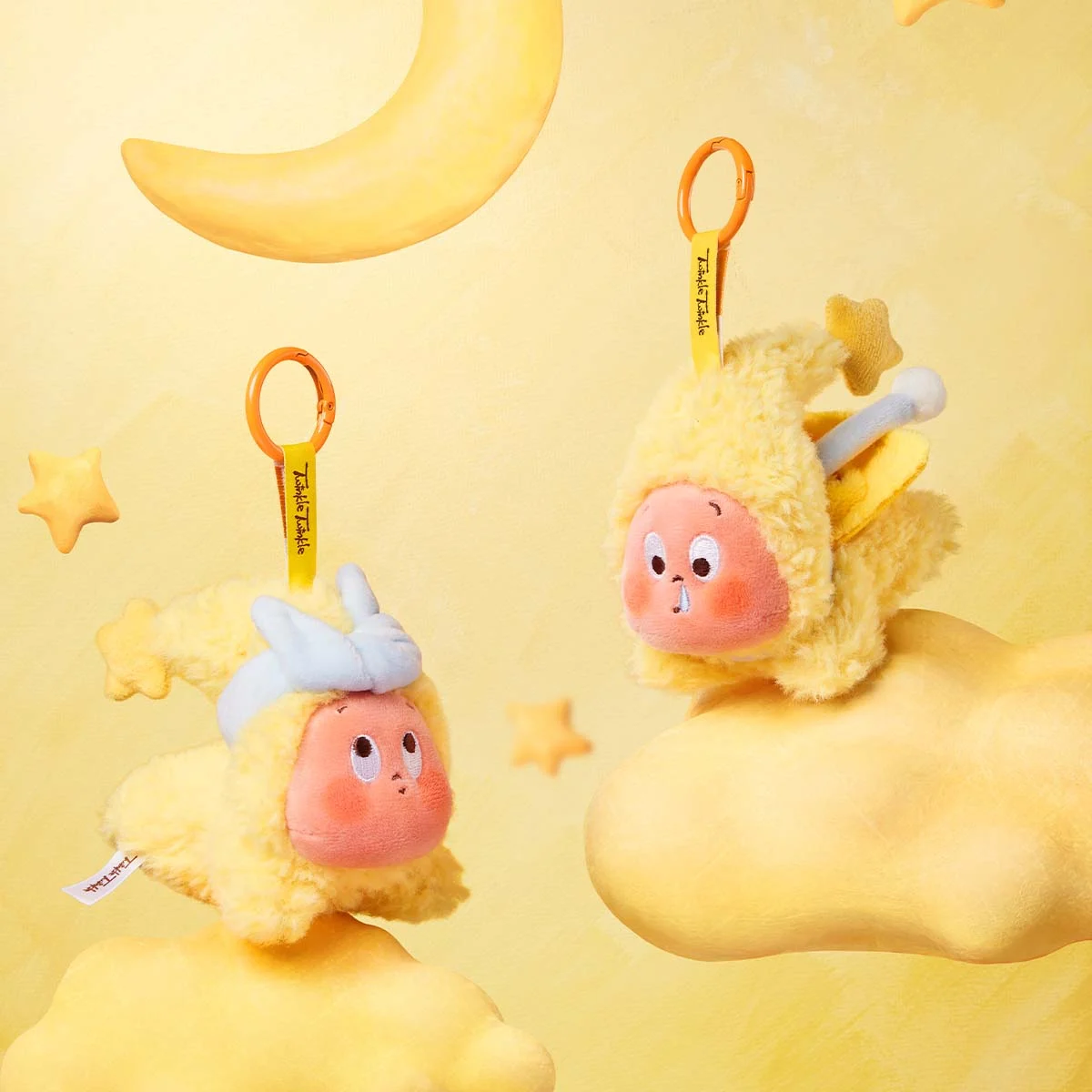
The pendant format deliberately sacrifices edge precision for volume, texture and portability. The ring is not a minor detail; it changes how the character will turn, hang and be seen.
The official plush photography shows why format is not merely a material swap. Limbs shorten into the body. The outer yellow mass becomes dominant. An attachment ring introduces a new top point and a practical direction of pull. A pendant is a moving object, not a small shelf figure with a hook added.
Farm Tales works when the costume gives the body a role
Farm-themed designs are easy to like and easy to overbuy. Wool, vegetables, horns, gingham and warm colors already arrive with built-in charm. The authorized Nanjing store photographs show the appeal honestly: multiple plush characters form a soft ensemble, while smaller hard figures below retain sharper individual actions.
The strong Farm Tales designs do more than wear an animal or crop. A sheep shape should change how the body stands. A hood should redirect the face. A vegetable form should create weight, balance or concealment. Otherwise, the theme is doing all the work.
Use the one-sentence refusal test before buying:
I prefer this one because the costume changes the body's action; I am refusing the other because it only changes the surface.
If you cannot finish that sentence, you probably like the complete display more than one specific object. That is useful information. Admiring a store arrangement does not obligate you to reproduce it at home.
Savor the Moment is a test of whether sweetness can become action
The official Twinkle Twinkle catalog currently includes Savor the Moment among its series. The title promises attention to small pleasures. That theme fits the IP, but it also creates a risk: food, rest and soft colors can manufacture mood before the figure has earned it.
Judge this route by gesture. Is the character tasting, offering, holding, waiting or sharing? Does the eye direction connect to the object? Does the prop change the silhouette, or is it only a miniature accessory placed near the body?
Twinkle Twinkle is strongest when sweetness has structure. A cup tilted toward a face is more specific than a cup placed beside it. Two bodies looking toward the same object create a relationship. A figure leaning into a cushion changes the whole center of gravity. Comfort becomes believable when the pose pays for it.
The first-buy decision: three tests and one refusal
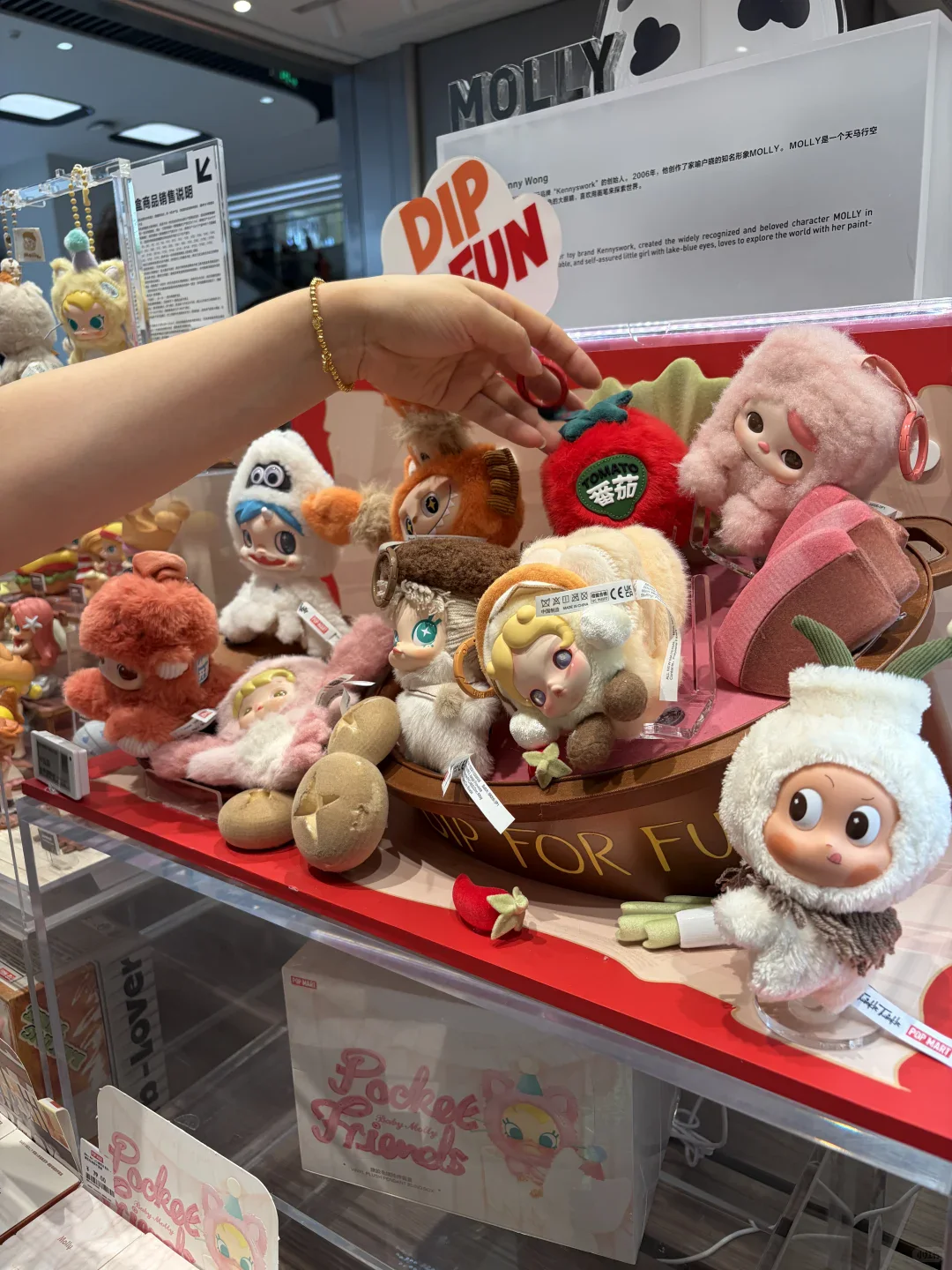
A real hand and crowded retail shelf show what isolated catalog images cannot: pendants rotate, neighboring colors compete, and the character must keep its identity in ordinary visual noise.
Product pages isolate a character against a controlled background. Real life does not. Bags have zippers, straps and printed fabric. Shelves have books, lamps and other figures. A first purchase should survive that noise.
Use three tests:
1. The distance test
Does the character still read from where you sit, not only from where you unbox it? For a desk figure, that may be sixty centimeters. For a shelf plush, it may be two meters. Distance is not a flaw to overcome. It is the actual design condition.
2. The material test
Do you want to inspect edges or feel volume? Hard figures keep intentional negative space between hands, props and body. Plush closes much of that space and replaces it with texture. Do not buy soft material while secretly wanting sculptural precision.
3. The relationship test
What does the character look toward, hold, protect or become? A readable relationship lasts longer than a fashionable palette. It also gives you a reason to place the object at a particular angle.
Then make one refusal. Name a popular or visually loud design that you will not buy. Refusal is not negativity; it is how a collection gains a point of view. A shelf filled only by availability becomes storage.
Twinkle Twinkle versus DIMOO, HIRONO and SKULLPANDA
The Pop Mart character guide should help you choose a design language before you choose a release. These characters solve different visual problems:
- Twinkle Twinkle uses a large outer mass, star-lit eyes and anticipation. It is the clearest choice when you want immediate warmth at ordinary viewing distance.
- DIMOO uses a stable child face, Cloudie and a changing dream world. It asks you to read the relationship between head form, companion and scene.
- HIRONO relies on withheld emotion, posture and unresolved objects. It rewards close narrative inspection more than instant room-scale recognition.
- SKULLPANDA uses fashion, posture and controlled self-presentation. Its tension often comes from how identity is staged rather than sheltered.
This is not a hierarchy. It is a placement decision. If a dim shelf needs one calm shape, Twinkle Twinkle has a real advantage. If you want a miniature scene whose meaning opens slowly, choose another system. Do not ask one character to perform every emotional job.
For blind-box mechanics, duplicates, storage and the difference between official and secondary-market buying, use the Pop Mart collecting guide. This page refuses to turn probabilities or resale prices into aesthetic judgment.
What Twinkle Twinkle is not
Twinkle Twinkle is not proof that softness equals innocence. It is not a universal symbol whose every color has one fixed meaning. It is not “the next Labubu,” and measuring it through another IP erases the design question worth asking.
It is also not a license to call every plush blob a strong silhouette. The outer mass must frame the face; the eye direction must create expectation; the costume must change action or presence. When those parts separate, “cute” becomes a substitute for looking.
The best Twinkle Twinkle is the one you can defend without mentioning rarity, secret odds, resale price or hype. You should be able to say:
I chose this one because the star-child remains visible through the costume, the material suits where it will live, and the pose still says something after the series title disappears.
That is a purchase with a point of view.
Twinkle Twinkle Popmart FAQ
Who is Twinkle Twinkle?
Twinkle Twinkle is a Pop Mart character group presented as tiny stars carrying stories of courage, longing and love. Visually, the characters are held together by round child faces, huge upward-looking eyes, star highlights, warm cheeks and compact bodies inside larger costume or star-like forms.
Is Twinkle Twinkle a boy or a girl?
Official English collection copy presents Twinkle Twinkle as a group of tiny stars rather than giving every form one fixed human gender. Treat a specific product name or official character description as the authority; do not invent a universal gender from costume color.
Should my first Twinkle Twinkle be a figure or plush?
Choose a hard figure when pose, props and small scene relationships are the reason you care. Choose plush when the broad outline, soft volume and room or bag presence matter more. A pendant also rotates and wears differently, so it should be judged as a carried object.
Which Twinkle Twinkle series is best?
There is no universal best series. We Are Twinkle Twinkle is the cleanest baseline for learning the character system. Farm Tales suits buyers who want costume and ensemble warmth, but only when the costume changes the body's role. Savor the Moment works when a small pleasure becomes a visible gesture rather than a decorative prop.
Is a secret Twinkle Twinkle worth more?
Rarity may affect market price, but it does not prove stronger design, lasting enjoyment or investment value. East Moment does not provide resale or investment advice. Judge the object first; use the collecting guide for operational buying questions.
How can I tell whether I actually want one?
Save the image for a week, then look again without the launch caption. Place a similarly sized object where the figure would live. If you can still name the silhouette, material and action you want—and one competing design you refuse—you are making a considered choice rather than responding to a release feed.
The final rule
Twinkle Twinkle does not need a complicated biography to matter. Its strength is compression: a point of light inside a protective shape. That clarity can survive a farm costume, horned hood, hard miniature world or soft pendant. But it survives only when the design keeps a hierarchy.
Face first. Silhouette second. Action or relationship third. Series name last.
Follow that order and your first Twinkle Twinkle will not be the loudest one in the feed. It will be the one that still belongs in your room when the feed has moved on.