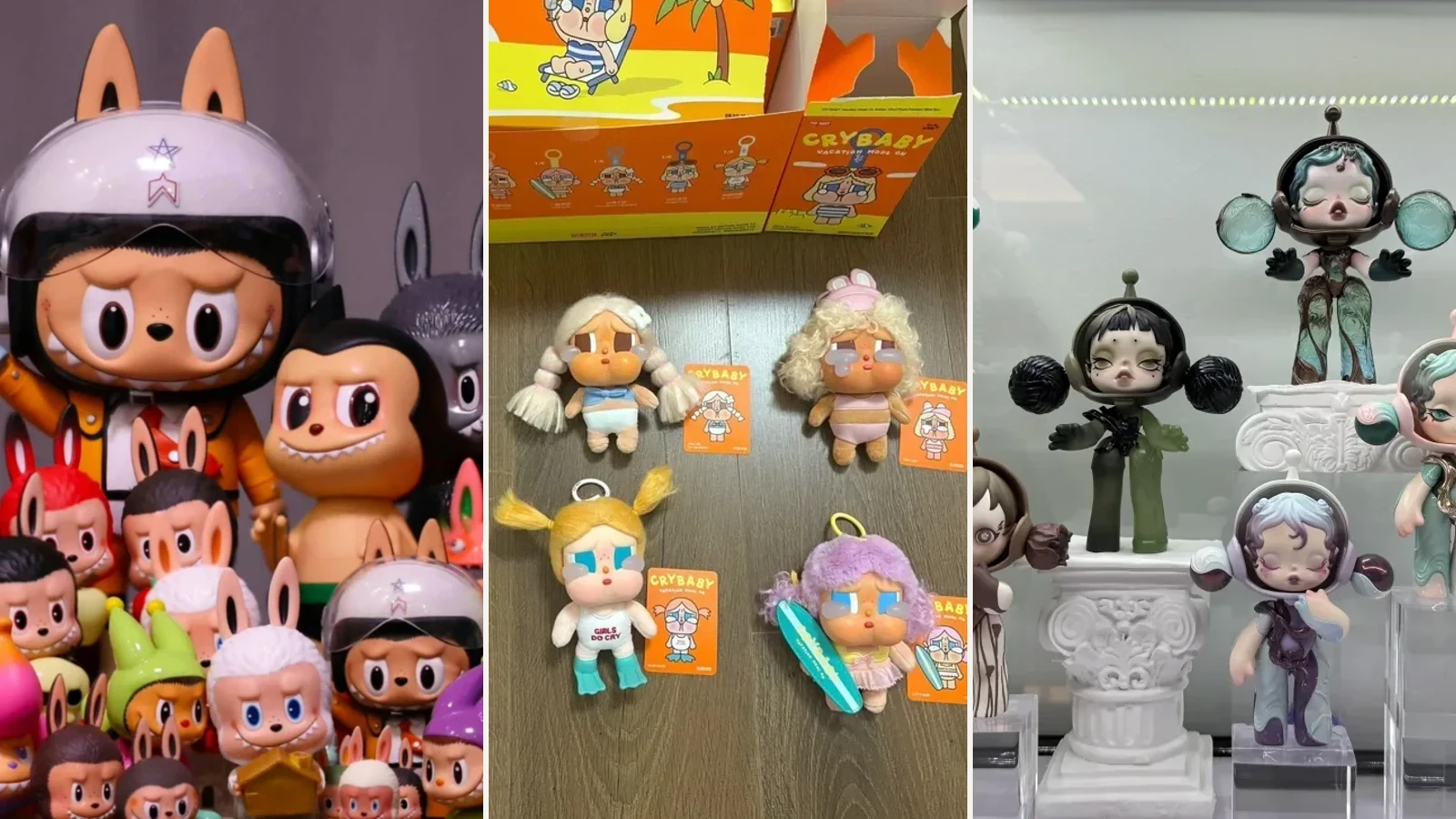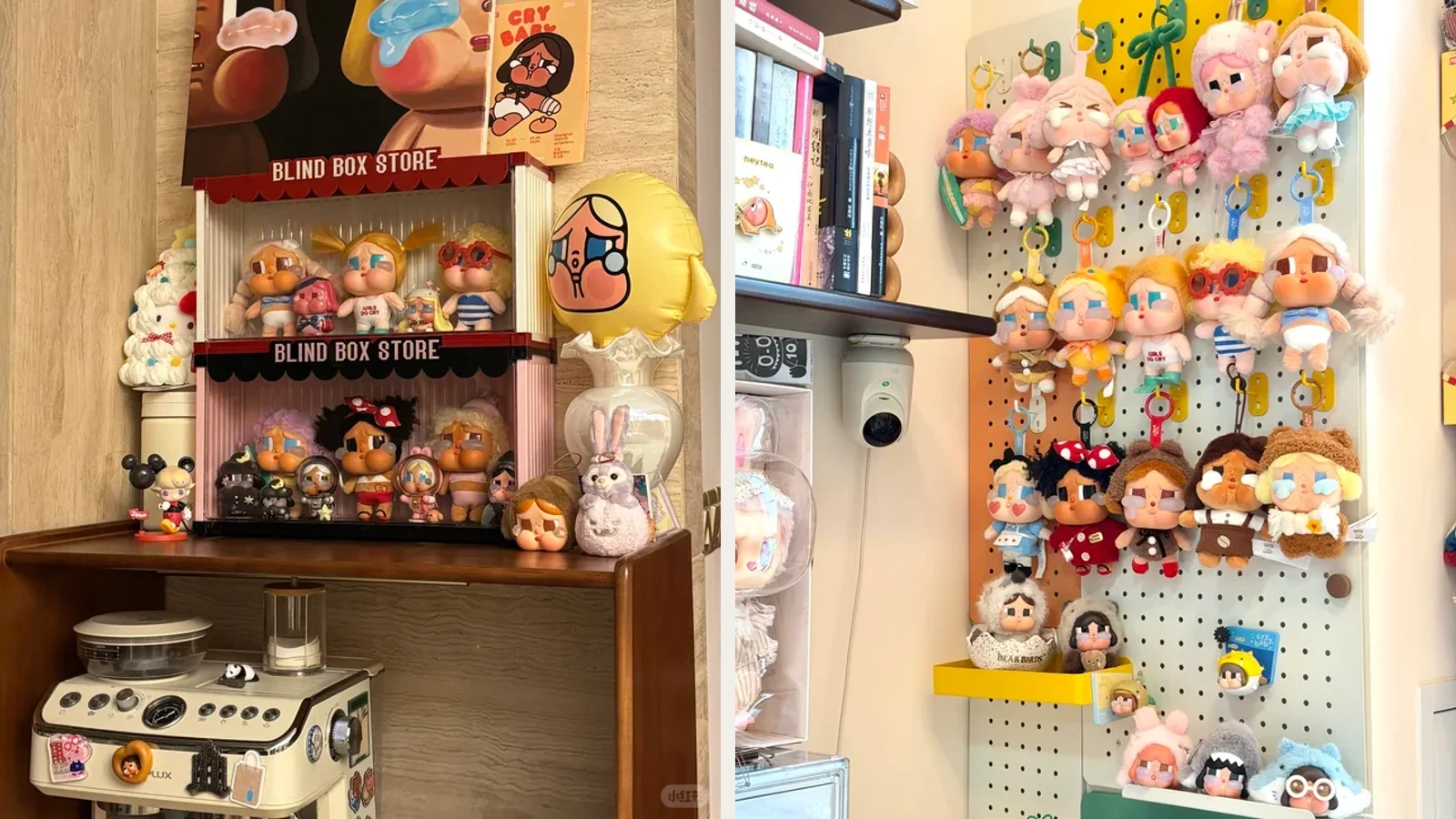
The right way to collect Pop Mart figures is to choose the outcome before the purchase method. Buy a sealed random box only when surprise is part of what you want. If you want one exact design, pay for certainty through an official confirmed option where offered or a documented opened item. A full case is a larger commitment, not a shortcut to profit. Set a total limit before opening anything.
Pop Mart figures begin with four different purchases
“Buy a Pop Mart figure” can describe four transactions with different risks. Most regret begins when a buyer makes one transaction while imagining another.
| Goal | Purchase method that matches it | What you are paying for | Main risk |
|---|---|---|---|
| One exact design | Official confirmed option where offered, or a documented opened item | Choice and reduced outcome uncertainty | Seller, authenticity and condition risk |
| The opening experience | One sealed random box from a traceable channel | Suspense within the exact disclosed lineup | Unwanted design and duplicates across purchases |
| Most basic designs in a series | Full case only after reading its exact disclosure | Broader lineup and one shipment | High spend; hidden-design and duplicate assumptions may be wrong |
| A future resale gain | No recommended method | A speculative position | Price, fee, fraud, liquidity and trend risk |
The fourth is deliberately not a collecting recommendation. A resale market can help collectors exchange unwanted pieces, but that does not make a sealed box an investment product. A high asking price is not a sale. One completed sale is not a liquid market. A celebrity photograph or viral post is not a return forecast.
The first decision therefore has nothing to do with rarity: Do you want the character, the exact object or the reveal?
Choose character and format separately
Pop Mart is an IP system with many characters and multiple physical formats. Its 2025 annual report filed through HKEX lists THE MONSTERS, SKULLPANDA, CRYBABY, MOLLY, DIMOO, Twinkle Twinkle and HIRONO among its major artist IPs. It also reports product categories including plush toys, figure toys, MEGA and other IP-related products.
That means a buyer has two independent choices:
- Character or IP: the visual world, expression and mood you want to live with.
- Format: a small figure, vinyl-plush pendant, doll, larger display object or functional accessory.
In 2025, plush was Pop Mart's largest product category at 50.4% of total reported revenue, while figure toys accounted for 32.4%. This dated company result is useful because it corrects the assumption that every current Pop Mart purchase is a small hard figure in a blind box.
A character guide can help with taste. A collecting guide must then ask where the object will live. Shelf figures need stable footprints and visible angles. Pendants face friction, dirt and loss. Large pieces require measured space and safe handling. The Labubu guide shows how one character moves across formats; the CRYBABY guide maps emotional expression to opening, carrying and display; the SKULLPANDA guide tests visual-world, scale and scene choices; the main Pop Mart guide explains the larger system.
Random box, confirmed item, opened item or case
These terms are often used loosely. Treat the seller's exact wording as a claim to verify, not a universal category.
Sealed random box
You know the series and the disclosed possible outcomes but not the exact design in one sealed box. The box buys uncertainty on purpose. It does not become “unfair” merely because the result is not your favorite, provided the product and probability disclosure were accurate.
Before buying, answer one question: Would I be content receiving my least-preferred basic design? If not, a random box does not match your goal.
Confirmed item
A platform or seller identifies the design before delivery while the item may remain in some form of original packaging. The exact mechanism varies. Confirmed does not automatically mean unopened, untouched, officially verified or defect-free. Ask what was opened, how the result was established, what packaging remains and what remedy exists if the item or condition differs.
Opened item
The design is visible because packaging has been opened. This removes random-outcome risk and adds condition questions. Request current photographs of the exact item, not a catalog image. Confirm included card, inner bag, box and accessories separately; “complete” has no value unless the contents are listed.
Full case
A case contains a defined number of individual boxes from one series. Collectors often assume a case contains no duplicate basic designs and that a hidden design is added on top. Neither assumption should be universalized. Read the exact official series disclosure: a hidden design may replace a basic one, case composition can differ, and a retailer may sell boxes after handling the case.
One official example shows why the product record must stay attached to the claim. The US listing for THE MONSTERS - Exciting Macaron Vinyl Face Blind Box, released October 27, 2023, states: “The whole set contains 6 non-repeating blind boxes.” That supports a six-box, non-repeating whole set for this product. It does not prove that every Pop Mart case has six boxes, that every case is free of handling risk, or that a hidden design is added rather than substituted.

This real six-item CRYBABY case shows the physical scale of a whole-set purchase: six boxes, six objects and substantially more packaging arrive at once. It is not the Exciting Macaron product cited above, and the photograph does not establish a no-duplicate rule or hidden-design probability. Those claims still belong to the exact official disclosure for the exact series being purchased.
Until the exact series says otherwise, a case is simply a larger sealed purchase.
Probability must stay attached to the exact series
Blind-box discussions frequently detach a probability from the packaging that defined it. A hidden-design ratio from one series then becomes folklore for the whole brand. That is not reliable.
For any probability claim, record:
- exact series and product name;
- official market page or package disclosure;
- number of basic and hidden designs;
- whether the hidden design replaces a basic design;
- stated probability and the unit it applies to;
- access or purchase date.
Probability also does not promise a result to one buyer. If an exact series states a hidden-item chance of 1 in N, opening N independent boxes does not guarantee one hidden item unless the official case configuration creates a different, explicitly disclosed relationship. Do not convert an average into a promise.
The Exciting Macaron product record supplies a valid case-composition example, but its visible official page does not publish a numeric hidden-design probability. No borrowed ratio is inserted merely to make the article look quantitative. A number belongs here only when the exact official product page or package discloses it.
The three-layer buying check
A practical purchase review has three layers. Skipping directly to face details or box color starts at the weakest layer.
Layer 1: transaction
- Is the channel official or traceable?
- Is the seller identity clear?
- Is the price complete, including tax, shipping and platform fees?
- Are return, defect and cancellation rules visible before payment?
- Can you retain an order number and receipt?
Layer 2: exact product
- What is the full series and product name?
- Is it a figure, pendant, doll, MEGA piece or accessory?
- Is the item random, confirmed, opened or sold as a case?
- What should be included?
- What are the official dimensions and material description for this exact listing?
Layer 3: physical evidence
- Does package, card and item correspond to the same exact series?
- Is an official verification path available for this market and product?
- Are there visible defects, damage, missing parts or inconsistencies?
- Are the seller's photographs of the exact item and current condition?
The layers work together. A receipt cannot make a damaged object undamaged. A perfect face photograph cannot create a trustworthy purchase chain.

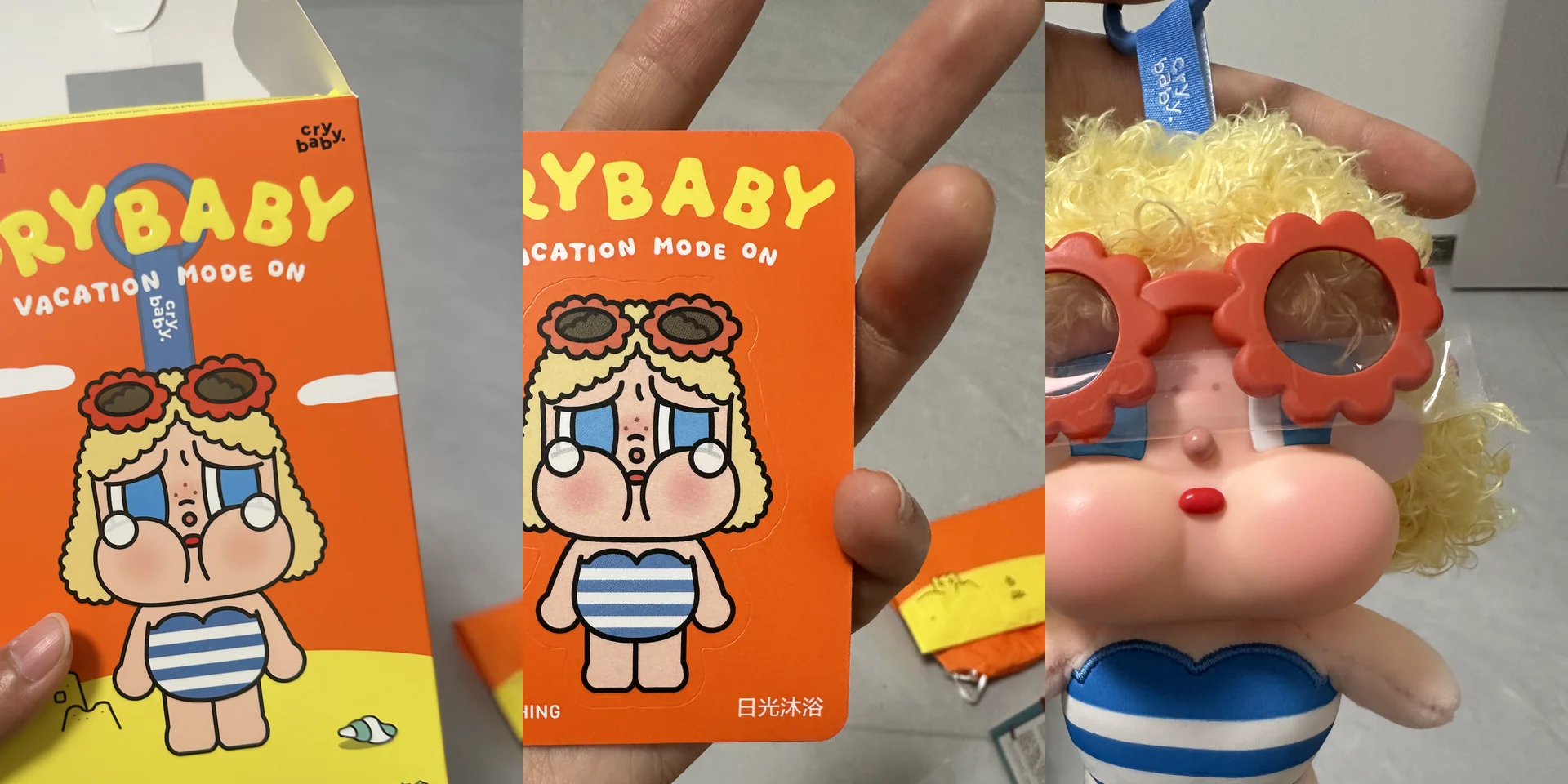
This is what a useful product record looks like: the box identifies the exact series, the card identifies the disclosed design, and the inner bag records another component that should remain with the item. The three photographs come from one documented product sequence. They support a completeness check; they do not, by themselves, authenticate every component or prove how the item was purchased.
Authenticity is a chain, not an eye test
Social platforms contain valuable side-by-side documentation of specific genuine and counterfeit objects. They also encourage universal rules: count the teeth, inspect one foot mark, compare one shade, scan any QR code. The problem is not that visual details are useless. The problem is that counterfeiters, product batches, packaging and series change.
Use this evidence order:
- buy through an official or traceable authorized route where possible;
- retain order confirmation and receipt;
- save the exact official series/product record;
- use the official verification path for the relevant market and item, where available;
- compare package, card, item and disclosed specifications as one set;
- use visual anomalies to trigger further review, not to declare a universal verdict.
For products carrying the US Box Label Code, Pop Mart's official US authenticity instructions are concrete: scratch the coating on the label, visit m-gss.popmart.com/us#/, open QR Verify, and enter the verification code. The official result can report a genuine first scan, multiple genuine scans, or that the maximum scan count has been exceeded. A repeated or exhausted scan is therefore not the same message as a failed verification; preserve the result and contact Pop Mart customer service when it is unclear.
Pop Mart lists its official website, official stores, Roboshop vending machines and authorized online platforms as official purchase channels in this guidance. Verification still belongs inside the larger evidence chain. A code result does not document seller identity, arrival condition or whether every package component came from the same transaction.
East Moment does not authenticate collectibles. A successful result records what Pop Mart's official interface reported for that code at the time checked; it is not a guarantee about the seller, transaction history, condition or every component supplied with the object.
If buying secondhand, request the seller's acquisition evidence while understanding that a photograph of a receipt can also be misused. Read the platform's eligibility, evidence and deadline rules before paying; platform protection is not a guaranteed remedy. Keep communications and payment inside the platform when relying on its protection, and do not move a disputed transaction outside it merely for a lower price.
Build a record before you build a collection
A small ledger prevents duplicate purchases, preserves condition history and reveals actual spending. Use one row per object:
| Field | What to record |
|---|---|
| Identity | Character, exact series, exact design and product format |
| Source | Official product URL, seller and channel |
| Transaction | Order number, purchase date, market and currency |
| Cost | Item, tax, shipping, platform fee and total landed cost |
| Purchase type | Random, confirmed, opened, case or secondhand |
| Contents | Box, inner bag, card, accessories and any missing part |
| Arrival condition | Photographs and written defect notes before display |
| Verification | Exact official path used and result, where available |
| Storage | Shelf, cabinet, archival box or carried use |
| Transfer | Gift, exchange or sale date, counterparty channel and condition |
The ledger is not excessive administration. It answers the questions that emerge months later: Which release is this? What did it actually cost? Was that mark present on arrival? Which card belongs with it? Did I already buy this design?
Inspect arrival before the opening excitement takes over
Film or photograph the unopened shipping package if the order is expensive, fragile or difficult to replace. Capture the label without publishing private address details. Then record:

These two details come from one damaged-arrival record. The first preserves the wider location of the crushed edge; the second moves closer to a folded inner box. That combination is more useful than a single dramatic close-up because it connects the defect to the package it came from. It documents one shipment, not a universal statement about product quality or carriers.
- exterior shipping damage;
- product box condition on all sides;
- seal or opening condition;
- inner packaging and included card;
- front, back, sides and base or tag of the object;
- close images of any defect with a wider image showing location and scale.
Do this before removing tags, attaching a pendant to a bag or discarding packaging. After-sales policies have time limits and evidence requirements. A dramatic complaint post is not a substitute for a clear chronological record.
Small production variation and damage are not the same concept. Whether a mark qualifies for a remedy depends on the exact product, seller policy, market and evidence. Describe what is visible before assigning a cause.
Store according to material and use
Most collection damage comes from ordinary exposure rather than spectacular accidents.
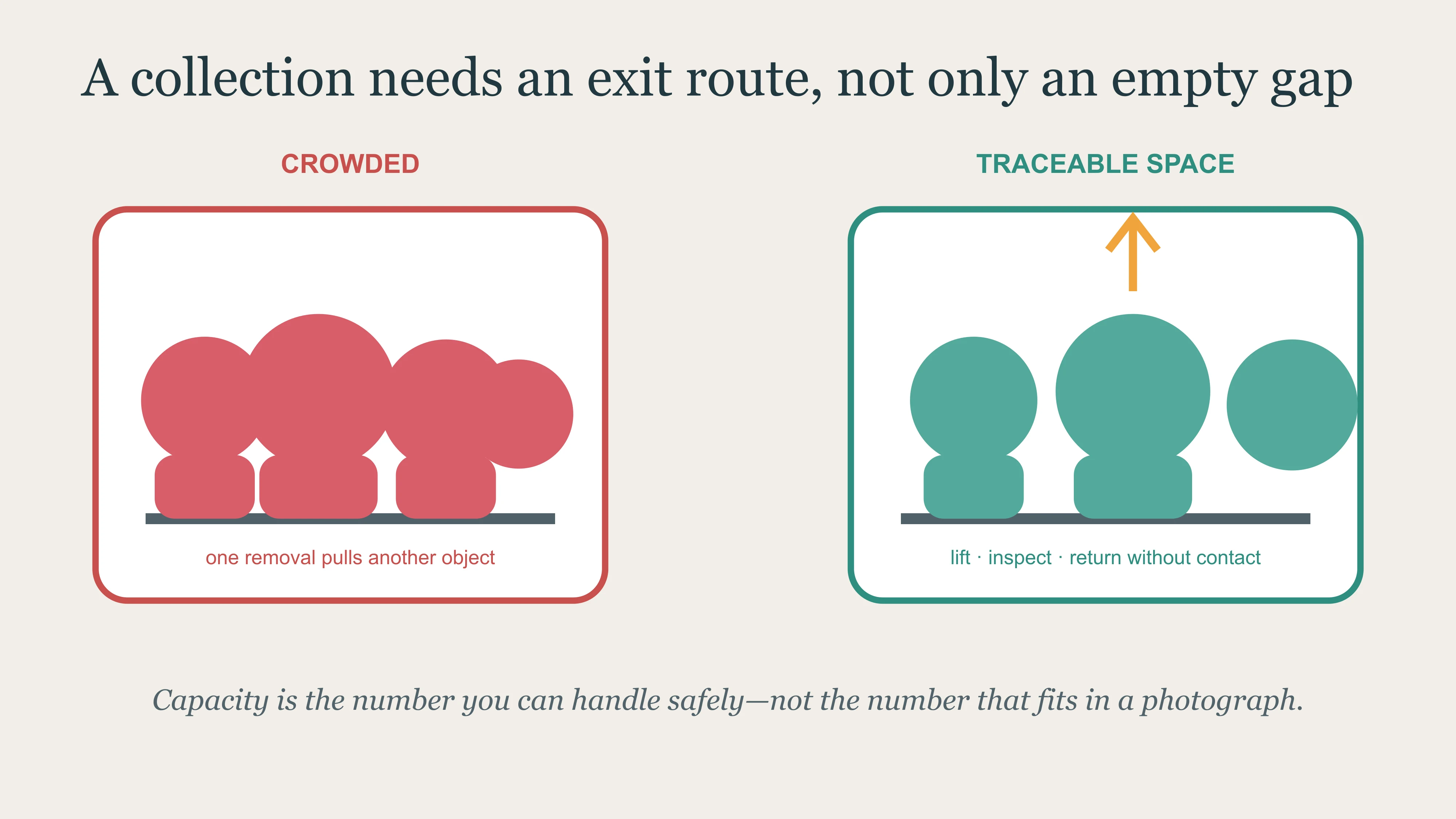
A cabinet solves one problem and can create another. Glass doors reduce routine dust, but tightly packed objects are harder to lift without pulling on a neighboring ear, tag or attachment. Built-in lighting improves visibility while adding a reason to check heat and prolonged light exposure. The useful measurement is not how many objects fit in a photograph. It is whether each object can be removed, inspected and returned without contact damage. I would rather see six objects with breathing room than twenty figures arranged like a warehouse accident waiting to happen.
- Light: avoid prolonged direct sunlight; painted surfaces and textiles can change.
- Heat: keep objects away from heaters and hot windows; materials and adhesives can deform or age.
- Dust: use a cabinet or regular gentle cleaning suited to the exact material.
- Contact: prevent dark fabrics, painted parts and soft plastics from pressing against one another for long periods without testing.
- Crowding: leave room to lift an object without pulling another down.
- Humidity: avoid persistently damp storage and inspect enclosed spaces.
- Bag use: photograph a pendant before use, check attachment hardware and accept that carrying creates wear.
Do not apply alcohol, solvent or an unknown cleaning product to a collectible because it worked on another material. Test manufacturer guidance for the exact object.
Packaging is also a choice, not a moral obligation. Keep it when it protects storage, contains identifying information, matters to your own completion standard or may be needed for transfer. Do not fill a living space with boxes solely because a future buyer might value them. Record the decision and preserve the parts that matter.
Control duplicates and stop chasing
Duplicates are not a defect in independent random purchases. They are a predictable cost of buying uncertainty repeatedly. Decide the duplicate plan before the first opening:
- keep one and gift the other;
- exchange only through a documented community process;
- buy no more random boxes after the first duplicate;
- switch to an exact opened item;
- stop the series entirely.
The strongest spending rule is a precommitted stop:
My maximum total for this series is ___. I will open at most ___ random boxes. If I still want one exact design, I will compare its documented total price with the remaining budget rather than chase it.
This turns a vague hope into a decision. It also makes the true price of the desired design visible. If three unwanted boxes were purchased first, their cost does not disappear when evaluating the fourth.
Exchange and resale without pretending to invest
An exchange can be a sensible way to place an unwanted design with someone who wants it. Record both objects, current condition, included parts, shipping method and who bears loss or damage. Use clear current photographs and avoid grading words such as “mint” unless both parties define them.
For resale, calculate net proceeds rather than headline price:
sale price - platform fee - payment fee - shipping - packaging - tax obligations - original landed cost
Then account for time, dispute risk and the possibility of no buyer. The result can be negative even when the visible sale price exceeds the original item price.
This is a personal cost record, not a valuation model or legal, tax or investment advice. Applicable taxes and reporting duties depend on the seller's location and circumstances.
Scalper stories, bargain screenshots and dramatic resale claims reveal real attention and frustration. They are not market data. The same rule applies to sold-out notices: scarcity at one channel and moment does not establish long-term scarcity. I refuse to call a collection successful when its owner needs the next buyer to rescue the previous decision.
A collecting system that stays enjoyable
The best collection is not the one with the most boxes or the highest claimed value. It is the one whose logic the owner can explain: these are the characters I care about, these are the formats that fit my space, this is the condition I accept, and this is the amount I can spend without needing resale to rescue the decision. If the first part is unresolved, use the Pop Mart character comparison before choosing another series.
Choose the outcome first. Use randomness only when randomness is the product you want. Preserve a transaction and condition record. Stop at the limit you set before excitement began. That approach leaves room for surprise without surrendering the whole purchase to it.
Which one missing record caused your most expensive mistake? Add one anonymized collecting-ledger row to East Moment's community: exact series, purchase type, true landed cost, arrival condition and the rule you will use next time. Return for reviewed rows that show where excitement became confusion—and which simple record stopped it.