Labubu is a character within THE MONSTERS, not the name of one toy shape. Pop Mart sells Labubu across figures, vinyl-plush pendants, plush dolls, larger MEGA collectibles and other objects. The practical first-buyer rule is simple: choose the format and intended use before choosing a series. A bag pendant, shelf figure and room-scale display piece are different purchases even when the face is familiar.
Labubu, THE MONSTERS and Pop Mart are not synonyms
Three names are often collapsed in listings and social posts:
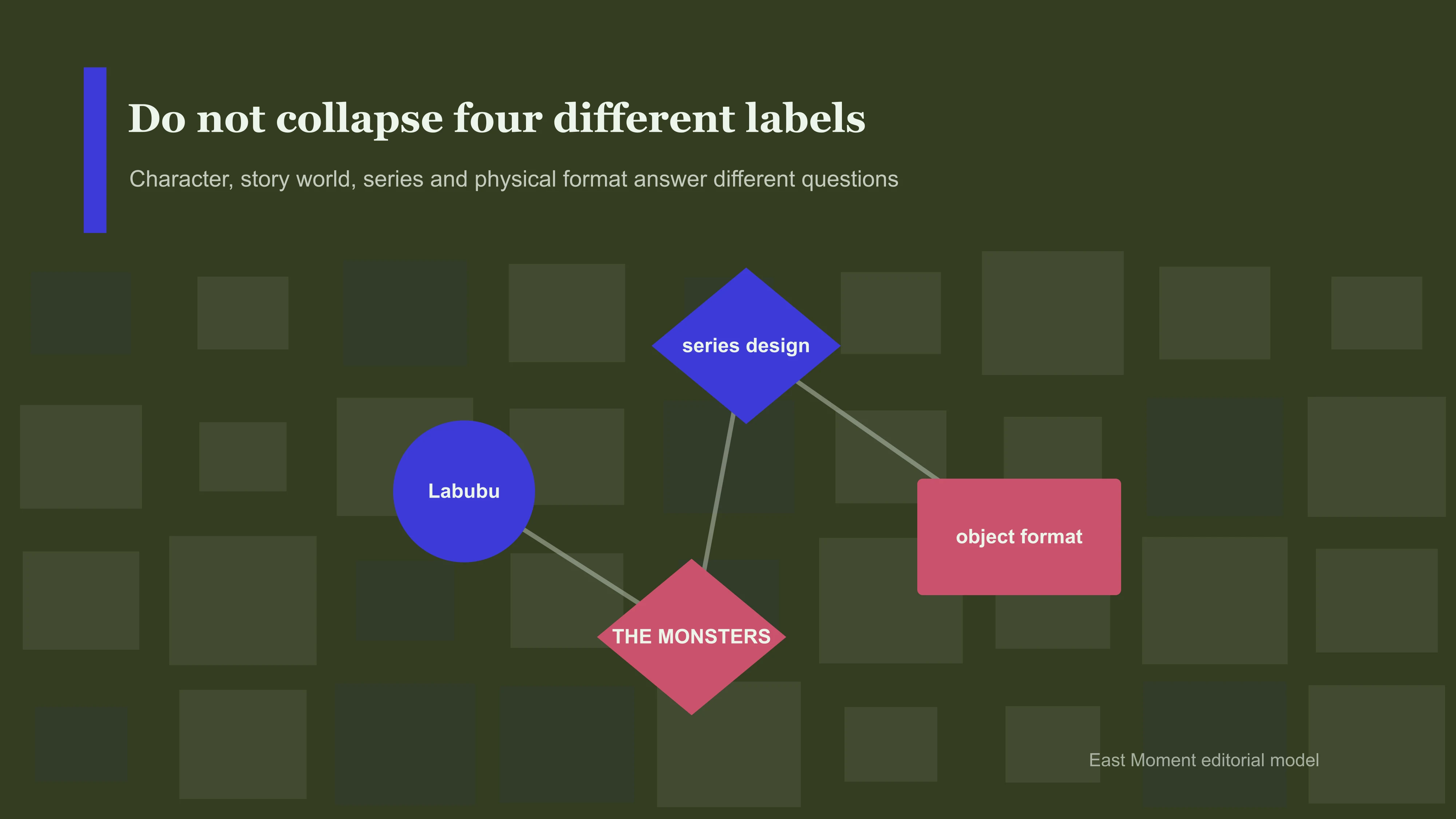
- Labubu identifies the character readers are searching for.
- THE MONSTERS is the wider IP family under which official product records place Labubu and related characters.
- Pop Mart is the company that operates the IP and develops, distributes and sells products around it.
The official US LABUBU collection makes the distinction visible. It has a collection page labeled LABUBU, while the individual products on that page commonly carry THE MONSTERS as their brand or subtitle. That is why a product title may begin with THE MONSTERS even when the object a shopper recognizes is Labubu.
This hierarchy solves two common search problems. First, not every THE MONSTERS product is necessarily the exact Labubu object a buyer imagines. Second, “a Labubu” is too broad to tell you whether a listing is a small figure, a carryable vinyl-plush pendant, a larger doll or a MEGA collectible.
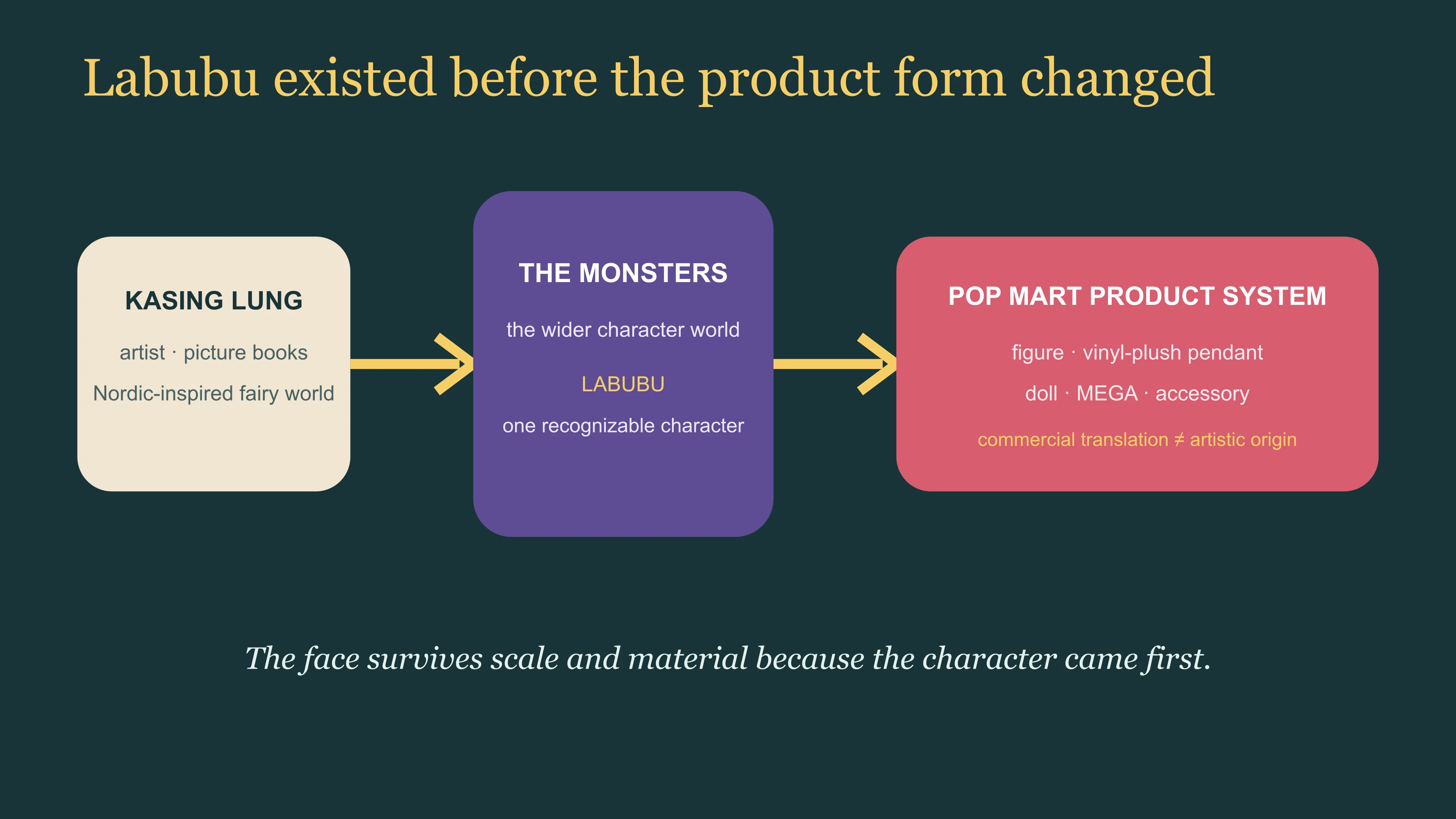
Pop Mart did not invent Labubu as a product mascot. Its official THE MONSTERS artist page identifies Hong Kong-born artist and picture-book creator Kasing Lung as the artist of THE MONSTERS. Pop Mart's regional collection history says that in 2015 he created a fairy world in three picture books inspired by Nordic mythology, with Labubu emerging as its most prominent character.
That order matters. Kasing Lung created the character world; Pop Mart turned it into a global product system. When a listing compresses everything into “Pop Mart Labubu,” it describes the commercial route but erases the artistic origin. It also explains why Labubu can survive changes in material and scale: the design existed as a character before it became a pendant, blind-box figure or MEGA object.
This distinction is not pedantry. It is the reason I refuse to explain Labubu as a lucky corporate mascot. A company can amplify a face, manufacture it and distribute it everywhere. It cannot manufacture the peculiar tension that made the face worth amplifying: pointed ears, too many visible teeth and an expression that refuses to behave like a polite children's toy.
The face stays recognizable while the object changes
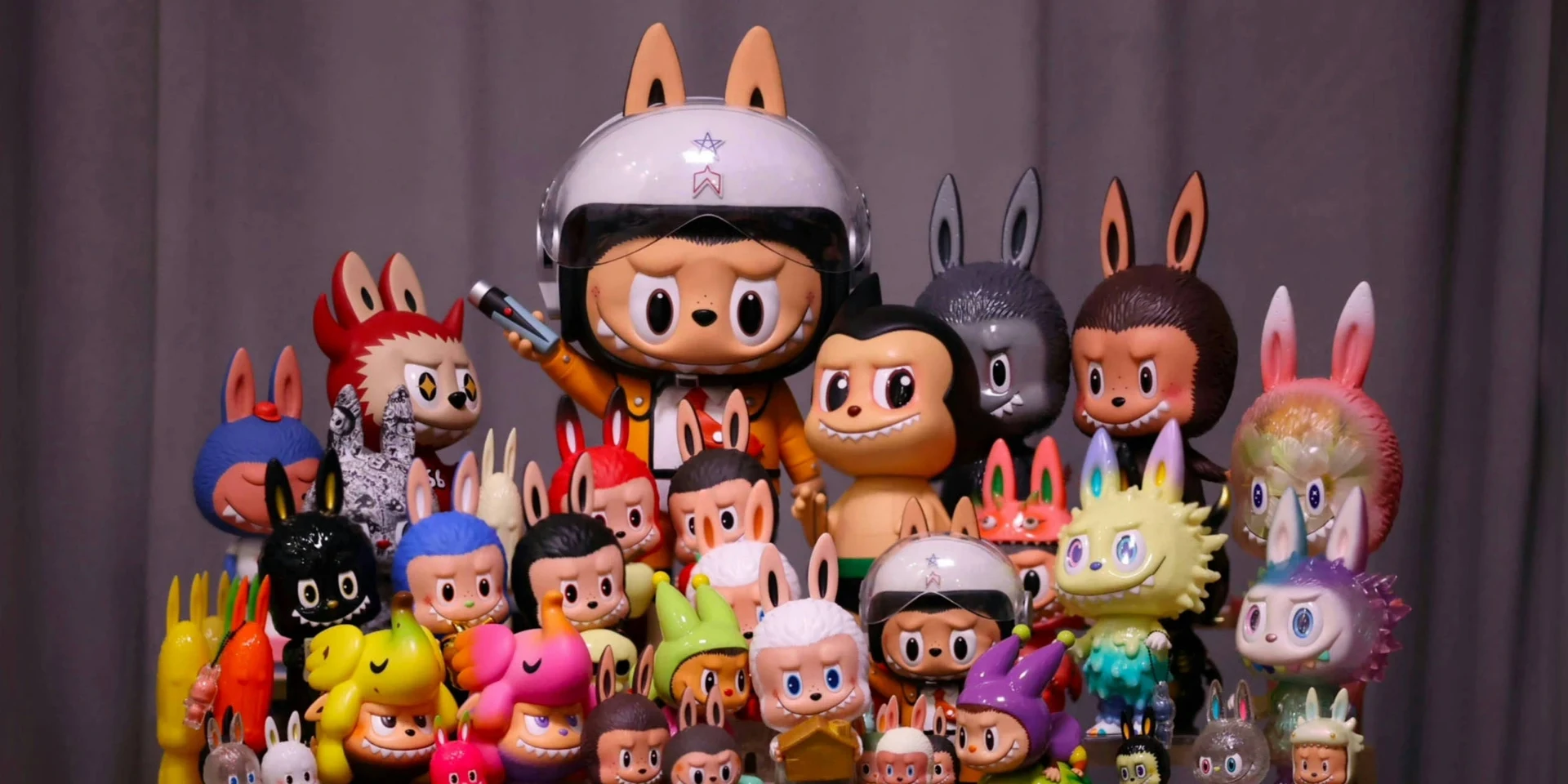
Labubu's recognition depends on a compact set of visual cues: pointed ears, a wide face, a mischievous rather than sweet expression and a prominent row of teeth. Costume, color, pose and material can change while that character identity remains legible.
Recognition, however, does not make the objects equivalent. A hard figure translates the character through sculpted pose, painted surface and a fixed silhouette. A vinyl-plush form combines a molded face with a soft body. A larger plush doll changes the relationship again through scale and touch. A MEGA piece is designed around visual presence and room commitment.

The two panels are separate authorized collection photographs. The hard figures on the left hold their shape through sculpted bodies and painted surfaces. The cabinet on the right shows soft bodies, molded faces and much larger objects competing for clearance. It is a format comparison, not proof that every visible object is one edition, authentic, equally durable or intended for the same use.
That difference is not collector trivia. It determines how the object is used, how it wears and what evidence a buyer needs before purchase.
| Format | Primary relationship | What to inspect | Typical mismatch |
|---|---|---|---|
| Small figure | Shelf or desk display | Height, pose, paint, base and series composition | Buyer expected softness or bag use |
| Vinyl-plush pendant | Carrying and styling | Face material, body fabric, attachment, dimensions and weight | Buyer assumes a pendant is a small version of a figure |
| Plush or vinyl-plush doll | Touch and larger display | Size, seams, filling, removable parts and care | Listing photos conceal actual scale |
| MEGA collectible | High-impact room display | Exact edition, dimensions, weight, placement and landed cost | Buyer focuses on character but not space or handling |
| Accessory or household object | Everyday function | Product type, function, dimensions and included parts | Character image is mistaken for a collectible figure |
The live official catalog has shown all of these broad directions, including series figures, vinyl plush pendants, vinyl plush dolls and MEGA LABUBU products. Availability changes. The table is a format guide, not a claim that every example is in stock.
Why “Which Labubu should I buy?” is the wrong first question
Series names are emotionally powerful because they present a complete visual world. But starting with a series encourages the buyer to compare colors and rarity before deciding what the object must do.
A better sequence begins with use:
- Shelf: choose a stable scale, pose and surface that works from your normal viewing distance.
- Bag: choose an attachment and size you are willing to expose to friction, weather and loss.
- Desk: check the footprint, visual angle and whether the object requires a base.
- Room: measure the exact location before considering a large doll or MEGA piece.
- Opening: decide whether any basic design in the exact series would be acceptable.
Only after that should you choose a theme or colorway. This order protects the buyer from paying for a famous series that does not fit the intended life of the object.
The bag is not a display cabinet
The popularity of vinyl-plush pendants makes wear part of the design question. A pendant on a bag may encounter dye transfer, rain, abrasion, compression and loss. It can also make the character visible in everyday movement in a way a shelf figure cannot.
Someone who wants pristine condition and someone who wants daily companionship do not want the same thing. Neither is the correct collector. The mistake is paying a pristine-condition premium, then using the object in a way that makes every mark feel like damage.
Before attaching a pendant, photograph its condition, test the hardware over a soft surface and decide whether the monetary or emotional cost of loss is acceptable. A secondary safety loop may reduce risk, but no attachment makes a carried collectible invulnerable.
The product category changed around Labubu
Pop Mart's 2025 annual report provides a useful correction to the assumption that Labubu demand is mainly about hard blind-box figures. The company reported that plush became its largest revenue-contributing category for the first time in 2025. Plush toys generated RMB18.708 billion, or 50.4% of total revenue, compared with RMB12.023 billion, or 32.4%, for figure toys.
The report specifically names the third-generation LABUBU Vinyl Plush Big into Energy series and the smaller Mini LABUBU Pin for Love series when explaining how THE MONSTERS expanded into different uses and everyday settings. These are company examples from that reporting year, not a permanent ranking of the “best” Labubu releases.
The broader significance is clear: the most visible current relationship with Labubu may be wearable and soft, not simply collectible and boxed. The character crossed from shelf culture into outfit, bag and public display. That movement helps explain why photographs of use can be more informative than isolated catalog images.
How big is Labubu inside Pop Mart?
Pop Mart reports revenue at the level of THE MONSTERS rather than giving a clean public total for every Labubu object. In 2025, THE MONSTERS generated RMB14.161 billion and represented 38.1% of Pop Mart's total revenue. The company described the year as THE MONSTERS' tenth anniversary and highlighted LABUBU as a major global driver.
Those figures prove commercial scale. They do not turn every item into a scarce asset, and they do not allow a buyer to calculate future value. Company revenue can grow while a particular release falls on the secondary market. A viral pendant can remain culturally visible after resale prices normalize. Financial performance and collector return are different measurements.
This distinction is especially important when a listing uses phrases such as “sold out,” “rare” or “celebrity favorite.” Those may create urgency without telling the buyer how many units exist, how many transactions complete at the displayed price, or how quickly demand can move to another release.
A disciplined first-Labubu decision
Use a four-line decision before opening a product page:
Character: I like Labubu's expression and visual world even without the current attention.
Format: I want a figure / pendant / doll / large display piece, and I know where it will live.
Uncertainty: I do / do not want a random outcome.
Limit: My maximum landed cost is ___, and I will not chase after an unwanted pull.
If any line is blank, the purchase is not ready. The rule sounds strict because the selling environment is designed to make the decision feel immediate.
If you want one exact design
Do not buy repeated random boxes in the hope that probability will eventually feel like choice. Look for an official confirmed option when a market offers one, or evaluate a documented opened item from a traceable seller. In the second case, you trade random-outcome risk for seller, condition and authenticity risk.
Ask for the exact series name, full object photographs, package and card, visible defects, purchase record where available, and the terms for problems after delivery. “Looks real” is not a transaction record.
If you want the opening experience
Read the exact series lineup and probability disclosure. Accept that the basic design you like least is a valid outcome if it is in the disclosed set. Buy one planned experience rather than treating each unwanted result as a reason to spend again.
The detailed mechanics belong in the Pop Mart collecting guide, because they apply across many characters and series.
Authenticity starts before visual inspection
Labubu's popularity has produced a large ecosystem of comparison posts. Some document real differences in a specific item and counterfeit version. The mistake is converting one comparison into a universal checklist.
Factories, batches, materials and counterfeits change. Packaging also changes across releases and markets. A single tooth, face color, foot stamp, tag or QR photograph cannot authenticate every Labubu product.
Use this evidence order instead:
- official or traceable authorized purchase channel;
- order confirmation and receipt;
- exact series and product record;
- official verification path for that market and item, where available;
- consistency among package, card, item and disclosed specifications;
- detailed visual inspection for condition and anomalies.
The exact series name and named design must remain connected across package, card, object and transaction record. That chain is not a universal packaging template and does not authenticate the contents by appearance. For a purchase record, add the exact object, transaction confirmation and official verification result where the market and item provide one.
Visual details still matter. They are simply stronger as part of a documented chain than as a stand-alone verdict.
Condition depends on the life you choose for the object
A figure can collect dust, fade in direct light or suffer paint transfer where parts touch. A plush pendant adds fabric wear, staining, compression and attachment stress. A large vinyl or plush object adds storage and handling problems that small-box advice does not solve.

This cabinet shows the practical difference between owning an object and merely fitting it into a shelf. Glass reduces routine dust, but crowding makes ears, tags and attachments harder to clear when an item is removed. Lighting improves visibility while increasing the need to check heat and prolonged exposure. The image demonstrates real storage constraints; it does not define ideal temperature, humidity or clearance.
Record the object when it arrives. Keep front, back, base or tag, package, card and any visible flaw in the same photo set. Store the receipt with that set rather than in a separate inbox you will not search later. If the object is carried, update the record when meaningful wear appears.
This is not paperwork for resale alone. It makes after-sales communication clearer and lets an owner distinguish a production flaw from later use.
What makes a Labubu purchase worth keeping
The best first Labubu is not the rarest one you can afford. It is the format you will actually use or display, in a visual treatment you still like after the release noise fades, bought through a channel you can document, at a cost that does not demand future resale to justify it.
Labubu works across many objects because the character remains recognizable while material, scale and use change. That flexibility is the source of its reach and the main reason buyers need to slow down. Choose the relationship first: shelf, bag, touch, room or opening. Then choose the product.
For the larger company system, read what Pop Mart is. Use the Pop Mart character comparison to test Labubu against HIRONO, DIMOO, MOLLY and other visual languages, or go directly to CRYBABY's emotion-first design system and SKULLPANDA's identity-through-transformation system. For boxes, confirmed items, condition records and spending rules, continue to the collecting guide.
Which part would you keep if the word “rare” disappeared: the grin, the artist's world, the way it sits on a bag or the memory attached to the object? Bring one Labubu relationship portrait to East Moment's community: exact format, where it lives, visible wear and the detail that still matters. Return to compare how the same character becomes a very different companion on a shelf, a bag or in a room.