Hanfu is not one flowing robe from an unspecified ancient China. It is a modern umbrella for many historical Han Chinese clothing systems—and a living practice of reconstruction, fashion, photography and argument. The first skill is not buying it. It is naming what the outfit is honestly trying to be.
What is Hanfu?
The Metropolitan Museum of Art's Chinese textile and dress collection search makes one essential boundary visible: Chinese dress has many periods, structures and object histories, so a modern outfit cannot honestly be explained as one timeless robe.
Hanfu commonly refers to historical clothing traditions associated with Han Chinese people, and to the contemporary revival movement that studies, reconstructs, wears and redesigns them. It is not a single silhouette, a generic “Chinese costume,” or every garment with a wide sleeve.
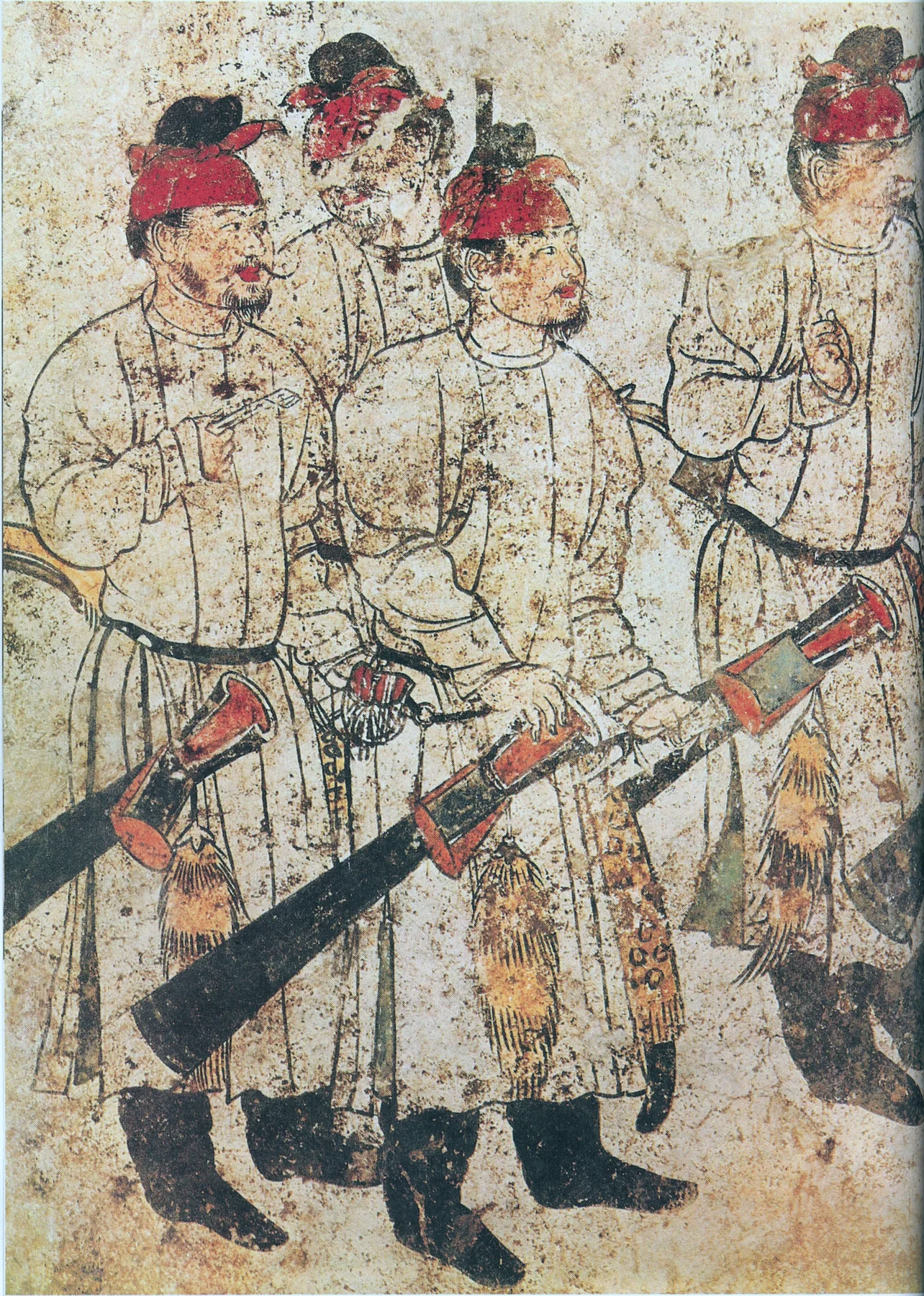
Different periods organized the body differently: collars, outer layers, skirts, belts, robe length and headwear changed. A Tang-inspired ensemble, Ming-inspired jacket-and-skirt system and contemporary fantasy outfit can all be beautiful. They cannot all make the same historical claim.
The Victoria and Albert Museum's Chinese dress collection makes that material variety inspectable across surviving objects. A collection record can document construction, date and provenance; it cannot certify the dynasty label attached to a modern marketplace photograph.
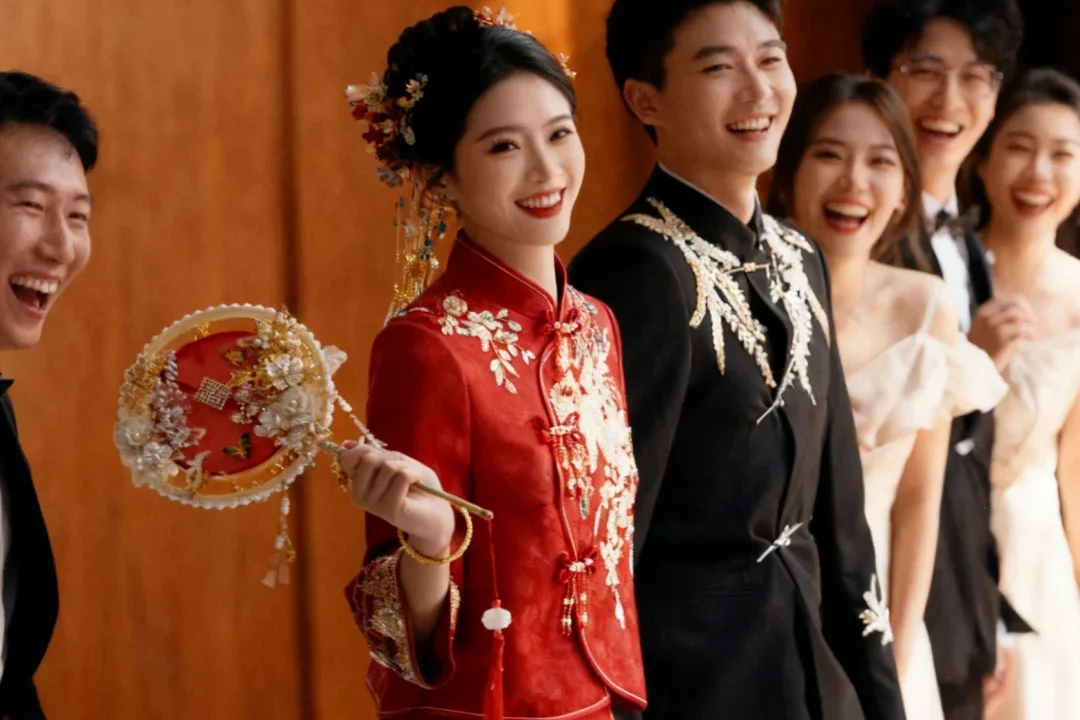
This image shows contemporary layered styling and a cross-collar line. It does not certify one dynasty. That distinction makes the image more useful: Hanfu lives because people wear, revise and debate it now, not because the past has been frozen behind it.
Hanfu begins with structure, not embroidery
Read the collar first. A crossed front, often described through jiaoling youren, has a visible closure logic; a round collar or standing collar belongs to another construction conversation. Then look at layers: what is inner clothing, what is outer clothing, where does the belt organize weight, and can the wearer walk, sit and reach naturally?
If removing dragons, clouds and knot buttons makes every “Chinese” signal vanish, decoration was doing work the cut could not do. Structure carries the history more reliably than a product title.
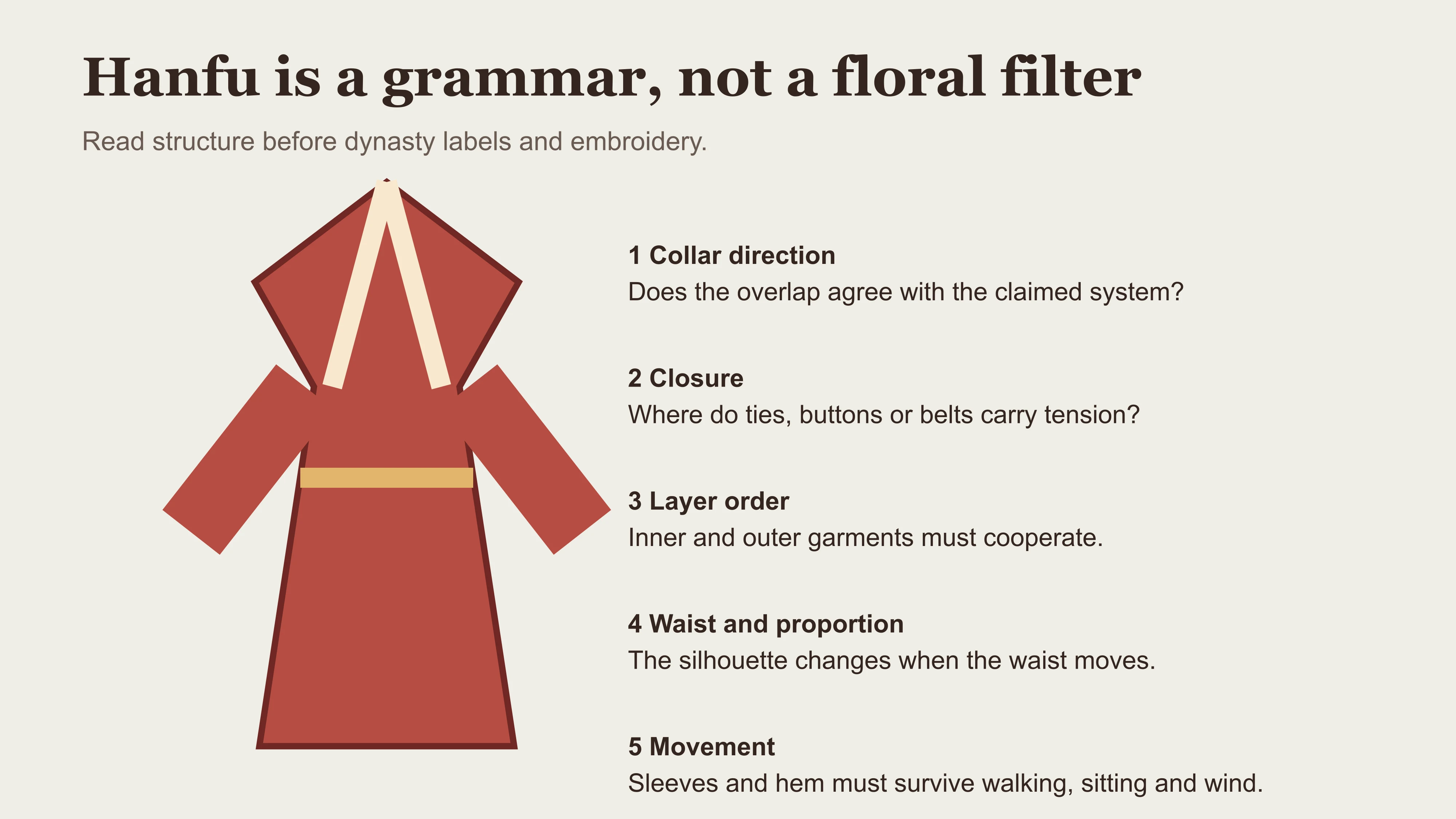
My rule is severe because the market needs it: if a seller cannot explain the collar, closure and garment relationship, the dynasty label is decoration. Dense embroidery and floating sleeves can create an instant “ancient China” mood, but mood is not construction. A real clothing system answers where tension sits, which layer closes first, how the belt carries weight and what happens when the wearer turns.
The cross-collar is often the first clue, not the final verdict. Round collars, upright collars, jackets, robes, skirts and trousers all appear within different Han clothing histories. One fashionable neckline cannot certify an entire outfit. Read the full body.
A complete Hanfu look is a relationship between garments
A complete look is more like a sentence than a single noun. Inner garment, upper garment, lower garment, belt, outer layer, headwear and shoes alter one another. Remove a layer and the neckline may collapse. Move the belt and the proportion changes. Add an oversized sleeve without changing the rest and the body begins serving the photograph instead of wearing the clothes.
This changes how I shop. I ask for the Chinese garment names, a flat-lay of every included piece and one walking or sitting image. If the seller can only provide a romantic model photograph, I still do not know what I am buying. A beautiful outer robe may hide an unrelated inner layer; a correct collar may be paired with fantasy sleeves; accessories may carry more historical confidence than the clothing deserves.
For an overseas beginner, the honest first sentence can be simple: “This is a contemporary outfit inspired by a named Ming form,” or “This is fantasy styling that borrows a cross collar.” Precision does not reduce pleasure. It lets the wearer enjoy invention without turning every photo into a false museum label.
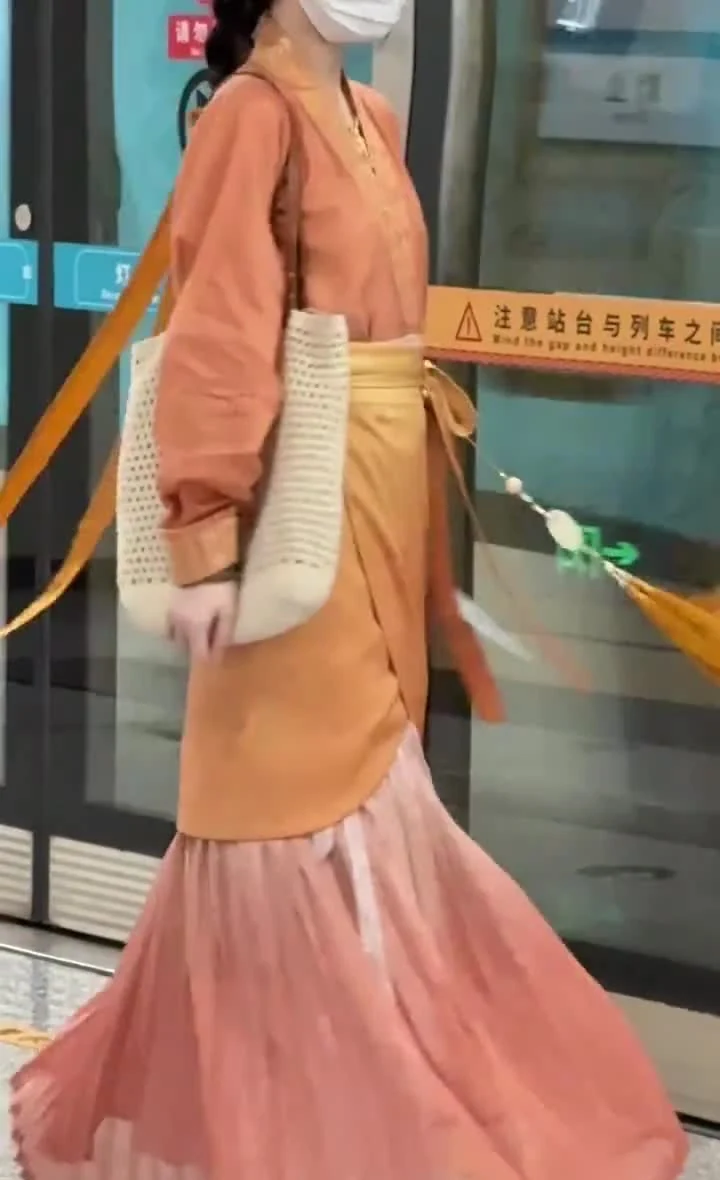
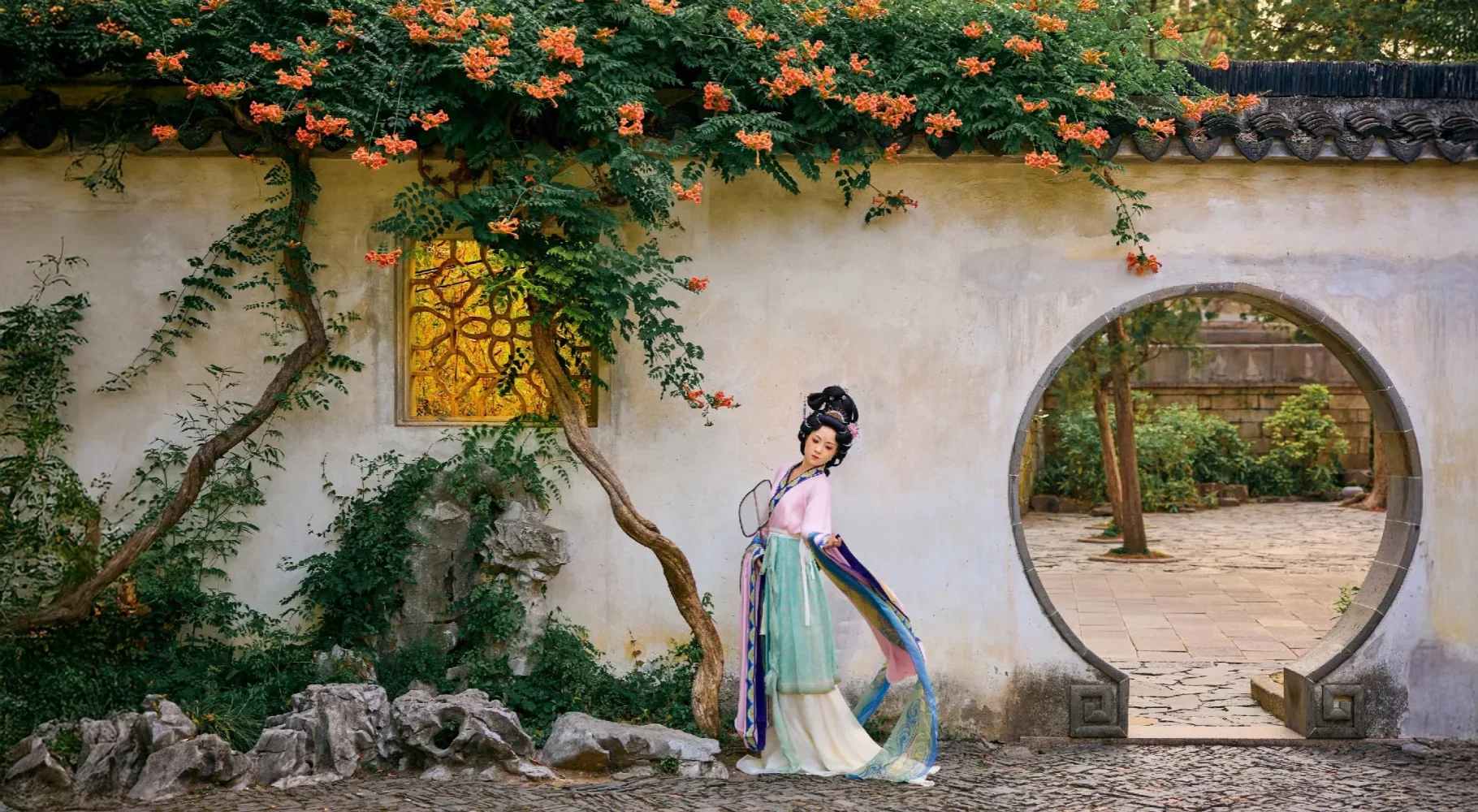
This second frame from the same authorized field sequence earns its place by answering a different question: the moving front view exposes the neckline, wrap, waist tie, layered hem and long loose ends at once. It proves how this contemporary outfit behaves in motion; it cannot certify a historical label, seam construction or fabric composition.
Reconstruction, inspiration and costume are different honest choices
| What you want | Honest label | What to check |
|---|---|---|
| A historically informed look | Period-inspired reconstruction | Named period, garment terms, evidence and complete silhouette |
| A wearable contemporary outfit | Hanfu-inspired fashion | Comfortable fabric, pockets or practical adjustments, clear modern design |
| Photography or performance drama | Costume | Movement, visual readability and no false archaeological claim |
“Inspired by” is not an apology. It is often the most precise thing a maker can say. The mistake is selling a fantasy blend as a recovered historical uniform.
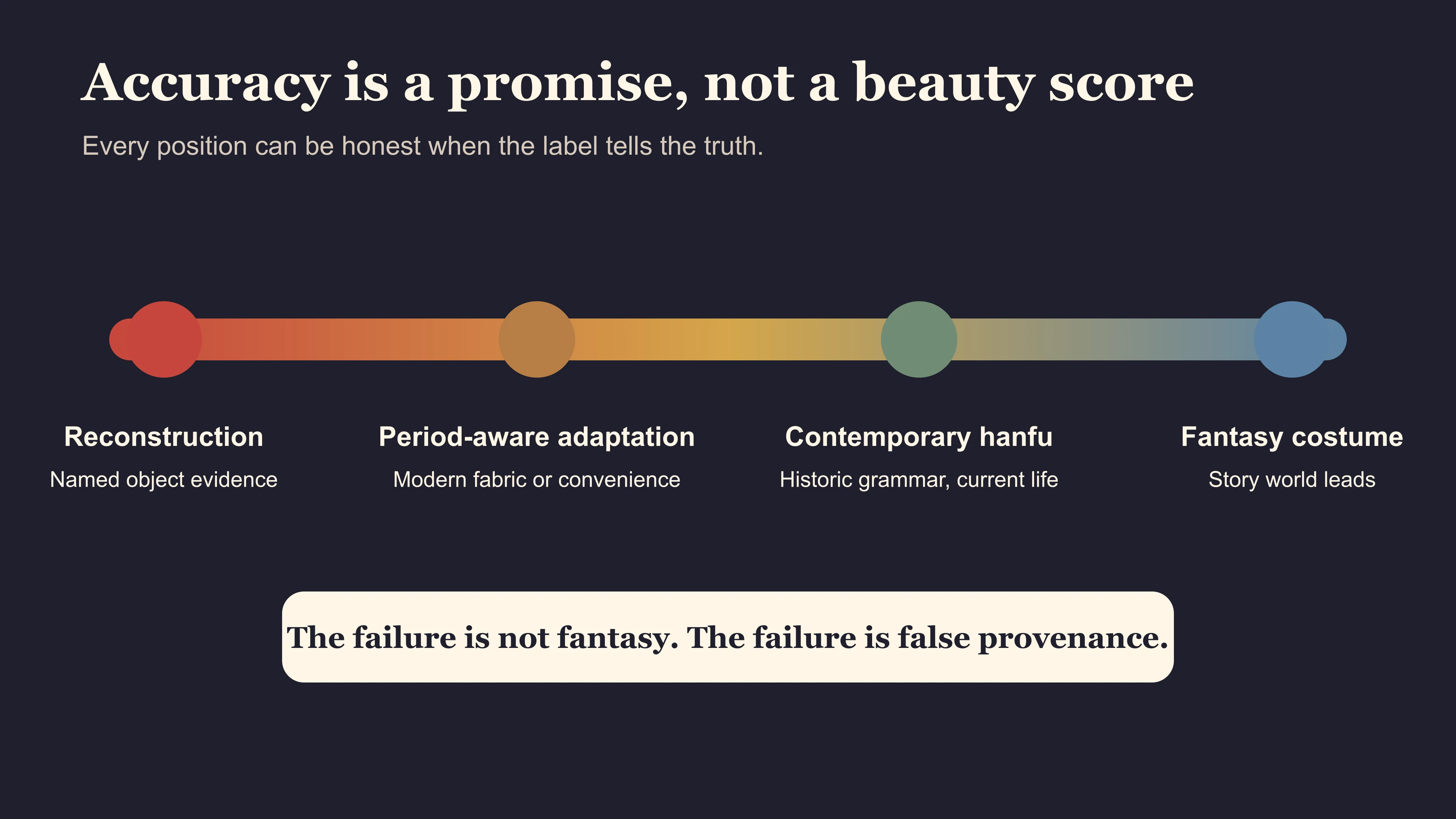
I reject the lazy hierarchy in which reconstruction is automatically morally superior and fantasy is automatically frivolous. A disciplined reconstruction can teach us how a historical silhouette worked. A contemporary outfit can let someone commute, study or meet friends without turning the day into a reenactment. Fantasy can build a beautiful fictional world. Each has value. The only unacceptable move is laundering one category through the authority of another.
When you post or sell an outfit, one clean sentence is enough: “Ming-inspired contemporary hanfu,” “based on a named tomb figure,” “modern cross-collar set,” or “xianxia costume.” Precise language does not diminish beauty. It gives beauty a floor to stand on.
What Hanfu is not
Qipao is not Hanfu: its modern history connects Manchu robe heritage and twentieth-century urban fashion. A modern tangzhuang jacket is not clothing from the Tang dynasty simply because its name invites the shortcut. Qing court dress, ethnic community clothing and contemporary couture each have their own histories.
Qing court clothing is useful as a boundary, not a prop to fill the Hanfu gallery. Rank, court regulation and formal systems shaped a different garment world. The women's clothing guide maps those distinctions before style turns them into one rack.
Hanfu is also not a purity test for Chinese identity. Clothes can recover curiosity, skill and continuity; they cannot measure a person's blood, patriotism or moral worth. The revival becomes smaller the moment one correct sleeve is used to humiliate another person's imperfect beginning.
My strongest objection is reserved for the phrase “the Chinese wore this for five thousand years.” No population wears one stable outfit across five millennia. That sentence erases conquest, trade, climate, class, regional difference, textile technology and fashion—the very forces that make clothing history worth studying.
Choose a first Hanfu outfit that can survive your actual day
Pick one coherent silhouette, not an inventory of symbols. Ask a maker for front, back and movement images; fabric composition; flat measurements; and the stated period reference. Test the sleeves while eating, use stairs before a photoshoot, and check light fabrics outdoors. A comfortable outfit that moves well will look more convincing than an elaborate robe that turns every doorway into a negotiation.
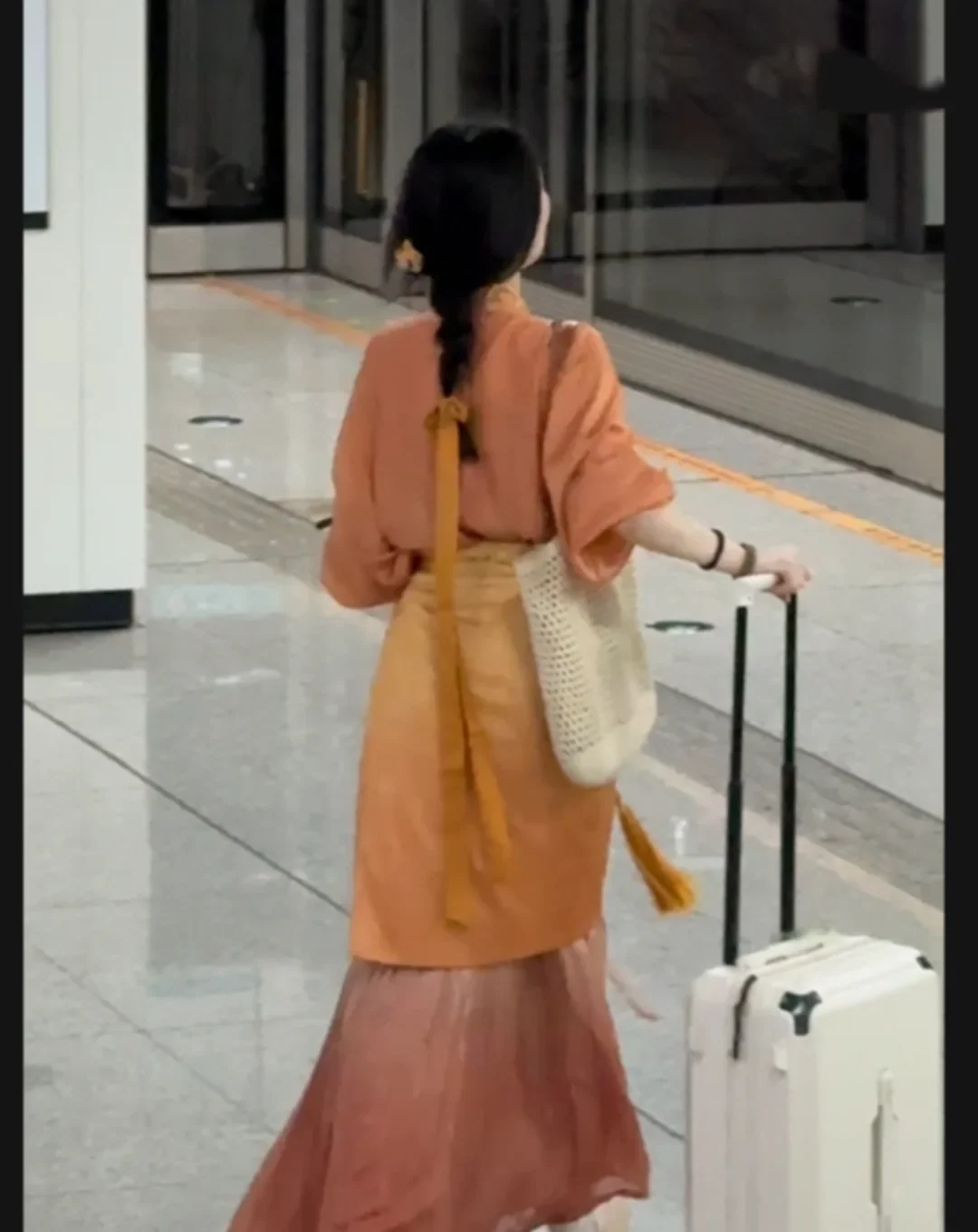
For festivals and ordinary styling, contemporary adaptation is often the right answer. For reenactment, research and period photography, the evidence claim should become stricter. Neither goal is superior; confusing them is what produces bad information.
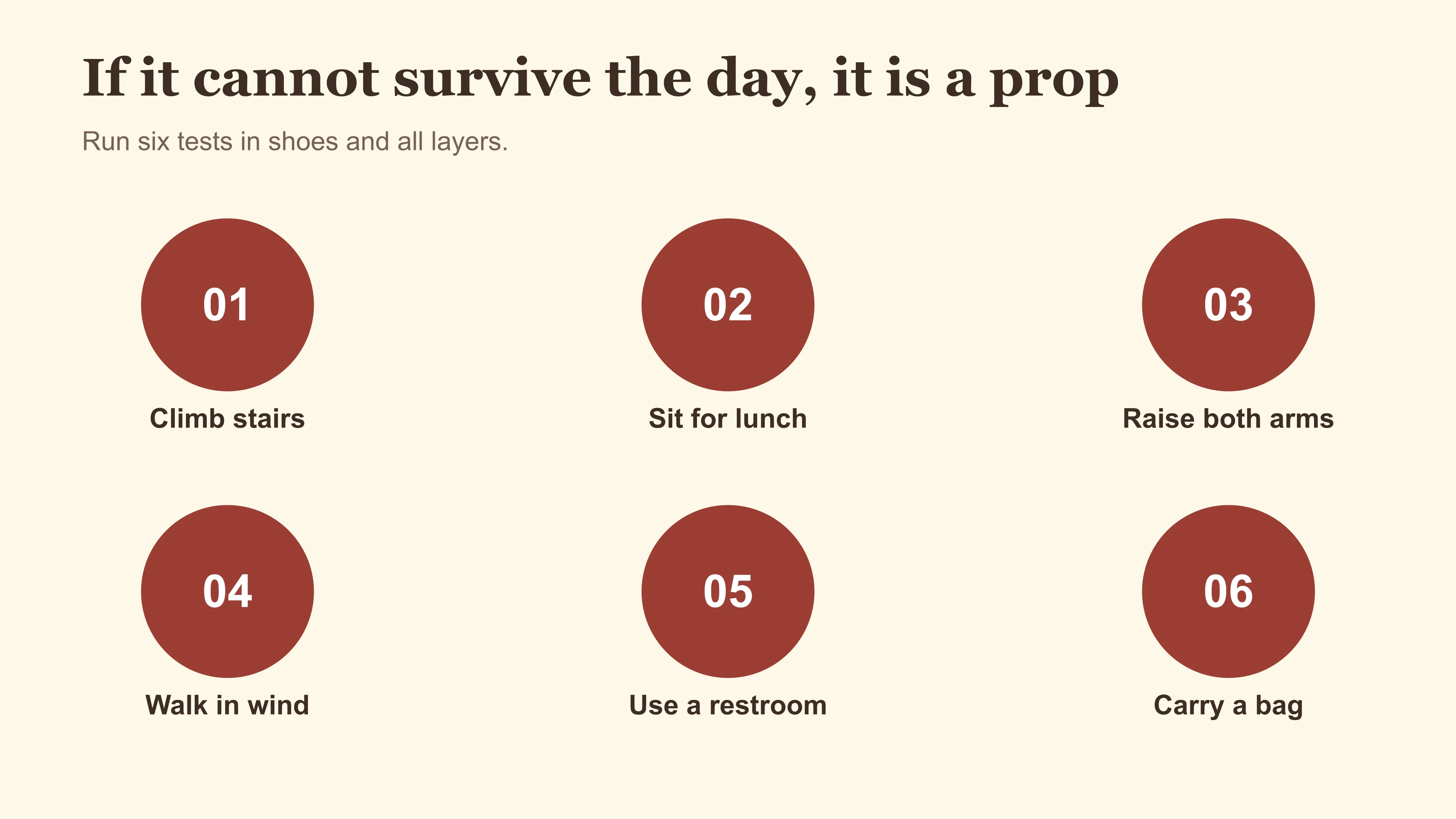
Run the test with the shoes, inner layers and bag you will actually use. Climb stairs without lifting the hem into both hands. Sit through lunch without the waistband rolling. Raise both arms without exposing an inner layer you meant to hide. Walk through wind, use a restroom and carry a phone or transit card. These are not vulgar modern interruptions to historical beauty. They are the difference between clothing and set dressing.
Fabric deserves the same honesty. Polyester can be durable, affordable and visually effective, but a glossy, airtight weave in a humid summer will punish the wearer. Linen-like blends can look calm but crease sharply. Silk is not automatically appropriate, affordable or easy to maintain. Ask for fiber content, lining, opacity and care instructions. The correct fabric is the one that serves the form and the day—not the one with the most prestigious noun.
For sizing, ignore height-and-weight charts when garment measurements are available. Shoulder width, chest ease, sleeve reach, upper-body length, skirt waist and finished hem matter more. Wrapped garments offer adjustment, but “adjustable” does not mean every size fits every body. If a brand refuses measurements, refuse the fantasy.
A first-outfit buying brief
Write this before opening a shop page:
- Use: museum visit, festival, daily wear, formal ceremony or photography.
- Historical promise: reconstruction, period-inspired, contemporary hanfu or fantasy.
- Weather: temperature, humidity, rain and wind.
- Movement: transport, stairs, sitting, meals and how many hours.
- Pieces included: every inner and outer garment named separately.
- Fit evidence: garment measurements plus walking video.
- Care: hand wash, dry clean, ironing and color-transfer risk.
That brief protects beginners from purchasing an identity before they have purchased clothes.
Hanfu revival is strongest when knowledge remains social
Hanfu returned to public life through people meeting, photographing, sewing, reading, debating and correcting one another. That social energy is more important than any claim that the movement has perfectly restored a lost wardrobe. Restoration is never complete; every surviving object and image carries gaps, and every modern body arrives with a different life.
The best gatherings I see are not fashion tribunals. Someone helps another wearer fix a collar. A sewing enthusiast turns a sleeve inside out to show the seam. A beginner asks why two outfits both called “Ming” create different proportions. Knowledge passes hand to hand because clothing is present, not because everyone has memorized a chart.
The worst gatherings turn accuracy into status. A person who owns expensive reconstruction mocks an affordable modern set; a beautiful photograph becomes evidence of historical authority; a correction is delivered as public punishment. That behavior does not defend tradition. It makes tradition emotionally expensive to enter.
I want a revival confident enough to be exact and generous at the same time. Name errors clearly. Explain the visible evidence. Leave the beginner with a better eye, not merely a smaller voice.
Why the revival matters
The modern Hanfu movement matters to me because it makes historical clothing a field of active argument. Wearers compare collars, sleeves, seams, textiles and image references; makers decide where research ends and contemporary fit begins; photographers create a public visual language that can teach and mislead at the same time. This is not passive revival. It is a negotiation over what the past can become on a present body.
That negotiation includes class and convenience. A museum reconstruction, a studio photograph and an outfit worn on public transport solve different problems. Price does not guarantee historical accuracy, and accuracy does not automatically make a garment comfortable or ethically made. I would rather see a seller label an outfit “historically inspired” with clear fabric and construction information than hide modern decisions behind the word traditional.
For a first purchase, ask three questions before color: what documented form inspired it, what activity will you actually do in it, and who made the garment under what conditions? Then check movement—sit, lift your arms, climb stairs and manage the closures. Clothing becomes culturally meaningful when knowledge survives contact with an ordinary day.
Hanfu revival is not merely nostalgia. It is a public argument about who gets to approach history through the body: students, makers, photographers, researchers, online communities and people who simply want clothing that feels unlike the global default. Disagreement about accuracy is not a flaw in the movement. It is evidence that names, sources and craft still matter.
My verdict is firm: Hanfu does not need to pretend that the past is simple. Its power comes from proving that the past was complicated and can still be worn with intelligence. Begin with structure, state the historical promise and choose a garment that lets the wearer remain a person.
In the comments, tell me which feature you read first—collar, closure, layers, waist or movement—and what it revealed. Then post three authorized frames in East Moment's Hanfu field thread: the complete outfit, one construction detail and the garment in motion. Return for new reader studies added to this guide.
Start with the traditional Chinese clothing guide for the wider wardrobe, then compare the women's and men's pages when fit and occasion become the real question. Hanfu becomes most interesting the moment you stop asking whether it looks ancient and start asking what historical conversation it is joining.