Traditional Chinese women's clothing is not one costume with one correct silhouette. The useful first step is to name what you are looking at—Hanfu, qipao, a period-specific reconstruction, a living community tradition, or modern fashion inspired by any of them—before the photograph turns it into a vague “Chinese dress.”
That naming changes the experience. It turns a beautiful outfit from scenery into a record of fabric, movement, city, family, status, craft and imagination.
What is traditional Chinese womens clothing called?
Traditional Chinese women's clothing includes many clothing systems rather than one national outfit. The labels you will meet most often are hanfu for a broad family of Han Chinese historical dress traditions, qipao or cheongsam for a modern dress shaped through Manchu robe heritage and twentieth-century urban fashion, and the named clothing traditions of China's many ethnic communities.
The rule worth remembering is simple: a flowing sleeve is not enough to identify a garment. Start with the collar, fastening, silhouette, textile, period and community. If some of those are unknown, “Chinese-inspired” can be more respectful and more accurate than an invented certainty.
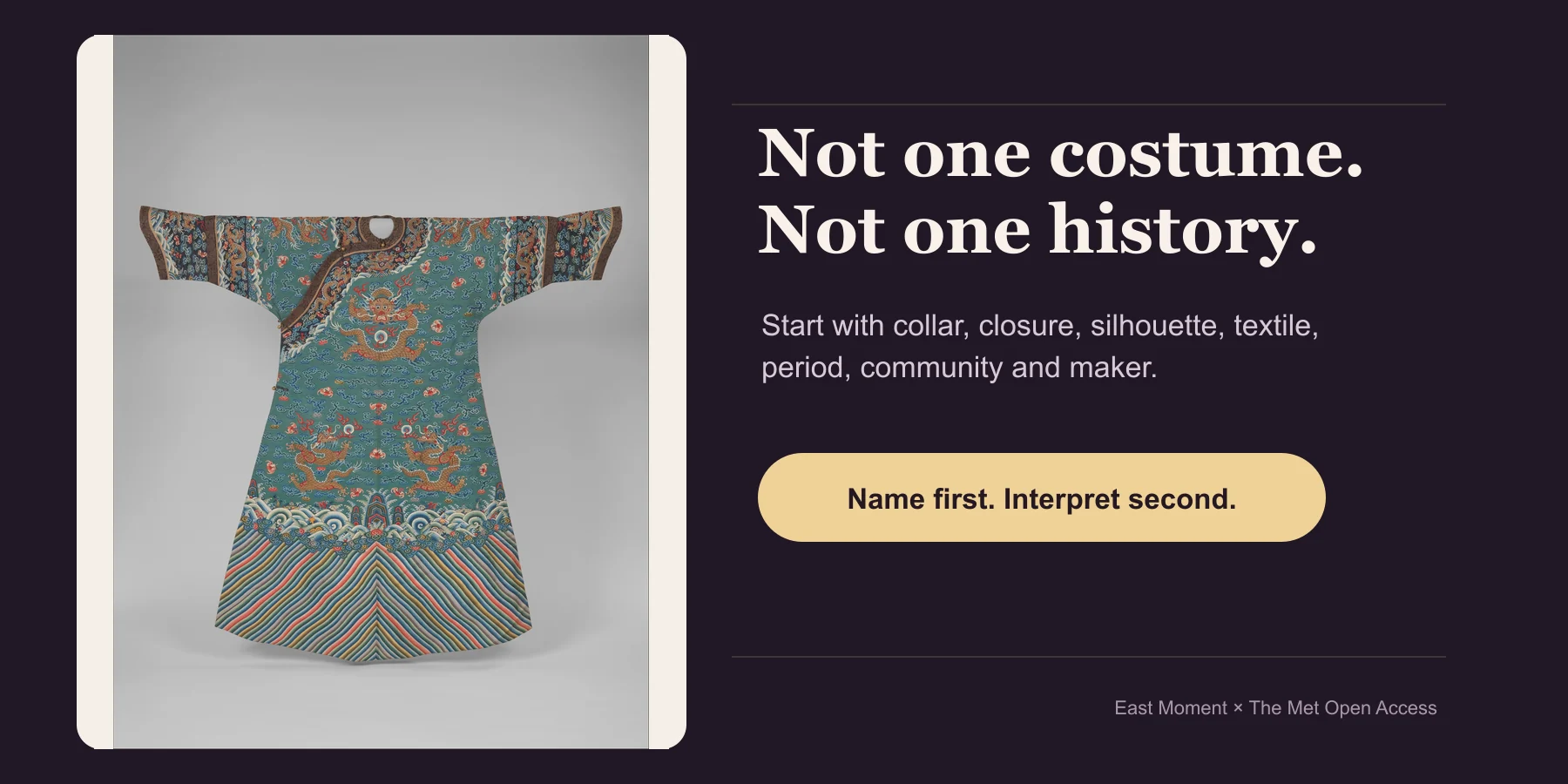
The late nineteenth-century festival robe in the hero makes the rule visible. The Met identifies one object, period and function; it does not establish a timeless national uniform. Its side-fastened closure, wide sleeves and dense surface organize a different body from a fitted qipao or a contemporary Hanfu ensemble. One accurate label opens history. One vague label closes it.
Hanfu is a family of wardrobes, not a single dress
Hanfu is a modern umbrella term for historical Han Chinese clothing traditions. Under that umbrella sit very different garments and periods: wrapped fronts, cross collars, skirts, jackets, robes, round collars, layered ensembles and changing relationships between body and fabric.
This is where costume-shop language causes damage. A Tang-inspired look and a Ming-inspired look should not be treated as interchangeable merely because both use long sleeves. The pleasure of learning the difference is not pedantry. It lets you see how a collar changes the line of the neck, how an outer layer carries weight, and how a skirt makes walking part of the silhouette.
For a first outfit, honesty beats perfection. Choose a maker who identifies the inspiration, the garment pieces and the construction. If it is a contemporary design borrowing historical vocabulary, say so. “Inspired by” is not a lesser phrase; it is often the most accurate stitch in the garment.
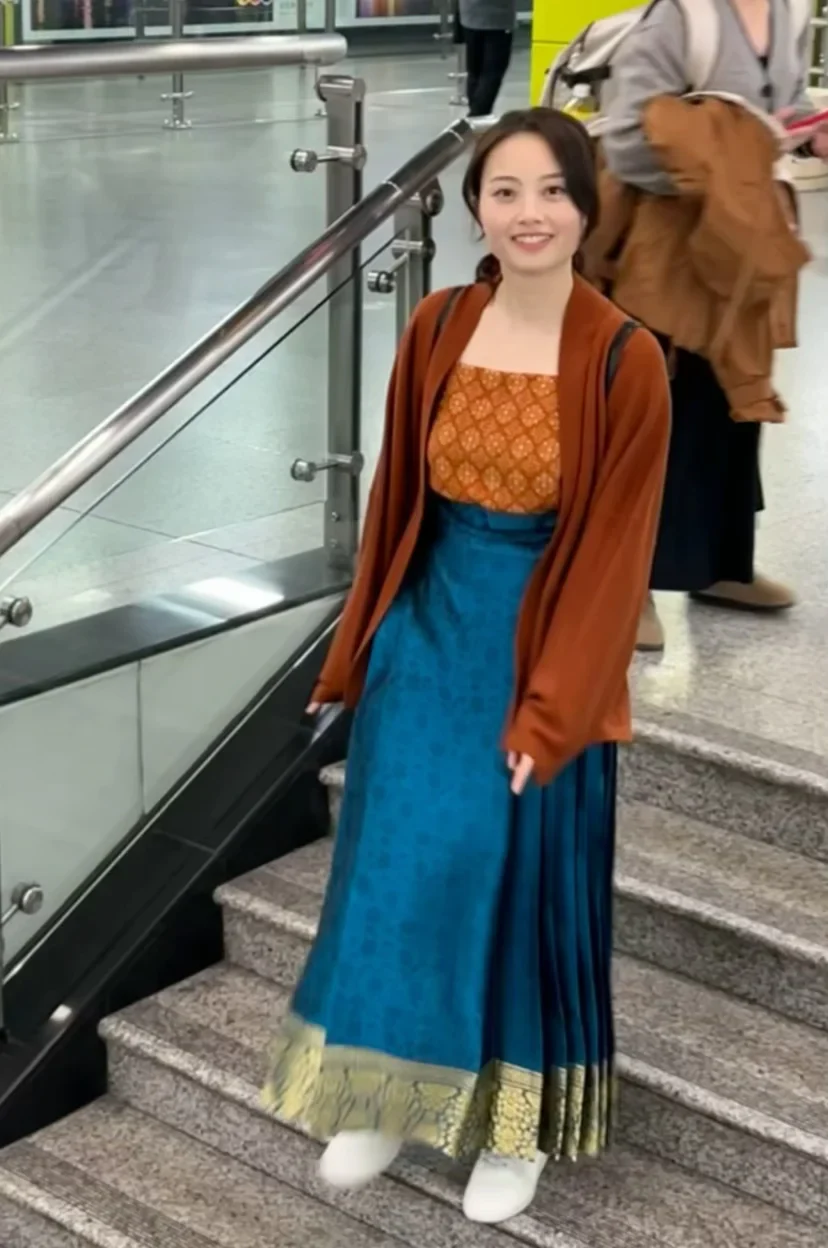
This metro outfit is more useful to me than another empty “ancient beauty” portrait. The knitted airplane sleeves answer the temperature; the mamian skirt carries the historical reference; the white sneakers answer the stairs, the platform and the need to move fast. None of that proves a strict Song-dynasty reconstruction. It proves something more alive: a woman can make historical vocabulary negotiate with an ordinary journey instead of asking the city to become a film set around her.
I judge modern Hanfu by that negotiation. If the wearer cannot sit, run for a train or lift an arm without protecting the costume from life, the styling has lost the argument. Historical study matters, but a living wardrobe also has to survive Tuesday.
Qipao is a modern city story, not an ancient uniform
The qipao, commonly called the cheongsam in Cantonese-derived English, is often mistaken overseas for the one traditional Chinese women's dress. It is far more interesting than that shortcut allows.
Its history connects Manchu robe heritage with late Qing and especially twentieth-century urban fashion. The fitted, high-collared image now repeated in film, hospitality uniforms and fashion editorials is real—but it is only one part of a changing silhouette. Fit, sleeves, hemline, fabric and the social meaning of the dress all shifted with city life, tailoring and ideas of modern womanhood.
The V&A's cheongsam collection records are useful when you want to replace a stereotype with objects: look at dates, textiles, cut and decoration before deciding that one glamorous image contains the whole history.
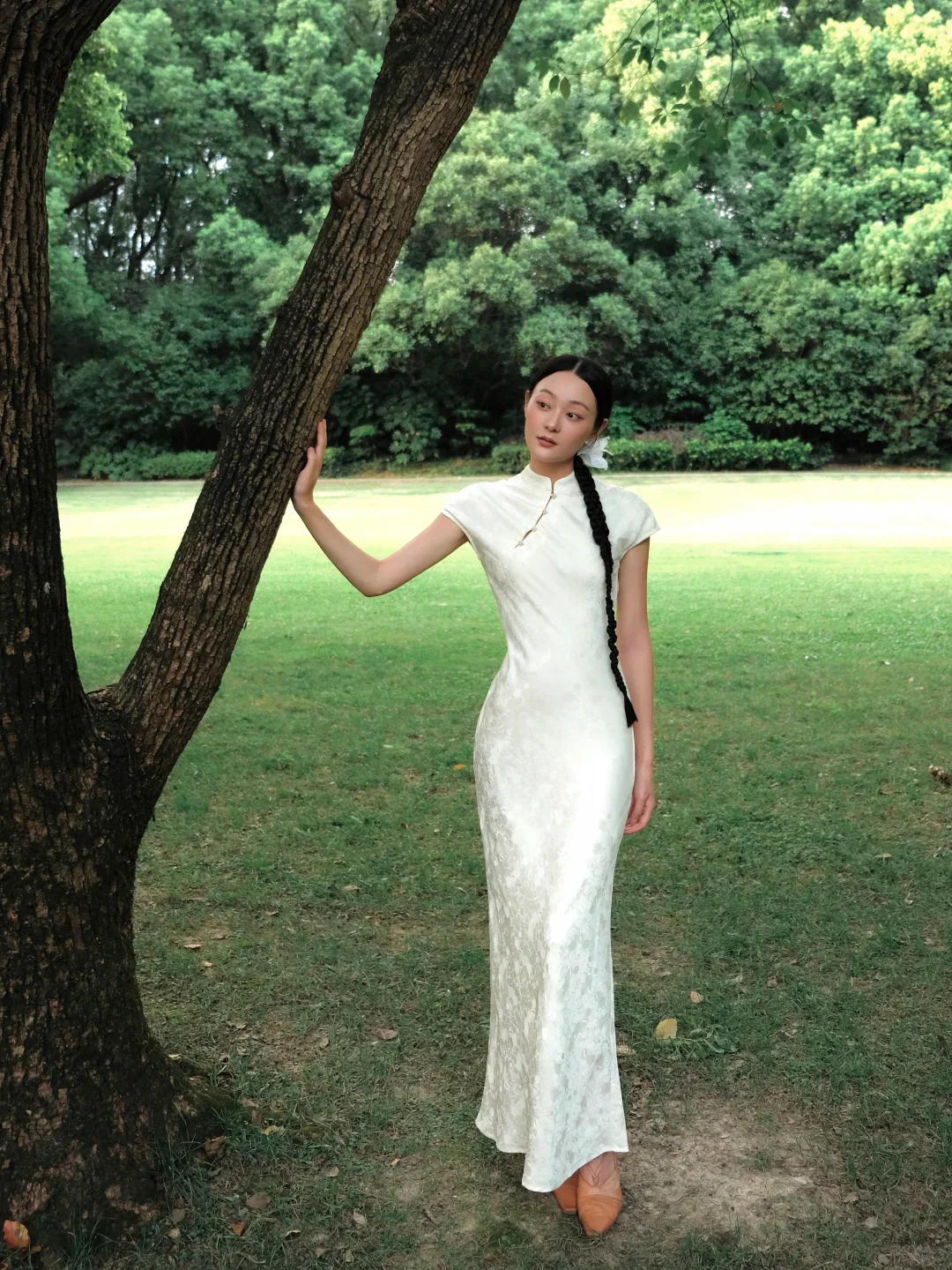
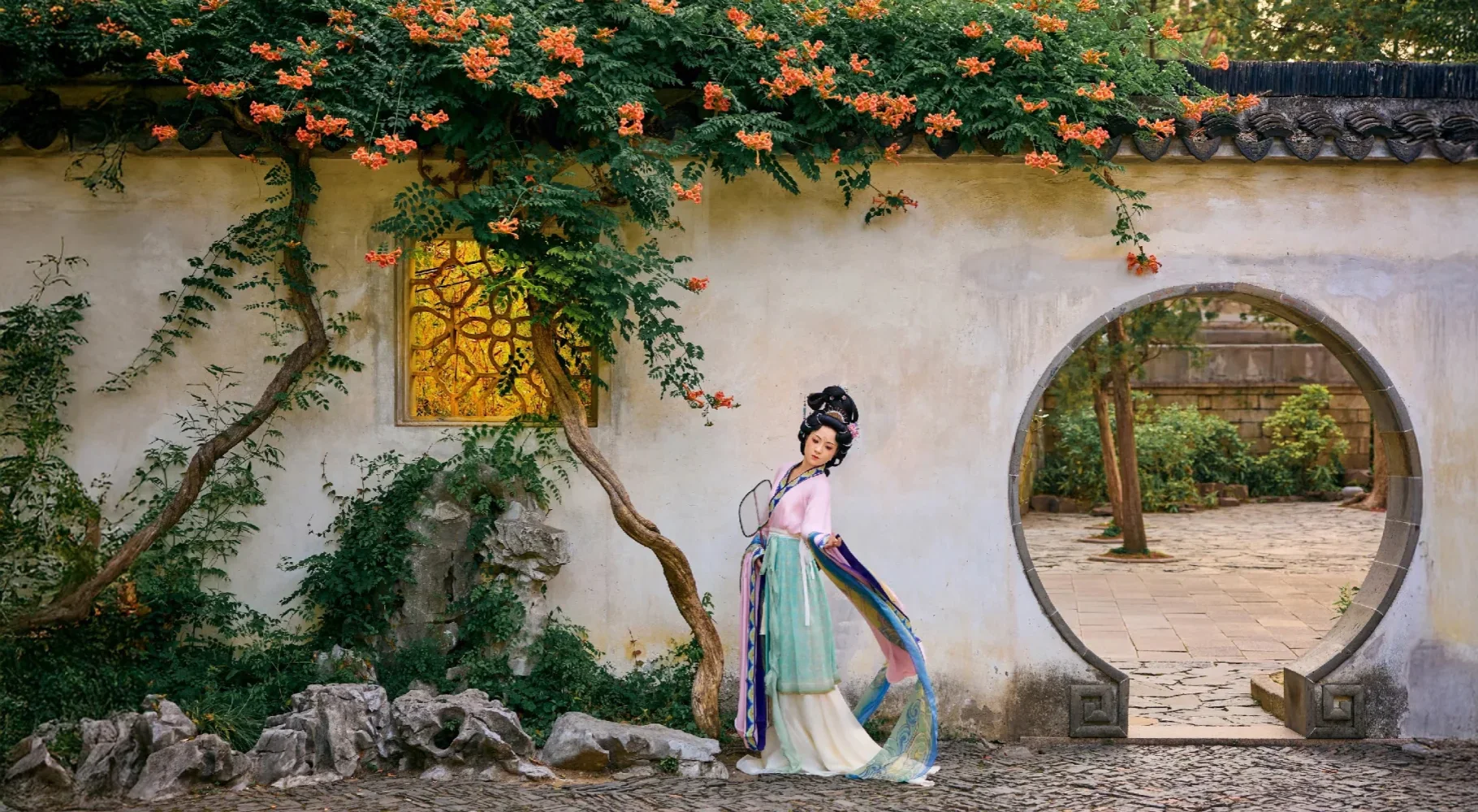
I prefer this quiet full-length view to the usual cropped nightclub fantasy. The standing collar, diagonal fastening, close waist and ankle-length hem can be read together, while the lawn and walking shoes keep the dress attached to a real body. The qipao is fitted, but it is not merely a machine for displaying curves. Its success depends on whether the wearer can stand, turn, sit and breathe without the dress fighting her.
The Shanghai garden setting does not make this one outfit the definition of Shanghai, and it cannot tell us the tailor, fabric composition or construction date. What it does show is why qipao remains present tense: one silhouette can feel composed, personal and entirely wearable without pretending to be an untouched relic.
An imperial robe is not a qipao, and it is not evidence of ordinary women's daily dress. The Met's ceremonial robe record is useful precisely because it names the category instead of letting embroidery float free from status. Clothing in China has also been a system of craft, rank and regulated appearance. A garment can be visually exuberant and socially restrictive at the same time.

This late nineteenth-century robe makes the name-first method visible. The butterflies are the first thing color pulls us toward, but structure should speak first: a rounded neckline, asymmetric side closure, exceptionally wide sleeves and dark borders controlling the red field. The Met's record gives us date, object category and material context. It does not permit us to call the robe everyday clothing, qipao, Hanfu or a universal symbol of Chinese womanhood. The visible object is rich enough without borrowing identities it does not own.
Do not make ethnic dress a decorative category
China's clothing histories include distinct living traditions among Miao, Tibetan, Uyghur, Mongol, Yi, Zhuang, Dong and many other communities. None is a colorful add-on to a single Han Chinese wardrobe.
The respectful questions are specific: Which community? Which region? Who made it? Is it for daily life, ceremony, performance, marriage, festival or a contemporary fashion context? A garment's embroidery, silverwork, headwear, weave or color may carry local knowledge that a generic label cannot hold.
This is not an argument against wearing or admiring these forms. It is an argument against making their names disappear. If a maker or community identifies the clothing precisely, repeat that precision. If you do not know, learn before turning it into a theme-party prop.
Traditional does not mean frozen
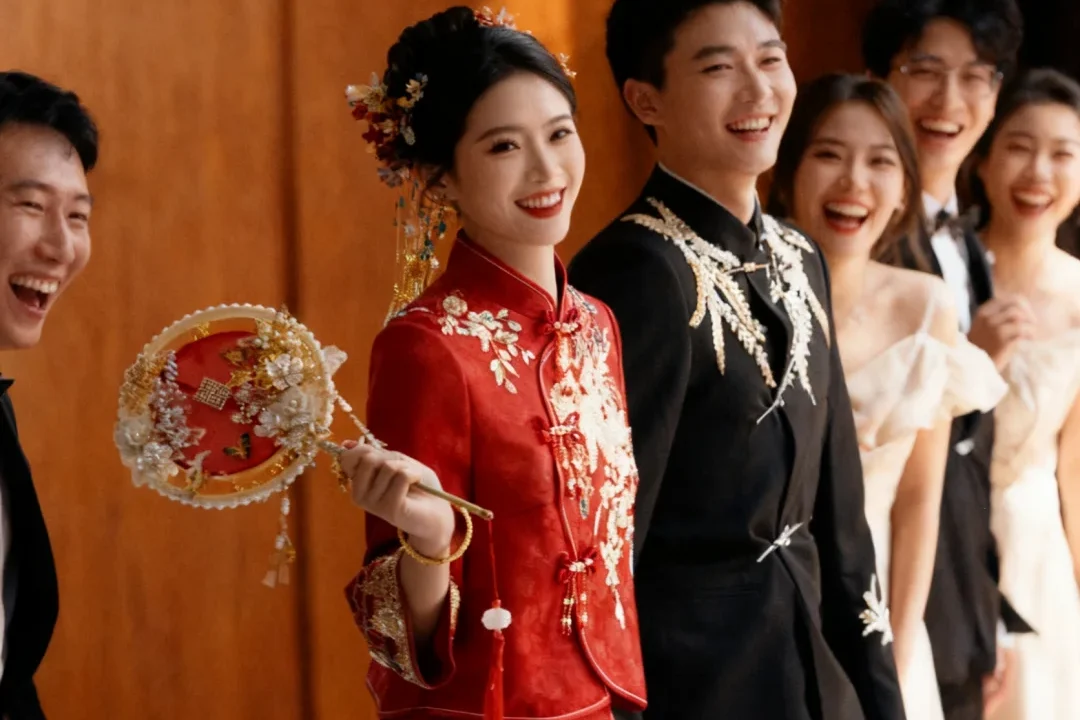
The most interesting Chinese clothing scenes today do not pretend the present has vanished. Someone may wear Hanfu on a subway, choose a qipao for part of a wedding, commission embroidery for a modern evening dress, or style historical references with trainers and a tote bag. These choices can be playful, scholarly, commercial, nostalgic or all four at once.
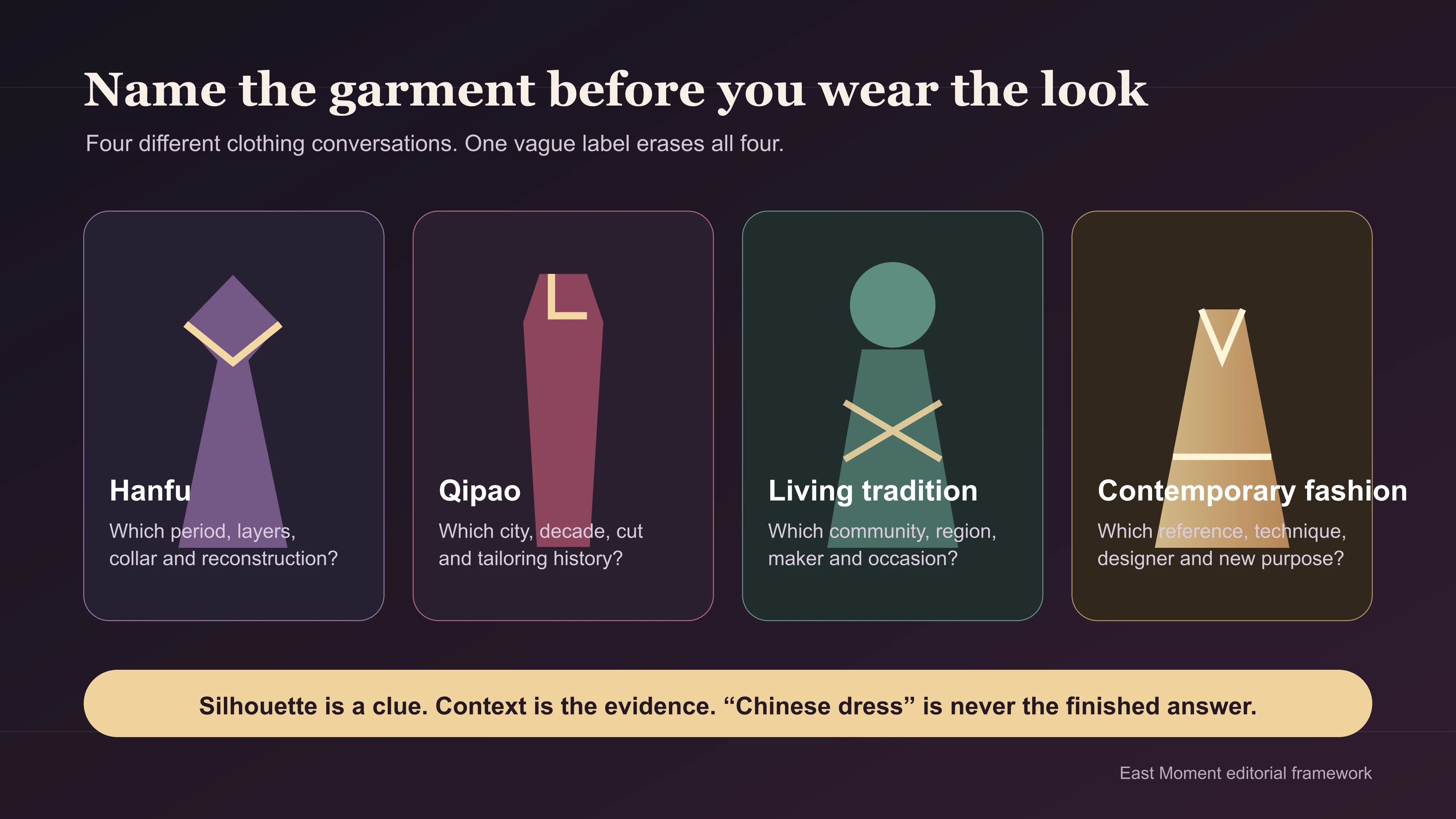
The diagram is deliberately a naming tool, not a silhouette detector. Hanfu needs period and layering questions. Qipao needs city, date and tailoring. Living community dress needs a named community, maker and occasion. Contemporary fashion needs a designer, reference and new purpose. Guo Pei's work belongs to that fourth conversation: it is couture, not historical dress reconstruction. The Guo Pei guide follows her work as fashion authorship, while this page keeps the older garment families from being flattened into her source material.
My name-first test for any Chinese women's garment
When a photograph arrives without a useful caption, I do not start by guessing a dynasty. I use a seven-part test. It is slower than typing “traditional Chinese dress,” and infinitely more respectful.
1. Read the collar and closure before the embroidery. A cross collar, standing collar, round neck or side fastening changes the garment family more reliably than a dragon or flower. Decorative motifs travel. Construction is harder to fake accidentally.
2. Separate the visible pieces. What looks like one dress may be a jacket over a skirt, a robe over inner layers or a modern one-piece garment designed to imitate layering. Find the waist line, sleeve attachment, side seams and any layer peeking through. The body is wearing a system, not a thumbnail.
3. Ask whether the silhouette belongs to a historical claim or a modern styling choice. A synthetic gradient skirt, invisible zip or contemporary fitted waist does not make the outfit illegitimate. It makes it contemporary. I would rather hear “Ming-inspired modern Hanfu” than watch a seller force every recent design into an unsupported museum date.
4. Name the wearer and occasion only when the evidence allows it. Wedding, festival, performance, studio portrait, daily outing and formal ritual create different clothing decisions. Do not label a community's ceremonial dress as daily costume because the photograph lacks context. Do not turn one influencer's styling into a national rule either.
5. Treat textile as material, not a luxury adjective. “Silk” is often used online to mean shiny. Look for weave, drape, stiffness, transparency, embroidery method and lining. A polyester garment can be honestly made and enjoyable to wear. A vague “100% silk ancient dress” claim should make you demand more information, not pay faster.
6. Find the maker's language. A serious maker can usually name the pieces, period of inspiration, fabric and departures from historical construction. This does not guarantee quality, but it gives you a claim that can be examined. A shop that sells Tang, Song and Ming looks under one identical product description is selling atmosphere, not knowledge.
7. Leave room for correction. Naming is not a performance of certainty. If I can identify a standing collar and side closure but not the period or community, I say exactly that. Precision includes knowing where the evidence stops.
This method is not academic distance. It makes clothing more intimate. Once I know what closes at the neck, what carries the weight and what the wearer chose to modernize, I can imagine the body inside the garment rather than treating her as a display stand for “Chinese culture.”
The three worst shopping shortcuts
The first bad shortcut is “more ancient-looking means more authentic.” It rewards oversized sleeves, heavy ornament and fantasy styling even when the construction is historically incoherent. A restrained outfit with a clearly named source can carry more integrity than a gold-covered ensemble marketed with five dynasties at once.
The second is “handmade means historically correct.” Handwork can be excellent and still produce a modern invention. Machine work can follow a documented pattern accurately. Craft method, historical claim and aesthetic quality are three separate questions.
The third is “Chinese women wore this.” Which women? Where? When? At court, at home, on a stage, at a wedding, in Shanghai, in a Miao community, in a twentieth-century film studio? The sentence is too broad to be useful. Chinese clothing becomes magnificent when the plural returns.
My strongest advice is blunt: buy the garment whose maker gives you the most honest nouns, not the most excited adjectives. “Cross-collar jacket, pleated skirt, modern polyester brocade, Ming-inspired” tells you enough to make a decision. “Luxury fairy ancient Chinese princess costume” tells you exactly nothing.
Choose the right garment for the occasion, not the most “authentic-looking” one
| Your situation | A better starting question | A useful choice |
|---|---|---|
| A festival, photoshoot or cultural event | Which period or visual mood genuinely interests me? | A clearly labeled Hanfu-inspired or period-informed ensemble that you can move in |
| A wedding or formal dinner | What formality and silhouette suit the event? | Use the Chinese wedding dress guide to choose a qipao, qun kua, Xiuhe-style set or modern Chinese dress by fit, movement and ceremony |
| A museum or historical reenactment | What can the evidence actually support? | A documented period reconstruction, with uncertainty stated where needed |
| A community celebration | Who sets the terms of dress here? | Follow hosts, community guidance and the clothing's living meaning |
The best outfit is not the one that looks most ancient in a thumbnail. It is the one whose name, maker, setting and claim are honest. The companion traditional Chinese mens clothing guide applies the same system-first test to changshan, tangzhuang, Zhongshan suits and men's Hanfu.
Four details that make you a better viewer
- Collar and closure: crossed, standing, round or side-fastened tells you more than a generic “robe” label.
- Layering: ask what is worn beneath and over the visible garment; layers change movement and status.
- Fabric and handwork: silk shine, weave, embroidery and fastening are labor stories before they are symbols.
- Context: a wedding portrait, a temple festival, a fashion runway and an historical drama do not make the same claim.
This is why clothing is such a good entry into culture. It refuses to stay abstract. A sleeve needs an arm, a hem needs a floor, and every garment eventually asks who had the time, money and skill to make it.
Wear curiosity, not a costume idea
You do not need Chinese ancestry to appreciate or wear Chinese clothing. Respect lives in the work: use accurate names, credit makers, avoid sexualized or sacred caricatures, and accept correction without turning a garment into a debate trophy.
Start with the traditional Chinese clothing guide for the wider wardrobe, then use this page when you encounter a women's look that has been flattened into a single label. The rewarding question is never “Is this Chinese enough?” It is “What history, body and maker does this garment ask me to notice?”
Bring one garment image to Moments and attempt the seven-part test: collar, pieces, silhouette claim, occasion, textile, maker language and uncertainty. Do not post “What costume is this?” and disappear. Show what you already noticed. Return when someone adds a regional name, construction detail or correction that changes your first label; that is how a clothing community becomes more useful than a costume search page.