Doubao Seed Code: The Name Is Changing—Here Is the Real Access Question
Looking for Doubao Seed Code? Understand current Seed names, Doubao and TRAE access, Volcano Engine APIs and how to avoid outdated setup advice.
Read the deep guide
Model · access · workflow · verification
AI in China explained through products, creative practice, research, everyday adoption and the cultural questions emerging around intelligent systems.
Test the route you can use3 published guides across 6 core paths.
Make the model survive a real workflow
AI in China is not a horse race between model names. A useful answer must show the route a person can actually access, the price and identity requirements attached to it, the task being tested and the verification step after the output. Benchmarks begin the investigation; a working second day decides whether the product matters.
Institutional research on China's digital and AI industries, used alongside direct product testing. China Academy of Information and Communications Technology
Published guides, organized by intent
A collection page must do more than list recent posts. Choose the question that brought you here, open a focused guide, then keep moving through works, people and related cultural context without returning to search.
2 published guides
Doubao and Qwen become useful only through a route a reader can actually reach. Compare capability, price, identity requirements, regional access and failure on a named task before repeating any model-family claim.
Looking for Doubao Seed Code? Understand current Seed names, Doubao and TRAE access, Volcano Engine APIs and how to avoid outdated setup advice.
Read the deep guide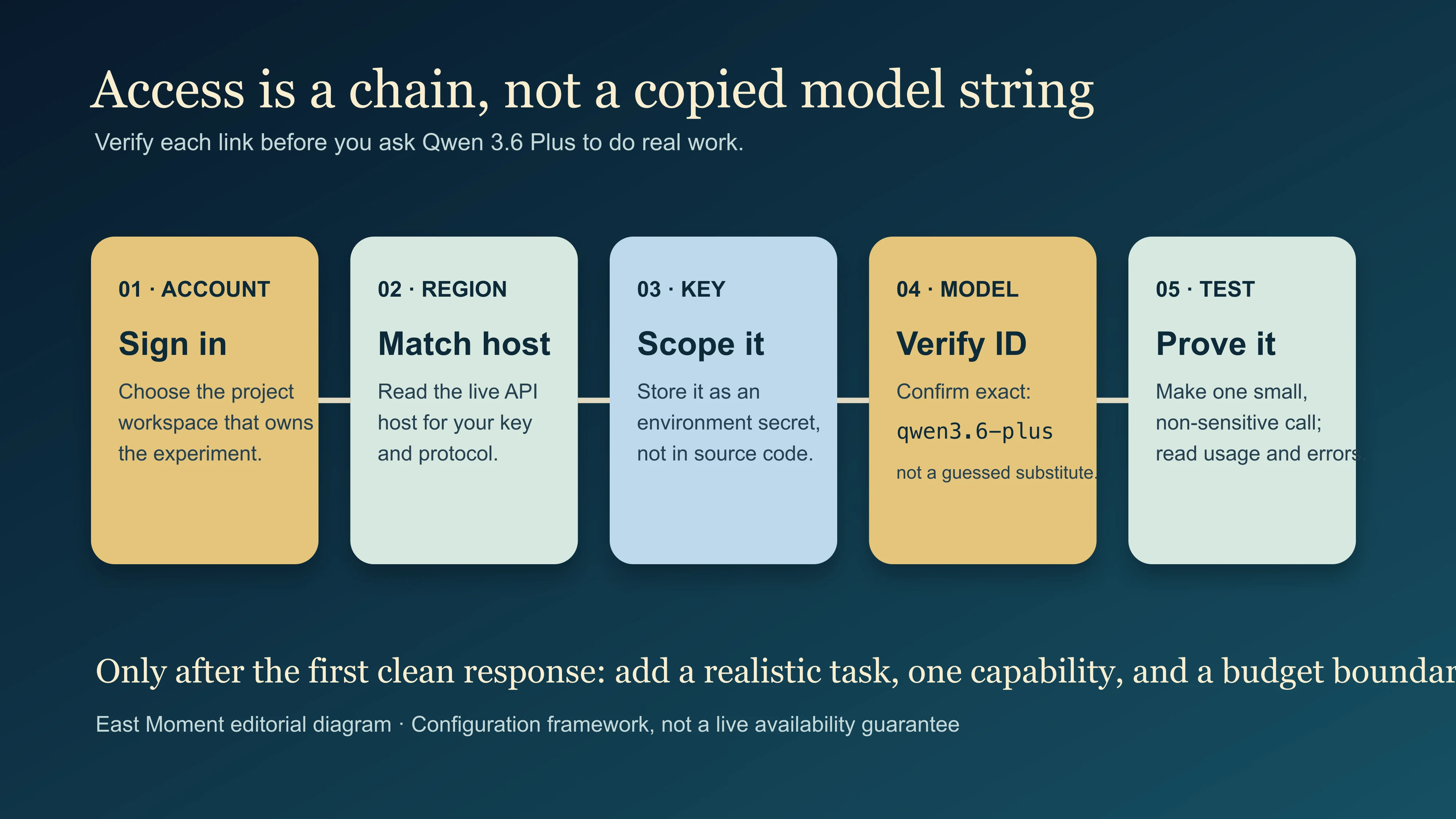
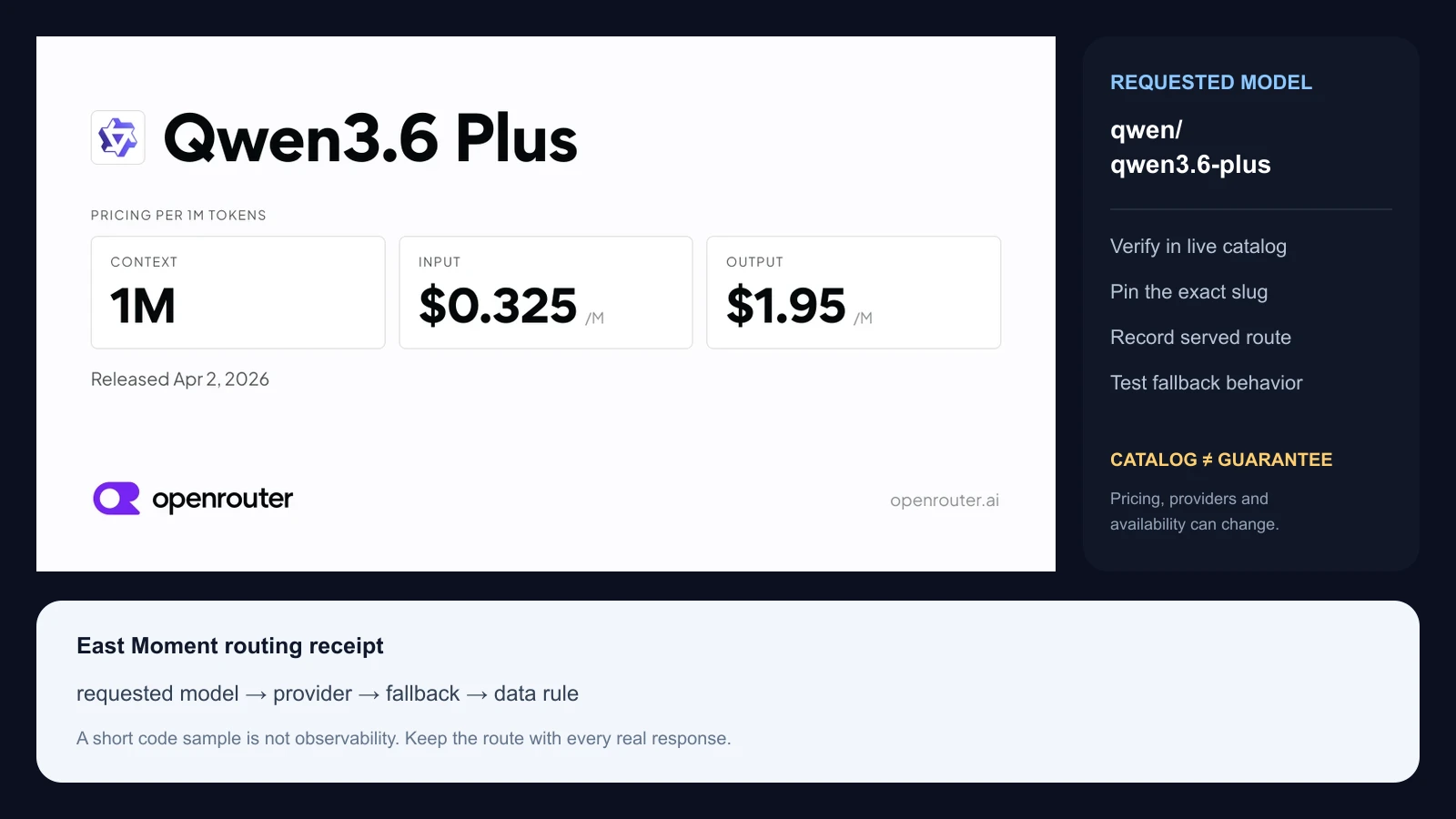
Access Qwen 3.6 Plus safely: verify the exact model, choose the right region, scope an API key, make a minimal call and avoid endpoint or billing traps.
Read the deep guide1 published guide
The same model name can arrive through a different provider, catalog entry, price, context limit and data route. This guide treats routing as part of the system and builds verification into the workflow instead of trusting the label alone.
The distribution test
I do not judge Chinese AI by a launch-stage benchmark or by a patriotic argument about who is ahead. I judge it at the ugly moment when a real person pastes in a messy document, asks for a usable answer, changes one condition and expects the tool to remember what matters. That is where speed, price, language, access and trust stop being separate technology stories. They become one human decision: will I use this again tomorrow?
The argument around Chinese AI is often trapped between two lazy positions: every new model is a national breakthrough, or every Chinese result is imitation. Both positions save the speaker from doing the harder work of testing. A benchmark tells me something narrow and useful about a defined task. It does not tell me whether the product accepts my files, preserves formatting, exposes its reasoning limits, cites a source, keeps a stable API route or quietly changes behaviour after an update. Those details sound boring. They are exactly where adoption is won.
Chinese-language use also changes the test. A model may summarize an English technical paper cleanly yet flatten a Chinese complaint, miss a pun, over-formalize a family message or treat platform slang as dictionary language. That failure is not cosmetic. Language carries rank, intimacy, embarrassment and generation. If a tool removes those things, it has not understood the task. The strongest Chinese products will not be the ones that merely answer in Chinese; they will know when a Chinese user wants precision, face-saving, speed, warmth or bluntness—and still admit when the evidence is weak.
A foundation model becomes culturally important through distribution. In China that can mean a chat product embedded in a short-video ecosystem, an assistant inside office software, an image tool entering an e-commerce workflow, or a voice system moving into a car cabin. The same model can feel powerful in one route and useless in another because identity, payment, latency, file limits and interface design change the experience. This is why a list of model names is a poor map of AI in China. The map must show where people meet the system and what they surrender to use it.
I care especially about the invisible bargain. A free tool may save twenty minutes but require an account, a phone number and a cloud upload. A coding route may be cheap per token but expensive in review time. A creator tool may produce a beautiful frame while making authorship and commercial rights harder to explain. Convenience is real; so is the cost transferred to privacy, verification and dependence. Chinese AI is moving fastest where products compress those frictions, not simply where a lab publishes the loudest number.
The most useful public frustration in Chinese AI discussions is not fear that the machine is too clever. It is anger that a product can sound certain while inventing the very fact the user needed. I share that anger. Fluency creates a debt of trust. The smoother the sentence, the more aggressively the product must reveal uncertainty, sources and tool boundaries. A person using AI for a restaurant suggestion can recover from a mistake. A buyer checking a regulation, a student citing a paper or a patient interpreting a symptom may not.
Building East Moment has made that anger brutally practical for me. AI can return a polished page and still leave the wrong URL owner, a broken internal link, an unverified image or a paragraph that sounds suspiciously like five others. The dangerous failure is not ugly prose; ugly prose is easy to notice. It is confident completion while the production system remains inconsistent. That is why I no longer accept 'the answer looks good' as a result. A result must survive the URL map, evidence record, image check, duplicate audit and the reader's next click.
My rule is deliberately severe: never reward an AI for making me feel finished. Reward it for making the next verification step clear. Ask for the source. Change a key condition. Give it a document containing an obvious contradiction. Check whether it notices. Repeat the task in a new session. This small pressure test is more revealing than a hundred screenshots of polished output. It also keeps human judgment in the loop without pretending that 'human in the loop' automatically makes a bad system safe.
Industry-scale context is checked against institutional research; product judgments still require direct testing. CAICT English research portal
China's visual internet makes the temptation obvious. A style appears, thousands of near-identical images arrive, and technical novelty becomes visual sameness within days. AI does not cause all homogenization, but it makes imitation almost frictionless. The valuable creator is therefore not the person who can generate the most. It is the person who can select, reject, combine first-hand material and defend a point of view. A prompt is not a personality. Taste is the record of what you refuse to publish.
The same principle applies to writing. AI can organize evidence, expose a missing question and help a bilingual writer compare phrasing. It cannot manufacture a witnessed afternoon, a family disagreement, the weight of a garment, the sound of a public table-tennis court or the embarrassment inside a comment thread. Those details must come from people and accountable sources. When AI helps preserve that specificity, it is useful. When it launders everybody's language into one frictionless voice, it is cultural loss disguised as efficiency.
Choose one task you already do: summarize a bilingual meeting, compare supplier quotations, refactor a small codebase, caption ten photographs or build a reading list with verifiable links. Run the same task three times across a week. Record time saved, corrections required, access friction, source quality and whether you would trust the result without checking. The winner is not the model that dazzles on day one. It is the product whose errors become legible and whose value survives repetition.
That test leaves room for a sharp conclusion. Some Chinese AI products are genuinely excellent at Chinese-language context and fast product integration. Some are wrappers with better marketing than memory. Some will become indispensable precisely because they are ordinary and cheap. I refuse both the inferiority story and the inevitable-superpower story. AI in China is already consequential. Its final value will be decided in millions of small acts of return, correction and refusal.
A benchmark begins the inquiry and often ends the marketing. Real use has more gates: can you create an account in your region, understand the terms, pay if necessary, send the file type your task requires, recover a result, inspect citations or intermediate work and repeat the process tomorrow? A model that performs brilliantly in a controlled evaluation but fails at identity, access or export is not the same product for an overseas user. East Moment treats the route as part of capability because friction changes who can benefit.
Run a small task whose failure you can recognize. For code, use a contained repository problem with tests. For translation, include relationship, register and a phrase that should not be rendered literally. For vision, ask about spatial relations rather than object labels alone. Record prompt, model identity, provider, date, settings and output. Then verify the answer outside the model. This does not produce a universal ranking. It produces evidence about one workflow, which is far more useful than repeating a leaderboard without knowing what was measured.
Cost must include correction. A cheaper token price loses its advantage when routing changes the model, context truncation damages the task or a weak answer consumes an hour of human repair. A higher-priced route may still be poor value if it hides identity or makes data handling impossible to understand. I care about the whole receipt: money, time, review burden, regional access and the confidence required before the output can touch real work.
China's AI story becomes culturally distinct at the distribution layer. Models enter super-apps, office suites, shopping, education, video editing, cars and devices already woven into daily routines. That proximity can lower the cost of trying a tool until generation feels less like a separate technical event and more like another button. It can also hide consequential choices—what was uploaded, which model answered, where data moved and why the interface makes one automated action feel inevitable.
Creative use deserves more than celebration or panic. A writer can use a model to expose options and still lose the stubborn phrasing that made the work theirs. A small seller can generate product material faster and accidentally multiply false details at scale. A student can receive patient explanation and stop checking whether the explanation is true. The same convenience can widen capability and weaken attention. I reject both lazy extremes: AI is neither automatic cultural decline nor automatic democratization. The result depends on the task, interface, incentives and human review left intact.
Return to this hub when products alter those conditions, not every time a model name changes. Bring a reproducible task: what you tried, the route, what worked, what failed and how you verified it. That evidence can update a guide without pretending one result settles the field. The strongest community contribution is a failure another user can reproduce and avoid. Hype is abundant. Honest receipts are still rare.
Reader-built field guide
Share the exact task, route, result and failure. A useful field note includes what you had to correct and whether the tool earned a second use.
What this builds: We will group repeatable tests by writing, coding, research and creative work so readers can compare tools against the same human task.