Hutong is often translated as “Beijing's old alley.” That answer is technically useful and emotionally thin. A hutong is a lane system tied to courtyard homes, thresholds, deliveries, bicycles, shade, repairs, neighbors and the pressure of a modern capital. It can be historic, renovated, commercial, residential or all of those within one block. The moment we photograph it as a frozen past, we stop seeing the people who keep it functioning.
Hutong begins with the lane between private life and public movement
A hutong is not simply a narrow road. Its width, turns, gates and side entrances organize how a neighborhood meets the city. A bicycle can pass while a conversation occupies the edge. A delivery rider pauses without becoming the center of the street. A courtyard door closes, but the lane still carries cooking smells, school uniforms, maintenance work and the sound of somebody calling home.
This is why the word “old” can mislead. Age matters, but use matters just as much. Some lanes preserve long residential continuity; others have been repaired, rebuilt, commercialized or adapted to new households. A hutong is a living urban arrangement, not proof that every building around it is untouched.

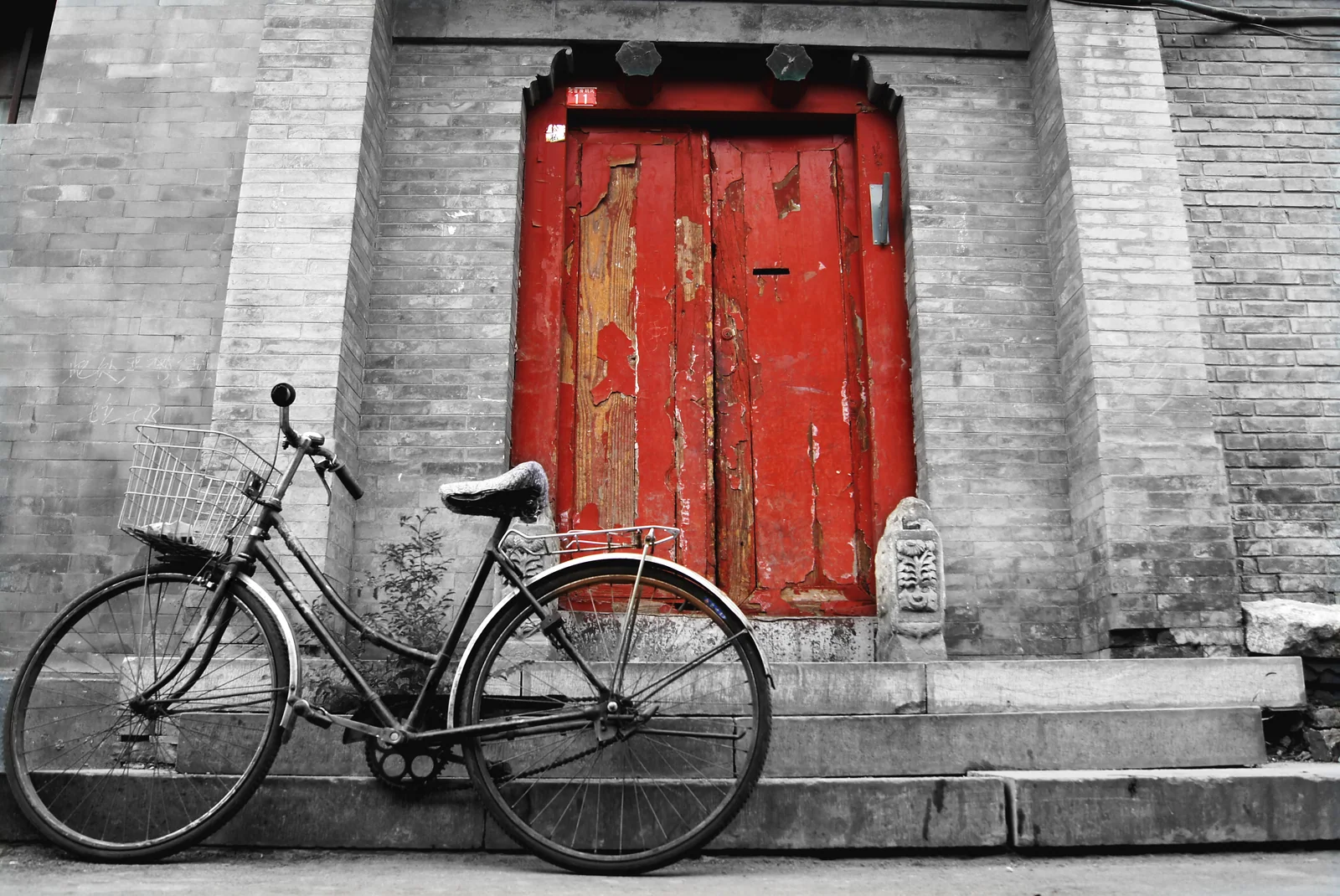
The lane looks simple until you ask it to support real life. It must carry pedestrians, scooters, refuse collection, deliveries, utility work, visitors and emergency access. Its beauty is therefore not separate from logistics. The patched corner and parked bicycle may tell more truth than a freshly restored façade with no visible use.
Hutong meaning is spatial before it is nostalgic
The word is associated with Beijing, but the idea becomes clearer through space:
The broader Chinese architecture guide helps separate hutong lanes from courtyard houses, imperial palaces, gardens and regional vernacular buildings.
| What to notice | What it tells you | What not to assume |
|---|---|---|
| Lane width and turns | How people, carts, bikes and deliveries share movement | Narrow means ancient or poor |
| Courtyard gates | Where domestic privacy meets collective circulation | Every gate leads to a preserved siheyuan |
| Roofline and walls | Climate, repair, materials and neighborhood scale | Gray brick equals one dynasty |
| Shops and services | How residents adapt heritage streets to daily needs | A café proves a district is “revived” |
| Public behavior | Whether the lane is lived in, visited or staged | A quiet photograph means an empty neighborhood |
The courtyard house, or siheyuan, is important because rooms and circulation gather around an enclosed center. But a hutong is the larger neighborhood network around many courtyards, walls, entrances and shared movement. One is a building arrangement; the other is an urban relationship.

From above, the repeated roofs can look beautifully coherent. At street level, that coherence breaks into different doorways, repairs, household arrangements and degrees of access. Both views are true. The aerial pattern explains urban form; the lane explains how unevenly that form is lived.
The Drum Tower shows why a hutong needs a larger scale
Beijing's lanes can feel intimate until a tower, gate or roofline suddenly restores the city's monumental scale. The Drum Tower is one of those moments. It helps orient the body and reminds us that hutongs were not isolated villages; they sat inside an imperial and later metropolitan structure.

I like this contrast because it prevents two opposite mistakes. If we look only at the Forbidden City, Beijing becomes a city of ceremonial power with no ordinary interior life. If we look only at hutongs, Beijing becomes a nostalgia postcard. The tower and the lane belong in the same walk: one explains hierarchy and time, the other explains adaptation and proximity.
The UNESCO Beijing Central Axis listing is useful for the monumental sequence and its planning logic. It does not turn every lane near the axis into a museum object or prove that present-day residents experience the city as an imperial diagram.
A siheyuan is a household arrangement, not a lifestyle guarantee
Travel writing often uses siheyuan and hutong as interchangeable words. They overlap, but they are not identical. A siheyuan is a courtyard-house arrangement. A hutong is a lane and neighborhood system that may contain many kinds of buildings, courtyards, additions and modern interventions.
The courtyard also should not be romanticized as automatic harmony. Its rooms could express hierarchy, gendered movement, age, wealth and degrees of access. Multiple families may share or divide a compound. Repairs, utilities, toilets, heating, parking and accessibility shape how the space works now.
My strongest memory of courtyard architecture is not the symmetry. It is the negotiation at the threshold: who can sit there, who must pass through, what can be stored outside, and how a private household becomes visible for one second before a door closes. That is more revealing than calling every gray-brick wall “traditional.”
The threshold is also where visitors most easily become intrusive. An open door may be open for light, airflow or a family member—not for our camera. Architecture creates a view, but it does not automatically grant permission. I would rather lose a photograph than teach another traveler that curiosity outranks somebody's home.
Hutong in Beijing is changing because Beijing is changing
Demolition, restoration, rent, tourism, infrastructure and new businesses all affect hutongs. Some residents leave. Some return. Some lanes become destinations with cafés and design stores; others remain practical residential shortcuts. A restored façade can preserve a street image while concealing changes behind it. A patched wall can preserve less visual purity and more actual continuity.
This is where heritage arguments become personal. Visitors often want authenticity to be easy to recognize. Residents need plumbing, warmth, storage, transport and safety. A city cannot preserve every building exactly as it was without deciding whose present life is allowed to continue inside it.
Compare the lane with the Forbidden City. The palace's monumental order helps explain the political scale that shaped Beijing, but the hutong explains what happens when urban history is compressed to human distance. Neither should be used to erase the other.

The comparison is about scale, not architectural sameness. The palace organizes ceremonial approach across monumental courts; a hutong organizes repeated everyday passage beside homes.
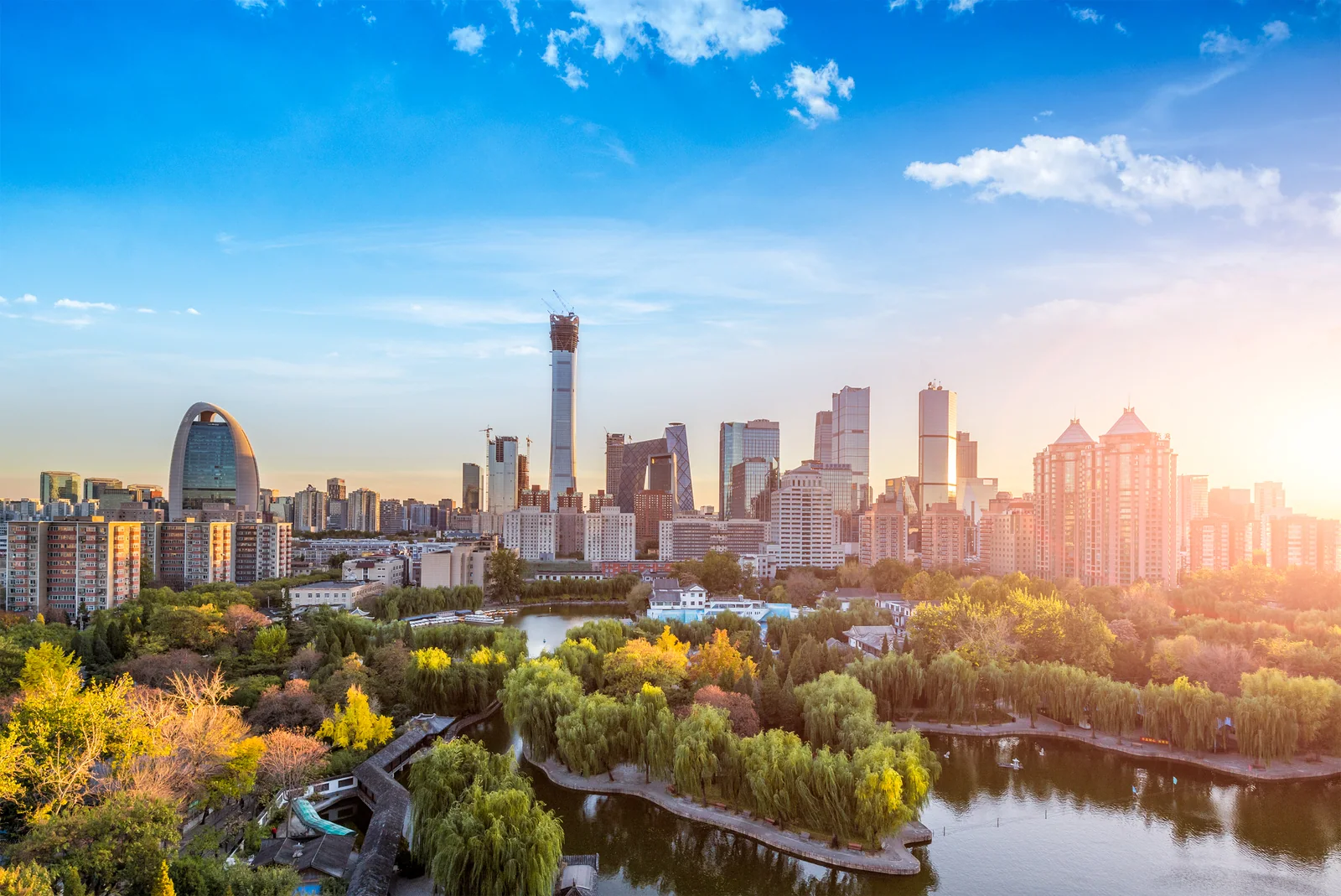
The skyline makes “old Beijing versus new Beijing” feel too simple. Both exist in one housing, transport and land market. A preserved lane is not outside the contemporary city; it carries contemporary pressure at a smaller width.
The most dishonest hutong sentence is “people lived more simply then.” Shared courtyards can produce closeness, but they can also compress privacy, storage and sanitation. A picturesque roofline tells us nothing about winter comfort, drainage, toilets, fire access or the cost of maintaining old materials. Those details are not ugly footnotes to heritage. They determine whether preservation protects a neighborhood or only preserves a view for outsiders.
I refuse the bargain in which residents must accept inconvenience so visitors can feel history. Good repair should let an old lane carry present life without erasing every scar or turning every courtyard into a boutique. That balance is difficult because infrastructure prefers straight lines and heritage survives through irregular ones. The tension cannot be solved by nostalgia.
Commercial hutong is not automatically fake hutong
A café, boutique or guesthouse does not by itself erase history. Commercial use has always belonged to cities. The harder questions are who can still afford the area, which services residents lose, whether renovation preserves more than a façade, and whether visitors are offered a neighborhood or a stage set.

I judge a renovated lane by friction. Can residents still move through it? Are ordinary services visible? Does every doorway sell the same souvenir? Is the architecture allowed to show repairs and compromise, or has every surface been polished into one marketable age? A living street can be attractive. The warning sign is not beauty; it is when all unscripted life has been edited out.
This is also why “hidden hutong” is a selfish travel phrase. A residential lane does not become more authentic because fewer outsiders know it. Sometimes the ethical choice is a public heritage street with clear visitor infrastructure, followed by attentive observation at its edges—not a hunt for private life that has not agreed to become content.
The return reason for this page is therefore practical: bring a second photograph from the same lane at another hour or season. Compare who uses the space, what has moved and what the first frame concealed. A hutong is better understood through change than through one perfect image.
How to visit a Beijing hutong respectfully
If you want a useful walk, choose observation over collection:
-
Walk slowly enough to see use. Notice deliveries, repairs, shared shade, bicycles, school routes and the times when a lane becomes busy.
-
Keep cameras outside private thresholds. A doorway is not permission to photograph a home or a person.
-
Do not block the lane. Residents still need to work, park, carry groceries and move emergency equipment.
-
Read restoration signs critically. Separate what a plaque dates from what a guide or shop claims.
-
Spend money locally without turning the street into a set. Eat, browse or visit a public site, but do not treat residents as performers.
-
Leave the drone and portrait lens behind. Tight lanes amplify intrusion, and overhead footage can expose private courtyards that walls were designed to protect.
-
Notice what tourism cannot prove. A clean façade cannot prove continuous residence; an old bicycle cannot prove poverty; a quiet morning cannot prove the neighborhood is disappearing.
-
Choose one public threshold and stay with it. Watch how residents, deliveries and visitors negotiate the same few metres. A complete five-minute sequence teaches more than ten isolated “old Beijing” frames.
For transport, opening times and current access, use the official information for the specific district. This page explains how to read the neighborhood; it is not a live ticketing or itinerary service. The Beijing travel guide handles the broader first-visit route.
A hutong matters because life keeps interrupting the picture
The most honest hutong photograph is not the emptiest one. It is the one that lets a lane remain a lane: a place where old walls meet scooters, courtyards meet deliveries, and a visitor's curiosity meets another person's right to go home.
The strongest image of this urban form is not a perfect gate. It is the constant negotiation at the edge of the frame: a chair moved for a bicycle, groceries carried around a visitor and shade treated as shared infrastructure. None of those gestures is monumental. Together they explain why a hutong cannot be understood as architecture alone. The lane is a daily agreement that keeps being rewritten.
Beijing's monumental center gives history a vertical axis. Hutongs give that history friction, inconvenience, intimacy and ordinary time. Their value is not that they look old. Their value is that they reveal how a city negotiates continuity while people keep changing what the space is for.
Share the detail that changed your reading in Moments: not only the roof or brick, but the human use that made the lane feel present.