The Forbidden City is easy to photograph and difficult to see. Red walls, yellow roofs and the central axis announce imperial power immediately. The slower story lives in thresholds, worn stone, service routes, repaired surfaces and the thousands of people whose labour made the palace look timeless.
Forbidden City history is a history of controlled movement
The palace complex in central Beijing was the imperial residence and ceremonial centre of the Ming and Qing dynasties. The UNESCO World Heritage record is the right place for the broad heritage frame; the Palace Museum is the practical institutional doorway to collections, buildings and current visitor information.
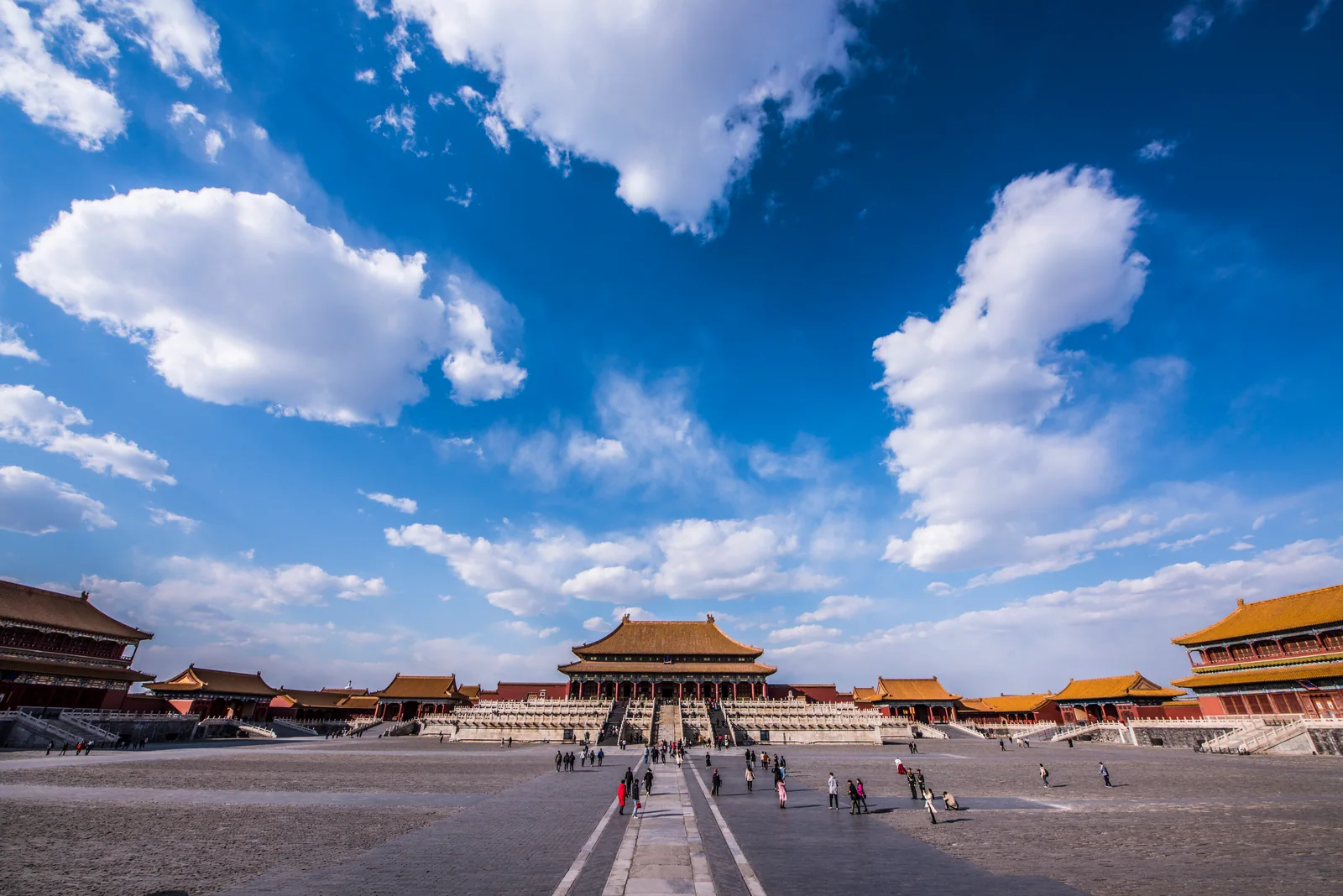
The first thing I feel on the central axis is not simply grandeur. It is choreography. Gates decide when you can stop. Courtyards decide how many bodies can gather. Raised thresholds turn walking into a negotiation with status.

The palace was built in the early fifteenth century and repeatedly repaired, altered and reinterpreted across later reigns. That sentence matters because “the Forbidden City” is often imagined as one perfect moment preserved from 1420. It is instead a long institutional life: construction, fire, reconstruction, changed court practice, museum conversion and conservation. A visitor sees continuity, but continuity here was produced through work.
What should you notice inside the imperial palace?
| Detail | What it communicates | A better question than “Is it beautiful?” |
|---|---|---|
| Central axis | Ceremony, hierarchy and controlled approach | Who was allowed to move here, and when? |
| Courtyards | Distance between roles and buildings | Why does the space widen or tighten at this point? |
| Roof colour and ornament | Rank, symbolism and maintenance | Who made and repaired the roof? |
| Doorways and thresholds | Access, pause and social separation | What changes when the visitor crosses? |
| Side routes and service spaces | Labour behind ceremony | Which people kept the palace functioning? |
This shift turns a palace visit from a hunt for famous rooms into a reading of how architecture organises people.

The moat and wall make the basic political idea blunt: the palace is a protected interior. Inside, the same logic becomes finer. A gate does not merely block; it reveals the next court at a controlled moment. A terrace raises one building above another. A broad paved court makes a human figure feel temporary. The hierarchy is not hidden in a symbol that needs decoding. It is already operating through your legs, sightline and fatigue.
The Forbidden City is not one frozen “Chinese style”
Visitors often use the palace as shorthand for all Chinese architecture. That collapses regional materials, garden traditions, religious buildings, vernacular houses and modern cities into one red-and-gold image.
Compare its formal axis with Chinese gardens, where movement is often indirect, framed and deliberately interrupted. The contrast is more revealing than a generic list of “Chinese architecture features.”
For a wider reading route, continue through the Chinese architecture guide, use the Beijing culture guide for the city beyond the palace, and compare the performance grammar of Peking Opera, where costume and movement also make hierarchy visible.
Colour is an administrative language
The familiar red walls and yellow glazed roofs are not only aesthetic choices. Colour, roof forms, courtyard scale and ornament participate in a hierarchy of use and status. The exact meaning of one motif should not be turned into a universal symbol dictionary, but the complex clearly makes rank visible through repetition and restriction.

Sunrise light can make the palace look private and tender. That feeling is real; it is also a reminder that the camera can soften an institution built around separation. I want both impressions present: beauty and control.
The palace was made by people who rarely appear in the picture
Bricks, timber, roof tiles, painted surfaces, metalwork, textiles, cleaning, food, transport, security and seasonal repair all supported imperial ceremony. A visitor sees the result as a coherent image because countless workers made difference disappear.
This is where a museum collection helps. Objects detach from the architecture and return attention to hands: a vessel's uneven edge, a repaired lacquer surface, a textile's repeated stitch. The Palace Museum's collections make the palace legible as a working material system, not only a royal stage.

A bronze object cannot prove what every court participant believed, but it can make labour visible. Casting, finishing, inscription, transport, placement and later care turn “imperial taste” into a chain of skilled decisions. This is why I resist the phrase palace treasure when it ends the conversation. Value is not only rarity or ownership. The object is evidence of a workshop, a ritual setting and the museum work that keeps it readable now.
Is the Forbidden City the same as the Palace Museum?
The names overlap, but they ask you to see different things. Forbidden City usually names the former imperial palace complex: walls, gates, halls, courts, gardens and the political order they staged. Palace Museum names the museum institution that now studies, conserves, displays and interprets the architecture and collections associated with that history.
This distinction changes a visit. If you see only the Forbidden City, every object can become decoration inside a famous building. If you see only the Palace Museum, the architecture can become a container for exhibitions. The real encounter moves between them. A vessel once occupied a ritual or domestic system; a hall controlled access; a museum label now selects which part of that relationship a modern visitor can recover.
It also explains why not every object associated with the imperial collection is visible in one room, or even held in one place. Collections move through evacuation, transfer, conservation, research and exhibition histories. I will not turn that complex twentieth-century history into a possession slogan. The honest visitor question is narrower and better: what is the museum showing here, what part of the original setting is lost, and what new knowledge has conservation made possible?
Once you ask that, a closed gallery or rotated object no longer feels like a betrayal of the postcard. Museums protect fragile things partly by limiting exposure. The palace survives as a place because access and preservation are continually negotiated, not because the gates opened and history stopped.
The side route can reveal more than the throne
The central axis teaches hierarchy brilliantly, but it can also turn a visit into a march from one famous gate to the next. I learn more when I step sideways and compare scale. A monumental court tells me how the state wanted arrival to feel; a narrower courtyard, threshold or service route asks how bodies actually moved, waited, carried and maintained that appearance.
Look down as often as you look up. Worn stone records repeated passage. Drainage and roof edges reveal how weather was managed. Repaired paint separates a living conservation problem from the fantasy of an untouched palace. A closed doorway is also evidence: heritage protection and crowd control shape what a present visitor can know.
The Forbidden City becomes less distant when labor returns to the frame. Someone swept the court, heated rooms, transported water, guarded entrances, repaired timber and prepared ceremonies. Imperial power depended on making this enormous amount of work appear orderly. The palace is most impressive when we see both the image and the effort required to sustain it.

From outside and above, the compound stops behaving like a sequence of photogenic gates. Its enormous roof field sits inside a modern illuminated city. That view makes preservation look less like freezing one monument and more like negotiating scale, access, traffic, skyline and the fact that Beijing continued growing around it.
This side perspective exposes a camera problem. Repetition makes the architecture feel endless, while the frame can hide the room, route and people beyond it. A spectacular view can be accurate and still distribute attention according to colour rather than historical importance.
Dragons, animals and symbols need architectural context
The palace is full of motifs that invite instant explanations: dragon equals emperor, phoenix equals empress, yellow equals sovereignty. Those associations can be useful beginnings, but a symbol is never free-floating. Its material, location, scale, audience and relationship to a building determine what it is doing.

At a doorway, a dragon is not merely decorative information. It participates in a controlled approach. On a vessel, robe or screen, the same creature enters a different material and social system. Count roof figures only if the count helps you compare building rank; do not turn the visit into a superstition scavenger hunt. The stronger question is always: why is this image here, at this size, before this audience?
Weather changes the Forbidden City without changing its plan
Snow, rain, dust, summer heat and freeze-thaw cycles turn colour into maintenance. The postcard version of a red wall in winter can look almost abstract, but the real surface is meeting water, temperature, dust, footsteps and organic growth.
I value seasonal photographs because they resist the idea that heritage lives outside weather. Timber expands and contracts. Painted surfaces fade. Roof drainage matters. Visitors change routes. The plan can remain legible while its materials require continuous intervention.
This is where “original condition” becomes a misleading fantasy. A palace that survived through repair is not less authentic because people maintained it. Conservation history is part of the building's history, provided new work is documented rather than passed off as untouched antiquity.
How to visit without exhausting yourself
The complex is large enough that a rushed “see everything” plan can turn architecture into a blur of gates. Reserve time for one central route and one quieter side route. Check the official Palace Museum visitor information for current tickets, closures and access rules before travelling; availability changes.
Bring water, comfortable shoes and a willingness to stop looking at the centre. A side courtyard, a roof detail or the pattern of people moving through a doorway may stay longer than the most famous hall.
For station exits, ticket sequencing, accommodation and the rest of the city, move to the practical Travel to Beijing guide. This page owns the palace's architecture and history; it should not pretend to be a complete Beijing itinerary.
My practical route is therefore not “maximum halls per hour.” It is one long axis, one deliberate sideways turn and one material detail revisited at the end. That rhythm gives the body enough comparison to understand what the palace is doing.
A route that preserves attention
Begin with the outer court while your eyes are fresh enough to understand scale. Before taking a wide photograph, stand still and watch how visitors disperse across the paving. In the inner court, compare the tighter spaces with the public sequence you just crossed. Then choose one side complex or exhibition according to what is open. Finish at a material detail—a drain, worn threshold, painted beam or bronze surface—and ask what repeated work kept it present.
This route deliberately leaves things unseen. That is not failure. The palace was designed to control access, and the museum remains too large for one exhaustive visit. A selective route produces memory; a complete checklist produces proof that you walked far.
A simple way to read one courtyard
Stop before entering and record three distances: how far the gate is from the hall, how much open ground separates you from the steps and how many thresholds you crossed. Then look back. The view you leave behind is part of the design; controlled revelation works in both directions.
Next, find one element that ordinary maintenance keeps alive: a drainage edge, a repaired roof tile, a painted beam or a worn paving line. Ask what weather and repeated bodies have done to it. Finally, compare the official label with what the room permits you to see. A short label may identify a reign or function, while the architecture shows queueing, exclusion and conservation at the same time.
Take one wide photograph, one detail and one photograph that includes people using the space. The three frames preserve scale, material and movement; a single postcard usually preserves only colour.
The Forbidden City becomes unforgettable when the postcard breaks
The Forbidden City is not valuable because it proves that emperors lived in large buildings. It is valuable because its layout makes power visible in the body: who approaches, who waits, who crosses, who works behind the wall and who is allowed to be seen.
Start with the axis, then look for the labour that the axis hides. Bring the detail that changed your reading to East Moment's community and tell us what the palace made you notice beyond the red walls.