Ai Weiwei's strongest works turn quantity into an ethical trap. From a distance we see a field, pile or statistic; up close we find individual labor, damaged history and the uncomfortable question of who gets counted.
Ai Weiwei should be read from object to system
The Tate collection record for Sunflower Seeds establishes the work's material, scale and institutional history; I use those facts as the floor for interpretation, not as a substitute for looking.
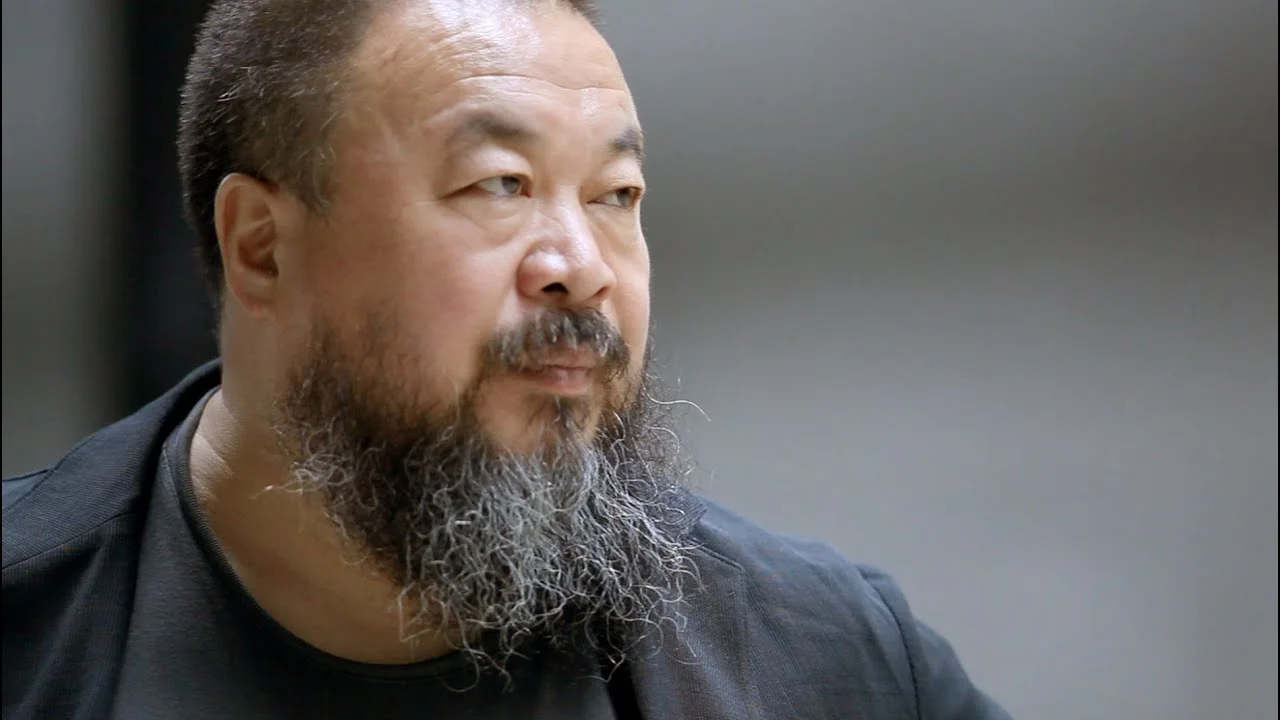
Ai Weiwei (艾未未) is a Chinese contemporary artist and filmmaker known for sculpture, installation, architecture, photography and public criticism. The fastest way to misunderstand him is to begin with a political label and use every object as an illustration. Begin with the object instead: what is it made from, who made it, what action changed it, and what institution gives it meaning?
One seed is craft; one hundred million become a system
For Tate Modern's Sunflower Seeds, artisans in Jingdezhen produced a vast field of individually made and painted porcelain seeds. Distance initially encourages a false reading of sameness. Close inspection restores difference: hand marks, labor time and the historic material culture of porcelain.
The work does not require us to choose between beauty and politics. Its force comes from making them inseparable. Porcelain carries imperial, export and local craft histories; the seed carries memories of shared scarcity and mass imagery; the quantity evokes population without letting an individual unit disappear completely.
The installation's changing rules also matter. An artwork is not only the artist's idea. Dust, visitor safety, museum management and the prohibition on walking through the field changed how bodies could encounter it. Institution became part of the meaning.
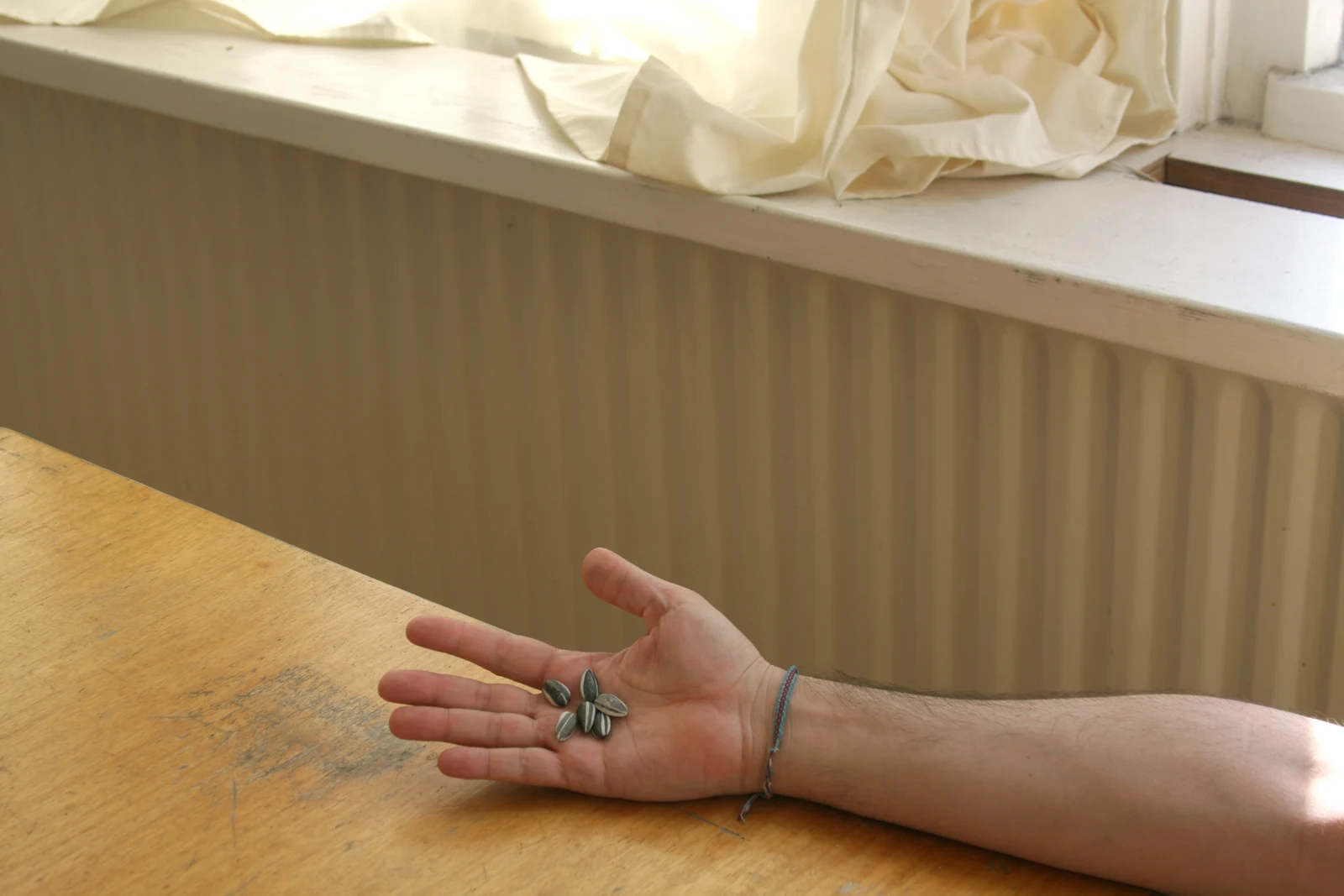
At hand scale, the field stops behaving like a statistic. The stripes wobble, grey tones differ and each seed occupies the palm like a small made object. This is the visual reversal the work demands: do not admire “a hundred million” until you have looked closely enough to recover one.
The seduction happens at distance. “A hundred million” sounds enormous, photographs beautifully and turns easily into a headline. The artistic test begins when attention reverses direction: field to seed, seed to painted marks, marks to a trained hand, hand to a person whose name the museum visitor may never learn. I admire the work because it makes that reversal possible. I also refuse to pretend it completes the reversal for us. Spectacle can swallow labor even when the wall label explains that labor perfectly.
Destruction is not automatically critique
Dropping a Han Dynasty Urn confronts viewers with a recorded act of destruction. The easy responses are moral outrage or automatic praise for transgression. Both are too quick.
Ask four questions: Was the object's identification secure? What value system designated it precious? Does destroying one object expose a larger destruction, or merely reproduce it? What does the photographic sequence add? The work remains difficult because the act cannot be undone. Its argument has a material cost, not just a symbolic one.
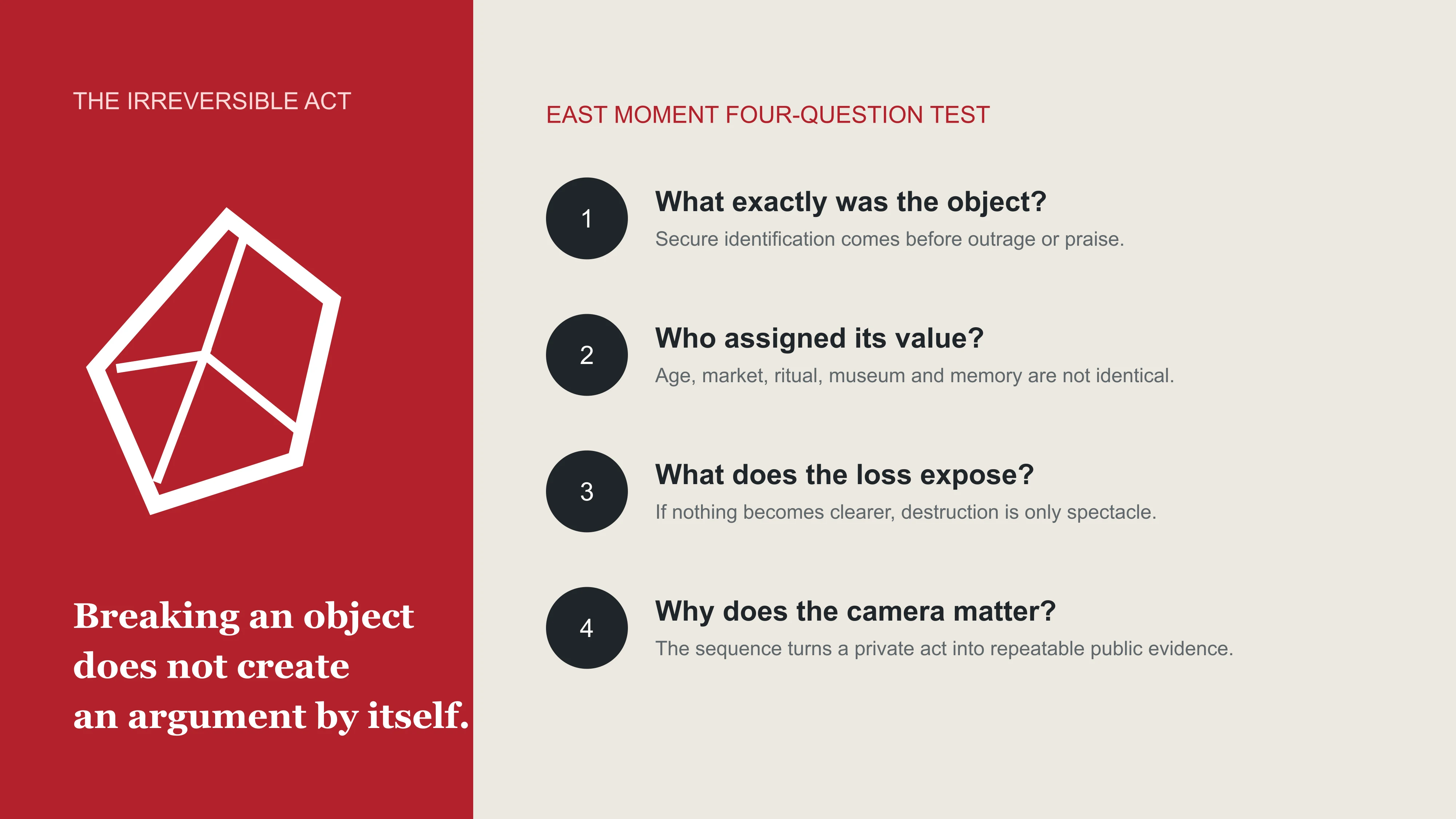
This is where I become deliberately unsympathetic to the word “provocative.” Provocation is cheap when the audience pays the emotional bill and the artist risks only attention. Here the destroyed object makes the question harder because the loss is real, while the camera multiplies the act forever. The three-frame sequence matters as much as the drop: without it, there is one private destruction; with it, every later viewer is recruited as witness, judge and distributor.
The work still does not receive automatic moral credit. If a viewer concludes that the destruction reproduces the contempt it claims to expose, that is a serious reading. The point is to locate the objection inside the object's identification, the action and the photographic form—not to shout either “heritage vandalism” or “brave conceptual art” and walk away feeling morally complete.
Jingdezhen is not a neutral production detail
The porcelain seeds were produced through skilled labor in Jingdezhen, a city whose name already carries imperial, industrial and global export histories. That location prevents the work from becoming a generic statement about “the masses.” The units look repeatable, yet their production depends on hands trained inside a specific material culture.
This matters to East Moment because porcelain is often presented as either timeless beauty or technical heritage. Sunflower Seeds activates a third possibility: historical craft can become a contemporary argument about labor, scale and visibility without ceasing to be craft.
The contradiction should remain uncomfortable. An internationally famous artist commissions extensive local labor; a global museum presents the result; viewers initially encounter the field as overwhelming sameness. The work criticizes abstraction while participating in systems that can also abstract makers. That tension makes it stronger than a clean political slogan.
Jingdezhen belongs to a larger Chinese manufacturing story in which repetition never means one machine did everything. Porcelain is a chain of forming, drying, painting, glazing, stacking, firing, sorting and failure. Naming the city without restoring that chain turns skilled production into exotic atmosphere.
My strongest response to Sunflower Seeds begins in that gap. I first want to surrender to the field as spectacle. Then the knowledge of individual painting makes the surrender feel morally lazy. The work does not let me keep the pleasure of scale without also asking whose repetitive labor made scale possible.
The person is larger than the dissident label
The Hirshhorn's retrospective account places sculpture, photography, audio, video and installation inside one long practice. It also records his return to China in 1993 after more than a decade in the United States and his collaboration with Herzog & de Meuron on Beijing's 2008 National Stadium. Those facts matter because they break the false image of an artist who simply discovered politics and then illustrated it.
His method was already built from conceptual art, found objects, architecture, publishing, photography and the rearrangement of inherited material. Politics did not replace form. Public pressure made the consequences of form harder to ignore. An antique stool made unusable, a surveillance camera remade in marble, a field of porcelain seeds and a stadium all ask versions of the same question: who designs the structure through which bodies move, and who is permitted to change it?
This continuity is the fullest way to introduce Ai Weiwei. Biography provides stakes, but it should not become a shortcut that turns every object into a heroic relic. His detention in 2011 and travel restriction until 2015 are consequential public facts documented by the Hirshhorn. They do not make every later artwork formally successful. Respecting the person means judging the work precisely enough that biography does not have to carry it.
Evidence can become form

Across installations, lists, films and online communication, Ai often organizes names, objects or repeated units so that information acquires physical weight. Documentation is not neutral. Selection, repetition and display determine which lives become legible.
This is the connection between art and public criticism in his practice. The artwork does not merely state that a system is large. It makes scale perceptible, then forces the viewer back toward particulars.
Trace makes the pixel answer for a life
The Smithsonian's record for Trace identifies 176 portraits built from more than 1.2 million LEGO bricks. The work began in the Alcatraz project and later occupied the Hirshhorn floor in six zones. From above, each face is instantly readable. Up close, the face breaks into commercial plastic units and gaps.
This is not merely another large-number trick. Portraiture gives the repeated unit a different responsibility. In Sunflower Seeds, attention moves from apparent sameness toward anonymous makers. In Trace, a named face is reconstructed from standardized pieces. The pixelated appearance recalls images already degraded by screens, surveillance and circulation. A person becomes data, yet the act of rebuilding the face insists that data is not the end of personhood.
The limitation is built into the same strategy. A floor of names and faces can still become an impressive inventory consumed too quickly. Viewers must stop at one portrait long enough for scale to lose its glamour. If the installation produces only “so many people,” it has recreated the abstraction it opposes. Ai's art is strongest when it engineers this failure and then makes the viewer responsible for correcting it.
The institution is never outside the artwork
Ai Weiwei's work often arrives surrounded by biography, controversy and institutional prestige. A museum can clarify materials and provenance, but it also changes the encounter. Security rules determine distance. Wall text organizes interpretation. International attention can make the political reading feel complete before the object has been examined.
I therefore read the institution as another material. Who is allowed to touch? Who is named as maker? Which history receives a label, and which remains an atmospheric idea? Sunflower Seeds became a different physical experience when visitors could no longer walk across the field. That was not a footnote to the artwork; it altered the relationship between individual body and collective scale.
This approach also prevents two lazy extremes. Ai Weiwei is not only a heroic dissident whose objects merely carry messages, and he is not only a celebrity whose politics cancel formal invention. The strongest work makes form, labor, risk and public meaning impossible to separate cleanly.
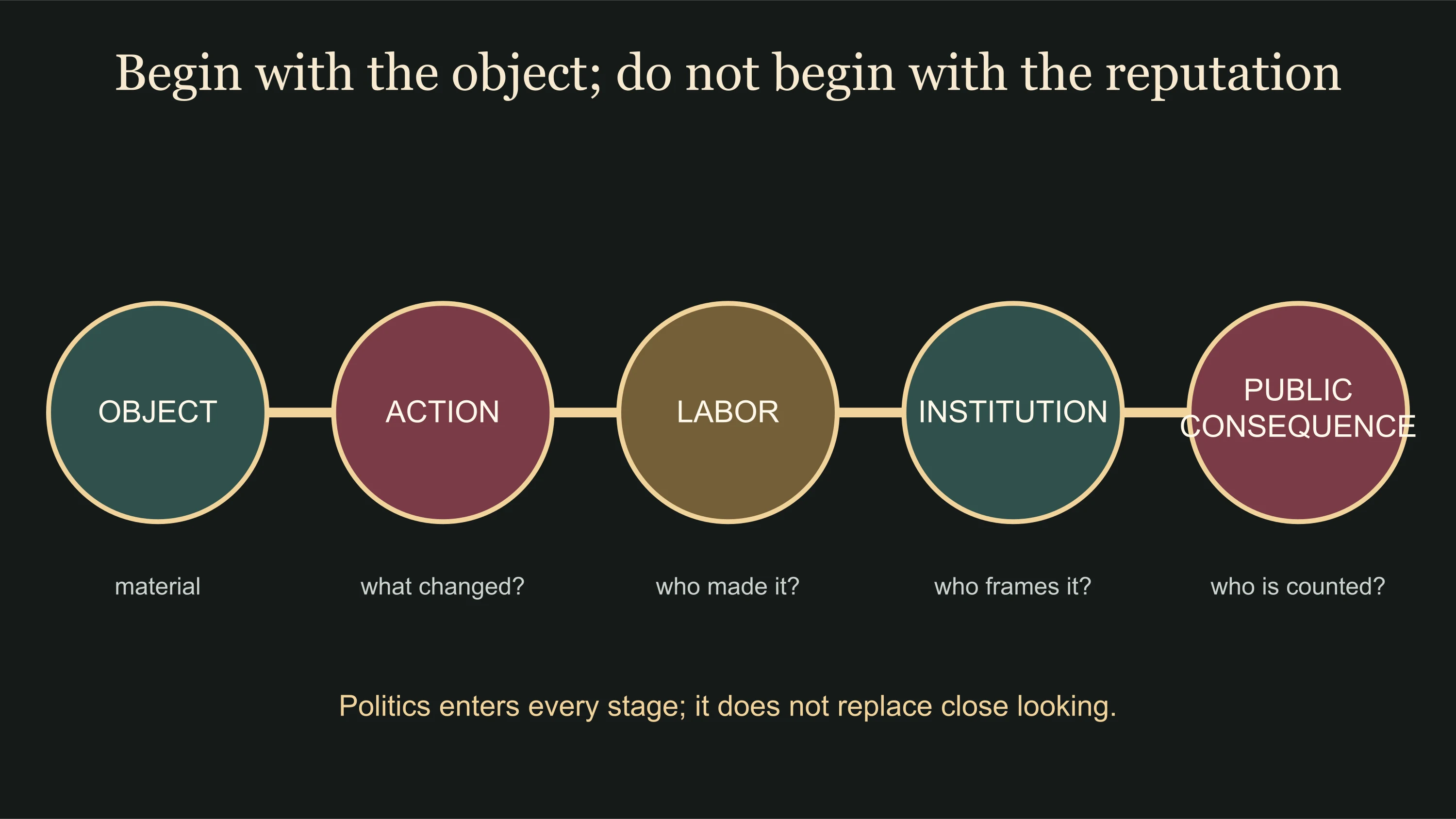
This is the sequence I use when an Ai Weiwei work arrives already buried under reputation. Name the object. Name the action performed on it. Find the labor that made or documented it. Identify the institution controlling access and interpretation. Only then ask what public consequence the work produces. Politics enters at every stage, but it does not excuse us from looking.
The method also leaves room to disagree. A viewer may decide that destruction overwhelms critique in Dropping a Han Dynasty Urn, or that museum scale re-abstracts the artisans in Sunflower Seeds. Those are stronger objections than “it is political, therefore important” or “it is provocative, therefore empty,” because they locate the disagreement inside a material decision.
Where to start
Do not start with a documentary biography. Start with Sunflower Seeds because Tate's record lets you examine material, manufacture, installation and institutional change in one object. Continue to Dropping a Han Dynasty Urn for the ethics of cultural value. Move to Trace to see how repeated units become named faces, then return to an interview and ask whether the artist's explanation makes the form more exact or merely easier to praise.
That order keeps the person present without allowing celebrity or politics to do the looking for you. It also exposes change: craft and ancient material, irreversible action, public names, digital circulation and institutions are not separate chapters. They are different versions of Ai Weiwei's lifelong refusal to treat a system as invisible background.
My verdict
Ai Weiwei is most persuasive when the political claim is not pasted onto the artwork but built into material and scale. His recurring achievement is to make a number stop behaving like a number. A seed, name, portrait or fragment becomes resistant to abstraction. His recurring danger is the opposite: monumental scale can turn resistance back into spectacle. The work remains alive because that contradiction is not solved for us.
Continue through the Chinese artists collection and the wider Chinese art guide. For a different use of repetition, compare Ai's counted objects with Yue Minjun's copied laughing face: one makes quantity into evidence, while the other makes identity into a uniform. In the comments, choose one work and identify the exact material decision that carries—or weakens—its argument. Then audit one artwork in Moments through five fields: object, action, labor, institution and public consequence. Return to dispute other audits with evidence; agreement is less useful here than precise disagreement.