The Jade Emperor is the celestial sovereign and senior administrator of heaven in influential strands of Chinese popular religion and Daoist tradition. He is enormously important, but calling him “the Chinese God” creates the wrong picture. Chinese religious culture has never been one company with one permanent organization chart. The better question is: what kind of authority does the Jade Emperor represent, and in which tradition or story?
Who is the Jade Emperor?
The Jade Emperor is commonly called Yuhuang Dadi (玉皇大帝), “Great Emperor of Jade,” or Yuhuang Shangdi (玉皇上帝). In temples, ritual texts and popular stories, he presides over a celestial administration populated by officials, messengers, star deities, local gods and divine departments.
That bureaucratic language is not a joke invented by office workers. It reflects a long Chinese habit of imagining cosmic order through titles, petitions, ranks, calendars, seals and reporting relationships. Heaven becomes legible because it resembles government.
But resemblance is not identity. A temple altar is not a civil-service handbook, and one novel's heaven is not a census of every deity worshipped in China.
The Met's account of Daoism and Daoist art is useful precisely because it does not reduce Daoism to one god list. It shows a changing religious and visual world shaped by cosmic forces, revelations, ritual, immortals and institutions. The Jade Emperor belongs inside that larger history, not above every Chinese belief as a universal monotheistic creator.

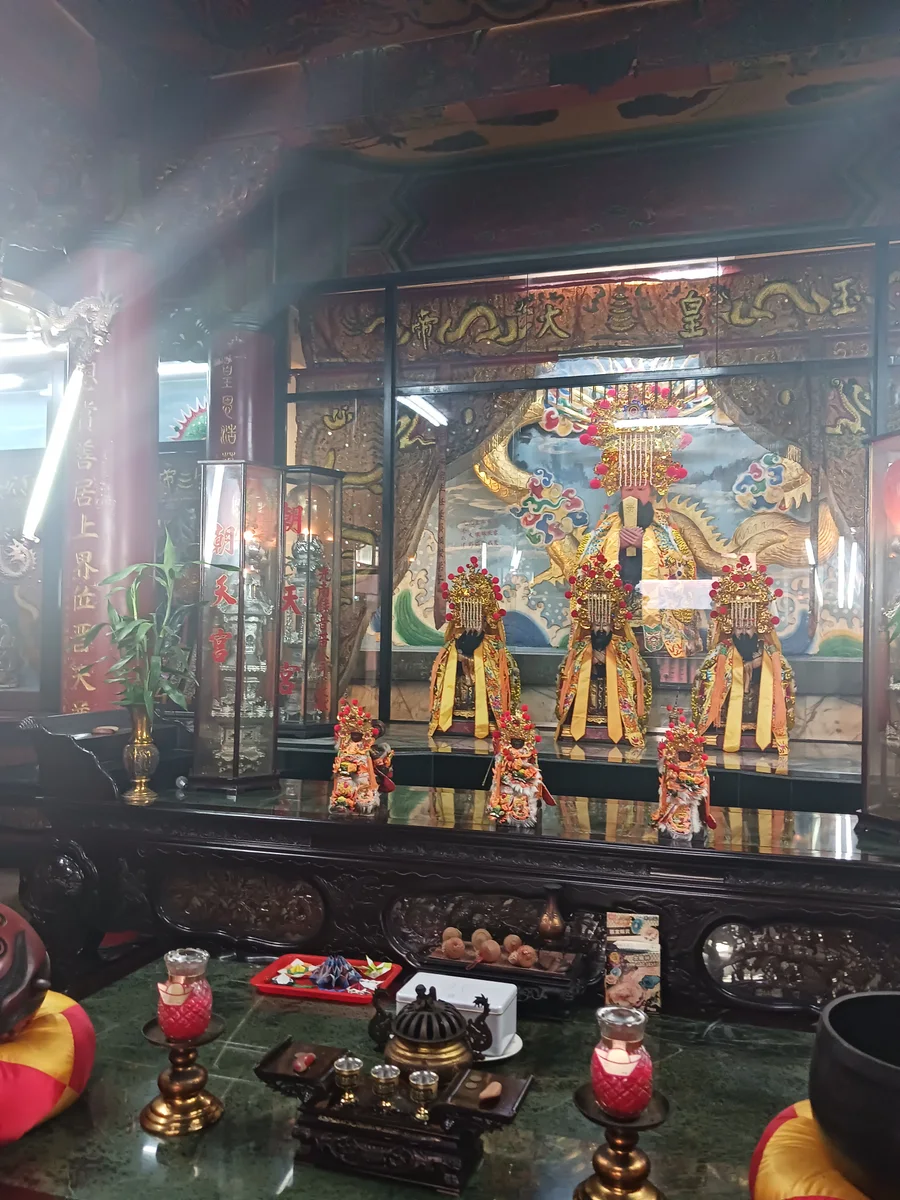
This 2025 temple photograph identifies one contemporary altar arrangement. Its dense vertical order makes celestial administration visible, but it cannot establish one canonical rank for every figure in every temple.
Wrong question one: is he the most powerful Chinese god?
This is the question fantasy games train us to ask. It is also the quickest way to misunderstand the subject.
Power in Chinese religious worlds is not one measurable substance. A deity may have high cosmic rank, intimate local trust, specialist authority, scriptural importance or enormous popular devotion. Those forms of power do not collapse into a tournament bracket.
The Jade Emperor can preside over heaven without replacing the Three Pure Ones in Daoist theology, erasing Buddhist figures such as Guanyin, or making a village's local protector emotionally irrelevant. A family praying for safe travel is not conducting metaphysical polling before choosing an altar.
My answer is firm: do not rank deities until you have named the text, temple, ritual community or fictional universe doing the ranking.
For the larger sorting method, use the Chinese mythology gods guide. It separates religious figures, culture heroes and literary characters before comparison begins.
Wrong question two: did the Jade Emperor create the universe?
Not in one universally accepted Chinese creation account.
Chinese myth preserves multiple beginnings and repairs. Pangu separates heaven and earth in a famous later creation story. Nüwa creates people in some accounts and repairs the damaged sky in another. Other texts start from undifferentiated cosmic conditions rather than a ruler making the world by decree.
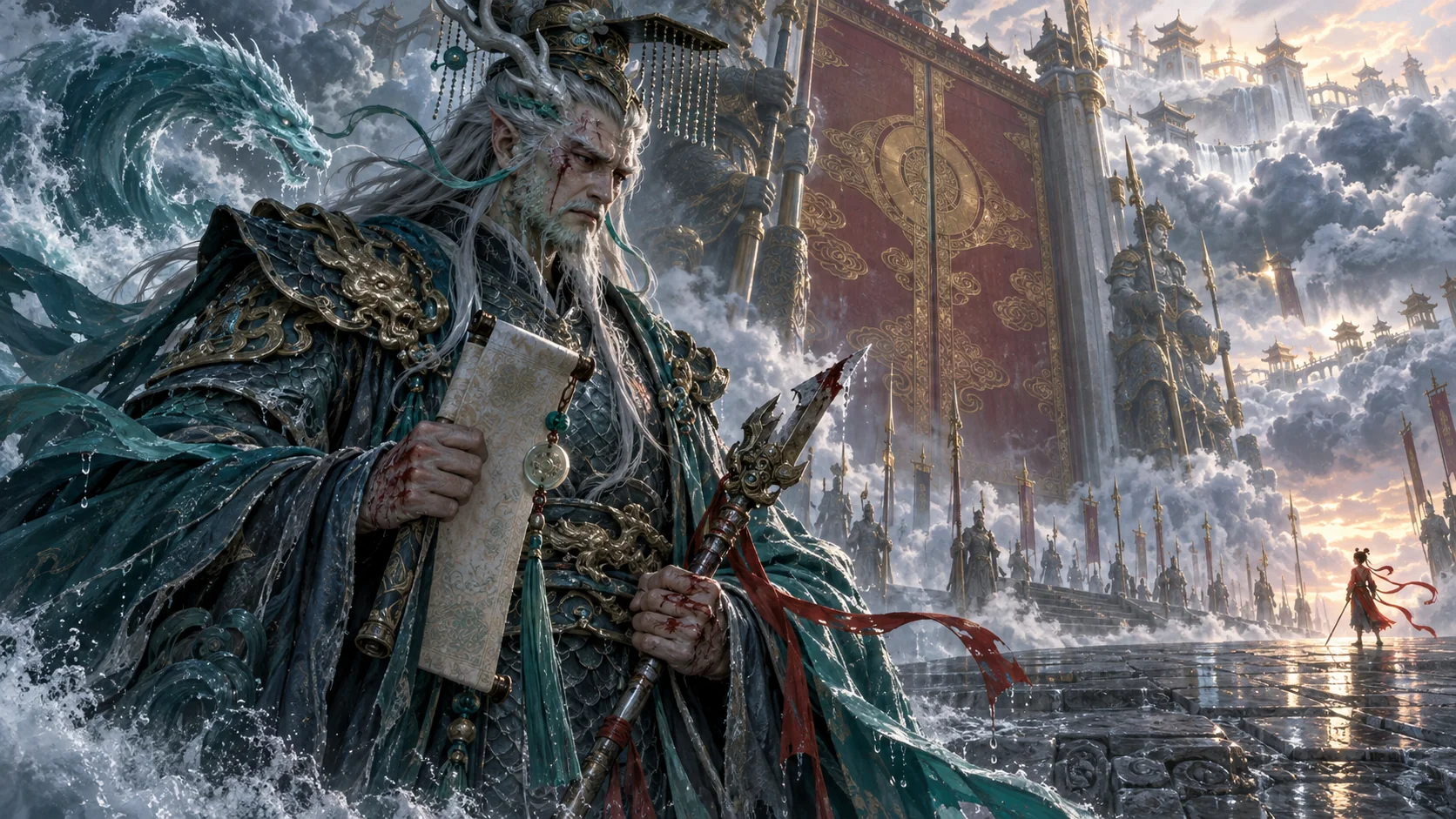
The Jade Emperor's strongest cultural image is government, not solitary creation. He receives reports, issues commands, assigns responsibilities and maintains order. That is why I describe him as an administrator of a cosmos whose existence is not dependent on one biography.
I reject the fantasy that a higher title automatically means deeper moral wisdom. The Jade Emperor interests me precisely because his authority is procedural: petitions still have to travel, officials still fail, and order still has to be maintained inside a heaven that was crowded before he took the throne. A lone all-powerful creator would make this universe cleaner. He would also make it much less Chinese.
This distinction also makes him more interesting. A creator stands outside the system at its beginning. An administrator inherits a crowded system full of competing offices, old powers, local obligations and paperwork.
Anyone who has entered a large organization understands the problem immediately.
Wrong question three: is the Queen Mother of the West his wife?
Popular entertainment often pairs the Jade Emperor with a heavenly queen, and English summaries then identify that figure as the Queen Mother of the West, Xiwangmu. Treat that equation carefully.
Xiwangmu has a deep and independent history. She appears in early texts and later develops into a powerful divine figure associated with the western paradise, immortality and the peaches of longevity. She is not important because she married into the Jade Emperor's office.
Some regional stories, operas, television dramas and popular retellings connect or pair them. That tells us something real about those versions. It does not retroactively turn every appearance of Xiwangmu into a spouse scene.
This is a recurring problem in English-language mythology pages: a relationship that helps one television plot becomes presented as a timeless family fact.
Use names as evidence. Ask whether the source says Wangmu Niangniang, Xiwangmu, a heavenly empress or another title. Translation should not silently merge them.
Wrong question four: why does he look weak in Journey to the West?
Because a novel needs drama, comedy and a hero with room to cause trouble.
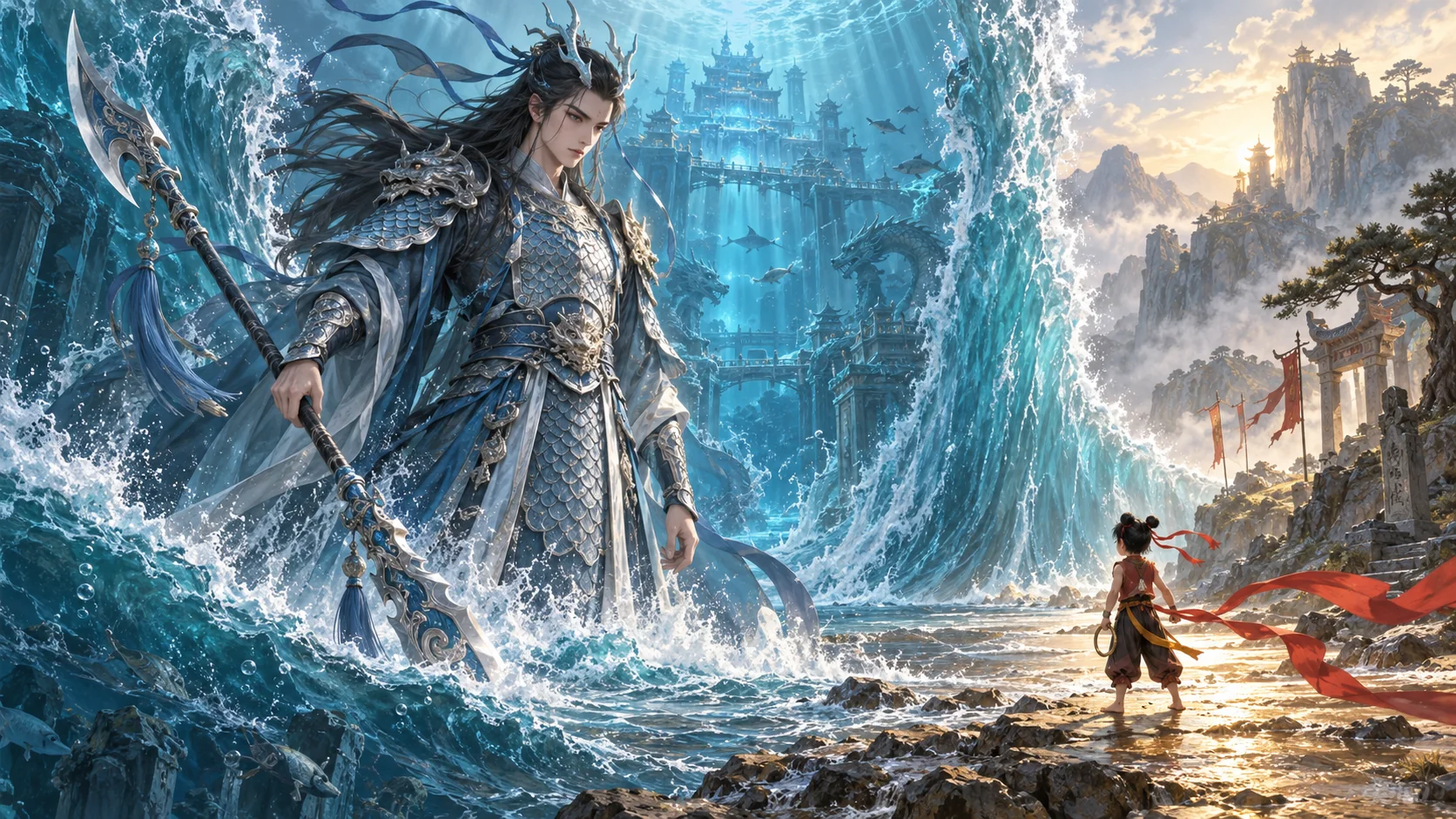
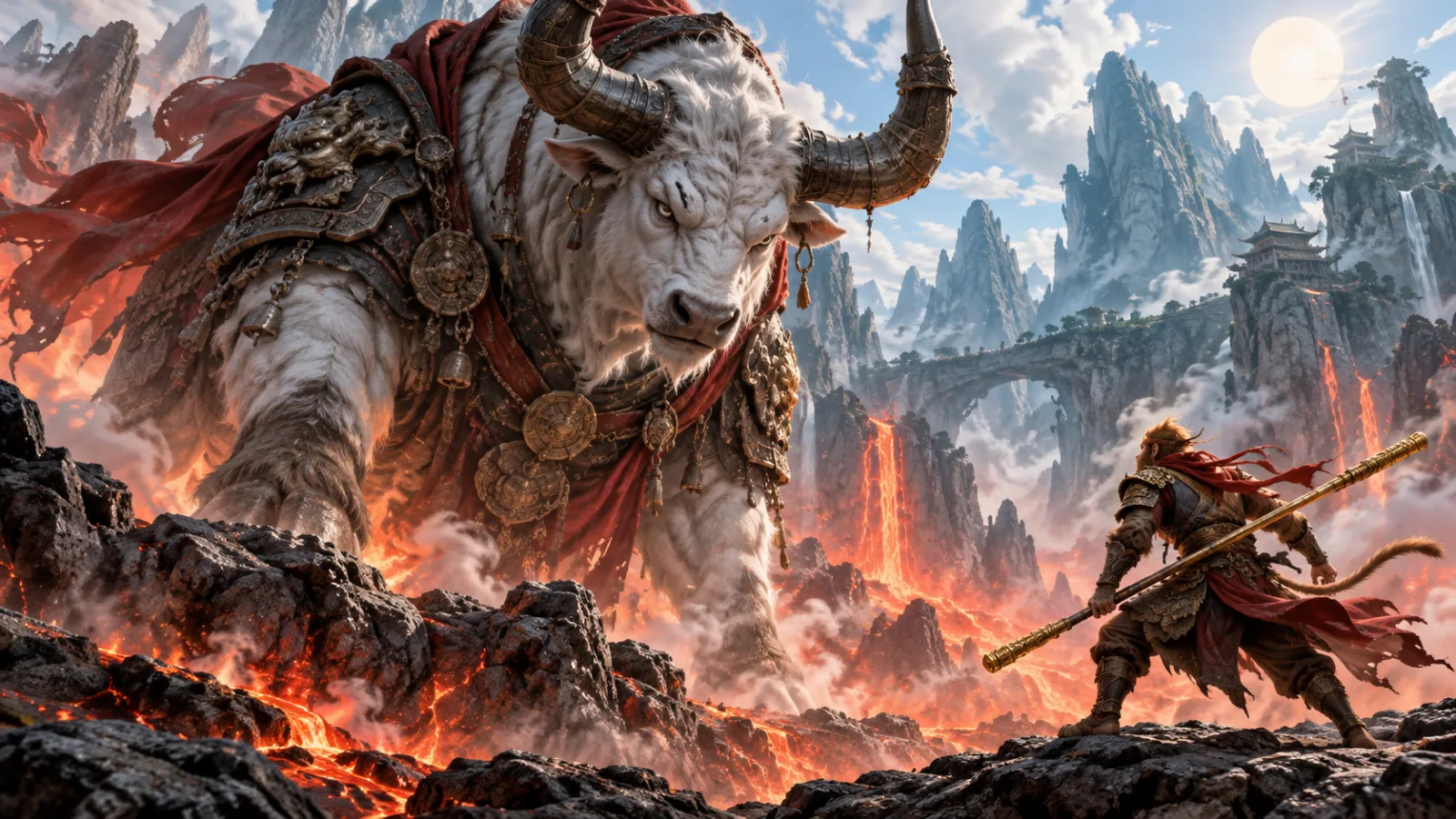
In Journey to the West, Sun Wukong's rebellion makes the heavenly administration look pompous, crowded and vulnerable. The Jade Emperor functions partly as the head of an institution that cannot process the Monkey King's disruptive energy through normal procedure.
That literary image is unforgettable. It is not a neutral documentary of Daoist theology.
The same warning applies to Investiture of the Gods, television adaptations, games and animated films. Fiction borrows divine titles, reorganizes relationships and changes competence to serve a plot. The Creation of the Gods guide shows how one contemporary film turns a literary-mythic world into a story of coercive fatherhood; it does not claim to reproduce a complete living pantheon.
The fun disappears if we refuse adaptation. The accuracy disappears if we mistake adaptation for the only tradition.
What does Jade Emperor worship look like?
There is no single scene, but real worship immediately corrects the idea that mythology is only character lore.
At a temple, the Jade Emperor is not merely a profile with powers. The space may include incense, offerings, lamps, written petitions, festival dates, attendants and neighboring deities. People arrive with obligations and hopes rather than a fandom wiki.

The named pagoda contains Buddhist and Chinese popular-religious imagery in a lived devotional space. The photograph proves coexistence and material practice, not that every visible figure belongs to one hierarchy or that the central image here is the Jade Emperor.
This photograph matters because its altar is not tidy. Statues, flowers, fruit, lamps and incense occupy the same field. Religious life is assembled through practice.
That is more truthful than the cleanest infographic.
The best way to understand the Jade Emperor
Use four lenses in order:
| Lens | Ask | Avoid |
|---|---|---|
| Name | Which title is used in Chinese? | Treating every “heavenly emperor” as the same figure |
| Source | Temple, ritual text, novel, opera, film or game? | Mixing all versions into one biography |
| Function | What does he administer or authorize here? | Reducing authority to combat power |
| Relationship | Is the connection explicit in this source? | Importing a TV family tree into older tradition |
The Britannica entry on Yudi gives a concise editorially reviewed starting point for the name and religious role. Read it as an entry, not a complete map of Chinese religion.
My verdict is that the Jade Emperor becomes less confusing the moment we stop calling him China's answer to Zeus, God or a video-game final boss. He represents something more culturally specific: the hope that even heaven can be administered, petitioned and held to an order - plus the Chinese suspicion that every large administration will produce stories about its paperwork.
Continue to the Chinese mythology pillar for the wider network, compare creation and repair through Nüwa, or meet the child deity who repeatedly breaks administrative logic in the Ne Zha mythology guide.
In the comments, tell us which Jade Emperor you encountered first and where that version came from. Then bring the exact temple, episode, book passage or family explanation to the East Moment community so different versions can sit beside one another without being flattened.
The Jade Emperor is powerful because heaven is organised, not because he is “the Chinese God”
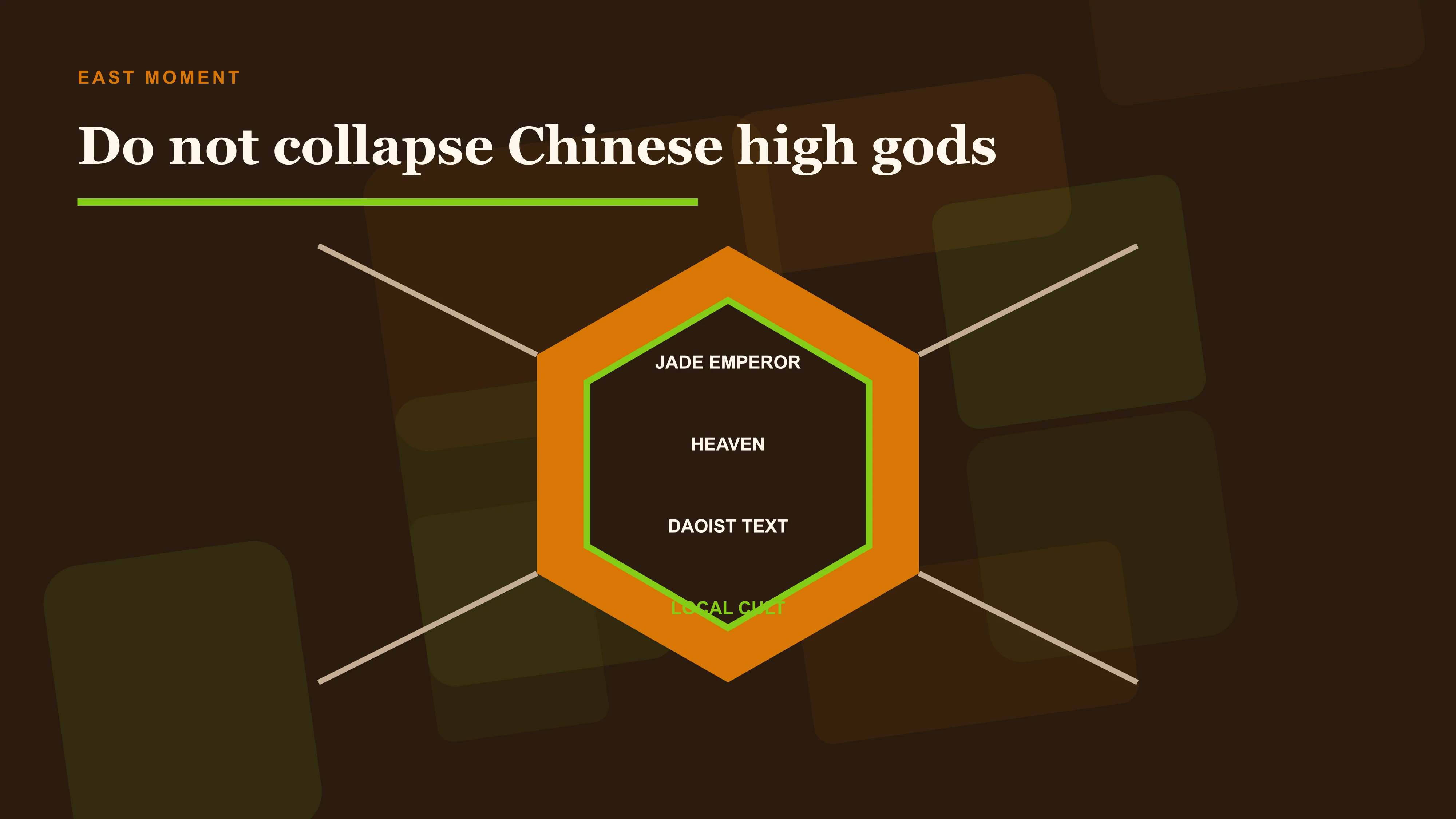
The quickest English analogy calls the Jade Emperor the supreme god of Chinese mythology. It helps for one sentence and creates confusion for the next ten. Chinese religious worlds contain overlapping Daoist, Buddhist, popular and local systems without one universal hierarchy accepted everywhere.
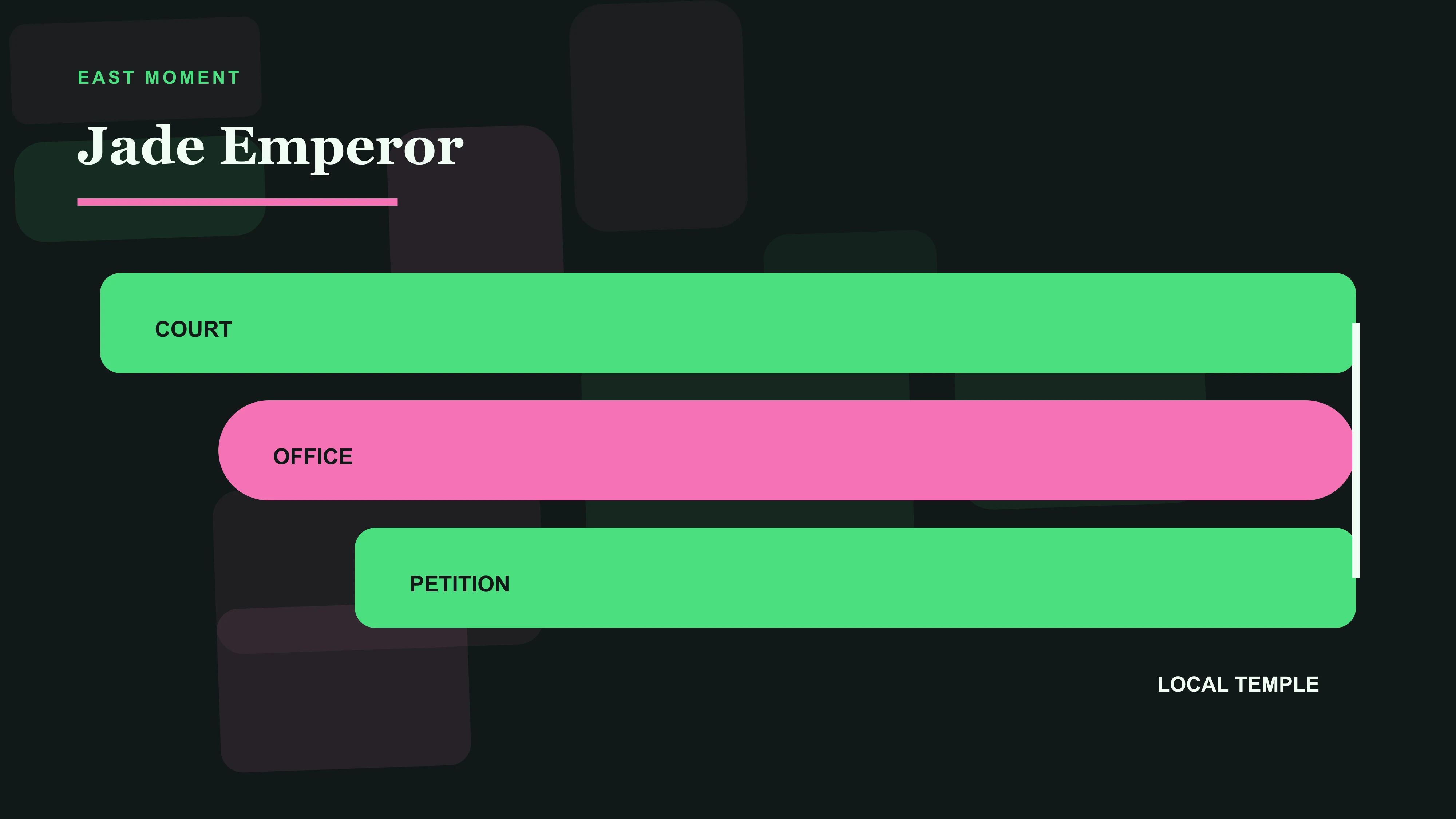
The Jade Emperor becomes legible through administration: celestial offices, reports, ranks, calendars and petitions. This is not merely earthly bureaucracy copied upward. It is a way communities imagined moral and cosmic order through relationships they already knew.
A temple altar is a local arrangement
Position, attendants, inscriptions and festival date matter. A central figure in one altar does not prove a universal rank chart. Temple communities organise worship through their own history and ritual networks.
Images should therefore be captioned from the source record, not from resemblance alone. Crown and robe can signal authority without uniquely identifying the Jade Emperor.
The ninth day is practice, not a personality test
In some communities, the ninth day of the first lunar month is associated with the Jade Emperor's birthday and offerings. Practice varies. The date can organise household or temple devotion; it cannot prove that every Chinese New Year includes the same rite.
The Daoist Association of China is an institutional route into contemporary Daoist context. Museum and temple sources remain necessary for individual objects.
My verdict: read the Jade Emperor through offices, ritual address and local placement. Do not flatten him into a Christian analogy or a fantasy king detached from worship. Continue to Chinese gods to see why a network model explains more than a single divine pyramid.
Three distinctions keep the Jade Emperor legible
First, name is not rank. A translated title such as Heavenly Emperor can refer to different figures in different texts and communities. Preserve the Chinese name and source context.
Second, myth is not liturgy. A popular story about the heavenly court may explain how readers imagine him; a ritual text or temple festival shows a different relationship of address and obligation.
Third, central placement is not universal supremacy. An altar is arranged for a particular community and occasion. A figure may occupy the centre there without settling every theological question across Chinese religion.
These distinctions also improve travel writing. Do not walk into a temple, identify the largest crowned statue from memory and publish a confident caption. Read the plaque, ask the temple and compare an institutional source.
The Jade Emperor remains compelling because administration itself becomes sacred imagination. Petitions, reports and calendars make heaven feel connected to ordinary concerns while preserving distance. That is far richer than calling him China's version of somebody else's god.
It also explains why popular stories can be humorous without cancelling reverence. Bureaucracy is familiar enough to satirise and powerful enough to fear. The heavenly court holds both registers, depending on the teller, ritual and audience.