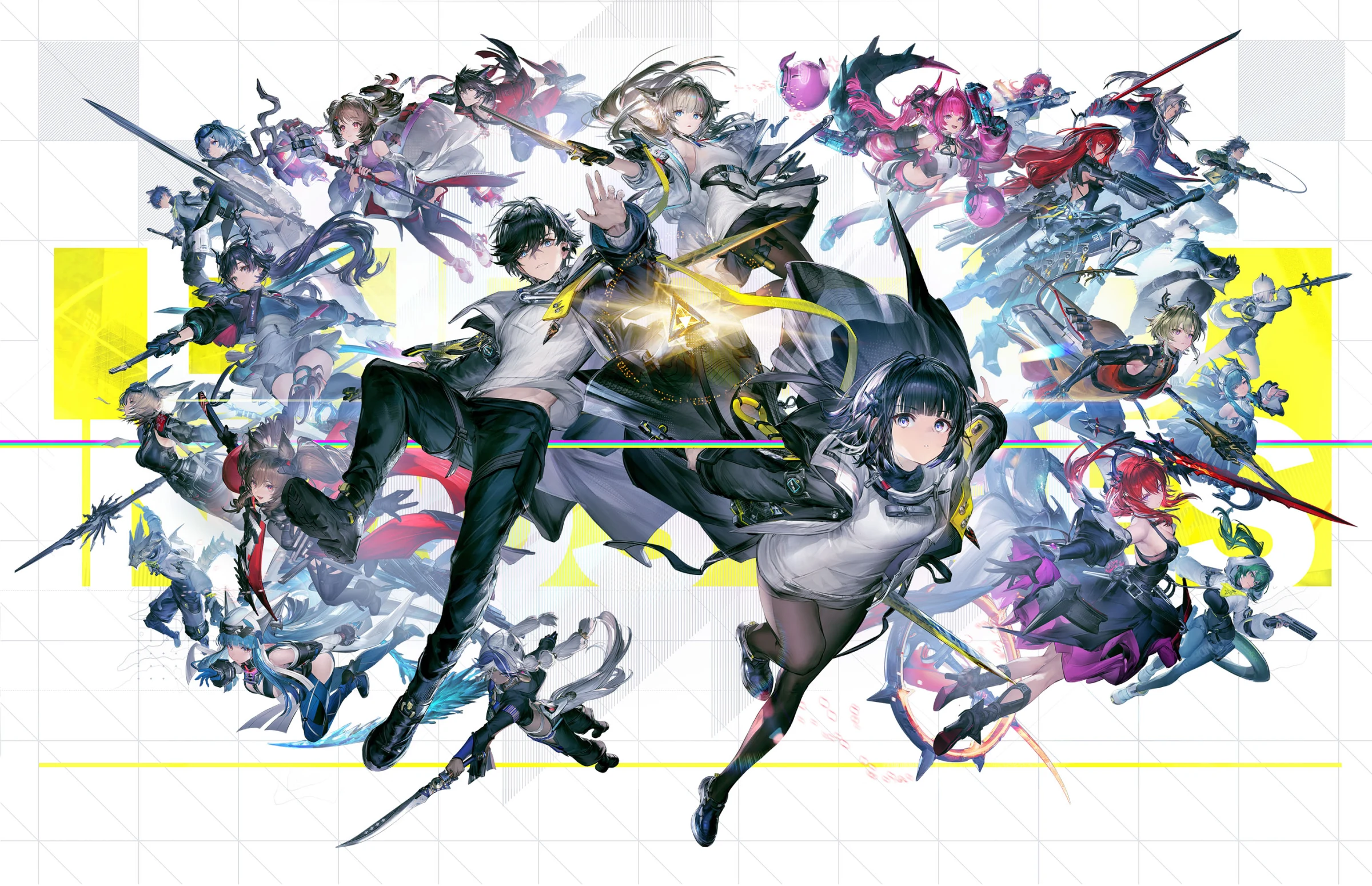
Arknights: Endfield is worth starting in 2026 only if the factory looks like play rather than homework. Its combat is polished, its characters are beautifully directed and Talos-II is easy to photograph. None of those qualities owns the game. Endfield becomes itself when you turn a hostile landscape into a production network and begin thinking in power, routes, throughput and consequences.
That is my firm answer after the global launch, the October Steam arrival and the Sanctuary of Ink update: do not install Endfield because you want “another Genshin.” Install it because the idea of rebuilding a world through infrastructure sounds more interesting than opening another chest. If conveyor belts make you impatient, the game will keep interrupting what you came for. If they make you curious, Endfield has a stronger identity than most anime-styled live-service RPGs.
Arknights Endfield is a factory game wearing an action-RPG face
The quickest way to misunderstand Arknights: Endfield is to describe its visible ingredients and stop. It is a free-to-play 3D action RPG. You control a party of operators. You explore zones, fight enemies, collect resources and acquire characters through a gacha system. All true. None explains why the game exists.
The decisive system is the Automated Industry Complex, usually shortened to AIC. You place machines, route materials, supply power and automate production. The factory is not a side room that quietly generates currency while you play the “real” game. It changes how you read the terrain. A mineral deposit is no longer scenery. A distant outpost is a routing problem. An empty patch of ground is future capacity.
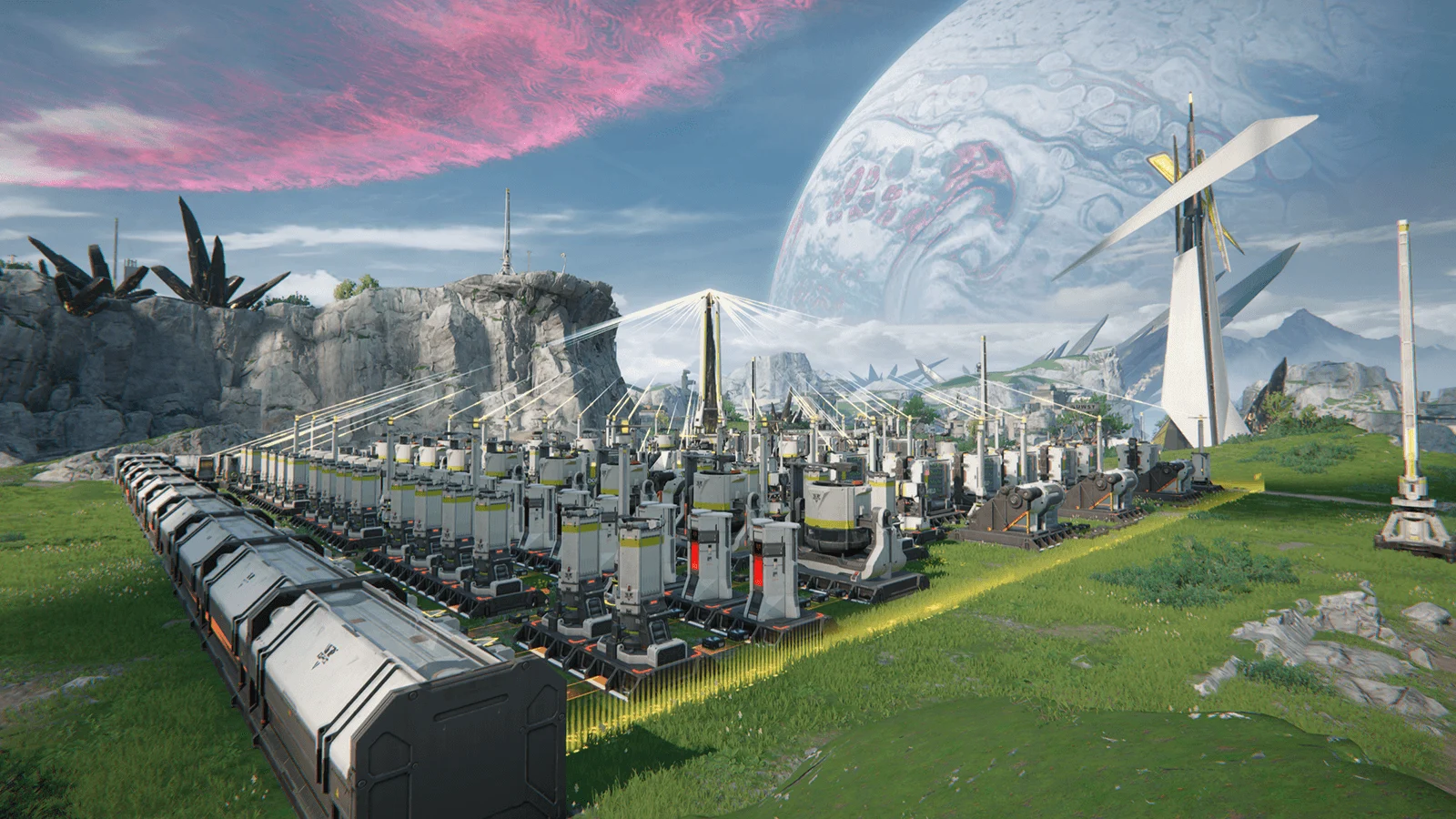
This official image proves the scale and spatial presence of an AIC factory: rows of modules, power structures and conveyors occupy the landscape beneath Talos-II's enormous sky. It does not prove that building the factory is intuitive, balanced or enjoyable. That judgment belongs to the hours between placing the first machine and realizing that you have started redesigning a route you built yesterday.
My test is simple. When a game gives you automation, does the world change—or does only a number increase? Endfield succeeds when infrastructure changes where you travel, what you notice and which shortage becomes urgent. It weakens when the factory becomes another compulsory menu between combat encounters.
The first hours sell the wrong game
New players meet several familiar systems before the factory becomes legible: cinematic introductions, character tutorials, combat encounters, currencies and a stream of proper nouns. That opening can make Endfield feel like a very expensive version of a formula you already know.
I would not judge it there. The first useful decision point comes after you can build a production chain without copying every instruction mechanically. Can you see why one machine feeds another? Do you want to fix the bottleneck? Do you feel satisfaction when a material arrives without your direct intervention?
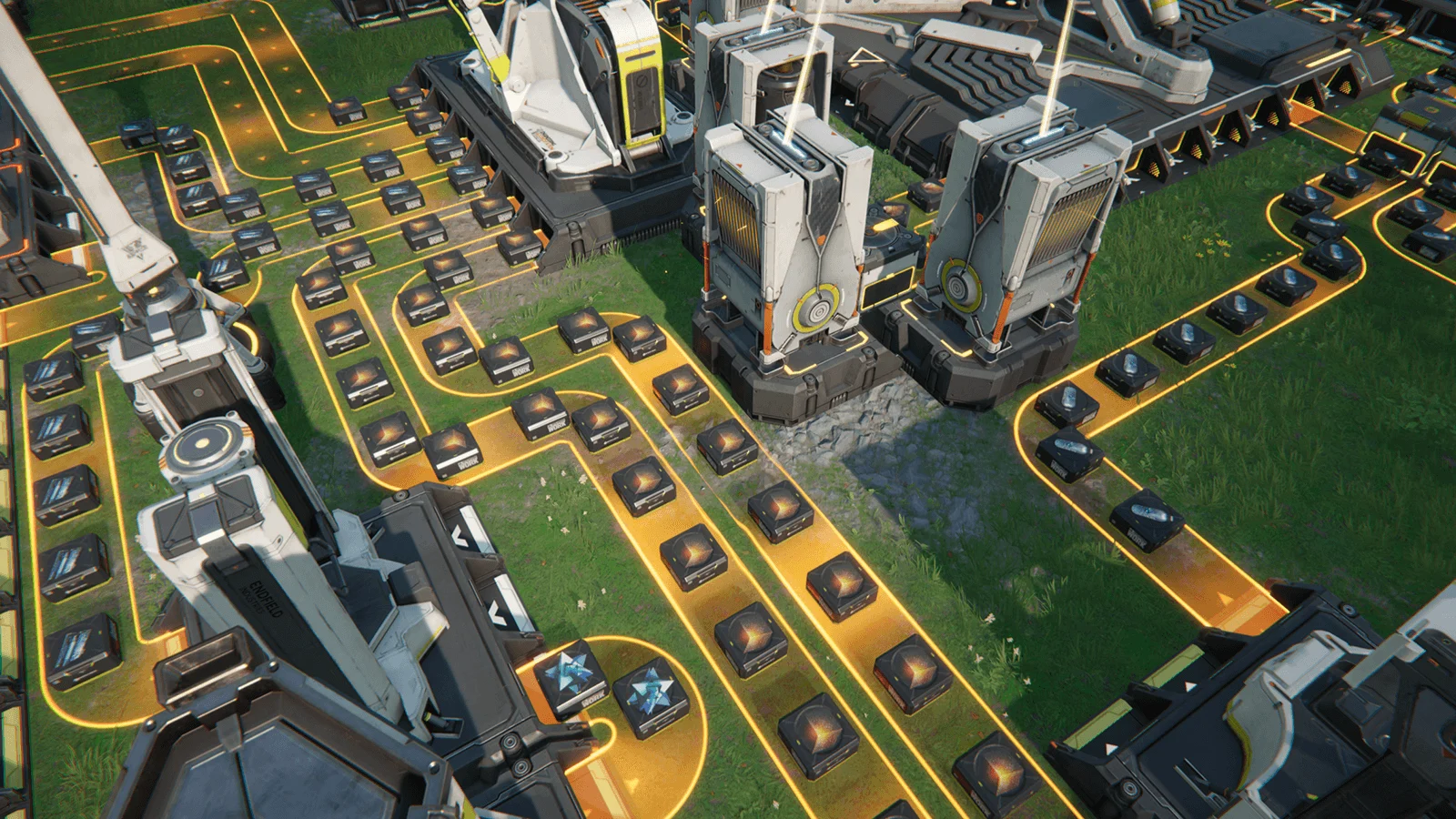
The top-down image above is almost an honesty test. It is less glamorous than a character close-up and more revealing than a trailer cut. The glowing lines and repeated items show that Endfield expects you to read systems at a glance. Some players will see possibility. Others will see clutter. Neither response is wrong, but it predicts enjoyment better than choosing a favorite operator.
This is where comparisons with Genshin Impact become useful and then must stop. Genshin turns a regional landscape into movement, collection and character attachment. Endfield asks whether the landscape can become a network that remembers your decisions. Both use beautiful characters and exploration; their strongest verbs are different.
Combat is good because it gives the factory pressure
Endfield's party combat has to do two jobs. It must feel immediate enough to carry exploration, and it must create demand for the systems behind it. Operators, equipment and resources would become disconnected display objects if the factory never affected what you could sustain.
The combat is most persuasive when positioning, skill order and party interaction matter at the same time. It is less convincing when visual effects become so busy that the tactical relationship between actions is harder to read. I would not call it the deepest action system in Chinese games. Where Winds Meet gives movement and open-world freedom much more room; Black Myth: Wukong turns authored boss fights into its main sentence. Endfield's strength is connection: the fight belongs to a larger loop of extraction, production and expansion.
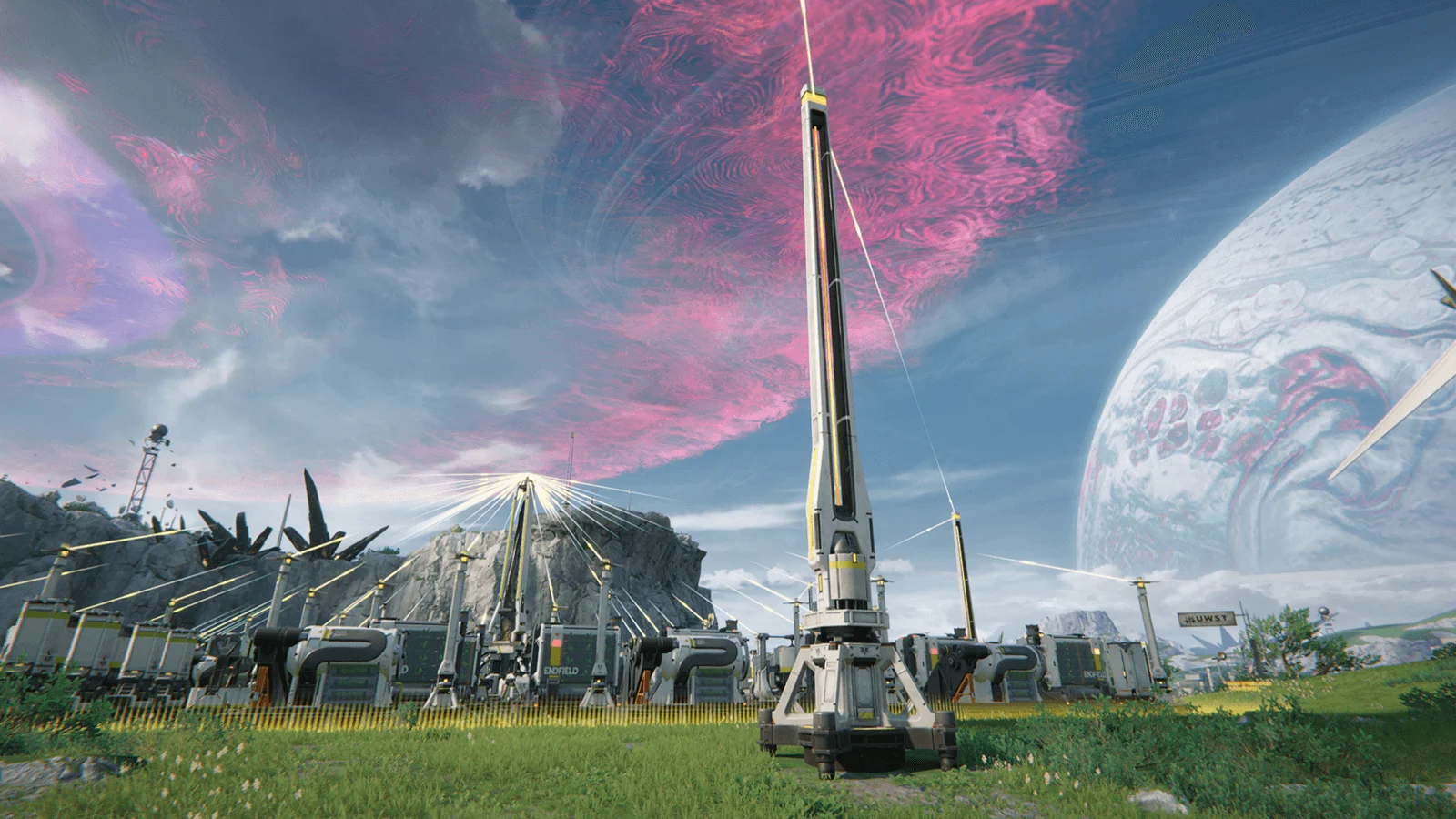
That connection also explains the game's clean industrial art direction. Machines are not rusty background texture added to make the world look serious. White housings, yellow signal lines and sharp towers make production readable at distance. The visual language tells you that Endfield Industries wants order imposed on a world that resists it.
I do not treat that order as morally neutral. “Rebuilding” can be care, extraction or both. Endfield is more interesting when its infrastructure raises the question of who benefits from a transformed landscape. It is less interesting when every new region becomes a blank board waiting for corporate machinery. A science-fiction world should be allowed to argue with the player who optimizes it.
The factory is neither Factorio nor an idle base
Calling Endfield “Factorio meets Genshin” is useful for ten seconds. It tells you that automation matters inside an anime-styled action RPG. It becomes misleading if you expect the freedom, density and engineering depth of a dedicated factory simulation.
Endfield has clearer boundaries. Its production system must work on console and mobile as well as PC. It must teach players who did not arrive from automation games. It must feed a live-service economy without letting one perfect design erase every other progression system. Those constraints produce a factory that is substantial by action-RPG standards and limited by factory-game standards.
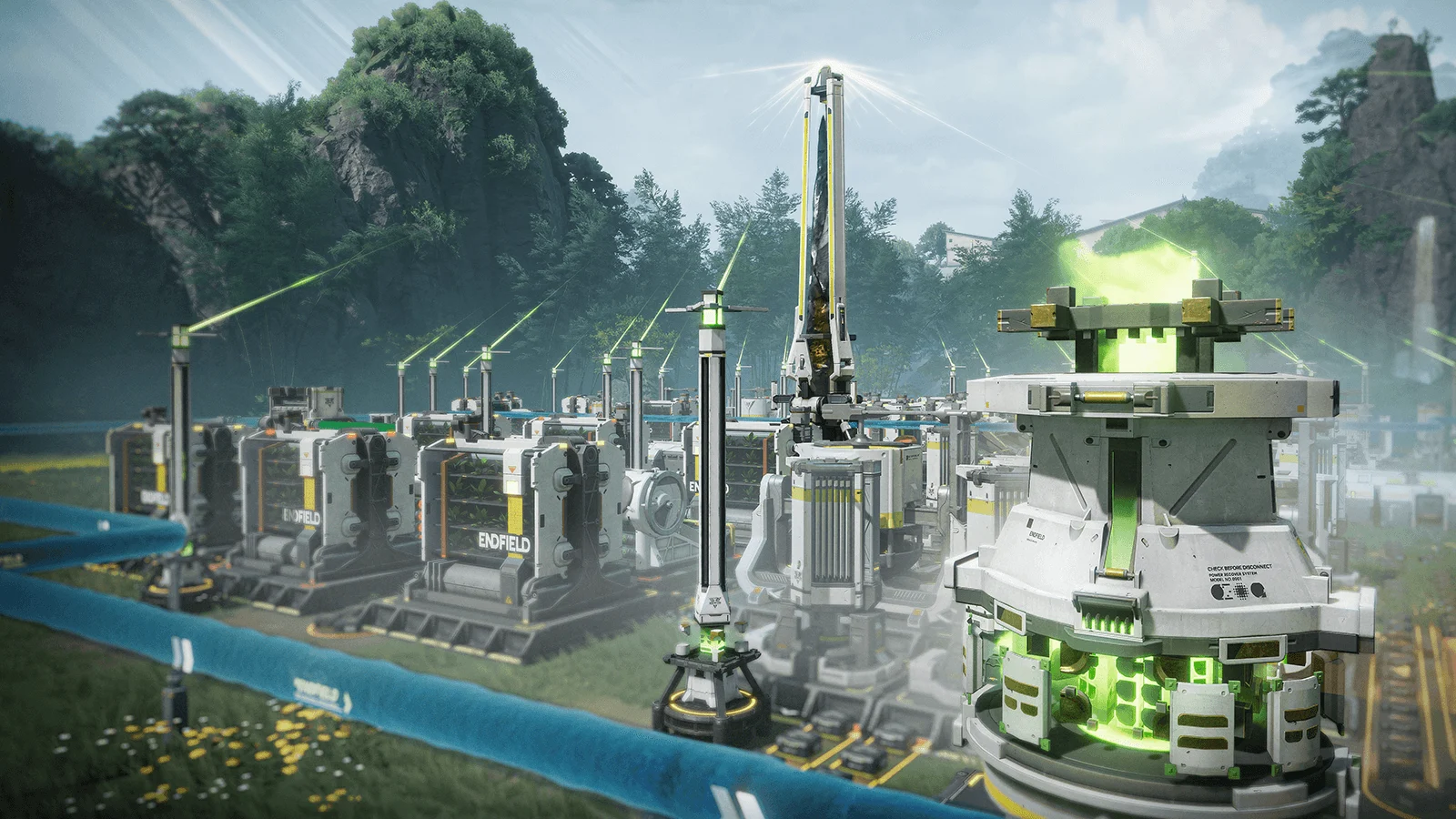
The right question is therefore not “Is this as deep as Factorio?” It is “Does building change how I inhabit this RPG?” My answer is yes. The stronger criticism is that learning the system can feel like tutorial debt before it becomes authorship. Community discussions repeatedly divide at exactly that point: initial confusion gives way to fascination for some players, while others never accept the factory as the price of entry.
Do not solve that problem by copying an optimized blueprint immediately. A borrowed layout can remove friction, but it can also remove the moment when the system becomes yours. Build one modest, imperfect chain first. Find its bottleneck. Improve it once. Then decide whether efficiency guides are helping you learn or merely completing the game on your behalf.
The gacha is not separate from the review
Endfield is free to download, not free of pressure. Character acquisition, currencies, banners and repeated return are part of the product. A review that celebrates the factory and treats monetization as a footnote would be dishonest.
The important boundary is not whether a player can progress without paying on one particular week. Live-service balance changes. The durable question is whether the game respects a player's ability to make informed decisions. Can you understand what carries between banners? Can you see the cost before committing? Does the game create a problem and then sell relief from the same problem?
I will not tell anyone that a banner is “worth it.” That depends on budget, roster, goals and future changes. My rule is stricter: never spend to rescue an account from impatience. Play long enough to understand the factory, combat loop and recurring obligations. If those systems do not already justify your time, a new character will decorate the problem, not solve it.
This is also where Honor of Kings offers a useful contrast. Honor of Kings creates return through the obligation and volatility of a live team. Endfield creates return through unfinished systems: the line you could optimize, the region you could connect, the operator you could build. Both can become habit. The feeling of responsibility comes from a different place.
Steam makes starting easier, not simpler
GRYPHLINE launched Endfield worldwide on January 22, 2026 across PlayStation 5, PC, Android and iOS. The game arrived on Steam after the October 15 Sanctuary of Ink update, with official support for carrying existing progress through a linked GRYPHLINE account on the same regional server. The publisher also announced more than 300,000 Steam wishlists before that release.
Those numbers prove visible demand for the Steam version. They do not prove long-term retention, satisfaction or revenue. More importantly, Steam changes access but not the game you are entering. You still need to choose the correct server, understand account linking and allow substantial storage for installation and extraction. The official Steam notice lists 50GB of free storage plus additional space during extraction; requirements can change, so check the current store and support pages rather than treating this article as a permanent spec sheet.
The Steam release matters because it lowers one kind of hesitation. It gives PC players a familiar library, update path and storefront review surface. It does not remove the factory learning curve, live-service schedule or gacha economy. Distribution convenience should not be mistaken for design simplicity.
Sanctuary of Ink is the right kind of update
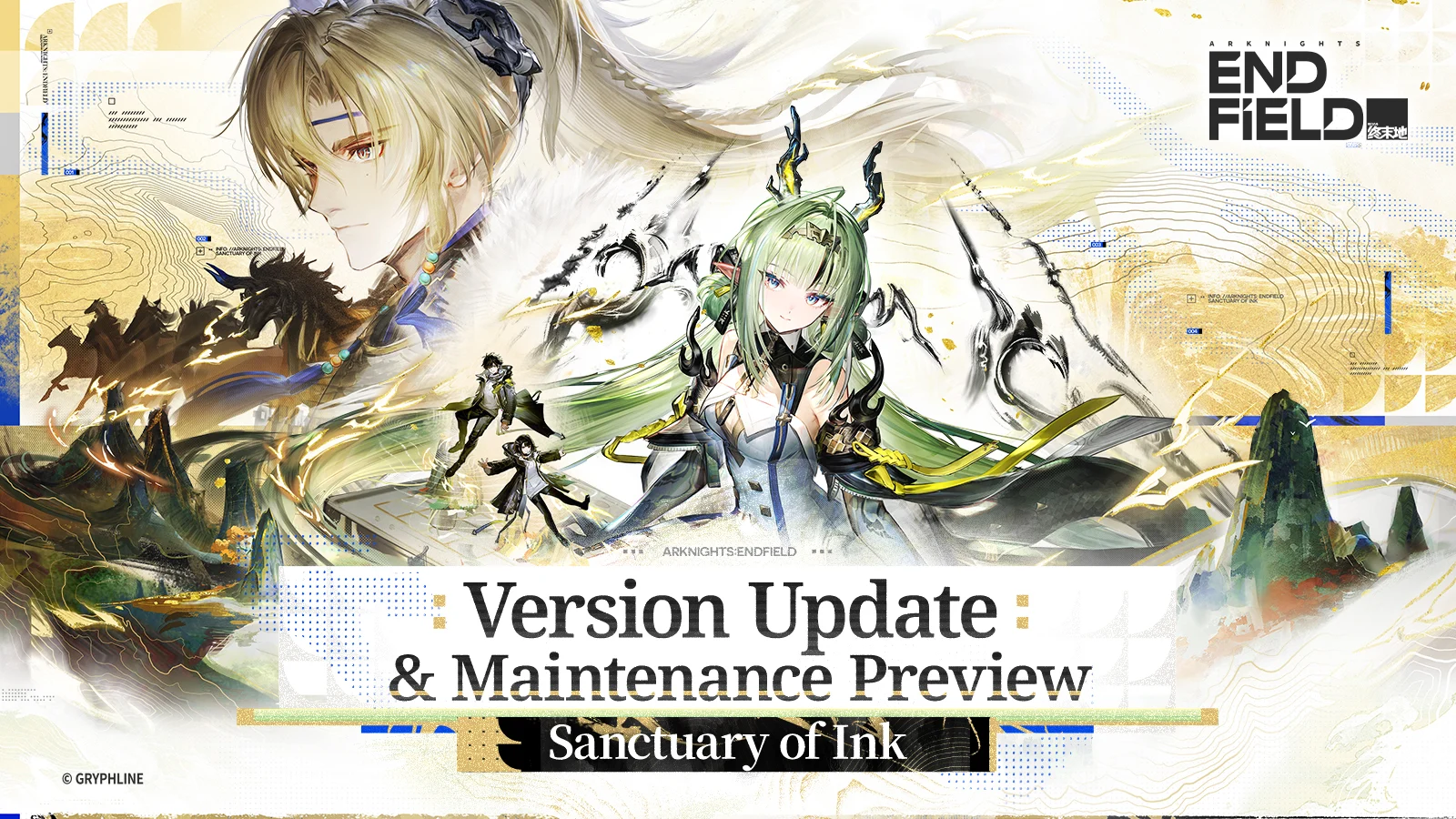
The October Sanctuary of Ink version is more than a content drop because its setting brings Endfield's industrial language into direct contact with Chinese ink-wash imagery. The official art combines topographic lines, black brush textures, mountain forms and the same clean interface geometry used elsewhere in the game.
That collision is valuable when neither side becomes decoration. Ink painting should not be a skin pasted onto a generic map, and science-fiction machinery should not automatically represent progress. The region becomes distinctly Chinese when landscape, architecture, names, movement and social memory shape what the player does—not merely what the loading screen looks like.
The developer communication also described practical factory improvements, including top-view farming and tighter placement. That is the right direction. A live-service game earns its updates when new content and old friction are addressed together. Adding another beautiful operator while leaving infrastructure awkward would misunderstand Endfield's own identity.
My new-player route: three sessions, then decide
Do not make a spending decision on the first night. Make a design decision after three focused sessions.
- Session one: reach the factory without rushing every tutorial. Learn the basic combat rhythm and note whether the world itself creates curiosity.
- Session two: build one complete production chain. Do not import a perfect blueprint. Watch one material move from extraction to useful output.
- Session three: return after the system has worked without you. Decide whether the result feels like ownership, obligation or busywork.
If the third session makes you want to rebuild the line, continue. If it makes you want to skip the factory and return to combat, stop. Endfield will not eventually reveal that the factory was optional scenery. It is the argument.
Before linking accounts, confirm your regional server. Before downloading, check the current storage requirement. Before spending, read the live banner rules inside the version you are actually playing. Before copying a late-game layout, preserve at least one chance to understand why the layout works.
Who should play Arknights Endfield now?
Start now if you want:
- an action RPG where infrastructure changes exploration;
- a factory system with meaningful spatial decisions but less depth than a dedicated automation sim;
- precise science-fiction art direction rather than a purely medieval fantasy world;
- a current Chinese game that combines industrial systems with region-specific visual culture;
- a live service whose October 2026 update and Steam launch create an active entry point.
Wait or skip it if you want:
- combat without production planning;
- a complete, fixed campaign with no recurring service obligations;
- a factory sandbox as deep and unconstrained as Factorio;
- a character collector whose currencies and banners never ask for attention;
- a game you can judge entirely from the beauty of its roster.
The Chinese Games guide places Endfield beside very different Chinese-developed worlds. That comparison should sharpen, not flatten, its identity. Endfield is not important because China made another globally distributed anime game. It is important because a Chinese studio put infrastructure—not merely a hero—at the center of how an international audience imagines agency.
My final verdict is deliberately conditional and completely certain: if you resent the factory, leave early; if you begin redesigning it in your head after closing the game, Endfield has already found you.
Bring one honest example to East Moment's community: the first production line you understood, the system that drove you away, or the moment Talos-II stopped looking like a backdrop and became a place you were responsible for changing.