Farewell My Concubine is a tragedy about institutions teaching a performer to erase the border between role and self, then punishing him for living without that border. Dieyi's devotion is not merely private obsession. Training, audiences, patrons, friendship and political movements all help produce it. The film's force comes from asking who is responsible when the identity they demanded becomes impossible to survive.
Farewell My Concubine in 60 seconds
| Question | Short answer |
|---|---|
| Original title | Ba wang bie ji (霸王别姬) |
| Director | Chen Kaige |
| Release | 1993 |
| Main cast | Leslie Cheung, Zhang Fengyi and Gong Li |
| Scope | Two Peking Opera performers and one woman across more than fifty years of Chinese history |
| Recognition | Joint Palme d'Or winner at Cannes in 1993 |
| Best reason to watch | Performance, intimacy and political survival become inseparable |
| East Moment verdict | Essential, but watch a complete restored cut with careful subtitles |
The Festival de Cannes restoration account identifies the film as the 1993 joint Palme d'Or winner and emphasizes its view inside Peking Opera training, makeup, backstage labor and performance. Those facts explain its institutional importance. They do not settle the characters' motives.
What Farewell My Concubine is really about
As children, Douzi and Shitou are trained through deprivation, repetition and violence. Douzi is assigned female dan roles; Shitou develops toward martial male roles. Their signature work becomes Farewell My Concubine, in which Consort Yu remains loyal to the defeated King of Chu and dies.
Stage specialization gives them livelihood and artistic identity, but it also supplies a script through which Dieyi—adult Douzi—understands his bond with Xiaolou, adult Shitou. Xiaolou can leave the role after applause. Dieyi increasingly cannot.
The easy conclusion is that Dieyi “confuses theater and reality.” That blames the person for a boundary everyone around him helped destroy. The harder truth is that society wants total devotion on stage and ordinary flexibility off it, while giving the performer no safe method for moving between the two. The Gong Li guide re-centers Juxian's practical intelligence so she does not remain a supporting obstacle inside the men's artistic tragedy.
Why the title matters
“Farewell My Concubine” names both the opera and the pattern organizing the film. On stage, the king and consort occupy fixed positions. Loyalty acquires beauty because the ending is already known and can be repeated.
Life does not offer that stability. Xiaolou marries Juxian. Regimes change. Patrons gain and lose power. The same performance can be praised as national art, tolerated as entertainment or condemned under a new political line. Dieyi keeps seeking the certainty of a role while history keeps changing the theater around him.
The title therefore does not predict only one death. It asks whether a rehearsed form can shelter a person from historical change. The film's answer is no—but it also refuses to pretend that life outside the role is morally cleaner.
The title is also easy to mistranslate as generic romantic farewell. In the source drama, “霸王” is the Hegemon-King Xiang Yu and “姬” refers to Consort Yu; it names a particular ruler, consort and final separation. Knowing that does not turn the film into an adaptation of one opera plot. It clarifies the role-pattern Dieyi repeatedly asks Xiaolou to inhabit with him.
The costume is beautiful, but the beauty is not innocent. By the time Dieyi wears the role with complete authority, the audience is looking at mastery built from years of correction, hunger and fear.
Dieyi, Xiaolou and Juxian are not a simple love triangle
Dieyi wants the stage partnership to define life beyond performance. Xiaolou depends on Dieyi artistically but claims an ordinary life outside the opera. Juxian recognizes more quickly than either man that institutions, patrons and politics can make private promises worthless.
| Character | What they seek | What they misunderstand |
|---|---|---|
| Dieyi | Continuity between role, art and attachment | Perfect performance cannot force another person to inhabit the same meaning |
| Xiaolou | Artistic stature plus a separate domestic life | He repeatedly treats separation as his choice even when Dieyi and Juxian bear its cost |
| Juxian | Security through practical judgment and commitment | Intelligence cannot create safety when public power rewards betrayal |
Juxian is not merely the woman who comes between two men. She reads danger, negotiates and demands promises. Dieyi's hostility toward her is real, but so is their resemblance: both discover that Xiaolou's loyalty becomes weakest when publicly tested.
This official Film Movement still matters because it removes the stage costume without making the partnership disappear. Dieyi and Xiaolou stand in matched formal dress, their public identity as a pair still carefully composed even when Consort Yu and the Hegemon-King are not visible. The frame proves that the film deliberately stages them together offstage; it cannot prove equal commitment, private intimacy or either man's motive. Those questions still have to be argued from scenes, choices and consequences.
Peking Opera is a system of trained signs
Peking Opera combines singing, speech, movement, combat, costume and makeup through codified practice. The UNESCO record provides a useful institutional overview, but the film is not a neutral tutorial. It shows one fictional troupe and uses brutal schooling as part of its argument about discipline and identity.
The childhood recitation in which Douzi must correctly state the gendered line of the role is crucial. Speech, body and social identity are forced toward alignment through repetition. When the line finally comes correctly, the school treats it as success. The film makes us remember the cost hidden inside fluency.
That is why Leslie Cheung's adult performance cannot be reduced to elegance. Precision carries the history of correction. A gesture can be artistically controlled and emotionally dangerous at the same time.
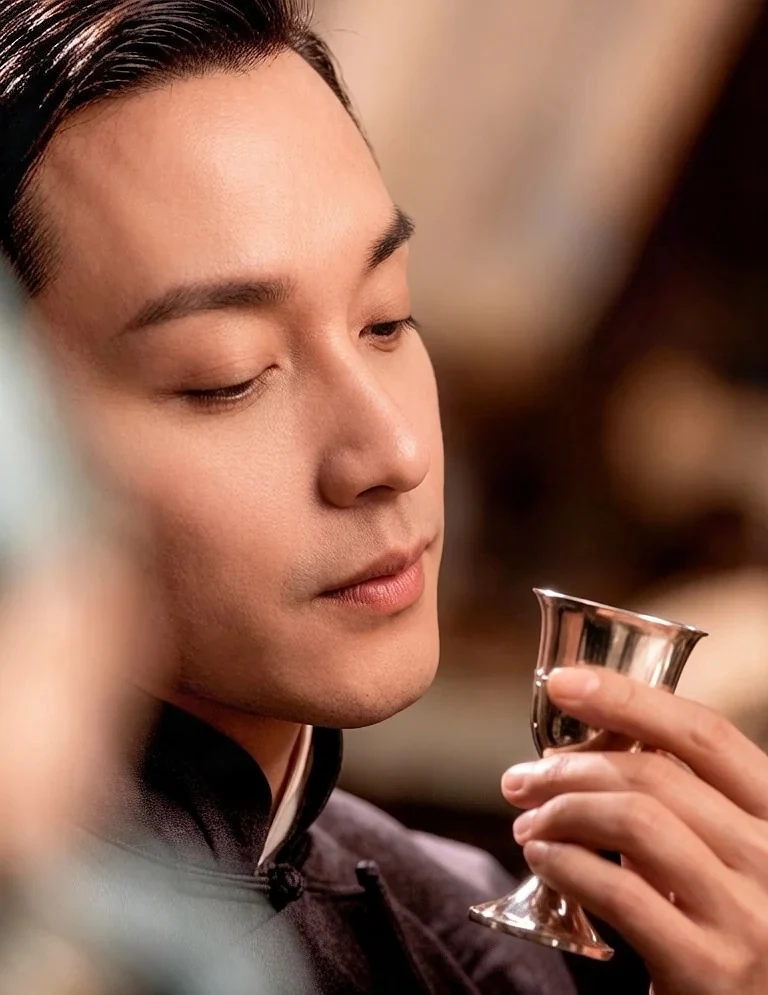
I keep returning to Dieyi offstage because the image refuses the easy split between “performer” and “real man.” The opera face is incomplete, yet the neck, hand and gaze remain controlled as though an audience has never left the room. The role has moved into bodily discipline. This still cannot prove what Dieyi thinks in a particular scene, but it makes the film's central wound visible: taking off costume does not restore a private self that training, desire and public reward have spent years occupying.
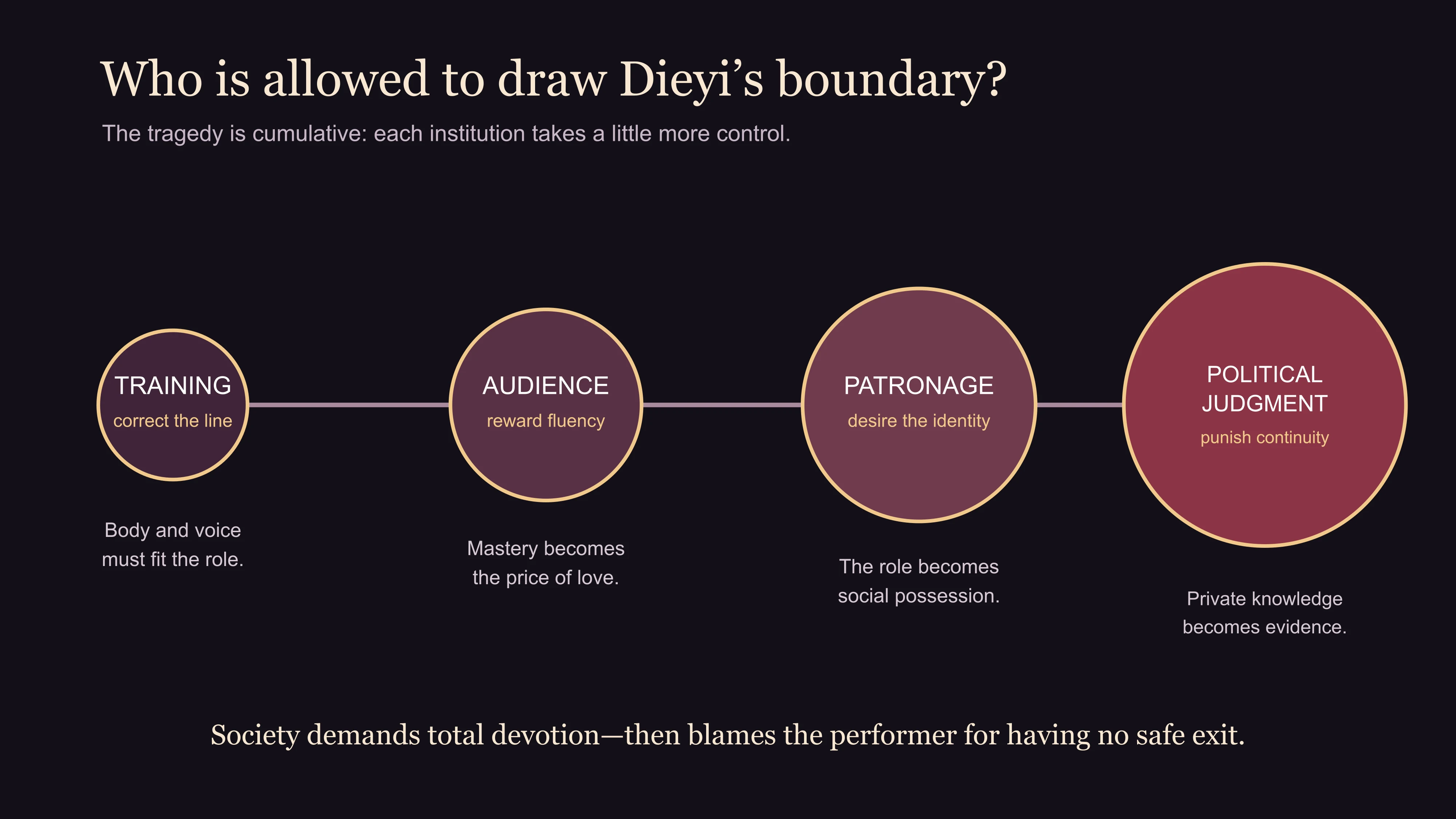
I reject the comforting idea that Dieyi simply needed to “separate art from life.” The adults around him spent years making that separation punishable. They rewarded him when the feminine line sounded natural, desired him when the stage identity became complete, and demanded flexibility only when the same completeness became inconvenient. Telling him to develop healthier boundaries after consuming their destruction is moral cowardice.
The sword works similarly. It first appears as an object desired across stage, patronage and friendship; promises about it become promises about loyalty. When it returns, material possession cannot stabilize the relationships attached to it. Track who holds, gives, withholds or remembers the sword: the object records obligations more reliably than the characters' public declarations.
How history changes the meaning of the same performance
The story passes through warlord-era Beijing, Japanese occupation, Nationalist rule, the establishment of the People's Republic and the Cultural Revolution. These periods are not decorative chapter headings. Each creates a different authority that can judge the performers. The Cannes account of the restoration likewise frames the film across more than fifty years, but a feature-film timeline should not replace historical scholarship about any one period.
The same opera persists, but its public meaning changes. A performance may secure protection in one moment and become evidence against the performer in another. Survival demands adaptation; artistic identity demands continuity. The characters cannot satisfy both without betrayal.
The Cultural Revolution sequences bring this contradiction into public confession. Colleagues and loved ones expose one another under pressure. It is too simple to sort every statement into honest revelation or cowardly lie. The political ritual converts intimacy into evidence, then rewards the destruction of trust.
I cannot watch these scenes as a history lesson that remains safely outside the frame. What stays in my body is the conversion of private knowledge into a weapon: a nickname, an old kindness, a promise, an artistic attachment—each can become proof against the person who once trusted it. That is why the film still feels physically difficult rather than merely prestigious. Its history is not a distant backdrop; it arrives in the mouth, posture and panic of somebody trying to survive one more public demand.
The discomfort is necessary. A cleaner version of this story would let the audience admire suffering from a respectful distance. Farewell My Concubine refuses that comfort. It asks whether we can praise artistic devotion while seeing the machinery that made such devotion dangerous.
Farewell My Concubine ending explained
Major spoilers begin here.
After the devastation of the Cultural Revolution, Dieyi and Xiaolou rehearse their signature opera again. Time has passed, but the stage positions return. Dieyi performs Consort Yu's final movement and uses the real sword to kill himself.
The action should not be romanticized as proof of perfect love. The opera gives Dieyi a form he can complete when ordinary life has repeatedly denied continuity. Yet completing it destroys the performer. Art does not rescue him; it provides the final language available to him.
My reading is firm: Dieyi's death is neither a confusion corrected too late nor a beautiful merger with art. It is the bill for a social system that demanded total identification, consumed the resulting performance, and left the performer responsible for surviving the contradiction.
Xiaolou's presence makes the ending more severe. The partner who could leave the role must witness what it means for someone who could not. The old stage relationship becomes real only at the moment it can no longer sustain a future.
Which cut should you watch?
The film has circulated internationally in versions of different lengths. For first viewing, seek a complete restoration and confirm runtime, language and subtitles before paying. A shortened cut can alter historical rhythm and character motivation, not merely remove optional detail.
Cannes announced a full 4K restoration presentation in 2026. Use the Cannes record and legitimate distributor listings to verify the edition available in your territory. This page embeds no rental or subscription player.
Why Farewell My Concubine still hurts
Farewell My Concubine deserves its reputation not because it compresses Chinese history into prestige spectacle, but because it shows history entering voice, posture, attachment and betrayal. The opera remains recognizable while every condition around it changes.
Continue through the Chinese movies collection, follow the Chen Kaige guide to test whether ritual carries the same pressure across his other films, and compare the Chinese opera guide with the international wuxia route in Crouching Tiger, Hidden Dragon rather than treating one fictional troupe as the whole tradition. In the comments, identify the exact moment when somebody else claims the right to define Dieyi. Do not merely call the ending sad; show where the theft began.
Farewell My Concubine shows what happens when a role takes custody of a life
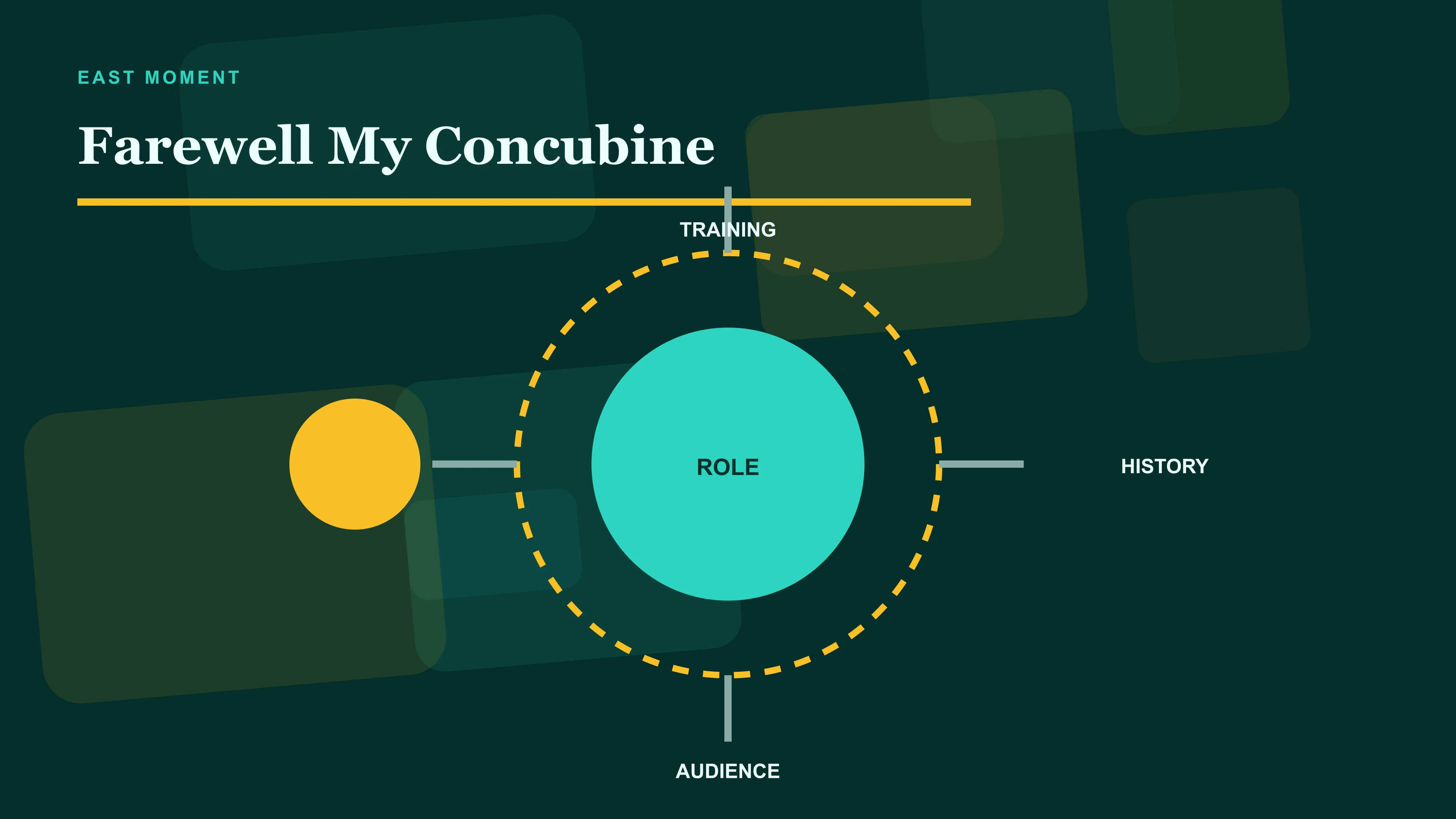
Dieyi does not simply love opera. Training, punishment and audience reward make the role of Consort Yu available before he has an adult language for himself. Performance gives mastery and recognition while narrowing the boundary between stage and life.
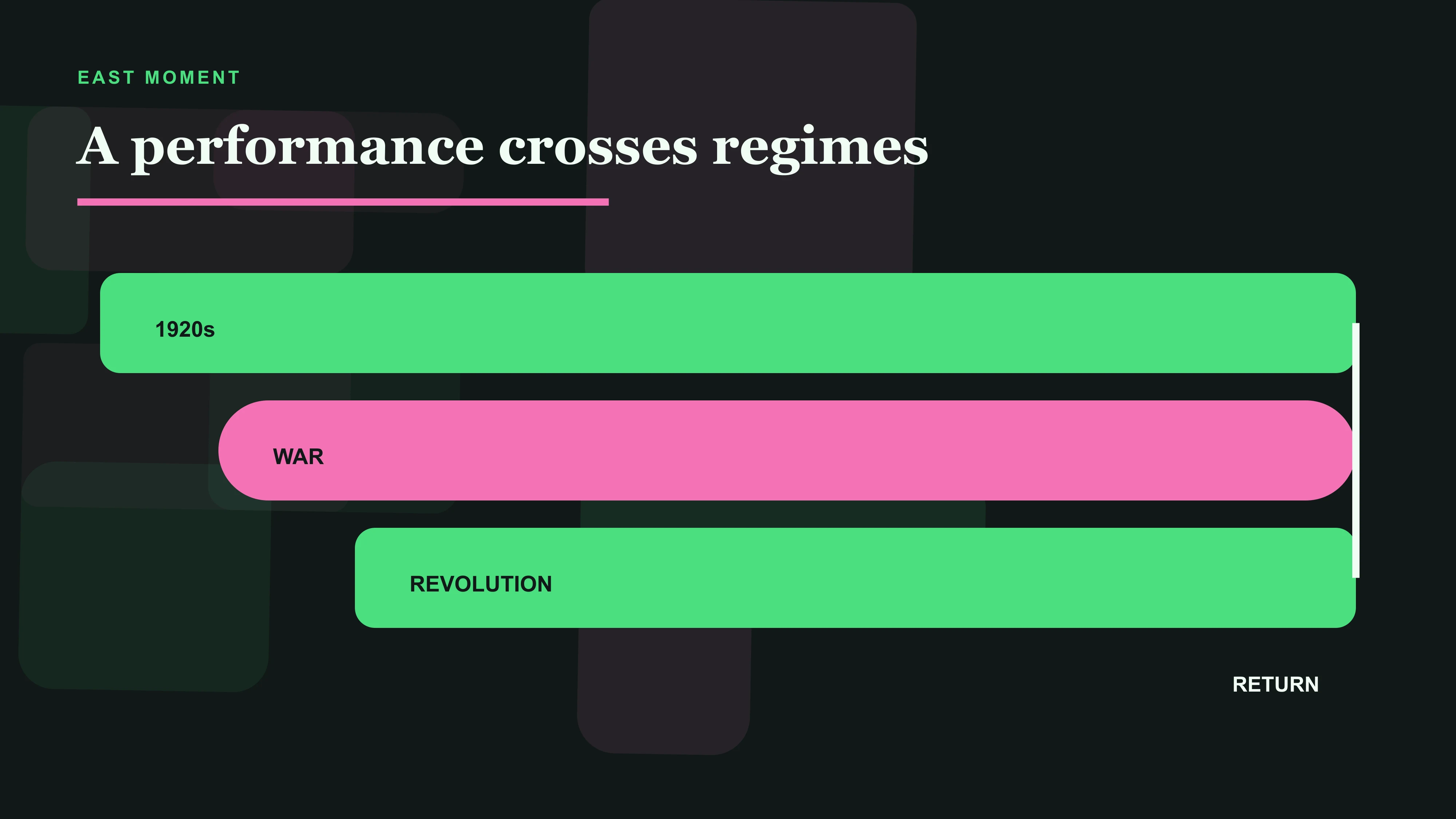
The repeated opera scene changes because the audience and regime change around it. A gesture can be art, livelihood, political evidence or accusation. History does not stay outside the theatre.
Leslie Cheung's achievement lies in preserving the person inside stylisation. The costume does not “explain” Dieyi; breath, gaze and the difficulty of leaving the role do.
The film's limitation is also real: suffering can become monumental enough to crowd out other queer lives and histories. Treat it as one devastating work, not a complete account of Peking Opera, twentieth-century China or gender identity. The UNESCO Peking Opera entry establishes the living art form beyond the film.
The opera survives the characters, which is both consolation and wound. Art carries memory forward while individual bodies absorb the cost of being made to represent it.