
Gong Li is powerful before she raises her voice. Her defining skill is storing pressure in the body until one look, breath or practical action reveals what a social system has demanded. That makes her ideal for films about households, institutions and history—but the performances are not one repeated image of suffering. Songlian, Juxian and Qiu Ju use entirely different kinds of intelligence.
Gong Li in 60 seconds
| Question | Short answer |
|---|---|
| Chinese name | Gong Li (巩俐) |
| Born | December 31, 1965, in Shenyang |
| Breakthrough | Red Sorghum (1987) |
| Best first film | Raise the Red Lantern for pressure, space and controlled reaction |
| Best contrast | The Story of Qiu Ju after Raise the Red Lantern |
| Essential non-Zhang Yimou role | Juxian in Farewell My Concubine |
| International entry point | Memoirs of a Geisha or Mulan, but neither should define the career |
| East Moment verdict | Watch how judgment accumulates before the visible rupture |
The Festival de Cannes person record provides an institutional career anchor. A festival page establishes credits and participation; it cannot explain why a performance works. That requires scenes.

This 1993 Cannes-period portrait explains one part of Gong Li's international image better than another red-carpet superlative. The white shirt, flat horizon and unforced stance leave almost nothing between the person and the camera. It proves how publicly visible and visually self-possessed she already was; it does not prove acting range. I include it because the separation matters. Stardom can make us look, but only the films can tell us what she does once we are looking.
Best Gong Li movies by what you want to understand
| Your intent | Start with | What it reveals |
|---|---|---|
| Understand contained pressure | Raise the Red Lantern | Status, surveillance and anger managed inside a closed household |
| See practical persistence | The Story of Qiu Ju | A direct goal pursued through ordinary offices and repeated refusal |
| See historical endurance | To Live | Adaptation, grief and family continuity across political change |
| See an independent moral center | Farewell My Concubine | Juxian reads danger faster than the artists around her |
| See sensual physical confidence | Curse of the Golden Flower | Costume and spectacle used as armor rather than substitute for action |
| Understand global casting | Mulan | A new fantasy antagonist inside a Disney production system |
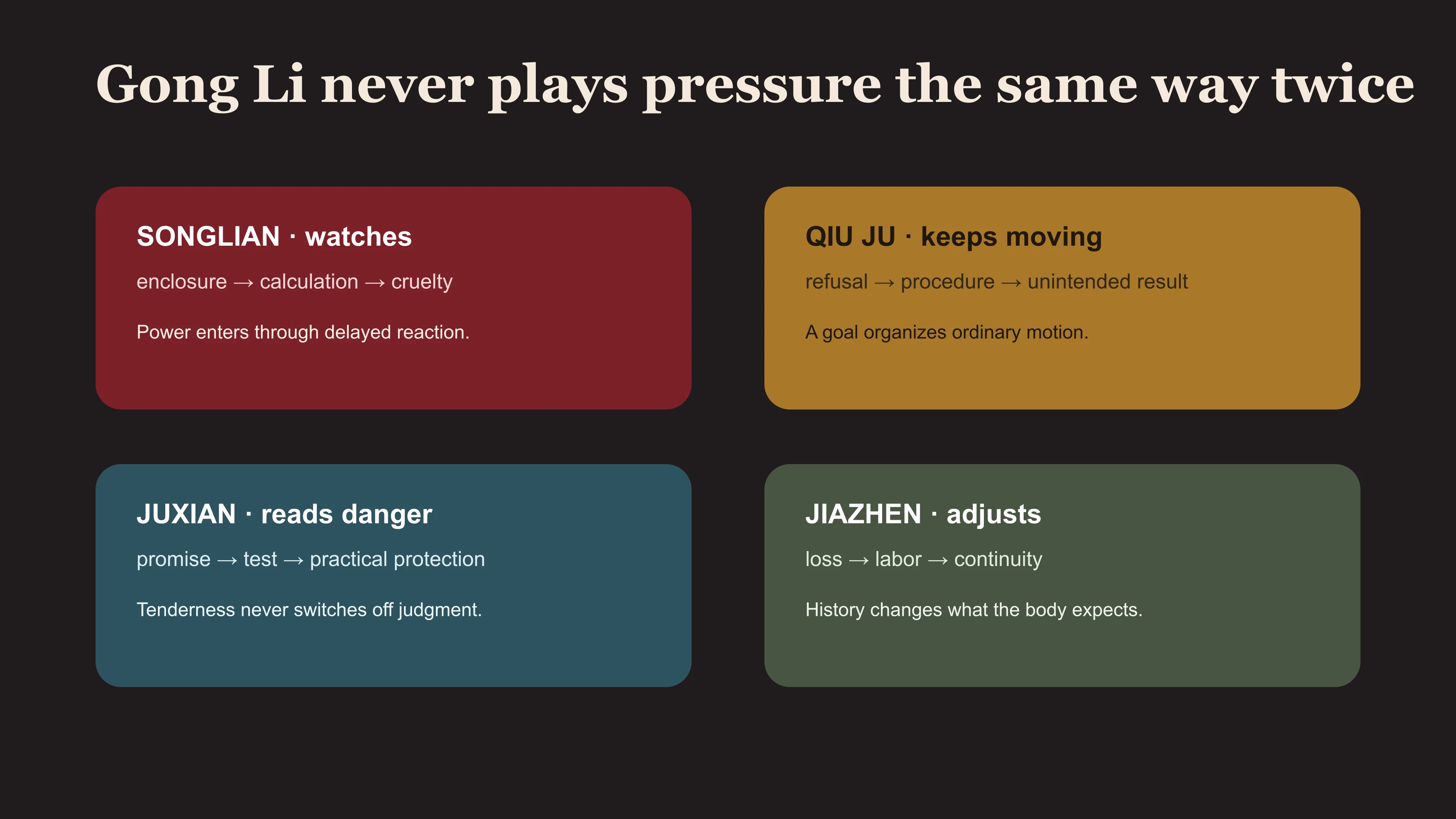
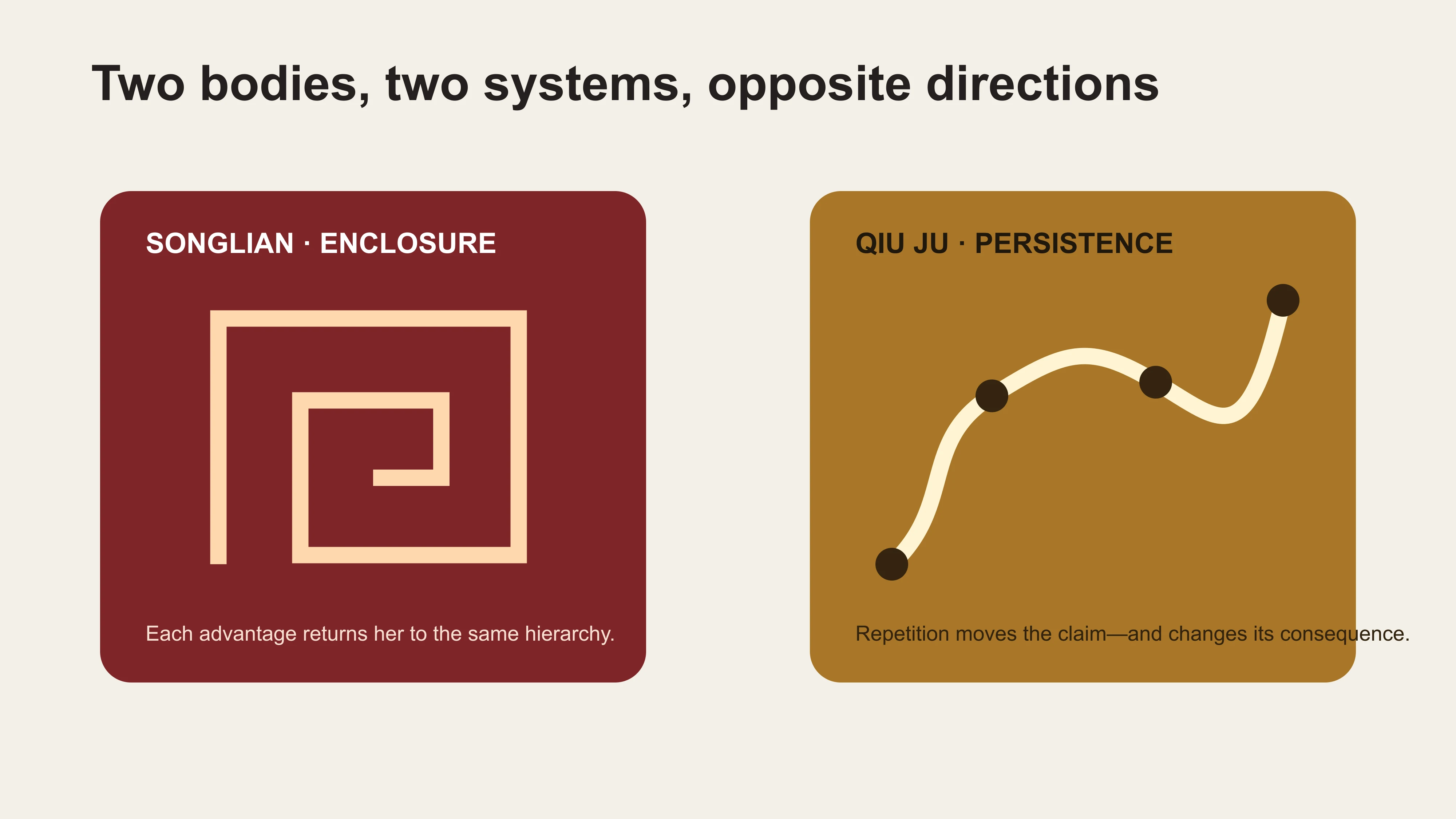
Start with Raise the Red Lantern, then watch The Story of Qiu Ju. The contrast prevents the common mistake of defining Gong Li only through glamorous suffering. Songlian is trapped inside signals she learns to manipulate; Qiu Ju keeps moving through public systems until their logic becomes visible.
Raise the Red Lantern makes thought physical
Songlian enters the Chen household educated, observant and convinced she can preserve some distance from its rituals. Gong Li does not play that confidence as loud rebellion. She makes Songlian watch.
The eyes assess which wife is performing kindness, where servants stand and what a lit courtyard changes. Posture stays formal because reaction itself can become evidence for a rival. When cruelty emerges, it feels earned by accumulated observation rather than supplied by a “strong woman” label.
The complete Raise the Red Lantern guide explains why lanterns, massage and courtyards function as a ranking system. Performance matters because Songlian is continually calculating inside that system. Gong Li gives the calculation duration.
Juxian refuses to remain the third point of a triangle
In Farewell My Concubine, Juxian is often introduced as the woman between Dieyi and Xiaolou. That description reproduces the men's perspective. Juxian is the character most consistently reading patrons, police, political shifts and the cost of Xiaolou's promises.
Her pragmatism is not coldness. It is survival intelligence developed in conditions where respectability can be withdrawn by others. Gong Li lets tenderness and suspicion coexist: a gesture can care for Xiaolou while also testing whether his word has any practical value.
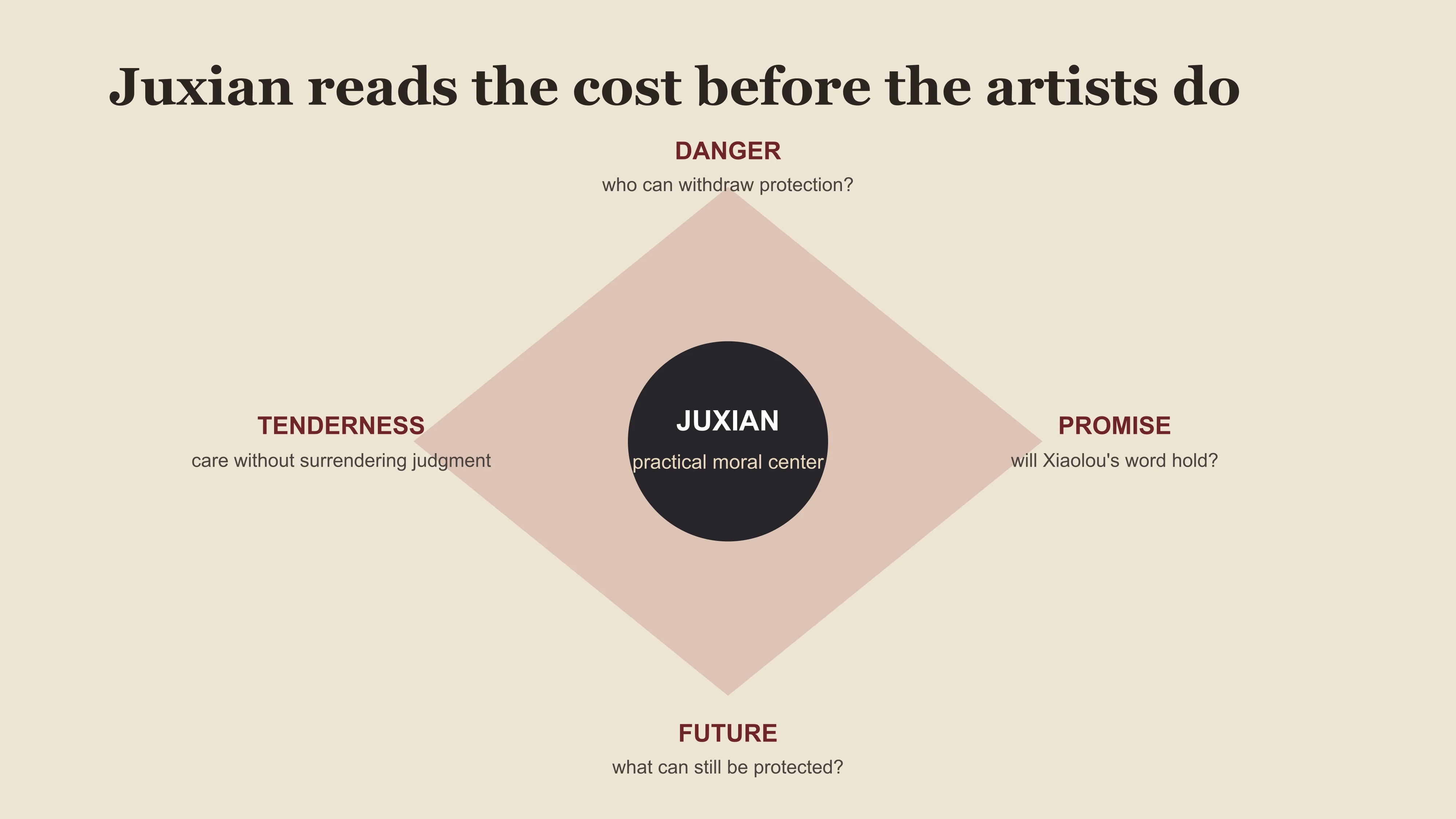
Read the Farewell My Concubine guide with Juxian at the center for one viewing. The film changes. Opera no longer appears only as Dieyi's transcendent art; it becomes one institution among several whose demands Juxian must survive without receiving its protection.
The Zhang Yimou collaboration is not one fixed style
Gong Li and Zhang Yimou are linked through Red Sorghum, Ju Dou, Raise the Red Lantern, The Story of Qiu Ju, To Live, Shanghai Triad, Curse of the Golden Flower and Coming Home. A list makes the partnership look coherent. The valuable part is how much the acting task changes.
- In Red Sorghum, physical presence and desire push against inherited arrangement.
- In Raise the Red Lantern, the body is monitored and learns to monitor others.
- In The Story of Qiu Ju, movement through offices replaces ornamental enclosure.
- In To Live, endurance occurs through daily adjustment rather than one heroic declaration.
- In Curse of the Golden Flower, ceremony becomes weaponized scale.
The director's visual authority does not erase the actor's work. Gong Li repeatedly prevents color, architecture and costume from becoming self-sufficient. The image matters because a person is trying to decide inside it.
The full Zhang Yimou profile owns the director's visual system. Gong Li's page owns the counterforce: the timing, weight and practical intelligence that stop a designed frame from becoming a sealed poster.
The Story of Qiu Ju is the corrective role
Qiu Ju wants an acknowledgment after her husband is injured by a village official. She travels, asks, waits, repeats and moves through escalating administrative levels. The performance's force comes from procedural persistence rather than tragic grandeur.
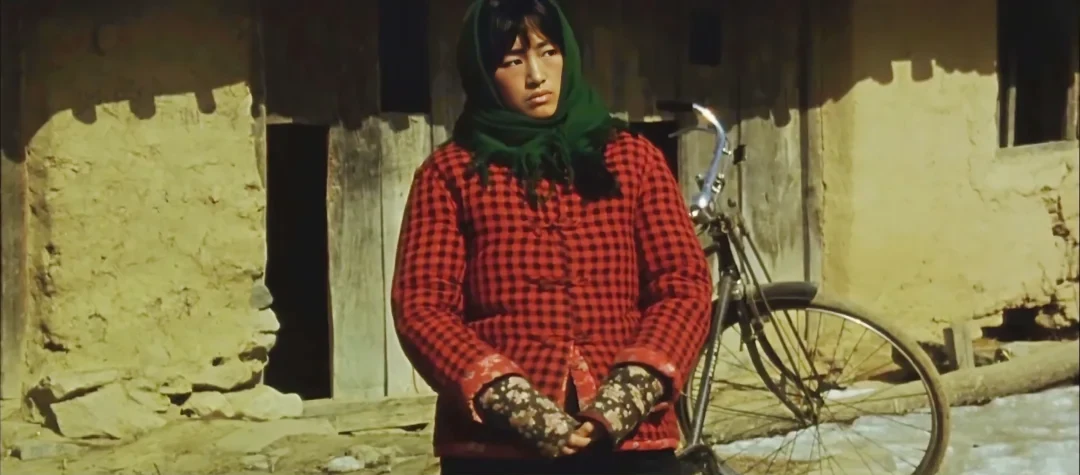
Gong Li changes gait, attention and conversational rhythm. Qiu Ju is not secretly performing sophistication for the viewer. She is focused on a concrete moral demand and discovers that the legal outcome can exceed the remedy she imagined.
Look at the bicycle, padded jacket, knitted gloves and the way her hands meet in front of the body. None of this is decorative “rural authenticity.” The clothes limit the silhouette, the cold changes movement, and the bicycle makes distance practical. Qiu Ju's persistence is built from journeys that cost time and effort. Gong Li does not float through those conditions as a prestige star visiting a village; she allows inconvenience to organize the performance. That is precisely why the character's plain request becomes more forceful each time an office tries to convert it into paperwork.
This role proves why “imperious,” “regal” or “intense” are inadequate summaries of the actor. Those labels describe how a star can fill a frame. Qiu Ju shows how Gong Li can let a goal organize every ordinary movement without announcing technique.
To Live makes adaptation active
In To Live, Jiazhen's endurance is not passive acceptance of history. She continually distinguishes what the family can still protect from what public power has already taken. Domestic work, grief and argument become decisions about continuity.
The performance avoids turning suffering into a series of award scenes. Loss changes energy and expectation. A later reaction carries earlier events without replaying them. Gong Li's gift is cumulative: history appears not only in costume or title card but in what the body no longer expects from the world.
Use the broader Chinese film guide to separate one character's experience from a total history lesson. Fiction can make pressure legible; it cannot replace documentary evidence about a period.
Her voice changes who is required to answer
Gong Li's physical authority receives more attention than her vocal decisions. Listen to where the sentence lands.
Songlian often speaks as if language can preserve rank: the words are measured because exposure creates ammunition. Qiu Ju repeats a plain demand until officials can no longer treat it as background noise. Juxian's questions test whether Xiaolou understands the practical consequence of what he has promised. Jiazhen's speech carries the economy of someone who cannot afford to perform every loss again.
These are not four volumes of the same commanding voice. They assign responsibility differently. Songlian makes the listener search for what is withheld; Qiu Ju makes the listener respond to what has been stated too clearly to ignore; Juxian makes a promise answerable; Jiazhen decides which argument still protects a family.
That distinction is why dubbing, subtitle wording and isolated clips can conceal part of the performance. The face holds pressure, but the sentence tells us where she intends to place it.
International roles expand scale, not depth automatically
Hollywood and international productions increased Gong Li's visibility through Memoirs of a Geisha, Miami Vice, Hannibal Rising and Mulan. Scale does not guarantee a better role.
Disney's free official Mulan trailer is useful for one narrow contrast: Xianniang's threat is visible immediately through costume, effects and attack posture. Watch it as a global fantasy production, not as a guide to Chinese history or folklore.
Xianniang gives Gong Li unusual physical threat and fantasy power, but the character also exists to clarify another protagonist's route. The role is useful as contrast: external force is visible immediately, whereas Songlian and Juxian make us discover force through constraint.
Do not start here if your question is why Gong Li matters. Start with the Chinese-language roles in which social position, speech and physical behavior build one another.
The 2026 Cannes Classics presentation of the restored Farewell My Concubine brought Gong Li back into the film's public memory in person. That current visibility matters because it resists a lazy “former muse” narrative: the work is still being restored, screened and argued over as cinema history, not stored as a closed chapter in one director's biography.
Gong Li and Zhang Ziyi should not be collapsed into one prestige type
Both actors have worked with Zhang Yimou and moved through Chinese-language and international prestige cinema. The useful comparison is not “who is better.” It is what pressure looks like in different bodies.
The Zhang Ziyi guide tracks precision that can crack into movement. Gong Li often begins from weight: a character appears to have absorbed the room, understood the rule and decided how long to withhold response. One makes control look expensive through sharp rupture; the other often makes it feel accumulated.
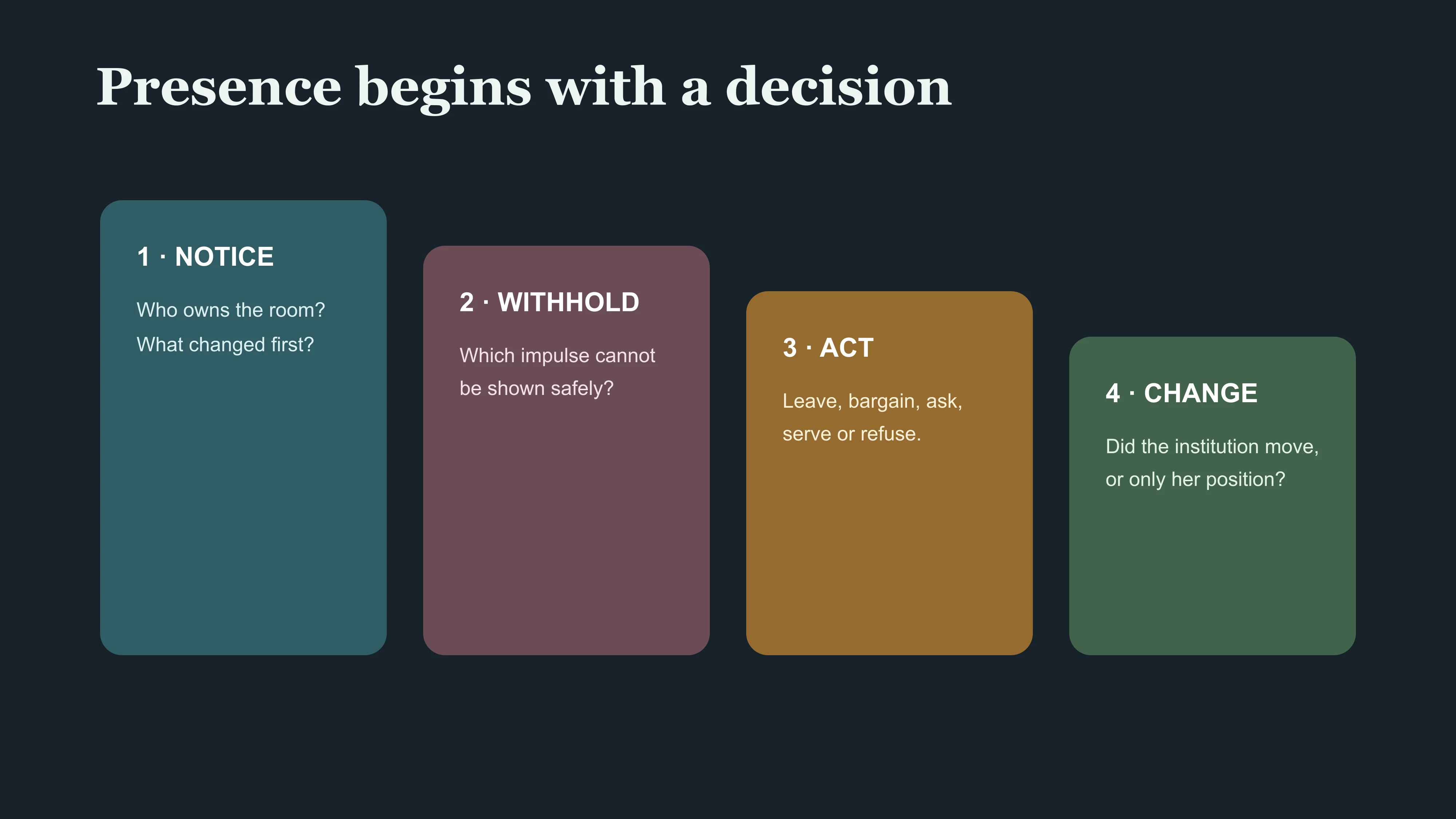
How to watch a Gong Li scene
- Identify who controls the room and its resources.
- Watch what the character notices before she speaks.
- Separate the public response from the first visible impulse.
- Find the practical action: leaving, bargaining, serving, asking or refusing.
- Check whether the action changes the institution or only her position inside it.
This method prevents “strong performance” from becoming empty praise. Strength is located in a sequence of decisions.
Gong Li is strongest when prestige stops being the subject
Begin with Raise the Red Lantern, continue with The Story of Qiu Ju, then watch Farewell My Concubine. That route moves from enclosed calculation to public persistence to historical survival outside the Zhang Yimou partnership.
Gong Li's authority is not simply presence. Presence is the surface result of a deeper skill: she makes a character's social intelligence physically visible before the script explains it.
Continue through the Chinese actors collection. In the comments, name one moment when contained judgment becomes action; the community can test it against posture, voice and consequence rather than vote on prestige.