2027 is the Year of the Goat from February 6, 2027. Calling it the Year of the Sheep or Ram is not automatically wrong. The Chinese category 羊 (yang) is broader than one English species label, so the picture and source context must decide the translation.
Year of the Goat dates and exact boundaries
Goat years include 1931, 1943, 1955, 1967, 1979, 1991, 2003, 2015, 2027 and 2039.
| Goat year | Begins | Ends | Element |
|---|---|---|---|
| 1991 | February 15, 1991 | February 3, 1992 | Metal |
| 2003 | February 1, 2003 | January 21, 2004 | Water |
| 2015 | February 19, 2015 | February 7, 2016 | Wood |
| 2027 | February 6, 2027 | January 25, 2028 | Fire |
The 2027 boundary comes from the Hong Kong Observatory's official Gregorian-lunar conversion table. A February 1, 2027 birthday still belongs to the Horse year.
Check an exact birthday with the Chinese zodiac calculator, then use the complete Chinese zodiac cycle to place Goat, Sheep or Ram within the twelve Earthly Branches.
Year of the Goat, Sheep or Ram? Use a three-part check
When an English page uses a different animal name, check three things before deciding that it is wrong:
- The Chinese category: the zodiac association is 羊 (yang) and the branch is 未 (wei).
- The visible animal: wool, horn shape, body, sex and setting may support sheep, ram or goat for a particular object.
- The source's convention: a museum, family, translator or horoscope publisher may retain its own established label.
The calendar identity remains stable while the English noun changes. This is why “year of the sheep” and “year of the ram” can be useful supporting searches rather than competing pages with separate meanings.
Our conclusion: the translation disagreement is useful evidence
English readers often expect a zodiac list to have one official animal name. Goat, Sheep and Ram then look like competing answers, as if two sources cannot both be competent.
The Chinese word 羊 does not map neatly onto that expectation. It can function as a broader category covering sheep, goats and related animals, while compounds specify particular species. A horned male in a museum may reasonably be labeled “ram”; a pastoral illustration may read as sheep; another design may clearly show a goat.
Translation should follow the object rather than forcing the object to obey a fixed English list. The ambiguity is not an editorial failure. It reveals that languages divide animal categories differently.
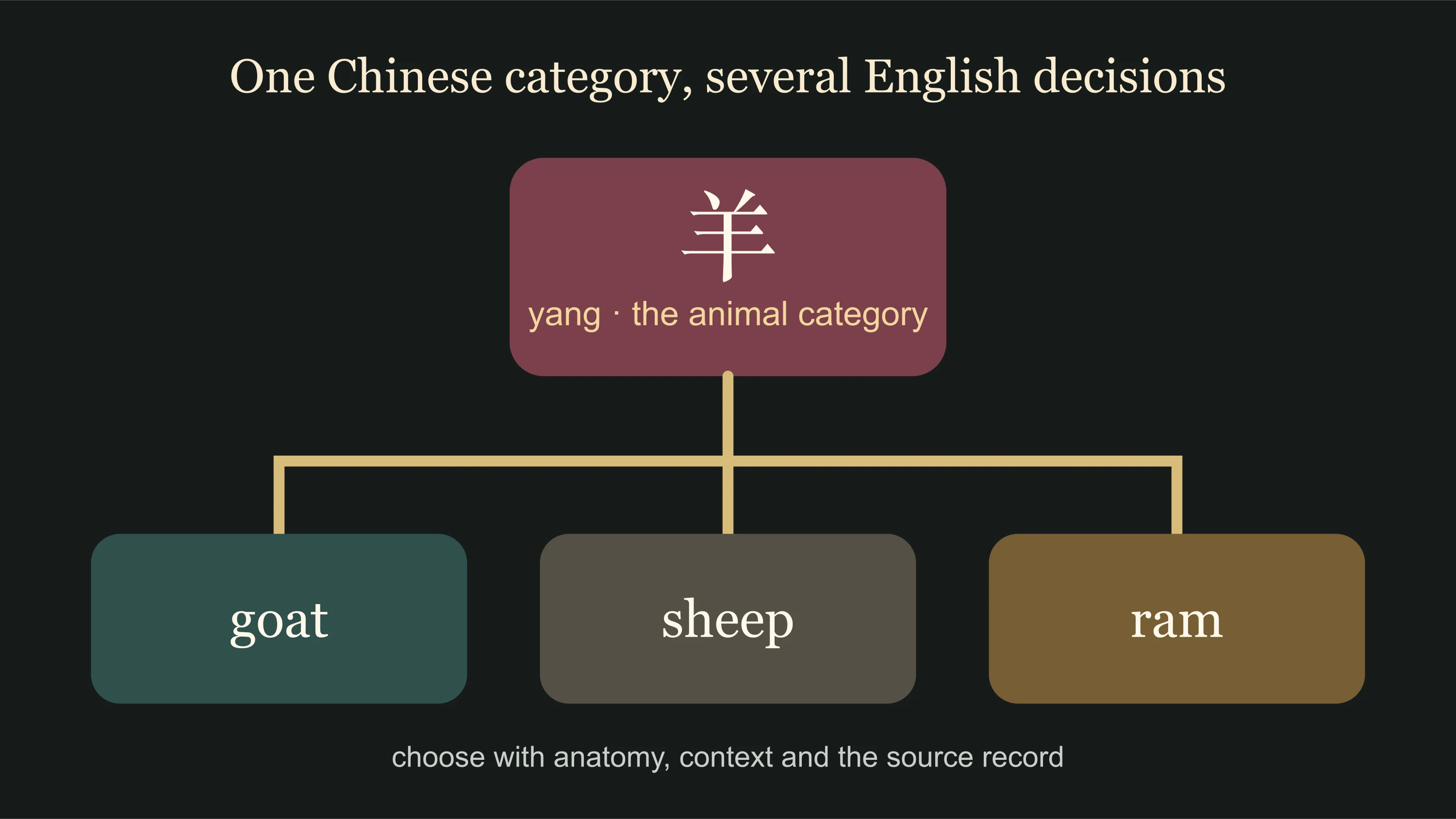
This is not a request to make every caption vague. It is a request to be more exact about which kind of certainty we have. The zodiac position is certain: 未 is eighth. The Chinese animal association is conventional: 羊. The English species label may remain conditional until the body, horns, wool, sex or museum record gives us more.
I prefer this small discomfort to a falsely tidy answer. When an English list silently changes Sheep to Goat, readers often assume one publisher made a mistake. In fact, the friction exposes a real translation decision. East Moment should show that decision instead of hiding it behind whichever label happens to rank best in search.
Wei is the branch; yang is the animal category
The eighth Earthly Branch is 未 (wei). The animal category is 羊 (yang). Wei is traditionally associated with roughly 1 p.m. to 3 p.m.
This distinction prevents two errors. First, 未 does not spell goat in ordinary vocabulary. Second, yang here is not the English yin-yang word “yang.” The animal 羊 and the cosmological 阳 / 陽 are different characters, even though their Mandarin pronunciation is similar. In the branch order, Wei follows Horse and precedes the Year of the Monkey.
That sound relationship can enable visual wordplay in other contexts, but it does not make a sheep the literal definition of yang energy.
An eleventh-century museum label chooses ram

The Metropolitan Museum of Art identifies this eleventh-century Jingdezhen qingbai porcelain as a Chinese zodiac figure of a ram. A robed human figure holds the compact horned animal as its identifying attribute.
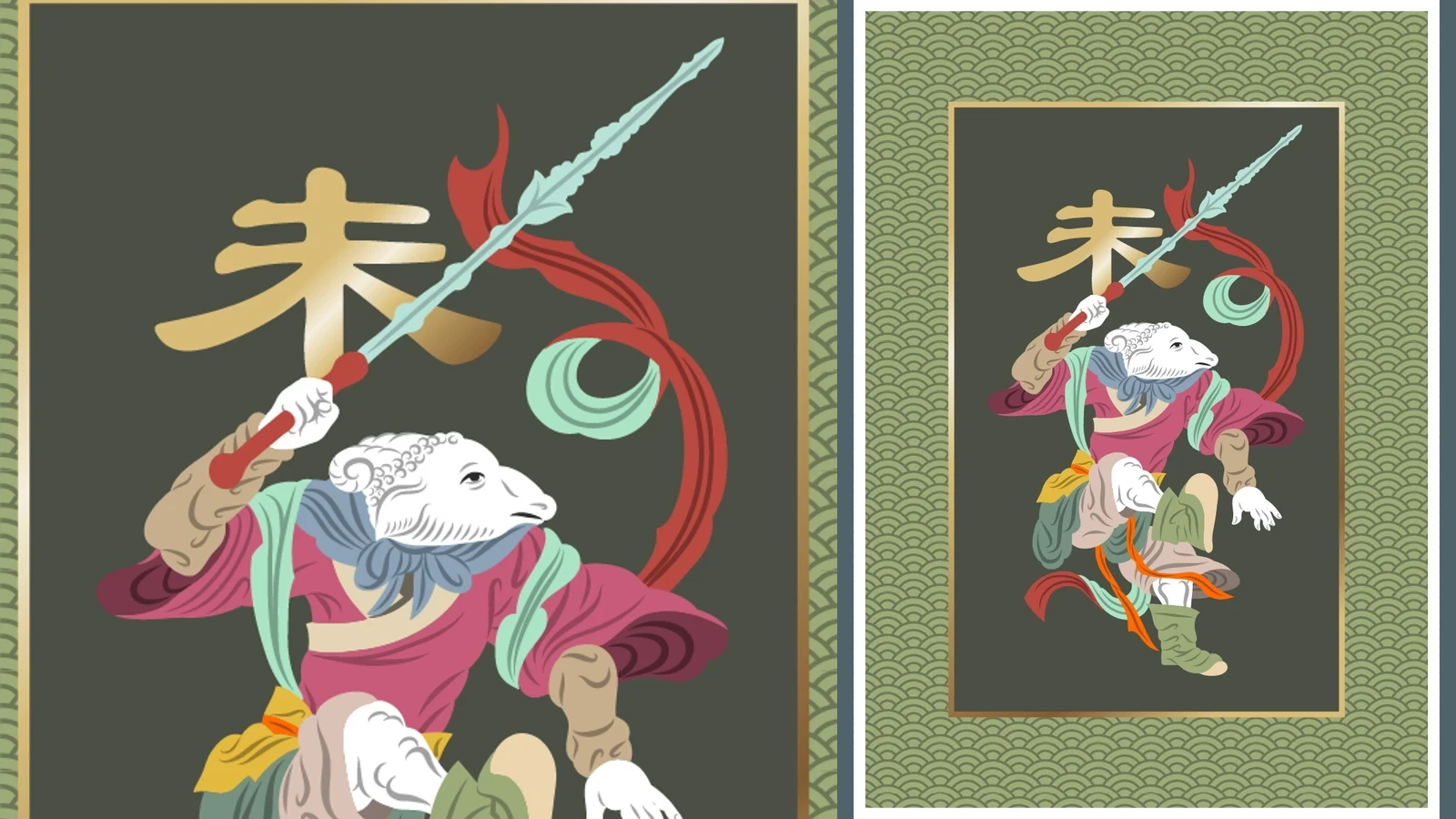
The label is strong evidence for this object, not a decree that every 未 zodiac image must be called Ram. Our contemporary hero reads more readily as Goat and pairs the animal-headed figure with a large 未. Two authorized or authoritative captions can differ because the depicted bodies differ.
This is exactly why images must do analytical work. Without looking at horns, coat, body and institutional record, “Which translation is correct?” is underspecified.
The object also corrects a modern visual habit. Zodiac graphics often enlarge the animal head until the category seems obvious. Here, a mostly human figure carries a much smaller horned creature. The museum's “ram” label is therefore doing evidentiary work: it helps us read a compact attribute that a casual glance could miss.
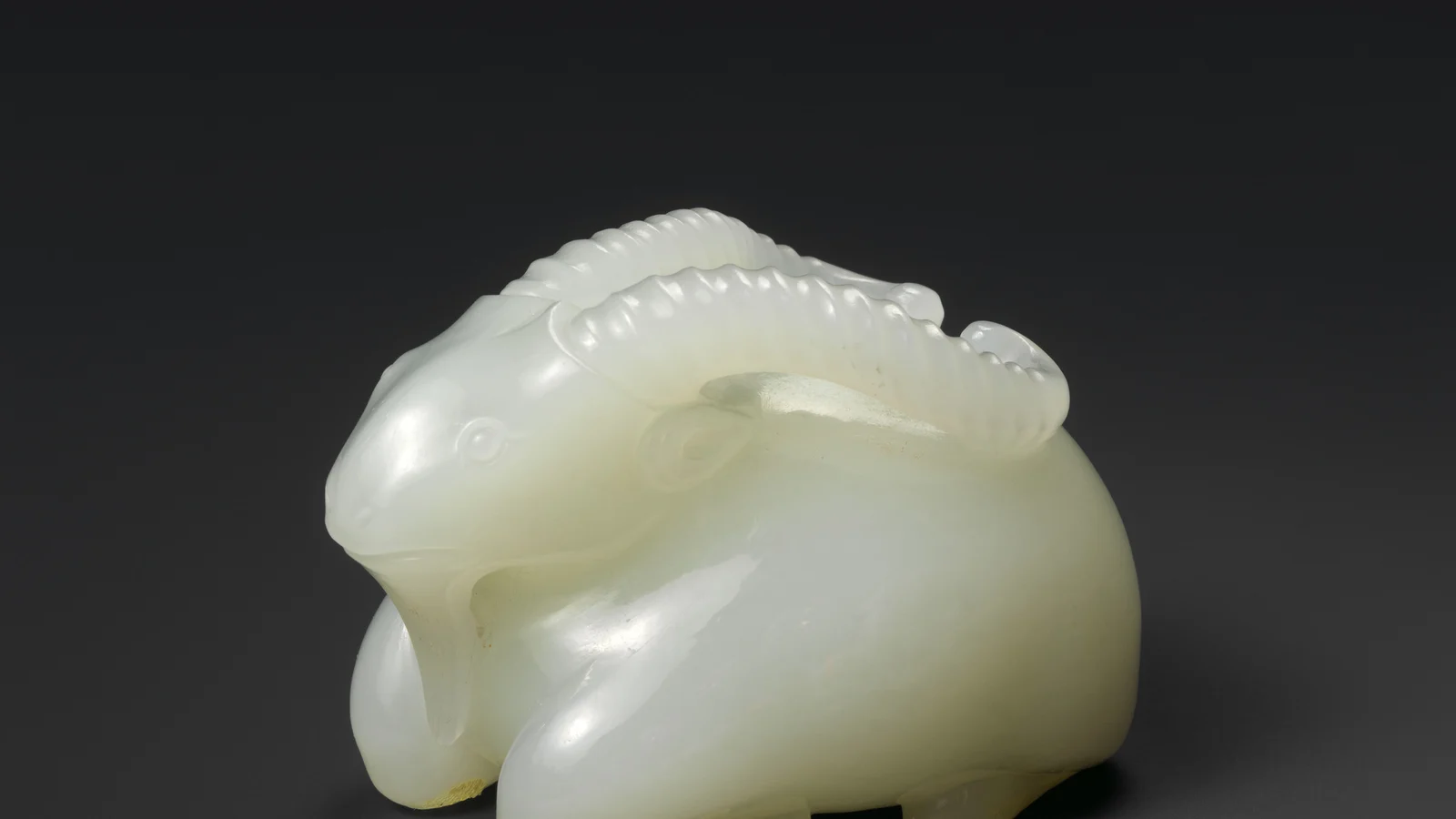
The Met's later jade Ram removes the human carrier and makes the animal body the whole object. The backward-turning horn, short tail and compact legs justify “ram” for this specific carving. They still do not settle every translation of 羊. This is exactly the habit I want the page to teach: name what the object shows, then keep the broader Chinese category visible behind the English label.
Why 2027 is a Fire Goat year
2027 combines Ding (丁) with Wei (未). Ding is associated with yin Fire, so the year is a Fire Goat, Fire Sheep or Fire Ram year depending on the animal translation.
The Ding-Wei pairing last appeared in 1967 and returns in 2087. Goat years recur every twelve years; the identical stem-branch combination recurs every sixty.
The element identifies the calendar pairing. It does not scientifically make everyone born in 2027 gentle, artistic or “fiery.” Preserve the calendrical precision and reject the personality overreach.
When yang becomes visual wordplay
Chinese auspicious design often uses similar sounds to let one image point toward another word. 羊 (yang, goat or sheep) and 阳 / 陽 (yang, the bright or yang side) are pronounced alike even though the characters and meanings differ.
That sound relationship is documented in the “three rams” motif. Sotheby's identifies a Ming jade group of three rams as a rebus for sanyang kaitai, associating the arrival of spring with renewed prosperity. The animals participate in wordplay; they do not become the dictionary definition of cosmological yang.
To identify the wordplay, look for the written phrase, number of animals and source record. A reliable caption should show how the composition supports 三阳开泰 rather than treating every group of three goats or sheep as the same motif.
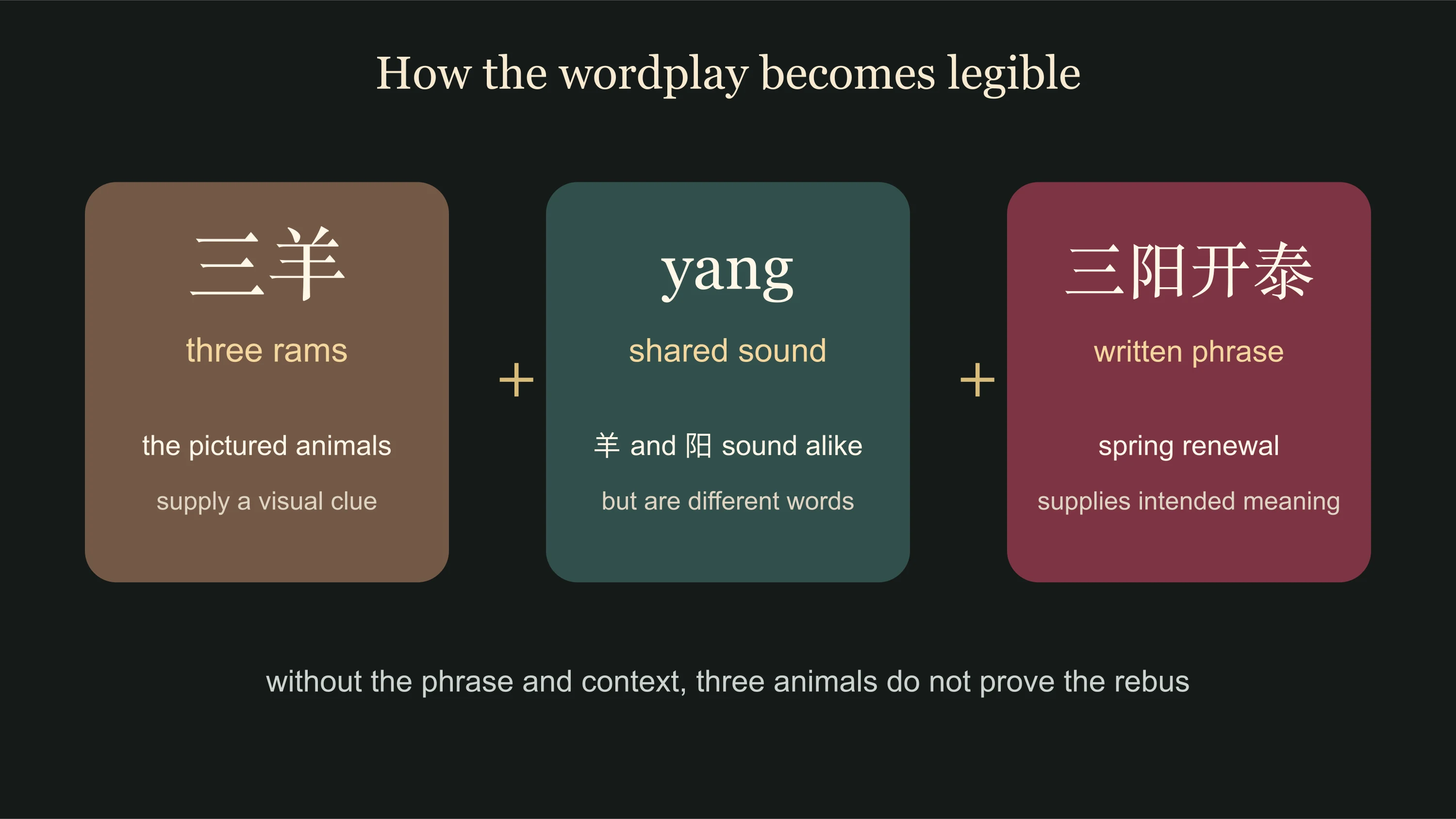
The phrase is a good test of whether a page respects Chinese visual culture or merely decorates with it. Three pictured rams supply the sound yang; the written auspicious phrase supplies the intended 阳; spring renewal supplies the social occasion. Remove the phrase and context, and three animals are just three animals. Add “wealth” to every such picture, and the explanation becomes generic symbolism rather than close reading.
This is the broader translation lesson again: sound, character and pictured species all carry information. English “Goat” preserves only one layer.
My rule for reading Goat-year design
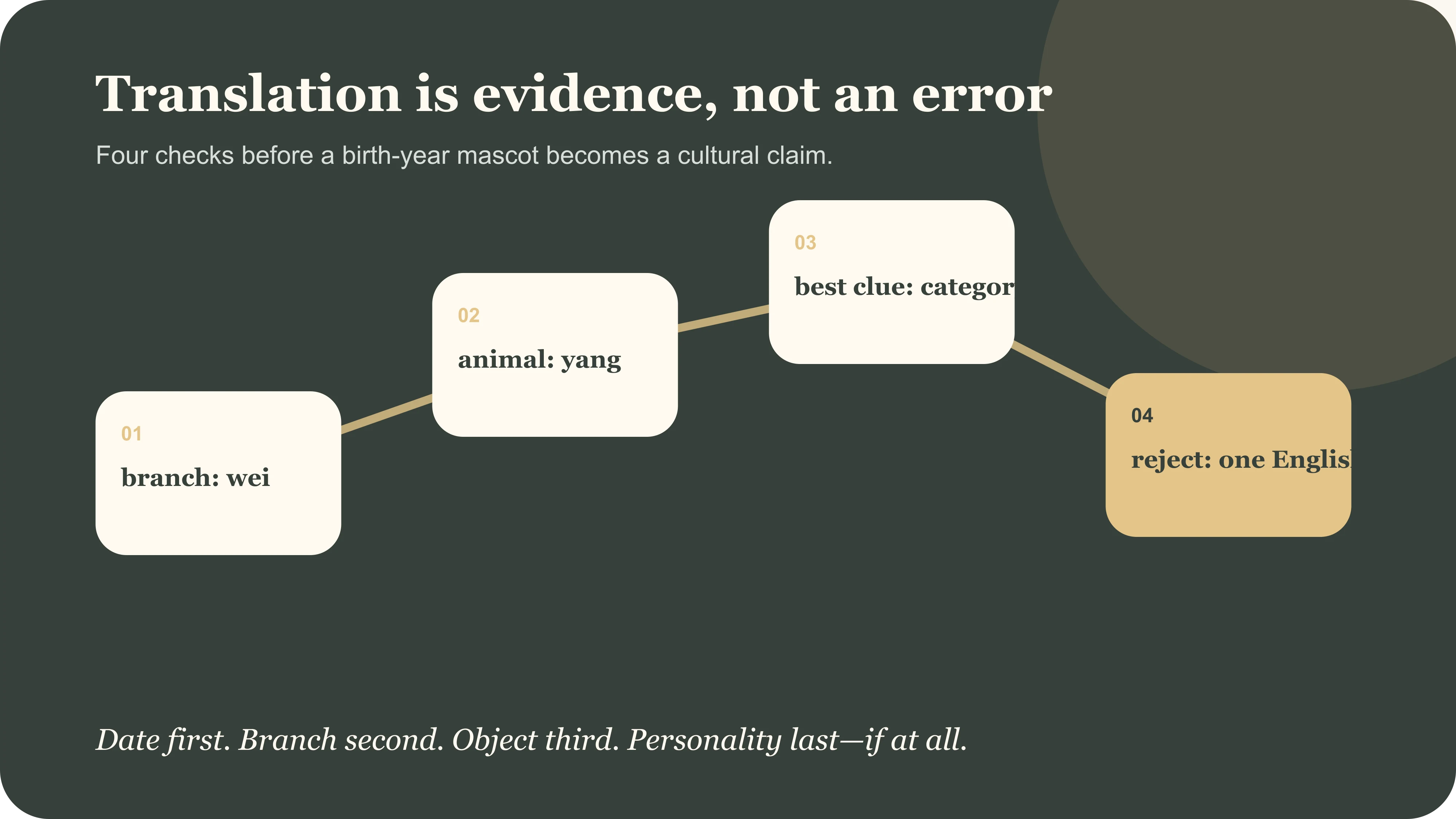
Ask four questions in order:
- Is 未 visible, or is the zodiac context supplied by year and sequence?
- What animal has the artist actually drawn: goat, sheep or ram?
- Is the English label describing that body accurately?
- Is a personality claim being presented as folklore rather than fact?
The Year of the Goat offers one of the zodiac's best translation lessons. The right answer is not to choose one English animal forever. It is to read the Chinese category and the visible object together.
That approach also changes how I would answer the search question in one sentence: Year of the Goat is the common English label, while Year of the Sheep and Year of the Ram can be equally responsible translations when the depicted animal or institutional source supports them. A useful guide should leave the reader better able to judge the next image, not merely remember our preferred noun.
The Year of the Goat begins with a translation argument
“Year of the Goat” looks like a settled English label. It is not. The Chinese word yang (羊) can refer broadly to caprines and ovines, while compounds specify goat, sheep or ram. English forces a choice that the single Chinese character does not always make.
I prefer Goat as the page title because it is a common English search phrase, but I do not pretend that every historical yang object depicts a goat. A curled horn may suggest a ram. Woolly fleece may suggest sheep. A museum record may deliberately retain “ram” because the object has been catalogued that way. Search convenience cannot overrule the evidence in front of us.
This translation problem is not a nuisance to eliminate. It is the most revealing part of the sign. It shows how a Chinese category moves across languages and becomes falsely precise. Once readers see that movement, they stop asking which English animal is universally “correct” and start asking which word is correct for this object, text or family usage.
Gentleness is not the same as passivity
Goat-year profiles often attach kindness, calm and artistic taste to everybody born under the sign. The image works because sheep and goats can be read as social, provision-giving animals, and because yang participates in auspicious wordplay. But a grazing animal is not helpless. It chooses footing, protects space and survives difficult terrain.
The stronger cultural reading is therefore care with discernment. Who is being fed? What is shared? What must be protected? Those questions are more useful than telling millions of people they dislike conflict. They also explain why food, fibre, herd and seasonal landscape matter to the animal's symbolism.
Three-yang wordplay needs the written phrase
The New Year expression san yang kai tai is often illustrated with three sheep or goats and translated as three goats bringing prosperity. The image works through sound and rebus: different characters pronounced yang can be made to echo one another. Without the written phrase or a reliable title, three animals in a picture are not automatic proof of this saying.
I enjoy the visual joke precisely because it is engineered. The maker expects the viewer to hear the phrase while seeing the animals. That mental click is more satisfying than a generic claim that goats are lucky.
The Metropolitan Museum of Art collection search is useful for comparing catalogued ram imagery, but catalogue terminology varies by object. A museum label can identify a specific work; it cannot settle every English translation of yang.
My boundary is firm: the Year of the Goat offers a calendar identity and a field of symbols, not a personality diagnosis. Read the horns, body, material, inscription and source together. Then continue through the Chinese zodiac hub or compare the adjacent Year of the Horse to see how movement gives way to settlement and care.
What should a visitor notice in a Goat-year display?
Start with the caption, not the stereotype. Does the object identify a branch, a festival wish, a family name or a specific animal? Then inspect the relationship around the body: a herd suggests coordination, a mother and young suggest care, three rams may activate a sound-based auspicious phrase, while a lone horned figure may simply identify the zodiac sign.
Do not translate every 羊 image as “gentle.” A pastoral scene can include hunger, fibre, trade, sacrifice or difficult terrain. A museum label may be more precise than the decorative slogan beside it. The cultural skill is to keep the broad Chinese category visible while naming the particular English animal honestly.
This is also the practical answer for travelers and readers who encounter Goat-year merchandise: ask what the design is trying to say in this setting. It may be a birth-year greeting, a spring rebus, a museum reconstruction or a commercial mascot. The same horned body can do different work when its date, inscription and audience change.
The herd changes the meaning of the individual
A lone ram in profile can emphasise horn, stance and force. A ewe with young shifts attention to care. A herd on difficult ground makes collective navigation visible. “Gentle” cannot describe all three scenes.
This is where Goat-year personality lists fail: they detach the animal from social arrangement. The useful question is who moves first, who follows, who is protected and how limited pasture is shared. Those relationships can support cultural interpretation without pretending to diagnose a reader.
Translation remains part of the evidence. If the source says sheep, preserve sheep. If it says ram, preserve ram. Use Goat for the established search route, then tell the truth about the particular object. That small discipline is exactly how an English-language page can respect Chinese ambiguity rather than flatten it.
Food symbolism must name the dish and occasion
Goat or mutton dishes can carry warmth, hospitality and regional memory, but a menu photograph does not automatically document the zodiac. Season, place and family practice turn food into evidence.
This matters because the animal's material life extends beyond a mascot: milk, meat, hide and fibre enter different economies. A northern winter dish and a southern New Year paper-cut may share yang imagery while doing different social work.
The page earns depth by holding those uses apart, then showing where wordplay or festival timing connects them. A general claim that Goat simply means prosperity is too blunt for the evidence.