The best travel tea set is the lightest kit that completes one full brew, waste-water and drying cycle without borrowing equipment. Measure its packed weight and outside dimensions, confirm that one brew fits the cups, test ceramic movement and leakage, and reject any kit that must be sealed while wet. Piece count, nesting tricks and the word
gongfuare secondary.
A travel tea set must complete the whole cycle
A travel tea set has six jobs: protect the vessels, reach the destination, stand securely, brew, contain the mess and dry. Most product listings demonstrate only the first four while every frustrating failure happens in the last two.
For one person, start with one 120-250 ml lidded mug or mug-and-basket infuser, a dry tea packet, a small towel and a protected compartment. For two people, a 90-150 ml gaiwan or small glazed pot plus two measured cups can work. A pitcher belongs only when even division matters and it still passes the packing test.
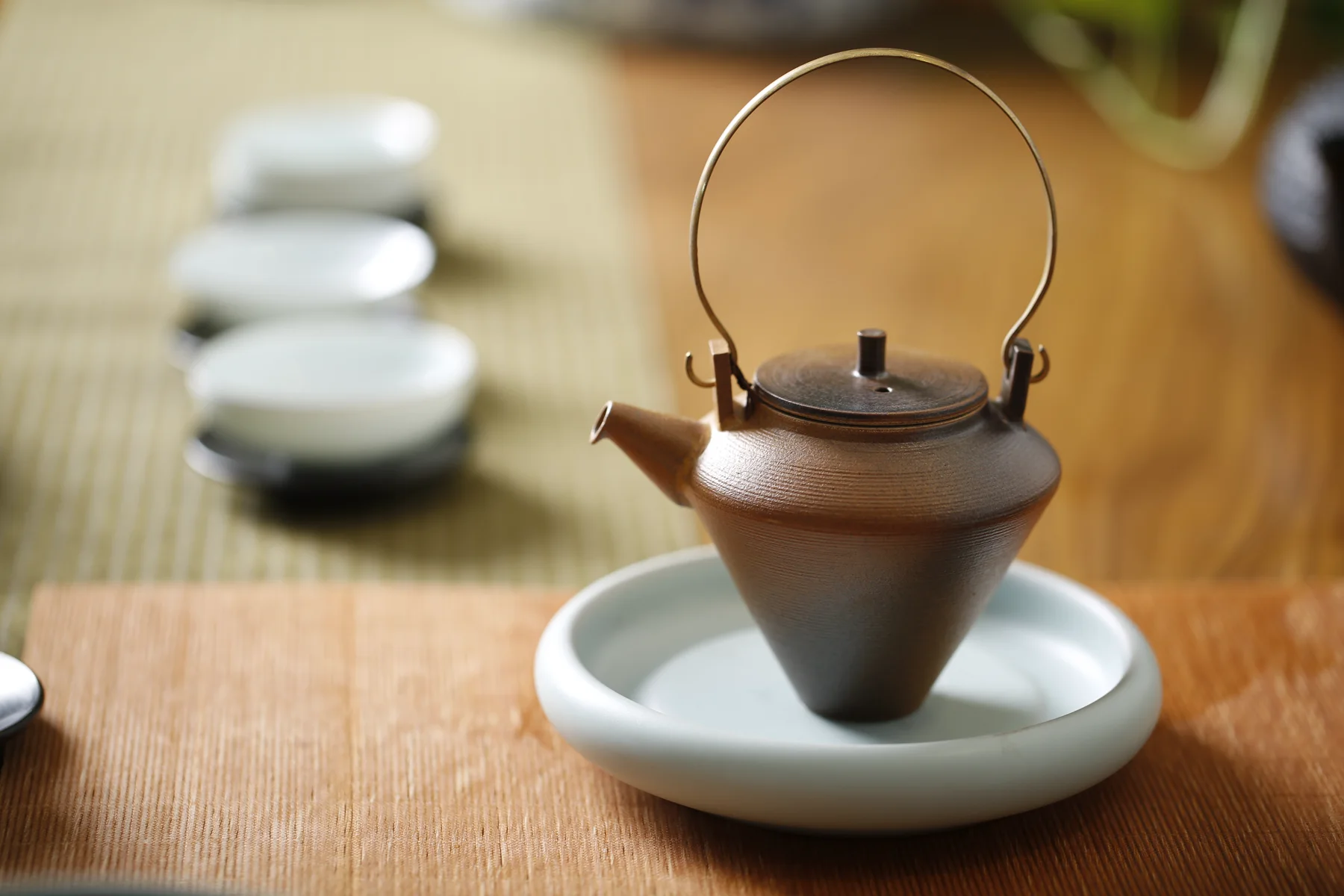
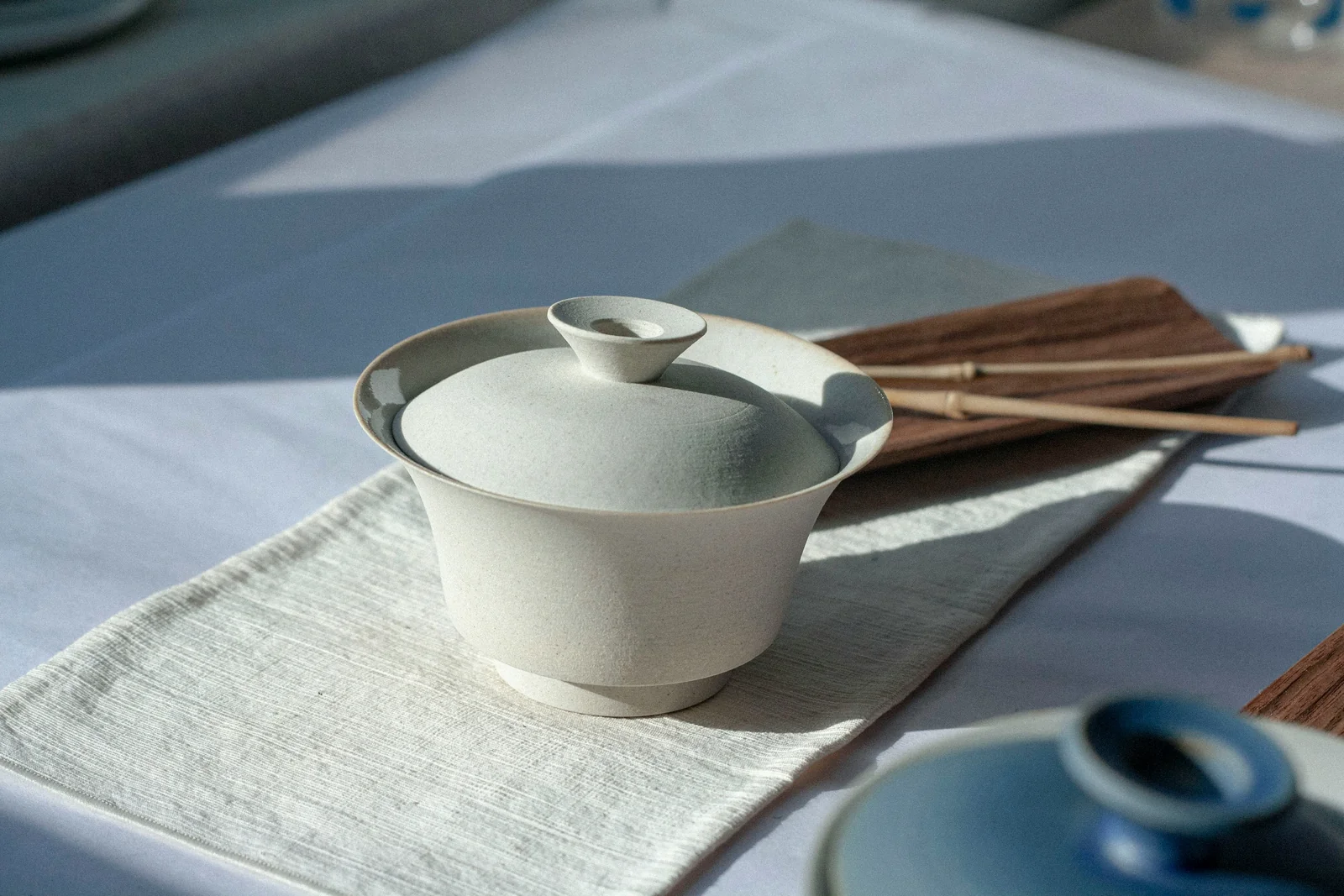
This first-hand scene shows a compact pot-and-cup service, not a proven travel product. It exposes the right question: can the vessel's actual liquor yield fill the intended cups? A visually small set can still fail if the cups overflow, the pot retains too much liquor or its handle consumes most of the case.
| Trip | Best starting system | Reason to reject it |
|---|---|---|
| Hotel or office, solo | Wide mug with removable basket | Basket cannot drain; mug or lid traps leaf |
| Hotel, two people | Small glazed pot or gaiwan and two cups | No stable surface or no place for spent leaf |
| Campsite with a table | Protected brewer, cups and waste-water container | Ground is unstable or cleaning water is unavailable |
| Train lounge while stationary | Closed infuser bottle or ordinary mug | It must be opened or poured while the train is moving |
| Car journey | Insulated water bottle; brew only after stopping | Any plan involving open hot water in a moving car |
Never handle a gaiwan, open kettle or exposed near-boiling water in a moving car or train. Portability never overrides burn prevention.
Measure what the listing usually hides
You need four baseline numbers before deciding that a kit is compact.
- Packed weight: weigh the closed case with every item you will actually carry, including towel, tea, filters and waste bottle. Do not count water unless you must transport it.
- Packed envelope: measure the longest outside length, width and height, including handle bulges and zipper seams.
- Bounding volume: calculate
length x width x height. This is not the container's internal capacity; it is the luggage space the set blocks. - Working yield: fill the brewer to the safe line, brew with the intended leaf, decant completely and weigh the liquor. For kitchen decisions, 1 g of water or tea liquor is close enough to 1 ml; this is not a laboratory measurement.
Record the real kit rather than a seller's headline:
| Baseline | Record | Decision |
|---|---|---|
| Closed packed weight | ___ g | Is it still worth carrying after water and luggage are added? |
| Outside length x width x height | ___ x ___ x ___ cm | Does it fit the intended bag and shelf? |
| Bounding volume | ___ cm3 | Compare two differently shaped cases on equal terms |
| Brewer working fill before leaf | ___ ml | Upper reference only |
| Liquor yield after leaf absorption | ___ ml | The number the cups must accept |
| Comfortable fill per cup | ___ ml | Do not use brimful catalog capacity |
| Number of cups served | ___ | Does one infusion divide without leftovers or overfill? |
An arithmetic example: a packed case measuring 20 x 14 x 11 cm occupies a 3,080 cm3 bounding box. If its brewer yields 92 ml and two cups are comfortable at 48 ml each, one infusion fits. These figures illustrate the calculation; they are not measurements of the pictured set or a product recommendation.
Make every object earn its space
The minimum kit is not always the kit with the fewest pieces. A container that protects ceramics during transport, becomes a stable tea surface and receives waste water can replace three objects. A cloth that separates cups, catches drips and dries the exterior can also earn its weight. The same object fails if it transfers odor, keeps ceramics damp or touches hot surfaces unsafely.
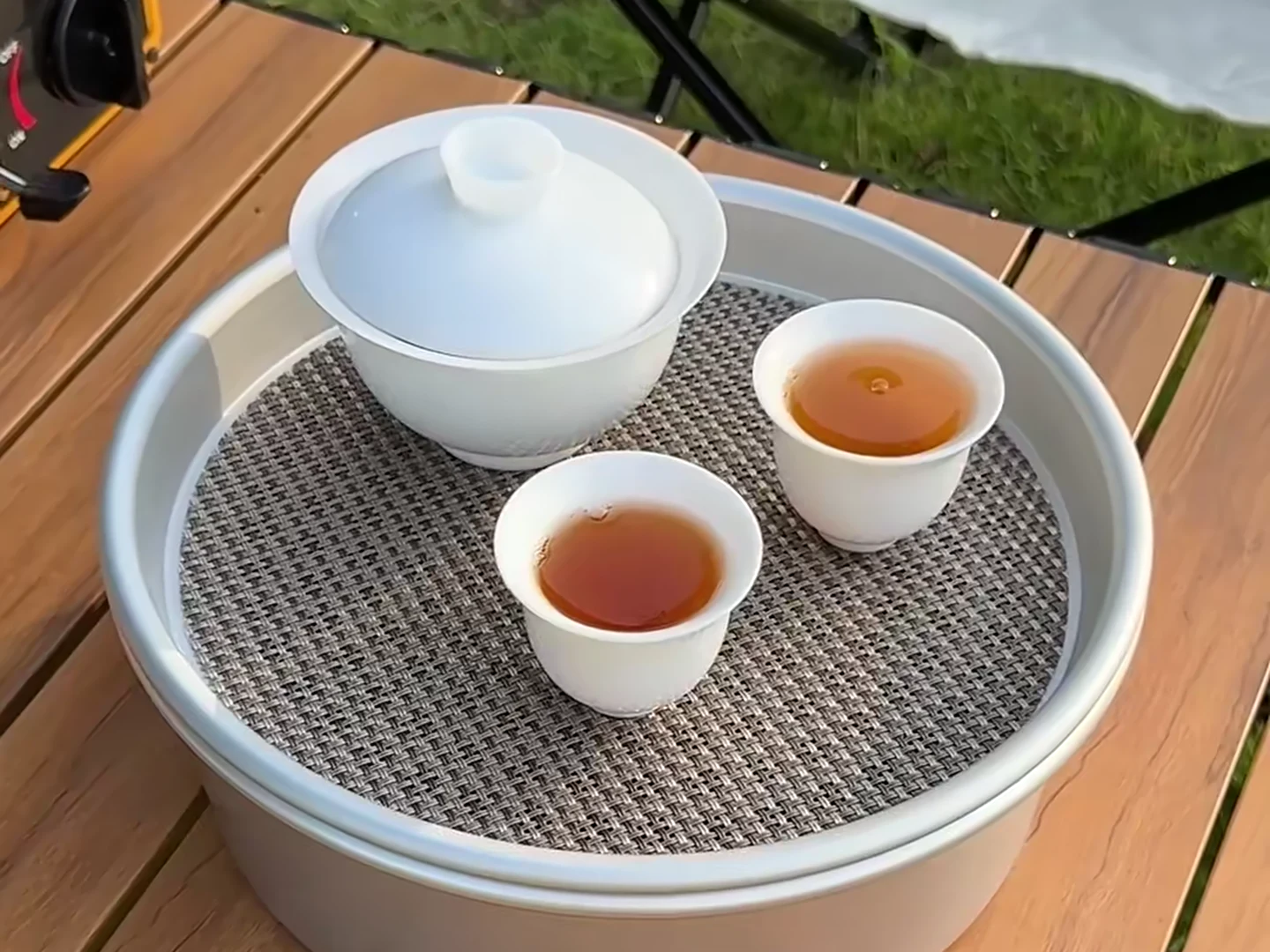
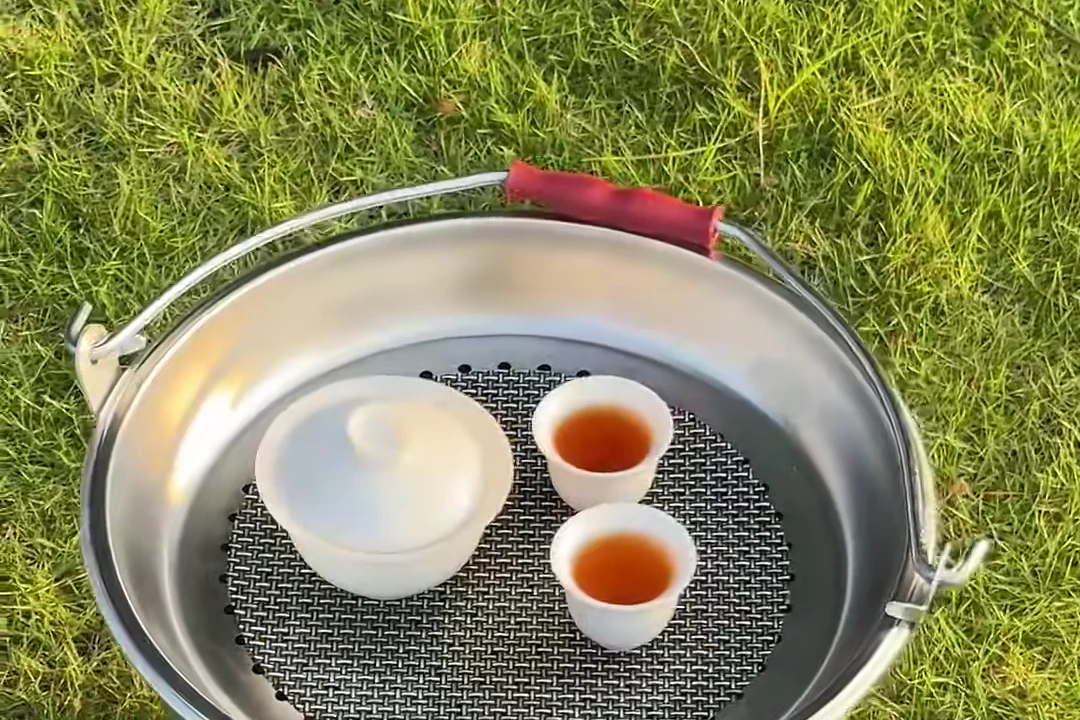
This field frame shows one real arrangement: a gaiwan and two cups fit on a perforated insert over a handled metal container. It proves only the visible setup. It does not establish the vessel capacities, food-contact status, load rating, leak resistance or suitability for another journey.
Use this functional hierarchy:
| Keep | Keep only when needed | Usually leave at home |
|---|---|---|
| Brewer, cup, protected tea, separation, drying cloth | Second cup, pitcher, small waste bottle, scale | Display tray, tongs, aroma cups, scoop set, ornaments |
The Chinese tea guide places portable equipment inside the wider culture of leaf, water and hospitality, while the complete Chinese tea set guide explains what each object does at home. Travel changes the threshold: an object stays only if removing it breaks the brew-to-dry cycle.
Gaiwan, teapot or infuser bottle?
Choose by the place where you will actually brew.
| Vessel | Strongest use | Main travel cost | Reject when |
|---|---|---|---|
| Glazed gaiwan | Controlled brewing on a stable table | Hot handling; lid needs separate restraint | Saucer rocks, lid strikes bowl or safe grip is uncertain |
| Small glazed teapot | Two-person pouring with a handle | Spout and handle enlarge the protected envelope | It dribbles, retains liquor or cannot be cleaned through the opening |
| Mug with removable basket | Hotel, office and solo use | Less precise small-infusion service | Basket has nowhere to drain or leaf catches below it |
| Sealed infuser bottle | Carrying already brewed tea | Seals and narrow channels need inspection | Leaf cannot be separated promptly or the seal leaks |
Glazed porcelain is neutral and easy to inspect but needs edge separation. Glazed stoneware may tolerate handling better but adds weight. Glass reveals leaf and residue but needs impact protection. Metal resists breakage, yet seals, coatings and narrow interiors require clear product documentation and thorough cleaning.
Unglazed clay is a poor default for unpredictable travel because odor carryover, drying and replacement are harder to manage. Valuable, antique or provenance-sensitive vessels should stay at home.
Run the 30-second packed movement test
Do this over a bed or folded blanket with a dry, empty kit. It is a screening test, not a certification and not a drop test.
- Pack every vessel exactly as it will travel.
- Close the case and rotate it through top, bottom and both sides.
- Hold it with both hands and make ten gentle side-to-side movements over 30 seconds.
- Listen for clicks and feel for shifting mass.
- Open the case and inspect rims, lid knob, spout, handle and foot rings under good light.
- Add dividers or lid restraint, then repeat until ceramic cannot touch ceramic.
Reject a case that depends on pressure from the zipper to immobilize a lid. Compression can transfer an outside impact directly to the rim. Each hard edge needs a soft boundary, and each cavity must keep working after the cloth is no longer folded like a factory photograph.
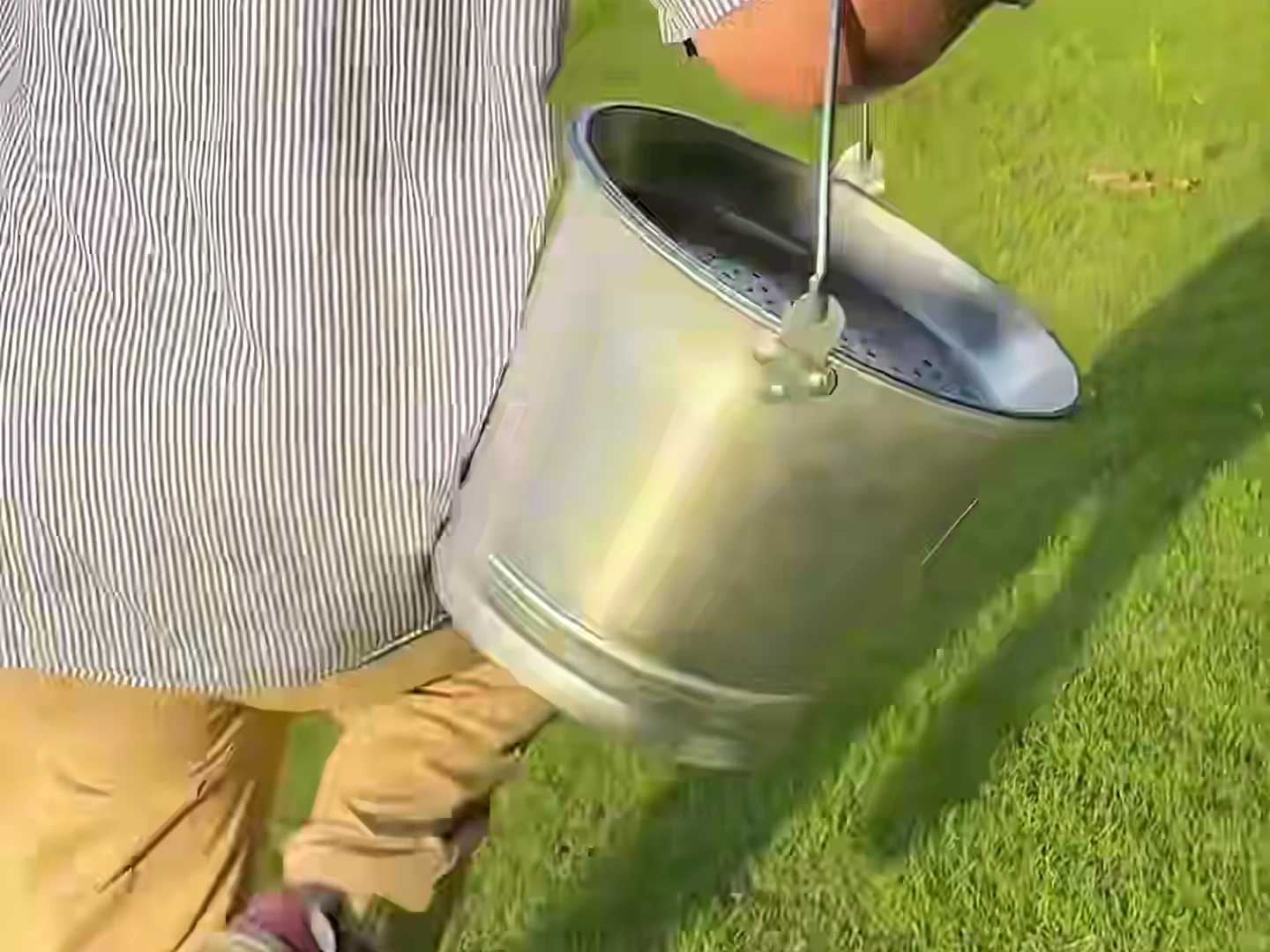
The visible handle makes this container portable in the literal sense. The image does not prove its weight, handle strength or protection against internal movement. Those questions still require weighing, inspection and the closed-case test above.
Test leakage with cool water and paper
Never discover a leaking waste compartment beside a laptop or inside a suitcase. Test removable bottles and nominally sealed reservoirs with cool tap water:
- Inspect the seal, thread and closure while dry.
- Fill to the maximum level you intend to carry, not the absolute brim.
- Dry the outside completely and wrap the closure in a fresh paper towel.
- Hold it upright for five minutes, then on each intended travel side for five minutes.
- Check the paper after every position.
- Repeat after opening and closing the seal three times.
Any wet mark is a failure. An open tray or bucket is a stationary waste receiver, not a leakproof transport vessel. Empty it at an appropriate drain before moving and never transport wastewater beside dry tea or electronics.
Budget water and waste before leaving
Count the water required for the session you actually plan. Multiply intended infusions by the brewer's working water input, then add water for any rinse and cleanup you refuse to skip.
Example only: five 100 ml infusions require about 500 ml of brewing water before kettle loss or cleaning. If the trip provides only one 500 ml bottle, there is no honest margin for rinsing equipment. Either carry more potable water, reduce the session or choose a method that creates less cleanup.
Waste volume is not equal to all water heated. Liquor that is drunk does not enter the waste container, while a discarded rinse, spilled liquor and cleaning water do. Measure the collected waste during the home rehearsal and choose a receiver with unused headroom. Do not assume a shallow tray can safely hold the result.
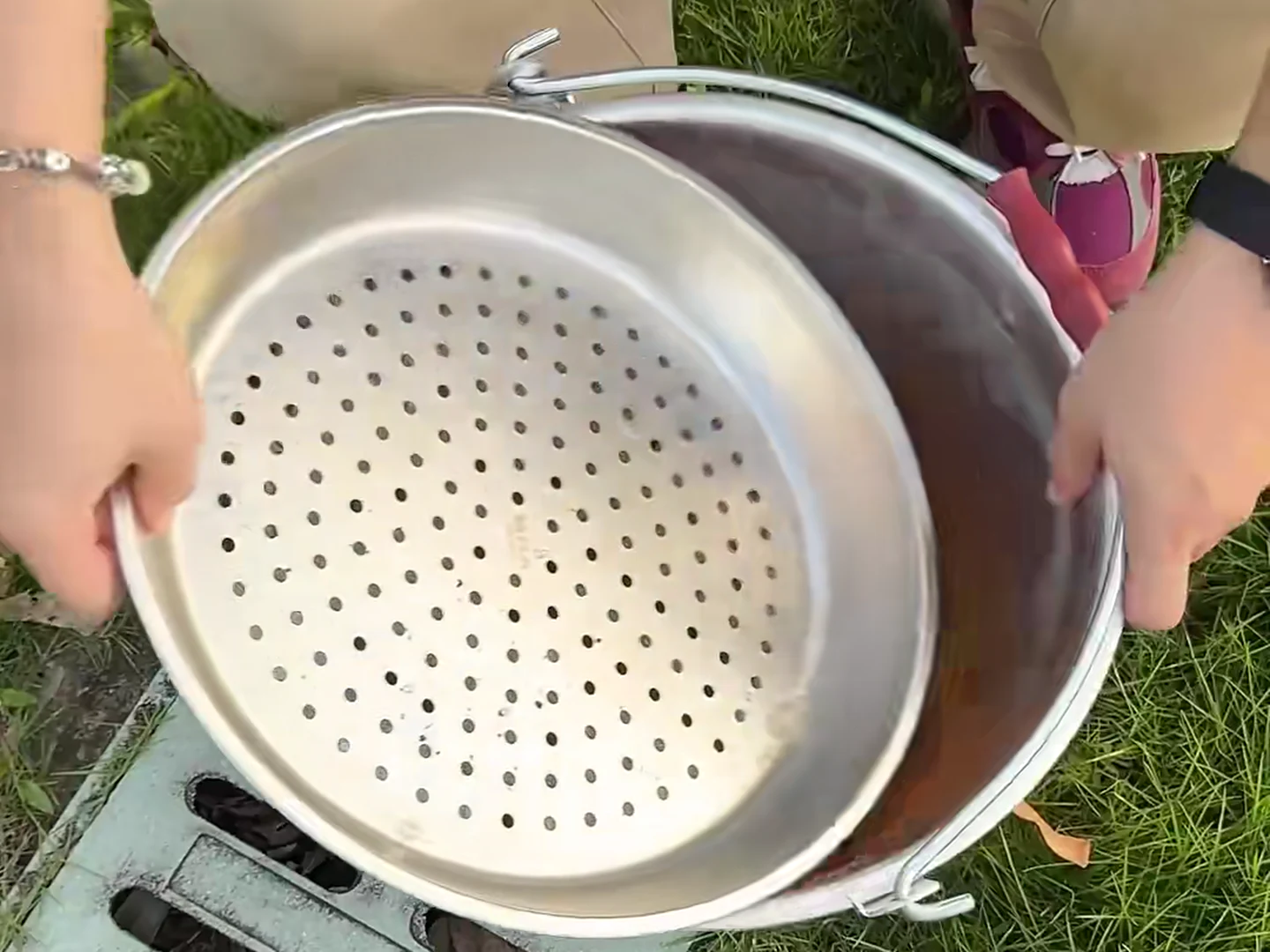
This frame documents a waste-water arrangement used in one outdoor session: liquid is visible below the removable insert. It does not prove sanitary design, safe materials, total capacity or leak resistance. Its value is conceptual: waste needs a known destination before the first pour.
Complete one home rehearsal without borrowing anything
Do not make the first full test happen in a hotel. Use the intended tea, number of drinkers and water allowance, then complete the entire sequence from a closed bag back to a closed bag.
| Stage | Record | Pass condition |
|---|---|---|
| Unpack | ___ minutes; borrowed items ___ | Everything has a stable place on the expected surface |
| Brew | liquor yield ___ ml; cup fills ___ ml | One infusion divides cleanly and decants fully |
| Serve | drips/spills ___ | Hot vessel and cups remain stable and controllable |
| Remove leaf | destination ___ | No leaf is washed onto unsuitable ground or left in plumbing |
| Waste | collected ___ ml; destination ___ | Receiver has headroom and can be emptied appropriately |
| Clean | clean water used ___ ml | Residue and leaf can be removed with available resources |
| Dry | open-air time ___ minutes | No visible moisture, odor or trapped condensation |
| Repack | final packed weight ___ g | Wet cloth is separated and no damp item is sealed |
For a stronger dryness check, weigh each clean, fully dry piece before the rehearsal. After cleaning and open-air drying, weigh it again on the same scale. If the reading has not returned to the dry baseline within the scale's resolution, or moisture remains in a spout, lid recess or seal, do not close it into the case.
Drying time is a result to record, not a universal number. Airflow, humidity, wall thickness, seams and cloth all change it. A case that dries in one room may stay damp in a humid destination.
When clean water or drying time runs out
The correct response is to stop the session early, not to seal a dirty wet set.
- Remove as much leaf as possible into an appropriate waste container.
- Do not rinse with water that is not safe or suitable for the equipment.
- Wipe only what can be wiped without driving leaf into a spout or seal.
- Keep damp ceramics and the wet towel in separate ventilated containment.
- Wash properly at the next reliable water source and reopen every component to dry.
Avoid elaborate ritual rinses when there is no responsible destination for the water. A simpler mug infusion can be more faithful to the trip than reproducing a home tea table badly.
Reject the kit for any one of these failures
A travel tea set is not ready if:
- the seller cannot provide packed outside dimensions or you cannot measure them on receipt;
- one brew does not fit the intended cups;
- ceramic surfaces click during the 30-second movement test;
- the lid, spout or handle bears directly against the case wall;
- any claimed sealed reservoir wets the paper-towel test;
- the hot vessel has no stable landing place;
- spent leaf or waste water has no planned destination;
- cleaning requires an item not packed or reliably available;
- the set must be closed before the pieces and case are dry;
- its packed weight makes you leave it behind on an ordinary trip.
That last failure matters. Portability is not the ability to photograph nested ceramics. It is the probability that the whole system leaves home, makes good tea and returns clean.
Three kits that survive the test
| Traveler | Start with | Add only after the rehearsal |
|---|---|---|
| Solo work trip | Mug, removable basket, towel, portioned tea | Small basket rest if the lid cannot receive it |
| Two-person slow trip | 90-150 ml glazed brewer, two measured cups, separators | Pitcher only if direct division is inconsistent |
| Tea-focused field session | Gaiwan or pot, cups, scale, protected samples, waste plan | Tray and comparison vessels when measurement is the purpose |
Bring the tea required for the planned sessions plus one spare portion. Keep each portion dry and sealed away from toiletries, food and damp cloth. Tea that demands tightly controlled water, temperature or storage can travel, but it should not be the default test of an unfamiliar room and kettle.
The buying verdict
Buy no travel tea set until its complete route can be written in one line:
closed dry bag -> protected carry -> stable setup -> measured brew -> contained waste -> clean open drying -> closed dry bag
If the route breaks, remove equipment or add the one missing function and repeat the rehearsal. Chinese tea practice does not depend on carrying a miniature display cabinet. UNESCO's record of Chinese tea knowledge and social practices is much larger than equipment, but it reinforces the point that tea lives through practice and social use. The best portable tea set is therefore not the one with the most ingenious stack. It is the smallest verified system that preserves leaf, water, attention and hospitality—and comes home dry.