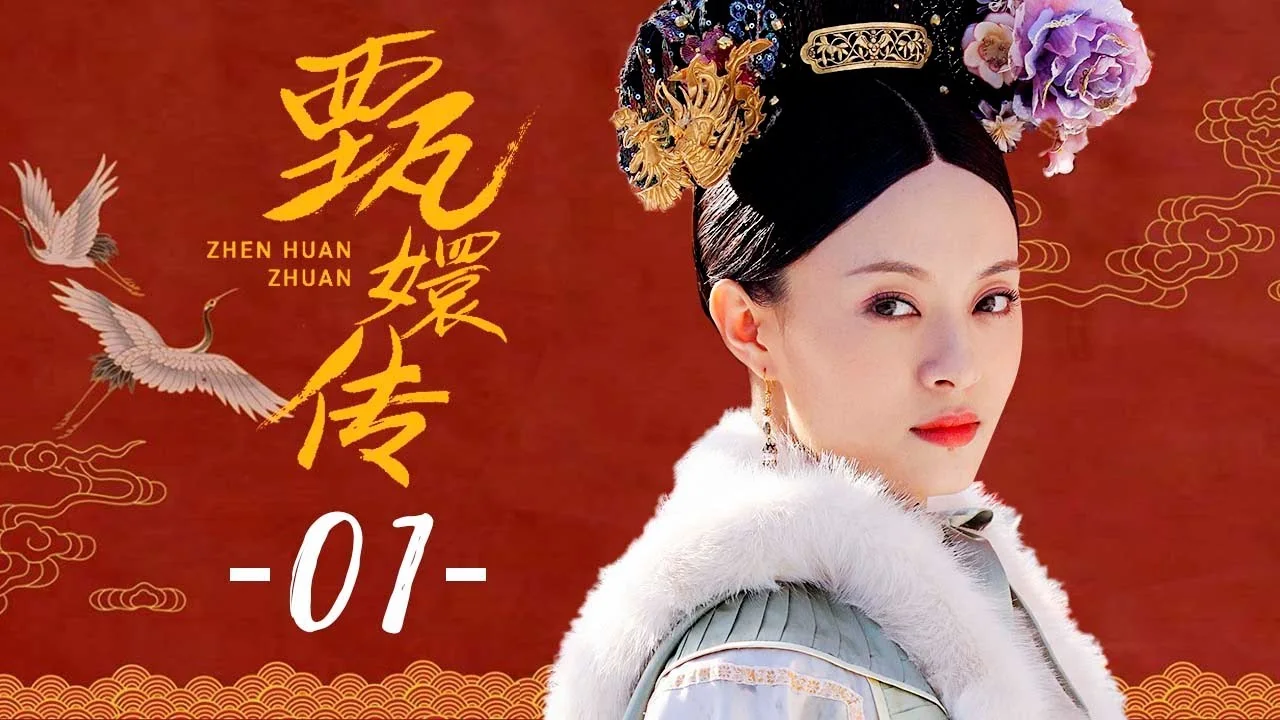
Empresses in the Palace is worth its 76 episodes because the pauses are evidence. A title becomes colder, a chair moves, a servant knows too much, and affection turns into administration. China has kept the drama alive by rewatching those details together until “Zhen Huan studies” became a social language of its own.
Empresses in the Palace in 60 seconds
| Reader question | Direct answer |
|---|---|
| What is it? | A 2011 Chinese palace drama, commonly known in Chinese as Zhen Huan Zhuan (甄嬛传) or Legend of Zhen Huan. The source television version has 76 episodes. |
| Who leads the cast? | Sun Li plays Zhen Huan; Chen Jianbin plays the Yongzheng Emperor. Jiang Xin's Hua Fei, Cai Shaofen's Empress Yixiu, Tao Xinran's An Lingrong and Lan Xi's Shen Meizhuang are structural leads, not side decoration. |
| Is it worth watching? | Yes, if you want cumulative character logic, precise social language and an ensemble whose smallest choices matter later. No, if you want fast romance or a historically reliable Qing guide. |
| Which version should I watch? | Choose the 76-episode Chinese version with subtitles. A shortened six-part international edit has circulated under the English title; it is a different viewing object and removes much of the relational evidence. |
| Is the ending happy? | The marked ending section below explains why political survival is not the same as happiness. Skip it until you finish the drama. |
| Why is it still popular? | Lines, reaction images and microscopic scene readings remain useful in ordinary conversations about hierarchy, favors, boundaries and false intimacy. |
Do not begin by memorizing every consort rank. Begin with a simpler rule: listen to what each person is allowed to call another person. The drama's power moves through names before it moves through poison.
The cast is a map of what power teaches
Zhen Huan is not surrounded by interchangeable “scheming women.” Each major relationship teaches her a different limit.
| Character | What the relationship gives Zhen Huan | What it takes away |
|---|---|---|
| The emperor | attention, status and the illusion that intelligence can be loved | the right to know whether she is being seen as herself |
| Shen Meizhuang | loyalty without constant performance | the fantasy that goodness is protected by withdrawal |
| An Lingrong | a mirror of insecurity, class shame and dependence | the hope that private tenderness survives unequal access to power |
| Hua Fei | a visible form of favor and violence | the idea that being loved by power means being safe from it |
| Empress Yixiu | institutional patience and long strategy | any belief that propriety and benevolence are the same thing |
| Prince Guo | an imagination of chosen intimacy outside palace rules | the possibility of leaving without consequence |
This is why plot-summary viewing fails. If Hua Fei is only a villain, her end is a twist. If she is a woman whose most treasured proof of love is also the instrument used against her, her end reorganizes the whole palace.
Zhen Huan enters believing intelligence can remain private
The young Zhen Huan wants less than viewers often remember. She does not enter the selection dreaming of total control. She hopes to remain unremarkable enough to preserve herself.
That hope is the first thing the palace disproves. Beauty, literacy, family background, illness and even absence can be interpreted by somebody else. A person does not need to seek power to become material for power.
Sun Li's early performance lets alertness hide inside softness. She listens quickly but answers within the amount of intelligence a young woman can safely display. The change later is not that Zhen Huan suddenly acquires a brain. It is that she stops apologizing for how much she already sees.
Hua Fei proves that favor is not protection

Hua Fei is loud because the emperor's favor has taught her that emotion can occupy space. She enters rooms with fragrance, entourage and entitlement. Yet the audience eventually learns that the same intimacy has always contained calculation.
Her tragedy is not “a bad woman finally receives punishment.” It is discovering that what she treated as the most private proof of love had been managed as imperial risk. The emperor does not cease loving and begin using her. The series reveals that those two actions were never cleanly separate.
That insight changes how we read every later tenderness toward Zhen Huan.
Ganlu Temple changes distance before it changes costume

Outside the palace, Zhen Huan loses rank but not the consequences created by rank. Cold, labor and humiliation make survival physical again. The quieter setting also exposes what the palace had been doing to speech: who must ask, who may refuse, who can touch whom and who has witnesses.
Prince Guo offers another relational grammar. He can call her toward a self not entirely defined by imperial favor. The romance matters less as an ideal couple than as evidence that Zhen Huan can imagine being recognized rather than administered.
The series does not allow that possibility to remain private. News, family danger, pregnancy and succession bring the state back into the body.
Returning is not empowerment; it is a decision to use the trap

The return is often clipped as a “strong woman” entrance. That is emotionally satisfying and critically incomplete.
Zhen Huan comes back because the outside has not remained outside. She accepts a manufactured lineage, a new title and a public role capable of protecting some people while endangering others. She does not defeat the palace by becoming authentic. She learns to make performance operational.
Notice the body. Earlier, she often receives information before choosing how much to reveal. On return, she manages what others are permitted to know. Stillness no longer protects privacy; it distributes uncertainty.
An Lingrong is the character rewatching changes most

On a first watch, An Lingrong can look like betrayal waiting to happen. On a rewatch, the smaller humiliations become louder: money, family status, gifts she cannot reciprocate, talents that earn attention only when useful, and friendships conducted across unequal confidence.
None of this acquits her. It gives the betrayal a social mechanism.
Her relationship with Zhen Huan fails partly because generosity does not erase hierarchy when the receiver experiences every gift as evidence of dependence. The palace is excellent at turning insecurity into labor for somebody stronger.
The ending gives Zhen Huan the room and removes everyone who made it human
Full ending spoilers begin here. The official Episode 76 listing identifies the finale; stop here if you have not finished the series.
Ending explained: Zhen Huan helps bring about the emperor's death after years of injury, suspicion and the destruction of Prince Guo. She protects Hongli's succession as the Qianlong Emperor and becomes empress dowager. The empress remains confined under the late emperor's decree; Zhen Huan holds political authority.
That is not triumph in the emotional grammar the early Zhen Huan wanted.
The final power is administrative. She can decide names, positions and continuity, but the people who made recognition possible are dead, damaged or unreachable. The series' darkest conclusion is not that innocence must become evil to survive. It is that a system can reward mastery only after making the original purpose of survival impossible.
Look at the finale after Episode 1 and the transformation becomes brutally concrete. The young woman once tried to become visually unimportant. The empress dowager can no longer afford an unmeasured look. Authority has given her control of the room and removed the possibility of entering it casually. This is why I reject the easy slogan that Zhen Huan simply “became stronger.” Strength is present, but so is permanent occupational damage to the self.
“Zhen Huan studies” turns rewatching into a public workshop
The familiar list of “12 disturbing details” is less valuable than the corrections those details require.
Whether Songzhi understood the secret of the Huanyi incense is disputable; the dialogue and difficulty of identifying the ingredients refine the point. The exact promise involving a future principal-wife title also needs correction rather than repetition.
That is 甄学 - “Zhen Huan studies” - at its best. Not declaring that every prop hides a conspiracy, but testing memory against scene evidence with other viewers.
The drama endures because even attendants feel alive, logic and etiquette shape behavior, and hierarchy itself - rather than a collection of uniquely evil women - generates the tragedy.
The show remains alive because it supports both pleasures: sharp reaction memes and serious structural reading.
Its best details are not secret codes planted for clever viewers. They are ordinary objects and repeated procedures whose meaning changes with power. A gift can be affection, debt, surveillance or evidence. A servant's delayed answer can be fear, calculation or an attempt to protect the person who technically owns her labor. Winter clothing, illness, food and incense do not decorate the plot; they tell us whose body the institution is willing to spend.
This is also why the exact forms of address matter more than a generic “palace intrigue” label. A change in title can withdraw intimacy without raising a voice. Calling someone by rank can protect both speakers in public, humiliate one of them in private or signal that a friendship has already become an official relationship. Subtitles sometimes flatten those shifts into repeated English names. If a scene suddenly feels colder, listen for the Chinese address before assuming the actors changed tone for no reason.
My strongest judgment is that the palace does not merely reveal bad character; it sorts insecurity into useful forms. Hua Fei turns favor into violence. An Lingrong turns humiliation into compliance and revenge. The empress turns patience into administration. Zhen Huan turns observation into survival. These women are responsible for their choices, but the system gives each destructive choice a practical reward before imposing its cost.
That is why I never describe the series as women fighting over one man. The emperor is not the prize at the center of a romantic contest. He is the distribution point for housing, fertility, family safety, status and the right to remain visible. Reducing the story to jealousy is not only shallow; it misunderstands the machinery every character is forced to operate.
What overseas viewers should not mistake for history
The Yongzheng Emperor, palace ranks and Qing visual vocabulary create a historical shell. The relationships are dramatized; the work adapts fiction rather than documenting private palace life. A costume, medical plot or line of succession should be checked against institutional history before being repeated as fact.
Use the drama to study how television makes hierarchy legible: address, blocking, access, rumor and gifts. Use the broader Chinese culture collection for accountable historical context. Do not turn a beautifully controlled scene into a primary document.
The best way to watch 76 episodes
- Start with the official Episode 1 route, then watch the first three episodes without a rank chart. Track only names, who speaks first and who can enter a room. Check subtitle and regional access before committing to the full run.
- By Episode 10, build a relationship map around Zhen Huan, Shen Meizhuang, An Lingrong, Hua Fei and the empress.
- Do not skip the slower domestic and servant scenes; later plot depends on who noticed what.
- At Ganlu Temple, reset the map. Rank disappears, but dependence does not.
- Before the finale, rewatch one early scene between Zhen Huan and the emperor. The ending becomes clearer when you hear how the same intimacy has changed.
Start with the Chinese TV shows guide, then continue to the full Sun Li profile to see what her performance does outside the palace. Compare its institutional pressure with Pursuit of Jade, where a household bargain tries to expand into public power. Our Chen Duling guide offers a useful modern comparison in how costume dramas turn feminine softness into competing readings.
In the comments, bring one line, form of address or room position that changed meaning on rewatch. Then join the East Moment community and let other viewers test the scene rather than simply agreeing with the conclusion.