Hidden Love is worth watching if you want an intimate romance built from attention, embarrassment and small changes in who may speak openly. But its childhood-to-adulthood premise deserves a stricter test than “the chemistry is sweet.” Sang Zhi's early admiration is a point of view, not a promise that Duan Jiaxu owes her a future. The relationship becomes defensible only when adult Sang Zhi controls pace, disclosure and refusal, and Duan Jiaxu responds to the woman in front of him rather than rewarding the younger girl who once watched him.
Hidden Love in 60 seconds
| Question | Short answer |
|---|---|
| Chinese title | Tou Tou Cang Bu Zhu (偷偷藏不住) |
| What it is | A 2023 Chinese contemporary coming-of-age romance |
| Episodes | 25 |
| Leads | Zhao Lusi as Sang Zhi; Chen Zheyuan as Duan Jiaxu |
| Essential third character | Victor Ma as Sang Yan, Sang Zhi's brother and Duan Jiaxu's friend |
| Central concern | How one-way admiration becomes, or fails to become, adult reciprocal choice |
| Main strength | Reaction-driven intimacy and unusually legible changes in attention |
| Main limitation | The warm style can make a serious life-stage objection feel easier than it is |
| Ending | Happy and conclusive for the central couple; spoiler details below |
| East Moment verdict | Watch for changing recognition, but do not switch off your boundary test |
The series became an easy international entry point into contemporary C-drama because its emotional grammar travels well. A glance held too long, a message rewritten, a name spoken differently and a person finally introduced in public require little cultural translation. That accessibility is real. It is not, by itself, proof that every stage of the premise is equally comfortable.
Should you watch all 25 episodes?
Watch the first three episodes as an ethical and aesthetic test, not merely a chemistry test.
- Continue if Zhao Lusi's reaction shots make private attention readable without needing explanatory dialogue.
- Continue if the story clearly preserves a boundary between Sang Zhi's younger admiration and Duan Jiaxu's later romantic recognition.
- Stop if the early life-stage distance makes the entire premise unpleasant for you. A later happy relationship does not require every viewer to enjoy the setup.
- Stop if you need an ensemble with equal narrative weight. Sang Yan and the family matter, but the drama's camera remains concentrated on the couple.
My judgment is definite: the series earns its length when it shows recognition changing direction. It becomes weaker whenever softness replaces the work needed to demonstrate that the relationship is now between two adults with meaningful choices.
What Hidden Love is about, without spoilers
Sang Zhi meets Duan Jiaxu through her older brother Sang Yan. He is older, socially at ease around her family and initially belongs to the protected category of “my brother's friend.” Sang Zhi's interest develops before she has the language or social position to make it mutual. For the early story, that interest should be read as hers alone.
Time and distance change the terms. When Sang Zhi reaches university and encounters Duan Jiaxu again, she has a life away from her family home, peers of her own and more power to decide what she reveals. Duan Jiaxu is also no longer only the charming visitor seen through a younger person's admiration. His debt, family history and defensive humor become visible as parts of an adult life.
The plot question is simple: will they become a couple? The more valuable question is harder: has enough changed that the old asymmetry no longer defines what either person may choose?
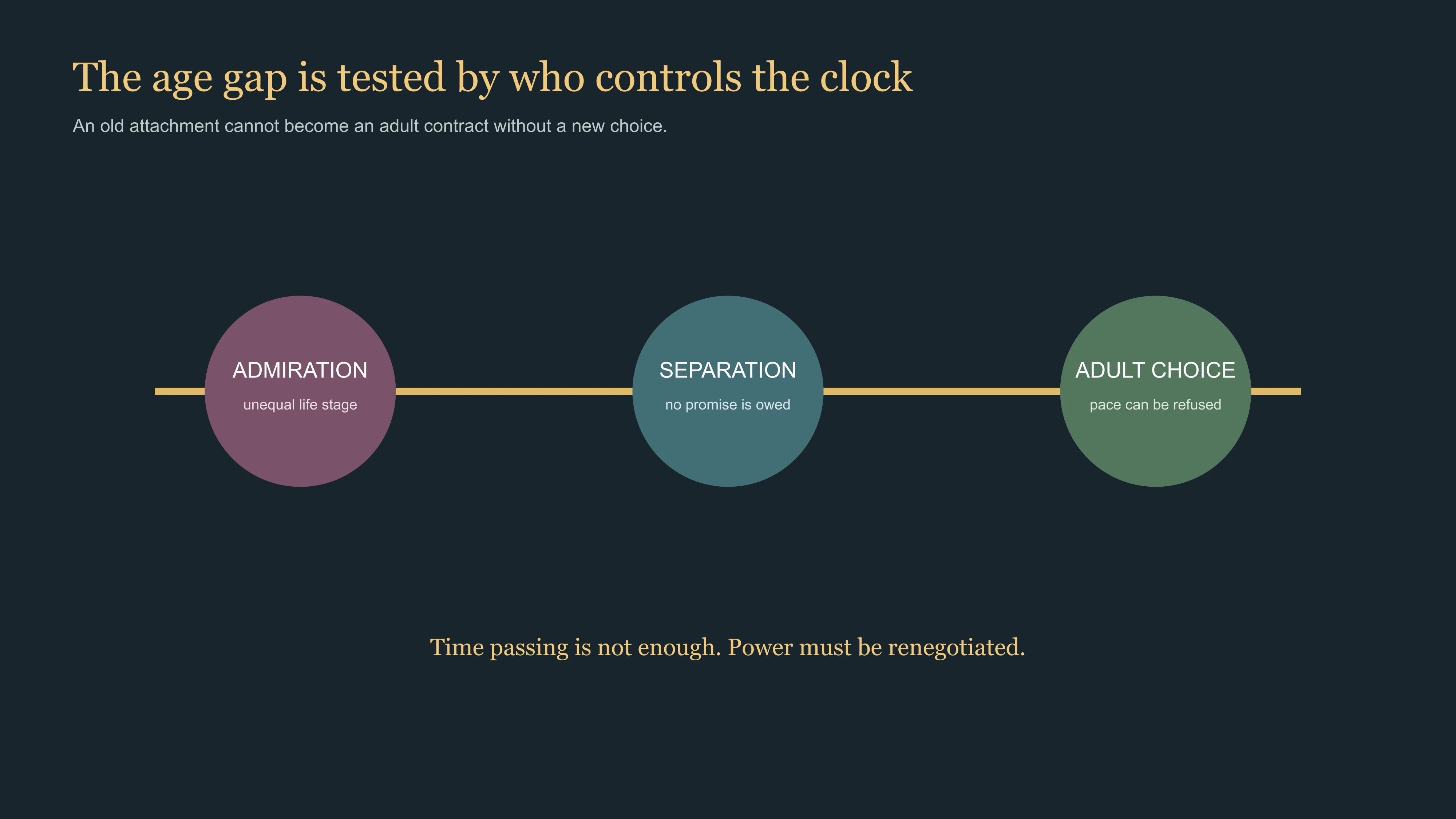
The age gap is not a footnote
The age and life-stage gap is part of the fantasy's attraction and the reason the series still deserves criticism. I do not treat either reaction as a factual verdict; I test what the relationship actually asks Sang Zhi to understand and carry.
My standard is not a number alone. It is whether the adult-stage writing passes four observable tests:
- Pace: can Sang Zhi slow the relationship without being punished by the narrative?
- Disclosure: does she decide when her earlier feelings become known, or are they used against her as a debt?
- Refusal: can she say no to contact, help or intimacy without the story treating refusal as childish confusion?
- Public accountability: does Duan Jiaxu stand behind the relationship when family and social history enter the room?
These tests matter because childhood admiration is not advance consent. Nor does being kind to a younger friend's sister create romantic credit. A responsible reading begins the romance only when both characters can respond from their present lives.
Why some viewers still remain uncomfortable
The drama uses warmth, attractive close-ups and family familiarity to make the transition feel safe. That style can reduce perceived threat, but style is not an argument. A viewer may still object that Duan Jiaxu knew Sang Zhi while she was much younger, that he holds more social experience, or that the adaptation's presentation makes the early phase feel too romantically continuous with the adult one.
That objection should not be mocked as failure to understand the genre. The best defense of the series is narrower: Duan Jiaxu does not need to have secretly wanted the younger Sang Zhi for the adult romance to work. In fact, the story is more defensible when he did not. What must later change is his recognition of her adult agency.
I reject the lazy defense that “it is only five years.” Five years can be negligible between two established adults and decisive when one person is still being treated as a child. The number does not settle the scene; the distribution of knowledge, authority and refusal does. The drama earns my support only in the adult phase, when Sang Zhi can make Duan Jiaxu wait, misunderstand her and face consequences he cannot charm away.
Lijun's reading: the drama is about becoming legible on your own terms
Sang Zhi spends much of the early story managing visibility. She notices, hides, denies and tests whether a feeling can exist without becoming family knowledge. Zhao Lusi is effective because the information is often in the delay before speech: the face receives a name or gesture, reorganizes itself and only then produces the socially acceptable answer.
This is more than “cute reaction acting.” It establishes a conflict over who controls Sang Zhi's emotional story. Her brother may tease. Her parents may protect. Duan Jiaxu may assume he understands. Sang Zhi matures when she can decide what becomes visible and what remains private.
That is why adult reciprocity cannot be measured by Duan Jiaxu's confession alone. The decisive movement is from being read by older people to authoring the terms under which she is known.
Duan Jiaxu must recognize change, not collect a reward
Chen Zheyuan's structural task is different. Duan Jiaxu begins with social fluency: he can joke, deflect and appear generous while keeping his own difficult circumstances hidden. The performance becomes meaningful when that fluency stops being total control. Adult Sang Zhi can surprise him, refuse his framing and become someone whose judgment has consequences for him.
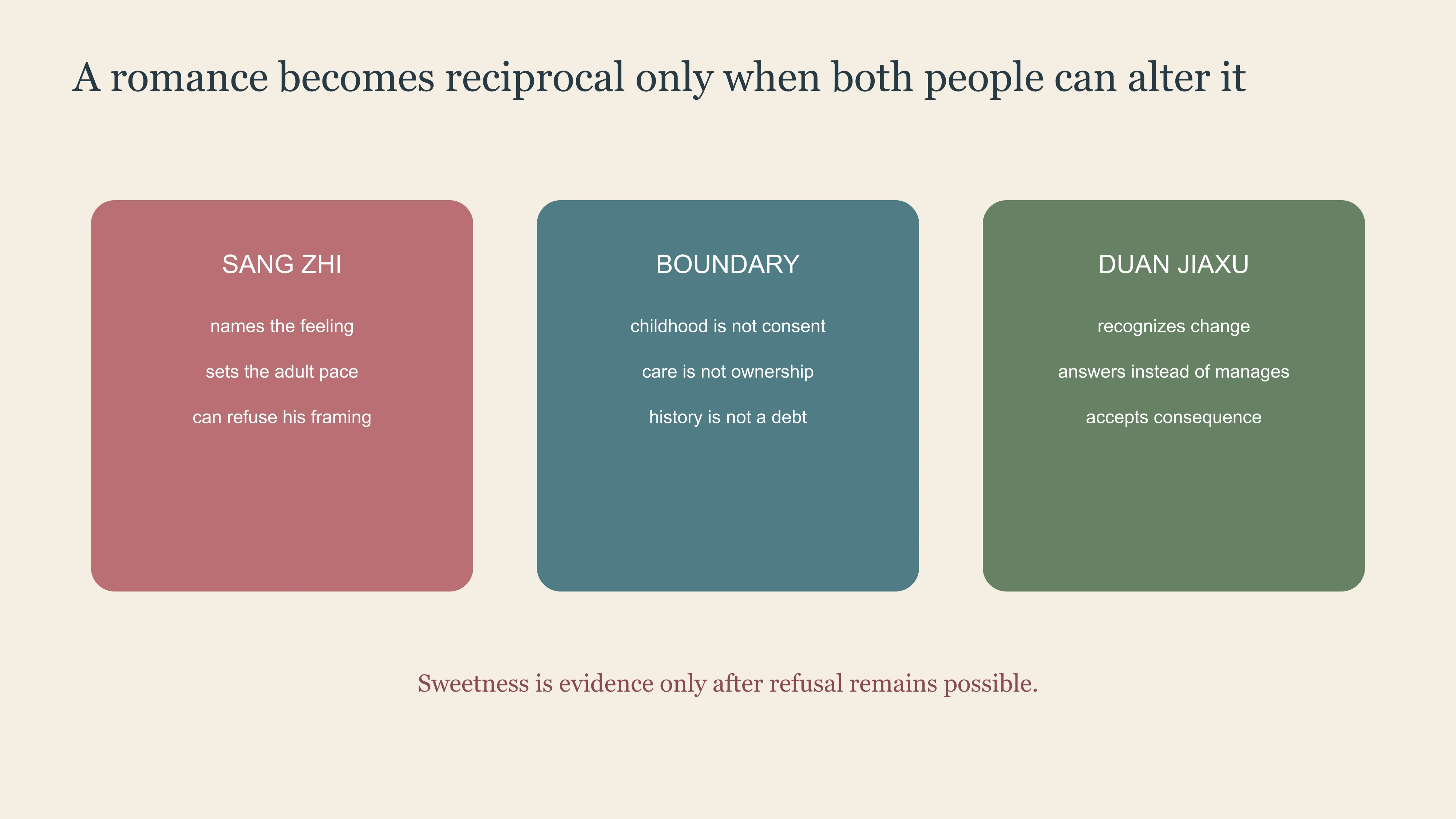
The romance works when Duan Jiaxu does three things:
- notices present-day Sang Zhi rather than interpreting her through his memory of Sang Yan's younger sister;
- accepts that her affection does not erase her right to set the pace;
- allows the relationship to become public responsibility rather than private comfort.
This prevents the plot from becoming a loyalty card in which years of admiration are redeemed for a boyfriend. Sang Zhi's earlier feeling explains continuity in her perspective. It does not prove that the later relationship is deserved.
His family burden explains distance; it does not make Sang Zhi his treatment
Duan Jiaxu's financial and family pressures give his charm a defensive function. Humor lets him control what other people may ask. Self-reliance lets him avoid the humiliation of being seen as needy. These details make him more than an idealized older boyfriend.
They also create a familiar romantic danger: the heroine can be turned into emotional rehabilitation. Hidden Love is strongest when Sang Zhi offers care without becoming responsible for curing his shame, settling his past or proving that he deserves life. Explanation is not exemption. A difficult history may clarify why he withdraws; it does not justify controlling her choices.
The useful viewer test is reciprocity under pressure. When Duan Jiaxu is distressed, does Sang Zhi still remain a person with competing needs, or does the camera reduce her to the comforting answer? When she is distressed, does he listen before solving? The relationship is adult only if care travels in both directions without erasing difference.
Sang Yan is not just comic interference
Sang Yan supplies humor and sibling friction, but his structural value is more serious. He connects Duan Jiaxu to the family context that the central couple cannot pretend does not exist. Without him, the romance could remain a private bubble. With him, past roles return: friend, brother, younger sister, trusted visitor.
His protectiveness should not become ownership of Sang Zhi's decision. At the same time, family scrutiny is not automatically villainy when the relationship carries a real history and life-stage difference. The story gains credibility when concern must be answered rather than simply defeated.
This is also where the series reveals a specifically domestic scale. Romance does not replace family membership; it reorganizes the meaning of an existing relationship network.
Use Episode 1 to inspect the boundary yourself
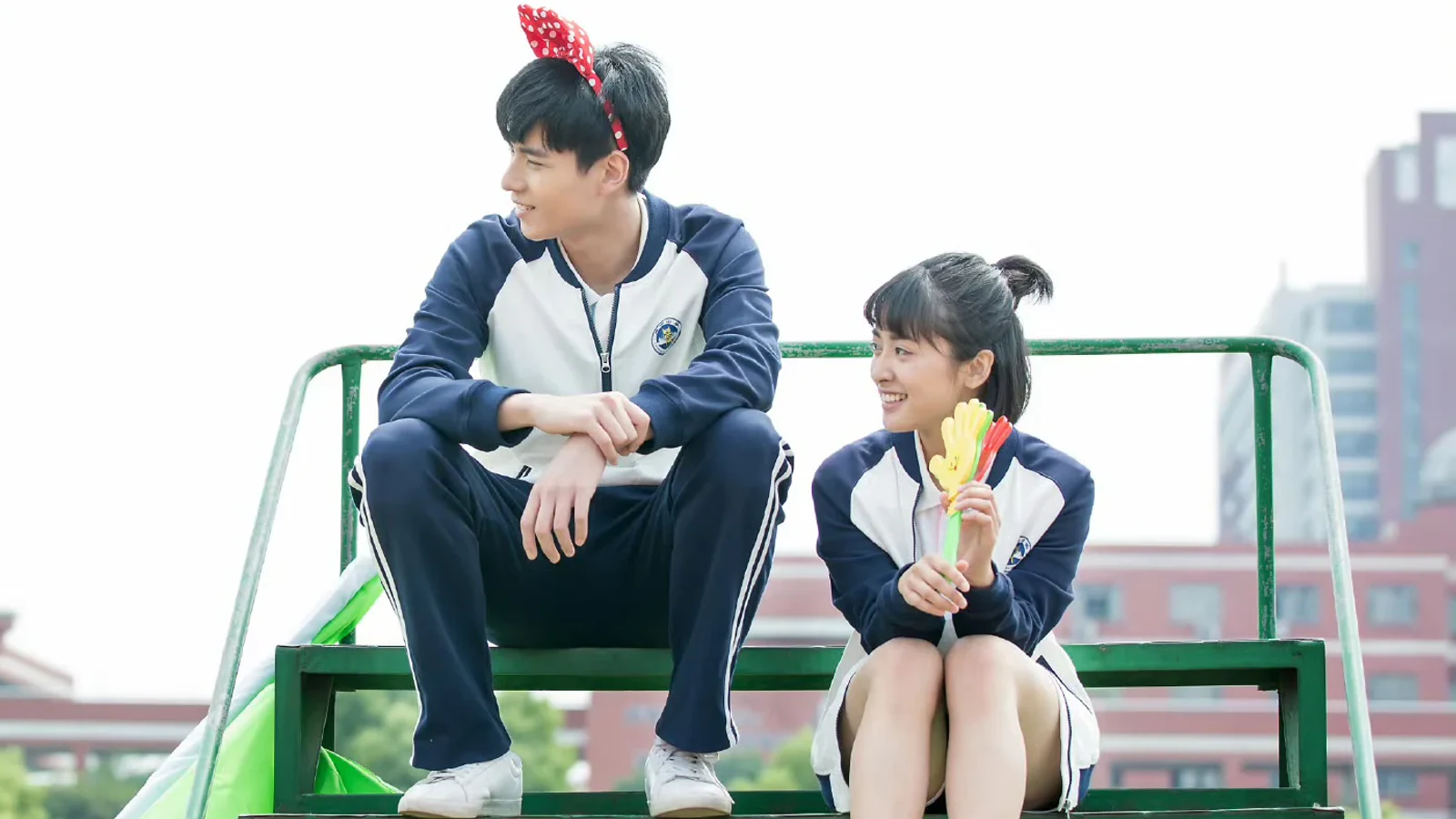
Open YOUKU's official English-subtitled Episode 1 in the player. The thumbnail identifies the episode; the moving scenes let you judge tone, framing and social distance for yourself.
Watch three things:
- Point of view: does the camera tell you that Sang Zhi is fascinated, or that Duan Jiaxu is already a romantic participant? Those are not the same claim.
- Forms of address: listen for how family and friendship roles define what each person can say.
- Room to refuse: note whether care, teasing and help leave Sang Zhi space to disagree.
If you cannot maintain a clear boundary between her early point of view and his later adult response, the series will probably not recover for you. If the distinction remains legible, the time jump can function as a genuine change of terms rather than permission applied backward.
Hidden Love cast: who carries what
- Zhao Lusi as Sang Zhi: carries the transition from concealed attention to authored disclosure. Her most useful tool is the reaction before the socially acceptable answer.
- Chen Zheyuan as Duan Jiaxu: must make charm readable as both generosity and defense, then show a changed recognition of adult Sang Zhi.
- Victor Ma as Sang Yan: keeps the romance connected to sibling history, male friendship and family accountability.
- Zeng Li and Qiu Xinzhi as Sang Zhi's parents: establish a household where affection and protection create both security and limits.
- Guan Zijing as Li Xun: belongs to Duan Jiaxu's work life and helps keep his adult world from existing only through romance.
This page owns the drama, its character relationships and viewing decision. Read the dedicated Zhao Lusi guide for her wider career and which role best demonstrates her range.
Does Hidden Love have a happy ending?
Spoiler-light answer: yes. The central couple receives a happy, conclusive commitment. Viewers searching only to avoid tragedy can watch without expecting a last-minute separation or ambiguous final image.
Mild spoilers: the final stretch moves the relationship into family recognition and future commitment. The official Episode 25 material presents a proposal and a shared future rather than treating the romance as a private summer that must end.
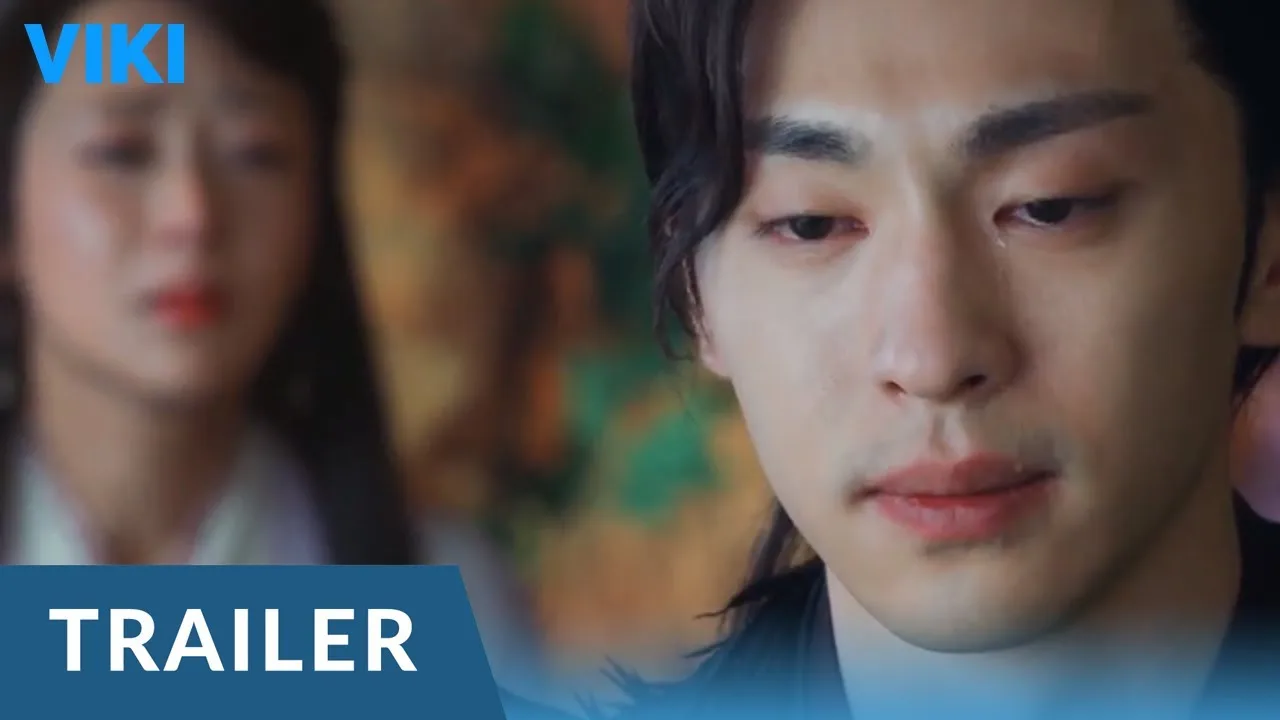
YOUKU's official Episode 25 clip confirms the ending type. The image is deliberately placed after the spoiler warning and should not be read as proof that every conflict on the route was equally well resolved.
The conclusion works because public commitment answers the story's secrecy. It is less convincing if read as proof that love has permanently solved Duan Jiaxu's family burden. A proposal can close a romance plot; it cannot retroactively remove debt, grief or the need for continued boundaries.
Is Hidden Love Season 2 confirmed?
No official Season 2 confirmation was found in the YOUKU sources checked for this August 12, 2026 draft. The existing 25-episode story is complete enough to stand alone. Current social results include posts claiming or anticipating a second season, but those posts are not production announcements.
Treat a sequel as real only when YOUKU or an identified production account supplies a title, cast or release notice. Fan trailers, recycled clips, short-form adaptations and articles that cite one another do not meet that standard.
Why Hidden Love became easy to recommend globally
The drama's overseas appeal does not require a claim that every country responded in the same way. Its design has several portable strengths:
- Low translation cost: much of the meaning sits in looking, waiting, texting and remembered details.
- A concentrated emotional route: new viewers do not need a large historical world or political system before the romance becomes legible.
- Streaming-friendly episodes: the story offers frequent micro-payoffs without requiring constant plot shocks.
- A recognizable but locally situated family structure: the brother's friend premise, sibling teasing and parental concern are accessible while retaining a Chinese household context.
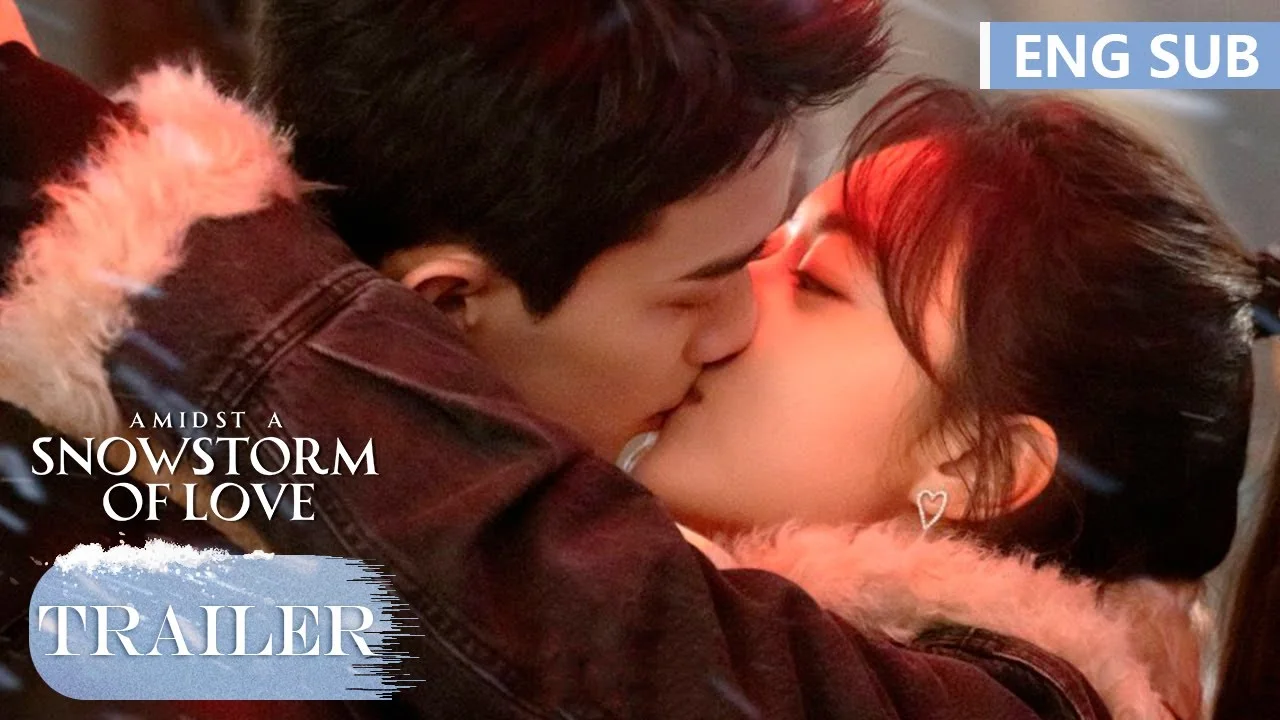
The risk is equally portable. Promotional clips can extract sweetness while hiding the life-stage problem that gives the full story its ethical work. A compilation of kisses is therefore a worse introduction than Episode 1 plus one adult-stage episode.
Hidden Love vs When I Fly Towards You
| Choose | Hidden Love | When I Fly Towards You |
|---|---|---|
| Main emotional unit | One concentrated attachment moving across life stages | Five-person school friendship plus romance |
| Core test | Whether admiration becomes adult reciprocal choice | Whether attention is answered and self-definition grows |
| Best for | Viewers who want close romantic point of view and stronger longing | Viewers who want ensemble warmth and protected school texture |
| Main objection | The age and life-stage framing may remain uncomfortable | The low-conflict world may feel too idealized |
| Ending | Happy and conclusive | Happy and conclusive |
Start with Hidden Love when you want to inspect how a private feeling changes across time. Start with When I Fly Towards You when friendship is part of the desired fantasy and both leads begin closer in life stage. Choose Put Your Head on My Shoulder when you want the conflict to move into groceries, illness, shared rooms and the daily proof that affection can become practical reliability.
Where to watch Hidden Love officially
- Watch YOUKU's official Episode 1 with English subtitles in the embedded player above.
- Continue through the official YOUKU English playlist.
- Check the Netflix title page in your country.
Catalogs, subtitle tracks and free-versus-member access vary by region and can change. Check inside the official platform before subscribing. East Moment does not link to unauthorized mirrors, downloads or reposted full episodes.
Final verdict: who should watch it
Watch Hidden Love if you want:
- a romance told through reactions and accumulated private attention;
- a happy ending with visible adult commitment;
- a concentrated contemporary C-drama that is easy to enter;
- a relationship you are willing to test rather than accept because the leads are attractive.
Skip it if you need:
- the age and life-stage issue to disappear entirely;
- an ensemble with equal independent arcs;
- hard social realism around debt, family repair and adulthood;
- fast external plot rather than slow emotional accumulation.
My conclusion is not that discomfort must be overcome. It is that the series has one defensible route through its difficult premise: Sang Zhi's younger admiration belongs to her; the adult relationship begins only when she can author its terms and Duan Jiaxu answers the person she has become. When the drama shows that change, its sweetness has structure. When it merely relies on warmth, viewers are right to keep asking questions.
Continue through the Chinese television guide for the wider drama route. In the comments, bring one adult-stage scene that proves Sang Zhi controls pace, disclosure or refusal. If the premise never became comfortable, identify the exact framing choice that prevented the transition from feeling earned.