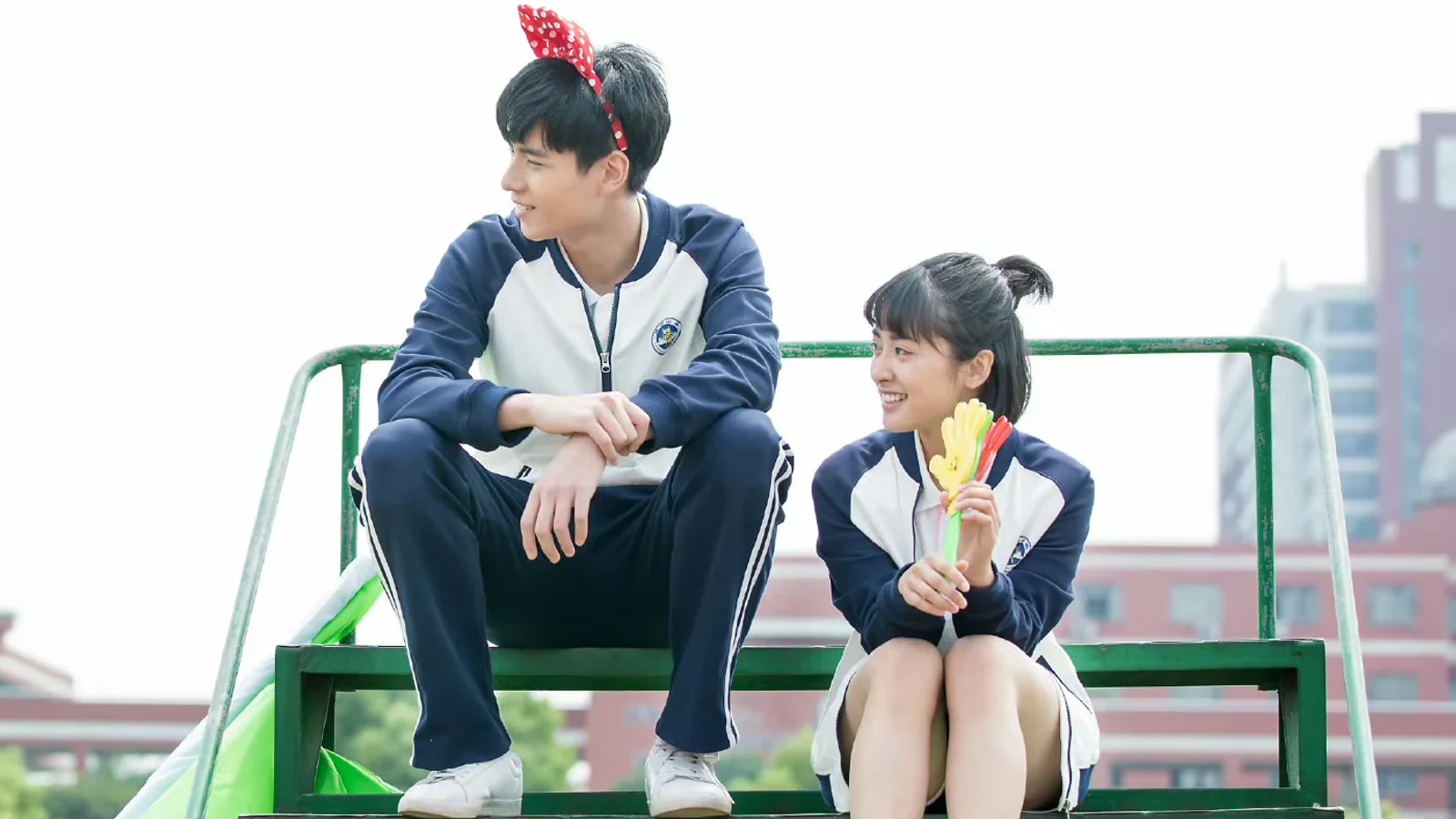
Put Your Head on My Shoulder is worth watching when you want romance without emotional punishment. Its low conflict is not missing plot; it is the product. Shared rooms, grocery choices, experiments, illness and awkward attempts at care turn attraction into a practical partnership. The limitation is equally clear: if you need suspense, strong rivals or major social stakes, 24 episodes will feel lighter than you want.
Put Your Head on My Shoulder in 60 seconds
| Question | Short answer |
|---|---|
| Chinese title | Zhi Wo Men Nuan Nuan De Xiao Shi Guang (致我们暖暖的小时光) |
| What it is | A 2019 Chinese campus-to-workplace romantic comedy |
| Episodes | 24, plus an official extra story |
| Leads | Xing Fei as Situ Mo; Lin Yi as Gu Weiyi |
| Setup | A graduating accounting student and a physics student unexpectedly share an apartment |
| Main strength | Domestic actions make affection visible without constant crisis |
| Main limitation | Thin external conflict and a repetitive secondary triangle |
| Ending | Happy and conclusive; full spoilers below |
| Best for | Viewers seeking low-stress cohabitation romance |
| East Moment verdict | Watch for care becoming competence, not for plot velocity |
This page covers the 2019 Chinese series, not the 2021 Thai remake. Tencent Video's official English-subtitled first episode is embedded on the page, so you can test the actual rhythm rather than deciding from a compilation.
Is 24 episodes too long?
For this story, 24 episodes are slightly more than necessary but not fundamentally wrong. Domestic intimacy needs repetition: one meal proves courtesy; a pattern of meals proves attention. The problem begins when repetition stops changing the relationship.
Use the first three episodes as a clean test:
- Continue if small practical misunderstandings feel revealing rather than trivial.
- Continue if you enjoy watching an academically confident person become socially clumsy.
- Stop if you need a plot goal larger than graduation, work and mutual recognition.
- Stop if an unresolved first crush frustrates you more than the central couple's calmness rewards you.
Unlike Meteor Garden, this drama does not ask whether a powerful man can unlearn domination. It asks whether two inexperienced people can become reliable in the same space.
The cast and what each person contributes
- Xing Fei as Situ Mo: supplies speed, irritation and practical social intelligence; she prevents the heroine from becoming a passive lesson for a genius.
- Lin Yi as Gu Weiyi: makes certainty in physics coexist with hesitation in ordinary feeling; his comic value comes from applying the wrong method with total seriousness.
- Tang Xiaotian as Fu Pei: represents familiar affection that never becomes dependable enough to deserve indefinite waiting.
- Zheng Yingchen as Wang Shan: keeps the secondary relationship from being only a device to provoke jealousy.
The decisive pairing is not “ordinary girl plus genius.” Situ Mo understands interpersonal consequence faster; Gu Weiyi can reason through technical systems. The romance works when each competence remains real and neither person becomes the other's improvement project.
This Episode 13 image gives the argument a body. Gu Weiyi is isolated in a green outdoor frame while the episode branding insists that this is still the couple's “warm little time.” The picture proves the official episode and the production's youthful visual language; it cannot prove that his stillness is emotionally precise. For that, watch whether he changes what he does after Situ Mo makes a need clear.
Domestic space is the actual plot
The apartment converts emotion into visible evidence. A character may claim not to care, but the refrigerator, medicine, bedding and division of space expose what attention has already changed.
This is more than cute production design. Cohabitation creates a chain of low-cost decisions with cumulative meaning:
- Notice another person's routine.
- Adjust without demanding praise.
- Make a mistake because observation is incomplete.
- Repair the practical consequence.
- Learn which care is welcome rather than assuming all care is good.
That sequence is the series' strongest romantic grammar. It makes affection inspectable.
Gu Weiyi is funny because intelligence cannot solve timing
Gu Weiyi's physics identity gives him confidence inside a controlled problem. Romance removes the controlled conditions. Another person does not supply all variables, repeat an experiment identically or reward the theoretically optimal gesture.
Lin Yi's useful choice is stillness interrupted by late reaction. Gu Weiyi often arrives at the emotional meaning of an exchange after Situ Mo has already moved on. The delay becomes comic, then tender, because learning shortens it.
The drama is weaker when “genius” becomes a blanket explanation for social ignorance. Intelligence in one domain does not require helplessness in every other. The best scenes let him learn; the lazier ones reset him for another joke.
Situ Mo must be allowed to outgrow Fu Pei
Fu Pei matters because many relationships fail without a dramatic betrayal. He is familiar, attractive and intermittently attentive, but he repeatedly leaves Situ Mo carrying ambiguity.
Her movement toward Gu Weiyi is therefore not a prize awarded to the more impressive man. It is a decision to stop organizing her emotional life around someone else's indecision. That is one of the show's most transferable insights: history with a person does not create an unlimited claim on your future attention.
Why the romance feels safe without becoming completely empty
Safety here means that the central pleasure does not depend on humiliation, coercive pursuit or repeated catastrophic misunderstanding. It does not mean both characters communicate perfectly.
The friction comes from embarrassment and timing. Gu Weiyi can know what he wants but not how to make the desire legible. Situ Mo can recognize care while still questioning whether it is stable. Their mistakes usually create repairable consequences, which allows viewers to watch at a lower level of emotional alarm.
For a romance with similarly fine-grained reaction acting but a more serious boundary question, read the Hidden Love guide. For a youth story driven more by friendship and future direction, use When I Fly Towards You.
Where the series becomes too slight
Low conflict still needs progression. Several middle episodes redistribute the same information: Gu Weiyi is interested, Situ Mo is uncertain, Fu Pei is late and another person creates a temporary misunderstanding.
The secondary romantic obstacles rarely feel capable of changing the final pair. That protects the comfort but reduces suspense. The show is best treated as a sequence of relational observations, not as a mystery about who will end up together.
If you watch only for the answer, the series is overlong. If you watch for the changing quality of attention, much of the repetition has a function.
Put Your Head on My Shoulder ending explained
Full spoilers begin here.
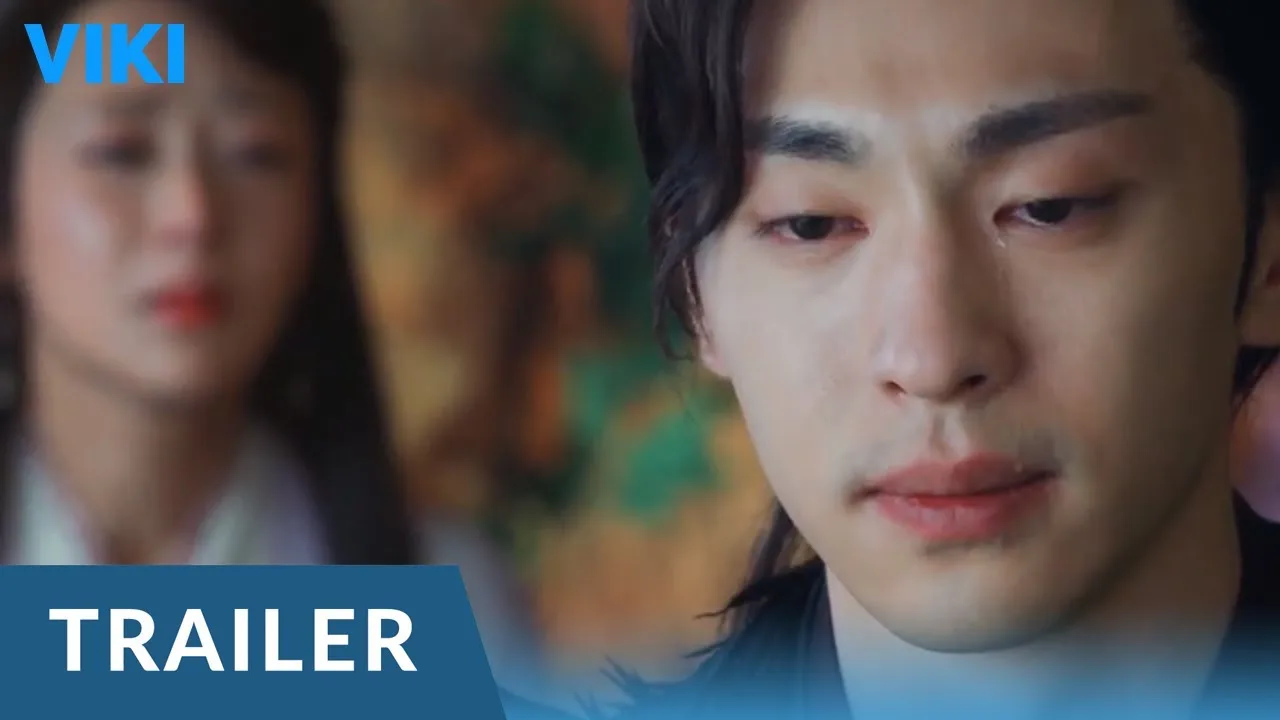
Situ Mo and Gu Weiyi receive a happy ending. Gu Weiyi goes to Germany for academic work, the relationship survives the distance and the central story proceeds to marriage and family life. The official extra story extends that domestic future rather than reopening the romantic choice.
The ending fits the argument because career development does not need to destroy intimacy. Distance becomes a logistical problem the couple can manage, not a late punishment inserted to manufacture importance.
What to watch next
- Watch Hidden Love for quieter visual intimacy and a sharper life-stage debate.
- Watch When I Fly Towards You when friendship and growing up matter as much as the central pair.
- Watch Meteor Garden when you want maximal class conflict and romantic turbulence rather than calm cohabitation.
- Use the Chinese television guide to choose by emotional cost, genre and episode commitment.
Final verdict
Put Your Head on My Shoulder understands that care becomes persuasive when it survives contact with ordinary life. Its best images are not declarations but adjustments: an object moved, a routine learned, an awkward plan repaired.
That is also why the drama will not work for everyone. It deliberately declines the scale that makes many romances addictive. Choose it when calm is the desired experience, not when you are hoping calm will secretly turn into a thriller.
Put Your Head on My Shoulder makes domestic space do the flirting
This drama works because attraction is organised through repeated ordinary contact. A kitchen, desk, doorway and shared schedule create tiny negotiations that a grand confession cannot replace. Cohabitation is not just a trope placed around the couple; it is the machine that reveals how each person notices and adjusts.
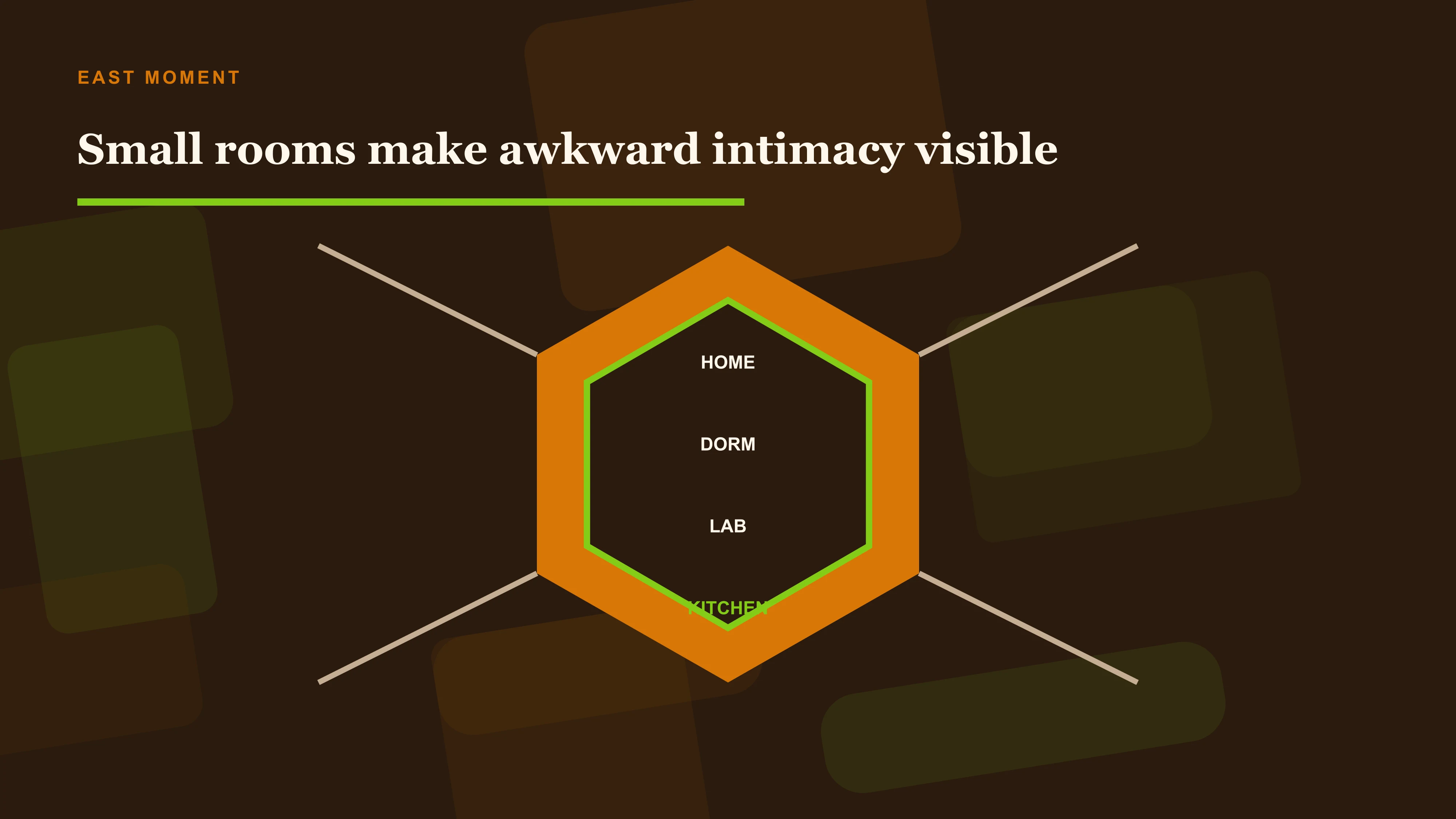
Situ Mo's life cannot be reduced to waiting for Gu Weiyi to understand feelings. Her uncertainty about work and adulthood gives the romance a practical horizon. Gu Weiyi's scientific competence is amusing precisely because it does not transfer automatically into emotional fluency.
Care must move beyond observation
The series is sweetest when care changes behaviour: a routine is adjusted, discomfort is noticed, an apology repairs a failed assumption. Watching closely is only the first step.
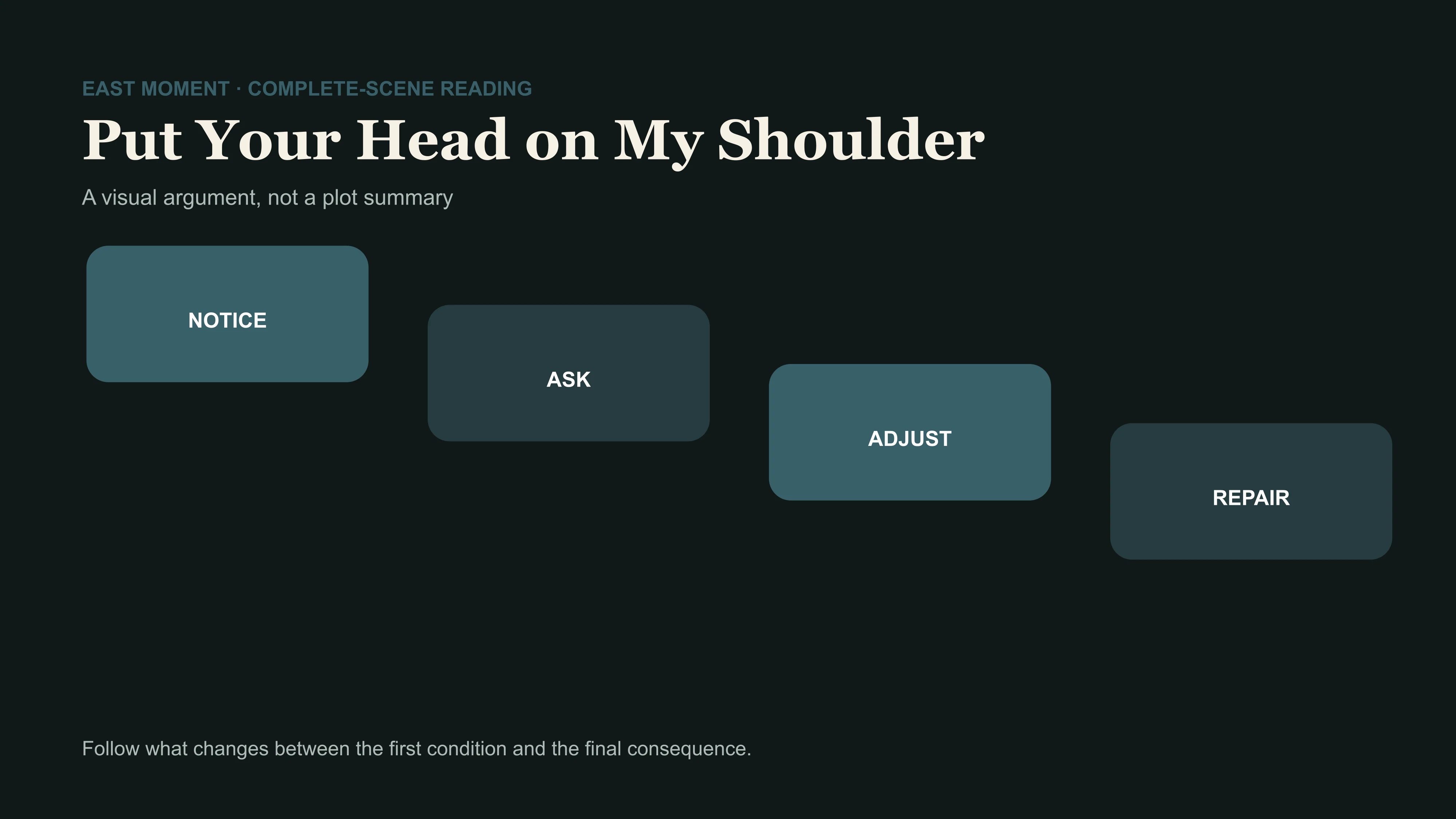
This is also where many romantic comedies cheat. They present surveillance, jealousy or unilateral decision-making as proof of intensity. A healthy scene gives the other person room to answer. The show is strongest when awkwardness leads to negotiation rather than control.
The ending should preserve two futures
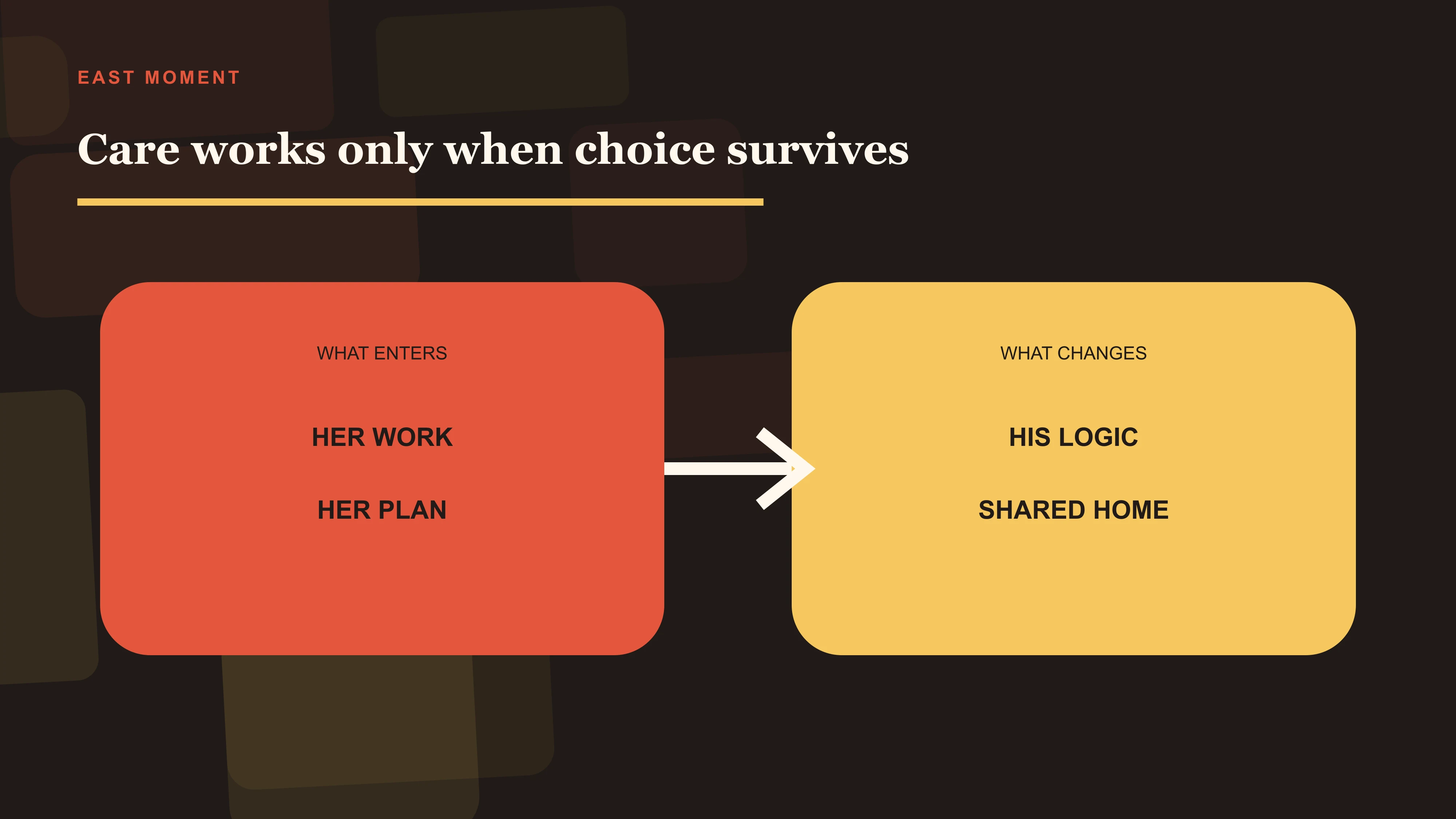
A shared home is not a complete future if one career becomes decoration. The useful ending question is whether Situ Mo and Gu Weiyi can remain legible as people with different work, habits and forms of competence. Romance should connect those lives, not absorb one into the other.
The Tencent Video official playlist confirms the licensed screen text and availability signals; it does not establish that every relationship behaviour is healthy. That judgment has to be made scene by scene.
Why the lightness matters
Low-stakes warmth is not inferior to tragedy. The series gives viewers a space where embarrassment usually remains survivable and repair is possible. That emotional promise explains its rewatch value.
The limitation is repetition: domestic cuteness can become a loop if no new responsibility enters. My verdict is that the drama earns affection when small adjustments accumulate into mutual knowledge. Compare it with A Love So Beautiful to see two youth romances make very different decisions about agency and delayed recognition.
The science joke works when expertise remains specific
Gu Weiyi's physics does not make him universally intelligent. It gives him a domain where cause and result can be tested, then places him in a relationship where another person cannot be reduced to a solvable variable. The comedy comes from transfer failure.
Situ Mo's competence is different: she reads ordinary life, work possibility and social discomfort with tools he lacks. Their equality is not sameness. It is the recognition that each person's knowledge changes the shared space.
The series also benefits from food and routine. A meal can reveal who planned, who assumed and who cleaned up. These details look small because no villain controls them; they are exactly where a long relationship would succeed or fail.
My rewatch test is simple: ignore the confession and follow one household task across several episodes. If responsibility becomes more mutual, the romance has progressed even before the dialogue admits it.
The supporting friendships should be judged by the same standard. Do they expand Situ Mo's choices or exist only to discuss the romance? A youth drama feels complete when work, friendship and love compete for time without one making the others disappear.
That balance gives the sweetness an adult destination. The shared room becomes meaningful because both people can still imagine a life beyond it.